Madam Speaker, I find it so interesting that our colleagues across the aisle talk about the problems with the filibuster in the Senate. But that is exactly why bills could not get passed that…
Madam Speaker, I find it so interesting that our colleagues across the aisle talk about the problems with the filibuster in the Senate. But that is exactly why bills could not
get passed that Republicans in the House passed but couldn't get them passed in the Senate because Democrats filibustered.
And about misinformation, there probably has never been a bill that has been more misrepresented to the American people than what is going on here in terms of this bill. And I do think the American people understand the truth, and they're going to act on the truth later on this year. They're doing it now. They're telling them, don't vote on it. But they feel obliged to do it.
I want to say that while my colleague across the aisle keeps ranting and raving about corporate profits for insurance companies, he doesn't say a word about the corporate profits for the Big Pharma companies. And yet, these are, they are wholly-owned subsidiaries of the Big Pharma companies.
Of all the single industry lobbies in Washington, the largest is the Pharmaceutical Research and Manufacturers of America. PhRMA sent $26.2 million on lobbying last year. That's nearly three times as much as the insurance lobby, which spent only $8.9 million.
And let's talk about profits. Drugmakers' combined profit margin last year--this is from an article of The Examiner from March 17, 2010, yesterday--profit margin was 22.2 percent, compared with the insurers' 4.4 percent. Drugmaker Merck's net income, $12.9 billion, exceeds that of the 10 largest insurers combined. And I can go on and on. Madam Speaker, I'd like to put this article in the Record.
And the reason they don't talk about Big Pharma and the drug industry is because Big Pharma helped write this bill, because it protects them. They know that they are going to get a windfall out of this bill, and they, again, our colleagues across the aisle, are wholly owned subsidiaries of them.
Madam Speaker, our colleague, my colleague from Louisiana, brought up a very, very important point that I think needs to be mentioned again and again. What Chairwoman Slaughter has proposed, and what will be done here, is to use a rule providing for consideration of both the Senate and reconciliation bills to deem the Senate bill passed, avoiding the political problem that stems from taking a true up-or-down vote on the horribly unpopular legislation.
If this legislation is doing so much good for the American people, then our colleagues should be proud to be voting for this in an up-or- down vote. They keep saying it, but you know, saying it doesn't make it so.
Even though, again, Speaker Pelosi said on page 23 of her ``New Directions for America'' document issued in the 109th Congress that ``Every person in America has a right to have his or her voice heard. No Member of Congress should be silenced on the floor.'' Then on page 24 she states that ``Bills should come to the floor under a procedure that allows open, full and fair debate, and Members should have at least 24 hours''--later expanded to 72 hours--``to examine the bill text prior to floor consideration.''
Yet, as Mr. Scalise has said, all we've seen are broken promises. And now, Speaker Pelosi is advocating parliamentary trickery to avoid an up-or-down vote on the Senate health care bill. And he quoted her as saying, ``This is a great way to do it because it avoids an up-or-down vote.''
This is not what the American people sent us here for. They didn't send us here to undermine the rule of law and to do things with tricks. They know this is the wrong thing to do. That's why they have been jamming the phones and telling our colleagues, vote ``no.''
[From the Examiner, Mar. 17, 2010]
Dems Tap Drug Maker Millions for PhRMA-Friendly Bill
(By Timothy P. Carney)
As they whip for the health care bill, Democratic leaders
pack a mean one-two punch of populist rhetoric and the hefty
financial backing of the drug industry.
In the heated yearlong health fight, President Obama has
often accused his opponents of willful misrepresentation,
even as he and his allies have endlessly repeated the biggest
whopper of all--that the bill would rein in the special
interests.
The Obama team regularly dismisses opponents as industry
lackeys. The Democratic National Committee blasted out e-
mails this week warning that ``for every member of Congress,
there are eight anti-reform lobbyists swarming Capitol Hill''
and ``Congress is under attack from insurance lobbyists.''
But drug industry lobbyists, according to Politico, spent
the weekend ``huddled with Democratic staffers'' who needed
the drug lobby to ``sign off'' on proposals before moving
ahead. Meanwhile, we learn that the drug lobby is buying
millions of dollars of ads in 43 districts where a Democratic
candidate stands to suffer for supporting the bill. The
doctors' lobby and the hospitals' lobby are also on board
with the Senate bill.
So the battle at this point is not reformers versus
industry, as Obama would have you believe. Rather, it is a
battle between most of the health care industry and the
insurance companies.
(And the insurers are not opposed to the whole package. On
the bill's central planks--limits on price discrimination,
outlawing exclusions for pre-existing conditions, a mandate
that employers insure their workers and a mandate that
everyone hold insurance--insurers are on board. They object
mostly that the penalty is too small for violating the
individual mandate.)
Pharmaceuticals are a far more entrenched special interest
than the insurers.
Of all the single-industry lobbies in Washington, the
largest is the Pharmaceutical Researchers and Manufacturers
of America. PhRMA spent $26.2 million on lobbying last year--
that's nearly three times as much as the insurance lobby,
America's Health Insurance Plans, which spent $8.9 million.
If you include individual companies' lobbying
pharmaceuticals blow away the competition, beating all other
industries by 50 percent, according to data at the Center for
Responsive Politics.
Given this Big Pharma clout, it's unsurprising that the
bill Obama's whipping for--Senate bill--has nearly everything
the drug companies wanted; prohibiting reimportation of
drugs, preserving Medicare's overpayment for drugs, lengthy
exclusivity for biotech drugs, a mandate that states
subsidize drugs under Medicaid, hundreds of billions in
subsidies for drugs, and more.
PhRMA chief Billy Tauzin, who was vilified by Obama on the
campaign trail, worked out much of this sweetheart deal in a
West Wing meeting with White House Chief of Staff Rahm
Emanuel. Tauzin visited the White House at least 11 times. He
left his imprint so deeply on the current bill that it should
probably be called BillyCare rather than ObamaCare.
Recall that pharmaceutical executives and political action
committees dug deep trying to save the flailing candidacy of
Democrat Martha Coakley in Massachusetts--a race that was
explicitly a referendum on health care. She took in more than
10 times as much drug company cash as Republican Scott Brown.
This week, PhRMA, through a front group called Americans
for Stable Quality Care, is rolling out millions of dollars
in advertisements for the Democrats' jury-rigged package
consisting of the BillyCare bill and some as-yet-undetermined
``budget reconciliation'' measure. The ads reportedly will
target wavering Democrats.
But supporters of BillyCare will continue to attack
opponents as shills for insurance companies, demonizing, as
Obama puts it, ``those who profit from the status quo.''
Let's look at those profits. Drug makers' combined profit
margin last year was 22.2 percent, compared with insurers'
4.4 percent. Drug maker Merck's net income, $12.9 billion,
exceeds that of the 10 largest insurers combined.
Pfizer, which netted $8.64 billion last year, gave its CEO,
Jeff Kindler, a 12.5 percent salary increase, bringing his
compensation to $14.9 million. Pfizer, in a federal filing,
attributed the raise partly to Kindler's work ``developing
and advancing U.S. and global public policies that serve the
overall interests of our Company,'' including his
``constructive participation in the U.S. legislative
process.'' Kindler contributed the maximum to Obama's
election, and Obama raised more money from the drug industry
than any candidate in history.
On this bill, Republicans side with insurers, and Democrats
mostly side with the richer and more powerful drug makers.
The difference: Republicans didn't cut a backroom deal with
the insurers. Obama will still play the populist card, even
as the drug lobby is his ace in the hole.
Madam Speaker, I am going to reserve the balance of my time.
Madam Speaker, I reserve the balance of my time.
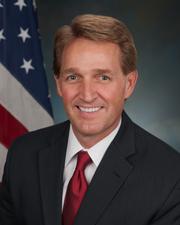
Madam Speaker, I'd like to yield 1 minute to my colleague from Arizona (Mr. Flake).
Madam Speaker, I continue to reserve.
Madam Speaker, I want to say that what my colleague from Massachusetts just said about all those hours of hearings, it was a totally different bill. No hearings have been held on this bill; a totally different bill. That isn't the way we work around here.
What they're asking people not to vote on is a bill that came from the Senate. It isn't the House bill. So let's, again, get real here and let's talk about what we should be talking about.
You know, my colleagues across the aisle were against the Senate bill before they were for the bill, and I would like to quote my distinguished colleague who is the Chair of the Rules Committee when she said on December 23, 2009, ``Under the Senate bill, millions of Americans will be forced into private insurance plans which will be subsidized by taxpayers. That alternative will do almost nothing to reform health care, but will be a windfall for insurance companies.'' She went on to then say ``The Senate has ended up with a bill that isn't worthy of its support. Supporters of the weak Senate bill say, just pass it. Any bill is better than no bill. I strongly disagree.''
Now that very same person has done everything possible to get this bill passed in this House so that it will become law. It is no wonder that the majority is considering procedural tricks and sleight of hand, because the bill that they are proposing to pass doesn't provide true health care reform. And the process doesn't pass the sniff test.
Republicans will never accept the status quo for health care. We can do better. We need to have a bill that will lower the cost of health care in America. But you do not lower the cost of health care by creating new government-run programs. We can lower the cost by putting patients, average, everyday Americans in charge of their health care, not insurance companies and not the government. Lower costs will result from putting patients in charge of their health care through innovations like expanded health savings accounts and by making sure that trial lawyers are not driving up the cost of health care with a blizzard of frivolous lawsuits.
We should be revitalizing America's economy and promoting economic freedom. The nonpartisan Congressional Budget Office estimates that the Republican plan will reduce the deficit by $68 billion.
Madam Speaker, on that I demand the yeas and nays.