
H.Res. 134House111th Congress (2009-2011)Passed Congress

Recognizing the 50th Anniversary of Dr. Martin Luther King, Jr.'s visit to India, and the positive influence that the teachings of Mahatma Gandhi had on Dr. King's work during the Civil Rights Movement.

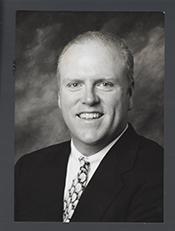
Sponsored by John LewisRep. John Lewis (D-GA)
Introduced February 4, 2009

Legislative Activity

Stay on top of the latest movement without scrolling through every action

9 earlier actions
HouseFloor Latest Action

Motion to reconsider laid on the table Agreed to without objection.

February 10, 2009 • 7:54 PM

View full timeline
HouseIntro Referral

Introduced in House

February 4, 2009

HouseIntro Referral

Referred to the House Committee on the Judiciary.

February 4, 2009

HouseFloor

Mr. Johnson (GA) moved to suspend the rules and agree to the resolution.

February 10, 2009 • 5:07 PM

HouseFloor

Considered under suspension of the rules. (consideration: CR H1107-1111)

February 10, 2009 • 5:07 PM

HouseFloor

DEBATE - The House proceeded with forty minutes of debate on H. Res. 134.

February 10, 2009 • 5:08 PM

HouseFloor

At the conclusion of debate, the Yeas and Nays were demanded and ordered. Pursuant to the provisions of clause 8, rule XX, the Chair announced that further proceedings on the motion would be postponed.

February 10, 2009 • 5:32 PM

HouseFloor

Considered as unfinished business. (consideration: CR H1130)

February 10, 2009 • 7:48 PM

HouseFloor

Passed/agreed to in House: On motion to suspend the rules and agree to the resolution Agreed to by the Yeas and Nays: (2/3 required): 406 - 0 (Roll no. 59).(text: CR H1107-1108)

February 10, 2009 • 7:54 PM

HouseFloor

On motion to suspend the rules and agree to the resolution Agreed to by the Yeas and Nays: (2/3 required): 406 - 0 (Roll no. 59). (text: CR H1107-1108)

February 10, 2009 • 7:54 PM

HouseFloor

Motion to reconsider laid on the table Agreed to without objection.

February 10, 2009 • 7:54 PM

Floor Debate

12 members

What members said about H.Res. 134 on the floor

6 Republicans6 Democrats
Sheila Jackson Lee
Rep. Sheila Jackson LeeD-TX-18 · Feb 10, 2009

It is a privilege, Mr. Speaker, to have the opportunity to come to the floor today for such an important recognition of two iconic movers of change, individuals who laid the underpinnings of the…

John Campbell
Rep. John CampbellR-CA-48 · Mar 5, 2009

Madam Speaker, from February 3, 2009, to March 4, 2009, I missed Roll Call votes 47-96. Unfortunately, I underwent a surgical procedure and was in California recuperating. Had I been here, I would…

Trent Franks
Rep. Trent FranksR-AZ-2 · Feb 10, 2009

I certainly thank the gentleman from Texas. Mr. Speaker, today's resolution marks the 50th anniversary of the Reverend Dr. Martin Luther King's visit to India and the positive influence that the…

Henry C. "Hank" Johnson, Jr.
Rep. Henry C. "Hank" Johnson, Jr.D-GA-4 · Feb 10, 2009

Mr. Speaker, I move to suspend the rules and agree to the resolution (H. Res. 134) recognizing the 50th Anniversary of Dr. Martin Luther King, Jr.'s visit to India, and the positive influence that…

Spencer Bachus
Rep. Spencer BachusR-AL-6 · Feb 10, 2009

Mr. Speaker, I rise in support of House Resolution 134, which recognizes the 50th Anniversary of Dr. Martin Luther King, Jr.'s visit to India. It will be my honor to co-chair a delegation led by…

Show 8 more
Sanford D. Bishop, Jr.
Rep. Sanford D. Bishop, Jr.D-GA-2 · Feb 10, 2009

Mr. Speaker, it is my distinct honor to join my friend and colleague Representative John Lewis in support of H. Res. 134. This resolution commemorates the fiftieth anniversary of the Reverend Dr.…

Sanford D. Bishop, Jr.
Rep. Sanford D. Bishop, Jr.D-GA-2 · Feb 11, 2009

Mr. Speaker, it is my distinct honor to join my friend and colleague Representative John Lewis in support of H. Res. 134. This resolution commemorates the fiftieth anniversary of the Reverend Dr.…

Lamar Smith
Rep. Lamar SmithR-TX-21 · Feb 10, 2009

Mr. Speaker, I yield myself such time as I may consume. Mr. Speaker, I support House Resolution 134, which commemorates the 50th anniversary of Dr. Martin Luther King's trip to India, in which he…

Timothy V. Johnson
Rep. Timothy V. JohnsonR-IL-15 · Feb 11, 2009

Madam Speaker, unfortunately last night, February 10, 2009, I was unable to cast my votes on the Motion to Instruct Conferees on H.R. 1, H. Res. 114, H. Res. 60, H. Res. 143, H. Res. 128, and H. Res.…

John Lewis
Rep. John LewisD-GA-5 · Feb 10, 2009

Mr. Speaker, I want to thank the gentleman from Georgia for yielding. Mr. Speaker, 50 years ago today, Dr. Martin Luther King, Jr. and his wife, Coretta Scott King, took a historic trip to India to…

Jim McDermott
Rep. Jim McDermottD-WA-7 · Feb 10, 2009

Mr. Speaker, I'm honored to join my friend and colleague, Representative John Lewis, himself a legendary civil rights leader, in strongly supporting H. Res. 134 and in carrying a message of hope to…

John R. Carter
Rep. John R. CarterR-TX-31 · Feb 10, 2009

Mr. Speaker, I rise to a question of the privileges of the House and offer the resolution as noticed. Mr. Speaker, on that I demand the yeas and nays.

Joseph Crowley
Rep. Joseph CrowleyD-NY-7 · Feb 10, 2009

Mr. Speaker, I move to lay the resolution on the table.

Bill Text

2 versions available

Reading Mode
Latest
Engrossed in HouseIssued February 10, 2009

H. RES. 134

In the House of Representatives, U. S.,

February 10, 2009

RESOLUTION

Whereas Dr. Martin Luther King, Jr. changed America forever in a few short years through his teaching of nonviolence and passive resistance to combat segregation, discrimination, and racial injustice;

Whereas, in 1950, during the pursuit of a Bachelor of Divinity degree at Crozer Theological Seminary in Upland, Pennsylvania, Dr. King first became aware of the success of nonviolent political action employed by India’s Mahatma Gandhi in political campaigns against racial inequality in South Africa, and later against British colonial rule in India;

Whereas Dr. King began an extensive study of Gandhi’s life and ideas, and became inspired to use Gandhi’s theory of nonviolent civil disobedience to achieve social change in America;

Whereas, in 1955 and 1956, Dr. King led the Montgomery Bus Boycott to protest the arrest of Rosa Parks and the segregation of the bus system of Montgomery, Alabama, during which time Dr. King was arrested and his home bombed;

Whereas the Montgomery Bus Boycott was the first large-scale, nonviolent civil rights demonstration of contemporary times in the United States;

Whereas, following the success of nonviolent protest in the Montgomery Bus Boycott, Dr. King desired to travel to India to deepen his knowledge of Gandhi’s teachings on nonviolent principles;

Whereas Dr. King, his wife Coretta Scott King, and Lawrence Reddick, then chairman of the history department at Alabama State College, arrived in Bombay, India, on February 10, 1959 and stayed until March 10, 1959;

Whereas Dr. King was warmly welcomed by members of Indian society throughout his visit, and met with Prime Minister Pandit Jawaharlal Nehru, land reform leader Vinoba Bhave, and other influential Indian leaders to discuss issues of poverty, economic policy, and race relations;

Whereas, while in India, Dr. King spoke about race and equality at crowded universities and at public meetings;

Whereas followers of Ghandi’s philosophy, known as satyagrahis, welcomed Dr. King and praised him for his nonviolent efforts during the Montgomery Bus Boycott, which they saw as a landmark success of principles of nonviolence outside of India;

Whereas the satyagrahis and Dr. King discussed Ghandi’s philosophy, known as Satyagraha, which promotes nonviolence and civil disobedience as the most useful methods for obtaining political and social goals;

Whereas the satyagrahis reaffirmed and deepened Dr. King’s commitment to nonviolence, and revealed to him the power that nonviolent resistance holds in political and social battles;

Whereas the trip to India impacted Dr. King in a profound way, and inspired him to use nonviolence as an instrument of social change to end segregation and racial discrimination in America throughout the rest of his work during the Civil Rights Movement;

Whereas Dr. King rose to be the preeminent civil rights advocate of his time, leading the Civil Rights Movement in the United States during the 1950s and 1960s and earning world-wide recognition as an eloquent and articulate spokesperson for equality;

Whereas Dr. King became a champion of nonviolence, and in 1964, at the age of 35, he became the youngest man to be awarded the Nobel Peace Prize in recognition of his efforts;

Whereas through his leadership in nonviolent protest, Dr. King was instrumental in the passage of the Civil Rights Act of 1964 and the Voting Rights Act of 1965;

Whereas, between 1957 and 1968, Dr. King traveled more than 6,000,000 miles, spoke more than 2,500 times, and wrote five books and numerous articles supporting efforts around the country to end injustice and bring about social change and desegregation through civil disobedience; and

Whereas the work of Dr. King created a basis of understanding and respect, and helped communities and the United States as a whole to act peacefully, cooperatively, and courageously to restore tolerance, justice, and equality between people: Now, therefore, be it

That the House of Representatives encourages all Americans to—

(1)

pause and remember the 50th Anniversary of Dr. Martin Luther King, Jr.’s visit to India;

(2)

commemorate Dr. King's legacy of nonviolence, a principle that—

(A)

Dr. King encountered during his study of India’s Mahatma Gandhi;

(B)

further inspired him during his first trip to India; and

(C)

he successfully used in the struggle for civil rights and voting rights;

(3)

commemorate the impact that Dr. King’s trip to India and his study of the philosophy of Mahatma Gandhi had in shaping the Civil Rights Movement and creating the political climate necessary to pass legislation to expand civil rights and voting rights for all Americans; and

(4)

rededicate themselves to Dr. King’s belief that “nonviolence is the answer to the crucial political and moral question of our time” and to his goal of a free and just United States.

Clerk.