Mr. Speaker, I yield myself such time as I may consume. Let's be clear about what we are doing here today, and, that is, absolutely nothing. This bill is going nowhere. It will not be signed into…
Mr. Speaker, I yield myself such time as I may consume.
Let's be clear about what we are doing here today, and, that is, absolutely nothing. This bill is going nowhere. It will not be signed into law, and it will be totally rewritten in the Senate. Majority Leader Reid made that perfectly clear on the floor of the Senate last night. So if you want to walk a $54.2 billion deficit-increasing, tax- hiking, job-killing plank, vote ``yes.'' If not, vote ``no.''
Let's also be clear that this bill has nothing to do with jobs. In fact, virtually every business group is opposed to this package: the Chamber of Commerce, Home Builders, Associated General Contractors, the National Federation of Independent Businesses, the National Association of Manufacturers, and the list goes on and on. Employers across the country say this bill will hurt our economic recovery. With employment stuck at nearly 10 percent, this is the last bill this House should be passing.
And here we are addressing yet another fundamental flaw in the Democrats' health care overhaul. Had the Democrats not hidden the true cost of that law, we would not be here today voting on another so- called ``doc fix,'' a fix that expands the deficit by $22.9 billion, kicks the can 19 months down the road, has doctors facing a 33 percent cut in 2012, and will force us to spend billions more. We could have paid for a much better package--like the ones the Republicans offered on the House floor last fall--by simply standing up to the trial lawyers and passing commonsense lawsuit reform.
Let's also be honest about the real deficit impact because it is much, much more than the $54.2 billion we have before us. Every Member of this House knows we will be back voting again to increase the deficit in order to again extend these programs and to extend COBRA and FMAP subsidies, both of which were deleted from the bill early this morning. Now, whether you eat the cookie in one bite or several little bites, it has the same number of calories. We owe it to ourselves and to the American people to be honest about just how much deficit spending we're being asked to swallow.
Given that this bill adds $54.2 billion to the deficit but is somehow PAYGO compliant, I think we can officially declare dead the myth that PAYGO will instill fiscal discipline.
So just what are we getting for this deficit spending? Not jobs and not tax cuts. There is no net tax relief before us today. In fact, the Democrats are imposing permanent tax increases at the worst possible time to pay for temporary extensions of current law.
There is a $17.7 billion tax on carried interest, including real estate partnerships and venture capital firms, that would discourage the entrepreneurial risk-taking that is crucial to economic growth and job creation.
The proposed tax on small business income is perhaps even more troubling. President Obama himself claims that 70 percent of new jobs come from small businesses, yet the bill would increase taxes on certain small businesses by subjecting to employment taxes the business profits as opposed to wages.
The bill also includes more than a half dozen complex changes to our international tax rules. These new changes collectively raise close to $15 billion but have not been reviewed by the Ways and Means Committee. Given the desperate shape of our economy and the need to remain competitive with other countries, we should not be rushing forward with massive tax increases without knowing their exact impact.
I urge my colleagues to vote ``no'' on increasing the deficit by over $50 billion and to vote ``no'' on raising taxes permanently when unemployment is stuck at nearly 10 percent.
Mr. Speaker, I reserve the balance of my time.
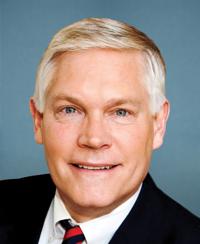
Mr. Speaker, I yield 3 minutes to the gentleman from Indiana (Mr. Pence).
(Mr. PENCE asked and was given permission to revise and extend his remarks.)
Mr. Speaker, I yield 2 minutes to a distinguished member of the Ways and Means Committee, the gentleman from Texas (Mr. Brady).
Mr. Speaker, I submit for the Record a list of all of the American businesses that oppose this bill because it will cost us American jobs.
Job Creators Oppose Democrats' Deficit Extender Bill
Cite Concerns that Provisions Will Hinder Job Creation, Decrease
Competitiveness of American Businesses
Since Democrats introduced their latest version of H.R.
4213, ``The American Jobs and Closing Tax Loopholes Act,''
business leaders and organizations that represent millions of
American businesses and their employees have voiced their
opposition to the job-killing, deficit extending bill. These
employers say that the legislation is anti-job growth, will
place American businesses at a worldwide competitive
disadvantage, subject them to higher taxes and will harm the
nation's path to economic recovery.
Given the disconnect between House Democrats' rhetoric on
jobs and their votes for tax increases, it is no wonder
employers are confused, new investments aren't being made and
unemployment continues to hover at close to 10 percent. Below
are just some of the concerns expressed by employers.
U.S. Chamber of Commerce: ``However, Congress' decision
with this legislation, to saddle small business, American
worldwide companies, and investment partnerships with
draconian tax increases that will hinder job creation,
decrease the competitiveness of American businesses, and
deter economic
growth, leaves the Chamber no choice but to oppose this
legislation as currently drafted.''
Business Roundtable: ``These tax increases would take us
two steps backwards in terms of the job-creating legislation;
we strongly need to move our economy forward, not backwards,
to stay competitive with the rest of the world.''
National Association of Home Builders: ``NAHB estimates
that the economic impact of taxing carried interest as 100
percent ordinary income would be a loss of 33,000 jobs due to
reduced multifamily rental housing construction and $1.2
billion in reduced annual property tax revenues to state and
local governments.''
National Association of Manufacturers: ``Unfortunately, the
onerous tax increases...could outweigh the benefits of the
pro-growth changes by imposing significant new costs on
American businesses and threatening job creation, U.S.
competitiveness and overall economic growth.''
Associated General Contractors: ``Unfortunately, the bill
reduces the effectiveness of these provisions by reducing
capital available for private construction and limiting
private job creation by increasing taxes on many small
businesses in the construction industry.''
National Foreign Trade Council: ``These new revenue
proposals will make American businesses less able to compete
in foreign markets, will subject them to double taxation, and
as a result may have significant negative consequences on
worldwide American businesses and their U.S. employees.''
Promote America's Competitive Edge: ``The proposed changes
in the international tax rules will make a bad situation
worse, making it even more difficult for American worldwide
companies to compete.''
Technology CEO Council: ``At a time when innovative
companies are looking for more certainty and stability, the
extenders bill as currently drafted fails to provide either .
. . last-minute proposals to raise revenue could outweigh the
bill's positive aspects, possibly costing--not creating--
jobs.''
IBM: ``The pending legislation would impose significant new
tax increases that will completely overwhelm any positive
economic effect of the R&D tax credit, harming the U.S.
economy just as recovery has begun.''
Black Entertainment Television Founder Robert Johnson: ``In
my opinion, this legislation would cause a rapid decline in
minority private equity firms and possibly eliminate minority
participation in this important financial sector of the
American economy . . . If minority funds are reduced or
eliminated it will also impact investments in urban cities
and job creation and economic development in markets where it
is most needed.''
Finance Executives International: ``With more Americans out
of work than any other time in the last 50 years, businesses
in the U.S. have an obligation to get our citizens back to
work. Other countries seem to understand this call to action,
and are working tirelessly to lower tax rates and bring in
businesses from around the globe. By passing H.R. 4213, the
United States would be harming the competitiveness of
American worldwide companies.''
Emergency Committee for American Trade: ``H.R. 4213 will
undermine U.S. commercial engagement overseas and put U.S.
enterprises and their workers at an even greater competitive
disadvantage . . . H.R. 4213 is a major step in the wrong
direction.''
Silicon Valley Leadership Group: ``We are concerned that
the recent revenue off-sets are being used as `pay-fors' at
the expense of U.S. jobs.''
Real Estate Roundtable: ``Capital formation is what leads
to job and tax base creation--this proposal would discourage
it. Now is not the time to raise taxes. The tax hike will
further delay economic recovery and make financing and
refinancing more difficult.''
S Corporation Association of America: ``It represents an
$11 billion tax hike on employers in the middle of a very
difficult economy, and it should be rejected.''
Organization for International Investment: ``[S]everal of
the international proposals in the Amendment may diminish the
ability of foreign multinationals to continue making
significant contributions to the U.S. economy and U.S.
employment.''
Investment Company Institute: ``Congressional action at
this time would be both redundant and counterproductive.''
I yield 3 minutes to a distinguished member of the Ways and Means Committee, the gentleman from Georgia (Mr. Linder).
Mr. Speaker, I yield 2 minutes to a distinguished member of the Ways and Means Committee, the gentleman from Nevada (Mr. Heller).
Mr. Speaker, I yield 2 minutes to a distinguished member of the Ways and Means Committee, the gentleman from Illinois (Mr. Roskam).
Mr. Speaker, I yield myself 15 seconds.
My friends on the other side have essentially claimed Republicans don't care about unemployed Americans. Nothing could be further from the truth. We believe these programs must be extended. But we also believe they must be paid for, as legislation introduced by Mr. Heller of Nevada does, and of which I am a cosponsor.
Mr. Speaker, I yield 2 minutes to the distinguished gentleman from Texas (Mr. Hensarling).
I yield 2 minutes, Mr. Speaker, to the gentleman from Texas, Dr. Burgess.
I yield the gentleman an additional minute.
Mr. Speaker, I will insert into the Record a letter to the Speaker of the House by 12 physicians' organizations representing 155,000 physicians opposing this legislation.
May 26, 2010
Hon. Nancy Pelosi,
Speaker, House of Representatives,
Washington, DC.
Dear Speaker Pelosi, On behalf of the undersigned national
surgical societies, we would like to thank you for your
leadership and ongoing efforts to pass a permanent
replacement for the flawed Medicare physician payment
formula. It is vital that Congress adopt a policy that
provides long-term stability to ensure that our nation's
seniors, disabled and military families enrolled in the
TRICARE program maintain access to high quality surgical
care. Unfortunately, short term approaches--including the
sustainable growth rate (SGR) policy contained in the
proposed House amendment to H.R. 4213, the American Jobs and
Closing Tax Loopholes Act of 2010--fall short of this goal,
so we must oppose such legislative proposals.
With regard to H.R. 4213 (as released on May 20), our
specific concerns include:
Rather than permanently repealing the SGR, the bill only
provides temporary relief from the pending payment cuts for
three and a half years; the formula applied in 2012 and 2013
will likely result in a pay freeze for most surgeons; the
bill reverts back to the SGR in 2014 when physicians will
once again be facing cuts in excess of 35 percent; and with
an estimated price tag of nearly $500 billion in 2014, it
will be virtually impossible to permanently fix the problem
at a later date.
These continued payment cuts, rising practice costs and a
lack of certainty going forward, make it difficult, if not
impossible, for already financially challenged surgical
practices to continue to treat Medicare patients. A February
2010 survey conducted by the Surgical Coalition confirms that
surgeons and anesthesiologists will be forced to make
significant changes in their practices if Medicare payments
continue to decline, jeopardizing timely access to surgical
care. The survey found that 37 percent of respondents will
change their Medicare status to ``nonparticipating'' and an
additional 29 percent will opt out of Medicare altogether. In
addition, those remaining in Medicare will also make
significant changes to their practices, with 69 percent
limiting the number of Medicare patient appointments; 47
percent reducing time spent with Medicare patients; and 45
percent no longer providing certain services. Finally, the
survey demonstrates a direct connection between Medicare
payment cuts, jobs and the economy, as 43 percent of
respondents stated they would reduce staff; 44 percent would
defer the purchase of new medical equipment; and 32 percent
would defer purchases of health information technology.
Surgeons are keenly aware of the fiscal challenges
confronting Congress and our nation. We believe, however,
that the most fiscally responsible approach is to permanently
repeal the SGR today, rather than growing the cost by acting
on it tomorrow. We remain steadfast in our commitment to
ensure and improve all Americans' access to quality surgical
care and we stand ready to work with you to find a solution
that will achieve this goal.
Sincerely,
American Academy of Facial Plastic and Reconstructive
Surgery;
American Academy of Otolaryngology-Head and Neck Surgery;
American Association of Neurological Surgeons;
American Association of Orthopaedic Surgeons;
American College of Osteopathic Surgeons;
American Congress of Obstetricians and Gynecologists;
American Osteopathic Academy of Orthopedics;
American Society of Cataract and Refractive Surgery;
American Society of Plastic Surgeons;
American Urological Association;
Congress of Neurological Surgeons;
Society for Vascular Surgery.
Mr. Speaker, I yield 1 minute to the distinguished gentleman from Nebraska (Mr. Terry).
Mr. Speaker, I continue to reserve the balance of my time.
Mr. Speaker, I yield myself such time as I may consume.
This legislation before us raises the deficit by $54 billion. It is not the fiscally responsible legislation that some claim it to be.
I insert in the Record the analysis by the Congressional Budget Office that shows the deficit increases by $54.2 billion under this legislation.
Estimate of the Statutory Pay-As-You-Go Effects for H.R. 4213, the American Jobs and Closing Tax Loopholes Act of 2010 (As reported by the Committee on Rules on May 26, 2010 with a subsequent
draft amendment transmitted to CBO on May 27, 2010)
[Millions of dollars, by fiscal year] ------------------------------------------------------------------------------------------------------------------------------------------------------------------------------------------------
Mr. Speaker, on that I demand the yeas and nays.