Mr. Speaker, by direction of the Committee on Rules, I call up House Resolution 205 and ask for its immediate consideration. For the purpose of debate only, Mr. Speaker, I yield the customary 30…
Mr. Speaker, by direction of the Committee on Rules, I call up House Resolution 205 and ask for its immediate consideration.
For the purpose of debate only, Mr. Speaker, I yield the customary 30 minutes to the gentlelady, my friend from North Carolina, Dr. Foxx. All time yielded during consideration of the rule is for debate only.
General Leave
I ask unanimous consent that all Members have 5 legislative days within which to revise and extend their remarks and to insert extraneous materials into the Record.
Mr. Speaker, I yield myself such time as I may consume.
Mr. Speaker, H. Res. 205 provides for further consideration of H.R. 1106, the Helping Families Save Their Homes Act of 2009. As I've previously stated, the Helping Families Save Their Homes Act takes a crucial step toward reviving our housing market, stemming the tide of home foreclosures, and putting our Nation's economy back on track.
This bill provides for a safe harbor from liability to mortgage servicers who engage in loan modifications to remove any impediments that may prevent them from partaking in voluntary modifications. It also makes much-needed changes to the HOPE for Homeowners Program in order to encourage more lenders to participate and ensure that the program meets its intended objective.
The bill further makes permanent the temporary increase in deposit insurance coverage for both the FDIC Deposit Insurance Fund and the National Credit Union Administration Share Insurance Fund, in order to both enhance the liquidity and stability of our banking institutions, and help restore confidence in our financial system.
The underlying legislation, Mr. Speaker, also makes several long overdue changes to our bankruptcy code. Now, some have understandably questioned these provisions which would allow bankruptcy judges the ability to modify loans on a homeowner's principal residence if the homeowner meets specified stringent criteria. It has been argued that allowing judicial modifications will lead to a sudden slew of bankruptcy filings, will cause massive losses to financial institutions, and will increase the cost of borrowing for other homeowners. However, this will simply not be the case.
Bankruptcy will remain, as it always has been, a last resort. And modifications will be at the individual discretion of a bankruptcy judge who will determine if a borrower has acted responsibly and if a claim has any merit.
Most importantly, allowing judicial modifications will maximize, not lessen, the value of troubled mortgages for lenders, and will avoid the continuous decline in property values in neighborhoods with foreclosed properties.
Additionally, this rule provides for a revised manager's amendment that will make the bankruptcy provision and this legislation even more effective and efficient. The revised manager's amendment will allow a court to consider lowering the interest rate to reduce a homeowner's mortgage payments in lieu of reducing the mortgage principal.
It also gives mortgage holders a greater proportion of a home's appreciation should the home be sold during the bankruptcy plan, and it makes changes to the good faith requirement, further ensuring that judicial modifications are only used when borrowers have exhausted all other options.
The bankruptcy provisions in this legislation with the changes proposed in the revised manager's amendment will help thousands of American families stay in their homes. We must remember that bankruptcy is no walk in the park. It is a strict, demanding, and intrusive process in which every aspect of one's financial life is scrutinized and controlled, and that says nothing of the negative stigma and of the long-lasting effects of filing for bankruptcy.
In addition, to be eligible for such loan modifications, families must show
that they will be able to repay their debts and that they have tried to obtain a loan modification outside of bankruptcy, but let's not kid ourselves. Under current law, similar loan modifications are available for every other type of secured loan except for loans securing primary residences.
If a millionaire or a billionaire can modify a loan on a private jet and if a housing speculator can modify loans on countless failed investment properties, why can't we allow struggling families to modify their mortgages so that they're not put out on the streets?
It's easy to stand up here and claim that this bill is simply a bailout for reckless homeowners; but as our Nation creeps deeper into this financial crisis, it is painfully clear that our housing market is having a rippling effect on the economy. Families who have acted responsibly and who have paid every single payment on time are finding themselves, in one way or another, swept up by the foreclosure crisis, oftentimes through no fault of their own.
As foreclosures rise, surrounding home prices fall, funding for vital public services goes down, financial institutions are saddled with losses, access to credit shrinks, and our economy grinds to a halt. This legislation will put a stop to this deadly spiral. It will rebuild this economy from the bottom up, for our Nation simply cannot recover if we here in Congress turn our backs on the millions of Americans struggling to care for their families and to stay in their homes.
Mr. Speaker, this bill may not help every family. It will, however, help responsible individuals stay in their homes, and it will mitigate the destructive impact of this housing crisis by clearing legal impediments to loan modifications, by improving the HOPE for Homeowners Program, by ensuring confidence in our banking system, and by finally making commonsense reforms to our bankruptcy laws.
I reserve the balance of my time, Mr. Speaker.
Mr. Speaker, I am very pleased at this time to yield 2 minutes to the gentlewoman from California, a member of the Committee on the Judiciary, Ms. Zoe Lofgren.
I yield the gentlewoman an additional 2 minutes.
Mr. Speaker, I would advise the Chair and the gentlelady from North Carolina that I may have an additional speaker, but he or she has not arrived yet, and toward that end, I would reserve my time.
Mr. Speaker, I am very pleased to yield 2 minutes to Ms. Lofgren.
Mr. Speaker, I yield the gentlelady an additional 1 minute.
Mr. Speaker, I would say to my friend when he asked the question, why would anybody offer money for people if they knew that a bankruptcy judge was going to modify it--but what about those private jets? They tend to loan money for them. And I know a whole lot of rich people that went into bankruptcy for the express purpose of avoiding paying bills. So I don't buy into that argument. We're about trying to help people here.
Mr. Speaker, I yield 2 minutes to the distinguished lady from Texas.
At this time, I will not.
I will yield 2 minutes to the gentlewoman from Texas (Ms. Jackson- Lee).
(Ms. JACKSON-LEE of Texas asked and was given permission to revise and extend her remarks.)
Mr. Speaker, I yield an additional minute to the gentlewoman.
Mr. Speaker, I am very pleased to yield 2 minutes to my good friend from Missouri, a member of the Financial Services Committee, Representative Cleaver.
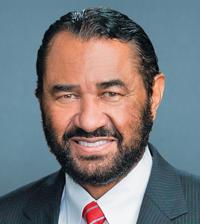
Mr. Speaker, I am very pleased to yield 2 minutes to my good friend, the gentleman from Texas (Mr. Al Green).
Mr. Speaker, I am very pleased to yield 1 minute to the distinguished chairperson of the Committee on the Judiciary, my good friend, Mr. Conyers.
I yield the gentleman an additional 30 seconds.
Mr. Speaker, I would inquire of the gentlelady from North Carolina if she has any remaining speakers?
Then I would reserve the balance of my time.
I continue to reserve.
I continue to reserve, Mr. Speaker.
Mr. Speaker, I yield myself the remainder of our time.
This is a good rule, Mr. Speaker, that not only addresses our current housing crisis but it also more precisely targets relief to those who need it most.
In January of this year alone, in St. Lucie County that I am privileged to serve, there was 1,372 home foreclosures, according to RealtyTrac. This was the second highest foreclosure rate in my State of Florida, up 44 percent from the previous year.
This legislation is not a giveaway, it is not welfare, it is a collective bill that will help those who have played by the rules. We must lay the foundation in this country to help us get out of this crisis, and we must make every effort to rebuild this country. We can't turn a blind eye to the nearly 6 million households in America that are possibly facing foreclosure.
Therefore, I urge my colleagues to support this rule that will put this great Nation back on track and will give millions of Americans the opportunity to continue living in their homes.
I urge a ``yes'' vote on the previous question and on the rule.
Mr. Speaker, I yield back the balance of my time, and I move the previous question on the resolution.
The previous question was ordered.