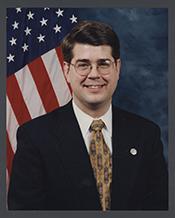
Mr. Speaker, I move to suspend the rules and agree to the resolution (H. Res. 407) expressing support for designation of May as ``National Asthma and Allergy Awareness Month,'' as amended. Mr.…
Mr. Speaker, I move to suspend the rules and agree to the resolution (H. Res. 407) expressing support for designation of May as ``National Asthma and Allergy Awareness Month,'' as amended.
Mr. Speaker, I ask unanimous consent that all Members may have 5 legislative days within which to revise and extend their remarks and include extraneous material in the Record.
Mr. Speaker, I yield myself such time as I may consume.
Mr. Speaker, I rise today in strong support of House Resolution 407. This resolution expresses support for the designation of the month of May as National Asthma and Allergy Awareness Month. I would like to thank my colleague, Congressman Dave Reichert of Washington, who partnered with me on this resolution. Congressman Reichert and I cochair the Congressional Children's Health Care Caucus.
Today's resolution focuses on two conditions that affect millions of Americans, asthma and allergy. Asthma is a respiratory disease that is caused when the lungs become inflamed and constricted. Asthma attacks can be so severe that they can be life-threatening.
An estimated 20 million Americans currently have asthma, and it is the most chronic condition in children. Asthma accounts for nearly 2 million emergency room visits per year, and costs America about $18 billion annually. More than 12.8 million school days are lost each year due to asthma, approximately 8 days for each student with asthma. This makes it very difficult for parents who may miss work because their child is home from school after an asthma flare-up.
There is no cure for asthma. Almost 4,000 people die each year from asthma-related conditions. The best course of action is to manage the disease by preventing symptoms and treating attacks when they occur. Improved care and management has the potential to not only save lives, but also to reduce the number of people suffering asthma attacks so they don't miss work or have to visit the emergency room or the hospital.
Our resolution also underscores the disparities in asthma based on race, ethnicity, and socioeconomic status. It is important to work to improve asthma-related outcomes for all Americans, but particularly for those who are disproportionately affected by the disease.
Mr. Speaker, the resolution before us also focuses on allergy. This refers to reactions by the immune system when a person comes into contact with certain substances that act as triggers. Allergies are most often triggered by pollen. They can also be triggered by exposure to other substances like certain food or pets.
Like asthma, allergy is a common disease among Americans. Approximately 50 million Americans suffer from allergies. Approximately 3 million school-aged children have a food allergy. And the prevalence of allergy has increased across all age, sex, and racial groups in the last decade.
Symptoms of allergy also vary. And we understand this very well this time of year. The symptoms can be rather mild or for some people very severe. Hives and swelling of the throat and allergic reactions can be severe enough to cause death. So it's important to consider the impacts of allergy as an individual condition.
We must also not overlook the connection between allergy and asthma. Over 50 percent of asthma cases are triggered by allergens. Today's resolution gives us an opportunity to learn more about asthma and allergy and the impact of these conditions upon American families. It encourages local communities to raise awareness surrounding these diseases.
The resolution also recognizes and salutes the important work of health professionals who treat asthma-and allergy-related health issues. Finally, the resolution recognizes and affirms the Nation's commitment to education surrounding the care for these two conditions.
I urge my colleagues to support this resolution.
I reserve the balance of my time.
Mr. Speaker, I would like to thank my colleague from the Energy and Commerce Committee, Mr. Terry, for his participation today. We're not going to repeal the health care reform law. It's too important to American families. We're going to make it work. And we're all in this together to make it work.
If you have asthma or if you have an allergy, the new health reform bill is very positive for you and your family because now no longer will health insurance companies be able to deny coverage based upon a preexisting condition. So if your child has a severe case of asthma, that health insurance company can no longer say, No, we're not going to cover that.
The new health reform law is good news for American families, especially those with asthma and allergies, because no longer will health insurance companies be able to cancel your policy just because you get sick. So if you have a health insurance policy and you come down with a severe case of asthma or your child does, under our law health insurance companies will no longer be able to cancel you because you have developed that condition. The same goes for breast cancer, the same goes for any terrible condition. And this is a real world solution for our families all across America.
More good news from the health care plan. There are many students in college these days that before they reached age 26 they were often left in the lurch. Now, under the health reform law we say that health insurance companies have to keep your kids on your policy until they turn age 26. There are plenty of young students today that are having a tough time finding a job, and this is an important lifeline for them.
I think we should also focus on our Medicare patients, because sometimes a condition like asthma gets a whole lot worse as someone ages. The good news under the health reform law is that Medicare patients will get free checkups and preventative care. So hopefully, if a chronic condition is developing, we can prevent it if they go in, and not have to worry about copayments anymore that are very expensive if you're on a fixed income. And you can get coverage that you need, the checkups and preventative care, whether it's asthma or allergies or some other serious condition.
I think it's probably going to help Medicare patients as well because some of them are spending a lot of money on their pharmaceuticals and drugs. So if you need those inhalers now and you're falling into the doughnut hole because you're spending a lot, we're going to be able to help you out for those seniors that are falling into that doughnut hole, meaning they are spending a lot on their drugs, whether it's asthma, allergies, or some other medication that they need.
So I am not sorry that this turned into a debate on health care. We're not going to repeal it. We're going to work together. Those are the values we share in America. We're going to make health reform work for American families, all of us. We're in this together. We don't need to waste time on repeal. We're going to dedicate ourselves, all of us, to making it work for American families.
Mr. Speaker, I would also like to urge my colleagues to support our designation of May as Asthma and Allergy Awareness Month. I urge my colleagues to support the resolution.
Mr. Speaker, I yield back the balance of my time.
Mr. Speaker, I object to the vote on the ground that a quorum is not present and make the point of order that a quorum is not present.