Mr. Speaker, I yield myself such time as I may consume. (Mr. DREIER asked and was given permission to revise and extend his remarks.) Mr. Speaker, I begin by thanking my good friend from Rochester,…
Mr. Speaker, I yield myself such time as I may consume.
(Mr. DREIER asked and was given permission to revise and extend his remarks.)
Mr. Speaker, I begin by thanking my good friend from Rochester, the distinguished Chair of the Committee on Rules, Ms. Slaughter, for yielding me the customary 30 minutes. And I congratulate her and all of our colleagues on their membership in the 111th Congress.
As we have heard from the speeches delivered by the Speaker and the Republican leader, today marks the start of the 111th Congress, a new beginning for the first branch and for the people's House.
As was stated, 2 weeks from today we are going to be making history with the inauguration of Barack Obama. President-elect Obama has already reached out to congressional Republicans, expressing his desire to work with us in this new Congress.
We all know very well what an honorable campaign Mr. Obama ran. While I didn't support his candidacy, I, like many of my colleagues and fellow Americans, was inspired by his message of hope, unity, and change for the future.
He laid out a vision that replaces bitterness with bipartisanship, cynicism with a sincere commitment to a brighter future.
Of course, there is a great divergence of opinion on the details of exactly how we reach that brighter future. Congressional Republicans have our agenda. We feel very strongly about it. We are committed more than ever to the principles for which we stand. But we wholeheartedly agree with Mr. Obama that the way forward is through open, inclusive debate, a strong spirit of bipartisanship and the sincere pursuit of common ground.
Unfortunately, the high-minded rhetoric of the Presidential campaign only highlights the pure cynicism of this rules package that we are considering today. The Democratic leadership of this House is poised to consider, as its very first legislative act of this Congress, a rules package that literally shreds the Obama vision.
I am going to repeat that, Mr. Speaker. The package that we are going to be voting on today literally shreds the Obama vision. Fourteen days before he is even inaugurated into office, the President-elect's plan for unity and bipartisanship is being obstructed by his own party.
This rules package takes the abysmal record of the last Congress and actually makes it more restrictive. You will hear a lot today about arcane procedural tactics and wonder how it has any relevance to the problems that we face as a nation. But these changes, Mr. Speaker, have enormous consequences for the conduct and outcome of our policy debates.
Mr. Speaker, process is substance. As we tackle enormously important issues like, as everyone has said, getting our economy back on track, we cannot achieve a good outcome without a good process. We are very attuned to the concept of history being made right now and 2 weeks from today, so perhaps we should look at history.
The motion to recommit, as we know it today, was granted to the minority 100 years ago following a rebellion against the most dictatorial Speaker of the last century, Joseph Gurney ``Uncle Joe'' Cannon. This motion ensures that the minority gets at least one opportunity, one opportunity to offer an amendment or an alternative. During the Democrats' 40-year reign, they routinely denied Republicans, often dozens of times in a Congress, the single bite at the apple, one opportunity to offer an alternative. Mr. Speaker, when we took the majority in 1995, we guaranteed the right of the motion to recommit, and we never, we never denied it.
This body has always been governed by majority rule. The majority has a number of tools at its disposal, not least of which is the Rules Committee itself, on which I am privileged to serve. That's how they advance their agenda. An effective majority can abide by the rules and traditions of the House and still succeed legislatively.
By contrast, in the 110th Congress, the Democratic leadership chose, instead, to resort to procedural gimmickry to advance their agenda. They had every legislative advantage as the majority party, and yet they felt compelled to trample the traditions of the House, rather than build consensus or engage in actual deliberation. They went so far as to shut down the appropriations process to avoid open debate. Mr. Speaker, as for the motion to recommit, that one single opportunity, that one single opportunity for minority input, the Democratic leadership
frequently resorted to legislative tricks to deny it.
Now, the Democratic leadership is no longer content to shut down debate on an ad hoc basis. They are making it official with this rules package. The underlying resolution contains a host of new procedural gimmicks to stifle debate and to perpetuate partisanship. This resolution changes the rules of the House to formally limit, to formally limit, the motion to recommit. This limitation prevents any bill from being returned to committee for further deliberation. It restricts Members' ability to strip out tax increases. Apparently, the Democratic majority believes tax increases are sacred, but open debate is not sacred.
This rules package also manipulates our budget rules, once again, to protect tax increases, as well as to protect spending increases. You see, Mr. Speaker, the Democratic leadership not only spent the last Congress shutting out Republicans, they also had to find clever ways to shut out fiscally conservative Democrats. Trying to build consensus within their own party was very time consuming. They learned their lesson, though. This rules package guts the budget rules that many Democrats hold so dear.
The laundry list of rules changes goes on. They cut term limits for committee chairmen, they scrap Medicare cost-containment measures. And if all this weren't enough, they include completely closed rules, completely closed rules for the two bills that will be considered later this week without ever having the Rules Committee meet. Apparently, the Democratic leadership scoured the House rules for accountability and transparency measures and systematically dismantled what they found.
So much, Mr. Speaker, for the Obama vision. While he is calling for the most transparent administration in our Nation's history, his congressional Democrats are launching the most closed Congress in history.
But I believe that President-elect Obama is sincere. Since the day he was elected, he has been reaching out to Republicans. He has called many of us individually to express a sincere desire to move beyond the divisiveness of politics and to work together. I can only imagine the chagrin at his own party, their attempt to undermine his best efforts. Today's rules package is a huge step backward. It sets the stage for even more closed, bitter, rancorous debate.
The next major item on the agenda is more than a $1 trillion stimulus package. Republican Leader John Boehner has laid out several modest, but critically important, requests for an open process. There should be public hearings. The text should be available online for a full week prior to a vote. There should be no special-interest earmarks.
These are commonsense guidelines that are widely supported by the American people. They understand that our response to the economic crisis is too important to allow it to be slapped together in secret behind closed doors and rammed through the House. Both Democrats and Republicans have a number of good ideas that should be considered and debated.
Today I will be pursuing an economic recovery package that focuses on pro-growth policies. I am introducing a trio of bills aimed at growing our economy by simplifying and reducing the tax burden on individuals and job creators, jump-starting our housing market and reviving the auto industry.
I hope we can move forward on these kinds of policies, but neither I nor my colleagues ask to prejudge the outcome of those debates. We simply ask that that debate take place.
Majority Leader Hoyer agrees, and said so on an interview that he had this past Sunday. We can only hope he is able to convince the Speaker to keep the process open and transparent. If her leadership's first legislative act of this Congress is any indication, it won't be a fruitful endeavor.
Mr. Speaker, today's new beginning is nothing more than a new low for the Democratic majority. Their cynicism and manipulation is all the more dismal against the backdrop of President-elect Obama's vision for hope, unity and change for the better. The Democratic majority's actions today do not represent change that fulfills hope. This is change that denies hope.
Mr. Speaker, I urge my colleagues to oppose this rules package.
I reserve the balance of my time.
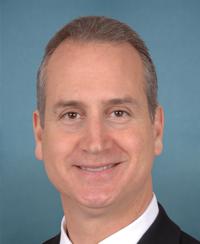
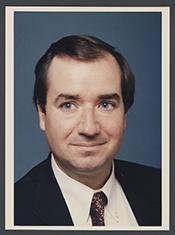
Mr. Speaker, I would like to yield 2 minutes to my good friend from Miami, the hardworking member of the Committee on Rules, Mr. Diaz-Balart.
I will say as I do that, Mr. Speaker, that we would never have contemplated denying the then-minority what is being denied us under this measure.
Will the gentlewoman yield?
Mr. Speaker, let me just say that the spirit of the debate here, refusal to yield, is indicative of exactly what this rules package consists of.
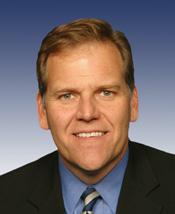
With that, Mr. Speaker, I would like to yield 2 minutes to our very good friend from Springfield, Missouri (Mr. Blunt).
Mr. Speaker, at this time I am happy to yield 2 minutes to my good friend from Richmond, Virginia (Mr. Cantor), the distinguished Republican whip.
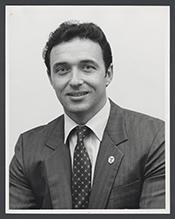
Mr. Speaker, at this time I am happy to yield 2 minutes to our very good friend from Menomonee Falls, Wisconsin (Mr. Sensenbrenner).
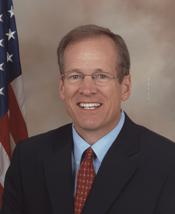
Mr. Speaker, at this time I am happy to yield 2 minutes to the gentleman from Columbus, Indiana (Mr. Pence), the Chair of the Republican Conference.
(Mr. PENCE asked and was given permission to revise and extend his remarks.)
Mr. Speaker, may I inquire of the gentlewoman how many speakers she has remaining on her side, and how much time is remaining on both sides for this debate?
At this time, I am happy to yield 2 minutes to my friend from San Antonio, Mr. Smith.
Mr. Speaker, at this time I am happy to yield 2 minutes to the gentleman from Chester Springs, Pennsylvania (Mr. Gerlach).
Mr. Speaker, at this time, I'd like to yield 1 minute to the gentleman from Roanoke, Virginia (Mr. Goodlatte).
(Mr. GOODLATTE asked and was given permission to revise and extend his remarks.)
Mr. Speaker, at this time, let me just inquire of the Chair how much time is remaining.
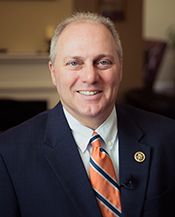
At this time I am happy to yield 1 minute to our great, relatively new Member from New Orleans (Mr. Scalise).
Mr. Speaker, I would just like to say that it doesn't appear that we have any other speakers on our side.
Is the gentlewoman prepared to close debate on hers?
I yield myself the balance of the time.
Mr. Speaker, we've had a fascinating debate here. I've repeatedly asked my colleagues on the other side of the aisle to yield to me so that we could engage in an exchange on this, and no one chose to yield to me at all, indicating exactly what this rules package is all about. We've repeatedly had academics quoted here over the past hour about the use of ``promptly'' and the fact that it kills legislation. Time and time again from the Chair, the Speaker of the House has ruled that a measure that is recommitted to a committee promptly is not killing the bill. Until the Chair says that, it is not killing the bill.
We know that the last Congress was the single-most restrictive, closed Congress in the history of the Republic, and it is very, very sad to have this sacrosanct right being obliterated that is granted to the minority, as Thomas Jefferson outlined in his manual, talking about the procedures and the rights that the minority should have. It is outrageous in the wake of Barack Obama's pledge to the American people that he wanted to have greater transparency and accountability.
Now, Mr. Speaker, at the conclusion of this debate on the package, I'll be offering a motion to commit, which could be the majority's last opportunity to freely decide the form of the motion to recommit. Included in the motion will be an amendment. This amendment is the minority's attempt to restore some of the Obama vision of openness, inclusiveness and transparency to the underlying rules package.
First, it would restore the motion to recommit, which I've discussed. It is an important tool that ensures that the minority gets at least one chance, one bite at the apple, so that 100 million Americans represented by Members of the minority here can be heard.
Second, it would restore term limits for committee chairmanships.
Third, it would change committee membership ratios so that all committees, except the Rules and Ethics Committees, reflect the ratio of Democrats and Republicans in the House. This would help to ensure that the 100 million Americans, as I said, who are represented by Republicans would have some kind of say in this process.
Fourth and finally, it would require that all committee votes be available online within 48 hours, a proposal from the Republican Study Committee.
At the end of the last Congress, the Appropriations Committee filed reports on bills that had been ordered reported months before. The public should not have to wait to know how their Member voted in committee while committee chairmen dragged their feet. These four improvements are about nothing more than exactly what Barack Obama talked about--transparency, accountability and fairness.
Today's historic rules package rolls back reforms made a century ago this month by a bipartisan working group of Members rising against the repressive rule of Speaker Joe Cannon. Two of the reforms that were codified during that historic revolt on opening day in 1909 were a motion of recommittal for the minority party and an increased threshold to set aside Calendar Wednesday. Ironically, we find ourselves here in the same well 100 years
later, fighting to maintain these simple rights and guarantees which have for a century, Mr. Speaker, safeguarded this House from the rise of another tyrannical Speaker.
So it is in that light that I ask Members to join me in supporting the motion to commit. Let us not undo what has been done. Let us learn from our past. Let us move forward with the hope and comity inspired by Barack Obama. Let's show the world that, in this House, the democratic process is alive and well no matter how large the majority. Vote ``yes'' on the motion to commit.
With that, I yield back the balance of my time.
Mr. Speaker, I offer a motion to commit.
Mr. Speaker, on that I demand the yeas and nays.