Mr. Speaker, by direction of the Committee on Rules, I call up House Resolution 799 and ask for its immediate consideration. Mr. Speaker, for the purpose of debate only, I yield the customary 30…
Mr. Speaker, by direction of the Committee on Rules, I call up House Resolution 799 and ask for its immediate consideration.
Mr. Speaker, for the purpose of debate only, I yield the customary 30 minutes to the gentlewoman from North Carolina (Ms. Foxx). All time yielded during consideration of the rule is for debate only.
General Leave
I ask unanimous consent that all Members be given 5 legislative days in which to revise and extend their remarks on H. Res. 799.
Mr. Speaker, I yield myself such time as I may consume.
Mr. Speaker, H. Res. 799 provides for consideration of the conference report to accompany H.R. 2997, Agriculture, Rural Development, Food and Drug Administration, and Related Agencies Appropriations Act of 2010. The rule waives all points of order against the conference report on H.R. 2997 and against its consideration, and the rule provides that the previous question shall be considered as ordered without intervention of any motion except one hour of debate and one motion to recommit, if applicable.
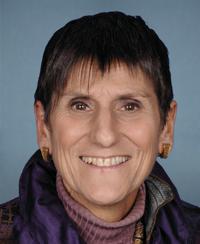
Mr. Speaker, I rise in strong support of the conference report for the fiscal year 2010 Agriculture Appropriations conference report. This is a good bill, one that went through the regular order. It is, in fact, the third appropriations conference report that this body will consider this year. I want to especially commend Subcommittee Chairwoman Rosa DeLauro and Ranking Member Jack Kingston, as well as the other subcommittee members, for their efforts in completing this bill.
Mr. Speaker, this bill is one that normally doesn't get a lot of attention but, in reality, is one of the most important bills that we can pass. I wish the allocation, Mr. Speaker, for this bill, quite frankly, was higher than it is because there is a great need for the programs that make up this bill. This conference report funds the following areas at the Department of Agriculture: public health programs, rural communities, agriculture research, animal health and marketing programs, and conservation. Most importantly, this bill funds domestic and international antihunger and nutrition programs, programs that literally put food in the mouths of hundreds of millions of hungry people here at home and around the world.
Mr. Speaker, this bill is $2.7 billion more than last year and $325 million more than the President's request, a 13 percent increase over last year's bill. Following my opening statement, we will hear from my friends on the other side, and I expect that they will talk about how this bill spends too much money and that this increase is simply unnecessary, especially during these difficult economic times.
Well, Mr. Speaker, this increase is needed now more than ever. Just look at where the increases in this bill are targeted: to the areas of nutrition, international food assistance, and food
and drug safety. Simply, these increases go to protect our food supply and to provide food for those who either cannot afford it or do not have access to it. It is unconscionable to me that anyone can complain about helping people in need during these tough economic times.
Today, there are over 36 million low-income individuals who rely on the SNAP program, formerly known as the Food Stamp Program. The sad fact is that this is a record number of people who are currently relying on this safety net program. This bill provides over $58 billion for the SNAP program, an increase of more than $4 billion from 2009.
WIC is funded at $7.2 billion, an increase of almost $400 million. This increase will provide up to 9.6 million women, infants, and children help with a healthy pregnancy and a healthy start in life.
The Commodity Supplemental Food Program, a program that provides nutritious food to low-income women, infants, children, and elderly citizens who all struggle with rising food costs, is funded at $171 million. That is $11 million more than 2009 and $9 million more than the President's request.
Finally, the Child Nutrition Programs, school meals and snacks, receive almost $17 billion, $1.9 billion above the 2009 levels.
Hunger is a real problem in America, and this bill provides funding that keeps the safety net intact. Look at one of the more affluent areas in this country, Fairfax County in Virginia. According to a recent Washington Post article, Fairfax churches and nonprofit organizations report a 39 percent increase in food assistance in the fourth quarter of 2008 when compared with the fourth quarter of 2007. Let me repeat that, a 39 percent increase. ``Almost half of the respondents reported helping families that had never asked for aid before, many of them former middle class residents now unemployment or facing foreclosure.'' I will insert this article into the Record at the end of my statement.
Mr. Speaker, this is just one example of how hunger is creeping into areas of the country that are not used to seeing hunger. Food banks, WIC clinics, and SNAP processors are the ones providing food for people who simply cannot make ends meet. Yet some of my colleagues on the other side of the aisle say we cannot afford to properly fund these programs, insinuating that we should turn our backs on these people who are in desperate need.
I, for one, make no apologies for these increases in food and nutrition programs. We have a moral obligation to step up to the plate to help the most vulnerable people during these difficult times.
Internationally, the need is just as great. This bill provides critical funding for the Food for Peace program and McGovern-Dole Food for Education program. Overall, there is $1.89 billion provided for international food aid programs. That is an increase of $564 million over 2009.
The P.L. 480 Food for Peace Title II grants program receives $1.69 billion, which is $464 million above 2009. And a program close to my heart, the McGovern-Dole program, is more than doubled from the previous year. In 2010, this important program will receive $209.5 million, $10 million more than President Obama's request and $109.5 million more than 2009 levels.
Mr. Speaker, for too long this country has underfunded international food and nutrition programs. This bill is changing that course. We are putting more money up front for development, providing assistance before it becomes an emergency that we and the rest of the world have to respond to. This is appropriate and necessary, and I applaud Chairwoman DeLauro for working to right the misguided policies of the previous administration. I would add that investing in food and nutrition programs overseas and investing in smart development is in our national security interests. Taking a global leadership role in combating hunger and fighting global poverty I think is something that wins us the hearts and minds of people all over the world, and I want to again commend Chairwoman DeLauro for her leadership.
I am also pleased that there is more than $33 million for eradication of the Asian longhorn beetle, an increase of more than $13 million over last year. This funding will help USDA in their efforts to help in identifying and eradicating the infestation of this pest. While more funding is needed, and I will be asking the USDA for additional emergency funding for this effort, the funding included in this bill is welcome and I appreciate its inclusion.
Finally, Mr. Speaker, I want to address the tragic bombing of the United Nations World Food Program offices in Islamabad, Pakistan. The World Food Program benefits from the international food aid programs that are funded in this bill. WFP is an excellent partner and is on the front lines of many of the efforts to combat hunger and starvation around the world. Josette Sheeran and everyone at WFP do an excellent job, and I am pleased to be able to work with them as they work to end hunger around the world.
I want to convey my deepest condolences and sympathies to the family and friends and colleagues of the WFP staff who were killed in Pakistan. My thoughts and prayers are also with those who were wounded and injured in the bombing attack, and we hope for their full recovery. The bombing underscores the often dangerous situations in which the World Food Program and so many other humanitarian relief workers find themselves. And I, for one, can only thank them for their important and too often unrecognized service to humanity.
[From the Washington Post, Sept. 29, 2009]
Whole Foods to Food Banks
(By Annie Gowen)
The Germantown woman was loading boxes of food from the
Manna food bank into a shiny sport-utility vehicle one recent
afternoon when she was approached by a donor dropping off
food.
``What group are you with?'' the donor asked the woman, who
promptly burst into tears. With her Toyota Sequoia and
quilted Vera Bradley bag, she had been mistaken for a
volunteer--rather than a client waiting to take home a bag of
potatoes.
``I'm a mother of four just trying to feed my kids,'' the
woman sobbed to the donor, who was taken aback, then
sympathetic.
Such awkward scenes are playing out frequently at food
pantries and other charities across the region as they
struggle to help the still upward-spiraling number of
formerly middle-class people knocking on their doors.
For the charities, the surge in demand has tested their
resourcefulness--and sometimes their patience. Not only must
they stock millions of pounds of additional food in bigger
warehouses, but they also must adopt fresh tactics to help
the newly needy, who can be more bewildered, more emotional
and more selective than their traditional clients.
One intake volunteer at Food for Others in Fairfax County,
for example, has learned that the formerly affluent won't
wait outside in line for food at evening neighborhood
giveaways, lest they be spotted.
``We have more people than ever coming here thinking they'd
never ever be here,'' said Amy Ginsburg, executive director
of Manna Food Center in Montgomery County. Manna, along with
most food area pantries, requires people to prove by income
that they need assistance.
The group is moving into a 12,000-square-foot warehouse in
Gaithersburg on Oct. 5 to meet the growing need. Manna gave
away 3.1 million pounds of food to 102,519 Montgomery County
residents last fiscal year, up from 2.1 million pounds the
year before. They've increased food drives, and cash
donations have kept pace.
Manna's workers and volunteers try to make the experience
as dignified as possible for everyone, helping clients load
their cars and handing out juice boxes and pretzels to
families waiting in increasingly longer lines. On a recent
morning, residents dressed in pressed khakis waited for boxes
of fresh produce, meat and canned goods alongside those in
dirty T-shirts.
``Not having enough money for food is a bizarre, foreign
experience'' for the new needy, Ginsburg explained. ``They're
still getting over the shock.''
Ginsburg and others running local charities expect the
number of residents seeking help to continue to rise even as
the economy improves. Jobless numbers are increasing, they
point out, while severance checks and unemployment benefits
are running out.
Fairfax found in a recent survey of 89 churches and
nonprofit organizations that 32,044 households received food
assistance in the last quarter of 2008, a 39 percent increase
from the previous year's fourth quarter. Almost half of the
respondents reported helping families that had never asked
for aid before--many of them former middle-class residents
now unemployed or facing foreclosure.
Wanda Moloney, client relations manager at Loudoun
Interfaith Relief, which served 56,000 residents last year,
said her group gives food to 100 new families a week.
Increasingly, Interfaith volunteers from some of Loudoun's
most affluent neighborhoods find themselves packing boxes for
their friends and neighbors.
Nobody knows what to say.
``You can see it in the eye contact,'' Moloney said. ``The
tears say it all.''
Barbara Curtis, 61, said that the experience of getting
groceries from the food pantry was ``startling at first.''
She and her husband, Tripp, lost their sprawling Loudoun home
this year after he became ill and was unable to work. With
five children at home, their descent from a comfortable
middle-class life seemed to happen overnight. ``It really let
me see how vulnerable we all are,'' Curtis said.
Terry Wilson, 43, a floral designer, also sought help in
Loudoun after he was bumped from full time to part time at
work and lost his benefits. But it wasn't easy. The first
time he pulled open the door and took in the crowd in the
waiting room, he turned around and walked out.
``It was like, `Whoa . . . I can't do this,' '' he recalled
Wednesday as he picked up food for the second time. But then
he realized having the groceries could help him shift money
to his utility bill and his car payment. ``Everyone else is
doing it, and times are tough. Let's suck it up and see what
happens.''
Out in the Manna parking lot, the Germantown woman--who was
visiting the food bank for the second time and did not want
her name used to spare her children embarrassment--was
inspecting her food allotment with the zeal of a soccer mom
at Whole Foods. She turned to Manna for help after her
husband refinanced their home into a costly subprime mortgage
and then moved out. She has been able to get the mortgage
modified, but her finances remain precarious.
She checked the expiration date on a carton of soy milk,
unscrewed the lid of a jar of organic peanut butter to make
sure it was sealed and read the label on a tube of ground
turkey. The turkey did not pass muster, and she politely
returned it to a Manna staffer. ``I don't know what's in
it,'' she explained.
``It's a double-edged sword,'' she said. ``You can't go
without food, but certain foods at Manna, no way I'm going to
feed my kids. It's kind of snotty.'' She rejoiced in a big
bag of day-old bagels, sport drinks and doughnuts, treats she
could no longer afford to buy her sons.
At times, this changing face of need has sparked moments of
confusion and discomfort for those who are trying to help.
Christine Lucas, executive director of the Arlington Food
Assistance Center, said she is often asked by volunteers and
donors about the number of clients driving fancy cars. (A
well-dressed couple who declined to be interviewed was there
recently, putting their sacks into a Cadillac.) Lucas
responds that it could be an employer's car or a family
hanging onto its last asset.
Or it could be the formerly middle-class mom with Calvin
Klein sunglasses perched atop her head who said she was going
to have to search Epicurious.com for recipes that use black
beans because the pantry had given her so many cans.
Appearances can be deceiving, as Debbie Lane and her two
children discovered when they drove out to an affluent
neighborhood in Chantilly to deliver $200 worth of school
supplies to a needy family. Lane, of Fairfax, said her kids
had offered to reuse some of their school supplies from last
year so that they could contribute to the back-to-school
drive, organized by the food pantry Our Daily Bread.
``My son, who is 8, said, `Mom, if this is the neighborhood
we're dropping these things off in, I think we should turn
our car around,' '' Lane recalled. ``It was a great segue for
me to talk about what poverty does and does not look like.''
But even she was surprised at the size and scope of ``this
palatial home with two brand-new expensive cars in the
driveway. I was really grappling with this. I was thinking,
`This is crazy.' '' She later learned that what she had tried
to explain to her kids was true: The family that needed the
supplies was renting rooms in the home's basement and had
recently seen its income drop when the mother died of cancer.
The Germantown mother of four said she knew why she'd been
mistaken for a volunteer by the donor dropping off food--it
was her car.
``Because I have the [Sequoia], she thought I was doing the
same thing she was, I guess,'' the woman speculated. She
watched the donor drive away with a mix of envy and sadness,
remembering what it was like ``to be normal.''
``What a glorious feeling . . . to be able to give to other
people,'' she said. ``It is a better feeling to give than to
receive. But sometimes you have to receive.''
I reserve the balance of my time.
I will reserve my time at this point in time, Mr. Speaker.
Mr. Speaker, I yield myself such time as I may consume.
The gentleman from California is correct when he says that his side was guilty of air-dropping provisions into conference reports. I remember one time being up in the Rules Committee when a Department of Defense bill came before the committee. And after the conferees had finished all their work, all of a sudden this kind of mysterious language appeared providing immunity to drug companies that produced drugs that were not safe. And the reality was, Mr. Speaker, that they did that after the conference had finished up.
In this case here it's very, very different. In this case here, the child nutrition reauthorization, a bill we had hoped to have already done by now, is not completed. And if, in fact, this language was not put in here to extend expiring child nutrition authorization programs-- and let me just kind of tell people what that is. It's things like school breakfasts and school lunches and after-school meals for kids who otherwise wouldn't get access to meals or nutrition.
So that language, which was agreed to by the authorizers, was put into this bill. Now, if we want to have an argument about process, fine. But the reality is here: if you did not do this right now, these programs would expire. And I don't know of anybody, maybe on your side they do, but I know for the majority on this side, people do not want those programs to expire because people depend on them.
I yield the gentleman 30 seconds.
I thank the gentleman for his comments. And I do think we have bested you in the area of responding to a need that, quite frankly, when your party was in control here, these areas were underfunded. And the deal, this is about school breakfasts and school lunches and after-school snacks for kids who otherwise wouldn't get it. That's what this is about. That's what we are debating here.
Mr. Speaker, at this time I would like to yield 3 minutes to the gentleman from New York, a member of the Rules Committee, Mr. Arcuri.
Mr. Speaker, let me just clarify for the record, because I think maybe there is a difference here between what some of us are saying on this side of the aisle compared to what some of my friends are saying on the other side of the aisle.
I don't believe a hungry child can wait. I don't believe we can put that problem off till next year or 5 years or 10 years down the road. And in fact, I would argue that investing and making sure that that child gets the proper nutrition and the proper food early on in their lifetime will probably save us a whole bunch of money in terms of health care costs and lost learning opportunities and so many other things that come as a result of people being hungry and not getting enough to eat.
So we don't have time to wait. And one of the reasons we are trying to tackle health care, Mr. Speaker, is to try to get this deficit and this debt under control, something, by the way, that when Bill Clinton left office, he left historic surpluses. After a few years of my friends on the other side of the aisle, we have historic deficits, and now we're trying to dig ourselves out of this ditch.
Mr. Speaker, at this time I would like to yield 4 minutes to the distinguished gentlewoman from Connecticut, the Chair of the Appropriations Subcommittee on Agriculture, Ms. DeLauro.
I yield the gentlelady an additional 2 minutes.
I yield myself 30 seconds. I find it interesting the gentleman's not talking about the bill before us, which, as he failed to mention, was actually filed last Wednesday. It's been over a week that people have had access to this bill.
He's right about one thing: we are changing the way we do business in this House compared to when the Republicans were in charge. We are changing our priorities. When they were in charge, they were talking about immunity for big drug companies, talking about corporate tax breaks. What we're talking about in this bill is making sure that our kids have breakfasts and lunches and good nutritional programs; making sure that our farmers get the food they deserve.
I'd like to yield 5 minutes to the distinguished chairman of the Rules Committee, the gentlewoman from New York (Ms. Slaughter).
I yield the gentlelady 2 additional minutes.
I yield the gentlelady an additional 30 seconds.
Mr. Speaker, I yield 1\3/4\ minutes to the gentleman from California, the Chair of the Education and Labor Committee, Mr. Miller.
Mr. Speaker, I would like to insert into the Record an article from the Star-News entitled, ``Hungry Eyes--More N.C. children go without food.''
[From the Wilmington (NC) Star News, Aug. 15, 2009]
Hungry Eyes--More N.C. Children Go Without Food
(By Amanda Greene)
The three children hadn't eaten a full meal in two days.
In desperation, their grandparents knocked on the door of a
downtown Wilmington church.
The children waited in the car as their grandparents asked
the minister at the door for help.
He gave them a box of pop-top cans of Vienna sausages and
pork and beans.
``They got the food, drove out of the parking lot and
stopped beside the road to feed the kids right away,'' said
Jennifer Caslin, development manager at the Wilmington branch
of the Food Bank of Central and Eastern North Carolina.
Such scenes are increasingly common here and throughout the
state as joblessness and the weak economy put ever greater
strains on an already thin safety net. You don't have to look
hard to see hungry children in North Carolina. Whether it's
families skipping breakfast so the food will stretch through
dinner, or eating packaged foods, because fruits and
vegetables are too expensive, many of the state's children
aren't eating balanced, nutritious meals.
In May, Feeding America, the largest food bank network in
the country, released the results of its first analysis of
food insecurity in early childhood, ``Child Food Insecurity
in the United States: 2005-2007.'' North Carolina ranked
second worst in the nation with 24.1 percent of its children
under 5 judged to be food insecure and lacking regular access
to nutritional food. The state was 10th worst in the same
Feeding America study of food insecurity in children 0-18
years old, using figures from the U.S. Department of
Agriculture. Nationally, the food insecurity average is 17
percent for children under 5.
Demand for food at the nation's food banks has increased 30
percent in the past year, said Ross Fraser, media relations
manager for Feeding America. ``So many people have been
plunged into poverty,'' he said, ``and it's terrible for
children because it stunts their growth in all ways.''
Indicators of food insecurity in North Carolina include
high child poverty rates, the 11 percent unemployment rate,
broken families, the high price of fresh food and a 21
percent increase in households with food stamps since 2007,
said Alexandra Sirota, director of policy and research,
Action for Children North Carolina in Raleigh.
North Carolina ranked 37th in child well-being in the
recently released 2009 Kids Count Data Book from the Annie E.
Casey Foundation using factors such as the percent of low-
birth-weight babies, infant mortality rate, child death rate,
teen death rate, teen birth rate, percent of teenaged high
school dropouts, percent of teens not attending school and
not working, percent of children in families without a parent
with full-time and year-round employment, percent of children
in poverty and percent of children in single-parent families.
The state did improve one level from its 38th ranking in
2008.
Often the youngest children fall through the cracks,
subject to their parents' ability--or inability-- to provide
nutritious foods.
``There are a lot of programs that are available once
(kids) get into the school system, but those aren't always
available for young children until school age,'' Sirota
added. ``The fact that families are both losing their jobs
and earning such low wages that they're living in extreme
poverty is an indicator of that added stress when you're
trying to feed the family.''
bridging the gap
When parents can't feed their children regularly, often the
schools, local social service networks and churches try to
fill the need.
And in the summers, when school's out, the need for meals
for children increases. The New Hanover County school
district hosts a federally-funded Summer Food Service for
Children Program at 15 schools and community centers in the
county for any child, 18 years old or younger, to eat a
lunch-time meal. For six weeks this summer, the program
served about 700 kids each day. That number is slightly lower
than previous years because funding for the program came in
after the end of school this year and didn't get advertised,
said Anne Ohlson, schools child nutrition supervisor.
``We do see a lot of hungry children who are waiting for us
when we show up with the
food,'' said Imer Smith, director of Child Nutrition for New
Hanover County Schools. Historically, most of those children
would show up at inner-city sites, but the number of children
coming to the program's sites outside the city is increasing.
An 8-year-old girl and her 4-year-old brother were among a
crowd of about 10 children who were waiting for the Food
Service lunch to start at the doors of the Jervay Communities
meeting center one day a few weeks ago. The girl and her
brother walked from their Jervay home across the square to
the center each day that week for lunch. Lunch was a turkey
and cheese sandwich, cucumber slices with ranch dressing,
a peach cup and skim chocolate milk.
``I love ranch on my sandwich,'' the little boy said,
smiling and slathering his bun.
During the school year, Caroline Hines is seeing more and
more parents who can't pay their child's food accounts as
food service director at Rachel Freeman Elementary School.
Parents who don't qualify for free or reduced meals have sent
her notes asking her not to allow their children to eat if
they don't bring money with them because the parents can't
afford the charge: $1.25 for breakfast or $2 for lunch.
Defaulted lunch accounts at all New Hanover schools have
risen from $18,223 in 2008 to $29,203 at the end of last
school year. New Hanover County Schools saw an increase in
children in free and reduced lunch programs from 9,792 in
2007-08 to 10,375 in 2008-09.
``I had a child who came in at breakfast and waited until
the end to get the leftover food that no one had opened,''
Hines said, adding that teachers and school social workers
sometimes buy students meals. Some parents won't fill out the
free lunch forms because ``they think people will know their
child needed it.''
Mr. Speaker, let me be clear to my colleagues, the bill before us was filed over a week ago, so this debate we're having is not about process. This really is about substance. And I am sad that my colleagues on the other side of the aisle have a problem with child nutrition programs. They have no problem when it comes to corporate tax breaks. They have no problems when it comes to immunity for big drug companies. But here they are on the floor today, they have a problem with child nutrition programs.
I should say to my colleague from North Carolina, poor kids don't want a handout. They don't want the government to provide them with a free meal. They wish that they weren't in that position. Unfortunately, the tough times that they find themselves in require us to help out. I urge a ``yes'' vote on the previous question and on the rule.
I move the previous question on the resolution.