Instructing the managers on the part of the House of Representatives in the impeachment proceeding now pending against Samuel B. Kent to advise the Senate that the House of Representatives does not desire further to urge the articles of impeachment against Samuel B. Kent.
Legislative Activity
Stay on top of the latest movement without scrolling through every action
Motion to reconsider laid on the table Agreed to without objection.
July 20, 2009 • 4:06 PM
View full timeline
Introduced in House
July 20, 2009
Mr. Johnson (GA) asked unanimous consent to consider as introduced.
July 20, 2009 • 4:06 PM
Considered by unanimous consent. (consideration: CR H8377)
July 20, 2009 • 4:06 PM
Passed/agreed to in House: On agreeing to the resolution Agreed to without objection.(text: CR H8377)
July 20, 2009 • 4:06 PM
On agreeing to the resolution Agreed to without objection. (text: CR H8377)
July 20, 2009 • 4:06 PM
Motion to reconsider laid on the table Agreed to without objection.
July 20, 2009 • 4:06 PM
Floor Debate
11 membersWhat members said about H.Res. 661 on the floor
 DEL
DEL KC
KC SAD
SAD HR
HR RAB+6
RAB+6
Floor Debate
11 membersWhat members said about H.Res. 661 on the floor
Mr. Speaker, I yield myself such time as I may consume. Mr. Speaker, I rise today in support of this resolution, which includes the United States Capitol Police Technical Corrections Act. I am…
Mr. Speaker, I yield myself such time as I may consume.
Mr. Speaker, I rise today in support of this resolution, which includes the United States Capitol Police Technical Corrections Act. I am pleased to rise in support of the bill which will enable the Chief of the Capitol Police to exercise the necessary authority to improve operations of the Capitol Police. The bill is an effort to resolve conflicting provisions in existing law and eliminate unnecessary regulations.
This bill is the result of the cooperative effort between the chairman of the full committee as well as the Subcommittee on Capitol Security to facilitate the most efficient framework in which the Capitol Police may operate. I am confident this collaborative approach will continue, resulting in a safer and more effectively managed Capitol complex, and I urge the support of my colleagues.
As was mentioned, this is combined with a bill on travel. And some might say, What do these two separate bills have to do with one another? Absolutely nothing.
Yet what is allowed on this floor, because we adopted yesterday a rule, is martial law. What's martial law? It means that the majority at any time may bring up any subject whatever, and we suspend all rules. ``Suspending all rules'' means that you can change every word in a bill and can present that on the floor, and we vote on that.
The only reason I bring this to the attention of my colleagues is that some colleagues may not be aware that, sometimes when we bring a bill to the floor which has the same name of a bill they passed in subcommittee and committee, it may be an entirely different bill. We normally have around here a rule of germaneness, but we have a suspension of the rules so we can put completely separate, nongermane bills together, and that's what we have. It's an interesting comment on how we do things here.
With that, I reserve the balance of my time.
Mr. Speaker, I yield 1 minute to the distinguished gentleman from Missouri (Mr. Blunt).
I yield the gentleman 1 additional minute.
I yield myself such time as I may consume.
Mr. Speaker, my friend, the gentleman from Massachusetts, said that this is a propitious time for the Travel Promotion bill to be considered on the floor because of the discouraging news we received today about unemployment--10.2 percent. That is the highest unemployment rate experienced in this country in 26 years--10.2 percent.
In my home State of California, we haven't received the most up-to- date figures, but the figures as of last month were 12.2 percent--over 10 percent for the Nation, over 12 percent for my State. My district is even higher than that, I believe. A propitious time to consider this bill since we have lost, by some estimates, as much as 200,000 jobs in the travel industry.
But is this a propitious time for us to be considering a health care bill which, by objective analysis by a number of different observers, will cause us to lose millions of jobs?
I've been home to my district. I realize that, by the Gregorian calendar, we have 12 months out of the year, but by the Pelosian calendar, we only have 11 months out of the year because we have been told to ignore August--it didn't exist--just as we are to ignore those thousands of everyday Americans who showed up yesterday, just as, presumably, the leaders in the AMA are ignoring their rank-and-file doctors who are today bringing forward a vote of ``no confidence'' against their board of directors for supporting the health care bill that is going to be presented to us sometime this week.
That's the bill that we were going to vote on in June, July, August, September, October, November, yesterday, today, tomorrow, maybe the next day. The President of the United States was going to come up here and, we understand, speak to our colleagues on the majority side yesterday, then today. We understand now it's going to be tomorrow.
The reason I bring this up is that, when I speak to my folks back home--and I was on a tele-town hall meeting last night and spoke with thousands of them--the first thing on their minds are jobs. The first thing on their minds is the economy. The first thing on their minds is whether or not they can take care of their families. At this time, at this propitious time, at this time when we have received with a thud the report that the unemployment rate is 10.2 percent, we have decided that we must consider a bill with very few, if any, amendments allowed, creating a new government takeover of health care that's going to cost trillions of dollars.
Someone on my tele-town hall last night said, Congressman, can you explain to me why in the bill that you're going to vote on this week the so-called benefits in it are not going to take place for several years?
I had to explain it's because you want to bring the costs down when you explain it to the public, so you're going to start the taxes in year one, but you're not going to start the benefits from the program until year four or five, so at the end of 10 years, the net costs will be less than they would be if it were fully implemented.
Now, maybe I take this a little personally because part of what they have in here is a 2.5 percent tax on medical instruments, on medical equipment, including, by the way, new hips. So now, in this country, if you have a new hip, as I did a year ago, you will be taxed for the privilege of having that operation done in the United States, 2.5 percent. I thought we were concerned about bringing costs down. For a wheelchair, you're going to have an extra tax on that. I don't understand why we are doing this. Oh, yes. We're going to have taxes of huge amounts on business. Small businesses and medium-sized businesses are going to have taxes imposed on them in the hundreds of millions of dollars.
So, as the gentleman from Massachusetts said, this is a propitious moment. We are being confronted with the magnitude of the economic downturn that affects each and every one of our constituents. So what are we giving them in return?
We have a bill that is going to create 111 new programs, boards, bureaucracies, and commissions. I have had town hall after town hall, tele-town hall after tele-town hall. Not a single member of my constituency, not a single, average, everyday American has said, Please create 111 new programs. Please create 111 new boards, bureaucracies, and commissions. Please put another $1 trillion or $2 trillion on our backs. Please add new taxes. By the way, that doesn't include the $200 billion doc fix that's going to be put in another bill so that we pretend it is not there.
A 2.5 percent tax on individuals who fail to purchase health insurance. A 2.5 percent excise tax on medical devices. A 5.4 percent surtax on ``high-income'' filers, over 50 percent of which are small businesses and which file as individuals. An 8 percent tax on employers who cannot afford to purchase government-approved health care benefits.
A propitious time, yes.
Now, I happen to represent a district in which we have 42,000 seniors--people over 65--who have made the voluntary decision to sign up for Medicare Advantage. There are 42,000 seniors in my district alone, and there are millions around the country. This bill cuts over $150 billion from that program; $150 billion from that program. When I speak to people in my district, they tell me it will gut that program.
So, as we consider a bill here dealing with travel at the propitious time of confronting the unemployment rate, one has to ask oneself: Why would we be forced to vote on a bill that will have an immediate short- term and long-term impact of killing jobs in this country? It does not make sense.
I also wonder whether any bill has had more uses of the word ``shall'' than the bill we are going to consider this week. By my count, there are 3,425 uses of the word ``shall'' in the bill that we are to be presented. Now, for those who don't fully appreciate statutory construction, the word ``shall'' means ``mandate.'' It means ``you must.'' There is no discretion.
Then 3,425 times, this bill, if it becomes law, will command people, including average everyday American citizens to do something. They will have no discretion about it. They will be required to do that; 3,425 instances of that.
And so, Mr. Speaker, as we all, I hope, support the bill that is before us at this time, providing direction for the Capitol Police in a more efficient operation of their force, and as we have combined it with the travel promotion authority, which many people believe will help us deal with the loss of jobs in the travel industry, I still have to ask, Why would we be running pell-mell towards voting for a bill that will take over one-sixth of the economy of the United States and, by outside objective analysis, will result in the loss of millions of jobs in this country, primarily in the small business community? It defies logic. And while the majority is allowed to bring up anything on the floor under the prevailing rule for these several days called martial law, it doesn't have to be germane with anything else, you would hope that there would at least be the concept of consistency if we are truly concerned about the unemployed in America; if we know that 10.2 percent is much more than a number, that it reflects real live human beings who have lost their jobs. Remember, this doesn't count the hundreds of thousands of discouraged workers, those who are so discouraged by the current economic situation they are no longer looking for jobs and, therefore, they are not counted in this number. We know we have lost hundreds of thousands of those people as well. They are people with children, people with wives, people with husbands, people with grandparents and parents, people who have bills to pay, these are the people who are hurting. And for us to do something in this House which is going to even cause them more difficulty is beyond me.
So I would just ask this: If this is a propitious time for us to consider a travel promotion bill because of the unemployment that's faced by that particular segment of our society, is it not a propitious time for us to acknowledge that maybe we ought to withdraw, go back to the drawing board and come up with a bill that deals with the concerns, the legitimate concerns about the shortcomings of our health care system but that does not at the same time destroy jobs? That may be a rhetorical question, but the answer to that question is very real to the people back home.
Once again, Mr. Speaker, I want to thank my colleagues on the majority side for having worked so closely with us on this bill that's before us now.
I would urge support for this bill.
With that, Mr. Speaker, I yield back the balance of my time.
I thank my good friend, the gentlewoman from California (Mrs. Davis), for yielding me time. I rise in support of the United States Capitol Police Administrative Technical Corrections Act of 2009. As…
I thank my good friend, the gentlewoman from California (Mrs. Davis), for yielding me time.
I rise in support of the United States Capitol Police Administrative Technical Corrections Act of 2009. As part of the act, Mr. Speaker, the House will consider Senate bill 1023, the Travel Promotion Act, which is similar to H.R. 2935 by Representative Delahunt of Massachusetts, a bill of which I am pleased to be a cosponsor. I would like to thank Congressman Delahunt, who is on the floor here this morning, for fighting for jobs for Americans because the Travel Promotion Act is a jobs bill. It's a vital economic development initiative to combat the economic downturn that we've been battling since the spring of 2008.
The Travel Promotion Act establishes a nonprofit corporation for travel promotion to promote tourism in the United States and to provide travel information to people around the world. It is very similar to an initiative in my home State of Florida, and we all know that tourism is especially important to the State of Florida.
Florida is a top travel destination from across the globe. The millions and millions of tourists who travel to warm and sunny Florida support a $57 billion tourism industry and our economy. People come from every nation to visit our beautiful beaches, Bush Gardens, Disney World, Universal Studios, the Everglades, and more. The Florida economy thrives, just like many other States across the Nation, and families have good jobs and a clean industry because of tourism.
Having beaches and attractions often is not enough, however. Florida also communicates to the world about Florida vacations through the Visit Florida tourism advertising campaign. We have a Web site and many outreach efforts, but there is no similar initiative for the United States as a whole internationally. So the intent of the Travel Promotion Act is to create new jobs through growing tourism nationwide.
Unfortunately, there are many misconceptions that the United States is not a friendly place for international tourists. Other nations actively promote international tourism through advertising campaigns and outreach, but some say that we have allowed our image to become an unwelcome one. Nations that project a welcoming image are reaping economic benefits while we run the risk of being left behind.
Overseas travel in the United States has declined by 10 percent in the first quarter of 2009. But we are going to turn that around through this Travel Promotion Act. Our travel bill would let world travelers know that we want them to visit America's great cities and natural wonders. We want the
world to come and share our culture and experience the richness that is the United States of America. Therefore, I urge adoption of the Travel Promotion Act to get our economy moving and create jobs.
Hats off again to Congressman Delahunt and the other sponsors of this legislation in the Energy and Commerce Committee. This is an important bipartisan effort.
I thank my colleague from California for yielding time.
Mr. Speaker, at this time, I would like to reference the Congressional Record of October 7, 2009. On that date, I entered into a colloquy with Congresswoman Loretta Sanchez of the Homeland Security Committee during the House's earlier consideration of S. 1023 as attached to House Resolution 806. That colloquy and its commitments are still valid today as we work again to pass the Tourism Promotion Act.
I would like to enter into the Record the letters that were cross- referenced in that colloquy. I would also like to add for the Record that we intend to work with Congressman Doyle of Pennsylvania regarding nonprofit cultural destinations as part of the bill.
House of Representatives,
Committee on Energy and Commerce,
Washington, DC, October 7, 2009.
Hon. John D. Rockefeller IV,
Chairman, Senate Committee on Commerce, Science, and
Transportation.
Hon. Amy Klobuchar,
Chairman, Subcommittee on Competitiveness, Innovation, and
Export Promotion.
Hon. Byron L. Dorgan,
U.S. Senator.
Dear Senators Rockefeller, Klobuchar, and Dorgan: As the
House may consider S. 1023, the Travel Promotion Act of 2009,
shortly, we write to clarify your intent with regard to
several provisions in the bill.
creation of the corporation
It is our understanding that the intent of the legislation
is for the Department of Commerce to administer grants to the
newly created nonprofit, ``Corporation for Travel
Promotion.'' It will be left to the judgment of the Secretary
of Commerce to transfer sums necessary for the operations of
the nonprofit and the administration of the grants. We
understand further that the Department of Treasury will hold
the separate ``Travel Promotion Fund,'' but will have no
substantive role with regard to the Corporation. By having
the Department of Commerce issue grants to the Corporation,
we can assure the application of Circular A-110, Uniform
Administrative Requirements for Grants and Agreements with
Institutions of Higher Education, Hospitals, and Other Non-
Profit Organizations. A-110 imposes a number of requirements
on non-profit entities spending federal dollars, including
the requirement that contracts target small businesses owned
by women and minorities.
In addition, we appreciate that you share our commitment to
diversity on the Corporation Board of Directors. We want to
stress that the Secretary of Commerce should make every
effort to ensure that the homeland security and small
business communities are adequately represented on the
Corporation's Board, and that the Board has a balance of
gender, ethnicity, and economic status, as well as
representatives from both urban and rural areas.
Also, we understand the importance of a functioning
Corporation and the decision to allow expenditures to be made
when six Board members are present. We would suggest that for
expenditures over $25 million, the Board strive to have more
than four members support approval of such an expenditure.
Moreover, we would expect the Corporation's campaigns to
target travelers from a diverse set of regions of the world
and to advertise a wide range of destinations across the
United States and its territories.
ii. coordination with the federal government
Although the legislation creates a requirement that the
Corporation consult with the Department of Commerce, we
believe that the Corporation should consult regularly with
the Departments of State and Homeland Security which also
have key responsibilities relating to travel and tourism. For
example, it is imperative that the Corporation coordinate on
any information it may disseminate regarding entry
requirements, required documentation, fees, processes, and
information concerning declared public health emergencies and
requirements for entering the United States. This
coordination is necessary in order to avoid the risk that
prospective travelers to the United States could receive
conflicting or confusing information regarding entry
requirements and processes.
iii. travel promotion fund fees
Under the Implementing Recommendations of the 9/11
Commission Act of 2007 (P.L. 100-53), the Secretary of
Homeland Security already has authority to charge a fee to
cover the cost of administering the Electronic System for
Travel Authorization (ESTA), but also has discretion to pay
for ESTA with other funds. Similarly, the legislation before
us should maintain the Secretary's discretion to determine
the most appropriate manner to fund ESTA administration.
The legislation does not specify how funds collected in
excess of $100 million or greater than the needs of the
Corporation for Travel Promotion should be used. We believe
that these funds should be transferred to the Department of
Homeland Security to: 1) reinvest in ESTA to support changes
necessary to collect the new fee, and 2) enhance critical
border security programs such as US-VISIT and Global Entry.
Under the Implementing Recommendations of the 9/11 Commission
Act of 2007, full implementation of the US-VISIT air exit
capability is required for increased flexibility to expand
the Visa Waiver Program, which would help increase tourism to
the United States.
iv. limitations and accountability
Furthermore, we believe it is essential to ensure that the
Corporation's funds are invested only in low risk vehicles
and that none of the funds provided to the Corporation be
used to directly promote or advertise a specific corporation.
Finally, we understand that under this bill, Congress has
full and complete access to the books and records of the
Corporation. We would suggest that the Corporation
proactively send its marketing plan to Congress.
v. summary
While there is strong support in the House for passage of
S. 1023, the Travel Promotion Act of 2009, we remain
concerned about some aspects of the bill. We look forward to
working with you to conduct vigorous oversight of the Travel
Promotion Act once it is law and to make any changes to the
legislation that may become necessary. Thank you in advance
for clarifying your thoughts on the matters discussed in this
letter.
Sincerely,
Henry Waxman,
Chairman.
John D. Dingell,
Chairman Emeritus.
Mr. Speaker, I move to suspend the rules and agree to the resolution (H. Res. 896) providing for the concurrence by the House in the Senate amendment to H.R. 1299, with an amendment. Mr. Speaker, I…
Mr. Speaker, I move to suspend the rules and agree to the resolution (H. Res. 896)
providing for the concurrence by the House in the Senate amendment to H.R. 1299, with an amendment.
Mr. Speaker, I ask unanimous consent that all Members have 5 legislative days in which to revise and extend their remarks and to include extraneous material on the measure now under consideration.
Mr. Speaker, I yield myself such time as I may consume.
Mr. Speaker, on March 31, the House passed H.R. 1299, to make technical corrections to laws governing administration of the Capitol Police. In the weeks since, the Senate Rules Committee has worked with us to improve the bill even further. The results of our joint effort are incorporated into the motion before the House.
I especially want to thank the gentleman from California (Mr. Daniel E. Lungren) and his able staff for their invaluable assistance on this important bill, and I urge an ``aye'' vote.
Mr. Speaker, I now want to yield to the gentlewoman from Florida (Ms. Castor) such time as she may consume.
Mr. Speaker, I yield once again to the gentlewoman from Florida (Ms. Castor).
Mr. Speaker, I yield 1 minute to the gentleman from Massachusetts (Mr. Delahunt).
My colleague from California, I certainly appreciate the work that we have done together on the Administration Committee. He speaks of this propitious time for trade, for travel promotion, and what we are trying to speak to here today.
I would suggest to him that it's also a propitious time, as it was on travel promotion, to work together in a bipartisan fashion and to try to work out the details of this kind of legislation over a period of time. It's been that same kind of propitious time that we would have liked to have worked on health care in that way, to have had people come together and really want to try and solve these issues for the American people.
What we have tried to do is keep the American people in the center of this discussion, to keep consumer protections for the American people in the center of this discussion. We saw that Consumers Union recently endorsed the health care proposal. People trust Consumers Union. When they are going to purchase something, a major purchase, they want to look it up in Consumer Reports, and they want to see what they are saying about it. I think it speaks well to what we have brought together here that Consumers Union is supportive of our efforts. It is a propitious time.
It's too bad that we weren't able to work together in the way that my colleagues were able to work on this trade promotion. But I have to think about the people in my district who have become bankrupt because of their health care bills. I have to think about the people who know that they are just an illness away from losing their insurance; that preexisting conditions can even be a pregnancy in some cases. That's wrong.
We're focusing on the American people, on consumers, on people who would love to be able to even change a job that they have been in, that they know they can do better, they can innovate, they can change. They can't do that today because they are too afraid of losing their health insurance.
Mr. Speaker, I am pleased that we are able to address the issues governing the administration of the Capitol Police here today. I am very pleased as a Californian and as a San Diegan that we are addressing these issues on trade promotion today. That is very important. It is a propitious time to do that. But we also acknowledge that it's a propitious time for us to work together on the issues that the American people care about. That's what we are trying to do.
I urge an ``aye'' vote on this legislation.
I yield back the balance of my time.
Mr. President, at this time the oath should be administered in conformance with article I, section 3, clause 6 of the Constitution and the Senate's impeachment rules to those Senators who were not in…
Mr. President, at this time the oath should be administered in conformance with article I, section 3, clause 6 of the Constitution and the Senate's impeachment rules to those Senators who were not in the Chamber while the Articles of Impeachment were presented.
The Secretary will note the names of the Senators who have been sworn today and will present to them for signing the book which is the Senate's permanent record of the administration of the oath.
The following named Senators are recorded as having subscribed to the oath this day:
Bennet
Cochran
Franken
Roberts
Mr. President, as the Sergeant at Arms advised the Senate prior to the July 4 recess, following the service of the summons on Judge Kent by the Sergeant at Arms on June 24, 2009, Judge Kent tendered his resignation as a United States District Judge, effective June 30, 2009. At the direction of the Senate, the Secretary delivered Judge Kent's original statement of resignation to the President. On June 29, 2009, counsel to the President accepted Judge Kent's resignation on behalf of the President. The House of Representatives has now moved that the Senate dismiss the Articles of Impeachment.
Mr. President, I have conferred with the distinguished Republican leader, Mr. McConnell, and with the distinguished Chairman and Vice Chairman of the Impeachment Trial Committee on the Articles Against Judge Samuel B. Kent appointed by the Senate, the Senator from Missouri, Mrs. McCaskill, and the Senator from Florida, Mr. Martinez. All are in agreement that, with the resignation of Judge Kent, the purposes of the House's prosecution of the Articles of Impeachment against Judge Kent have been achieved. Judge Kent is no longer serving on the Federal bench, and he has ceased drawing his judicial salary. It is agreed that no useful purpose would now be accomplished by proceeding further with the impeachment proceedings against Judge Kent.
Accordingly, I now move that the Senate order that the Articles of Impeachment against former Judge Samuel B. Kent be dismissed and that the Secretary be directed to notify the House of Representatives of this order.
Mr. President, I move to reconsider the vote by which the motion was agreed to.
Mr. President, I wish to thank, on behalf of the entire Senate and the House of Representatives, the Chairman and Vice Chairman and all of the members of the Impeachment Trial Committee for their willingness to undertake this task. I ask unanimous consent that the Impeachment Trial Committee on the Articles Against Judge Samuel B. Kent be terminated.
That concludes the proceedings on the trial of the impeachment of Judge Samuel B. Kent. As such, I move that the Court of Impeachment stand adjourned sine die.
Mr. President, I note the absence of a quorum.
Mr. Speaker, I move to suspend the rules and pass the bill (H.R. 5682) to improve the operation of certain facilities and programs of the House of Representatives, and for other purposes, as amended.…
Mr. Speaker, I move to suspend the rules and pass the bill (H.R. 5682) to improve the operation of certain facilities and programs of the House of Representatives, and for other purposes, as amended.
I ask unanimous consent that all Members have 5 legislative days within which to revise and extend their remarks and include extraneous material on the bill now under consideration.
I yield myself such time as I may consume.
Mr. Speaker, the Committee on House Appropriations, reported this legislation, which I introduced on July 1, 2010, to improve the operation of certain facilities and programs of the House.
The bill will make two substantial changes into law. First it will make into permanent law a temporary provision allowing active-duty Armed Forces personnel working in House office buildings as congressional liaisons to use the House staff gym like any other staff member. This practice, which is currently in place, is working fine and we propose to make it permanent for the benefit of personnel who might prefer to exercise here rather than travel to the Pentagon or elsewhere.
Second, the bill includes language to eliminate needless bookkeeping related to the House Child Care Center. The account supporting the Center is not a true revolving fund, meaning that at the end of every year accountants must seek approval to transfer the unobligated balances forward to the new year and work with the Treasury to implement what has become an annual ritual.
Converting the account to a true revolving fund will save House and Treasury staff time better spent elsewhere. This change will have no effect on the Center's staff, parents, or the children.
Finally, the bill includes two technical corrections and complies with the PAYGO rules.
I know of no controversy on this bill. Since H.R. 5682 affects only the House, I trust that the Senate will pass it quickly without change. I urge an ``aye'' vote.
I reserve the balance of my time.
Mr. Speaker, I urge an ``aye'' vote, and I yield back the balance of my time.
Show 8 more
I thank the gentleman for yielding. Mr. Speaker, I rise in support of both the Capitol Police Administrative Technical Corrections Act, which is an important bill which is appropriately championed by…
I thank the gentleman for yielding.
Mr. Speaker, I rise in support of both the Capitol Police Administrative Technical Corrections Act, which is an important bill which is appropriately championed by Mr. Brady, by Mr. Lungren, and by others, and I also hope that whatever the rules are today that they allow us to finally pass the Travel Promotion Act.
I, along with Ms. Castor, would refer my colleagues to the comments made on October 7, the colloquies entered into on October 7, which was when the Travel Promotion Act was last considered. My good friend Mr. Delahunt and I worked on an act highly similar to this in the last Congress. The House passed it in the last Congress. The House has passed it in this Congress. I look forward to the House's passing it again today.
Again, I want to particularly thank Mr. Delahunt for his efforts on this bill. Sam Farr, who is the cochairman, along with me, of the Travel and Tourism Caucus, has been a leader in this as well.
There are 17 million jobs in the travel and tourism industry, and 200,000 of those jobs have been lost this year already. This bill is a step in the right direction of encouraging foreign travelers to stay longer, as I'm sure I must have said on October 7. They spend more money in their travel than do domestic travelers. Their trips are, on average, longer. Frankly, in virtually every instance, they leave the United States of America understanding us better and liking us better. This is an important diplomatic tool as well as an important economic tool.
Mr. Speaker, I look forward to seeing this bill pass the House and the Senate, and hopefully this year, Mr. Delahunt and I, if we're not with the President when he signs the bill, we'll at least know that the President has finally signed this bill into law.
Mr. Speaker, I move to suspend the rules and pass the bill (H.R. 1299) to make technical corrections to the laws affecting certain administrative authorities of the United States Capitol Police, and…
Mr. Speaker, I move to suspend the rules and pass the bill (H.R. 1299) to make technical corrections to the laws affecting certain administrative authorities of the United States Capitol Police, and for other purposes.
Mr. Speaker, I ask unanimous consent that all Members may have 5 legislative days in which to revise and extend their remarks and include extraneous matter on the bill now under consideration.
Mr. Speaker, I yield myself as much time as I may consume.
I am pleased to present the Capitol Police Administrative Technical Corrections Act of 2009.
As its title suggests, H.R. 1299 is not intended to make substantive policy changes for the Capitol Police. It corrects drafting errors, modernizes outdated terms, and repeals redundant and inconsistent provisions already on the books. My favorite correction is the long overdue repeal of the 1868 law requiring Capitol Police officers to buy their own uniforms. Congress decided years ago to provide the uniforms but has never repealed the 1868 law.
Chief Phillip Morse requested most of these corrections; the committee found others. The bill has the support of Chief Morse and our House Sergeant-at-Arms Wilson Livingood. The House passed a similar bill last fall, which failed to pass the Senate before final adjournment.
It was a pleasure to work with the gentleman from California (Mr. Daniel E. Lungren) and his staff on this measure, and I urge an ``aye'' vote.
I reserve the balance of my time.
Mr. Speaker, I urge an ``aye'' vote, and I yield back the balance of my time.
Mr. Speaker, on that I demand the yeas and nays.
Mr. Speaker, I want to thank Representative Delahunt for working diligently to ensure the passage of the Travel Promotion Act of 2009. As the U.S. slips further behind other countries in attracting…
Mr. Speaker, I want to thank Representative Delahunt for working diligently to ensure the passage of the Travel Promotion Act of 2009. As the U.S. slips further behind other countries in attracting international visitors, we must take a look at how we are promoting and marketing our country, and find innovative solutions to strengthen the travel industry. I am proud to be a sponsor of this legislation in House.
The Travel Promotion Act addresses some of the important strategies that will provide greater outreach to international tourists and find ways to bring them here--to visit, to spend, and to learn about our country.
In my state of Vermont, our tourism economy is one of the most precious and valuable economic development engines we have. From our small bed and breakfast sector, to our crafts, and our cultural festivals, to being the home of Ben & Jerry's and some of the best skiing in the country--Vermont is a tourist destination, and this legislation will help it grow.
However, I want to also point out the importance of supporting cultural tourism in this country. This legislation and its implementation should remember that not all states have a major theme park or world-class resorts. But all states have cultural and heritage resources that are valuable and critical to tourism. I hope
that when this legislation is implemented, cultural tourism will be strengthened through it.
I urge my colleagues on both sides of the aisle to join me in supporting this important legislation.
Mr. Speaker, I yield myself such time as I may consume. Mr. Speaker, I rise today in support of H.R. 1299, known as the United States Capitol Police Technical Corrections Act. I am pleased to join…
Mr. Speaker, I yield myself such time as I may consume.
Mr. Speaker, I rise today in support of H.R. 1299, known as the United States Capitol Police Technical Corrections Act.
I am pleased to join Chairman Brady in sponsoring this bill, which will create a stronger operational framework for the police, allowing them to better accomplish their mission by providing much-needed clarity and eliminating unnecessary or conflicting provisions of existing law.
The technical corrections in this bill provide the chief of the Capitol Police with the appropriate authority and responsibility related to his role as head of the agency. This bill also clarifies important reporting and notification processes for personnel, administrative, and operational actions.
So I am pleased that the chairman has taken up this issue. I am confident that the work of the full committee, in addition to that of the Subcommittee on Capitol Security, will create a stronger law enforcement organization and, therefore, a safer and more secure Capitol complex.
I would urge that all Members support this bill.
Mr. Speaker, I yield back the balance of my time.
Mr. Speaker, I rise today once again in strong support of the Travel Promotion Act. In these difficult economic times, this bill is vital for our Nation's economy. Last year the U.S. lost nearly…
Mr. Speaker, I rise today once again in strong support of the Travel Promotion Act. In these difficult economic times, this bill is vital for our Nation's economy.
Last year the U.S. lost nearly 200,000 travel-related jobs. In my district, we have been hit particularly hard, with one of the highest unemployment rates in the country and a hotel occupancy rate among the lowest we've ever seen.
The Travel Promotion Act would help bring back those jobs and put Americans back to work. Independent economists have said that every dollar spent on this program will bring in three dollars in increased revenue--from the added jobs and economic growth that we will see from increased tourism to our country. And this can all be accomplished without adding to the Nation's debt.
Every State in our Nation benefits from tourism--whether you have mountains, beaches, amusement parks, vineyards, ballparks, historic monuments or casinos, we all benefit from this bill.
This is a common sense piece of legislation that will help energize our economy at a time when we need it most. I urge support for the bill.
Mr. Speaker, I yield myself such time as I may consume. Mr. Speaker, I am pleased to support this resolution providing for administrative provisions affecting the House. This resolution simply…
Mr. Speaker, I yield myself such time as I may consume.
Mr. Speaker, I am pleased to support this resolution providing for administrative provisions affecting the House.
This resolution simply authorizes that any Active Duty member of the Armed Forces who is assigned to a congressional liaison office in the House of Representatives may obtain membership and access to the House staff fitness center. Given the sacrifices demonstrated by the members of our military each and every day, and their requirement to stay in good physical condition, this is entirely appropriate.
The resolution also establishes, as was mentioned by our chairman, a revolving fund for the House Child Care Center, and it codifies current practices relating to the CAO's allocation, care, and repair of furniture for use in the House.
These are all commonsense and appropriate changes, and I urge my colleagues to support H.R. 5682.
Mr. Speaker, I yield back the balance of my time.
I thank the gentlewoman. I just want to take the time to convey my thanks and my gratitude to the gentleman from Missouri. This has been an arduous trip on occasion, but I can't imagine this bill…
I thank the gentlewoman.
I just want to take the time to convey my thanks and my gratitude to the gentleman from Missouri. This has been an arduous trip on occasion, but I can't imagine this bill coming at a more propitious time given the news on unemployment.
As Mr. Blunt said and as Ms. Castor said--and let me, too, acknowledge her tremendous leadership in terms of enhancing and promoting tourism, not just in the State of Florida but in this country. This bill will provide a stimulus to an important segment of our economy that has seen, over the course of time, a declining market share of international visitors.
The gentleman from Missouri is correct. This, too, is a diplomatic tool as far as how the United States is perceived by people from abroad and by nations whom we will need in terms of securing our objectives in terms of foreign policy.
Again, thank you, Mr. Blunt, and thank you, Ms. Castor.
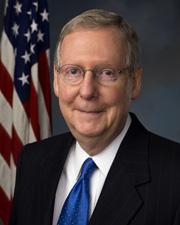
I move to lay that motion on the table. The motion to lay on the table was agreed to. Mr. President, I ask unanimous consent that the order for the quorum call be rescinded. Mr. President, I ask…
I move to lay that motion on the table.
The motion to lay on the table was agreed to.
Mr. President, I ask unanimous consent that the order for the quorum call be rescinded.
Mr. President, I ask unanimous consent to proceed as in morning business.
Show 1 more
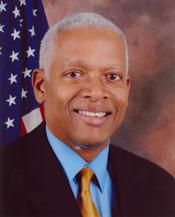
Mr. Speaker, I ask unanimous consent to send to the desk a resolution and ask for its immediate consideration in the House.
Mr. Speaker, I ask unanimous consent to send to the desk a resolution and ask for its immediate consideration in the House.
Bill Text
2 versions available
        [Congressional Bills 111th Congress]
[From the U.S. Government Publishing Office]
[H. Res. 661 Received in Senate (RDS)]

111th CONGRESS
1st Session
H. RES. 661

_______________________________________________________________________

IN THE SENATE OF THE UNITED STATES

July 22, 2009

Received

_______________________________________________________________________

RESOLUTION

Instructing the managers on the part of the House of Representatives in
the impeachment proceeding now pending against Samuel B. Kent to advise
the Senate that the House of Representatives does not desire further to
urge the articles of impeachment against Samuel B. Kent.

Resolved, That the managers on the part of the House of Representatives in
the impeachment proceedings now pending in the Senate against Samuel B. Kent,
formerly judge of the United States District Court for the Southern District of
Texas, are instructed to appear before the Senate, sitting as a court of
impeachment for those proceedings, and advise the Senate that, because Samuel B.
Kent is no longer a civil officer of the United States, the House of
Representatives does not desire further to urge the articles of impeachment
hitherto filed in the Senate against Samuel B. Kent.
Attest:
NANCY PELOSI,
Speaker of the House of Representatives.
Attest:
LORRAINE C. MILLER,
Clerk.