Mr. Speaker, I ask unanimous consent that all Members may have 5 legislative days to revise and extend their remarks and include extraneous material on the subject of this bipartisan Special Order on…
Mr. Speaker, I ask unanimous consent that all Members may have 5 legislative days to revise and extend their remarks and include extraneous material on the subject of this bipartisan Special Order on the subject of breast cancer awareness.
Mr. Speaker, tonight, like so many times before, I stand with my friends and colleagues on both sides of the aisle to address an issue that is both personal and universal.
As you may know, October is National Breast Cancer Awareness Month. It is a privilege to be with fellow survivors and advocates celebrating 25 years of breast health awareness education and empowerment.
Breast cancer is the leading cause of cancer deaths in women ages 15 to 54 according to the National Cancer Institute. In 2009 alone, the American National Cancer Society estimates that there will be 194,280 new cases of breast
cancer across the nation, and 40,610 of these Americans will die from the disease.
Although these statistics may seem discouraging, we have made significant progress. Steady declines in breast cancer mortality among women since 1990 have been attributed to a combination of early detection and improvements in treatment. When breast cancer is detected at early stages, the survival rate for women is 98 percent. Simply stated, many of these improvements would not have happened without Breast Cancer Awareness Month and its focus on research, education and awareness which increase early diagnoses and save lives.
On a personal level, I know the importance of early detection. Nearly 2 years ago, after I found a lump in my breast while doing a self exam in the shower, my doctor diagnosed me with breast cancer. I had just turned 41. Having been a legislator for more than 17 years and having passed breast cancer legislation, I knew a lot about breast cancer. I knew the importance of early detection, clinical exams every 3 years after age 20, every year after 40, mammograms every year after 40, and yet for all that I knew, I soon realized how much I didn't know. I knew about the BRCA1 and BRCA2 gene mutations, the so-called breast cancer genes, but I didn't know that some women were more likely to have the mutation. I didn't know that even with no immediate family history of breast cancer, as an Ashkenazi Jew I was five times more likely to have the mutation or that I would have up to an 85 percent lifetime chance of getting breast cancer and up to a 60 percent chance of getting ovarian cancer.
I knew that young women can and do get breast cancer. But like a lot of young women, I didn't know just how many of us it touches. And after talking with health care providers, survivors and advocates, it became clear that many other young women did not know these things either. Despite our seeming wealth of knowledge on breast cancer, an astounding 40 percent of young women with breast cancer said that prior to their diagnosis, they did not know that a young woman could get breast cancer.
That's why on March 26, cancer-free and determined to be among the last young women who did not know enough about breast cancer, I introduced H.R. 1740, the Breast Cancer Education and Awareness Requires Learning Young Act, or the EARLY Act. And just this morning, the Energy and Commerce Committee's Health subcommittee held a hearing on this critical legislation as well as several other important breast cancer legislation.
The EARLY Act is designed to educate young women and their physicians about breast health and provide support for young women diagnosed with breast cancer. Young women must learn to be their own voices, to speak up for themselves and know when they need to go to their doctor, because at the end of the day the old saying rings true, ``knowledge is power.'' And when the EARLY Act becomes law, we will fulfill the vital goals of Breast Cancer Awareness Month, increasing education, research and awareness all year long.
However, research, education and awareness are not all that we focus on when it comes to Breast Cancer Awareness Month. We must also take this opportunity to honor and recognize the people close to us who have won their fight against breast cancer, those still fighting, those we have lost, and those who are working hard every day to make sure no one else dies from breast cancer.
We honor the determination of those women and the hope that their courage gives us all. It is an honor to be here tonight, standing together in solidarity as we observe Breast Cancer Awareness Month, wholly committed to increasing early diagnoses, saving more lives and ultimately finding a cure to wipe out this deadly disease. Together, we will save more of our moms, our sisters, our grandmas, our daughters and our loved ones. We can and will empower women to learn the facts, know their bodies, speak up for their health and embrace support.
Mr. Speaker, I am particularly pleased tonight in an environment in which sometimes, in fact too recently, we struggle to do almost anything in a bipartisan fashion, and the intensity and the fervor in which we engage in debate here often prevents us from coming together. The Members of the House of Representatives truly came together today in support and in honor of Breast Cancer Awareness Month. They came together in honor of women who have passed away from breast cancer, in honor of survivors, in honor of women still fighting the disease.
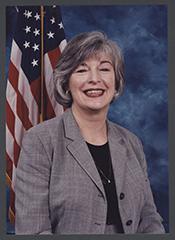
It is my privilege to yield to and introduce my very good friend, fellow breast cancer survivor, someone who has been there for me even before I shared my own story publicly, Congresswoman Sue Myrick, the gentlelady from North Carolina.
Mr. Speaker, the gentlelady from North Carolina (Mrs. Myrick) has been such a passionate advocate on behalf of all cancer patients. As the co-Chair of the Congressional Cancer Caucus, she has
done an absolutely incredible job at raising awareness not just about breast cancer but about all types of cancer. I think, given how much cancer has touched Americans' lives in a very personal way, it's important that we have local advocates like Sue Myrick, and it's my privilege to be side by side with you as cosponsors of the EARLY Act. Thank you so much.
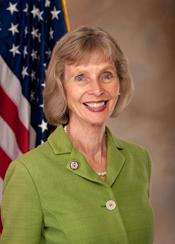
It's now my privilege to yield 4 minutes to the gentlelady from California, Lois Capps, who has a health care professional background as an RN, prior to her election to Congress, and has been one of the leading voices in women's health in the House of Representatives.
Thank you so much. Again, the gentlelady from California, Lois Capps, has been just one of the most outstanding health care advocates in the Congress. I knew about her advocacy and her leadership in health care even before I arrived in Congress in 2004, and it is a privilege to serve with you. It truly is.
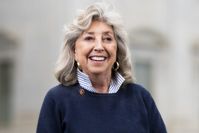
It's now my privilege to yield 2 minutes to a woman who has recently joined the Congress, was elected in the class of 2008, worked hard to get here and has been doing a fantastic job, served in the Nevada State Senate as the State Senate minority leader and is a good friend of mine, Congresswoman Dina Titus from the great State of Nevada.
Thank you so much, Congresswoman Titus. Your leadership and the fact that you've joined the Congress added another woman to our ranks. Women's health and making sure that we can focus the attention and the agenda on women's health here in the United States House of Representatives is so incredibly important. We already have a sort of head cheerleader, so to speak, although I don't mean to trivialize her position. But the first woman, Speaker of the House of Representatives, has been a passionate advocate for women's health and has always encouraged making sure that we have more women join our ranks. You've done an incredible job since you've been here. I'm so pleased that you've joined us in the House of Representatives.
Mr. Speaker, I want to spend a couple of minutes just highlighting some unique facts that, really, most people are unaware of when it comes to breast cancer. What I've learned since my own diagnosis and since getting involved in a more personal way in trying to pass the EARLY Act is--we all hear the expression, Everyone knows someone who
has breast cancer. Well, today we really can say that everyone had someone close to them that had breast cancer.
It's just amazing after I shared my own story how many--I was standing there in the well the day that I shared my story with folks, and I can't tell you how many Members came up to me and touched my arm and said, Debbie, my daughter had breast cancer, my mother, my sister, my wife. People stopping me on the street, on the airplane, on the ball field with my kids. It's amazing. The outpouring of people reaching out to connect with me has just been absolutely incredible, because breast cancer touches so many people and touches women in a very personal way. But what's really frustrating about breast cancer is how it strikes certain populations in a more deadly way.
Another thing that I realized is that there are higher risk populations that too often are unaware of their risk. Like me, as an Ashkenazi Jewish woman, I was not really aware of my risk of having a greater likelihood of carrying the BRCA1 or BRCA2 gene mutation. Subsequently when I was diagnosed with breast cancer, I did a genetic blood test and found out that I am a carrier of the BRCA2 gene. But in doing research for the EARLY Act, the statistics that I learned about African American women and breast cancer were really startling.
African American women have the highest breast cancer death rate among minority women. It's 34 per 100,000 people in the population, African American women from ages 35 to 44. So younger African American women have a breast cancer death rate more than twice the rate of white women in the same age group, and they are 34 percent more likely to die of cancer than are whites, and more than twice as likely to die of cancer as are Asians or Pacific Islanders, American Indians or Hispanics.
We have got to raise awareness in higher-risk populations and minority populations, and we have to change the disparity, the disparity in the survival rate and the disparity in terms of access to health care for their populations, because we know that early detection is the key.
At this time, to talk some more about that, is a very good friend of mine, another newly elected Member from the great State of Pennsylvania, professionally a dietitian before she was elected to Congress, a small business owner, and most importantly, a mother of five. I now yield 3 minutes to the gentlelady from Pennsylvania, Kathy Dahlkemper.
Thank you so much, Congresswoman Dahlkemper. Again, it was a thrill to see you come to the House of Representatives and add your expertise, particularly as a dietician, and thank you for sharing those personal stories from your district in Pennsylvania.
The important thing about Breast Cancer Awareness Month, and when we talk about breast cancer it is putting a face on it, helping people to understand, because so often statistics are really easy to just kind of glaze over and stop paying attention to.
Here tonight to help us continue to raise awareness is the gentlewoman from southern California, Susan Davis, who has made health care a signature issue during her time in both the California Assembly as well as the United States House of Representatives, a member of the Education and Labor Committee, one of the three committees in the House of Representatives that passed part of the health care reform legislation, and she has also been a leader by pushing for billions of dollars in funding for NIH.
I yield to the gentlewoman from California.
Thank you very much.
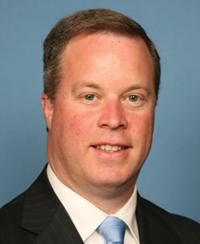
It's now my privilege to introduce and yield to a gentleman who is, again, another recent addition to the House of Representatives, elected in November of 2008, someone who I have really seen exercise incredible leadership since his election to the United States Congress, and apparently the token man here tonight. So it's really especially wonderful that he has joined us.
Steve Driehaus hails from Ohio and is the former minority whip in the Ohio House of Representatives. He is also a former Peace Corps volunteer, which, to me, that kind of altruism and volunteerism is so incredibly admirable. He is the father of three young children, whom I know he is most proud of.
It's my pleasure to yield to him on behalf of Breast Cancer Awareness Month.
Thank you so much, Mr. Driehaus. Again, it has absolutely been a privilege to work with you since you joined us in the House of Representatives. You've been really doing an incredible job, and I appreciate especially your taking time out of your evening, especially late in the evening, 9 o'clock at night, to help raise awareness about the importance for women to focus on their breast health and to help women and men be focused on breast cancer awareness in this month of October and all throughout the year.
It's now my privilege to introduce someone whom I have come to know over the last number of years and whose district I have traveled to on a number of occasions and whose leadership I've seen demonstrated both in her hometown of Columbus as well as here on the floor of the House. She served as a former school board member in Franklin County, a former county commissioner in Franklin County, and now serves in the United States House of Representatives with distinction.
I yield to the gentlelady from Ohio, Mary Jo Kilroy.
Thank you so much, Congresswoman Kilroy. It is so wonderful to serve in the House of Representatives with you, and as someone who has recently shared her personal health care battle and highlighted the need for health care reform as a reflection of your own personal story, I really just admire your courage. And it's been an incredible privilege to work with you. Thank you so much.
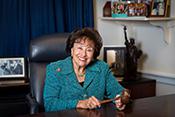
It's now my privilege to introduce not only my friend but my next- door neighbor in Washington, D.C., a woman who has been a passionate advocate, a fighter--really you look in the dictionary and look up the word ``fighter'' and ``passion'' and Shelley Berkley is right there.
She served prior to her election to Congress in the Nevada State Assembly. And I would like some credit for pronouncing ``Nevada'' correctly. So I want to pat myself on the back for that. Ms. Berkley served on the Nevada State Community College Board of Regents as well. She is the mom of two wonderful sons, both of whom I've met and who have done her proud.
And it's my privilege to yield time to her tonight for Breast Cancer Awareness Month.
Thank you, Congresswoman Berkley for your leadership and for your friendship and for your neighborliness.
At this time I would like to yield to the gentlelady from North Carolina who will yield to some colleagues who have joined us on her side of the aisle.
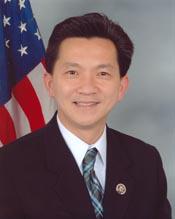
Thank you very much, Mr. Cao, for joining us this evening. Again, this has been a bipartisan Special Order, as well as male, female, a combination of devotion to making sure that the women in our lives and the 1 percent of men that are diagnosed with breast cancer every year are more aware of the importance of focusing on their breast health.
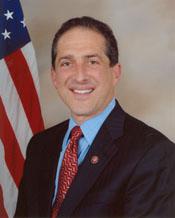
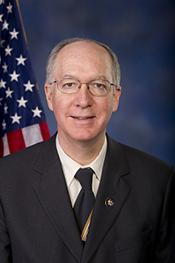
It is now my privilege to yield time to the gentleman from Illinois who is celebrating a birthday today. That is particularly exciting, and we appreciate him coming down to help raise awareness about the importance of breast cancer on his birthday. He is a father of two. Prior to his election to Congress last year to fill an unexpired term of the former Speaker, he was a scientist, a very successful and learned scientist, and has added incredible expertise to the discussion and debate we have here in the House of Representatives, Mr. Foster from Illinois.
Thank you so much, and happy birthday.
It is now my privilege in the last couple of minutes before we yield back, in honor of Breast Cancer Awareness Month, to yield time to the gentlewoman from northern California who is a passionate fighter on behalf of the causes that she and her constituents care about, Lynn Woolsey.
Thank you so much. As Ms. Woolsey steps away from the podium, I really want to acknowledge her leadership, particularly on young women breast cancer issues because prior to my introduction of the EARLY Act, she was one of the leading voices on breast cancer in young women, and we can't thank her enough.
Mr. Speaker, as our hour comes to a close, I want to thank Congresswoman Myrick for her leadership and her friendship. I think the point we want to make tonight is that although Breast Cancer Awareness Month is celebrated throughout the entire month of October, it is important for us to focus on breast cancer awareness and for women to focus on their breast health throughout the year.