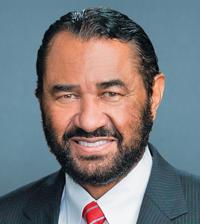
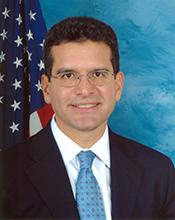
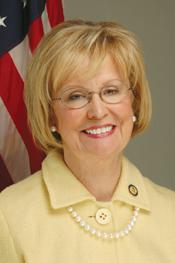
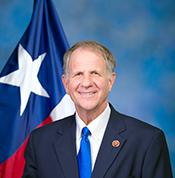
Thank you very much. Mr. Speaker, I am honored that leadership has brought this resolution, H. Res. 817, to the floor today. I believe that this resolution is important, and this likewise seems to be…
Thank you very much.
Mr. Speaker, I am honored that leadership has brought this resolution, H. Res. 817, to the floor today. I believe that this resolution is important, and this likewise seems to be the case with my colleagues because this resolution has received the support of 57 Democratic and Republican cosponsors. This resolution has been a bipartisan effort. And for fear that I will forget, let me mention now that my colleague, the Honorable Ted Poe, will not be with us today, but he is here in spirit. He suffered the same fate as I; his plane is late in Houston, Texas. I was on the runway for 2 hours. I barely made it, but thank God that I did. I want the Members to know that he is solidly behind this resolution. This resolution, with reference to domestic violence, transcends party affiliation; it transcends ethnicity; it transcends gender; and it transcends the boundaries of human decency.
Many thank you's are in order. I want to thank the President, President Barack Obama, for declaring October National Domestic Violence Awareness Month. I would like to thank Speaker Pelosi because she has entered a statement recognizing this as Domestic Violence Awareness Month. The Congressional Women's Caucus deserves a sound round of thank you's because they have been involved in helping us to raise awareness year-round. I would like to thank Chairman George Miller of the Education and Labor Committee for the outstanding work that he has done in helping us to get this resolution to the floor. His staff has done a stellar job. They have worked with my staff to make sure that the resolution arrived here timely. I would like to thank the ranking member, John Kline, for his work with the Honorable Ted Poe in helping us to get this resolution to the floor.
All of my colleagues are honorable, but I am mentioning Ted in such a way simply because he is not here, and I know his heart is with us. I would like to thank the ranking member who is here today, Representative Judy Biggert, for her help and for her kind words with reference to this resolution and Representative Pierluisi from Puerto Rico for his efforts to help us get this resolution to the floor and for managing this resolution today.
At this time I want to call our attention to some history associated with this issue of domestic violence. Domestic Violence Awareness Month was first observed 22 years ago, and since that time, we've had additional legislation that has come into being that has made a difference with reference to helping us to end domestic violence. The Family Violence Prevention and Services Act of 1984 is an important piece of legislation. This piece of legislation helped us to acquire more emergency shelters, crisis prevention programs and community education efforts. It truly has made a difference.
There also has been another piece of important legislation, the Violence Against Women Act of 1994, which created a new culture for the police officers who work these cases and the
judges who hear these cases. These cases at one time were thought to be, unfortunately, family business, and there were too many persons who were involved in the business of law enforcement who did not make it their business. I'm honored that the Violence Against Women Act of 1994 has helped change this culture. I would also mention that the American Recovery and Reinvestment Act of 2009 was important because it contained $225 million for violence against women programs. These programs are going to be of great benefit to a good many women.
Domestic violence awareness is growing, but it has not reached a point wherein we can rest on our efforts. At one time it was one of the most underreported crimes in this country. As I indicated, too many police officers, too many judges, too many persons associated with enforcement did not make it their business. And although we have sought to do the business of helping women and men who are victims of domestic violence, there is still much work to be done. One survey indicates that in 1 day, more than 60,000 people received help. However, at the same time, on that same day, 9,000 requests went unanswered. There is still much work to be done. In my State of Texas, the Houston Area Women's Center has indicated that in the year 2008, 136 women were killed by their intimate partners, 11 children were killed, and 96 children lost their parents to domestic violence.
I thank the gentleman for yielding the additional time.
Ninety-six children were killed by domestic violence.
The national data on this is equally as appalling. More than three women are murdered by their husbands or boyfriends in the United States every day. One of every four women will experience domestic violence at some point in her lifetime. In 2005, 1,181 women were murdered by an intimate partner. Women from ages 16 to 24 experience the highest rates of domestic violence on a per capita basis. Six of 10 Native American women will be physically assaulted in their lifetimes. Ninety-two percent of homeless women will experience physical or sexual abuse at some point in their lifetimes. Forty to sixty percent of men who abuse women also abuse children.
Millions of children witness every year domestic violence. By at least one estimate, 15.5 million children witness domestic violence.
So we now come to a call to action. We should not allow anyone to have to live in fear within his or her home. We believe that this is an offense that can be eliminated. It will take much effort from us. We here in Congress will have to fund the programs that can make a difference. And without question, programs have been developed that can make a difference. Training is necessary to teach people how to live with each other without abusing each other. The police must enforce the laws, the judges must enforce the laws, and in the end we can live in a world where people can live safely in their homes without fear of being harmed by people that they have great affinity and affection for.
The National Network to End Domestic Violence (NNEDV), the
National Coalition Against Domestic Violence (NCADV) along
with 9 other national organizations is heralding the arrival
of Domestic Violence Awareness Month and urging Congress,
members of the media and the public to take a stand against
domestic abuse.
The economic downturn is exacerbating domestic violence,
and victims of domestic abuse urgently need everyone's help.
Although the economy does not cause domestic violence, but in
abusive relationships, factors associated with a bad economy
can increase the frequency and severity of abuse. Job losses,
the lack of affordable health care, the housing crisis and a
host of other conditions are increasing abuse and leaving
survivors with fewer options to escape. The demand for
services is going up, but funding for services is going down.
Governmental entities, corporations and individuals are
tightening their budgets and are funding life-saving programs
at reduced levels across the nation.
In a national census survey conducted by the National
Network to End Domestic Violence, in just one day in 2008
more than 60,000 victims sought services, yet nearly 9,000
requests for services went unmet due to lack of funding.
The most extreme example is California, where the governor
completely eliminated state funding for domestic violence
services. Other states have seen funding reductions, but
California represents the most shocking of these reckless
cuts.
This year, Domestic Violence Awareness Month is
particularly meaningful. The movement against domestic abuse
is celebrating the 15th anniversary of the Violence Against
Women Act, originally authored by then-Senator Joe Biden.
This year is also the 25th anniversary of the Family Violence
Prevention & Services Act. Both are critical federal laws
that provide funding for services and the justice system's
responses to intimate partner abuse.
These laws have made an amazing difference in our ability
to address domestic violence. Across the country, federal,
state and local laws are working to serve countless survivors
and saving lives, but we need to do more. Still, an average
of three women are murdered daily by someone who says love
you.' This is unacceptable and preventable. Domestic violence
affects us all, and it tears at the fabric of our
communities. Every day, men, women and children experience
the tragic effects of domestic violence.''
In recognition of Domestic Violence Awareness Month, let us
renew efforts to invest in lifesaving shelters and other
critical domestic violence services like counseling and
emergency hotlines.
Members of Congress and the public can take a stand for
survivors of abuse by supporting the Domestic Violence
Awareness Month Resolution sponsored by Representative Al
Green (D-TX) and Representative Ted Poe (R-TX), which has
received bipartisan support of nearly 60 members of the House
of Representatives.
Sincerely,
Sue Else,
President, National Network to End Domestic Violence.
Rita Smith,
President, National Coalition Against Domestic Violence.
Additional National Organizations Endorsing the Domestic
Violence Awareness Month Resolution: Break the Cycle, Casa De
Esperanza, Congress of American Indians Task Force on
Violence Against Women, Family Violence Prevention Fund,
Legal Momentum, National Alliance to End Sexual Violence,
National Organization of Sisters of Color Ending Sexual
Assault, National Resource Center on Domestic Violence,
Pennsylvania Coalition Against Domestic Violence.