




II
111th CONGRESS
1st Session
S. 1485
IN THE SENATE OF THE UNITED STATES
July 21, 2009
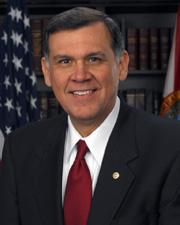
Mr. Martinez (for himself and Mr. Nelson of Florida) introduced the following bill; which was read twice and referred to the Committee on Commerce, Science, and Transportation
A BILL
To improve hurricane preparedness by establishing the National Hurricane Research Initiative, and for other purposes.
Short title; table of contents
Short title
This Act may be cited
as the National Hurricane Research
Initiative Act of 2009
.
Table of contents
The table of contents for this Act is as follows:
Sec. 1. Short title; table of contents.
Sec. 2. Findings.
Sec. 3. Sense of Congress.
Sec. 4. Definitions.
Sec. 5. National Hurricane Research Initiative.
Sec. 6. National Hurricane Research Task Force.
Sec. 7. National Hurricane Research.
Sec. 8. Authorization of appropriations.
Sec. 9. Independent review.
Findings
Congress makes the following findings:
Hurricanes and other tropical cyclones have directly caused more than 2,000 deaths in the United States since 2003 and account for approximately 66 percent of insured losses due to natural hazards.
While the ability to understand and predict hurricanes and other tropical cyclones has improved since 1999, particularly with respect to storm tracking, much remains unknown concerning—
storm dynamics, rapid intensity change, and impact on extratropical cyclones;
the interactions of storms with natural and built environments; and
the impacts to and response of society to destructive storms.
Several expert assessments of the state of hurricane science and research needs have been published, including—
the January 2007
report by the National Science Board titled, Hurricane Warning: The
Critical Need for a National Hurricane Initiative
;
the February 2007
report by the Office of the Federal Coordinator for Meteorological Services and
Supporting Research entitled, Interagency Strategic Research Plan for
Tropical Cyclones: The Way Ahead
; and
reports from the Hurricane Intensity Working Group of the National Science Advisory Board of the National Oceanic and Atmospheric Administration.
In the June 2005
publication, Grand Challenges for Disaster Reduction
, and in
related 2008 implementation plans for hurricane and coastal inundation hazards
the Subcommittee on Disaster Reduction of the Committee on Environment and
Natural Resources of the National Science and Technology Council prioritized
Federal science and technology investments needed to reduce future loss of life
and property caused, both directly and indirectly, by hurricanes and other
coastal storms.
A National Hurricane Research Initiative complements the objectives of the National Windstorm Impact Reduction Program.
Sense of Congress
It is the sense of Congress that, consistent with the findings of the expert assessments and strategies described in paragraphs (3) and (4) of section 2, a National Hurricane Research Initiative should be established to address the urgent and compelling need to undertake long-term, coordinated, multi-entity hurricane research focused on—
conducting high priority scientific, engineering, and related social and behavioral studies; and
effectively applying the research results of such studies to mitigate the impacts of hurricanes on society.
Definitions
In this Act:
Task Force
The term Task Force means the National Hurricane Research Task Force established under section 6(a).
Eligible entities
The term eligible entities means State, regional, and local government agencies and departments, tribal governments, universities, research institutes, and nongovernmental organizations.
Indian tribe
The term Indian tribe has the meaning given the term in section 102 of the Federally Recognized Indian Tribe List Act of 1994 (25 U.S.C. 479a).
Initiative
The term Initiative means the National Hurricane Research Initiative established under section 5(a)(1).
National Windstorm Impact Reduction Program
The term National Windstorm Impact Reduction Program means the program established by section 204 of the National Windstorm Impact Reduction Act of 2004 (42 U.S.C. 15703).
State
The term State means any State of the United States, the District of Columbia, American Samoa, Guam, the Commonwealth of the Northern Mariana Islands, Puerto Rico, and the Virgin Islands.
Tribal government
The term tribal government means the governing body of an Indian tribe.
Under Secretary
The term Under Secretary means the Under Secretary for Oceans and Atmosphere.
National Hurricane Research Initiative
Establishment
In general
The Under Secretary, in collaboration with the Director
of the National Science Foundation, shall establish an initiative to be known
as the National Hurricane Research Initiative
for the purposes
described in
paragraph (2). The Initiative shall consist of—
the activities of the Under Secretary under this section;
the activities of the Task Force under section 6; and
the research carried out under section 7.
Purposes
The purposes described in this paragraph are as follows:
To improve understanding and prediction of hurricanes and other tropical storms, including—
storm tracking and prediction;
forecasting of storm formation, intensity, and wind and rain patterns, both within the tropics and as the storms move poleward;
storm surge modeling, inland flood modeling, and coastal erosion;
the interaction with and impacts of storms with the natural and built environment; and
the impacts to and response of society to destructive storms, including the socio-economic impacts requiring emergency management, response, and recovery.
To develop infrastructure that is resilient to the forces associated with hurricanes and other tropical storms.
To mitigate the impacts of hurricanes on coastal populations, the coastal built environment, and natural resources, including—
coral reefs;
mangroves;
wetlands; and
other natural systems that can reduce hurricane wind and flood forces.
To provide training for the next generation of hurricane researchers and forecasters.
Implementation plan
In general
Not later than 18 months after the date of the enactment of this Act, the Under Secretary shall develop a detailed, 5-year implementation plan for the Initiative that—
incorporates the
priorities for Federal science and technology investments set forth in the June
2005 publication, Grand Challenges for Disaster Reduction
, and
in related 2008 implementation plans for hurricane and coastal inundation
hazards of the Subcommittee on Disaster Reduction of the Committee on
Environment and Natural Resources of the National Science and Technology
Council;
to the extent practicable and as appropriate, establishes benchmarks, milestones, goals, and performance measures to track progress of the research carried out under the Initiative and the application of research results for reducing hurricane losses and related public benefits, as recommended by the Task Force under section 6(f)(2); and
identifies opportunities to leverage the results of the research carried out under section 7 with other Federal and non-Federal hurricane research, coordination, and loss-reduction initiatives, such as—
the National Windstorm Impact Reduction Program established by section 204(a) of the National Windstorm Impact Reduction Act of 2004 (15 U.S.C. 15703);
the National Flood Insurance Program established under chapter 1 of the National Flood Insurance Act of 1968 (42 U.S.C. 4011 et seq.);
the initiatives of the Robert T. Stafford Disaster Relief and Emergency Assistance Act (42 U.S.C. 5121 et seq.);
wind hazard mitigation initiatives carried out by a State;
the Hurricane Forecast Improvement Project of the National Oceanic and Atmospheric Administration; and
the Working Group for Tropical Cyclone Research of the Office of the Federal Coordinator for Meteorological Services and Supporting Research.
Review
Not later than 18 months after the date of the enactment of this Act, the Under Secretary shall ensure that the implementation plan required by paragraph (1) is reviewed by—
the Director of the National Science Foundation;
the Secretary of Homeland Security;
the Director of the National Institute for Standards and Technology;
the Commanding General of the U.S. Army Corps of Engineers;
the Commander of the Naval Meterorology and Oceanography Command;
the Associate Administrator for Science Mission Directorate of the National Aeronautics and Space Administration; and
the Director of the U.S. Geological Survey.
Revisions
The Under Secretary shall revise the implementation plan required by paragraph (1) not less frequently than once every 5 years to address and respond to the findings and recommendations of the Task Force.
Research
Establishment of research objectives
The Under Secretary shall, in consultation with the Director of the National Science Foundation, establish objectives for research carried out pursuant to section 7 that are based on the findings of the expert assessments and strategies described in paragraphs (3) and (4) of section 2.
Coordination
In carrying out the provisions of this subsection, the Under Secretary shall coordinate with the Task Force to the extent practicable.
National workshops and conferences
The Under Secretary, in coordination with the Director of the National Science Foundation and the Task Force, shall carry out a series of national workshops and conferences that assemble a broad collection of scientific disciplines—
to address hurricane-related research questions; and
to encourage researchers to work collaboratively to carry out the purposes described in subsection (a)(2).
Public Internet website
The Under Secretary, in coordination with the Task Force, shall facilitate the establishment of a public Internet website for the Initiative—
to foster collaboration and interactive dialogues among the Under Secretary, the Director of the National Science Foundation, the Task Force, and the public; and
to enhance public access to Initiative documents and products, including—
information about the members of the Task Force, including their affiliation and contact information;
meeting agenda and minutes of the Task Force;
reports and publications of the Initiative;
the most recent 5-year implementation plan developed under subsection (b); and
the most recent annual report submitted to Congress under subsection (f).
Annual report
Requirement for annual crosscut budget and report
The Under Secretary, in conjunction with members of the Task Force who represent Federal agencies, the Office of Science and Technology Policy, and the Office of Management and Budget, shall submit to Congress each year, together with documents submitted to Congress in support of the budget of the President for the fiscal year beginning in such year (as submitted pursuant to section 1105 of title 31, United States Code), a coordinated annual report for the Initiative for the fiscal year in which the report is submitted and the last fiscal year ending before such submittal.
Contents
The report required by paragraph (1) shall—
document the funds transferred by the Under Secretary to the heads of other Federal agencies under section 8(b);
document the grants and contracts awarded to eligible entities under section 7;
for each agency that receives funds under section 8(b) and eligible entity that receives a grant or contract under section 7, identify what major activities were undertaken with such funds, grants, and contracts; and
for each research activity or group of activities described in section 7(c), as appropriate, identify any accomplishments, which may include full or partial achievement of benchmarks, milestones, goals, performance measure targets established for the implementation plan under subsection (b)(1)(B).
National Hurricane Research Task Force
Establishment
Not
later than 90 days after the date of the enactment of this Act, the Under
Secretary shall establish a task force to be known as the National
Hurricane Research Task Force
to facilitate and coordinate the efforts
of Federal agencies and eligible entities in support of the Initiative.
Membership
The Task Force shall be composed of the following:
The Under Secretary, or the Under Secretary's designee.
The Director of the National Science Foundation, or the Director's designee.
The Director of the National Institute of Standards and Technology, or the Director's designee.
The Secretary of Homeland Security, or the Secretary's designee.
The Commanding General of the U.S. Army Corps of Engineers, or the Commanding General's designee.
The Director of the United States Geological Survey, or the Director's designee.
The Administrator of the National Aeronautics and Space Administration, or the Administrator's designee.
One member shall be appointed by the Secretary of Defense, who shall be a representative of the Office of Naval Research or the Chief of Naval Operations.
The Federal Coordinator for Meteorological Services and Supporting Research.
The Director of the Office of Science and Technology Policy, or the Director's designee.
The Director of the Office of Management and Budget, or the Director's designee.
The Chair of the Executive Committee of the Federal Geographic Data Committee, or the Chair's designee.
Such other members from Federal agencies as the chairpersons of the Task Force jointly consider appropriate.
Members who are not employees of the Federal Government, selected jointly by the chairpersons of the Task Force in consultation with the National Academy of Sciences and the National Academy of Engineering, as follows:
At least 3 members who are prominent in the fields of hurricane science, engineering, social science, or related fields.
At least 1 member who represents a State government agency responsible for emergency management and response.
At least 3 members who represent the views of local governments, tribal governments, and nongovernmental organizations.
At least 2 members who represent private sector interests engaged in hurricane research, preparedness, response, or recovery.
At least 1 member who represents a State floodplain or coastal zone manager.
Such other members as may be appropriate.
Chairpersons
The concurrent chairpersons of the Task Force shall be the following:
The Under Secretary, or the Under Secretary's designee under subsection (b)(1).
The Director of the National Science Foundation, or the Director's designee under subsection (b)(2).
The Director of the National Institute of Standards and Technology, or the Director's designee under subsection (b)(3).
Initial meeting
Not later than 120 days after the date of the enactment of this Act, the Task Force shall hold its first meeting.
Meetings
The Task Force shall meet at the call of the chairpersons of the Task Force, but not less frequently than twice each year.
Duties
The duties of the Task Force are as follows:
To provide assistance to the Under Secretary with the development of the 5-year implementation plan required by section 5(b).
Not later than 270 days after the date of the enactment of this Act and in consideration of the expert findings referred to in section 2(3)—
to develop and furnish to the Under Secretary findings and recommendations, as appropriate, for monitoring research progress and for a set of benchmarks, milestones, goals, and performance measures to track the transition and application of research results for reducing hurricane losses and related public benefits under the Initiative;
to identify interim and long-term goals of the research program under section 7; and
to prioritize the activities of the Initiative over a 10-year period.
To improve communication and coordination among Federal agencies with respect to hurricane-related research, developments in hurricane forecasting and operations, and best practices for applying results of Initiative research to reduce loss of life and property damage resulting from hurricanes.
To identify opportunities to leverage the activities and products of the Initiative with the National Windstorm Impact Reduction Program and other Federal and non-Federal hurricane research, coordination, and loss reduction programs.
To recommend a model described in section 7(c)(1)(A) and monitor progress on development of such model.
To make recommendations to the Under Secretary and the Director of the National Science Foundation on research priorities and content and structure of the program established under section 7(a)(1).
To make recommendations on national hurricane research observation and data requirements.
To assess opportunities to leverage the capabilities of the following stakeholders:
Federal, State, and local governments.
Tribal governments.
Academic and research institutions.
Entities from the private sector.
Nongovernmental organizations.
To evaluate the extent to which the stakeholders described in paragraph (8) have been engaged as partners and collaborators in the Initiative.
To assist the Under Secretary in facilitating the development of the annual report required by section 5(f).
To review such report and provide comments to the Under Secretary.
To submit to the National Science and Technology Council and to Congress, together with documents submitted to Congress in support of the budget of the President for the 2012 fiscal year (as submitted pursuant to section 1105 of title 31, United States Code), a report containing a comprehensive review of the progress of the Initiative in meeting the needs of the United States to understand hurricanes, their impacts on natural and built environment, and methods to mitigate such impacts.
Advisory bodies
Authority to establish
The Task Force may establish such advisory bodies as the Task Force considers necessary to assist the Task Force in its duties under subsection (f).
Criteria
An advisory body established under paragraph (1) shall represent a broad variety of private and public interests.
Advisors to the Task Force
The Task Force may seek advice and input from any interested, knowledgeable, or affected party as the Task Force considers necessary to carry out the duties under subsection (f).
Compensation
In general
All members of the Task Force who are officers or employees of the United States shall serve without compensation in addition to that received for their services as officers or employees of the United States.
Travel expenses
The members of the Task Force shall be allowed travel expenses, including per diem in lieu of subsistence, at rates authorized for employees of agencies under subchapter I of chapter 57 of title 5, United States Code, while away from their homes or regular places of business in the performance of services for the Task Force.
Procurement of temporary and intermittent services
The Chairpersons may procure temporary and intermittent services under section 3109(b) of title 5, United States Code, at rates for individuals which do not exceed the daily equivalent of the annual rate of basic pay prescribed for level V of the Executive Schedule under section 5316 of such title.
Volunteer services
Notwithstanding section 1342 of title 31, United States Code, the Commission may accept and use voluntary and uncompensated services as the Commission determines necessary.
Exemption from FACA notice requirement for Task Force advisory bodies
An advisory body established by the Task Force under subsection (g) shall not be subject to section 10(a)(2) of the Federal Advisory Committee Act (5 U.S.C. App. 10(a)(2)).
Termination of Task Force
The Task Force shall terminate on September 30, 2018.
National Hurricane Research
National Science Foundation competitive grant research program
In general
The Director of the National Science Foundation, in coordination with the Under Secretary, shall establish a program to award grants to eligible entities to carry out—
research described in subsection (c); or
other research that is consistent with the research objectives established under section 5(c)(1).
Selection
The National Science Foundation shall select grant recipients under this section through its merit review process.
National Oceanic and Atmospheric Administration research program
In general
The Under Secretary shall carry out a program of research described in subsection (c) or other research that is consistent with the research objectives established under section 5(c)(1).
Research activities
Research carried out under paragraph (1) may be carried out through—
intramural research;
awarding grants to eligible entities to carry out research;
contracting with eligible entities to carry out research; or
entering into cooperative agreements to carry out research.
Research
The research described in this subsection is research that is consistent with the purposes described in section 5(a)(2) and is described by one or more of the following:
Fundamental hurricane research
Fundamental hurricane research, which may consist of the following:
Community research models
Research to support continued development and maintenance of community weather research and forecast models recommended by the Task Force under section 6(f)(5), including advanced methods of observing storm structure and assimilating observations into the models, in which the agency or institution hosting the models ensures broad access and use of the model by members of the Task Force and the civilian research community.
Predicting hurricane intensity and structure
Research to improve understanding and prediction of—
storm formation and tracking with extended time scale to weeks in advance;
rapid changes in storm size, motion, structure, and intensity;
the internal dynamics of storms;
the transition to extratropical characteristics as storms move poleward; and
the interactions of storms with environmental conditions, including the atmosphere, ocean, and land surface.
Understanding air and sea interactions
Research regarding observations, theory, and modeling to improve understanding of air and sea interaction in hurricanes and other high wind speed environments.
Predicting storm surge, waves, rainfall, inland flooding, and strong winds produced by hurricanes
Research to understand, model, and predict rainfall, coastal and riverline flooding, high winds, and the potential occurrence of tornadoes, including probabilistic modeling, mapping, and visualization of risk.
Relationships between hurricanes and climate variability and change
Research to improve the understanding of the complex relationships between hurricanes and climate on seasonal to decadal time scales, such as research to determine the most effective methods to use observational information and numerical-model simulations to examine short-term and long-term impacts of climate on changes in storm intensity, geographic distribution, and frequency.
Relationships between hurricanes and ecosystems
Research to improve the understanding of how hurricanes affect ecosystems, landscapes, and natural resources and to develop assessments for hurricane vulnerability and risk, including—
how ecosystems have been influenced by past hurricanes and the ability and capacity of ecosystems to recover from the effects of hurricanes;
how ecosystem management practices can minimize disruptions to ecosystem functions and dependent economic uses as a result of hurricanes; and
the role of natural features, such as barrier islands, wetlands, and mangroves, in—
acting as natural buffers to wind and flood forces; and
improving coastal resiliency.
Technology assessment and development
Technology assessment and development, which may consist of the following:
Improved observation of hurricanes and tropical storms
Research to improve hurricane and tropical storm observations and to improve the understanding of the complex nature of storms and their interaction with the natural and built environment through development and application of new technologies, such as—
mobile radars and advanced airborne observing technologies;
global positioning system technology;
unmanned vehicles;
satellite-based sensors;
ground-based and aerial wireless sensors; and
other geospatial technologies and geospatial data, including bathymetry and elevation.
Computational capability
Research and development of robust computational capabilities and facilities required to conduct numerical and other types of modeling that support the scientific studies and research carried out under the Initiative as well as data acquisition and modeling during hurricane events, including research to improve understanding of the efficient utility of multiple models that—
require sharing and interoperability of databases, computing environments, networks, visualization tools, and analytic systems that improve on such technologies that are available on the date of the enactment of this Act; and
are used for transitioning hurricane research assets into operational practice.
Technologies for disaster response and recovery
Research to improve damage assessments after a hurricane and emergency communications during hurricane response and recovery, including improvements to—
communications networks for government agencies and nongovernmental entities;
network interoperability;
cyber-security during hurricane or storm related emergencies; and
use of models, remote sensing, and statistically based ground sampling to support effective and rapid damage assessment to scale disaster response and recovery needs.
Research integration, transition, and application
Research on integration, transition, and application of research results, which may consist of the following:
Transition of research to operations
Research to develop mechanisms to accelerate the application of improved models, observations, communication, and risk assessment systems, and related research products to forecasting and other operational settings, including use of 1 or more developmental test beds.
Assessing vulnerable infrastructure
Developing a national engineering assessment and clearinghouse of coastal infrastructure by leveraging and building upon existing Federal activities, resources, and research, including infrastructure related to levees, sea walls, and similar coastal flood-protection structures, drainage systems, bridges, water and sewage utilities, power, and communications, to determine the level of vulnerability of such infrastructure to damage from hurricanes.
Interaction of hurricanes with engineered structures
Research to improve understanding of the impacts of hurricanes and tropical storms on buildings, structures, and housing combined with modeling that is essential for guiding the creation of improved building designs and construction codes in locations particularly vulnerable to hurricanes.
Evacuation planning
Research to improve the manner in which hurricane-related information is provided to, and utilized by, the public and government officials, including research to assist officials of State, tribal, regional, or local governments in—
determining the circumstances in which evacuations are required; and
carrying out such evacuations.
Decision support
Research to—
assess the social, behavioral, and economic factors that influence decision making by the public, government officials, nongovernmental entities, the private sector, and other impacted populations before, during, and in the aftermath of hurricanes;
improve the translation of natural science and engineering research carried out under the Initiative into informed decision making that enables communities, economies, and the man-made and natural environments to become resilient to hurricane impacts, including development of effective risk and vulnerability assessment and risk communication tools; and
develop methods of assessing disaster recovery costs, both government and nongovernment, and of comparing the relative benefits of disaster mitigation methods with disaster recovery costs.
Authorization of appropriations
In general
There are authorized to be appropriated for fiscal years 2010 through 2015 amounts as follows:
To the Under Secretary, $18,750,000 to carry out sections 5, 6, and 7(b), of which not less than $13,750,000 shall be used to carry such section 7(b).
To the Director of the National Science Foundation, $56,250,000 to carry out sections 5 and 7(a).
Interagency transfer of funds
Transfers by Under Secretary for Oceans and Atmosphere
Of amounts appropriated pursuant to the authorization of appropriations under subsection (a)(1), the Under Secretary may transfer to the heads of other Federal agencies such amounts as the Under Secretary considers appropriate to carry out sections 5, 6, and 7(b).
Transfers by Director of the National Science Foundation
Of amounts appropriated pursuant to the authorization of appropriations under subsection (a)(2), the Director of the National Science Foundation may transfer to the heads of other Federal agencies such amounts as the Director considers appropriate to carry out sections 5 and 7(a).
Independent review
Agreement
In general
The Under Secretary shall seek to enter into an agreement with the National Research Council of the National Academies for the National Research Council to perform the services covered by this section.
Timing
The Under Secretary shall seek to enter into the agreement described in paragraph (1) not later than 180 days after the date of the enactment of this Act.
Independent review of National Hurricane Research Initiative
Under an agreement between the Under Secretary and the National Research Council under this section, the National Research Council shall carry out an independent review of the Initiative. In carrying out the review, the National Research Council shall review the following:
Whether the Initiative has well-defined, prioritized, and appropriate research objectives.
Whether the Initiative is properly coordinated among relevant Federal agencies and stakeholders.
Whether the Initiative has allocated appropriate resources to each of the research objectives.
Whether suitable mechanisms exist for transitioning the research results from the Initiative into operational technologies and procedures and activities in a timely manner.
Report
Not later than 4 years after the date of the enactment of this Act, the Under Secretary shall submit to the Committee on Commerce, Science, and Transportation of the Senate and the Committee on Science and Technology of the House of Representatives a report on the results of the review carried out under this section.
Authorization of appropriations
There is authorized to be appropriated to the Under Secretary, $750,000 to carry out this section.