Mr. President, for the past 6 months, the administration has been busy laying the groundwork for a new development agenda. First, the President issued a bold 2010 international affairs budget that…
Mr. President, for the past 6 months, the administration has been busy laying the groundwork for a new development agenda.
First, the President issued a bold 2010 international affairs budget that significantly increases funding for vital programs in Pakistan and Afghanistan, begins to rebuild our diplomatic and development capacity, and renews our commitment to essential programs from education to HIV/ AIDS and hunger.
Then, earlier this month, President Obama and other G8 leaders announced a $20 billion food security partnership to provide small farmers in poor countries with the seeds, fertilizers, and equipment they need to break a decades-long cycle of hunger, malnutrition and dependency. Finally, the State Department unveiled plans for a ``Quadrennial Diplomacy and Development Review,'' a comprehensive assessment designed to improve policy, strategy, and planning at the State Department.
While we are still awaiting a nominee to head the U.S. Agency for International Development I am confident that a name will soon be forthcoming.
These are welcome changes that demonstrate this Administration's commitment to a vigorous reform process and a bold development plan. Congress will be a strong partner in those efforts--providing the resources, legislation, and authorities to ensure that our development programs are funded and designed to meet our priorities.
While there is some debate on what form foreign aid reform should take, there is a broad consensus in the development community about why reform matters.
Experts agree that the strength of our development programs is directly linked to success or failure in front-line states like Afghanistan and Pakistan.
They agree that USAID is more critical to achieving our foreign policy objectives than ever before--yet it lacks the tools, capacity and expertise to fulfill its mission.
They agree that too often decision-makers lack basic information about the actual impact of our development programs.
They also agree that excessive bureaucracy and regulations and fragmented coordination are hampering our efforts to swiftly and effectively deliver assistance.
And they agree that even as we plan for broad, fundamental reform, there are many steps we can take in the interim to dramatically improve the effectiveness of our foreign aid efforts.
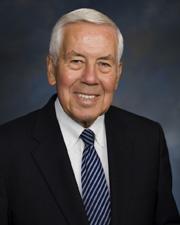
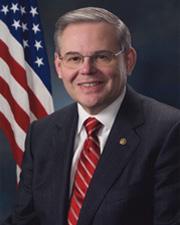
We assembled a small bipartisan Senate working group to formulate legislation that makes short-term improvements while setting the stage for longer-term reform. Senators Lugar, Menendez, Corker and I have been developing initial reform legislation that we believe goes a long way towards improving our short-term capacity to deliver foreign aid in a more accountable, thoughtful and strategic manner.
One provision in the bill that we believe is particularly important establishes an independent evaluation group, based in the executive branch, to measure and evaluate the impact and results of all U.S. foreign aid programs, across all departments and agencies. This new institution--the Council on Research and Evaluation of Foreign Assistance--can address a fundamental knowledge gap in our foreign aid programs--quite simply, it will help us understand which programs work, which do not, and why.
I want to emphasize, this legislation only represents the first step in a longer reform process. But we believe it sends an important bipartisan signal that foreign aid reform will be a priority for this committee in the years ahead. I am pleased that Senators Risch and Cardin will join as original cosponsors to the bill.
When John F. Kennedy spoke at the founding of USAID, in 1961, he articulated a basic truth about our foreign policy. We cannot escape our moral obligation to be a wise leader in the community of free nations. Kennedy warned that--``To fail to meet those obligations now would be disastrous; and, in the long run, more expensive. For widespread poverty and chaos lead to a collapse of existing political and social structures which would inevitably invite the advance of totalitarianism into every weak and unstable area. Thus our own security would be endangered and our prosperity imperiled.''
Just substitute violent extremism for totalitarianism and the quote is as accurate today as it was then. Just as we did in Marshall's time and Kennedy's time, America today has a chance to return to a foreign policy that is not just seen by people everywhere, but felt and lived, one that translates our promises into real value and real progress on the ground--one that improves people's daily lives, inspires them, and earns their respect.
The good news is that, as we rebuild our civilian institutions, there will so many chances to lead in the process. We are living in a moment of volatility, but also--emphatically--a moment of possibility.
Infant mortality rates dropped by 27 percent worldwide since 1990. By 2015, let us cut under-five mortality by 2/3. Life expectancy is eight years higher than it was in 1990--but we can do better by cutting hunger and poverty in half and reversing the spread of HIV/AIDs, malaria and other major diseases. Primary school enrollment has increased by 10 percent--it is time we made it universal. While we are at it, let us eliminate gender disparity in education once and for all.
History teaches us that America is safest and strongest when we understand that our security will not be protected by military means alone. It must be protected as well by our generosity, by our example, by powerful outreach, and by instilling a palpable sense in the people of the world that we understand--and share their destiny. That has always inspired people, and it always will. It undercuts our enemies, it empowers our friends--and it keeps us safer.