A bill to allow the funding for the interoperable emergency communications grant program established under the Digital Television Transition and Public Safety Act of 2005 to remain available until expended through fiscal year 2012, and for other purposes.
Legislative Activity
Stay on top of the latest movement without scrolling through every action
Became Public Law No: 111-96.
November 6, 2009
View full timeline
Introduced in Senate
September 22, 2009
Sponsor introductory remarks on measure. (CR S9680)
September 22, 2009
Read twice and referred to the Committee on Commerce, Science, and Transportation.
September 22, 2009
Senate Committee on Commerce, Science, and Transportation discharged by Unanimous Consent.(consideration: CR S10439)
October 14, 2009
Senate Committee on Commerce, Science, and Transportation discharged by Unanimous Consent. (consideration: CR S10439)
October 14, 2009
Passed Senate without amendment by Unanimous Consent. (text: CR S10439)
October 14, 2009
Received in the House.
October 15, 2009 • 10:03 AM
Message on Senate action sent to the House.
October 15, 2009
Referred to the House Committee on Energy and Commerce.
October 15, 2009
Mr. Boucher moved to suspend the rules and pass the bill.
October 28, 2009 • 10:41 AM
Considered under suspension of the rules. (consideration: CR H11987-11989)
October 28, 2009 • 10:42 AM
DEBATE - The House proceeded with forty minutes of debate on S. 1694.
October 28, 2009 • 10:42 AM
At the conclusion of debate, the Yeas and Nays were demanded and ordered. Pursuant to the provisions of clause 8, rule XX, the Chair announced that further proceedings on the motion would be postponed.
October 28, 2009 • 10:51 AM
Considered as unfinished business. (consideration: CR H112008-12009)
October 28, 2009 • 1:01 PM
Passed/agreed to in House: On motion to suspend the rules and pass the bill Agreed to by the Yeas and Nays: (2/3 required): 420 - 0 (Roll no. 819).(text as passed House: CR H11987-11988)
October 28, 2009 • 1:26 PM
On motion to suspend the rules and pass the bill Agreed to by the Yeas and Nays: (2/3 required): 420 - 0 (Roll no. 819). (text as passed House: CR H11987-11988)
October 28, 2009 • 1:26 PM
Motion to reconsider laid on the table Agreed to without objection.
October 28, 2009 • 1:26 PM
Cleared for White House.
October 28, 2009
Presented to President.
October 30, 2009
Signed by President.
November 6, 2009
Became Public Law No: 111-96.
November 6, 2009
Voting History
1 vote recorded • Roll call available
Floor Debate
20 membersWhat members said about S. 1694 on the floor
 PJL
PJL FPJ
FPJ JR
JR RB
RB RLD+15
Floor Debate
20 membersWhat members said about S. 1694 on the floor
Mr. President, security and liberty are both essential in our free society. Benjamin Franklin wrote: ``Those who can give up essential liberty to obtain a little temporary safety, deserve neither…
Mr. President, security and liberty are both essential in our free society. Benjamin Franklin wrote: ``Those who can give up essential liberty to obtain a little temporary safety, deserve neither liberty nor safety.'' I have been mindful of this since the devastating attacks of September 11, and each time we have considered the USA PATRIOT Act. The American people of today and those of tomorrow--our children and grandchildren--depend on us to do our best to ensure both security and the preservation of our essential liberties.
After September 11, the Government's power to gather information about those suspected of, or connected to, potential terrorists increased. Because such surveillance may, sometimes by mistake, sweep in U.S. citizens, we must vigilantly monitor these laws to ensure that they are implemented appropriately. This calls for public, judicial and congressional oversight to make sure we maintain the proper respect for security and liberty.
After September 11, I introduced the USA PATRIOT Act, Patriot Act, to give the Government the tools needed to defend this country and aggressively pursue those who would do us harm. Even in those dark days, I insisted on oversight. Working with the then House Majority Leader, Republican Dick Armey, we included sunsets for some of the provisions of the bill that had the greatest potential to directly affect Americans.
We debated the reauthorization of the Patriot Act for several months in 2005 and 2006. I again fought to protect the civil liberties and constitutional rights of Americans. Unfortunately, after a series of short extensions, the reauthorization of 2006 lacked sufficient constitutional protections over the vast authorities it granted to the Government. I had worked to secure increased oversight and to include new sunsets in the bill.
With those sunsets expiring on December 31, 2009, we must once again consider the Patriot Act. Three provisions of the Patriot Act are slated to expire at the end of this year, including the authorization for roving wiretaps, the ``lone wolf'' measure, and orders for tangible things, commonly referred to as the ``library'' provision.
In March, I sent Attorney General Holder a letter requesting the administration's views on these expiring provisions. I reiterated that request at a Senate Judiciary Committee oversight hearing in June. I have recently received a letter from the Attorney General urging us to extend the expiring authorities. I appreciate the President and the Attorney General's emphasis on accountability and checks and balances, and their willingness to consider additional ideas.
Today I am introducing a bill with Senators Cardin and Kaufman that does just that. It will extend the authorization of the three expiring provisions. The bill also updates checks and balances by increasing judicial review of the use of Government powers that capture information on U.S. citizens, and augments congressional oversight. We propose increasing Government accountability through more transparent public reporting of the use of surveillance, and by requiring audits of how these vast authorities have been used since they were last reauthorized. In addition, we propose that, given their extensive use abuse and intrusiveness, we include a sunset for National Security Letters, NSLs. I introduced a bill in 2006, after the most recent Patriot Act reauthorization, to impose a sunset on NSLs. This sunset provision, combined with a comprehensive audit by the Inspector General, will help to hold the Federal Bureau of Investigation, FBI, accountable in its use of this authority.
In developing this bill, I worked closely with Senators Feingold and Durbin to protect the rights and privacy of Americans, and to expand oversight. Senators Feingold and Durbin have worked tirelessly over the years to protect the civil liberties of Americans, from the first debate over the Patriot Act in 2001, to the reauthorization in 2006, to the FISA Amendments Act enacted last year. I am pleased that Senators Cardin, Kaufman and I have adopted some of the concepts they proposed in the SAFE Act of 2005, and that were included in the broader Patriot Act reauthorization bill they introduced last week, the JUSTICE Act.
I have long been concerned over the issuance and oversight of NSLs. National Security Letters are, in effect, a form of administrative subpoena. They do not require approval by a court, grand jury, or prosecutor. They are issued in secret, with recipients silenced, under penalty of law. Yet NSLs allow the Government to collect sensitive information, such as personal financial records. As Congress expanded the NSL authority in recent years, I raised concerns about how the FBI handles the information it collects on Americans. I noted that, with no real limits imposed by Congress, the FBI could store this information electronically and use it for large-scale, data-mining operations. We now know that the NSL authority was significantly misused. In 2008 the Department of Justice Inspector General issued a report on the FBI's use of NSLs revealing serious over-collection of information and abuse of the NSL authority.
We should reconsider the breadth of the NSL authority. This bill would also impose more judicial oversight and higher standards on the issuance of NSLs. It would require the FBI to include a statement of facts articulating why the information it is seeking is relevant to an authorized investigation.
The bill also addresses the constitutional deficiency recently identified by the Second Circuit Court of appeals in Doe v. Musasey. The Second Circuit found that the nondisclosure, or ``gag orders,'' issued under NSLs are a constitutional infringement. I have long maintained that position. The bill establishes a procedure whereby the recipient of an NSL has 21 days to notify the Government that it wishes to challenge the nondisclosure requirement. The Government then has 21 additional days to apply for a court order to compel compliance with the nondisclosure requirement. This scheme corrects the constitutional defects found by the Second Circuit. The bill would shift the burden of defending the need for a gag order to the Government. This bill also eliminates the NSL nondisclosure provision that allows the Government to ensure itself of victory by certifying that, in its view, disclosure ``may'' endanger national security or ``may'' interfere with diplomatic relations. The bill further strengthens judicial review of nondisclosure or ``gag orders'' associated with NSLs by imposing a one- year limitation on such orders. To protect on-going law enforcement investigations, it permits renewals of the nondisclosure orders in appropriate cases.
The power of the government to collect records for tangible things under Section 215 of the original Patriot Act, commonly referred to as the ``library records'' provision, is another authority that I worked to reform during the last reauthorization. It is time to redefine the way we describe this authority to accurately reflect the broad scope of information it allows the government to collect. Section 215 allows the FISA court to secretly require any entity to produce any document or other tangible thing with a minimal standard of relevance and a presumption in favor of the Government's showing of relevance. This bill correctly identifies Section 215 orders as orders for ``tangible things'' as opposed to only for ``business records'' as it is in current law.
This bill adopts the reasonable constitutional standard that I supported in 2006 for 215 orders. First, it would eliminate the presumption in favor of the government's assertion that the records it is seeking are relevant to its investigation. This bill would require the Government to make a connection between the records or other things it seeks and a suspected terrorist or spy before it is able to obtain confidential records such as library, medical and telephone records. Section 215 orders for tangible things permit the Government to collect an even broader scope of information than NSLs. For that reason, it is critical that the Government show that the records it seeks are both relevant to an investigation and connected to at least a suspected terrorist or spy.
This bill would also establish more meaningful judicial review of Section 215 orders. First, it repeals the requirement in current law that requires a recipient of a Section 215 nondisclosure order to wait for a full year before challenging that gag order. There is no justification for this mandatory waiting period for judicial review, and this bill eliminates it. It also repeals a provision added to the law in 2006 stating that a conclusive presumption in favor of the Government shall apply where a high level official certifies that disclosure of the order for tangible things would endanger national security or interfere with diplomatic relations. These restraints on meaningful judicial review are unfair, unjustified, and completely unacceptable. I fought hard to keep these two provisions out of the 2006 reauthorization, but the Republican majority at that time insisted they be included.
This bill will strengthen court oversight of Section 215 orders by requiring court oversight of minimization procedures when information concerning a U.S. person is acquired, retained, or disseminated. Requiring FISA Court approval of minimization procedures would simply bring Section 215 orders in line with other FISA authorities--such as wiretaps, physical searches,
and pen register and trap and trace devices--that already require FISA court approval of minimization procedures. This is another common sense modification to the law that was drafted in consultation with Senators Feingold and Durbin. If we are to allow personal information to be collected in secret, the court must be more involved in making sure the authorities are used responsibly and that Americans' information and personal privacy are protected.
Finally, this bill addresses concerns over the use of pen register or trap and trace devices ``pen/trap''. The bill raises the standard for pen/trap in the same manner as it raises the standard for Section 215 orders. The Government would be required to show that the information it seeks is both relevant to an investigation and connected to a suspected terrorist or spy. This section also requires court review of minimization procedures, which are not required under current law, and adds an Inspector General audit of the use of pen/trap that is modeled on the the audits of Section 215 orders and NSLs.
I look forward to working with the members of the Judiciary Committee, the Senate, the House and with the administration as this bill moves forward, and I welcome the views of others.
Mr. President, I ask unanimous consent that the text of the bill be printed in the Record.
Mr. Speaker, I move to suspend the rules and agree to the resolution (H. Res. 787) expressing support for designation of October 13, 2009, as National Metastatic Breast Cancer Awareness Day. Mr.…
Mr. Speaker, I move to suspend the rules and agree to the resolution (H. Res. 787) expressing support for designation of October 13, 2009, as National Metastatic Breast Cancer Awareness Day.
Mr. Speaker, I ask unanimous consent that all Members may have 5 legislative days in which to revise and extend their remarks and include extraneous material in the Record.
Mr. Speaker, I yield myself such time as I may consume.
I rise today in strong support of House Resolution 787. This resolution expresses support for designating October 13, 2009, as National Metastatic Breast Cancer Awareness Day.
Metastatic breast cancer refers to stage IV breast cancer, the most advanced stage of this form of cancer. At this point, cancer cells have spread beyond the breast and underarm lymph nodes to other areas of the body. Sadly, there is no cure for breast cancer once it has reached this stage.
Breast cancer is the second most commonly diagnosed cancer in women. The National Institutes of Health estimates that nearly 195,000 new cases will be diagnosed in 2009, the majority of which occur among women. Nearly 30 percent of women diagnosed with early stage breast cancer will develop metastatic breast cancer; and despite this startling statistic, advanced breast cancer is rarely discussed during National Breast Cancer Awareness Month.
This resolution supports designation of National Metastatic Breast Cancer Awareness Day. It encourages all people in the U.S. to become more informed and aware of metastatic breast cancer and requests that the Clerk of the House transmit a copy of this resolution to the Metastatic Breast Cancer Network.
Earlier this month, my subcommittee held a hearing on four pieces of legislation that focus on prevention, early diagnosis, and treatment of breast cancer. During this hearing, we heard from four of my colleagues who have sponsored legislation to address this important health issue. Those are Congressman Nadler, Congresswoman DeLauro, who is also the sponsor of this resolution today, Congresswoman Wasserman Schultz, and Congresswoman Castor. We also heard testimony from a number of advocacy groups and the National Cancer Institute.
Mr. Speaker, this hearing and the resolution before us today underscore the importance of early detection of breast cancer and ensuring that, once diagnosed, women receive the best quality treatment available. As House Resolution 787 highlights, it's especially important that women with metastatic breast cancer feel supported rather than feeling isolated or ignored.
As National Breast Cancer Awareness Month draws to a close, I would like to take this opportunity to comment on the important issues raised with respect to the experience of breast cancer patients in today's medical environment. These patients and many others lack access to preventive services that are recommended by experts. Many patients lack coverage of the medical care that they need. That's precisely why we are hard at work trying to pass health reform legislation that will improve access to quality and affordable health care for every American.
If enacted, America's Affordable Health Choices Act of 2009, currently H.R. 3200, will make dramatic improvements in our efforts to battle breast cancer. Specifically, it will provide affordable access to insurance. H.R. 3200 would prohibit insurers from excluding patients or charging higher premiums because of preexisting conditions. It would offer protection against high out-of-pocket costs by limiting deductibles and copayments and precluding insurance companies from establishing limits on annual or lifetime benefits. H.R. 3200 would also prohibit insurers from rescinding or dropping insurance policies on the basis of health status.
This bill would also provide coverage of preventive services in Medicare, Medicaid, and within the newly established Health Insurance Exchange, free of cost sharing. This means that services like mammograms would be available free of copays. Early detection and treatment can help reduce the number of patients who ever get to stage IV while we continue our efforts to find a cure for those who do.
I am pleased to join my colleagues today in raising awareness about breast cancer, and particularly stage IV breast cancer.
Of course I want to thank, in particular, the gentlewoman from Connecticut, Congresswoman DeLauro, and my colleague from New Jersey, Congressman LoBiondo, for their leadership.
Let me just say about Congresswoman DeLauro, she has been basically a champion on every aspect of breast cancer since I've been here. I think, really, without her efforts, we would not have gone as far as we have in terms of providing meaningful research and treatment. So it's certainly no surprise that she is the prime sponsor of this resolution today.
I reserve the balance of my time.
Mr. Speaker, I yield 4 minutes to the sponsor of the legislation, the gentlewoman from Connecticut (Ms. DeLauro). I can't say enough about her. Her championing on the issues of breast cancer research, treatment, et cetera, are really always out there.
I yield the gentlewoman 1 additional minute.
Mr. Speaker, I yield 3 minutes to the gentlewoman from California (Ms. Harman).
(Ms. HARMAN asked and was given permission to revise and extend her remarks.)
I yield to the gentlewoman 1 additional minute.
Mr. Speaker, I yield 2 minutes to the gentlewoman from Nevada (Ms. Berkley).
Mr. Speaker, I would just urge everyone to support this resolution. I particularly want to thank the survivors, Mrs. Myrick, Ms. DeLauro, and Ms. Wasserman Schultz.
They just spend so much time devoted to this issue, whether it's research, treatment, to try to find a cure or to just raise awareness. I never cease to be amazed by their efforts. I want to thank them and I urge everyone to pass the resolution.
Mr. Speaker, I yield back the balance of my time.
Mr. President, today I introduce the Comprehensive Derivatives Regulation Act of 2009, or the CDRA, which establishes for the first time a comprehensive regulatory framework to prevent derivatives…
Mr. President, today I introduce the Comprehensive Derivatives Regulation Act of 2009, or the CDRA, which establishes for the first time a comprehensive regulatory framework to prevent derivatives trading activities from ever again contributing to catastrophic failures in our financial system. One year ago this month our nation found itself on the verge of a total financial meltdown with decades-old financial institutions collapsing overnight and credit markets freezing up in large part because companies like AIG took huge and risky bets selling totally unregulated credit default swaps, bets that backfired when the housing bubble burst.
Derivatives are financial contracts that investors use to manage their risks or grow their portfolios. They are called derivatives because they derive their value from other things such as the price of corn at a future date, or whether a company fails to make good on its debts. While most derivatives offer companies the ability to better manage their risks, some irresponsible financial firms took huge risks in recent years using new, untested, and unregulated derivatives products. When these firms faltered, it sent shockwaves through our financial system and landed us in a recession. As a result, today families in Rhode Island and throughout the country struggle to keep their jobs and stay in their homes.
I have been working over the past year with my Senate colleagues to develop a series of critical reforms to the financial sector to ensure that we never face such a perilous situation again. As the Chairman of the Securities, Insurance, and Investment Subcommittee of the Senate Banking Committee, I have introduced bills to greatly strengthen oversight of credit rating agencies and hedge funds, which until now have been subject to relatively little regulation.
Introducing the CDRA is another key step in filling the huge regulatory gaps in our financial system. This bill would put in place a truly comprehensive framework for regulating all such products. Derivatives have been overseen by two market regulators, the Securities and Exchange Commission, SEC, which has broad responsibility for protecting investors and ensuring the integrity of securities markets, and the Commodity Futures Trading Commission, CFTC, which regulates commodity futures and the exchanges on which those products are traded.
In part because of this shared jurisdiction, large segments of the derivatives markets, such as credit default swaps, have gone entirely unsupervised by either agency. This bill will fill these regulatory gaps.
First, the bill would require standardized credit default swaps and other unregulated derivatives to be traded through a clearinghouse. This would protect the companies and the financial system from the risks posed by these instruments. Importantly, the bill also grants regulators the ability to oversee any new derivative product in the future, so dealers can no longer create products that fall into holes in the law.
Second, the bill establishes robust capital and margin requirements for derivatives dealers and other major market participants, and subjects them to higher standards for products that are not traded on clearinghouses.
Third, the bill subjects firms to new conduct requirements to protect investors from abusive practices in the market. It also includes new recordkeeping and reporting requirements to ensure that regulators and investors have broad information about derivatives transactions and positions throughout the financial sector.
Fourth, the bill combats fraud and manipulation in derivatives markets by giving regulators new authority to set position limits and oversee the marketing of products to certain investors. The bill strengthens thresholds in place to ensure only sophisticated investors are engaging in certain types of trading.
Finally, the bill rationalizes the sharing of jurisdiction between the SEC and CFTC, and establishes a process for quickly assigning responsibility for new products so they do not fall through the cracks. Specifically, the bill provides the SEC with jurisdiction over all derivatives that are securities or can be used as synthetic substitutes for securities, because without such authority over products that can affect securities markets, the SEC cannot accomplish its mission to protect investors and ensure the integrity and fairness of markets. The bill provides the CFTC with jurisdiction over all other derivatives. The bill also provides a fast and efficient process for the U.S. Court of Appeals for the District of Columbia Circuit to resolve any differences in views between the agencies that might arise.
I hope my colleagues will join me in improving the oversight of credit default swaps and other derivatives products by cosponsoring this legislation and supporting its passage.
Mr. President, I ask unanimous consent that the text of the bill be printed in the Record.
Mr. Speaker, I move to suspend the rules and pass the bill (S. 1694) to allow the funding for the interoperable emergency communications grant program established under the Digital Television…
Mr. Speaker, I move to suspend the rules and pass the bill (S. 1694) to allow the funding for the interoperable emergency communications grant program established under the Digital Television Transition and Public Safety Act of 2005 to remain available until expended through fiscal year 2012, and for other purposes.
Mr. Speaker, I yield myself such time as I may consume.
(Mr. BOUCHER asked and was given permission to revise and extend his remarks.)
Mr. Speaker, before the House today is Senate 1694, a measure to enable funding for the Interoperable Emergency Communications Grant Program to remain available through fiscal year 2012. In the absence of this measure, the funds for the program could not be expended by the recipients of grants under the program after the end of this year.
The bill before the House has been approved in the other body, and it is identical to House bills previously introduced by the gentlelady from California (Ms. Harman) and by the gentleman from Louisiana (Mr. Cao). The bill extends the Public Safety Interoperable Communications Grant Program that is jointly administered by the U.S. Department of Commerce through the National Telecommunications and Information Administration and by the U.S. Department of Homeland Security.
The funds, which are awarded as grants to first responders under the program, derive from proceeds of the auction by the Federal Communications Commission of the 700 megahertz spectrum, which became available as TV broadcasters ceased their analog television broadcasts in association with the digital television transition. The program had its genesis in recommendations by the 9/11 Commission concerning the well-acknowledged shortcomings in interoperable communications capabilities among first responders nationwide.
As required by law, the Department of Commerce's Office of the Inspector General conducted an annual assessment of that Department's management of this grant program. It found that the NTIA within the Department of Commerce had met the statutory guidelines and requirements for making awards and for reviewing and approving the grantees' communications plans, but the Office of Inspector General also found that the congressional deadline which exists in current law had not allowed the States a sufficient amount of time within which by the end of this year to expend the grant funds that they receive under this program. That inability of States to expend all of these moneys by the end of this year is what necessitates the passage of the measure that is before us today.
Ms. Harman's measure was approved by the Subcommittee on Communications, Technology, and the Internet of our House Energy and Commerce Committee on the 8th of October, and her measure was approved by the full committee on October 15. It has been endorsed by, among others, the National Governors Association, the Major Cities Chiefs Association, the Association of Public-Safety Communications Officials--International, the Telecommunications Industry Association, the National Emergency Management Association, and mayors of the cities of New York, Houston, and Los Angeles. S. 1694 passed the other body by unanimous consent on October 14, and we're taking up the Senate measure today so that upon approval in the House, it can go directly to the President for signature without further delay.
I want to say thank you this morning to the gentleman from Florida (Mr. Stearns), who is the ranking Republican member of the Subcommittee on Communications, Technology, and the Internet, and also the gentleman from Texas (Mr. Barton), who is the ranking member on our full committee, for the bipartisan manner in which we have processed the legislation through the Energy and Commerce Committee. I commend both Ms. Harman and Mr. Cao for their leadership.
Mr. Speaker, with the conclusion of these comments, I reserve the balance of my time.
Mr. Speaker, I recognize myself for 2 minutes.
Let me again thank the gentleman from Louisiana and the gentlewoman from California (Ms. Harman) for bringing this measure before us today. It is a bipartisan measure.
It is necessary that we pass this legislation in order to assure that first responders are able to expend the funds that are awarded to them under the Emergency Communications Grant Program. That program expires at the end of this year, and the Inspector General at the Department of Commerce found that awardees under that program simply within that timeframe do not have the time necessary in order to make good on these grants and expend those for communications equipment. So by extending this program until the end of fiscal year 2012, we provide the time that is necessary.
It is appropriate legislation, completely bipartisan, and I encourage that the House adopt this bill.
Mr. Speaker, I yield back the balance of my time.
I thank the gentleman for the time, and I also want to say to him thank you for your very, very kind words. It has been my honor to work in partnership with Congressman Pallone. He is enormously…
I thank the gentleman for the time, and I also want to say to him thank you for your very, very kind words. It has been my honor to work in partnership with Congressman Pallone. He is enormously committed to health care and to health care reform but with particular interest to women's health issues. He has been a strong partner in his championing of these efforts on the committee which he chairs.
I also want to say a ``thank you'' to my colleague Congressman LoBiondo for cosponsoring this resolution with me today and a particular ``thank you'' to my colleague and good friend, Congresswoman Myrick, for all of her efforts and stamina. We are a band of sisters in this effort. Thank you so very, very much.
Mr. Speaker, following the lead of eight States across the Nation-- Colorado, Georgia, Illinois, Maine, Maryland, Michigan, Washington, and my home State of Connecticut--this resolution expresses support for designating October 13, 2009, as National Metastatic Breast Cancer Awareness Day.
Right now in America, it has been said that 15,000 men and women around the country are living with metastatic, or stage IV, breast cancer. It means that the cancer cells have traveled from the breast to other areas in the body, such as to the liver, lungs, bones or brain, and the cells are now growing there. There is no cure for breast cancer once it has metastasized, and most of today's current medical treatments are focused only on extending the best quality of life for the patient.
Breast cancer is the second leading type of cancer among women. In this year alone, 192,000 women--over that number--and 1,900 men in the United States will be diagnosed with the disease, and over 62,000 women will die from it. Thirty percent of women diagnosed with earlier stages of the illness will eventually suffer from metastatic breast cancer. The later it is diagnosed, the more likely it is that the cancer has or will metastasize.
Missed opportunities of early detection is a major reason why women in developing countries, as well as right here in the United States with our own most vulnerable citizens, are more likely diagnosed with late-stage breast cancer. Without adequate access to preventative medical care, the health of the poor here and around the world is already at extreme risk.
For all of these reasons and more, we believe that Congress should support this resolution and should get behind National Metastatic Breast Cancer Awareness Day on October 13. Not only will such a day help to emphasize the urgent need for new and targeted breast cancer treatments for stage IV cancer patients, but it will raise awareness, and it will save lives.
I know firsthand. I'm a cancer survivor--ovarian cancer. I was fortunate enough to have been diagnosed at stage 1. If it had not been caught early by my doctor or if the cancer had metastasized, there is a good chance I would not be standing here today. We need to promote awareness of metastatic cancers in any way that we can so that women and men will know how to get timely mammograms and cancer screenings that might just save their lives.
Even as doctors and scientists search for a cure for metastatic breast cancer, it is up to us to help make the treatment affordable for women in need and to pass comprehensive health insurance reform now, not later. Too many women with breast cancer today are forced to make decisions based on their finances and not on what is best for their health. All too often, as they bravely battle their illnesses, they must also fight high out-of-pocket costs and denied claims. If they become too sick to work, they must face the terrifying prospect of losing their coverage altogether.
While today we express our support for a National Metastatic Breast Cancer Awareness Day, I hope very soon in the future we will reaffirm our commitment to breast cancer patients by passing meaningful health insurance reform.
Today's resolution has the support of several key organizations, including Living Beyond Breast Cancer, breastcancer.org, The Wellness Community, Breast Cancer Network of Strength--formerly Y- ME--and the Young Survivor Coalition.
By drawing attention to this disease, we can help medical researchers find ways to provide a higher quality of life and a longer life expectancy for patients. We can help make stage IV cancer a chronic but not a fatal disease, and we can encourage the women and men we love to stay aware of metastatic breast cancer and to protect themselves through regular checkups and screenings.
I strongly urge my colleagues to support this resolution.
Show 8 more
Mr. President, I rise today to introduce legislation that will help improve public safety communications. September is a month when we remember. We remember that 8 years ago we witnessed the…
Mr. President, I rise today to introduce legislation that will help improve public safety communications.
September is a month when we remember. We remember that 8 years ago we witnessed the impossible horror of September 11th. We remember that 4 years ago we watched the watery devastation of Hurricane Katrina. We remember because even with the passage of time, these are wounds that do not heal and losses we will never forget.
These events also demonstrated the tremendous bravery of our public safety officials. Their courage awes and inspires. So when tragedy strikes, we want to make sure that those who wear the shield have the communications systems they need to do the job. We know now that public safety communications can mean the difference between security and harm.
Yet when it comes to public safety communications, we still have a lot of work to do. Four years ago, Congress took an important first step. In the Digital Television and Public Safety Act of 2005, Congress authorized the National Telecommunications and Information Administration, in consultation with the Department of Homeland Security, to implement the Public Safety Interoperable Communications Grant Program. This program provided a one-time, formula-based, matching grant opportunity for public safety agencies to improve interoperable communications systems.
Governors across the country lined up to designate State agencies to apply for and administer these funds. Under the program, funds were originally available for the purchase and deployment of communications equipment and training for system users. Later, in the Implementing Recommendations of the 9/11 Commission Act of 2007, Congress expanded the program to include planning and coordination activities.
But now millions of these dollars are at risk. The September 30, 2010, deadline for expending funds that is a holdover from the original legislation could inadvertently jeopardize the effectiveness of public safety communications projects in States across the country. Many grantees spent the first year of the grant period developing required plans and justifications and then awaiting approvals from the Department of Homeland Security and the National Telecommunications and Information Administration. As a result, many grantees did not have the full 3-year award period to acquire and deploy interoperable communications equipment. They face the real possibility of reaching the September 30, 2010, deadline with communications projects incomplete. In short, it is no longer sensible to bind the States to this original deadline in 2010.
There is no need to take my word for it. The Inspector General at the Department of Commerce reached exactly the same conclusion. In a report published in March 2009, the Inspector General found that grantees were unlikely to finish their communications projects within the statutory time frames. The Inspector General even recommended that the National Telecommunications and Information Administration work with Congress to extend the deadline for grantees to expend their communications funds from this program. Now the National Governors Association and the Association of Public Safety Communications Officials also have chimed in to support an extension.
I rise today so we can do something about it. By extending the September 30, 2010, deadline by one year and on a case-by-case basis two years, we can make sure that the funds are used exactly as Congress intended. We can make sure that public safety projects are not stranded due to arbitrary deadlines. We can make sure that our first responders have the first class communications systems they desperately need and deserve. For this reason, I urge my colleagues to join me and Senator Hutchison and support this legislation.
Mr. President, I ask unanimous consent that the text of the bill be printed into the Record.
Mr. President, I rise today to introduce legislation that will help improve public safety communications. September is a month when we remember. We remember that 8 years ago we witnessed the…
Mr. President, I rise today to introduce legislation that will help improve public safety communications.
September is a month when we remember. We remember that 8 years ago we witnessed the impossible horror of September 11th. We remember that 4 years ago we watched the watery devastation of Hurricane Katrina. We remember because even with the passage of time, these are wounds that do not heal and losses we will never forget.
These events also demonstrated the tremendous bravery of our public safety officials. Their courage awes and inspires. So when tragedy strikes, we want to make sure that those who wear the shield have the communications systems they need to do the job. We know now that public safety communications can mean the difference between security and harm.
Yet when it comes to public safety communications, we still have a lot of work to do. Four years ago, Congress took an important first step. In the Digital Television and Public Safety Act of 2005, Congress authorized the National Telecommunications and Information Administration, in consultation with the Department of Homeland Security, to implement the Public Safety Interoperable Communications Grant Program. This program provided a one-time, formula-based, matching grant opportunity for public safety agencies to improve interoperable communications systems.
Governors across the country lined up to designate State agencies to apply for and administer these funds. Under the program, funds were originally available for the purchase and deployment of communications equipment and training for system users. Later, in the Implementing Recommendations of the 9/11 Commission Act of 2007, Congress expanded the program to include planning and coordination activities.
But now millions of these dollars are at risk. The September 30, 2010, deadline for expending funds that is a holdover from the original legislation could inadvertently jeopardize the effectiveness of public safety communications projects in States across the country. Many grantees spent the first year of the grant period developing required plans and justifications and then awaiting approvals from the Department of Homeland Security and the National Telecommunications and Information Administration. As a result, many grantees did not have the full 3-year award period to acquire and deploy interoperable communications equipment. They face the real possibility of reaching the September 30, 2010, deadline with communications projects incomplete. In short, it is no longer sensible to bind the States to this original deadline in 2010.
There is no need to take my word for it. The Inspector General at the Department of Commerce reached exactly the same conclusion. In a report published in March 2009, the Inspector General found that grantees were unlikely to finish their communications projects within the statutory time frames. The Inspector General even recommended that the National Telecommunications and Information Administration work with Congress to extend the deadline for grantees to expend their communications funds from this program. Now the National Governors Association and the Association of Public Safety Communications Officials also have chimed in to support an extension.
I rise today so we can do something about it. By extending the September 30, 2010, deadline by one year and on a case-by-case basis two years, we can make sure that the funds are used exactly as Congress intended. We can make sure that public safety projects are not stranded due to arbitrary deadlines. We can make sure that our first responders have the first class communications systems they desperately need and deserve. For this reason, I urge my colleagues to join me and Senator Hutchison and support this legislation.
Mr. President, I ask unanimous consent that the text of the bill be printed into the Record.
Mr. Speaker, I want to thank Representative Harman for introducing legislation to provide additional time for states to utilize federal grants made available through the Public Safety Interoperable…
Mr. Speaker, I want to thank Representative Harman for introducing legislation to provide additional time for states to utilize federal grants made available through the Public Safety Interoperable Communications Grant Program, PSIC. I am proud to be a sponsor of this legislation and commend her for her ongoing leadership on this critical issue.
The PSIC grant program funds state projects that provide public safety personnel with interoperable communications equipment and training for system users. The Act appropriated $1 billion for the program from the proceeds of the auction of analog spectrum reclaimed by the digital television transition.
In our current fiscal environment, public safety needs this assistance more than ever.
Unfortunately, under current law, funding for these critical interoperability projects will expire in September 2010.
Given the enormous importance of interoperable public safety communications during times of crisis, we need to allow states the time and funds necessary to complete projects already underway or in planning stages. If adopted, Representative Harman's legislation will provide this necessary time.
S. 1694 represents the best approach to this problem because (1) it minimizes the regulatory burden on public safety; (2) it creates incentives for public safety to act quickly and (3) it protects public money. More specifically:
The proposed legislation allows all States an automatic one-year extension. This will reduce the regulatory burden on states associated with individual extension requests. Some states may not need more than a year and they can avoid filing an extension request altogether.
The automatic one-year extension also incentivizes States that are on track for completion to complete work rapidly so they do not have to go through the extension request process.
But those States that need more than one year to complete projects will have the flexibility to request an additional year if the head of NTIA determines that their circumstances warrant an extension.
The criteria enumerated in the proposed legislation will ensure that the Assistant Secretary's decisions are based on a complete evaluation of the extension request. This discretion allows the Assistant Secretary to protect public money and ill-advised or mismanaged projects may not be eligible for continued funding.
S. 1694 has widespread support. A number of organizations, including the National Governor's Association and the Association of Public Communications Officers, APCO, ave all expressed support for Representative Harman's bill.
Representative Harman's bill is identical to a bipartisan measure introduced in the Senate by Senators Rockefeller and Hutchison. If we pass this bill today we have a decent chance of making this extension happen in time for public safety to plan and budget accordingly.
One of the painful lessons our nation learned in the aftermath of the terrorist attacks of September 11 from the response to Hurricane Katrina was how critical it is for first responders to be able to communicate seamlessly with one another when responding to an emergency. This is as true in a city like LA as a rural state like Vermont, where emergency personnel are sparse in many parts of the state and it is often necessary for multiple jurisdictions to work together when responding to a call. If we are going to ask our first responders to put their lives on the line and work together to protect us, we must provide them with the tools they need to do their jobs effectively.
I urge my colleagues on both sides of the aisle to join me in supporting this important legislation.

Thank you, Mr. Pallone, for yielding time to me to speak on this bill and on the bill that was just considered. Mr. Speaker, I am proud to be a member of the Health Subcommittee of the Energy and…
Thank you, Mr. Pallone, for yielding time to me to speak on this bill and on the bill that was just considered.
Mr. Speaker, I am proud to be a member of the Health Subcommittee of the Energy and Commerce Committee. I regret the fact that it has taken us so many months to get to a place where we are almost ready to consider comprehensive health care reform. I strongly support it, especially with a robust public option. Yet this is a good day because, today we will pass a more limited bill that identified a huge problem, metastatic breast cancer.
I have been fortunate not to have cancer, but there are many cancer survivors in this body, some of whom have survived breast cancer. I am the sister of Dr. David Lakes, who is an oncologist in Northern California and who was voted Healer of the Year in Marin County for the work he has done with those who suffer from metastatic breast cancer. I am very proud of him.
I am very proud of the sponsors of this legislation, who understand how critical it is not just to focus on the fact of this disease, but, as Ms. DeLauro said a few minutes ago, on how to make it a chronic disease and not a killer. So I strongly support this legislation.
As the author of Legislation to extend the PSIC Grant Program, the Public Safety Interoperable Communications Grant Program, which was debated just moments ago, I urge us to continue the program which provides $1 billion in grants to State and local governments for interoperable communications systems, which, obviously, will be needed in the event of the next terrorist attack or natural disaster.
Eight years after 9/11, we have not fixed one of the two major problems on that day. One problem was that we failed to connect the dots. The other was that we could not communicate in realtime among our first responders to the catastrophe both in New York and in Washington. Nationally, we still lack an interoperable communications network. That will require more work by Congress and the FCC to build out the now vacant 700 megahertz analog spectrum so that, nationally, all of our first preventers, or responders, can communicate.
In the meantime, it is significant that our communities will be able to access additional Federal funds because of the action recommended moments ago to pass S. 1694 which is identical to H.R. 3633--an action that means the bill will become law.
Let me finally say that the PSIC extension legislation is supported by the major city police chiefs, the National Governors Association, the National Emergency Management Association, the Association of Public-Safety Communications Officials, the Telecommunications Industry Association, mayors in Los Angeles, New York and Houston, the Los Angeles County Sheriff--Lee Baca--and many others because they know that having interoperable communications in our cities and regions is critical.
Just as metastatic breast cancer is an emergency that we must deal with, so is the lack of a truly national interoperable communications capability. We took a big step this morning. I hope we will take a bigger step later this year.
I thank Chairman Pallone for the work that he does on the Health Subcommittee. I am proud to be a member.
Mr. Speaker, I yield myself such time as I may consume. (Mr. CAO asked and was given permission to revise and extend his remarks.) Mr. Speaker, S. 1694, with an identical version in the House, H.R.…
Mr. Speaker, I yield myself such time as I may consume.
(Mr. CAO asked and was given permission to revise and extend his remarks.)
Mr. Speaker, S. 1694, with an identical version in the House, H.R. 3633 and H.R. 3348, is an important bill because it would provide an additional 2 years for public safety officials, first responders, and firefighters to use communications grants. This will help many districts, especially ones like mine, where officials are still replacing and upgrading equipment. Only people who have lived through the horrors such as Katrina realize the importance of this grant.
After Katrina, much of the communications systems in the Second Congressional District and throughout southeast Louisiana were down for a period of several weeks. First responders were trying to save lives and trying to fight crime, while at the same time they were unable to communicate with one another. So, with this grant, it will provide cities such as New Orleans the time to rebuild their emergency operations centers. That includes replacing the building in which they were housed as well as replacing an entire interoperable system. Some emergency personnel are still using radios on loan from FEMA 4 years after the storm because, without an extension, the Public Safety Interoperable Communications Grant Program would have expired next year. My district could not fully take advantage of it.
Other areas in the Gulf Coast and Midwest that were struggling to rebuild after disasters were also having trouble completing or even applying for communications grants because of the short window of the program. It became clear that the need for this program extended beyond those areas when we began to receive calls and letters of support from States like Vermont, Montana, Texas, and California, who all voiced the same concern--they needed more time to use these grants, and they needed Congress' help.
The International Association of Fire Fighters, National Emergency Management Association, and Association of Public Safety Officials all lent their support to this effort. I would like to thank them for helping get this bill up for a vote.
I would also like to thank the staff on the Energy and Commerce Committee for their fast, bipartisan work on getting this bill to the floor, and I would also like to extend my thanks to the gentlewoman from California, Congresswoman Jane Harman, who took the initiative to file H.R. 3633 when there was a slim chance that my own bill, H.R. 3348, would have a chance of passing. So I would like to thank her for her initiative in making sure that this important extension gets passed so that we can help people who need help.
I would also like to thank my colleagues on the floor who have shown the bipartisan support and spirit to support this bill today.
Mr. Speaker, it doesn't seem that I have any other speakers, so I will yield back the balance of my time.
Mr. Speaker, on that I demand the yeas and nays.
Mr. Speaker, today I rise in support of legislation, S. 1694, offered by Ms. Harman. This bipartisan bill is critical to promoting interoperable emergency communications capabilities for the Nation's…
Mr. Speaker, today I rise in support of legislation, S. 1694, offered by Ms. Harman. This bipartisan bill is critical to promoting interoperable emergency communications capabilities for the Nation's first responders. This important piece of legislation provides our Nation's first line of defense with the tools and equipment necessary to carry out their life-saving responsibilities.
As Chairman of the Committee on Homeland Security, it remains unsettling that most of the public safety communications failures uncovered during the terrorist attacks on 9/11 and Hurricane Katrina in 2005 still exist today. Those tragic events will forever be engrained in the minds of every American. We learned a shrilling lesson from those major incidents: that when our Nation's first responders cannot communicate during a manmade or natural disaster, lives are lost.
Today, we have the opportunity to act with what Reverend Dr. Martin Luther King, Jr. coined as, ``the fierce urgency of now.'' Interoperable communications--the ability of emergency responders to communicate in real-time, when needed, and as authorized--remains an unaccomplished goal. Therefore, we must commit to the American people that we will do our due diligence and address the daily challenges-- both human and technological--that first responders face with interoperable emergency communications post-haste.
I would like to applaud Ms. Harman for her leadership in the effort to bring our nation's first responders one step closer to achieving interoperable communications by closing a loophole in the Public Safety Interoperable Communications, PSIC, grant program.
Specifically, S. 1694, which is a companion bill to H.R. 3633, appropriately extends next year's statutory deadline to spend PSIC grant funds to September 30, 2012. The PSIC program is an important grant program for the public safety community and has provided nearly $1 billion of funding to state and local to purchase equipment, deploy new communications systems, and train personnel.
As a condition to receive grants under the PSIC program, states and local governments must develop Statewide Communications Interoperability Plans, SCIPs. The Department of Homeland Security faced delays in approving the SCIPs, creating the challenge for state and local grantees to spend the grant funds by the end of next year.
S. 1694 makes an important change and gives grantees the much needed time and flexibility to do their due diligence and avoid wasteful spending. This bipartisan bill allows for state and local governments to properly invest in public safety communications systems that will achieve the goal of implementing nationwide interoperability.
I support S. 1694 and urge my colleagues to join me in this supporting our Nation's first responders.
Madam Speaker, today I am introducing legislation that will help America's first responders keep their communities safer by solving a dangerous deficiency in their emergency communications…
Madam Speaker, today I am introducing legislation that will help America's first responders keep their communities safer by solving a dangerous deficiency in their emergency communications capabilities. Our first responders are also our first preventers, and their ability to communicate seamlessly and effectively on an interoperable network during an emergency helps save lives and protect critical infrastructure.
For over 7 years, I have worked to prevent a tragic repetition of the communications problems that resulted in thousands of deaths on 9/11-- when the lack of an interoperable network prevented the NYPD from warning firefighters that the Twin Towers were glowing red and it was time to evacuate.
My home State of California is prone to natural disasters, especially earthquakes and wild fires. Alarmingly, there are still instances when our firefighters have relied on runners and drivers to relay messages during an emergency. This occurs when multiple companies respond to the same incident, each carrying different equipment.
An important piece of the solution to this crisis is the Public Safety Interoperable Communications, PSIC, grant program, which provides funding to purchase interoperable communications equipment and undertake training to use it.
Since 2007, the PSIC program has provided nearly $1 billion in grants to state and local governments, and the deadline to spend the funds is next year. All states were required to develop Statewide Communications Interoperability Plans, SCIP. Unfortunately, according to the Department of Homeland Security, its approval of these plans was delayed until the spring of 2008, in part because DHS wanted to ensure they were subject to appropriate environmental reviews. This is understandable; however, the delay in approving SCIP plans means that not all of the grant funds can be spent before next year's deadline.
The PSIC program is vital to public safety; it should be allowed the necessary time and funding. The legislation I introduce today--which is a companion bill to S.1694 introduced by Senators Rockefeller and Hutchinson--would guarantee a one-year extension to spend the grant money, with an option for an additional year approved on a case-by-case basis.
While I urge prompt action on this bill, this will in no way relieve us of the obligation to complete the build-out of the 700 megahertz spectrum so that we develop true national interoperability. I am enormously disappointed that, despite universal agreement on the goal, real progress has been so slow.
In conclusion, the PSIC program must be continued. It is a building block in the effort to equip our communities to respond to a terrorist attack or natural disaster. I urge prompt consideration and passage.
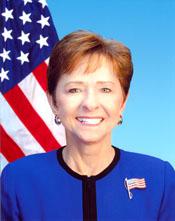
Mr. Speaker, I am very proud to be here today to support Representative DeLauro's Metastatic Breast Cancer Awareness Day resolution. As has already been mentioned many times this month, October is…
Mr. Speaker, I am very proud to be here today to support Representative DeLauro's Metastatic Breast Cancer Awareness Day resolution.
As has already been mentioned many times this month, October is National Breast Cancer Awareness Month, and we see it all over by the pink ribbons everywhere, media campaigns. Throughout the last 30 days, there has been good exposure. The month is nearly over, but the need for breast cancer
awareness and education continues all year long.
October 13 has been recognized as National Metastatic Breast Cancer Awareness Day, and I would like to thank the Metastatic Breast Cancer Network for their continued community outreach.
Awareness and education has assisted in the annual decline in deaths from breast cancer. The Centers for Disease Control has stressed the importance of women receiving regular mammograms, which can help doctors diagnose breast cancer in its early stages, which was my fortunate experience. It is because of these successful programs and National Breast Cancer Awareness Month that encourage early diagnosis before the cancer cells travel from the breast to other parts of the body, including the most well-known and, unfortunately, the places they go the most often, the bones, the liver, the lungs, and the brain. And that describes metastatic breast cancer.
It's commonly known as stage IV breast cancer because it is diagnosed when the cancer has spread to one or more of these distant sites in the body. For all intents and purposes, it is the scariest form of the disease and one that is very difficult to fight. People face reality when they're first diagnosed and are told that they're at stage IV. For others, it's a diagnosis they face later on as they go through their treatment, which is happening to one of my friends currently.
For these women, time is truly of the essence, and the support of family, friends and of the medical professionals is crucial. Sadly, metastatic breast cancer is deadly in most cases, but the good news is that research continues to make great strides in survival rates and in the quality of life for these patients. So I am very proud to support this resolution to designate October 13 as Metastatic Breast Cancer Awareness Day.
I thank my good friend, Representative DeLauro, who is also a cancer survivor, I might add--long term--for sponsoring this bill.
With that, I reserve the balance of my time.
Mr. Speaker, at this time, I am very pleased to yield so much time as he may consume to the other sponsor of the legislation, the gentleman from New Jersey (Mr. LoBiondo).
Mr. Speaker, I reserve the balance of my time.
Mr. Speaker, I yield back the balance of my time.
Show 9 more

Mr. Speaker, I rise today in strong support of S. 1694, the Public Safety Interoperable Communications Grant Program Extension Act of 2009. This grant program, due to expire at the end of this year,…
Mr. Speaker, I rise today in strong support of S. 1694, the Public Safety Interoperable Communications Grant Program Extension Act of 2009.
This grant program, due to expire at the end of this year, is a vital component of a nationwide fully interoperable communications network for our first responders. It provides grants to States so they may purchase expensive, yet essential, interoperable communications equipment.
This simple, straightforward extension would assist States in establishing their portion of a nationwide interoperable network. We cannot afford to let this program expire.
There are two primary reasons to support this bill.
First, interoperability is essential for the safety of Americans. We all know the devastating consequences that occur when our first responders and public safety entities cannot communicate in the face of incredible disaster. Tragedies such as 9/11 and Hurricane Katrina instantly come to mind.
Interoperability was a key recommendation of the 9/11 Commission and one of the foremost reasons Congress passed legislation to ``free-up'' spectrum by transitioning to digital television.
First responders need to be able to communicate effortlessly--lives depend on it.
Second, we want to ensure the communications networks established by States are thorough, effective, and efficient.
The Department of Homeland Security has set deadlines for all States to develop Statewide Communications Interoperability Plans and Congress established the grant program to help States purchase the equipment to implement these plans.
Unfortunately, the deadline for the program has not afforded States sufficient time to comply with the program requirements.
By extending the deadline for applications for this grant program, we are enabling public safety entities to do the right thing--to carefully and thoroughly design their interoperable plans before they spend millions of taxpayer dollars on equipment.
Of course, the sooner interoperable communications networks come online, the better. But we do not want to unwisely rush their implementation or effectively punish those entities that do their due diligence in the planning stages. We must extend this vital grant program.
Mr. Speaker, I am grateful to my colleague Rep. Harman who had the foresight to introduce this legislation. I urge my colleagues to support S. 1694, the Public Safety Interoperable Communications Grant Program Extension Act of 2009.

Mr. Speaker, I rise today in support of S. 1694, the Extension of Public Service Interoperability Communications, PSIC, Grant Program, and I'm proud to be one of the first to have cosponsored this…
Mr. Speaker, I rise today in support of S. 1694, the Extension of Public Service Interoperability Communications, PSIC, Grant Program, and I'm proud to be one of the first to have cosponsored this important piece of legislation. I thank my colleague from California, Ms. Harman, for her hard work in helping to create the PSIC program and for her support of public safety funding.
The funds available under these PSIC grants must have a more flexible timeline so that our public safety agencies can take full advantage of this program and develop interoperability plans that work for their communities. These funds are essential to public safety interoperability plans nationwide.
I've long supported funding for public safety interoperability, both as a member of the Energy and Commerce Committee and in my role as Co- Chair of the E911 Caucus.
First Responders must have the best resources available to them during a crisis. Just as importantly, different emergency agencies must have the ability to communicate with one another to provide essential information. The inability to communicate could have life or death consequences. We knew this hard fact long before 9/11/2001, but we saw it demonstrated in the starkest terms on that day. We should never have to say ``what if?'' We must take the question mark out of interoperable communications and ensure that we have efficient systems in place as soon as possible.
It's been over eight years since we learned the important lessons, of September 11, but we're still taking the initial steps toward interoperability. These grants are just the tip of the iceberg. We need to develop more funding resources and encourage the rapid deployment of available spectrum for public safety interoperability. I'm committed to making certain that we have adequate spectrum rollout for this purpose and I support funding initiatives that will provide interoperability opportunities throughout the nation.
Thank you again for your personal commitment to keeping our first responders and all Americans safe.

I thank the gentleman from North Carolina. I want to rise also to congratulate all the participants in a game well-played last night. We had many Members of Congress. As the gentleman from North…
I thank the gentleman from North Carolina.
I want to rise also to congratulate all the participants in a game well-played last night. We had many Members of Congress. As the gentleman from North Carolina said, we had some former pro football players. It was a hard-fought battle. We won in overtime, 32-26, with a fantastic pass from Heath Shuler to John Booty. It was fabulous.
As Mr. Shuler said, it has been four tries. This is our first victory, being able to beat the Capitol Police. But the big winner was the Capitol Hill Police Memorial Fund and the Washington Literacy Council. We believe we raised about $50,000 to be split between those two groups.
I would also like to acknowledge our offensive and defensive players in the game.
Offensive, it was easy. It was Heath Shuler, five touchdown passes. He played a fantastic game. I think the NFL is going to start looking at you again, Heath. We'd like that. Maybe that seat will come open in North Carolina if you went back to the NFL.
Also, on defense, there were two players that played the game, big surprises for our team: Jack Kingston, better known as Brett Favre of the congressional team, had an outstanding game. But the defensive player of the game went to Anthony ``Mad Dog'' Weiner, who had two key interceptions in the game and just played fantastic.
I want to thank Speaker Pelosi and Leader Boehner for their help and support in putting this game together. Also Roger Goodell, the Commissioner of the NFL, was there last night to flip the coin. And John Booty and Ken Harvey, two former NFL players, did a fantastic job in setting this up.
And finally, again, just to thank the Capitol Police, who do a great job day in and day out, making sure the Capitol is safe, making sure the people who come here are safe. So thank you to them.
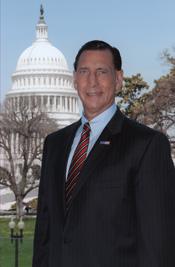
Thank you, Congresswoman Myrick, and thank you to Congressman Pallone and to Congresswoman DeLauro for their advocacy on this very important issue. Mr. Speaker, I rise in very strong support of the…
Thank you, Congresswoman Myrick, and thank you to Congressman Pallone and to Congresswoman DeLauro for their advocacy on this very important issue.
Mr. Speaker, I rise in very strong support of the resolution designating October 13 as National Metastatic Breast Cancer Awareness Day.
We have heard a lot of statistics. They are staggering, and they are staggering because, much of the time, some of this can be prevented. The resolution recognizes the need to raise the level of awareness and to increase research on treatments that will provide a higher quality of life and longer life expectancies for patients living with and fighting metastatic breast cancer.
I participated in an American Cancer Society cancer awareness event about 2 weeks ago on a Sunday in my district in southern New Jersey. On a Sunday morning, in a driving Nor'easter rainstorm with very high winds and with rain coming down in buckets, we had
hundreds of people who showed up because they believed that their involvement would make a difference. They were helping to raise the level of awareness. They were helping to get the message out that we can challenge this terrible disease and that we can make progress.
Metastatic breast cancer refers to stage IV breast cancer, which is when cancer cells travel and then do terrible things in other locations of the body. We know that, in this year, there will be in excess of 190,000 women, almost 2,000 men and, very, very tragically, in excess of 62,000 women who will lose their lives.
So I am a very proud cosponsor of this resolution. I encourage all of my colleagues to join in support of this. All of America should understand that, united and together, we can make a difference. We can make a difference against this dreaded disease.

I thank the gentleman for yielding. Mr. Speaker, I had not planned to speak on this resolution when I came to the floor, but after listening to Ms. DeLauro's eloquent discussion of it, I felt…
I thank the gentleman for yielding.
Mr. Speaker, I had not planned to speak on this resolution when I came to the floor, but after listening to Ms. DeLauro's eloquent discussion of it, I felt duty-bound to weigh in as well in very strong support.
There isn't a woman in my family who has not died from breast cancer--both of my grandparents, all of my aunts, of which I had several, and my mother. My sister, thank goodness, is a survivor, and has just celebrated the birth of her first grandchild herself; but it is in our family, and I cannot tell you how important this resolution is to increase the awareness of this deadly disease.
By the time my mother passed away, her breast cancer had metastasized throughout her body, and as she lay there with her family around her, she couldn't help but ask why she was still there. It broke our hearts to see this woman who had raised us so well and who was so strong in our family literally fall apart before our very eyes.
So I hope that this resolution will increase the awareness of this dreaded disease that hits almost every household in the United States and that causes such pain and suffering. Let us be aware of it, and let us use this opportunity to educate our fellow citizens so that they can receive the treatment they need in a timely manner so they do not suffer as my entire family has.
I want to thank the gentlewoman from Connecticut, and want to urge all of my colleagues to give this resolution a resounding thumbs up.

Mr. Speaker, I want to congratulate our team that won so decisively last night. Mr. Boehner and I were there to cheer the Democratic/Republican, Republican/Democratic team on. The good news is that…
Mr. Speaker, I want to congratulate our team that won so decisively last night. Mr. Boehner and I were there to cheer the Democratic/Republican, Republican/Democratic team on.
The good news is that they won; the bad news is they beat the Capitol Police. So I don't know what that means.
But the fact is that it was great teamwork between the Democrats and the Republicans, which was saluted in the Rotunda earlier today. Senator Edward Brooke, whom we had honored with the Congressional Gold Medal, was pleased to hear about this teamwork between Democrats and Republicans. And, indeed, it got a standing ovation from those folks who didn't even know about the game until then.
But you should have seen our guys. They were so great.
Mr. Shuster, congratulations. Congratulations to Heath Shuler. The last time I saw them, they were playing baseball. They go from baseball to football, all-round athletes; great teamwork, great leadership. Congratulations to our team.
And I, too, want to join in thanking the Capitol Police. I know they went all-out last night because they always go all-out for us.
Congratulations. We were suited up, but we were not called upon.
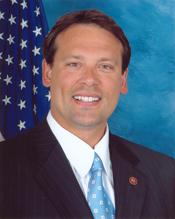
Mr. Speaker, it is a great privilege today to finally announce that after a lot of hard knocks and tries on the gridiron, the Capitol Hill Police versus the Members of Congress, we finally…
Mr. Speaker, it is a great privilege today to finally announce that after a lot of hard knocks and tries on the gridiron, the Capitol Hill Police versus the Members of Congress, we finally successfully came away with a victory last night.
Along with a lot of help, former members of the NFL certainly helped us along, certainly excluding me, Ken Harvey, John Booty and others played an outstanding game, but our Members of Congress did an outstanding job. I think it just goes to show you that, working together across the aisle, we too can succeed.
The co-captain, Mr. Shuster, probably had the most difficult job all night of managing who was in the game. You can only imagine; every Member of Congress thought that they were the best player on the team. So he had the most difficult job all night.
I would yield to my co-captain, Mr. Shuster.
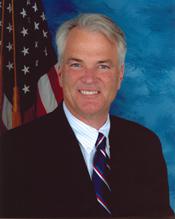
Mr. Speaker, on rollcall No. 819, had I been present, I would have voted ``yea.'' (By unanimous consent, Mr. Shuler was allowed to speak out of order.) Members of Congress Victorious Over Capitol…
Mr. Speaker, on rollcall No. 819, had I been present, I would have voted ``yea.''
(By unanimous consent, Mr. Shuler was allowed to speak out of order.)
Members of Congress Victorious Over Capitol Hill Police in Annual
Charity Football Game
Bill Text
5 versions available
        [Congressional Bills 111th Congress]
[From the U.S. Government Publishing Office]
[S. 1694 Enrolled Bill (ENR)]

S.1694

One Hundred Eleventh Congress

of the

United States of America

AT THE FIRST SESSION

Begun and held at the City of Washington on Tuesday,
the sixth day of January, two thousand and nine

An Act

To allow the funding for the interoperable emergency communications
grant program established under the Digital Television Transition and
Public Safety Act of 2005 to remain available until expended through
fiscal year 2012, and for other purposes.

Be it enacted by the Senate and House of Representatives of the
United States of America in Congress assembled,

SECTION 1. PUBLIC SAFETY INTEROPERABLE COMMUNICATIONS GRANTS.

(a) Notwithstanding section 3006(a)(2) of the Digital Television
Transition and Public Safety Act of 2005 (47 U.S.C. 309 note), sums
made available to administer the Public Safety Interoperable
Communications Grant Program under section 309(j)(8)(E) of the
Communications Act of 1934 (47 U.S.C. 309(j)(8)(E)) shall remain
available until expended, but not beyond September 30, 2012.
(b) The period for performance of any investment approved under the
Program as of the date of enactment of this Act shall be extended by
one year, but not later than September 30, 2011, except that the
Assistant Secretary of Commerce for Communications and Information may
extend, on a case-by-case basis, the period of performance for any
investment approved under the Program as of that date for a period of
not more than 2 years, but not later than September 30, 2012. In making
a determination as to whether an extension beyond September 30, 2011,
is warranted, the Assistant Secretary should consider the circumstances
that gave rise to the need for the extension, the likelihood of
completion of performance within the deadline for completion, and such
other factors as the Assistant Secretary deems necessary to make the
determination.

Speaker of the House of Representatives.

Vice President of the United States and
President of the Senate.