Daniel Webster Congressional Clerkship Act of 2009
Legislative Activity
Stay on top of the latest movement without scrolling through every action
Read twice and referred to the Committee on Rules and Administration.
January 7, 2009
View full timeline
Introduced in Senate
January 7, 2009
Read twice and referred to the Committee on Rules and Administration.
January 7, 2009
Floor Debate
24 membersWhat members said about S. 27 on the floor
 JC
JC DH
DH DF
DF NJR
NJR LC+19
LC+19
Floor Debate
24 membersWhat members said about S. 27 on the floor
I thank the gentleman for yielding. Mr. Speaker, I rise today in support of two important pieces of legislation that I have sponsored and that are now included in the natural resources bill that we…
I thank the gentleman for yielding.
Mr. Speaker, I rise today in support of two important pieces of legislation that I have sponsored and that are now included in the natural resources bill that we have received from the Senate, S. 22.
San Joaquin River Restoration Settlement Act
The first, the San Joaquin River Restoration Settlement Act, will bring to a close 18 years of litigation between the Natural Resources Defense Council, the Friant Water Users Authority, the U.S. Department of the Interior and others. Representatives Cardoza, McNerney and Radanovich joined me as co-sponsors of this legislation. This bill is similiar to the one that we introduced in the waning days of the 109th Congress, and reintroduced at the beginning of the 110th Congress as H.R. 24. The bill approves, authorizes and helps fund an historic Settlement on the San Joaquin River in California.
However, the bill we are introducing today does reflect a few significant changes resulting from discussions among the numerous Settling Parties and various ``Third Parties'' in the San Joaquin Valley of California. During the past year the parties to the settlement and these affected third parties, such as the San Joaquin River Exchange Contractors, have agreed to certain changes to the legislation to make the measure PAYGO neutral and to enhance implementation of the settlement's ``Water Management Goal'' to reduce or avoid adverse water supply impacts to Friant Division long-term water contractors. The legislation that we are voting on today incorporates these changes, which are supported by the State of California and major water agencies on the San Joaquin River and its tributaries. The Bush Administration also supported this legislation.
This bill will approve a settlement that seeks to restore California's second longest river, the San Joaquin, while maintaining a stable water supply for the farmers who have made the San Joaquin Valley the richest agricultural area in the world.
The Settlement has two co-equal goals: to restore and maintain fish populations in the San Joaquin River, including a self-sustaining salmon fishery, and to avoid or reduce adverse water supply impacts to long-term Friant water contractors. Consistent with the terms of the Settlement, we expect that both of these goals will be pursued with equal diligence by the federal agencies.
The bill also authorizes $1 million for the California Water Institute at California State University, Fresno, for the creation of an Integrated Regional Water Management Plan for the Central Valley. The plan will serve as a guide for those in the study area to use to address and solve long-term water needs in a sustainable and equitable manner.
This legislation is crucial. Without this consensus resolution, the parties will continue the fight, resulting in a court-imposed judgment. It is widely recognized that an outcome imposed by a court is likely to be worse for everyone on all counts: more costly, riskier for the farmers, and less beneficial for the environment.
The Settlement provides a framework that the affected interests can accept. As a result, this legislation has enjoyed the strong support of the Bush Administration, California Governor Schwarzenegger's Administration, the environmental and fishing communities and numerous California farmers and water districts, including the Friant Water Users Authority and its member districts that have been part of the litigation.
When the Federal Court approved the Settlement in late October, 2006, Secretary of the Interior Dirk Kempthorne praised the Settlement for launching ``one of the largest environmental restoration projects in California's history.'' The Secretary further observed that ``This Settlement closes a long chapter of conflict and uncertainty in California's San Joaquin Valley . . . and open[s] a new chapter of environmental restoration and water supply certainty for the farmers and their communities.''
I share the former Secretary's support for this agreement, and it is my honor to join with Representatives Cardoza, McNerney and Radanovich, as well as Senators Feinstein and Boxer who have previously introduced and supported this legislation to authorize and help fund the San Joaquin River Restoration Settlement.
For almost two years we have worked with the parties to the settlement, affected third party agencies and the State of California to ensure that the legislation complies with congressional PAYGO rules.
In November of 2007, the House Natural Resources Committee favorably reported a revised version of the bill (H.R. 4074) that included amendments conditionally agreed to by the parties that allow most Friant Division contractors to accelerate repayment of their construction cost obligation to the Treasury. In May of 2008, the Senate Energy and Natural Resources Committee favorably reported the Senate companion measure (S. 27) with provisions that further refined the accelerated repayment concept and addressed third party concerns about its implementation. These changes, included in the bill we introduce today, both increase the amount of up-front funding available for the settlement and decrease the bill's PAYGO ``score'' by $88 million, according to the Congressional Budget Office. In exchange for agreeing to early re-payment of their construction obligation, Friant water agencies will be able to convert their 25-year water service contracts to permanent repayment contracts, so-called ``9D contracts'' under federal Reclamation Law.
I note that the Bureau of Reclamation and the Friant Water Users Authority on behalf of its members have had very specific discussions on how the repayment amounts will be calculated in accordance with this legislation, memorialized in a letter dated February 20, 2009, from Mr. Donald Glaser, Regional Director of the Bureau of Reclamation for the Mid-Pacific Region. I request that Mr. Glaser's letter be inserted in the Record.
U.S. Department of the Interior,
Bureau of Reclamation,
Sacramento, CA, February 20, 2009.
Mr. Ronald Jacobsma,
General Manager, Friant Water Users Authority, Lindsay, CA.
Subject: Financing Provisions of the San Joaquin River
Restoration Settlement Act.
Dear Mr. Jacobsma: As you are aware, amendments were made
early in 2008 to the proposed San Joaquin River Restoration
Settlement Act (Act) in an effort to reduce the ``PAYGO''
score of the Act. One of the amendments made in the Act would
authorize and direct the Secretary of the Interior to convert
certain Friant Division, Hidden Unit, and Buchanan Unit
irrigation contractors' water service contracts to water
repayment contracts, subject to certain provisions. The Act
was recently passed by the Senate as Title X, Subtitle A,
Part 1, of S. 22, and we expect the House of Representatives
to consider it shortly. As you know, staff from the Bureau of
Reclamation and the Friant Water Users Authority have had
technical discussions concerning the financing provisions of
the bill. This letter and enclosures set forth our
understanding of how the financing provisions will be
implemented if the conversion sections of the Act, found in
Section 10010, are in their current form upon enactment, if
those provisions of the bill are modified before enactment,
we will of course need to reevaluate whether the information
in this letter and enclosures is still accurate.
Enclosed is a summary of each of the financing provisions
in Section 10010 related to the contract conversion and our
understanding of how they would be implemented by Reclamation
(Enclosure 1). Also, enclosed are two specific examples to
demonstrate how the financial calculations for this
conversion and related funding would work given a number of
specific assumptions (Enclosure 2). Enclosure 2 consists of a
description of the assumptions used and a spreadsheet for
each of the examples.
If there are any problems with the information provided in
the enclosures, please contact Jason Phillips as soon as
possible to discuss and resolve.
Sincerely,
Donald R. Glaser,
Regional Director.
These new contracts will be administered as repayment contracts consistent with federal Reclamation Law, including the Acts of August 4, 1939 (ch. 418, 53 Stat. 1187) and July 2, 1956 (ch. 492, 70 Stat. 483). The later Act, among other things, provides in part that the contractors shall have a first right ``. . . to a stated share or quantity of the project's available water supply . . . and a permanent right to such share or quantity upon completion of payment. . . .'' It is my understanding that, except as specifically provided in this legislation, the operative provisions of such repayment contracts will be substantially similar to the existing water service contracts.
The bill also provides in Section 10010(c)(1) that, consistent with Section 213(a) of the Reclamation Reform Act of 1982, the ownership and full-cost pricing provisions of federal Reclamation Law no longer will apply to the individual Friant Contractors upon repayment of their capital obligations. A question has arisen as to whether these Reclamation Law limitations would apply to water delivered under such a repayment contract after full repayment of capital, where a Friant contractor also had a contract for another supply under a water service contract, such as the Cross Valley Canal contract. It is my understanding that the Department of the Interior and Friant contractors concur that in such a situation, the acre-limitation and full-cost pricing provisions would not apply to water delivered from Central Valley Project facilities for which the capital costs had been fully paid, but would apply to water delivered from Project facilities for which the capital costs had not been repaid, such as water from the Cross Valley Canal contracts.
The Senate Committee amendments also included new provisions to enhance the water management efforts of affected Friant water districts. These provisions are contained in Part III of Title X, Subpart A, of the legislation before the House today. These changes were developed by the parties to the settlement at my request and the request of Mr. Cardoza and Mr. Radanovich to ensure that the Friant districts have the best opportunity to mitigate water supply impacts resulting from the Settlement.
Specifically, the legislation now includes new authority to provide improvements to Friant Division facilities, including restoring capacity in canals, reverse flow pump-back facilities, and financial assistance for local water banking and groundwater recharge projects, all for the purpose of reducing or avoiding impacts on Friant Division contractors resulting from additional River flows called for by the Settlement and this Legislation.
In addition, with respect to Part III authorizing financial assistance for local projects for water banking and groundwater storage, recovery and conveyance, the bill authorizes the
Bureau of Reclamation to share up to 50 percent of the cost of such projects. It is my understanding that in administering other cost- sharing programs, the Bureau typically provides the maximum cost sharing authorized unless the applicant requests less.
Near the end of the 110th Congress, parties to the Settlement and affected third parties came to agreement on additional provisions that would greatly facilitate passage of the bill by making it fully PAYGO- neutral.
The legislation we are introducing today includes substantial funding, including direct spending on settlement implementation during the first ten year period of $88 million gained by early repayment of Friant's construction obligation, and substantial additional funding authorized for annual appropriation until 2019, after which it then becomes available for direct spending again. This additional funding is generated by continuing payments from Friant water users and will become directly available to continue implementing the settlement by 2019 if it has not already been appropriated for that purpose before then.
In 2006, California voters showed their support for the settlement by approving Propositions 84 and 1E, which will help pay for the Settlement, with the State of California now committing at least $200 million toward the Settlement costs during the next 10 years. When State-committed funding, direct spending authorized by the bill, and highly reliable funding from water users are added together, there is at least $380-390 million available for implementing the Settlement over the next 10 years, with additional dollars possible from additional federal appropriations.
It is my understanding that Senator Feinstein intends to work during the 111th Congress to find a suitable offset that will allow restoration of all of the direct spending envisioned by the settlement without waiting until 2019, and I will do whatever I can to aid in those efforts.
Today's legislation continues to include substantial protections for other water districts in California who were not party to the original settlement negotiations. These other water contractors will be able to avoid all but the smallest water impacts as a result of the settlement, except on a voluntary basis.
The bill we are introducing today contains several new provisions to strengthen these third-party protections in light of the changes made to address PAYGO. These include safeguards to ensure that the San Joaquin River Exchange Contractors and other third parties will not face increased costs or regulatory burdens as a result of the PAYGO changes.
This agreement would not have been possible without the participation of a remarkably broad group of agencies, stakeholders and legislators, reaching far beyond the settling parties. The Department of the Interior, the State of California, the Friant Water Users Authority, the Natural Resources Defense Council on behalf of 13 other environmental organizations and countless other stakeholders came together and spent countless hours with legislators in Washington to ensure that we found a solution that the large majority of those affected could support.
I urge my colleagues in the House to approve this legislation and provide the Administration the authorization it needs to fully carry out the restoration, water management and other actions called for under the settlement.
Sequoia and Kings Canyon National Parks Wilderness
I also rise today in support of the Sequoia and Kings Canyon National Parks Wilderness designation.
This provision adds about 85,000 acres of wilderness in the Sequoia and Kings Canyon National Parks in California. About 45,000 acres of the wilderness created by this bill will be incorporated into the currently existing Sequoia-Kings Canyon Wilderness area. The other 40,000 acres will comprise a new wilderness area, which will be named after former Congressman John Krebs.
John Krebs served two-terms in Congress, from 1975 to 1979, representing California's San Joaquin Valley and the central Sierra Nevada mountains that include Sequoia and Kings Canyon National Parks. He was born in Berlin in 1926 and immigrated to the United States in 1946. He graduated from the University of California and later US's Hasting College of Law. He had lived in Fresno, California since 1958 and prior to being elected to Congress was active in local government, including serving a term on the Fresno County Board of Supervisors.
I had the great privilege of working in John Krebs first congressional campaign and joining him during his first term in Washington. It was through his efforts that Congress first provided federal wilderness designation for the Mineral King area.
The wilderness areas designated by this Act include some spectacular areas within the Sequoia and Kings Canyon National Parks. The Redwood Canyon area contains Redwood Mountain Grove, the largest stand of Giant Sequoia within the parks. The Redwood Canyon area also includes over 75 known caves, including the longest cave in California with over 21 miles of surveyed passage.
This bill is obviously very important to me--both for preserving these natural areas for future generations, as well as for honoring my former boss--and I urge my House colleagues to approve S. 22 so this measure can become law.
Mr. Speaker, parliamentary inquiry. Mr. Speaker, just to clarify, I have a series here of questions I would like to ask under parliamentary inquiry, and that does not count against my time; is that…
Mr. Speaker, parliamentary inquiry.
Mr. Speaker, just to clarify, I have a series here of questions I would like to ask under parliamentary inquiry, and that does not count against my time; is that correct?
Thank you, Mr. Speaker.
Mr. Speaker, just to be clear, as we are considering S. 22, has the gentleman from West Virginia made a motion to amend S. 22?
Further parliamentary inquiry.
Mr. Speaker, is this motion by the Democrat bill manager the only way that this bill may be amended under suspension of the rules?
Further parliamentary inquiry, Mr. Speaker.
Mr. Speaker, just to clarify, then, under suspension of the rules, no other Member except the Democrat bill manager may offer amendments or text directly to S. 22 to change any other provisions of the bill which have not been considered by the House or which have substantive issues like cutting off recreational opportunities, reducing border security, locking up energy sources, or high costs?
Mr. Speaker, if S. 22 had been considered under an open rule, would any Member with a germane amendment be able to offer that amendment?
I think I know the answer, but further parliamentary inquiry.
Mr. Speaker, could the Rules Committee have issued a rule to allow Members from both sides of the aisle to offer amendments to strike objectionable provisions or restore House- passed language which was not included by the Senate?
I suspected that would be your response, Mr. Speaker.
Mr. Speaker, I yield myself 4 minutes.
(Mr. HASTINGS of Washington asked and was given permission to revise and extend his remarks.)
Mr. Speaker, I oppose this motion to consider the Senate Omnibus Lands bill by suspending the rules of the House.
Let us be very clear about what's happening on the House floor this morning. For weeks and months, Democrat leaders in the Senate and the House, and outside special interest groups, have repeatedly insisted that the House must pass this massive Senate bill without changing a single word or it will be doomed to Senate purgatory and no further action will be taken. This was the justification given for why every Member of this House should be blocked from offering their ideas and amendments to improve or change this 1,200-page bill. Yet this morning, as I have just confirmed with the Speaker through the parliamentary inquiry, Democrat leaders are using the special suspension process to
amend the Senate bill and simultaneously block other Members from offering an amendment.
The Senate's Rubicon of not changing one word has now been crossed. S. 22 has been amended. If we change one part of the bill, then this House deserves the opportunity to consider it in an open and fair manner. Instead, the Democrat leaders are shutting down everyone from offering amendments, including Democrats who have publicly been outspoken about wanting to remove entire provisions from S. 22. I urge these Democrats and all House Members to oppose this bill under suspension and demand a fair and open process of debate.
The suspension process, Mr. Speaker, should be reserved for noncontroversial bills with little or no cost to the taxpayers. Yet, this Senate Omnibus Lands bill costs over $10 billion and consists of over 170 bills folded into a 1,200-page monster piece of legislation. Mr. Speaker, this is an extreme abuse of the process for considering bills under suspension of the rules.
Under suspension of the rules, the House has only 40 minutes to debate the bill. With over 170 bills in this omnibus package, that allows just seven seconds--seven seconds--to debate each bill. And of these 170 plus bills, 100 of them have never been passed by the House. Any notion that this is just a package of bills already passed by the House is absolutely false.
Now, I know that for some Members there may be a page or two in this 1,200-page bill that does something positive for their district. In fact, three separate pieces of legislation, Mr. Speaker, that I authored were attached to this package. But I am more concerned about the other bills that have not been closely examined or been debated by the House.
This massive bill was assembled behind closed doors with the purpose of creating a package that tries to force individual Members to vote for it in order to get their own bill passed despite broad policy differences that will have serious and harmful impacts. Members of the House should consider this bill in its entirety and what it does for our country.
This bill contains 19 provisions to block American-made energy production, locking away hundreds of millions of barrels of oil and trillions of cubic feet of natural gas. Under this bill, our country becomes less secure, and we must rely on foreign imports of energy to fuel our vehicles and run our businesses.
When the Federal Government shuts down energy production in America, we are sending good-paying jobs overseas. Over 3 million acres of land will be locked up from possible energy production, and new jobs won't be created when Americans desperately need them in these times. With our economy reeling, and thousands of Americans losing jobs every week, this is a poisonous policy that makes it tougher and more expensive to get America's economy back on track.
This bill also bans recreational access to millions of acres of public lands despite proponents' claims that it will do otherwise. Lands that citizens currently use for enjoyment will be barricaded from recreational vehicle use. Riding a bicycle won't even be allowed.
I yield myself an additional 30 seconds.
Mr. Speaker, this bill costs $10 billion at a time when taxpayers and the economy simply can't afford it. Our National Parks Service system can't even keep existing priorities open and in working order.
With the maintenance backlog of $9 billion on existing lands, Congress should not be passing a $10 billion bill to buy more lands to make the problem worse. This bill makes it more difficult for the Border Patrol and other law enforcement agencies to secure the southern border. And this bill makes criminals and potential felons out of children who want to collect fossils on Federal lands.
Mr. Speaker, I could go on much longer, but I only have 20 minutes for debate.
Mr. Speaker, I yield myself an additional 15 seconds.
And we are considering a package of over 170 bills, with just seven seconds to debate each bill's cost.
So I urge my colleagues, Mr. Speaker, to oppose passage of this bill under suspension of the rules and insist on the ability to consider under an open process that allows for amendments.
Mr. Speaker, I oppose this motion to consider the Senate Omnibus Lands bill by suspending the rules of the House.
Let us be very clear about what's happening on the House Floor this morning. For weeks and months, Democrat leaders in the Senate and the House, and outside special interest groups, have repeatedly insisted that the House must pass this massive Senate bill without changing a single word or it will be doomed to Senate purgatory and no further action will be taken.
This was the justification given for why every Representative in this House should be blocked from offering their ideas and amendments to improve or change this over 1,200 page bill.
Yet this morning, Democrat Leaders are using the special suspension process to amend the Senate bill and simultaneously block every other Representative from offering an amendment.
The Senate's rubicon of not changing one word has now been crossed. S. 22 has been amended. So then why isn't the House allowed to consider additional amendments except the one approved by Democrat leaders. If we change one part of the bill, then this House deserves the opportunity to consider it in an open and fair manner. Instead, Democrat leaders are shutting down everyone from offering amendments, including Democrats who've been publicly outspoken about wanting to remove entire provisions from S. 22 that they strongly oppose. I urge these Democrats and all House Members to oppose this bill under suspension and demand a fair, open process of debate on this bill in the House.
The suspension process is reserved for noncontroversial bills with little cost to the taxpayer. Indeed, other bills on suspension today include supporting the goals of International Woman's Day, urging the President to designate 2009 as the Year of the Military Family, and supporting the designation of Pi Day. Yet, this Senate Omnibus Lands Bill costs over 10 billion dollars, and consists of over 170 individual bills being amassed into a 1,200 page monster piece of legislation. This is an extreme abuse of the process for considering bills under suspension of House rules.
Under suspension of the rules, the House has only 40 minutes to debate the bill. I've been recognized for 20 of those minutes. With over 170 bills in this Omnibus, that allows just 7 seconds . . . 7 seconds . . . to debate each bill.
And of these 170 plus bills, some 100 of them have never been passed by the House. Any notion that this is just a packaging of bills already passed by the House is absolutely false.
I recognize what I have just spoken about is inside baseball, legislative process arguments, yet it is important for the American public to understand the heavy-fisted manner in which this House is being run. It's also important for all Representatives to understand that this bill has now been amended and that we should have the opportunity to consider other changes to it.
For every Member of the House, there may be a page or two in this 1,200 page bill that does something positive in your district. In fact, three separate pieces of legislation that I authored were attached to this package. However, I am more concerned about the other bills that have not been closely examined or debated by the House. This massive bill was written behind-closed-doors with the purpose of creating a package that tries to force individual Members to vote for it in order to get their own small bill passed despite broad policies that will have a serious and harmful impact. Members of the House should consider this bill in its entirety and what it does to our country.
It contains 19 provisions to block American-made energy production, locking away hundreds of millions of barrels of oil and trillions of cubic feet of natural gas. Under this bill, our country becomes less secure as we must rely on foreign imports of energy to fuel our vehicles and run our businesses. When the federal government shuts down energy production here in America, we're sending good-paying jobs overseas. Over 3 million acres of land will be locked up from possible energy production and new jobs won't be created when Americans desperately need them. With our economy reeling and thousands of Americans losing jobs every week, this is a poisonous policy that makes it tougher and more expensive to get America's economy back on track.
This bill bans recreational access to millions of acres of public lands despite proponents' claims that it will protect vast new land areas for the appreciation of Americans. Lands that citizens currently use for enjoyment will be barricaded from recreational vehicle use.
Riding a bicycle won't even be allowed. The harm to American's outdoor enjoyment is so outrageous that even ESPN has covered it.
This bill costs $10 billion at a time when taxpayers and our economy simply can't afford it. Our National Parks System can't even keep existing properties open and in working order. With a maintenance backlog of 9 billion dollars on existing lands, Congress should not be passing a $10 billion bill to buy more land and make the problem worse.
This bill makes it more difficult for the Border Patrol and other law enforcement to secure our southern border by restricting vehicle access onto specific lands. This bill would make criminals and potential felons out of children and others who collect fossils on federal lands.
Mr. Speaker, I could go on much longer, but we have only 20 minutes for debate and we're considering a package of over 170 bills, so we have just 7 seconds to debate each bill's cost and effect upon domestic energy production, American jobs, recreation access to public lands, and border security. I urge my colleagues to oppose passage of this bill under suspension of the rules and insist on the ability to consider it under a fair, open process that allows for amendments.
Mr. Speaker, I reserve the balance of my time.
Mr. Speaker, I yield for the purpose of making a unanimous consent request to the gentleman from Texas (Mr. Smith).
(Mr. SMITH of Texas asked and was given permission to revise and extend his remarks.)
Mr. Speaker, I am pleased to yield 1\1/2\ minutes to the gentleman from California (Mr. Nunes).
Mr. Speaker, I am pleased to yield 2 minutes to the gentleman from Texas (Mr. Culberson).
Mr. Speaker, I am pleased to yield 1 minute to the gentleman from Georgia (Mr. Broun), a member of the committee.
Mr. Speaker, I yield the gentleman an additional 15 seconds.
Mr. Speaker, I am pleased to yield 5 minutes to a very valuable member of the Natural Resources Committee, the gentleman from Utah (Mr. Bishop).
Mr. Speaker, how much time on both sides remains?
Mr. Speaker, I am pleased to yield 2 minutes to the gentlelady from Wyoming (Mrs. Lummis), a new member of the committee.
I yield the gentlelady an additional 15 seconds.
Mr. Speaker, I think we are kind of out of balance here.
I will reserve the balance of my time.
Mr. Speaker, could I inquire of my friend from West Virginia how many speakers he has.
I will reserve my time.
I will reserve.
And I have two speakers, including me.
Mr. Speaker, can I inquire of my friend how many speakers he has left?
Including you?
Why don't I reserve my time, and we'll be even.
Mr. Speaker, I am pleased to yield 1 minute to a new member of the Natural Resources Committee, the gentleman from Utah (Mr. Chaffetz).
Once again, Mr. Speaker, I understand that I am ready to close on my side. If the gentleman from West Virginia is prepared to close after I speak, I will go ahead.
I yield myself the balance of my time, Mr. Speaker.
Mr. Speaker, I just want to make a point. There's some reference here to the NRA and what their position is on this bill. I just want to say that there was a letter passed to all Members that NRA has no position on this bill. They are neutral.
Mr. Speaker, because under suspension of the rules Members cannot offer amendments directly to S. 22, so, Mr. Speaker, may I ask the gentleman from West Virginia to yield for the purpose of an amendment to his motion to strike the provisions of S. 22 which can criminalize rock-collecting on Federal lands?
Mr. Speaker, let me try another one. There are several issues here. May I ask the gentleman from West Virginia to yield to me for the purpose of an amendment to his motion to guarantee that S. 22 will not prohibit or delay energy development on millions of acres of Federal lands affected by this bill?
The gentleman won't yield. Mr. Speaker, I will try one more time.
May I ask the gentleman from West Virginia to yield to me for the purpose of an amendment to his motion to guarantee that S. 22 will not prohibit recreational access for all Americans to the millions of acres of Federal lands affected by this bill?
Mr. Speaker, how much time do I have left?
Mr. Speaker, I just want to point out that this is an extraordinary process. Suspension of the rules for bills are generally for noncontroversial issues. This is a $10 billion authorization bill, and it was amended. It was amended. But nobody else, including those that I referenced here earlier, had an opportunity to come to the floor and offer their amendment in their way to try to perfect this bill.
So, I am urging my colleagues to vote ``no'' on this bill. When it's defeated under suspension of the rules, the majority can take this back to Rules, have an open rule so we can debate this process, I think, in a very reasonable way.
Because, keep in mind, Mr. Speaker, we were told, ``No amendments on this bill or the Senate will take it down to their purgatory.'' That didn't happen. So, with that, Mr. Speaker, I yield back my time and urge a ``no'' vote.
Mr. Speaker, on that I demand the yeas and nays.
Mr. President, I rise to speak to Senator Bingaman's introduction today of the Omnibus Public Land Management Act of 2009. I strongly support this bill and Senator Bingaman's leadership in sponsoring…
Mr. President, I rise to speak to Senator Bingaman's introduction today of the Omnibus Public Land Management Act of 2009. I strongly support this bill and Senator Bingaman's leadership in sponsoring it, and urge my colleagues to vote for its prompt passage.
This omnibus legislation includes no fewer than 20 bills of interest to California, including 14 bills to increase our water supply and to restore our rivers and groundwater quality, 3 bills to designate additional wilderness areas, and 3 other National Park Service, Bureau of Land Management, and Forest Service bills.
I would like to speak at some length about one of these bills, the San Joaquin River Restoration Settlement Act, which I have introduced with Senator Boxer to bring to a close 18 years of litigation between the Natural Resources Defense Council, the Friant Water Users Authority and the U.S. Department of the Interior. Before I discuss the San Joaquin bill, however, I would like to review the other 19 California bills in the omnibus legislation introduced today. These include the following:
Additions to National Wilderness Preservation System
Eastern Sierra and Northern San Gabriel Wilderness,
Riverside County Wilderness, and the
Sequoia and Kings Canyon National Parks Wilderness;
Bureau of Land Management
Tuolumne Band of Me-Wuk Indians of the Tuolumne Rancheria land exchange;
Forest Service
Mammoth Community Water District land conveyance;
National Park Services
Tule Lake Segregation Center Resource Study;
Bureau of Reclamation
San Diego Intertie feasibility study,
Madera Water Supply Enhancement Project authorization,
Rancho California Water District project authorization,
Santa Margarita River project authorization,
Elsinore Valley Municipal Water District project authorization,
North Bay Water Reuse Authority project authorization,
Prado Basin Natural Treatment System Project authorization,
Bunker Hill Groundwater Basin project authorization,
GREAT Project authorization,
Yucaipa Valley Water District project authorization,
Goleta Water District Water Distribution System title transfer,
San Gabriel Basin Restoration Fund, and the
Lower Colorado River Multi-Species Conservation Program
I would like to say a few words about the water project authorizations and wilderness bills, in addition to the San Joaquin River Settlement legislation.
In the Western U.S., drought, population growth, increasing climate variability, and ecosystem needs make managing water supplies especially challenging. The 9 California water recycling projects included in the omnibus bill offer a proven means to develop cost effective alternative water supply projects. Together they will help the state reduce its dependence on imported water from both the Lower Colorado River and Sacramento/San Joaquin Delta.
Among the other bills to benefit California water supply and quality, one codifies the Lower Colorado River Multi-Species Conservation Program, MSCP, a 50 year plan to protect endangered species and preserve wildlife habitat along the Colorado River.
The three wilderness bills in this package would together protect a wilderness about 735,000 acres of land in Mono, Riverside, Inyo, and Los Angeles Counties, and within Sequoia-Kings Canyon National Park. This will protect spectacular lands ranging from the High Sierras to the magnificent California deserts. I want to thank Senator Boxer in particular for her leadership on these bills.
I would like to devote most of my remarks to the San Joaquin River Restoration Settlement Act, a bill Senator Boxer and I have cosponsored that approves, authorizes and helps fund an historic Settlement on the San Joaquin River in California. This Settlement restores California's second longest river, while maintaining a stable water supply for the farmers who have made the San Joaquin Valley the richest agricultural area in the world. One of the major benefits of this settlement is the restoration of a long-lost salmon fishery. The return of one of California's most important salmon runs will create significant benefits for local communities in the San Joaquin Valley, helping to restore a beleaguered fishing industry while improving recreation and quality of life.
This San Joaquin Settlement bill is nearly identical to the bill that we introduced in the waning days of the 109th Congress, and reintroduced at the beginning of the 110th Congress as S. 27. However, the bill we are introducing today does reflect a few significant changes resulting from discussions among the numerous Settling Parties and various ``Third Parties'' in the San Joaquin Valley of California. During the past year the parties to the settlement and these affected third parties, such as the San Joaquin River Exchange Contractors, have agreed to certain changes to the legislation to make the measure PAYGO neutral and to enhance implementation of the settlement's ``Water Management Goal'' to reduce or avoid adverse water supply impacts to Friant Division long-term water contractors. The legislation that we are introducing today incorporates these changes, which are supported by the State of California and major water agencies on the San Joaquin River and its tributaries.
The Settlement has two goals: to restore and maintain fish populations in the San Joaquin River, including a selfsustaining salmon fishery, and to avoid or reduce adverse water supply impacts to long- term Friant water contractors. Consistent with the terms of the Settlement, we expect that both of these goals will be pursued with equal diligence by the Federal agencies.
Without this consensus resolution of a long-running western water battle the parties will continue the fight, resulting in a court- imposed judgment. It is widely recognized that an outcome imposed by a court is likely to be worse for everyone on all counts: more costly, riskier for the farmers, and less beneficial for the environment.
The Settlement provides a framework that the affected interests can accept. As a result, this legislation has enjoyed the strong support of the Bush Administration, California Governor Schwarzenegger's Administration, the environmental and fishing communities and numerous California farmers and water districts, including the Friant Water Users Authority and its member districts that have been part of the litigation.
When the Federal Court approved the Settlement in late October, 2006, Secretary of the Interior Dirk Kempthorne praised the Settlement for launching ``one of the largest environmental restoration projects in California's history.'' The Secretary further observed that ``This Settlement closes a long chapter of conflict and uncertainty in California's San Joaquin Valley . . . and open[s] a new chapter of environmental restoration and water supply certainty for the farmers and their communities.''
I share the Secretary's strong support for this balanced and historic agreement, and it is my honor to join with Senator Boxer and a bipartisan group of California House Members who have previously introduced and supported this legislation to authorize and help fund the San Joaquin River Restoration Settlement.
During the past year we have worked with the parties to the settlement, affected third party agencies and the State of California to ensure that the legislation complies with congressional PAYGO rules.
In May of 2008, the Energy and Natural Resources Committee approved amendments agreed to by the parties that allow most Friant Division contractors to accelerate repayment of their construction cost obligation to the Treasury. This change both increases the amount of up-front funding available for the settlement and decreases the bill's PAYGO ``score'' by $88 million, according to the Congressional Budget Office. In exchange for agreeing to early re-payment of their construction obligation, Friant water agencies will be able to convert their 25-year water service contracts to permanent repayment contracts.
The amendments also included new provisions to enhance the water management efforts of affected Friant water districts. Specifically, the legislation now includes new authority to provide improvements to Friant Division facilities, including restoring capacity in canals, reverse flow pump-back facilities, and financial assistance for local water banking and groundwater recharge projects, all for the purpose of reducing or avoiding impacts on Friant Division contractors resulting from additional River flows called for by the Settlement and this Legislation.
Near the end of the 110th Congress, parties to the Settlement and affected third parties came to agreement on additional provisions that would greatly facilitate passage of the bill by making it PAYGO- neutral. The legislation we are introducing today includes substantial funding, including direct spending on settlement implementation during the first ten year period of $88 million gained by early repayment of Friant's construction obligation, and substantial additional funding authorized for annual appropriation until 2019, after which it then becomes available for direct spending again. This additional funding is generated by continuing payments from Friant water users and will become directly available to continue implementing the settlement by 2019 if it has not already been appropriated for that purpose before then.
In 2006, California voters showed their support for the settlement by approving Propositions 84 and 1E, that will help pay for the Settlement, with the State of California now committing at least $200 million toward the Settlement costs during the next 10 years. When State-committed funding, direct spending authorized by the bill, and other highly reliable funding including pre-existing payments by water users are added together, there is at least $380-390 million available for implementing the Settlement over the next 10 years, with additional dollars possible from additional federal appropriations.
Nevertheless, it is my intention to work with the Chairman of the Energy and Natural Resources Committee during the 111th Congress to find a suitable offset that will allow restoration of all of the direct spending envisioned by the settlement without waiting until 2019.
Today's legislation continues to include substantial protections for other
water districts in California who were not party to the original settlement negotiations. These other water contractors will be able to avoid all but the smallest water impacts as a result of the settlement, except on a voluntary basis. These protections are accomplished while ensuring a timely and robust restoration of the River and without creating any new precedents for implementing the Endangered Species Act. Similarly, there is no preemption of State law and nothing in the bill changes any existing obligations of the United States to operate the Central Valley Project in conformity with state law.
The bill we are introducing today contains several new provisions to strengthen these third-party protections in light of the changes made to address PAYGO. These include safeguards to ensure that the San Joaquin River Exchange Contractors and other third parties will not face increased costs or regulatory burdens as a result of the PAYGO changes.
Support of this agreement is almost as far reaching as its benefits. This historic agreement would not have been possible without the participation of a remarkably broad group of agencies, stakeholders and legislators, reaching far beyond the settling parties. The Department of the Interior, the State of California, the Friant Water Users Authority, the Natural Resources Defense Council on behalf of 13 other environmental organizations and countless other stakeholders came together and spent countless hours with legislators in Washington to ensure that we found a solution that the large majority of those affected could support.
At the end of the day, I believe that this San Joaquin bill is something that we can all feel proud of, and I urge my colleagues to move quickly to approve this omnibus public lands legislation and provide the administration the authorization it needs to fully carry out the extensive restoration opportunities and other actions called for under the Settlement.
Mr. Speaker, I move to suspend the rules and pass the Senate bill (S. 22) to designate certain land as components of the National Wilderness Preservation System, to authorize certain programs and…
Mr. Speaker, I move to suspend the rules and pass the Senate bill (S. 22) to designate certain land as components of the National Wilderness Preservation System, to authorize certain programs and activities in the Department of the Interior and the Department of Agriculture, and for other purposes, as amended.
Mr. Speaker, I ask unanimous consent that all Members may have 5 legislative days in which to revise and extend their remarks and include extraneous material on the Senate bill under consideration.
Mr. Speaker, in a speech given in the fall of 1964, as the War in Vietnam intensified, President Lyndon Johnson quoted Scripture from the Book of Matthew which says that the floods came, but the house did not fall because it was founded upon rock.
President Johnson then said the following, ``The house of America is founded upon our land, and if we keep that whole, then the storm can rage, but the house will stand forever.
Once again we find ourselves as a Nation seeking shelter from the storm; the storm of two wars, the storm of economic collapse. But like President Johnson, we remain convinced that no matter what adversity we may be facing, if we are faithful stewards of our land, our house will stand forever.
The legislation before us today, S. 22, the Omnibus Public Land Management Act of 2009, will keep America's land whole. The bill contains more than 160 individual measures, including new wilderness designations, new wild and scenic rivers, new hiking trails, heritage areas, water projects, and historic preservation initiatives.
Taken as a whole, this omnibus bill is the most important piece of conservation legislation we will consider this year and perhaps this Congress. Some have argued, and will argue today, no doubt, that the challenges we face mean that we should not spend time considering environmental legislation. They dismiss the package before us as ``feel good'' legislation. Well, I think the American people could use some feel good legislation right now. They could use legislation that protects our pristine public lands, the clear running streams and rivers, the wide open spaces, and the unique history that make this Nation great.
When the headlines read that banks are failing and companies are folding, they could use some headlines announcing that our national parks are still beautiful, our national battlefields are still sacred, and our rivers are still wild and scenic.
When the headlines read that America's status as an economic superpower is in doubt, they could use some headlines announcing that our status as a conservation superpower has never been stronger.
The package before us is exactly what the American people want, and it is exactly what our public lands need. In my own case, I'm enormously proud of the fact that included in this package is the Wild Monongahela Act, which will designate more than 37 acres of wilderness in my home State of West Virginia.
It should be noted that we are amending S. 22 today to insert language making it absolutely clear that this bill will not affect existing State authority to regulate hunting, fishing, and trapping on the lands in this package. The amendment also makes clear that nothing in S. 22 will affect these activities. My colleagues should know that this provision was negotiated with the National Rifle Association and has the NRA's full support.
Opponents of this bill fail to grasp the deep and abiding love the American people have for their land. They fail to understand the power of our wide-open spaces and magnificent vistas, the power of those magnificent vistas to inspire our generation and renew our spirit. It's that kind of inspiration and that kind of renewal that are always valuable, but when times are tough, they are priceless.
We should approve S. 22 today, not in spite of the challenges we face but because of them. These storms will pass and the house of America will be standing because we have kept our land whole.
I urge passage of S. 22.
Mr. Speaker, I reserve the balance of my time.
Parliamentary Inquiry
To respond to the gentleman, over 70 bills in this omnibus land package were considered by our Committee on Natural Resources and passed out of the House of Representatives. Some 20 more were reviewed by our committee during the last session of Congress when the gentleman from Washington was on a leave of absence from our committee.
Mr. Speaker, I yield 3 minutes to the distinguished gentleman from Arizona, the subcommittee Chair of our National Parks Subcommittee, a gentleman who has been very instrumental in crafting this legislation and does so much for our national parks, Mr. Grijalva.
Mr. Speaker, I yield 2 minutes to the gentleman from Pennsylvania (Mr. Altmire).
Mr. Speaker, I yield 2 minutes to the gentleman from Pennsylvania (Mr. Altmire), who has been very instrumental in crafting additional language in this bill.
Mr. Speaker, I ask that the gentleman's words be taken down.
Mr. Speaker, I think previous colloquies or language at least put into this debate by the gentleman from Texas (Mr. Smith) made it very clear that it is not the intent of the sponsors of this legislation to see innocent civilians collecting fossils on public lands go to jail. That's not the intent, and it's been made very clear both in the legislation and already in this debate thus far.
Mr. Speaker, I yield for the purpose of making a unanimous consent to the distinguished gentleman of our Energy and Minerals Subcommittee, the gentleman from California (Mr. Costa).
(Mr. COSTA asked and was given permission to revise and extend his remarks.)
Mr. Speaker, I yield 2 minutes to the distinguished gentlewoman from California, our subcommittee Chair of our Water and Power Subcommittee, Mrs. Grace Napolitano.
Mr. Speaker, I yield 1 minute to the gentleman from California, Mr. Mike Thompson.
Will the gentleman yield?
I am mindful and remain committed to progress in implementing and funding the December 19, 2000, Trinity River restoration record of decision. Restoring the fishery resources of the Trinity River is important for the Hoopa Valley Indian Tribe, commercial and recreational fishing families along the coasts of California and Oregon. I agree to work with the gentleman from California in this regard.
Mr. Speaker, unlike the omnibus lands packages of the past by Republican Congresses that were jammed down our throats at the last minute, this bill has been around for well over a year in our committee. To have the bill described as being jammed down their throats at this point, the gentleman from Utah has been in quite a few battles with this bill, so he must know a lot about it.
I yield 1 minute to the gentleman from California, the distinguished chairman of our Education and Labor Committee, Mr. George Miller.
Mr. Speaker, I yield 1 minute to a very valued new member of our committee, Mr. Martin Heinrich, the gentleman from New Mexico.
(Mr. HEINRICH asked and was given permission to revise and extend his remarks.)
Mr. Speaker, I yield 1 minute to the gentleman from Connecticut, Mr. Chris Murphy.
If the gentleman will yield, I have four speakers, and it is my intention to conclude the debate.
Mr. Speaker, I yield 1 minute to the gentleman from Washington, Mr. Brian Baird.
Mr. Speaker, I yield 1 minute to the gentleman from Virginia, Mr. Tom Perriello.
How much time does the gentleman from Washington have, and what are his intentions to use it?
Two.
Not including me.
All right. Then I will yield 1 minute to the gentleman from Virginia, Mr. Gerald Connolly.
Mr. Speaker, I yield 1 minute to a distinguished Member and a valued member of our Committee on Natural Resources, the gentleman from New Jersey (Mr. Holt).
I am prepared to close.
Simple, simple answer. No.
That is not the case. The answer is no.
The question is not in order, Mr. Speaker.
How much time, Mr. Speaker?
Mr. Speaker, much has been said about the cost of this legislation. I think it's important to note that CBO estimates that enacting S. 22 would have no effect on revenues and no net effect on direct spending over the 2009 to 2018 period, which is the time period relevant to enforcing the pay-as-you-go rules under the current budget resolution. So, this legislation is PAYGO-compliant. PAYGO rules do apply here; something the Republicans never followed when they were in power.
This is an authorization process and, as most Members know, there's a difference between authorization and appropriation. If Members oppose certain projects in this bill, then the case is to take this to the Appropriations Committee, where those concerns can be properly aired.
The bill contains numerous provisions related to non-Federal matching funds in order to maximize public benefit while minimizing Federal expenditures, an important point that has not yet been made in the pending legislation.
So, as I conclude, Mr. Speaker, let me say, as I said in the beginning, this bill is important, especially in today's troubled economic times. We find more and more families where both breadwinners have to find jobs in order to make ends meet. That means that quality time spent at home is rare, and the quantity of time in which families can spend together is even more rare today. Whenever there is time found together, it must be quality time, and that quality time can be found in our National Parks and our public lands and our heritage areas and our historically preserved areas, in our open spaces.
And that's what this legislation is about. It's a family values issue. Providing hardworking American families today time to spend quality time and quantity time is rare; to spend quality time together in our open spaces, recognizing the vast heritage and important heritage and proud heritage of this great land that we call America. That is what this legislation is all about, and I urge my colleagues to vote ``yes.''
Mr. Speaker, I submit for inclusion in the Record the following exchange of letters between the Judiciary and Natural Resources Committees regarding a certain jurisdictional aspect of S. 22.
House of Representatives,
Committee on the Judiciary,
Washington, DC, February 5, 2009.
Hon. Nick Rahall,
Chairman, Committee on Natural Resources, House of
Representatives, Washington, DC.
Dear Chairman Rahall: I am writing regarding S. 22, the
Omnibus Public Land Management Act of 2009, which has been
received in the House after passing the Senate.
Subtitle D of title VI of that bill is a measure based on
H.R. 554 from the 110th Congress, the Paleontological
Resources Preservation Act, containing significant provisions
within the Rule X jurisdiction of the Judiciary Committee,
including criminal penalties, judicial review and enforcement
of administrative fines, use of civil and criminal fines, and
forfeiture. The Judiciary Committee received an extended
referral of H.R. 554 in the 110th Congress, and our two
committees had extensive discussions about refining the bill
in important respects.
While I understand and support the decision, in light of
the difficulty in passing S. 22 in the Senate, to attempt to
pass it in the House without amendment to ensure it reaches
the President, I regret that we will be unable to make
appropriate refinements to the provisions in the Judiciary
Committee's jurisdiction before the bill becomes law. I
appreciate your willingness to work with me to make these
refinements as soon as practicable in subsequent legislation.
I would appreciate your including this letter in the
Congressional Record during consideration of the bill on the
House floor. Thank you for your attention to this matter, and
for the cooperative relationship between our two committees.
Sincerely,
John Conyers, Jr.,
Chairman.
I yield back the balance of my time.
Mr. Speaker, I rise today to express my support for S. 22, the Omnibus Public Land Management Act of 2009. I want to thank Chairman Rahall for his leadership during the previous Congress to move this…
Mr. Speaker, I rise today to express my support for S. 22, the Omnibus Public Land Management Act of 2009.
I want to thank Chairman Rahall for his leadership during the previous Congress to move this important legislation forward. While we were unable to vote on this package last year, it is time that we pass these bills.
This legislation is a bipartisan package of more than 160 individual bills, and incorporates a wide range of public lands, water resources, and ocean and coastal protection measures that impact various regions of our Nation. All of the bills included in the package have been thoroughly reviewed and approved by the House or favorably reported by the Senate committee of jurisdiction during the 110th Congress.
Today, I wish to highlight four bills in the omnibus package that I sponsored during the 111th Congress.
First, the Coastal and Estuarine Land Conservation Program Act.
This legislation codifies and strengthens an existing NOAA program-- the Coastal and Estuarine Land Conservation Program or CELCP--that awards grants to coastal states to protect environmentally sensitive lands.
As someone who represents over 200 miles of California's coastline, I'm well aware of the pressures of urbanization and pollution along our nation's coasts. These activities threaten to impair our watersheds, impact wildlife habitat and cause damage to the fragile coastal ecology.
Coastal land protection partnership programs, like CELCP, can help our Nation meet these growing challenges.
For example, in my congressional district I've worked collaboratively with environmental groups, willing sellers, and the State to conserve lands and waters around Morro Bay, on the Gaviota Coast, and near the Piedras Blancas Light Station.
These projects have offered numerous benefits to local communities by preserving water quality, natural areas for wildlife and birds, and outdoor recreation opportunities--thereby protecting for the future the very things we love about the coasts.
Although the program has been in existence for six years, it has yet to be formally authorized. This legislation seeks to do just that. It expands the federal/state partnership program explicitly for conservation of coastal lands.
Under this program, coastal states can compete for matching funds to acquire land or easements to protect coastal areas that have considerable conservation, recreation, ecological, historical or aesthetic values threatened by development or conversion.
It will not only improve the quality of coastal areas and the marine life they support, but also sustain surrounding communities and their way of life.
I would also like to acknowledge the work of former Congressman Jim Saxton. Mr. Saxton introduced this legislation in the 109th and 110th Congresses. His longstanding commitment to passage of this legislation will ensure the protection of the important coastal habitat and provide for increased recreational opportunities throughout his home state of New Jersey.
The Omnibus Public Land Management Act also includes my Integrated Coastal and Ocean Observation System Act.
This legislation seeks to establish a national ocean and coastal observing, monitoring, and forecasting system to gather real-time data on the marine environment, to refine and enhance predictive capabilities, and to provide other benefits, such as improved fisheries management and safer navigation.
To safeguard our coastal communities and nation, we must invest in the integration and enhancement of our coastal and ocean observing systems.
The devastation caused by tsunamis, hurricanes, and other coastal storms demonstrates the critical need for better observation and warning systems to provide timely detection, assessment and warnings to millions of people living in coastal regions around the world.
The U.S. Commission on Ocean Policy, the Pew Oceans Commission, and many government ocean advisory groups have called for the establishment of a national integrated coastal and ocean observing system as the answer to this challenge.
Specifically, the National Integrated Coastal and Ocean Observing System Act would formally authorize the President to develop and operate a genuine national coastal and ocean observing system to measure, track, explain, and predict events related to climate change, natural climate variability, and interactions between the oceans and atmosphere, including the Great Lakes; promote basic and applied science research; and institutionalize coordinated public outreach, education, and training.
Importantly, this system will build on recent advances in technology and data management to fully integrate and enhance the nation's existing regional observing assets, like the Southern and Central and Northern California Ocean Observing Systems, which operate off California's coastline. These systems have proven invaluable in understanding and managing our ocean and coastal resources.
I would also like to commend our former colleague from Maine, Congressman Tom Allen, for championing this legislation in the 110th Congress. Congressman Allen worked tirelessly to enact this important legislation in the last session, and he deserves a tremendous amount of credit when this measure is signed into law.
S. 22 also includes my City of Oxnard Water Recycling and Desalination Act.
This bill authorizes a proposed regional water resources project--the Groundwater Recover Enhancement and Treatment or GREAT Program--located in my congressional district.
Many communities today are faced with the difficult task of providing reliable and safe water to their customers. The City of Oxnard is no exception.
Oxnard is one of California's fastest growing cities and is facing an ever-growing crisis: it's running out of affordable water.
The water needs for the city's agricultural and industrial base, together with its growing population, have exceeded its local water resources. As a result, over 50 percent of its water has to be imported from outside sources. However, through a series of local, state and federal restrictions the amount of imported water available to the city is shrinking, while the cost of that water is rising.
Recognizing these challenges, Oxnard developed the GREAT Program to address its long-term water needs.
The GREAT Program elements include a new regional groundwater desalination facility to serve potable water customers in Oxnard and adjacent communities; a recycled water system to serve agricultural water users and provide added protection against seawater intrusion and saltwater contamination; and a wetlands restoration and enhancement component that efficiently reuses the brine discharges from both the groundwater desalination and recycled water treatment facilities.
Implementation of the GREAT Program will provide many significant regional benefits.
First, the new desalination project will serve ratepayers in Oxnard and adjacent communities, guaranteeing sufficient water supplies for the area.
Second, Oxnard's current water infrastructure delivers approximately 30 million gallons of treated wastewater per day to an ocean outfall. The GREAT Program will utilize the resource currently wasted to the ocean and treat it so that it can be reused by the agricultural water users in the area.
During the non-growing season, it will inject the resource into the ground to serve as a barrier against seawater intrusion and saltwater contamination. To alleviate severely depressed groundwater levels, this component also pumps groundwater into the aquifer to enhance groundwater recharge.
Finally, the brine produced as a by-product of the desalination and recycling plants will provide a year-round supply of nutrient-rich water to the existing wetlands at Ormond Beach.
I commend Oxnard for finding innovative and effective ways of extending water supplies in the West. In my view, the City of Oxnard Water Recycling and Desalination Act supports one such creative solution.
It will reduce the consumption of groundwater for agricultural and industrial purposes, cut imported water delivery requirements, and improve local reliability of high quality water deliveries.
Finally, the package includes my Goleta Water Distribution System Conveyance Act.
This bill authorizes the title transfer of a federally owned water distribution system in my congressional district from the Bureau of Reclamation to the Goleta Water District.
The purpose of the legislation is to simplify the operation and maintenance of the District's water distribution system and eliminate unnecessary paperwork and consultation between the District and the Bureau.
The Goleta Water District has operated and maintained the facilities proposed for transfer since the 1950s. They have worked through all requirements of the Bureau's title transfer process, including public meetings, fulfillment of their repayment obligations, completion of an environmental assessment, and compliance with all other applicable laws.
The only step remaining to complete the process is an act of Congress enabling the Secretary of the Interior to transfer title.
It is important to note that the proposed transfer would apply only to lands and facilities associated with the District and would not affect the District's existing water service contract with the Santa Barbara County Water Agency, nor the Federal government receipts from water deliveries under the contract.
In addition, the proposed transfer does not envision any new physical modification or expansion of the service infrastructure.
I'm pleased the Bureau supported my legislation, which will allow the Bureau to focus its limited resources where they are needed most.
In my view, this is an example of local problem-solving at its best. I commend the staff of the water district and the Bureau for their efforts to reach this agreement. I know that they have been working on this for several years now.
In closing, Mr. Speaker, all of these bills could not have been accomplished without the strong support and hard work and dedication of the House Leadership and Chairman Rahall, and I thank them for successfully moving these priorities in my congressional district.
I urge all of my colleagues to support the Omnibus Public Land Management Act of 2009.
Show 8 more

Mr. President, today Senator Rockefeller and I are introducing the Strengthen the Earned Income Tax Credit Act of 2009. Since 1975, the earned income tax credit, EITC, has been an innovative tax…
Mr. President, today Senator Rockefeller and I are introducing the Strengthen the Earned Income Tax Credit Act of 2009. Since 1975, the earned income tax credit, EITC, has been an innovative tax credit which helps low-income working families. President Reagan referred to the EITC as ``the best antipoverty, the best pro-family, the best job creation measure to come out of Congress.'' According to the Center on Budget and Policy Priorities, the EITC lifts more children out of poverty than any other government program.
It is time for us to reexamine the EITC and determine where we can strengthen it. Census data and the events of Hurricane Katrina reiterated the fact that there is a group of Americans that are falling behind. The poverty rate for 2007 was 12.5 percent and this is basically the same as the rate for 2006. In 2007, there were 37.3 million living in poverty.
We need to help the low-income workers who struggle day after day trying to make ends meet. They have been left behind in the economic policies of the last 8 years. We need to begin a discussion on how to help those that have been left behind. The EITC is the perfect place to start.
The Strengthen the Earned Income Tax Credit Act of 2009 strengthens the EITC by making the following four changes: reducing the marriage penalty; increasing the credit for families with three or more children; expanding credit amount for individuals with no children; and simplifying the credit.
First, the legislation increases marriage penalty relief and makes it permanent. In the way that the EITC is currently structured, many single individuals that marry find themselves faced with a reduction in their EITC. The tax code should not penalize individuals who marry.
Second, the legislation increases the credit for families with three or more children. Under current law, the credit amount is based on one child or two or more children. This legislation would create a new credit amount based on three or more children. One of the purposes of the EITC is to lift families above the poverty level. Because the EITC adjustment for family size is limited to two children, over time large families will not be kept above the poverty threshold.
Under current law, the maximum EITC for an individual with two or more children is $5,028 and under this legislation, the amount would increase to $5,656 for an individual with three or more children. Increasing the credit amount would make more families eligible for the EITC. Currently, an individual with three children and income at and above $40,295 would not benefit from the credit. Under this legislation, an individual with children and income under $43,276 would benefit from the EITC.
Third, this legislation would increase the credit amount for childless workers. The EITC was designed to help childless workers offset their payroll tax liability. The credit phase-in was set to equal the employee share of the payroll tax, 7.65 percent. However, in reality, the employee bears the burden of both the employee and employer portion of the payroll tax.
For 2008, the EITC will fully offset the employee share of payroll taxes only for childless workers earning less than $5,720. A typical single childless adult will begin to owe Federal income taxes in addition to payroll taxes when his or her income is only $10,655, which is below the poverty line.
The decline in the labor force of single men has been troubling. Boosting the EITC for childless workers could be part of solution for increasing work among this group. Increasing the EITC for families has increased labor rates for single mothers and hopefully, it can do the same for this group.
This legislation doubles the credit rate for individual taxpayers and married taxpayers without children. The credit rate and phase-out rate of 7.65 percent is doubled to 15.3 percent. For 2007, the maximum credit amount for an individual would increase from $457 to $913. The doubling of the phase-out results in taxpayers in the same income range being eligible for the credit. In addition, the legislation would increase the credit phase-out income level from $7,470 to $13,800 for 2009 and $14,500 for 2010.
Under current law, workers under age 25 are ineligible for the childless workers EITC. The Strengthen the Earned Income Tax Credit Act of 2009 would change the age to 21. This age change will provide an incentive for labor for less-educated younger adults.
Fourth, the Strengthen the Earned Income Tax Credit Act of 2009 simplifies the EITC by modifying the abandoned spouse rule, clarifying the qualifying child rules, and repealing the disqualified investment test. Current rules require parents to file a joint tax return to claim the EITC. This can create difficulty for separated parents. If parents are separated and not yet divorced, complex rules govern whether the custodial parent may claim the EITC if a separate return is filed. The custodial parent must be able to claim head-of-household filing status. This test requires that a parent must pay more than half of household expenses from her own earnings, rather than from child support payments or program benefits. Under this legislation, the requirements by permitting a separated parent who lives with for more than six months of the year and also lives apart from his/her spouse for at least the final six months of the year to claim the EITC.
Under current law, two adults who live in the same household with a child may each qualify to claim the child for the EITC, but only one taxpayer may claim the child and the other taxpayer is not eligible to claim the childless worker EITC. Under this legislation, filers who are eligible to claim a child for the EITC but do not do so are eligible to claim the smaller EITC for workers not raising a child. For example, a mother and aunt living in the same house who are both qualified to claim the child would be able to receive the EITC. The one who claims the child would get the larger amount and the other would be eligible for the smaller childless worker credit.
Under current law, low-income filers are ineligible for the EITC if they have investment income such as interest, dividends, capital gains, rent or royalties that exceeds $3,950 a year. Very few EITC claimants have investment income above this level. This income
test creates a ``cliff'' because those workers with investment income of $2,951 would be unable to claim any EITC. This provision discourages savings among low- and moderate-income families. Under this legislation, the investment income test would be repealed.
This legislation will help those who most need our help. It will put more money in their pay check. We need to invest in our families and help individuals who want to make a living by working. I urge my colleagues to support an expansion of the EITC.

Mr. President, American consumers and public safety officials increasingly find themselves confronted by scams in the digital age. One of the most recent scams is known as caller I.D. ``spoofing.''…
Mr. President, American consumers and public safety officials increasingly find themselves confronted by scams in the digital age. One of the most recent scams is known as caller I.D. ``spoofing.'' Today, I am introducing a bipartisan bill with Senators Snowe, McCaskill and Klobuchar--The Truth in Caller I.D. Act of 2009-- to put an end to fraudulent caller I.D. spoofing.
What is caller I.D. spoofing? It's a technique that allows a telephone caller to alter the phone number that appears on the recipient's caller I.D. system. In other words, spoofing allows someone to hide behind a misleading telephone number to try to scam consumers or trick law enforcement officers.
Let me give you a few shocking examples of how caller I.D. spoofing has been exploited during the past 4 years:
In one very dangerous hoax, a sharp-shooting SWAT team was forced to shut down a neighborhood in New Brunswick, NJ, after receiving what they believed was a legitimate distress call. But what really happened was a caller used spoofing to trick law enforcement into thinking that the emergency call was coming from a certain apartment in that neighborhood. It was all a cruel trick perpetrated with a deceptive telephone number.
In another example, identity thieves bought a number of stolen credit card numbers. They then called Western Union, set up caller I.D. information to make it look like the call originated from the credit card holder's phone line, and used the credit card numbers to order cash transfers, which the thieves then picked up.
In other instances, callers have used spoofing to pose as Government officials. In the past year, there have been several instances of fraudsters using caller I.D. fraud to pose as court officers calling to say that a person has missed jury duty. The caller then says that a warrant will be issued for their arrest, unless a fine is paid during the call. The victim is then induced to provide credit card or bank information over the phone to pay the ``fine.''
Furthermore, while these examples are serious enough, think about what would happen if a stalker used caller I.D. spoofing to trick his victim into answering the telephone, giving out personal information, or telling the person on the other end of the line about their current whereabouts. The results could be tragic.
There are a number of Internet Web sites--with names like Tricktel.com and Spooftel.com--that sell their services to criminals and identity thieves. Any person can go to one of these Web sites, pay money to order a spoofed telephone number, tell the Web site which phone number to reach, and then place the call through a toll-free line. The recipient is then tricked when he or she sees the misleading phone number on his or her caller I.D. screen.
A new Web site--Dramatel.com--even offers a prepaid calling card platform that combines a caller I.D. spoofing service with other features that allow a fraudster to disguise their voice and record the entire call. It's hard to imagine what legitimate purpose this service could possibly offer--other than providing a tailor-made mechanism for criminals to prey on innocent victims.
In essence, these Web sites provide the high-tech tools that criminals need to do their dirty work. Armed with a misleading phone number, an identity thief can call a consumer pretending to be a representative of the consumer's credit card company or bank. The thief can then ask the consumer to authenticate a request for personal account information. Once a thief gets hold of this sensitive personal information, he can access a consumer's bank account, credit card account, health information, and who knows what else.
Furthermore, even if a consumer does not become a victim of stalking or identity theft, there is a simple concept at work here. Consumers pay money for their caller I.D. service. Consumers expect caller I.D. to be accurate because it helps them decide whether to answer a phone call and trust the person on the other end of the line.
In June 2007, I chaired a Senate Commerce Committee hearing on caller I.D. spoofing. At that hearing, there was broad consensus that caller I.D. spoofing was quickly developing into a major area of consumer abuse and criminal fraud. Unfortunately, the Federal Communications Commission and the Federal Trade Commission have been slow to act on this latest scam. In the meantime, many spoofing companies and the fraudsters that use them believe their activities are, in fact, legal. Well, it's time to make it crystal clear that spoofing is a scam and is not legal.
How does the bipartisan Truth in Caller I.D. Act of 2009 address the problem of caller I.D. spoofing?
Quite simply, this bill plugs the hole in the current law and prohibits fraudsters from using caller identification services to transmit misleading or inaccurate caller I.D. information with the intend to defraud, cause harm, or wrongfully obtain anything of value. This prohibition covers both traditional telephone calls and calls made
using Voice-Over-Internet, VoIP, service.
Anyone who violates this anti-spoofing law would be subject to a penalty of $10,000 per violation or up to one year in jail, as set out in the Communications Act. Additionally, this bill empowers States to help the Federal Government track down and punish these fraudsters.
I invite my colleagues to join Senators Snowe, McCaskill, Klobuchar and myself in supporting the Truth in Caller I.D. Act of 2009. We should not waste any more time in protecting consumers and law enforcement authorities against caller I.D. spoofing.
Mr. President, I ask unanimous consent that the text of the bill be printed in the Record.
Mr. Speaker, when I was teaching government, I taught my kids that a suspension was one of those noncontroversial bills for which it could be brought to the floor with a limited amount of debate and…
Mr. Speaker, when I was teaching government, I taught my kids that a suspension was one of those noncontroversial bills for which it could be brought to the floor with a limited amount of debate and no opportunity for amendments.
We have, today, a suspension that is over 177 different measures, over half of which have never been discussed in either a House or the floor committee meeting till this morning. Twenty-three were never discussed in any committee hearing over in the Senate. When the true costs are extrapolated out over the time of the authorization, it will be close to $8 billion to $10 billion. And 37 times the description of provisions in this bill were called controversial, but that's okay, this is a suspension.
It doesn't matter that this bill has been criticized by the American Motorcyclists Association for taking millions of acres of land out of use for millions of people who want to use recreation, or been criticized by the U.S. Chamber of Commerce. Even ESPN criticized this particular bill. That's okay, though, this is still a suspension.
We have been told that there is a $9 billion backlog in needs in the national parks. In the stimulus bill, apparently $2 billion was put in there to meet the needs of the national parks, and now we exacerbate the problem with another 8 to $10 billion in this particular bill.
This is the visitors' center in the Dinosaur National Monument in Utah. This is a brilliant place to go. They have been able to take away part of the mountains so a kid can go in there and actually see within the mountainside the fossils that are still there and see what scientists say is the beginning and be able to put them together. Unfortunately, no one has been able to access this building for the last 10 years because we don't have enough money to fix this building, which has been condemned.
Rather than fixing these types of buildings, within the bowels of this bill is a $34 million earmark to create a new national park in Paterson, New Jersey, which will protect such natural wonders as a condominium, a butterfly garden and a microbrewery. This is a park that was not requested by the National Park Service or not recommended by the National Park Service. Nonetheless, we are putting $34 million into that while these structures that we currently have in our national park system go vacant. That's okay. This is still a supplemental.
We will spend $110 million on heritage areas. Eleven lucky heritage areas will get Federal money to assist them in economic development and tourism development. If you don't happen to live in one of those lucky eleven areas, you will be losing tourists and losing economic development and having the wonderful opportunity to have your taxes pay for that approach.
In rough economic times like we have, this is brilliant policy by us. That's okay, it's still a suspension. Falls River in Massachusetts will have the lower Taunton declared a wild and scenic river.
The Wild and Scenic River Act was there to protect areas from development. By law or statute, you cannot have anything other than a needful building within a mile of the bank of a wild and scenic river.
Now, the last time that we were here, I went off, probably in excess, about showing ugly pictures in Falls River, Massachusetts. I shouldn't have done it. It's actually a very pretty community. The sponsors of the bill actually came back and showed pretty pictures of Falls River, Massachusetts.
The point is, it doesn't matter whether there are ugly pictures or pretty pictures, doesn't matter whether you think it's a cynical effort to stop production of some port or whether you believe the spin that this is for economic development. Regardless of whether you take any of those stands, all of those are not the purpose of a wild and scenic river.
This is Falls River, Massachusetts. These are not needful buildings within a half-mile of the bank. Regardless of how you look at that particular issue, it violates the spirit and the letter of the Wild and Scenic River Act. And it violates more than that, because it simply says the rule of law can be put apart that any time a majority comes on this floor and decides to vote for an issue that can now replace the standard of which we decide to deal with.
We have a problem with the great obstacles to our border control and border security. Within the bowels of this bill is another bill that will make it more difficult for border security, even on bicycles, to try and patrol Federal lands. Those are problems within this structure, and we are told that it's still a suspension.
We have about 12 Members, I counted, on the floor, engaging in this debate. Soon there will be 400 more coming through these doors without having heard the discussion, without having heard the debate and thinking this is nothing more than a suspension. We do need regular order.
Now, I want it very clear not only do I not own monkeys, but Mr. Rahall is not to blame for this. Chairman Rahall has done a perfect job on the House. Even in the bad bills he has brought forward, he at least went through regular order. This is a byproduct of the Senate. This is a product of the Senate, and the Senate should be ashamed to try and compile 177 different bills into one omnibus package. And we should be ashamed of actually debating it as a suspension.
Mr. Speaker, I would like to ask my colleagues to join me today to pass S. 22, the Omnibus Public Land Management Act. This bill is a compilation of over 160 bills intended to protect millions of…
Mr. Speaker, I would like to ask my colleagues to join me today to pass S. 22, the Omnibus Public Land Management Act. This bill is a compilation of over 160 bills intended to protect millions of acres of wilderness and miles of national wild and scenic rivers. It will also establish three new national park units, four new national trails and more. The Lifetime Innovations of Thomas Edison (LITE) Act, which is part of the omnibus legislation, honors the life and accomplishments of New Jersey's own Thomas Edison.
The Lifetime Innovations of Thomas Edison Act (LITE) Act is a testament to Edison whose impact is still being felt today. Congress, in 1928, honored Edison with the Congressional Gold Medal for the ``development and application of inventions that have revolutionized civilization in the last century.'' In 1997, Life magazine named Edison ``Man of the Millennium'' in recognition of his inventions that have transformed modern society, including the incandescent light bulb, the motion picture camera, and the phonograph. The LITE Act will preserve the intellectual and physical accomplishments of Thomas Edison by commemorating his lifetime achievements; re-designating the Edison National Historic Site, located in West Orange, NJ, my Congressional district, as a National Historic Park; and authorizing appropriations to support the site.
The Edison site is actually comprised of two separate sites--Edison's home of 45 years (known as Glenmont) and his laboratory complex. The Edison site houses over five million pages of documents, over 400,000 artifacts, approximately 35,000 sound recordings, and over 10,000 books from Edison's personal library. Like this priceless collection of documents and artifacts, Edison's laboratory complex and home are also historical treasures. With buildings dating back to 1887, the laboratory complex was one of America's first research and development facilities, and is where Edison earned over half of his 1,093 patents. Moreover, Mr. Edison's gravesite is located on the grounds of his beloved Glenmont, a twenty-nine room home built in 1880 that contains original furnishings and other family items.
The LITE Act is critical to efforts to protect the Thomas Edison National Historic Site. The Edison site has enormous historical significance for America and for the world, and is badly in need of restoration. The need for major infrastructure improvements at the Edison site has been documented as early as 1972. Additionally, the site was listed, in 1992, by the National Trust for Historic Preservation as one of the nation's most ``endangered historic places.'' The laboratory complex is currently closed to the public because of an extensive restoration effort. It is estimated that the first phase of the restoration effort will conclude this April and that the laboratory complex will open for public preview some time this summer. Renovations at Glenmont have been completed and the site is open to the public and fully functioning. Plans also exist for a second phase of the restoration project. Currently, National Park Service (NPS) staff are housed in historic buildings under less than ideal circumstances. The second phase will focus on getting NPS staff out of the historic buildings and into office space that better supports their critical mission of preserving Edison's historical legacy.
When the Edison site was fully operational, approximately 95,000 people visited the site each year. It is estimated that the number of visitors will nearly triple when the first phase of the restoration project is completed. The LITE Act would ensure this commitment by re- designating the Edison site as a ``national historical park'' (consistent with National Park Service guidelines) and authorizing appropriations for restoration work. These measures will preserve Thomas Edison's historical legacy, enhance the educational experience of visitors to the site, and hopefully, encourage more private funding for restoration projects.
Although private benefactors--most notably the Edison Preservation Foundation--have generously donated significant resources to restore the site, the federal government's long-term commitment to the site is critical to its longevity and educational mission. This legislation recognizes Thomas Edison's numerous contributions to American society and preserves the Edison National Historic Site as a leading educational, scientific and cultural center.
S. 22, the Omnibus Public Land Management Act of 2009 is a sweeping piece of legislation that will conserve millions of acres of America's splendor for future generations. The Lifetime Innovations of Thomas Edison Act is a small component of the bill but will provide great educational and entertainment opportunities for the people of New Jersey and others who will visit this historic gem. I respectfully urge my colleagues to support this important legislation.
Mr. Speaker, first of all, I thank the ranking member and gentleman from Washington for yielding, and I ask unanimous consent to have my statement made as a part of the Record as well as an exchange…
Mr. Speaker, first of all, I thank the ranking member and gentleman from Washington for yielding, and I ask unanimous consent to have my statement made as a part of the Record as well as an exchange of letters between Chairman Conyers and Chairman Rahall.
This Public Land bill includes a provision that falls squarely within the jurisdiction of the House Judiciary Committee. Subtitle D of title six of the bill imposes both civil fines and criminal penalties for the excavation and removal of fossils and other archeological items from federal lands.
It also includes provisions relating to forfeiture and judicial review and enforcement of administrative fines--all within the purview of the Judiciary Committee.
Unfortunately, the Judiciary Committee was not given an opportunity to review or amend this language before consideration of S. 22 on the House floor today.
This provision incorporates the Paleontological Resources Preservation Act, which was introduced in the 110th Congress. Judiciary Chairman Conyers and I raised questions about this language in the last Congress. Staff from the House Resources Committee worked with our staff to try to address these concerns.
Subtitle D employs several approaches to regulate the removal of fossils from federal lands, including criminal penalties. Certainly, the removal or destruction of fossils is inappropriate and should be deterred. But in its haste to solve this problem, the Senate concluded that a term of imprisonment is the answer.
Subtitle D makes it a felony punishable by up to five years in prison to remove fossils from federal lands.
Even more troubling is that this crime could apply to a person who unintentionally removes a fossil or artifact from federal land; that is, who has no knowledge that the item may be a fossil or artifact. So someone could pick up what they thought was an interesting pebble and face five years in prison. I hope no Member thinks that is appropriate.
These and other issues demonstrate the importance of proper deliberation and review of criminal statutes by the Judiciary Committee before bills reach the House floor.
Chairman Conyers and Chairman Rahall have committed to working with me on bipartisan legislation to promptly address the various defects in the criminal penalty language, and I appreciate their support. It is our hope that this legislation will move quickly through the committee process and be considered on the House floor under suspension of the rules.
We must ensure that any criminal penalties imposed for the removal of fossils or artifacts from federal lands are directed at actual criminals and do not include the unintentional acts of law-abiding citizens who visit our national parks and forests each year.
House of Representatives,
Committee on the Judiciary,
Washington, DC, February 5, 2009.
Hon. Nick Rahall,
Chairman, Committee on Natural Resources, House of
Representatives, Washington, DC.
Dear Chairman Rahall: I am writing regarding S. 22, the
Omnibus Public Land Management Act of 2009, which has been
received in the House after passing the Senate.
Subtitle D of title VI of that bill is a measure based on
H.R. 554 from the 110th Congress, the Paleontological
Resources Preservation Act, containing significant provisions
within the Rule X jurisdiction of the Judiciary Committee,
including criminal penalties, judicial review and enforcement
of administrative fines, use of civil and criminal fines, and
forfeiture. The Judiciary Committee received an extended
referral of H.R. 554 in the 110th Congress, and our two
committees had extensive discussions about refining the bill
in important respects.
While I understand and support the decision, in light of
the difficulty in passing S. 22 in the Senate, to attempt to
pass it in the House without amendment to ensure it reaches
the President, I regret that we will be unable to make
appropriate refinements to the provisions in the Judiciary
Committee's jurisdiction before the bill becomes law. I
appreciate your willingness to work with me to make these
refinements as soon as practicable in subsequent legislation.
I would appreciate your including this letter in the
Congressional Record during consideration of the bill on the
House floor. Thank you for your attention to this matter, and
for the cooperative relationship between our two committees.
Sincerely,
John Conyers, Jr.,
Chairman.
Mr. Speaker within the gigantic omnibus lands bill that is on the floor today are two authorizations for water projects that will greatly benefit my Congressional District and much of Southern…
Mr. Speaker within the gigantic omnibus lands bill that is on the floor today are two authorizations for water projects that will greatly benefit my Congressional District and much of Southern California. I did not ask that the Santa Margarita Conjunctive Use Project and the Elsinore Valley Municipal Water District Wildomar Service Area Recycled Water Distribution Facilities and Alberhill Wastewater Treatment and Reclamation Facility Projects be rolled into this 1,200, plus-page bill. Each of these projects had enough merit to pass the House on their own and could have just as easily passed the Senate. They are worthy projects that will help to address the water shortage that Southern California continues to experience.
The first authorization, for the Santa Margarita Conjunctive Use Project, directs the Bureau of Reclamation to construct a project for the benefit of the Fallbrook Public Utilities District and the United States Marine Corps base at Camp Pendleton consisting of enhanced recharge in the groundwater basins using natural and enhanced river flows. All of the project rights-of-way are already held. A feasibility study and joint EIS/EIR is under preparation by the Bureau of Reclamation.
The project sets aside and preserves valuable riparian and upland habitats of the last free flowing river in California, using a portion of the 1,300 acres originally purchased for a dam and reservoir. It would improve and partially privatize the water supply to USMC Base Camp Pendleton, which will receive better quality water in quantities sufficient to meet water needs up to its ultimate planned utilization.
This legislation also provides a final resolution to litigation that began over forty years ago. In 1966, the U.S. District Court directed the Department of the Interior to provide a ``physical solution'' to the division of water of the Santa Margarita River as set forth in a stipulated judgment. Previous legislative efforts to authorize a two dam project on the river were not successful. The conjunctive use project utilizes advances in water treatment technology, making it possible to comply with the court's directive at less than half the cost of the two dam project and without environmental degradation.
Finally, this project provides a safe, drought and earthquake proof water supply of as much as 18,000 acre feet of water per year, enough for 35,000 families, for Camp Pendleton and Fallbrook. The project yield will be split with 60% for Camp Pendleton and 40% for Fallbrook.
This is a good project and deserves to be authorized.
The second authorization, the Elsinore Valley Municipal Water District Wildomar Service Area Recycled Water Distribution Facilities and Alberhill Wastewater Treatment and Reclamation Facility Projects, Amends the Reclamation Wastewater and Groundwater Study and Facilities Act to authorize the Secretary of the Interior, in cooperation with the Elsinore Valley Municipal Water District, California, to participate in the design, planning, and construction of permanent facilities needed to establish recycled water distribution and wastewater treatment and reclamation facilities that will be used to treat wastewater and provide recycled water in the water district.
This project is needed to provide additional water resources for agricultural and residential areas in Riverside County. In the wake of additional water limitations from the Colorado River and the Sacramento Delta this authorization creates an additional local water resource that gives the district better options.
Mr. President, I rise today to introduce the Student Credit Card Protection Act of 2009 with my colleague Senator Durbin. This legislation will help prevent college students from compiling massive…
Mr. President, I rise today to introduce the Student Credit Card Protection Act of 2009 with my colleague Senator Durbin. This legislation will help prevent college students from compiling massive credit card debt while in school.
College students have become the target of credit card companies advertising campaigns over the past 15 years. Many universities allow credit card companies to set up tables on campus and offer students free gifts in exchange for filling out a credit card
application. Additionally, students receive card solicitations through mail to their on-campus mailbox or at their home address even before they arrive at the university in the fall. These aggressive marketing strategies have worked and now close to 96 percent of college graduates hold a credit card, compared to 1994, when only half had one. The average college student graduates with close to $3,000 in credit card debt, double the amount in 1994. In some very extreme cases, students are leaving school with multiple credit cards and debts amounting upwards of $10,000.
Credit card debt can make it harder for graduates to rent an apartment, receive a car loan, or obtain a job after college. Due to the lack of financial education and complicated terms and conditions, many students find themselves in over their heads. The Student Credit Card Protection Act will help students avoid large credit card debt while forcing issuers to make more responsible loans. The bill requires credit card issuers to verify annual income of a full-time student and then extends a line of credit based on the income. For a student without a verifiable income, a parent, legal guardian or spouse must cosign the credit card and approve any increase in the credit limit. These simple underwriting requirements will make it more difficult for credit card companies to approve loans that are beyond a students' ability to repay and return to a more responsible lending policy.
It is imperative that we help minimize the amount of debt young consumers incur before entering into the workforce. On average, a student with a bachelors degree will leave school with $18,000 in student loan debt. Paying for housing, health-care and student loans already place a financial strain on a recent college graduate. A huge credit card payment on top of all of the other bills can lead to financial ruin before young people even have a chance to get on their feet. This bill gives students the protection they deserve from irresponsible lending that can trap them in years of crushing debt repayment.
The current economic situation has exposed many bad habits of both the financial industry and the average consumer. The savings rate of our country has significantly declined over the past decade as consumer spending and borrowing steadily increased. While it is necessary for Congress to implement policies which will allow Americans to save more of their income, it is equally important for consumers to put into practice controlled and prudent spending habits.
Mr. Speaker, we have an obligation to our communities and to generations that follow, to preserve our nation's scenic beauty, wildlife, and outdoor recreation. The Grand Canyon, Yellowstone, Acadia,…
Mr. Speaker, we have an obligation to our communities and to generations that follow, to preserve our nation's scenic beauty, wildlife, and outdoor recreation. The Grand Canyon, Yellowstone, Acadia, and the Blue Ridge Mountains are just a few of our country's natural treasures admired around the world. Yet there are many more, so critical to our natural heritage and to our basic well-being.
The Omnibus Public Land Management Act of 2009 (S-22) will save many of those other special places and sustain America's unique greatness as a nation of unparalleled natural treasures. One of the many important achievements of this package of 160 public lands bills is Congressional designation of 86 Wild & Scenic rivers in Arizona, California, Idaho, Massachusetts, Oregon, Utah, Vermont, and Wyoming. From our own experience in Connecticut we know the special value of a Wild & Scenic river designation.
Take for example our Eightmile River Wild and Scenic River designation signed into law last May, championed by my colleague Joe Courtney. An unprecedented level of protection has now been produced for one of New England's outstanding river systems, and Wild & Scenic designation was the catalyst for getting it done. In CT like New England we are many separate towns with our own identities and agendas. Getting towns to work together on regional issues is very tough. But the Wild & Scenic process brought the watershed towns together and they worked hard for several years. With the support of the designation process, they scientifically identified the river system's outstanding resource values such as its high ``Water Quality'' and diversity of ``Unique Species.'' They built community awareness of the river's importance and community involvement in the Wild and Scenic process. The commitment to protect the river was widespread among citizens and made official through overwhelming town votes for designation. Today, thousands of acres have been conserved and a long term management plan for the entire Watershed developed and adopted. Now, through its Wild and Scenic designation, the Eightmile has a federal partner and special federal protection. It is a model of communities taking strong action together to realize a common vision. It is also a model of how small amounts of federal funding can help inspire local action and leverage substantial non-federal resources.
I am so pleased to see Congress taking action through the Omnibus Public Land Management Act of 2009 to realize our common desire to keep America the beautiful. As Wild and Scenic designation is a great asset for our state, this bill will help create many more invaluable assets for our entire country.
Show 11 more
Mr. Speaker, I will vote today for S. 22 because I have been an advocate of initiatives like many that are authorized in this package that protect our nation's historical, cultural, and scenic…
Mr. Speaker, I will vote today for S. 22 because I have been an advocate of initiatives like many that are authorized in this package that protect our nation's historical, cultural, and scenic heritage. Several provisions in this bill will specifically help to preserve areas in my district and throughout the state of Virginia.
I have cosponsored and voted for the Civil War Battlefield Preservation Act, which is included in this package and provides grants to assist with the purchase of important Civil War sites that have not yet been protected. This program has helped preserve many sites in my district, rich in Civil War heritage. Most recently, the purchase of the site of the Battle of Third Winchester is contingent on receiving grant funding from this program.
Other initiatives that will preserve important sites in Virginia that are included in this package are the Virginia Ridge and Valley Act, the Northern Neck National Heritage Area Study Act and the Washington- Rochambeau Revolutionary Route National Historic Trail Designation Act.
While I agree in general with the intent of programs included in this package, I also have concerns regarding some of its provisions. There is language included in the bill that would prohibit natural resource development on about 1.2 million acres in Wyoming. According to the Bureau of Land Management, this provision would permanently take 8.8 trillion cubic feet of natural gas and 300 million barrels of oil out of production. I believe that it is irresponsible to put restrictions on domestic energy production. Environmentally friendly domestic energy production should be considered as part of a comprehensive energy plan to help stabilize the cost of gasoline and reduce U.S. dependence on foreign oil.
I also maintain that long-term, permanent energy policy must be developed through clean, alternative and renewable energy resources to fuel our cars and light our homes and businesses. Solar power, wind power, clean coal technology, nuclear power, the hydrogen economy, new energy transmission technology, hybrid vehicle development, biofuels-- every option must be on the table for investment and development to secure our nation's energy needs for the 21st century. But we cannot close the door to domestic energy production.
Mr. President, I come before the Senate to once again raise an issue that is near and dear to my heart--an issue that is of great importance to working families across this country. In 2001 and again…
Mr. President, I come before the Senate to once again raise an issue that is near and dear to my heart--an issue that is of great importance to working families across this country. In 2001 and again in 2003, Senator Snowe and I worked together to ensure that low- income working families with children receive the benefit of the Child Tax Credit. Last year, we were successful in improving the credit to ensure that more working families are able to receive its benefit for the tax year 2008, and I come here today to introduce legislation that will ensure this important provision continues to provide tax relief for our working families in the future.
The change we made to the credit last year will ensure the Child Tax Credit is available for all working families. As some of my colleagues may be aware, to be eligible for the refundable child tax credit, working families must meet an income threshold. If they don't earn enough, then they don't qualify for the credit. The problem is that some of our working parents are working full-time and yet they still don't earn enough to receive a meaningful benefit from this provision because they just don't have a high enough income.
It is wrong to provide the credit to some hardworking Americans, while leaving others behind. That is why we temporarily lowered the income threshold to $8,500 in the Emergency Economic Stabilization Act last Fall. As a result, the single, working parent that is stocking shelves at your local grocery store for minimum wage will receive a meaningful credit this year.
This improvement to the credit must be made permanent to ensure that our tax code works for all Americans, especially those working parents forced to get by on the minimum wage. Today, we are introducing the Working Family Child Assistance Act, legislation which makes the refundable Child Tax Credit permanent and sets the income threshold at a reasonable level so that all working parents, including those making the minimum wage, receive the benefit of the credit.
I look forward to working with my colleagues and the Administration to ensure that those low-income, hard-working families that need this credit the most do receive its benefits.
Mr Speaker, I am troubled by the manner in which this bill, S. 22, the Omnibus Public Lands Act, was brought to the House floor with no opportunity to amend and little input from members of this…
Mr Speaker, I am troubled by the manner in which this bill, S. 22, the Omnibus Public Lands Act, was brought to the House floor with no opportunity to amend and little input from members of this chamber.
We are all aware of the challenges in moving legislation, particularly this legislation, through the Senate. But that does not mean we should defer to the judgment of 99 Senators and let the voices of the 435 members of the House and their constituents go unheard.
There are a lot of good things in this bill. For example, I am pleased S. 22 includes stand alone legislation I have introduced, H.R. 488, to decrease the matching funds requirement and authorize additional appropriations for Keweenaw National Historical Park in Michigan. Another provision in the bill would support the North Country National Scenic Trail, which snakes more than a thousand miles across my state.
Despite the inclusion of these provisions, this could be a stronger bill with input from the House. There is no better example of this than the one amendment that was allowed, that offered by Mr. Altmire. His amendment protects access to public lands for recreational activities otherwise allowed by law or regulation, including hunting, fishing and trapping and clarifies states' authority to manage fish and wildlife populations.
I have drafted an amendment, which due to the way this bill was brought to the floor I was unable to offer, to strip a provision designating 11,739 acres at Pictured Rocks National Lakeshore as the Beaver Basin Wilderness Area. The proposed wilderness designation is located entirely in my congressional district and lacks the support of the local city and county governments. This issue deserved debate and consideration by the House before pushing through this public lands bill.
Quickly adding S. 22 to the suspension calendar and effectively blocking input and changes is not appropriate regular order. Ultimately, the good things in this bill outweigh my frustrations over the process so I will support final passage. But I urge you, Mr. Speaker, to restore regular order to the House floor.
Thank you, Chairman Rahall. S. 22 will likely be the most important piece of conservation legislation we consider this year, and perhaps this Congress. After too many years, during which the…
Thank you, Chairman Rahall.
S. 22 will likely be the most important piece of conservation legislation we consider this year, and perhaps this Congress.
After too many years, during which the condition of our national parks, forests, and wildlife refuges were totally ignored, after too many years where clean and abundant water, clean air, healthy trees and healthy wildlife were not priorities, S. 22 is a long overdue recommitment to the protection and the preservation of our natural and cultural resources that make this Nation truly great.
Contrary to stated cost estimates, CBO has stated this package is budget neutral. And according to just about every environmental, outdoor recreation, sportsmen's and historic preservation group, it's the best thing they've seen in a long, long time.
I am particularly proud of the inclusion of my legislation, the National Landscape Conservation System within the Bureau of Land Management. NLCS was created administratively a decade ago. It covers approximately 26 million acres--about 10 percent of the land administered by the Bureau of Land Management--including National Scenic and Historic Trails, national conservation areas, national monuments, wilderness areas, wild and Scenic Rivers, and wilderness study areas managed by BLM. These individual units make up the National Landscape Conservation System. They are unique and ruggedly beautiful areas with truly nationally significant resources.
Mr. Speaker, the opponents of this bill seem to be concerned that it will somehow change or alter current management of these lands. This is simply not true, and it's obvious if you read the text of the legislation.
After almost a decade of success, it's time for Congress to put its stamp of approval on this system by formally authorizing NLCS. That authorization, combined with the important wilderness, wild and scenic river trails, and other designations in this package will begin the process of restoring the American people's faith in our ability to serve as good stewards of the incredible natural and cultural resources which make this Nation blessed.
Mr. Speaker, this is a very important issue to me. I rise to oppose Senate 22, the Omnibus Public Land Management Act in the suspension, but my decision to oppose this was not an easy one, because…
Mr. Speaker, this is a very important issue to me.
I rise to oppose Senate 22, the Omnibus Public Land Management Act in the suspension, but my decision to oppose this was not an easy one, because two of the individual bills in this omnibus measure were introduced in honor of a dear friend of mine, one of the truest Western statesmen to have ever served in the United States Congress. I speak, of course, of the late Senator Craig Thomas, who was also a Member of this body, a tireless advocate and protector of those values that continue to shape Wyoming and its people.
Wyoming is a State blessed with unparalleled natural resources, from spectacular mountain ranges and wide open plains to the vast mineral deposits that lie beneath them. In Wyoming, we find balance regarding how those very resources are managed. The bill we are considering today fails in achieving that have balance.
While our economy reels and the Federal deficit reaches record highs, this bill places an additional $10 billion burden on the taxpayers in Wyoming and across the Nation. These are not dollars being spent to ease economic woes or create jobs, these are dollars being spent in large part to restrict access to our public lands, to limit responsible energy production in the West and to codify the vague and ill-conceived National Landscape Conservation System.
Supporters of this 1,200-page massive omnibus package will tell you that most of the bills it is comprised of are largely noncontroversial. In some cases they are correct, but in many cases they are not.
Nearly 100 of the bills wrapped into this measure were never considered by the full House, let alone by those of us who were freshmen. Absolutely no amendments are allowed to be offered today.
As such, I am afforded no opportunity to work with the people of my State to address the specific local concerns regarding the Wyoming portion of this package.
In today's vote we are asked to choose all or nothing. I know, Mr. Speaker, the House can do better. Our public lands deserve better.
Mr. Speaker, I rise in strong support of S. 22, the Omnibus Public Land Management Act of 2009. Not only does this measure combine 71 bills already passed by the House of Representatives that improve…
Mr. Speaker, I rise in strong support of S. 22, the Omnibus Public Land Management Act of 2009. Not only does this measure combine 71 bills already passed by the House of Representatives that improve forest health, facilitate better land management and protect water resources; it contains a bill that is long overdue for the President's signature--The Christopher and Dana Reeve Paralysis Act.
In the beginning of the 108th Congress, I joined a number of my colleagues in announcing the introduction of this critical piece of legislation. On that spring day in 2003, we were joined by Christopher Reeve. Each of us who had the privilege of working with Chris knows that his voice was strong and his perseverance was limitless. He worked tirelessly to raise awareness of spinal cord injuries and bring science closer to a cure. I would like to take this opportunity to recall what he said to us on that day six years ago:
``I am honored and humbled to have my name associated with such a powerful piece of legislation. The passage of this bill will send an unprecedented message--the issues of research, rehabilitation and quality of life are paramount to improving the lives of those living with disabilities.''
These words ring true today--and I know that the spirit and force behind them are more powerful than ever as we prepare to pass a bill that will truly make a difference in the advancement of paralysis research. This legislation will authorize funding for the National Institutes of Health (NIH) to expand and coordinate NIH activities on paralysis research to prevent redundancies and accelerate discovery of better treatments and cures. It will also establish a grant program in the Department of Health and Human Services for activities related to paralysis, including establishing registries and disseminating information.
Mr. Speaker, as a lawmaker eager to preserve our public lands, as well as find new treatments and cures for paralysis, I urge my colleagues to vote in favor of S. 22 and support its final passage.

Mr. Speaker, here again on this House floor a 1,294- page bill has been dropped onto the American people with no committee hearing, not even a Rules Committee hearing, spending $10 billion. * * * Mr.…
Mr. Speaker, here again on this House floor a 1,294- page bill has been dropped onto the American people with no committee hearing, not even a Rules Committee hearing, spending $10 billion.
* * *
Mr. Speaker, I ask unanimous consent to withdraw my remarks.
Mr. Speaker, it is important, however, that this House of Representatives represent the people and do so in a way that does not demonstrate contempt for the opinion of the people. A 1,294-page bill, Mr. Speaker, has been dropped on the floor without regard for committee hearings, without regard for transparency, without regard to the promise that this leadership made to be the most transparent, open, and accountable Congress in the history of the United States, spending $10 billion that our children do not have. That is a complete violation of all the promises made by this leadership to the people.
And look at the bill that they're passing. This piece of legislation will make a criminal out of every tourist traveling to the western United States who makes the mistake of picking up a rock and throwing it in their trunk. Grandma and Grandpa are going to be thrown in jail. And read from the bill if you don't believe me. If you don't have a permit, if you're not a qualified paleontologist, and you pick up a rock and throw it in the car, if you alter a rock on federally owned land in most of the western States and throw it in the car, it is 5 years in prison, Page 526 of the bill, 5 years in prison for putting a rock in your trunk. You will have the vehicle confiscated.
Turn to Page 531: ``All vehicles and equipment shall be subject to civil forfeiture.'' So ladies and gentlemen of the Congress, if you vote for this bill, you're voting to subject your constituents to be thrown in jail. Grandma and Grandpa with the grandkids traveling in the western States, if they pick up a rock and throw it in the car, 5 years in jail, thousands of dollars in fines, and the Winnebago is going to be confiscated. This is dead wrong.
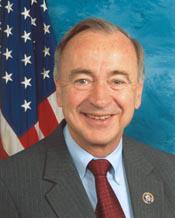
Mr. Speaker, I rise today in support of the Public Lands Management Act. Teddy Roosevelt once spoke of his fondness for the out of doors when he said, ``there are no words that can tell the hidden…
Mr. Speaker, I rise today in support of the Public Lands Management Act.
Teddy Roosevelt once spoke of his fondness for the out of doors when he said, ``there are no words that can tell the hidden spirit of the wilderness, that can reveal its mystery, its melancholy, and its charm.''
This legislation contains a protection for a number of America's public lands and in particular, for a treasured place back in my home of Idaho called the Owyhee Canyonlands.
Last summer, I had the privilege of spending a week floating the river which created the area this bill will protect. We saw redband trout in the pristine rapids, camped along the lush river banks, climbed up the rocky canyon walls to see bighorn sheep, and stood at the top looking at a rich desert plateau of sage grouse, antelope and bald eagles.
When passed, this bill will permanently protect as wilderness 517,000 beautiful acres in the southwestern corner of my home state's landscape and would provide wild and scenic status to nearly 315 miles of rivers. It will also guarantee that the ranching families who have protected this land for generations will continue on, with their grazing rights protected.
None of that would be possible without the hard work of my friend and colleague in the
Senate, Mike Crapo, who fostered a collaborative process of ranchers, public officials, community leaders and conservationists to preserve our cherished Owyhees.
Many of these provisions in this bill have been waiting on Congressional action for years and are supported by Members from across the political spectrum. I urge you to join us today in supporting this historic legislation.
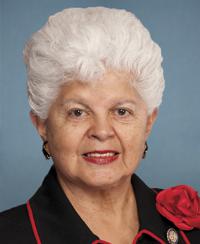
Mr. Speaker, allow me to speak in support of Senate bill 22, the Omnibus Public Land Management Act of 2009, within which are 30 separate authorizations for the Bureau of Reclamation and the United…
Mr. Speaker, allow me to speak in support of Senate bill 22, the Omnibus Public Land Management Act of 2009, within which are 30 separate authorizations for the Bureau of Reclamation and the United States Geological Survey.
The 30 bills include and highlight the changing Western water environment. The bill authorizes conservation, water-use efficiencies, water recycling projects, addresses aging infrastructure issues, and allows for the feasibility study of many much-needed water projects.
Our Subcommittee on Water and Power heard most of these bills. Some were Senate bills, and were approved by unanimously by both sides. Seven California title XVI water recycling authorizations and two groundwater recharge authorizations are included in this bill. When completed, these projects will produce 500,000 acre-feet of reclaimed reuse water and added storage capacity. There are many areas of drought in the western States, including in my home State of California, which is now facing its third unprecedented drought year. Title XVI projects would allow for communities to expand their local water resources and lessen their reliance on unreliable imported water supplies.
Finally, this legislation will ratify two tribal water right settlements in Nevada and New Mexico and set a funding mechanism for many other settlements across the West. Most importantly, S. 22 will resolve many years of litigation and bring ``peace in the valley'' through a sustainable water supply for tribal and nontribal communities.
I might add this was on a bipartisan basis out of my committee at all times.
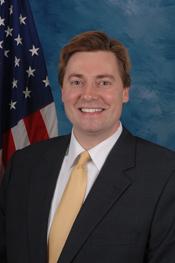
Mr. Speaker, I rise today in support of my amendment to the public lands bill S. 22. I commend my colleagues in both the House and the Senate for their efforts to advance the over 150 largely…
Mr. Speaker, I rise today in support of my amendment to the public lands bill S. 22. I commend my colleagues in both the House and the Senate for their efforts to advance the over 150 largely noncontroversial bills that are included in the underlying legislation.
This bill preserves key components of America's natural heritage for generations to come. However, as passed by the Senate, this bill did not do enough to protect the rights of our Nation's sportsmen. For this reason I worked to include in this bill language to rectify that oversight. I am pleased that the House has added my amendment to the public lands bill we're considering today because unless Congress includes the specific protections my amendment adds to this bill, efforts to regulate or limit hunting, fishing, or trapping could potentially move forward in the future.
Last year I offered an amendment to protect the rights of sportsmen on nearly 27 million acres of public lands within the National Landscape Conservation System. It passed the House 416-5 and is maintained within Title II of today's bill. Today we simply extend those same protections to two other sections of the bill: rivers and trails in title V and heritage areas in title VIII. This ensures that nothing in these sections of the bill shall regulate hunting, fishing, and trapping or limit their access to these public lands.
My amendment is straightforward and simple. It's supported by the NRA, and with its inclusion, I urge my colleagues, especially supporters of the second amendment, to vote in favor of this public lands bill today.

Mr. Speaker, I thank the chairman, and I commend him for his good work on this legislation, which would preserve important pieces of America's natural, cultural, and historical resources for future…
Mr. Speaker, I thank the chairman, and I commend him for his good work on this legislation, which would preserve important pieces of America's natural, cultural, and historical resources for future generations. Others have spoken today about valuable parts of this bill. I'd like to address that. In New Jersey, this bill would preserve our heritage as one of the leaders of the Industrial Revolution by creating the Paterson Great Falls National Historic Park and the Edison National Historic Park.
Paterson Great Falls will protect and preserve a striking natural resource, the Great Falls, along with cultural and historical sites that tell the stories of our Founders, America's economic rise, and the African American experience. Edison National Historic Park will ensure that future generations have an opportunity to visit the home and laboratory of one of New Jersey's most celebrated and influential citizens and one of America's most prominent inventors, Thomas Edison.
I'd like to commend my colleagues from New Jersey, Representatives Pascrell and Payne, for their hard work on these issues, and I'd also like to commend Representative Hinchey for his work on the Washington Rochambeau Trail in this bill. The trail will help link many of the sites in New Jersey's Crossroads of the American Revolution. These sites are of great importance to the residents of central New Jersey, and I urge my colleagues to support it.
Bill Text
Latest available legislative text
        [Congressional Bills 111th Congress]
[From the U.S. Government Printing Office]
[S. 27 Introduced in Senate (IS)]

111th CONGRESS
1st Session
S. 27

To establish the Daniel Webster Congressional Clerkship Program.

_______________________________________________________________________

IN THE SENATE OF THE UNITED STATES

January 7, 2009

Mr. Schumer (for himself, Mrs. Clinton, and Mr. Kennedy) introduced the
following bill; which was read twice and referred to the Committee on
Rules and Administration

_______________________________________________________________________

A BILL

To establish the Daniel Webster Congressional Clerkship Program.

Be it enacted by the Senate and House of Representatives of the
United States of America in Congress assembled,

SECTION 1. SHORT TITLE.

This Act may be cited as the ``Daniel Webster Congressional
Clerkship Act of 2009''.

SEC. 2. FINDINGS.

Congress finds the following:
(1) Each year, many of the most talented law school
graduates in the country begin their legal careers as judicial
law clerks.
(2) The judicial clerkship program has given the judiciary
access to a pool of exceptional young lawyers at a relatively
low cost.
(3) These same lawyers then go on to become leaders of
their profession, where they serve a critical role in helping
to educate the public about the judiciary and the judicial
process.
(4) The White House, the administrative agencies of the
Executive Branch, the Administrative Office of the United
States Courts, the Federal Judicial Center, and the United
States Sentencing Commission, all operate analogous programs
for talented young professionals at the outset of their
careers.
(5) The Congress is without a similar program.
(6) At a time when our Nation faces considerable
challenges, the Congress and the public would benefit
immeasurably from a program, modeled after the judicial
clerkship program, that engages the brightest young lawyers in
the Nation in the legislative process.
(7) Accordingly, the Congress herein creates the Daniel
Webster Congressional Clerkship Program, named after one of the
most admired and distinguished lawyer-legislators ever to serve
in the Congress, to improve the business of the Congress and
increase the understanding of its work by the public.

SEC. 3. DANIEL WEBSTER CONGRESSIONAL CLERKSHIP PROGRAM.

(a) Selection Committees.--As used in this Act, the term
``Selection Committees'' means the--
(1) Committee on Rules and Administration of the Senate;
and
(2) Committee on House Administration of the House of
Representatives.
(b) Establishment of Program.--There is hereby established the
Daniel Webster Congressional Clerkship Program for the appointment of
individuals who are graduates of accredited law schools to serve as
Congressional Clerks in the Senate or House of Representatives.
(c) Selection of Clerks.--Subject to the availability of
appropriations, the Selection Committees shall select Congressional
Clerks in the following manner:
(1) The Committee on Rules and Administration of the Senate
shall select not less than 6 Congressional Clerks each year to
serve as employees of the Senate for a 1-year period.
(2) The Committee on House Administration of the House of
Representatives shall select not less than 6 Congressional
Clerks each year to serve as employees of the House of
Representatives for a 1-year period.
(d) Selection Criteria.--In carrying out subsection (c), the
Selection Committees shall select Congressional Clerks consistent with
the following criteria:
(1) Each Congressional Clerk selected shall be a graduate
of an accredited law school as of the starting date of his or
her clerkship.
(2) Each Congressional Clerk selected shall possess--
(A) an excellent academic record;
(B) a strong record of achievement in
extracurricular activities;
(C) a demonstrated commitment to public service;
and
(D) outstanding analytic, writing, and oral
communication skills.
(e) Process.--After a Congressional Clerk is selected under this
section, such Congressional Clerk shall then interview for a position
in an office as follows:
(1) For a Congressional Clerk selected under subsection
(c)(1), the Congressional Clerk shall interview for a position
with any office of any Committee of the Senate, including any
Joint Committee or Select and Special Committee, or any office
of any individual member of the Senate.
(2) For a Congressional Clerk selected under subsection
(c)(2), the Congressional Clerk shall interview for a position
with any office of any Committee of the House of
Representatives, including any Joint Committee or Select and
Special Committee, or any office of any individual Member of
the House of Representatives.
(f) Placement Requirements.--The Selection Committees shall ensure
that Congressional Clerks selected under this section are apportioned
equally between majority party and minority party offices.
(g) Compensation of Congressional Clerks.--Each Congressional Clerk
selected under this section shall receive the same compensation as
would, and comparable benefits to, an individual who holds the position
of a judicial clerkship for the United States District Court for the
District of Columbia within 3 months of graduating from law school.
(h) Required Adherence to Rules.--Each Congressional Clerk selected
under this section shall be subject to all laws, regulations, and rules
in the same manner and to the same extent as any other employee of the
Senate or House of Representatives.
(i) Exclusion From Limit on Number of Positions.--A Congressional
Clerk shall be excluded in determining the number of employees of the
office that employs the Clerk for purposes of--
(1) in the case of the office of a Member of the House of
Representatives, section 104 of the House of Representatives
Administrative Reform Technical Corrections Act (2 U.S.C. 92);
or
(2) in the case of any other office, any applicable
provision of law or any rule or regulation which imposes a
limit on the number of employees of the office.
(j) Rules.--The Selection Committees shall develop and promulgate
rules regarding the administration of the Congressional Clerkship
program established under this section.
(k) Member Defined.--In this section, the term ``Member of the
House of Representatives'' includes a Delegate or Resident Commissioner
to the Congress.

SEC. 4. AUTHORIZATION OF APPROPRIATIONS.

There are authorized to be appropriated for fiscal year 2010 and
each succeeding fiscal year from the applicable accounts of the House
of Representatives and the contingent fund of the Senate such sums as
necessary to carry out the provisions of this Act.
<all>