Pacific Salmon Stronghold Conservation Act of 2009
 Sen. Maria Cantwell (D-WA)
Legislative Activity
Stay on top of the latest movement without scrolling through every action
Placed on Senate Legislative Calendar under General Orders. Calendar No. 642.
November 17, 2010
View full timeline
Introduced in Senate
April 2, 2009
Sponsor introductory remarks on measure. (CR S4370)
April 2, 2009
Read twice and referred to the Committee on Commerce, Science, and Transportation. (text of measure as introduced: CR S4370-4373)
April 2, 2009
Committee on Commerce, Science, and Transportation Subcommittee on Oceans, Atmosphere, Fisheries, and Coast Guard. Hearings held. With printed Hearing: S.Hrg. 111-833.
April 15, 2010
Committee on Commerce, Science, and Transportation. Ordered to be reported without amendment favorably.
June 9, 2010
Committee on Commerce, Science, and Transportation. Reported by Senator Rockefeller without amendment. With written report No. 111-348.
November 17, 2010
Placed on Senate Legislative Calendar under General Orders. Calendar No. 642.
November 17, 2010
Floor Debate
16 membersWhat members said about S. 817 on the floor

 +11
+11
Floor Debate
16 membersWhat members said about S. 817 on the floor
Mr. President, I rise today with Senators Robert Casey, Herb Kohl, and Tom Udall to introduce the Health Access and Health Professions Supply Act of 2009. Health care reform is a national…
Mr. President, today I am reintroducing the Improving Access to Mainstream Financial Institutions Act of 2009. This bill provides economic empowerment and educational opportunities for working…
Mr. President, today I am introducing legislation to restore Clean Water Act protections for the same waters that were covered by the Act prior to two recent divisive U.S. Supreme Court decisions. I…
Mr. President, I rise today, along with Senator Bill Nelson, to introduce legislation that would curb a growing nuisance that millions of wireless customers experience on a daily basis-- unsolicited…
Mr. President, I rise to introduce a bill to allow five Southeast Alaska communities to finally be allowed to form urban corporations under the terms of 1971's Alaska Native Claims Settlement Act,…
Show 8 more
Mr. President, I rise to introduce, along with Senators Bond, Akaka, Boxer, Collins, Durbin, Kerry, Klobuchar, Landrieu, Lautenberg, Lieberman, Schumer, and Whitehouse, the Homeless Emergency…
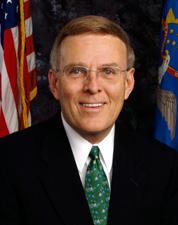
Mr. President, I rise today to introduce the Tribal Law and Order Act of 2009. Last Congress, as Chairman of the Committee on Indian Affairs, I chaired eight hearings on the criminal justice system…

Mr. President, I rise today to introduce America's Red Rock Wilderness Act of 2009. This legislation continues our commitment to preserve natural resources in this country. America's Red Rock…

Mr. President, If there is one environmental issue that divides us more than unites us, it's water, especially in the West. Farmers, ranchers, cities, towns, all compete for limited supplies. Salmon…
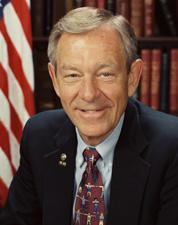
Mr. President, I rise today with Senator Akaka to introduce the Federal Executive Board Authorization Act of 2009 in order to provide for the establishment, administration and funding of Federal…

Mr. President, the Immigration and Nationality Act, INA, imposes what has become known as the ``widow penalty,'' requiring the deportation of individuals whose pending applications for green cards…

Mr. President, today, Senator Blanche Lincoln, Senator Herb Kohl, Senator Olympia Snowe and I will be introducing the Elder Justice Act. The Elder Justice Act we are introducing today was reported by…
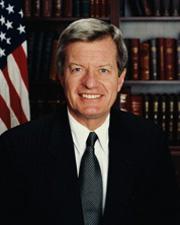
Mr. President, I rise today to introduce the Rural Heritage Conservation Extension Act of 2009, along with my good friend, Senator Grassley from Iowa. As we all know, the country, including my home…
Show 4 more

Mr. President, I wish today to express my support for the Elder Justice Act of 2009. As in previous years, I am proud to be an original cosponsor. I wish to thank my colleague, Senators Hatch,…
Mr. President, I rise today to introduce the Pacific Salmon Stronghold Conservation Act of 2009, together with my colleague from Alaska Senator Murkowski. I am grateful for all the input and…
Mr. President, I rise today to introduce the Pacific Salmon Stronghold Conservation Act of 2009, together with my colleague from Alaska Senator Murkowski. I am grateful for all the input and…

Mr. President, I rise to join my colleague, Mr. Dorgan, in introducing the Tribal Law and Order Act of 2009. This bill represents a bipartisan effort and crucial step in addressing a serious public…
Bill Text
2 versions available
        [Congressional Bills 111th Congress]
[From the U.S. Government Publishing Office]
[S. 817 Reported in Senate (RS)]

Calendar No. 642
111th CONGRESS
2d Session
S. 817

[Report No. 111-348]

To establish a Salmon Stronghold Partnership program to conserve wild
Pacific salmon, and for other purposes.

_______________________________________________________________________

IN THE SENATE OF THE UNITED STATES

April 2, 2009

Ms. Cantwell (for herself, Ms. Murkowski, Mrs. Murray, Mrs. Feinstein,
Mrs. Boxer, Mr. Wyden, Mr. Merkley, and Mr. Begich) introduced the
following bill; which was read twice and referred to the Committee on
Commerce, Science, and Transportation

November 17, 2010

Reported by Mr. Rockefeller, without amendment

_______________________________________________________________________

A BILL

To establish a Salmon Stronghold Partnership program to conserve wild
Pacific salmon, and for other purposes.

Be it enacted by the Senate and House of Representatives of the
United States of America in Congress assembled,

SECTION 1. SHORT TITLE; TABLE OF CONTENTS.

(a) Short Title.--This Act may be cited as the ``Pacific Salmon
Stronghold Conservation Act of 2009''.
(b) Table of Contents.--The table of contents for this Act is as
follows:

Sec. 1. Short title; table of contents.
Sec. 2. Findings; purposes.
Sec. 3. Definitions.
Sec. 4. Salmon Stronghold Partnership.
Sec. 5. Information and assessment.
Sec. 6. Salmon stronghold watershed grants and technical assistance
program.
Sec. 7. Interagency cooperation.
Sec. 8. International cooperation.
Sec. 9. Acquisition and transfer of real property interests.
Sec. 10. Administrative provisions.
Sec. 11. Limitations.
Sec. 12. Reports to Congress.
Sec. 13. Authorization of appropriations.

SEC. 2. FINDINGS; PURPOSES.

(a) Findings.--Congress makes the following findings:
(1) Several species of salmon native to the rivers of the
United States are highly migratory, interacting with salmon
originating from Canada, Japan, Russia, and South Korea and
spending portions of their life history outside of the
territorial waters of the United States. Recognition of the
migratory and transboundary nature of salmon species has led
countries of the North Pacific to seek enhanced coordination
and cooperation through multilateral and bi-lateral agreements.
(2) Salmon are a keystone species, sustaining more than 180
other species in freshwater and marine ecosystems. They are
also an indicator of ecosystem health and potential impacts of
climate change.
(3) Salmon are a central part of the culture, economy, and
environment of Western North America.
(4) Economic activities relating to salmon generate
billions of dollars of economic activity and provide thousands
of jobs.
(5) During the anticipated rapid environmental change
during the period beginning on the date of the enactment of
this Act, maintaining key ecosystem processes and functions,
population abundance, and genetic integrity will be vital to
ensuring the health of salmon populations.
(6) Salmon strongholds provide critical production zones
for commercial, recreational, and subsistence fisheries.
(7) Taking into consideration the frequency with which
fisheries have collapsed during the period preceding the date
of the enactment of this Act, using scientific research to
correctly identify and conserve core centers of abundance,
productivity, and diversity is vital to sustain salmon
populations and fisheries in the future.
(8) Measures being undertaken as of the date of the
enactment of this Act to recover threatened or endangered
salmon stocks, including Federal, State, and local programs to
restore salmon habitat, are vital. These measures will be
complemented and enhanced by identifying and sustaining core
centers of abundance, productivity, and diversity in the
healthiest remaining salmon ecosystems throughout the range of
salmon species.
(9) The effects of climate change are affecting salmon
habitat at all life history stages and future habitat
conservation must consider climate change projections to
safeguard natural systems under future climate conditions.
(10) Greater coordination between public and private
entities can assist salmon strongholds by marshaling and
focusing resources on scientifically supported, high priority
conservation actions.
(b) Purposes.--The purposes of this Act are--
(1) to expand Federal support and resources for the
protection and restoration of the healthiest remaining salmon
strongholds in North America to sustain core centers of salmon
abundance, productivity, and diversity in order to ensure the
long-term viability of salmon populations--
(A) in the States of California, Idaho, Oregon, and
Washington, by focusing resources on cooperative,
incentive-based efforts to conserve the roughly 20
percent of salmon habitat that supports approximately
two-thirds of salmon abundance; and
(B) in the State of Alaska, a regional stronghold
that produces more than one-third of all salmon, by
increasing resources available to public and private
organizations working cooperatively to conserve
regional core centers of salmon abundance and
diversity;
(2) to maintain and enhance economic benefits related to
fishing or associated with healthy salmon stronghold habitats,
including flood protection, recreation, water quantity and
quality, carbon sequestration, climate change mitigation and
adaptation, and other ecosystem services; and
(3) to complement and add to existing Federal, State, and
local salmon recovery efforts by using sound science to
identify and sustain core centers of salmon abundance,
productivity, and diversity in the healthiest remaining salmon
ecosystems throughout their range.

SEC. 3. DEFINITIONS.

In this Act:
(1) Administrator.--The term ``Administrator'' means the
Assistant Administrator for the National Marine Fisheries
Service of the National Oceanic and Atmospheric Administration.
(2) Board.--The term ``Board'' means the Salmon Stronghold
Partnership Board established under section 4.
(3) Charter.--The term ``charter'' means the charter of the
Board developed under section 4(g).
(4) Director.--The term ``Director'' means the Director of
the United States Fish and Wildlife Service.
(5) Ecosystem services.--The term ``ecosystem services''
means an ecological benefit generated from a healthy,
functioning ecosystem, including clean water, pollutant
filtration, regulation of river flow, prevention of soil
erosion, regulation of climate, and fish production.
(6) Program.--Except as otherwise provided, the term
``program'' means the salmon stronghold watershed grants and
technical assistance program established under section 6(a).
(7) Salmon.--The term ``salmon'' means any of the wild
anadromous Oncorhynchus species that occur in the Western
United States, including--
(A) chum salmon (Oncorhynchus keta);
(B) pink salmon (Oncorhynchus gorbuscha);
(C) sockeye salmon (Oncorhynchus nerka);
(D) chinook salmon (Oncorhynchus tshawytscha);
(E) coho salmon (Oncorhynchus kisutch); and
(F) steelhead trout (Oncorhynchus mykiss).
(8) Salmon stronghold.--The term ``salmon stronghold''
means all or part of a watershed or that meets biological
criteria for abundance, productivity, diversity (life history
and run timing), habitat quality, or other biological
attributes important to sustaining viable populations of salmon
throughout their range, as defined by the Board.
(9) Salmon stronghold partnership.--The term ``Salmon
Stronghold Partnership'' means the Salmon Stronghold
Partnership established under section 4(a)(1).
(10) Secretary.--Except as otherwise provided, the term
``Secretary'' means the Secretary of Commerce.

SEC. 4. SALMON STRONGHOLD PARTNERSHIP.

(a) In General.--
(1) Establishment.--The Secretary shall establish a Salmon
Stronghold Partnership that is a cooperative, incentive-based,
public-private partnership among appropriate Federal, State,
tribal, and local governments, private landowners, and
nongovernmental organizations working across political
boundaries, government jurisdictions, and land ownerships to
identify and conserve salmon strongholds.
(2) Membership.--To the extent possible, the membership of
the Salmon Stronghold Partnership shall include each entity
described under subsection (b).
(3) Leadership.--The Salmon Stronghold Partnership shall be
managed by a Board established by the Secretary to be known as
the Salmon Stronghold Partnership Board.
(b) Salmon Stronghold Partnership Board.--
(1) In general.--The Board shall consist of representatives
with strong scientific or technical credentials and expertise
as follows:
(A) 1 representative from each of--
(i) the National Marine Fisheries Service,
as appointed by the Administrator;
(ii) the United States Fish and Wildlife
Service, as appointed by the Director;
(iii) the Forest Service, as appointed by
the Chief of the Forest Service;
(iv) the Environmental Protection Agency,
as appointed by the Administrator of the
Environmental Protection Agency;
(v) the Bonneville Power Administration, as
appointed by the Administrator of the
Bonneville Power Administration;
(vi) the Bureau of Land Management, as
appointed by the Director of the Bureau of Land
Management; and
(vii) the Northwest Power and Conservation
Council, as appointed by the Northwest Power
and Conservation Council.
(B) 1 representative from the natural resources
staff of the office of the Governor or of an
appropriate natural resource agency of a State, as
appointed by the Governor, from each of the States of--
(i) Alaska;
(ii) California;
(iii) Idaho;
(iv) Oregon; and
(v) Washington.
(C) Not less than 3 and not more than 5
representatives from Indian tribes or tribal
commissions located within the range of a salmon
species, as appointed by such Indian tribes or tribal
commissions, in consultation with the Board.
(D) 1 representative from each of 3 non-
governmental organizations with salmon conservation and
management expertise, as selected by the Board.
(E) 1 national or regional representative from an
association of counties, as selected by the Board.
(F) Representatives of other entities with
significant resources regionally dedicated to the
protection of salmon ecosystems that the Board
determines are appropriate, as selected by the Board.
(2) Failure to appoint.--If a representative described in
subparagraph (B), (C), (D), (E), or (F) of paragraph (1) is not
appointed to the Board or otherwise fails to participate in the
Board, the Board shall carry out its functions until such
representative is appointed or joins in such participation.
(c) Meetings.--
(1) Frequency.--Not less frequently than 3 times each year,
the Board shall meet to provide opportunities for input from a
broader set of stakeholders.
(2) Notice.--Prior to each meeting, the Board shall give
timely notice of the meeting to the public, the government of
each county, and tribal government in which a salmon stronghold
is identified by the Board.
(d) Board Consultation.--The Board shall seek expertise from
fisheries experts from agencies, colleges, or universities, as
appropriate.
(e) Chairperson.--The Board shall nominate and select a Chairperson
from among the members of the Board.
(f) Committees.--The Board--
(1) shall establish a standing science advisory committee
to assist the Board in the development, collection, evaluation,
and peer review of statistical, biological, economic, social,
and other scientific information; and
(2) may establish additional standing or ad hoc committees
as the Board determines are necessary.
(g) Charter.--The Board shall develop a written charter that--
(1) provides for the members of the Board described in
subsection (b);
(2) may be signed by a broad range of partners, to reflect
a shared understanding of the purposes, intent, and governance
framework of the Salmon Stronghold Partnership; and
(3) includes--
(A) the defining criteria for a salmon stronghold;
(B) the process for identifying salmon strongholds;
and
(C) the process for reviewing and awarding grants
under the program, including--
(i) the number of years for which such a
grant may be awarded;
(ii) the process for renewing such a grant;
(iii) the eligibility requirements for such
a grant;
(iv) the reporting requirements for
projects awarded such a grant; and
(v) the criteria for evaluating the success
of a project carried out with such a grant.
(h) Federal Advisory Committee Act.--The Federal Advisory Committee
Act (5 U.S.C. App.) shall not apply to the Board.

SEC. 5. INFORMATION AND ASSESSMENT.

The Administrator shall carry out specific information and
assessment functions associated with salmon strongholds, in
coordination with other regional salmon efforts, including--
(1) triennial assessment of status and trends in salmon
strongholds;
(2) geographic information system and mapping support to
facilitate conservation planning;
(3) projections of climate change impacts on all habitats
and life history stages of salmon;
(4) development and application of models and other tools
to identify salmon conservation actions projected to have the
greatest positive impacts on salmon abundance, productivity, or
diversity within salmon strongholds; and
(5) measurement of the effectiveness of the Salmon
Stronghold Partnership activities.

SEC. 6. SALMON STRONGHOLD WATERSHED GRANTS AND TECHNICAL ASSISTANCE
PROGRAM.

(a) In General.--The Administrator, in consultation with the
Director, shall establish a salmon stronghold watershed grants and
technical assistance program, as described in this section.
(b) Purpose.--The purpose of the program shall be to support salmon
stronghold protection and restoration activities, including--
(1) to fund the administration of the Salmon Stronghold
Partnership in carrying out the charter;
(2) to encourage cooperation among the entities represented
on the Board, local authorities, and private entities to
establish a network of salmon strongholds, and assist locally
in specific actions that support the Salmon Stronghold
Partnership;
(3) to support entities represented on the Board--
(A) to develop strategies focusing on salmon
conservation actions projected to have the greatest
positive impacts on abundance, productivity, or
diversity in salmon strongholds; and
(B) to provide financial assistance to the Salmon
Stronghold Partnership to increase local economic
opportunities and resources for actions or practices
that provide long-term or permanent conservation and
that maintain key ecosystem services in salmon
strongholds, including--
(i) payments for ecosystem services; and
(ii) demonstration projects designed for
specific salmon strongholds;
(4) to maintain a forum to share best practices and
approaches, employ consistent and comparable metrics, forecast
and address climate impacts, and monitor, evaluate, and report
regional status and trends of salmon ecosystems in coordination
with related regional and State efforts;
(5) to carry out activities and existing conservation
programs in, and across, salmon strongholds on a regional scale
to achieve the goals of the Salmon Stronghold Partnership;
(6) to accelerate the implementation of recovery plans in
salmon strongholds that have salmon populations listed as
threatened or endangered under the Endangered Species Act of
1973 (16 U.S.C. 1531 et seq.);
(7) to develop and make information available to the public
pertaining to the Salmon Stronghold Partnership; and
(8) to conduct education outreach to the public, in
coordination with other programs, to encourage increased
stewardship of salmon strongholds.
(c) Selection.--Projects that will be carried out with assistance
from the program shall be selected and administered as follows:
(1) Site-based projects.--A project that will be carried
out with assistance from the program within 1 State shall be
selected as follows:
(A) State selection.--If a State has a competitive
grant process relating to salmon conservation in effect
as of the date of enactment of this Act and has a
proven record of implementing an efficient, cost-
effective, and competitive grant program for salmon
conservation or has a viable plan to provide
accountability under the program--
(i) the National Fish and Wildlife
Foundation, in consultation with the Board,
shall provide program funds to the State; and
(ii) the State shall select and administer
projects to be carried out in such State, in
accordance with subsection (d).
(B) National fish and wildlife foundation
selection.--If a State does not meet the criteria
described in subparagraph (A)--
(i) the Administrator, in consultation with
the Director, shall provide funds to the
National Fish and Wildlife Foundation; and
(ii) the National Fish and Wildlife
Foundation, in consultation with the Board,
shall select and administer projects to be
carried out in such State, in accordance with
subsection (d).
(2) Multisite and programmatic initiatives.--For a project
that will be carried out with assistance from the program in
more than 1 State or that is a programmatic initiative that
affect more than 1 State--
(A) the Administrator, in consultation with the
Director, shall provide funds to the National Fish and
Wildlife Foundation; and
(B) the National Fish and Wildlife Foundation, in
consultation with the Board, shall select and
administer such projects to be carried out, in
accordance with subsection (d).
(d) Criteria for Approval.--
(1) Criteria developed by the board.--
(A) Requirement to develop.--The Board shall
develop and provide criteria for the prioritization of
projects funded under the program in a manner that
enables projects to be individually ranked in
sequential order by the magnitude of the project's
positive impacts on salmon abundance, productivity, or
diversity.
(B) Specific requirements.--The criteria required
by subparagraph (A) shall require that a project that
receives assistance under the program--
(i) contributes to the conservation of
salmon;
(ii) meets the criteria for eligibility
established in the charter;
(iii)(I) addresses a factor limiting or
threatening to limit abundance, productivity,
diversity, habitat quality, or other biological
attributes important to sustaining viable
salmon populations within a salmon stronghold;
or
(II) is a programmatic action that supports
the Salmon Stronghold Partnership;
(iv) addresses limiting factors to healthy
ecosystem processes or sustainable fisheries
management;
(v) has the potential for conservation
benefits and broadly applicable results; and
(vi) meets the requirements for--
(I) cost sharing described in
subsection (e); and
(II) the limitation on
administrative expenses described in
subsection (f).
(C) Schedule for development.--The Board shall--
(i) develop and provide the criteria
required by subparagraph (A) prior to the
initial solicitation of projects under the
program; and
(ii) revise such criteria not less often
than once each year.
(e) Cost Sharing.--
(1) Federal share.--
(A) Non-federal land.--For any fiscal year, the
Federal share of the cost of a project that receives
assistance under the program and that is carried out on
land that is not owned by the United States shall not
exceed 50 percent of the total cost of the project.
(B) Federal land.--For any fiscal year, the Federal
share of the cost of a project that receives assistance
under the program and that is carried out on land that
is owned by the United States, including the
acquisition of inholdings, may be up to 100 percent of
the total cost of the project.
(2) Non-federal share.--
(A) In general.--Subject to subparagraph (B), the
non-Federal share of the cost of a project that
receives assistance under the program may not be
derived from Federal grant programs, but may include
in-kind contributions.
(B) Bonneville power administration.--Any amounts
provided by the Bonneville Power Administration
directly or through a grant to another entity used to
carry out a project that receives assistance under the
program shall be credited toward the non-Federal share
of the cost of the project.
(f) Administrative Expenses.--Of the amount available to a State or
the National Fish and Wildlife Foundation under the program for each
fiscal year, such State and the National Fish and Wildlife Foundation
shall not expend more than 5 percent of such amount for administrative
and reporting expenses necessary to carry out this section.
(g) Reports.--
(1) Reports to states or nfwf.--Each person who receives
assistance through a State or the National Fish and Wildlife
Foundation under the program for a project shall provide
periodic reports to the State or the National Fish and Wildlife
Foundation, as appropriate, that includes the information
required by the State or the National Fish and Wildlife
Foundation to evaluate the progress and success of the project.
(2) Reports to the administration.--Not less frequently
than once every 3 years, each State that is provided program
funds under subsection (c)(1)(A) and the National Fish and
Wildlife Foundation shall provide reports to the Administrator
that include the information required by the Administrator to
evaluate the implementation of the program.

SEC. 7. INTERAGENCY COOPERATION.

The head of each Federal agency or department responsible for
acquiring, managing, or disposing of Federal land that is within a
salmon stronghold shall, to the extent consistent with the mission of
the agency or department and existing law, cooperate with the
Administrator and the Director--
(1) to conserve the salmon strongholds; and
(2) to effectively coordinate and streamline Salmon
Stronghold Partnership activities and delivery of overlapping,
incentive-based programs that affect the salmon stronghold.

SEC. 8. INTERNATIONAL COOPERATION.

(a) Authority To Cooperate.--The Administrator and the Board may
share status and trends data, innovative conservation strategies,
conservation planning methodologies, and other information with North
Pacific countries, including Canada, Japan, Russia, and South Korea,
and appropriate international entities to promote conservation of
salmon and salmon habitat.
(b) Sense of Congress.--It is the sense of Congress that the
Administrator and the Board, or entities that are members of the Board,
should and are encouraged to provide information to North Pacific
countries, including Canada, Japan, Russia, and South Korea, and
appropriate international entities to support the development of a
network of salmon strongholds across the nations of the North Pacific.

SEC. 9. ACQUISITION AND TRANSFER OF REAL PROPERTY INTERESTS.

(a) Use of Real Property.--No project that will result in the
acquisition by the Secretary or the Secretary of the Interior of any
land or interest in land, in whole or in part, may receive funds under
this Act unless the project is consistent with the purposes of this
Act.
(b) Private Property Protection.--No Federal funds made available
to carry out this Act may be used to acquire any real property or any
interest in any real property without the written consent of the 1 or
more owners of the property or interest in property.
(c) Transfer of Real Property.--No land or interest in land,
acquired in whole or in part by the Secretary of the Interior with
Federal funds made available under this Act to carry out a salmon
stronghold conservation project may be transferred to a State, other
public agency, or other entity unless--
(1) the Secretary of the Interior determines that the
State, agency, or entity is committed to manage, in accordance
with this Act and the purposes of this Act, the property being
transferred; and
(2) the deed or other instrument of transfer contains
provisions for the reversion of the title to the property to
the United States if the State, agency, or entity fails to
manage the property in accordance with this Act and the
purposes of this Act.
(d) Requirement.--Any real property interest conveyed under
subsection (c) shall be subject to such terms and conditions as will
ensure, to the maximum extent practicable, that the interest will be
administered in accordance with this Act and the purposes of this Act.

SEC. 10. ADMINISTRATIVE PROVISIONS.

(a) Contracts, Grants, and Transfers of Funds.--In carrying out
this Act, the Secretary may--
(1) consistent with a recommendation of the Board and
notwithstanding sections 6304 and 6305 of title 31, United
States Code, and the Federal Financial Assistance Management
Improvement Act of 1999 (31 U.S.C. 6101 note; Public Law 106-
107), enter into cooperative agreements, contracts, and grants;
(2) notwithstanding any other provision of law, apply for,
accept, and use grants from any person to carry out the
purposes of this Act; and
(3) make funds available to any Federal agency or
department to be used by the agency or department to award
financial assistance for any salmon stronghold protection,
restoration, or enhancement project that the Secretary
determines to be consistent with this Act.
(b) Donations.--
(1) In general.--The Secretary may--
(A) enter into an agreement with any organization
described in section 501(c)(3) of the Internal Revenue
Code of 1986 to authorize the organization to carry out
activities under this Act; and
(B) accept donations of funds or services for use
in carrying out this Act.
(2) Property.--The Secretary of the Interior may accept
donations of property for use in carrying out this Act.
(3) Use of donations.--Donations accepted under this
section--
(A) shall be considered to be gifts or bequests to,
or for the use of, the United States; and
(B) may be used directly by the Secretary (or, in
the case of donated property under paragraph (2), the
Secretary of the Interior) or provided to other Federal
agencies or departments through interagency agreements.
(c) Interagency Financing.--The Secretary may participate in
interagency financing, including receiving appropriated funds from
other agencies or departments to carry out this Act.
(d) Staff.--Subject to the availability of appropriations, the
Administrator may hire such additional full-time employees as are
necessary to carry out this Act.

SEC. 11. LIMITATIONS.

Nothing in this Act may be construed--
(1) to create a reserved water right, express or implied,
in the United States for any purpose, or affect the management
or priority of water rights under State law;
(2) to affect existing water rights under Federal or State
law;
(3) to affect any Federal or State law in existence on the
date of enactment of this Act regarding water quality or water
quantity;
(4) to affect the authority, jurisdiction, or
responsibility of any agency or department of the United States
or of a State to manage, control, or regulate fish and resident
wildlife under a Federal or State law or regulation;
(5) to authorize the Secretary or the Secretary of the
Interior to control or regulate hunting or fishing under State
law;
(6) to abrogate, abridge, affect, modify, supersede, or
otherwise alter any right of a federally recognized Indian
tribe under any applicable Federal or tribal law or regulation;
or
(7) to diminish or affect the ability of the Secretary or
the Secretary of the Interior to join the adjudication of
rights to the use of water pursuant to subsections (a), (b), or
(c) of section 208 of the Department of Justice Appropriation
Act, 1953 (43 U.S.C. 666).

SEC. 12. REPORTS TO CONGRESS.

Not less frequently than once every 3 years, the Administrator, in
consultation with the Director, shall submit to Congress a report
describing the activities carried out under this Act, including the
recommendations of the Administrator, if any, for legislation relating
to the Salmon Stronghold Partnership.

SEC. 13. AUTHORIZATION OF APPROPRIATIONS.

(a) Grants.--
(1) In general.--There is authorized to be appropriated to
the Administrator, to be distributed by the National Fish and
Wildlife Foundation as a fiscal agent, to provide grants under
the program, $30,000,000 for each of fiscal years 2009 through
2013.
(2) Board.--The National Fish and Wildlife Foundation
shall, from the amount appropriated pursuant to the
authorization of appropriations in paragraph (1), make
available sufficient funds to the Board to carry out its duties
under this Act.
(b) Technical Assistance.--For each of fiscal years 2009 through
2013, there is authorized to be appropriated to the Administrator
$300,000 to provide technical assistance under the program and to carry
out section 5.
(c) Availability of Funds.--Amounts appropriated pursuant to an
authorization of appropriations in this section are authorized to
remain available until expended.
Calendar No. 642

111th CONGRESS

2d Session

S. 817

[Report No. 111-348]

_______________________________________________________________________

A BILL

To establish a Salmon Stronghold Partnership program to conserve wild
Pacific salmon, and for other purposes.

_______________________________________________________________________

November, 17, 2010

Reported without amendment