Madam Speaker, for the purposes of debate only, I yield the customary 30 minutes to the gentlewoman from Rochester, New York (Ms. Slaughter). Pending that, I yield 1 minute to the distinguished…
Madam Speaker, for the purposes of debate only, I yield the customary 30 minutes to the gentlewoman from Rochester, New York (Ms. Slaughter).
Pending that, I yield 1 minute to the distinguished majority leader.
Madam Speaker, congratulations. It's very nice to see you in the chair.
I would like to insert a section-by-section analysis of the resolution to appear at this point in the Record.
section 1. resolved clause.
This section provides that the Rules of the l12th Congress
are the Rules of the 112th Congress, except with the
amendments contained in section 2 of the resolution, and
orders contained in sections 3, 4, and 5.
section 2. changes to the standing rules.
Citing Authority under the Constitution. Paragraph (a)
creates a new clause 7 in rule XII providing that a Member
may not introduce a bill or joint resolution unless the
sponsor also submits a statement citing as specifically as
practicable the power or powers under the Constitution
authorizing the enactment of that bill or joint resolution.
The statement will appear in a separate section in the
Congressional Record and be made available to the public in
electronic form.
While the rule requires that a Member submit the statement
at the same time as the bill is introduced, there is nothing
in the rule to prevent the sponsor of the bill from
submitting an additional statement later in the process if he
or she wants to revise the initial statement. With regard to
electronic availability, appearance in the electronic version
of the Congressional Record will initially satisfy the
electronic availability requirement of this paragraph.
However, ultimate the intention is that the Clerk will make
the statements available in a searchable, sortable, and
downloadable database as soon as practicable.
With respect to Senate bills, the provision authorizes the
chair of a committee of jurisdiction, prior to consideration
of the Senate bill, to submit a statement as if the chair
were the sponsor. Finally, the provision also repeals the
current requirement for a similar statement in committee
reports.
When a Member introduces a bill or joint resolution, the
Clerk must ensure that a statement required under this
paragraph accompanies the measure. However, the Clerk is not
required to evaluate the content of the statement or its
adequacy; those are matters to be considered by Members
during consideration of the legislation.
Three-Day Availability for Unreported Bills. This provision
adds a new clause to rule XXIX establishing a point of order
against consideration of a bill or joint resolution that has
not been available for three calendar days. This provision
mirrors existing layover rules prohibiting consideration of
bills reported by a committee or conference reports.
Transparency for House and Committee Operations.
Subparagraph (i) directs the Committee on House
Administration to establish and maintain standards for
documents made available in electronic form by the House and
its committees. Subparagraph (2) provides that a measure or
matter will have been considered as having been ``available''
within the meaning of the rules if it was publicly available
in electronic form at a location designated by the Committee
on House Administration.
The intention of these provisions is to ensure that Members
and the public have easy access to bills, resolutions, and
amendments considered in committee and by the House. The
standard for electronic documents is intended to evolve over
time. While the standard may initially include more static
formats such as a searchable PDF, the intention is to
eventually transition to more flexible structured data
formats, such as XML, as the tools become available to ease
the creation and ensure the integrity of House documents.
With respect to availability, the provision is intended to
place electronic distribution on par with traditional
printing; rather than entirely replace it. Finally, the rule
contemplates a singular location that will direct Members and
the public to the text of measures to be considered by the
House and its committees.
Subparagraph (3) amends clause 2(g)(3) of rule XI to
provide for a minimum notice period of 3 days for a committee
meeting. This joins the current requirement for 7 days notice
for a committee hearing. The provision maintains the current
ability of the Chair, with the concurrence of the ranking
minority member, to waive both notice periods if they find
good cause to start the hearing or meeting sooner. The
provision can also be waived by a majority vote of the
committee.
Subparagraph (4) requires that the chair of the committee
make the text of the measure or matter being marked up
publicly available in electronic form at least 24 hours prior
to commencement of the meeting. This provision is intended to
ensure that members have the text of the measure or matter in
sufficient time to review the measure and draft any
amendments. Accordingly, if the committee is considering a
committee print, or the Chair of a committee intends to use
an amendment in the nature of a substitute as the base text
for purposes of further amendment, circulation of that text
will satisfy this requirement. While the rule requires that
the text be circulated at least 24 hours in advance of the
meeting, that text should be circulated as early as possible
to provide members the maximum amount of time to review the
measure or matter and draft any desired amendments.
Subparagraph (5) requires that the chair of a committee
make the results of any record vote publicly available in
electronic form within 48 hours of the vote, while
subparagraph (6) requires that the text of any adopted
amendment be made similarly available, along with the text of
the measure being marked up, within 24 hours of commencement
of the markup or adoption of the amendment.
Subparagraph (7) requires the posting of non-governmental
witness ``truth-in-testimony'' information (with appropriate
redactions, such as a home address or phone number, to
protect the privacy of the witness). Subparagraph (8)
requires public availability in electronic form of the
committee rules.
Subparagraph (9) requires each Committee, to the maximum
extent practicable, to provide audio and video coverage of
each committee hearing or meeting and maintain recordings
that are easily accessible to the public. This subparagraph
is not intended to require audio and video coverage in
situations where it would be technically impracticable, such
as where a hearing or meeting is held in a room without audio
and video broadcast equipment, or create a defect with a
hearing or meeting if a webcast or recording is not available
due to technical issues.
Subparagraph (10) strikes an exception, adopted in the
110th Congress, for the Committee on Rules to accurately
report its votes in committee reports to accompany a rule,
joint rule, or a special order of business.
Subparagraph (11) amends clause 2(d)(1) of rule X to
require committees, during development of their oversight
plan, to include proposals to cut or eliminate mandatory and
discretionary programs that are inefficient, duplicative,
outdated, or more appropriately administered by State or
local governments.
Initiatives to Reduce Spending and Improve Accountability.
Subparagraph (d)(i) replaces the current ``pay-as-you-go''
requirements with a ``cut-as-you-go'' requirement. The
provision prohibits consideration of a bill, joint
resolution, conference report, or amendment that has the net
effect of increasing mandatory spending within a five-year or
ten-year budget window. This provision continues the current
practice of counting multiple measures considered pursuant to
a special order of business which directs the Clerk to
engross the measures together after passage for purposes of
compliance with the rule and provides a mechanism for
addressing ``emergency'' designations.
Subparagraph (2) strikes the ``Gephardt rule'' that
provides for the automatic engrossment and transmittal to the
Senate of a joint resolution changing the public debt limit,
upon the adoption by Congress of the budget resolution,
thereby avoiding a separate vote in the House on the public
debt-limit legislation. Subparagraph (3) adds a new clause to
rule XXIX that clarifies that the chair of the Committee on
the Budget, rather than the entire committee, is authorized
to provide guidance to the presiding officer on the budgetary
impact of legislative proposals. This change reflects the
current practice under majorities of both parties.
Subparagraph (4) modifies clause 3 of rule XXI, pertaining
to transportation obligation limitations, to protect the
balances of the Highway Trust Fund by establishing a point of
order against consideration of any general appropriation bill
or joint resolution, or accompanying conference report, that
provides spending authority from balances in the trust fund
(other than those from transfers from the General Fund of the
Treasury) or reduces or limits the accruing balances of that
trust fund for anything other than activities authorized for
the highway or mass transit programs.
Subparagraph (5) modifies clause 7 of rule XXI, which
places restrictions on reconciliation directives contained in
a budget resolution. The new modification would specify
that it would not be in order to consider a budget resolution
or amendments thereto, or a conference thereon which would
have the effect of increasing net direct spending.
Other Changes to House Operations. Paragraph (e)(1)
provides the Chair of the Committee of the Whole with
authority to employ two minute voting during a series of
votes.
Subparagraph (2) changes the current rule regarding
electronic devices, which prohibits the use of mobile phones
and personal computers on the floor, to prohibit the use of
any mobile electronic device that is disruptive of the
decorum. This change will give the Speaker greater latitude
in deciding which mobile electronic devices may or may not be
used by Members on the floor.
For historical purposes, it is important to note that the
use of electronic devices in the chamber of the U.S. House of
Representatives is governed by the rules of the House. In the
111th Congress, the fourth sentence of clause 5 of rule XVII
Madam Speaker, I yield myself such time as I might consume.
(Mr. DREIER asked and was given permission to revise and extend his remarks.)
As we've seen here today, Madam Speaker, we are marking an important turning point in the history of the United States House of Representatives. We have before us a package of reforms that will bring greater transparency and accountability to this House, and it will once again give the American people the opportunity to participate in the legislative process. They've made clear to us that what their priorities are--job creation, economic growth, and a smaller, more accountable Federal Government--must be done. The reforms included in the rules package are designed to ensure that those priorities are met and that we are held responsible for our actions to do the people's work.
Madam Speaker, I want to thank each and every one of my colleagues who have worked tirelessly on this rules package. Never before in history has there been the kind of Member involvement--bipartisan Member involvement--in an opening day rules package. I particularly want to thank my good friends Greg Walden, who led our transition team, and Rob Bishop, who led the rules reform effort, as well as the other members of our transition working group. We had four new Members of Congress who right after the election got involved in working on this very, very important transition, and I want to express my appreciation.
As I said, Madam Speaker, this has, for the first time, ever been bipartisan. I don't want to claim that my Democratic colleagues are supportive of this rules package, but I will say that when we began the process, I'm happy that former Speaker Pelosi designated as liaisons to work with us through the transition process the distinguished former chair of the Administration Committee, the gentleman from Pennsylvania (Mr. Brady), and the gentleman from New Jersey (Mr. Andrews), and I want to express my appreciation to them again for their hard work.
As we looked for ways to chart a new course and reduce congressional waste, we knew that we had to consider good ideas from both political parties, and that's why I'm happy to say we had input from both Democrats and Republicans in fashioning this opening day rules package. Our Democratic liaisons were tremendous partners, and again, I express my appreciation to my Democratic colleagues for joining with us in this effort.
Now, having completed our transition work, we are now beginning a new Congress. Each of us faces the new beginning with the knowledge that congressional approval ratings are abysmally low. It's rare that the Congress is held in high esteem by the American people--we all know that--but it is even rarer to have an approval rating that is as low as it is right now.
Now, why is it that this body has become so unpopular? The reason is that the American people felt that they were not being listened to. They have sent us here to conduct the 112th Congress differently than any Congress of the past. I'm not going to just talk about the last two Congresses, Madam Speaker; I'm going to say that they sent us here this year to perform differently than any Congress of the past. What's more, they have given us, as Speaker Boehner likes to say, some pretty simple and clear and direct marching orders when it comes to our work: fulfill our constitutional duties in an open and transparent way.
Now, Madam Speaker, this rules package that we have before us provides us the tools to do just what the American people have asked: to perform our constitutional duties in a transparent and open way. Because our highest priorities are job creation and economic growth, we must rein in the government spending that has spiraled out of control over the past several years. We're taking several steps to meet that goal.
For starters, we're requiring that any new spending be offset for five 10-year budget windows. If a bill increases the deficit by more than $5 billion in any of these 10-year windows, it will be subjected to a point of order. In other words, we're changing the rules of the House to ensure that we look at short, medium, as well as long-term consequences to Federal spending. We should not, and cannot, consider legislation that pushes the Federal budget deficit and the problems down the road.
We will also be reforming the spending process by replacing PAYGO with CutGo. Rather than pairing spending with tax increases, job- killing tax increases, we will pair it with spending cuts. It's often been said that we don't have a revenue problem; we have a spending problem. These new rules will make it easier to reduce spending rather than increase it. In fact, the idea behind this package is to focus on ways in which we can increase the opportunity to reduce spending rather than increase it.
Now, Madam Speaker, we're also taking important steps to make us more accountable to the American people, the people whom we're so honored to represent. We won't be voting on bills unless they've been available for at least 3 calendar days. We will be returning much of the legislative work back to the committees where greater transparency will be required. The work product, the recorded votes, and the video archives of all committees are required by these rules to be posted online. No longer will massive legislation be written behind closed doors, regardless of political party, and rammed through the House before anyone has the chance to review or amend the text. Our work will be done in an open way that affords all Members the opportunity to participate and scrutinize.
Another key reform by this rules package is the creation of an electronic format for legislation. This represents a dramatic change in how legislation is made available, not just to Members but to the public and the press as well. Now, Madam Speaker, for the last two centuries, legislation was considered available when a paper copy was dropped off in the document room across the street. Now it will be considered available when anyone with access to the Internet can look it up.
This new format will evolve over time, and there's work ahead that still has to be done as we implement these rules changes, but no Member should consider this vote as the end of the reform efforts of this Congress. Again, what we're doing here today is simply the first step in what is going to be a one-year, 2-year process of reform.
We will not be wed to the way we used to do things. Rather, we will be looking for new and different ways to do our jobs and to do them in the most transparent and accountable way. And let me say again, Madam Speaker, it is very important for us to ensure that we have the input of my friend from Rochester (Ms. Slaughter) and other Democrats, as well as Republicans, in this process.
Madam Speaker, this rules package is a very significant first step. We have learned the hard way that bad process inevitably results in bad outcomes. We need look no further than our ailing economy and spiraling deficit, not to
mention Congress' abysmal approval rating, to see that that is true.
By reforming the rules of the House, we set the stage for reforming the entire Federal Government. Ultimately, we ensure fidelity to the original rules document, that being the Constitution. And I am so pleased that tomorrow on the House floor, led by our friend from Virginia (Mr. Goodlatte), we will be having a bipartisan reading of the Constitution.
Madam Speaker, our Founders understood better than anyone the importance of restraining Federal power. I think that Thomas Jefferson put it best when he said, ``In questions of power, let no more be heard of confidence in man, but bind him down from mischief by the chains of the Constitution.''
Now, Madam Speaker, in this Congress, we will refocus our efforts on fulfilling our constitutional duties in a transparent and responsible way. We will be reform-minded and accountability-oriented, and we will be driven by the number one concern of the American people--getting our economy back on track. Madam Speaker, form dictates function, and these new rules will set us on the path toward greater economic growth and confidence for the American people.
With that, I urge support of this very important resolution and reserve the balance of my time.
Madam Speaker, at this time I am very pleased to yield 2 minutes to the gentleman from Auburn, Washington, Sheriff Reichert, our distinguished colleague and a member of the Ways and Means Committee.
Mr. Speaker, I yield myself such time as I might consume, and I would like to respond to some of the comments made by my very good friend, the minority whip.
On the issue of CutGo versus PAYGO, I think it's important to note that in the bipartisan agreement that was put together just last month, supported by President Obama, there was an actual embrace of the John F. Kennedy vision of recognizing that economic growth and an enhanced level of revenues to the Federal Treasury come about by keeping marginal rates low.
Now I will say, Mr. Speaker, that was a bipartisan agreement; and so what we've said is that as we look at growing the economy, we are very enthused at the fact that job creators are going to be able to have revenues focused on job creating, therefore enhancing the opportunity for more revenues coming to the Federal Treasury.
Second, I think it's also very important for us to realize that the focus does need to be on spending; and we believe very passionately that, in the last 4 years since we've seen a 92 percent increase, a 92 percent increase, Mr. Speaker, in nondefense discretionary spending, that we need to have a laser-like focus on that.
Now, Democrats and Republicans, Mr. Speaker, have come together to decry both the lack of jobs that exist in our economy, as well as deficit spending. There's clear bipartisan agreement on that. We all want to create more private sector jobs, and we all want to see the deficit reduced.
Now, how is it, Mr. Speaker, that we deal with those two issues?
The single most important thing that we can do to ensure that we address that is to ensure economic growth. And so the notion behind PAYGO, which would, in fact, bring about, unfortunately, an increase in taxes that dramatically would stall this recovery--and even Keynesian economists, those through the 1930s, 1940s--John Maynard Keynes died in 1950--there are many people who have followed his economic model, that being stimulating through greater Federal spending.
Keynesian economists, Mr. Speaker, acknowledge that increasing taxes, when you're dealing with a difficult economy, in fact, undermines the potential for economic growth.
Now, let me take the second issue that my friend mentioned, Mr. Speaker, and that issue has to do with the question of our delegates. They're all friends of mine and I respect--I've visited most of the territories, if not all, and I will say that these are very diligent, hardworking Members.
But we all know what the bottom line comes to here. The bottom line comes down to that the vote here in the Committee of the Whole counts until it doesn't count, and it doesn't count if it counts. And that's why I understand. And my friend, Mr. Faleomavaega, said correctly, this is a symbol. It is a symbol. And I think that their membership and participation on committees is important, and there is a great deal of camaraderie that does go on with our friends.
But the fact is, when you have a structure where the vote counts until it doesn't count and doesn't count if it counts, it seems to me that that is not the proper route for us to take; and so that's the reason that this action has been taken.
Mr. Speaker, I am happy to yield to my very good friend, the distinguished minority whip.
I've actually been here a few months longer than my friend has.
Mr. Speaker, if I could reclaim my time, I would say that I began by talking about a great Democratic President, John F. Kennedy, who used this model. And the notion of simply looking at 1981, 1989, and 2001 is not the simple basis for the argument that I'm propounding. I'm beginning, if you look at modern history, with John F. Kennedy as President of the United States.
And I will also say that, in looking at the 1993 bill, I am convinced, as I stand here today, that if we had had simply that tax increase and not put into place the measures that we did in 1994, 1995, 1996 that focused on job creation and economic growth, reducing the top rate on capital gains and, in fact, bringing about marginal rate reduction, we would not have enjoyed that tremendous period of growth that we experienced through the decade of the 1990s which, as we all know, was the time that the Republicans were, in fact, in control here.
We've had a nice exchange. If I could reserve the balance of my time. I would love to hear further from my friend if Ms. Slaughter would yield to him.
Mr. Speaker, at this time I am happy to yield 2 minutes to our very distinguished new Republican whip, my good friend and fellow Californian, the gentleman from Bakersfield, Mr. McCarthy.
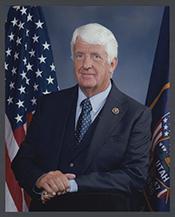
Madam Speaker, I am happy to yield 2 minutes to the gentleman who led our effort to bring about reform of the rules and help put this package together, my very good friend, Mr. Bishop, the gentleman from Utah.
I am happy to give my friend an additional 30 seconds.
Madam Speaker, I am happy to yield 45 seconds to the distinguished new chair of the Committee on Transportation and Infrastructure, the gentleman from Florida (Mr. Mica).
If the gentleman would yield, I would say, Madam Speaker, the gentleman from Florida is absolutely correct. Clause 3 of rule XXI, as amended, does not change the way in which the underlying programs are funded, which is through contract authority provided by authorization acts.
Madam Speaker, I yield 2 minutes to the very distinguished chairman of our transition committee, my friend from Hood River, Oregon (Mr. Walden).
May I inquire of the Chair how much time remains on each side?
I reserve the balance of my time.
Madam Speaker, I yield 2 minutes to the distinguished chair of the Committee on the Budget, the gentleman from Janesville, Wisconsin (Mr. Ryan).
Will the gentleman yield?
I will simply say I was quoting Mr. Faleomavaega and Mr. Hoyer when they used that term.
I thank my friend for yielding.
I reserve the balance of my time, Madam Speaker.
Madam Speaker, I continue to reserve the balance of my time.
Mr. Speaker, I continue to reserve the balance of my time.
I continue to reserve the balance of my time.
Mr. Speaker, will the gentleman yield on that point?
I thank my friend for yielding.
Let me just say to the commission that I think it is very important to note that they argued that there should be a reduction to 26 percent as the top corporate rate and 23 percent as the top tax rate.
I thank my friend for yielding.
I yield myself the balance of my time.
Mr. Speaker, everyone is very enthused about today. It is a great day. We have 96 new Members of this institution--87 Republicans and nine Democrats--nearly 100 new Members. They are here having carried a very strong and powerful message from the American people, which is we have got to create jobs, get our economy growing, reduce the size and scope and reach of government, and do it in a more transparent, open and accountable way.
Mr. Speaker, that is exactly what we are doing. That is exactly what we are doing with this rules package.
Now, there seems to be a little disagreement on the notion of dealing with spending and taxes. The fact of the matter is we all know--several of us have said it through the debate--that we don't have a revenue problem. We have a spending problem. What we need to do is to focus on reducing spending, and we are absolutely committed with a laser-like approach to doing that. It is going to be tough. It is going to be painful. I hope that, as we reached out and had bipartisan input on this rules package for the first time ever, that we will be able to do the exact same thing, Mr. Speaker, when we deal with the question of getting our economy growing and the other challenges that lie ahead of us.
We never before have had the opportunity that we are going to have in just a few minutes. The Rules Committee is going to meet after we are seated, and when I came to the Rules Committee two decades ago, I was told by the dean of the Washington press core, David Broder, that the Rules Committee hearing room was small by design. Why? To keep us out, Mr. Broder said to me.
Well, Mr. Speaker, for the first time in this quest for transparency, we are going to have online streaming of our Rules Committee meeting that will take place after we are seated here.
General Leave
Mr. Speaker, I ask unanimous consent that all of our Members have 5 legislative days in which to revise and extend their remarks on this measure.
It is with a great deal of zeal, enthusiasm, and gratitude that I move the previous question and yield back the balance of my time.