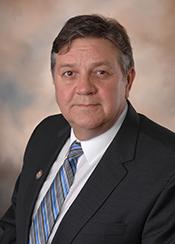
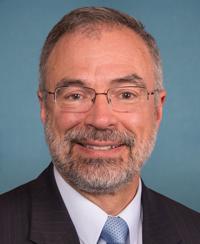
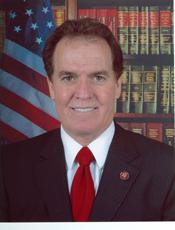
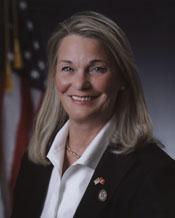
Tonight, my colleagues and I have come to the floor, both as Members of Congress and physicians, to discuss the urgent need to repeal and replace the Patient Protection and Affordable Care Act. Like…
Tonight, my colleagues and I have come to the floor, both as Members of Congress and physicians, to discuss the urgent need to repeal and replace the Patient Protection and Affordable Care Act.
Like many of my fellow Members here this evening, I've spent the last decades of my life as a physician, a surgeon. Unlike our President, I was on the front lines of medicine. I went to medical school in Detroit, Michigan. I did a family practice internship in Flint. I returned to Detroit to do a surgical residency, and then moved to the upper peninsula of Michigan, where for the last 28 years until I took this job, I was taking care of patients in a rural general surgical practice.
I know what it's like to be in a small town where people depend on their local physician, and it's 2 hours in an ambulance to get to the nearest hospital. And the Patient Protection and Affordable Care Act is affecting rural hospitals to such a degree that many of these hospitals are going to close. And I just want to bring to your attention, Mr. Speaker, the seriousness of this problem.
It's been a pleasure being a surgeon. It's a pleasure being here in Congress. As a matter of fact, sometimes patients of mine still call the congressional office inquiring about scheduling a case. One of the very reasons I ran for Congress was because I felt those with real health care experience needed to contribute to the national discussion on health care reform. Tonight, along with other members of the Doctors Caucus, I'd like to dispel some of the myths associated with the President's health care bill.
It's time to set the record straight. It isn't enough to just say this bill must be repealed, we must tell you why it has to be repealed, explain to you the really bad aspects of this bill. I'm proud to say that one of my first votes as a Member of Congress was to repeal it. Tonight, we're going to go through some of the provisions of the bill which make it so onerous.
While I disagree with the President's health care bill for a number of reasons, I'm particularly appalled at the recent regulation issued by the United States Department of Health and Human Services as a result of the bill, requiring all employers, even if they have a religious or moral objection, to offer health insurance that includes sterilization, abortion-inducing drugs, and contraception.
I offer for the Record an excerpt from a letter from Bishop Sample of the Catholic Diocese of Marquette, one of my constituents. Here is a quote from Bishop Sample's letter:
In so ruling, the Obama administration has cast aside the
First Amendment to the Constitution of the United States,
denying to Catholics our Nation's first and most fundamental
freedom, that of religious liberty. And as a result, unless
the rule is overturned, we Catholics will be compelled to
either violate our conscience or drop health care coverage
for our employees and suffer the penalties for doing so.
The Obama administration's sole concession was to give our
institutions 1 year to comply. We cannot, we will not comply
with this unjust law. People of faith cannot be made second-
class citizens.
Mr. Speaker, as a fellow Catholic and a physician, I agree with Bishop Sample. It's my belief that the government has no right to mandate that employers purchase health insurance for their employees in the first place. But this law is made even worse by demanding that those who support life, regardless of their particular religion, provide coverage for abortion-inducing drugs.
Mr. Speaker, Federal conscience laws have existed since 1973 and have protected many health care providers from discrimination due to religious and moral values. Unfortunately, President Obama's health care bill contains no language protecting the conscience of health care providers.
I recently cosponsored H.R. 1179, the Respect for Rights of Conscience Act, which was introduced by my colleague, Mr. Fortenberry of Nebraska. If signed into law, this bill would amend the Affordable Care Act to permit a health plan to decline coverage of specific items and services that are contrary to the religious beliefs of the sponsor of the plan without suffering consequences. While I and other Members of Congress continue our efforts to repeal the President's health care plan in its entirety, bills such as H.R. 1179 are necessary while the Affordable Care Act is still law to ensure that the Federal Government does not mandate any American citizen to defy their own religious principles.
I certainly have many other issues with the President's health care bill, but I'd like to give some time to my other colleagues here tonight a chance to speak as well.
I yield to the gentleman from Maryland.
Right.
That's correct.
That's correct, as I understand it.
Thank you, Dr. Harris, for being here tonight. We certainly appreciate your comments.
Let me add, at a town hall in New Hampshire in August of 2009, President Obama stated: If you like your health care plan, you can keep your health care plan. The President made this statement several times as he attempted to gain support for his health care overhaul.
After the last Congress passed the Affordable Care Act, the Obama administration began its job-killing regulatory spree. Instead of allowing Americans to keep their health care plans if they're happy, this new law could cause as many as 87 million Americans, nearly a third of the population, to lose their coverage.
As a physician, I understand the importance of consumer choice when it comes to health care. Personally, I don't think government should be in the business of mandating the purchase of health care insurance at all. Why in the world would you pass a bill that mandates the purchase of health care insurance and then potentially kicks 28 percent of the population off their plans?
I can tell you from experience, this has nothing do with affordable care. Again, this is just not another reason to replace President Obama's Affordable Care Act with real health care reform.
I look forward to replacing this plan with a bill that expands health care choice, like H.R. 3000, a measure introduced by my colleague, Dr. Price, that I cosponsored. This bill expands health care access and availability, making provisions for selling insurance across State lines and addressing medical liability reform. This is a real step forward in health care reform, unlike the previous Congress's attempt.
With that, I'd like to introduce Dr. Gingrey of Georgia for his comments.
Thank you very much. I really appreciate my colleague from Georgia's comments, Dr. Gingrey. Excellent.
The minority leader, then-Speaker Nancy Pelosi, once promised that the President's Affordable Care Act would create as many as 4 million jobs. Despite these promises, over 13 million Americans have been unemployed for the last 31 months. Instead of creating jobs, the President's health care plan is working against America's economic heartbeat--small business. According to a study by the National Federation of Independent Business, new taxes created by the employer mandate provision in President Obama's health care bill may eliminate as many as 1.6 million additional jobs by 2014.
During his State of the Union address last week, President Obama stated:
Companies that choose to stay in America get hit with one
of the highest tax rates in the world. It makes no sense, and
everybody knows it. So let's change it.
I couldn't agree more with the President on that statement.
One easy place to start would be the passage of H.R. 1370, a measure introduced by my colleague, Dr. Boustany. This measure repeals the annual fee, meaning a tax, that the President's health care plan places on health care insurance providers. Instead of raising taxes by $500 billion on the American taxpayers to pay for the Affordable Care Act, President Obama should follow his own advice and encourage the Senate to repeal his health care plan.
With that, I would like to introduce my colleague from Louisiana, the former Louisiana doctor of the year, Dr. Fleming.
I appreciate that, Dr. Fleming. Thank you for your comments.
I just thought I'd make a few comments of my own about your discussion of the IPAB board and make sure that the American people know what this is. The Independent Payment Advisory Board is a board of bureaucrats appointed by the President, without appeal, that will determine whether or not procedures, if they are overpriced, will be available to the American people.
I've talked to patients in many difficult situations, where I have had a very sick patient and have taken care of the patient myself and the patient's family, where difficult decisions are being made affecting the life or death of the patient. These decisions are not easy to make. You have to discuss the alternatives with the patient and with the patient's family; and usually, through the coordination of what the patient wants, with what the physician recommends and in discussion with the family, we come to a decision.
The Independent Payment Advisory Board may decide completely differently from what we decide. Certainly, some patients deserve different types of care: palliative care rather than aggressive care, comfort care measures versus complete major surgery. These are decisions that have to be made personally--on an individual basis-- based on sound medicine, what the family needs, what the patient wants, and not with an unappealable bureaucratic decision made in Washington by someone who may or may not know the patient and who certainly may not be educated in medicine or compassion. From my eyes, it's really a scary thought for the American people, and I just wanted to put my perspective on your comments there.
Now we have my colleague here with us this evening, the gentlewoman from New York (Ms. Buerkle), as a member of the Doctors Caucus. Ms. Buerkle is actually a nurse, yet we have health professionals of all varieties here tonight, so I yield to the gentlewoman.
Thank you very much. I appreciate the gentlewoman's remarks, and thank you for taking the time to come up this evening.
We're nearing the end of our hour here, and I'd like to give the other Members that are here an opportunity to speak.
I yield to my friend from Arizona (Mr. Gosar), who is a member of the dental profession. I'm looking forward to your comments.
I thank my colleague from Maryland, and I appreciate your bringing up those great points.
The President's health care act was to allow people to get more access to medicine. And as we've seen from multiple discussions here this evening, with the closure of many small hospitals throughout America due to the decreased payments under the President's health care bill, many small hospitals are facing closure.
I know, like the gentlelady from New York mentioned, I have many small hospitals that are on the razor's edge of being in the black or in the red. Recently, a small hospital in my district was just on the verge of bankruptcy. How is closing five hospitals in the 200-mile area increasing access to care? It isn't. It's making access to care more difficult, more impersonal.
Physicians, like ourselves, we're concerned about what's going to happen here because I'm concerned about my patients. And I'm concerned about my colleagues who complain to me about their patients. I think it's folly to be able to regulate health care from above.
Health care needs reform. We have the best health care in the world. The problem is it costs a lot of money. It costs a lot of money because there's not enough market forces, as my friend from Louisiana mentioned. You know, once somebody pays their copay, they don't care what anything costs. I paid my copay, I don't care what it costs. It's all good. We need to have health insurance be more like car insurance. You can buy car insurance from multiple different companies, thousands of different companies. In Michigan, you can buy your car insurance from a company in Florida or Tennessee because there's a lot of open competition. And your car insurance doesn't pay for an oil change. It doesn't pay for new tires. It doesn't pay for the routine expenses. If your car insurance paid for your oil change and your new tires, it would be really expensive, just like our health insurance is today.
We need to have people understand that health care isn't free once they pay their deductible. I think the health savings account concept where people have to save money tax free in their health savings account, use that money for their routine medical care and have health insurance be what it should be, not complete coverage of everything medicine but insurance for catastrophic disease, for items that you choose to insure for, not to insure for things that the government makes you insure for, like, you know, abortions which you may not want, or pregnancy, which you may not--you know, if you've had a hysterectomy, why should you be paying insurance for a pregnancy? There should be choice in health insurance, to allow people to have a Cadillac plan if they want, if they can afford it, or a Chevrolet plan. Or a young person may have simply a catastrophic plan if they feel they will not have significant health issues.
That type of marketplace and that type of philosophy is what we need in the health insurance business in my view.
I want to ask my colleague from Louisiana if that view of medicine, a market-based insurance and then competition between physicians as well, is your view?
Thank you. Let me ask my colleague from Georgia if he has any other comments he'd like to make?
I thank the gentleman from Georgia and the gentlemen from Louisiana and Arizona, the gentlewoman from New York, and my colleague from Maryland as well for appearing with me tonight. We've been trying to explain to the Speaker and the American people some of the issues that we have with the President's health care bill that do not solve our problem with health care and why we want to repeal it.
I encourage you all to look further into this issue and become educated so that you can inform yourself and your friends how serious this problem is.
With that, I yield back the remainder of my time.