Mr. Speaker, reserving the right to object, are we apportioning that 5 minutes from each side? I yield to the gentleman from California. I withdraw my reservation. Mr. Speaker, I yield 2\1/2\ minutes…
Mr. Speaker, reserving the right to object, are we apportioning that 5 minutes from each side?
I yield to the gentleman from California.
I withdraw my reservation.
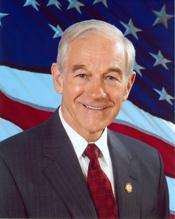
Mr. Speaker, I yield 2\1/2\ minutes to the gentleman from Texas, Congressman Ron Paul, an American patriot, someone who has been relentless in his efforts to stop America from blundering into foreign adventures.
I yield myself 30 seconds.
What this is doing is essentially stopping any kind of a negotiated deal and putting us on a path towards war with Iran. You know, it is likely that any negotiated deal that would prevent a nuclear-armed Iran would provide for Iranian enrichment for peaceful purposes under the framework of the nuclear nonproliferation weapons treaty with strict safeguards and inspections. So we're taking a path here that guarantees that we're put on a glide slope right to war. Why are we doing this, we don't have enough wars in this country? We aren't involved in enough places around the world in war?
This is a bad resolution.
I would like to include for the Record a statement by the Friends Committee on National Legislation, which says that the new sanctions push the U.S. and Iran closer to war.
New Iran Sanctions Push U.S., Iran Closer Toward War--Friends Committee
on National Legislation
Washington, DC.--FCNL's Lobbyist on Middle East issues Kate
Gould issued the following statement opposing the Iran Threat
Reduction and Syria Human Rights Act of 2012 (H.R. 1905) that
could reach the House floor as early as today:
The Friends Committee on National Legislation strongly
opposes the Iran Threat Reduction and Syria Human Rights Act
of 2012 (H.R. 1905). We believe this legislation would
undermine human rights in Iran and cripple the accountability
of the diplomatic process now underway to prevent a nuclear-
armed Iran, pushing the U.S. and Iran closer toward a
devastating war.
War is the ultimate human rights violation, and this bill
lays the groundwork for war by escalating the scale of
economic warfare that Congress would impose on ordinary
Iranian citizens. As in the case of the decades of U.S. and
U.N. sanctions against Iraq that culminated in a U.S.
invasion of that country, economic warfare punishes
civilians, emboldens hardliners in Iran's regime, and
forecloses diplomatic options to prevent a nuclear-armed Iran
and war.
Punishing Iranian Civilians
FCNL and ten other national advocacy and religious
organizations from the human rights and peace and security
community wrote to Senator Tim Johnson, Chair of the Senate
Banking Committee, last week to oppose this bill, and to
highlight the importance of keeping channels open for
Iranians to have access to food, medicine, and other
humanitarian goods and services.
Ordinary Iranians already face tremendous difficulties in
accessing basic medicine under sanctions. For example, this
week, the board of directors of the Iranian Hemophilia
Society informed the World Federation of Hemophilia that the
lives of tens of thousands of children are being endangered
by the lack of proper drugs, as a consequence of
international sanctions.
The Iranian Hemophilia Society notes that U.S. and
international sanctions technically do not ban medical goods.
Yet, despite the `humanitarian exemption' in U.S. sanctions
laws, medicine is not getting in to Iran because the
``sanctions imposed on the Central Bank of Iran and the
country's other financial institutions have severely
disrupted the purchase and transfer of medical goods.''
The humanitarian exemption is of profound importance, as
the U.S. business community and humanitarian organizations
have pointed out. We are relieved that this legislation does
not directly prohibit Iranians from accessing food, medicine,
and humanitarian trade. However, if the Iranian civilian
economy is destroyed by sanctions, then millions of Iranians
will be deprived of their livelihoods, and unable to purchase
the food, medicine, and other goods that the humanitarian
exemption is supposed to protect. Further destabilization of
the Iranian currency and decimation of the Iranian economy
will push Iran closer to the state of Iraq when it was under
sanctions. During that time, UNICEF estimated that U.N.
sanctions contributed to the deaths of half a million
children.
Emboldening Hardliners in Iran
This bill would embolden hardliners in the Iranian regime,
at the expense of the civilians who will overwhelmingly bear
the brunt of these sanctions. Just as Saddam Hussein never
missed a meal under the decades of sanctions against Iraq,
top Iranian officials will not have difficulty accessing food
and medicine. National security expert Fareed Zakaria has
noted that the U.S./U.N. sanctions' ``basic effect has been
to weaken civil society and strengthen the state'', and that
``the other effects of the sanctions has been that larger and
larger parts of the economy are now controlled by Iran's
Revolutionary Guard--the elite corps of the armed forces.''
Foreclosing Diplomatic Options, Laying Groundwork for War
As countless U.S. and Israeli security officials have
pointed out, diplomacy is the single most effective way to
prevent war and a nuclear-armed Iran. This bill would be a
setback to achieving a near-term diplomatic resolution of the
standoff over Iran's nuclear program, foreclosing diplomatic
options to prevent a nuclear-armed Iran and a devastating
war.
This bill would tie the President's hands, eroding the
little flexibility that Congress normally allows the
executive branch to conduct negotiations with Iran and allow
for sanctions relief in exchange for serious, verifiable
Iranian concessions. We are particularly concerned about
section 217, which effectively endorses regime change. The
provision would prohibit the President from lifting sanctions
against the Central Bank of Iran unless Iran agrees to a host
of conditions that the Islamic Republic of Iran cannot
reasonably be expected to agree to.
As veteran intelligence officer Paul Pillar has pointed
out, requiring Iran to end efforts to ``acquire or develop
ballistic missiles'', [section 217 (d)(1)(A)(iii)] ``goes
beyond any United Nations resolutions on Iran, which talk
about nuclear capability of missiles, and even beyond
anything ever demanded of Saddam Hussein's Iraq, for which
range limits were imposed. It would be understandable if
Tehran reads such language as further evidence that the
United States is not interested in any negotiated agreement
but instead only in regime change.''
The bill even requires the President to certify that Iran
does not ``construct, equip, operate, or maintain nuclear
facilities that could aid Iran's effort to acquire a nuclear
capability'' [section 217 (d)(1)(A)(ii.)]: in order to lift
sanctions against Iran's Central Bank. It appears that
Congress is requiring that t broad indiscriminate sanctions
remain in place unless Iran surrenders its nuclear program
entirely, even if it is a verifiably peace program.
FCNL strongly urges members of Congress to speak out and
vote against this broad, indiscriminate sanctions legislation
on the House floor today.
I yield 2\1/2\ minutes to the gentleman from Texas, Representative Ron Paul.
I would like to include for the Record a publication from the International Civil Society Action Network, ``What the Women Say: Killing Them Softly: The Stark Impact of Sanctions on the Lives of Ordinary Iranians.''
What the Women Say: Killing Them Softly: The Stark Impact of Sanctions
on the Lives of Ordinary Iranians--Brief 3: July 2012
The unprecedented, devastating and counterproductive impact
of sanctions, coupled with the on-and-off threat of war, is
an ever-growing reality in the lives of ordinary Iranians.
For the generation of Iranians whose childhood was punctured
by nightly bombings, fear of chemical attacks, and eight
years of death and destruction resulting from the Iran-Iraq
war, the current state of uncertainty, prospects of hardship
and unraveling of the lives they rebuilt is overwhelming.
In New York, London, Washington and Brussels the rationale
for sanctions vary. Central to the case is the notion that
only crippling sanctions can slow Iran's nuclear program and
bring about change. A number of the sanctions also target
state institutions and individuals implicated in human rights
violations. Regardless of their political leanings, among
western leaders, policymakers and pundits, no one denies that
economic sanctions are blunt instruments that typically harm
the civilian population far more than the state. Western
policy makers, however, respond that `this is the price that
has to be paid'--the questions of price for what, how much,
how long and by whom are left hanging.
Iranians have the answers. The earliest sanctions imposed
in the immediate aftermath of the 1979 Iranian revolution
(and American hostage taking) had less direct impact on the
public. But since 1995, when the Clinton Administration honed
in on the oil and gas sector to the current day where the
banking and financial sectors have been targeted, private
enterprise and ordinary citizens are the primary and
overwhelming victims. Needless to say, they are skeptical of
western politicians or institutions that claim to care about
the well being, human rights or aspirations of the Iranian
populace.
It is not uncommon for Iranians in every walk of life to
recall the Iran-Iraq war (1980-88), when the Western world
was complicit with Saddam's Iraq and its use of chemical
weapons. With the impact of current sanctions seeping into
every day life now, many Iranians consider them to be a
profoundly insidious and destructive force and source of
basic human rights violations, affecting a wide cross section
of Iranians.
As one women's rights activist stated, ``the international
community's sole focus on the nuclear issue has resulted in
the adoption of policies that inflict great damage on the
Iranian people, civil society and women. Militarization of
the environment will prompt repressive state policies and the
possibility of promoting reform in Iran will diminish.''
Iranians' wariness of the international community, however,
has not quelled criticism of their own government. They have
neither an appetite for war nor for the bellicose language of
the state. They criticize the government's mishandling of the
economy in recent years. They balk at the continued
imposition of social restrictions. Those involved in civil
rights activism including students, workers, women and
leaders from ethnic groups and religious minority communities
are among the first to feel the endless pressures and
limitations imposed on them. Not least because the sanctions
and threat of war allow the state to invoke ``a state of
emergency'' and in so doing suppress critics and voices of
dissent.
In its ongoing series of MENA region `What the Women Say'
briefs, ICAN provides a gendered analysis of the impact of
sanctions, echoing the voices and experiences of Iranians,
particularly women's rights activists, regarding the social,
economic, political and security consequences. At a time when
the United States, the European Union and others are
heralding their national action plans on women, peace and
security that highlight the need for women's protection in
times of crisis and their participation in conflict
prevention and peacemaking, this brief offers the
international community recommendations on limiting the
immediate and long-term damage being wrought on women,
Iranian society and ultimately regional security.
1. Current sanctions cut deep and wide into the social and economic
life of ordinary Iranians
Iranians know war and they know sanctions. The experiences
of women, men, the elderly and the young who lived through
the eight years of the Iran-Iraq war are rarely recounted
today, but the long term impact is still evident. Though
their plight is rarely discussed, women of child bearing age
and soldiers exposed to chemical warfare still suffer from
complex health problems. Similarly the thousands of men
handicapped by landmines and war wounds are rarely a topic of
conversation. Another long term impact has been the rise of
female headed households in part due to war deaths among men.
Throughout the 1980s war years, Iranians also suffered from
sanctions and lived under a strict rations policy. But it was
a very different society then. Some 50 percent of Iranians
lived in rural areas and were largely self sufficient through
domestic agricultural production. The sanctions too were
limited to key sectors pertaining to military equipment. As a
result the public impact was less evident. International
trade relations were sustained including with the U.S.
private sector. Today only 29 percent of Iranians live in
rural areas. Continued migration to urban areas has led to
the expansion of cities and their peripheries. The majority
of migrants eke out their living in the service industry and
informal economy on the margins of cities. The sanctions
regime is doing most damage to those who are already
vulnerable--the urban poor. As the pressures increase,
economic class and social divisions are also being
exacerbated.
2010 sanctions choking insurance and shipping sectors with
implications for public health: Sanctions introduced in the
summer of 2010 directly targeted insurance companies that
insured Iranian shipping involved in the import and export of
products. Despite denials by proponents of the sanctions
regime, this round of sanctions directly affected the
availability of foreign-made medication and other healthcare
products to Iranians including vitamins for children and
pregnant women and sanitary products. The implication for
serious illnesses including cancer is particularly profound.
As one women's rights activists recounted, ``foreign made
medicine became difficult to find in 2010, and with the
intensification of sanctions this trend has continued.
Domestically produced drugs, which are dependent on imported
ingredients, are also more expensive and difficult to find.''
Others echo this experience. ``Many Iranians can no longer
afford the high cost of cancer treatment drugs that have
become hard to find,'' says the daughter of a female cancer
patient. ``Family members have to go from one hospital to
another and to multiple pharmacies to find and then purchase
the medicines at high costs for the treatment and life of
their family members. Patients with poorer prognoses or those
who cannot afford it are forgoing treatments and opting for
an early death so they don't burden their families
financially.''
Sanctions targeting Iran's oil and gas sector were also
intensified in 2010, through limiting or ending the sale of
gasoline products to Iran. In anticipation, the Iranian
government initiated a number of steps including ending of
subsidies for gasoline, rationing gasoline and increasing
domestic refining processes. As a result, the price increase
has been significant, with unrationed gasoline
costing 4000 Rials per liter in 2009 and projected to
increase to 8000 Rials in 2012. Free market prices for
gasoline are currently at 7000 Rials per liter. Additionally
the quality of the domestic product is much lower than
imports, according to experts.
One significant impact of the increased use of domestically
produced gasoline has been a noticeable decline in air
quality, particularly in Tehran. Reports note that Tehran's
air quality, which was already poor, has worsened
significantly since gasoline imports were sanctioned. Even
the New York Times report explained the connection between
the ban on gasoline imports, the push to use domestically
produced gasoline and the rapid air quality deterioration:
``According to e-mails circulated to industry experts . . .
lran's new supply of domestic gasoline may contain high
levels of aromatics--more than twice the level permitted by
Iranian law. Burning aromatics in car engines produces
exhaust packed with high concentrations of ``floating
particles'' or ``particulates'' that, added to the typical
smog caused by nitrous oxides and ozone, can cause a range of
health problems, from headaches and dizziness to more serious
cardiac and respiratory complaints.'''
In the same year, Mohsen Nariman, MP from Babol said, ``air
pollution is on the rise at an unusual rate and it seems that
one of the main causes is the substandard gasoline that is
being used in Tehran.'' One newspaper, the Hamshahri Daily,
reported that 310 persons died per day as a result of poor
air quality in Tehran in the months of October and November
2011. The cause of death included increased respiratory
complications, heart attacks and stroke.
Unprecedented banking sanctions targeting Iranians in all
areas of life: The banking sanctions that went into effect in
December 2011 have also wreaked havoc in people's lives. The
Iranian Rial has almost halved in value against the US dollar
and other currencies. With memories of the Iran-Iraq war
still fresh for many Iranians, across Tehran and other
cities, people, including shopkeepers and merchants reacted
by hoarding products. Consequently the price of a wide range
of goods and products including foodstuffs rose between 20-
100 percent, and continues to fluctuate.
The knock-on effect is evident in all areas of life. While
incomes have not increased, rents have doubled in some areas
of the city. The price of bread--a staple of the Iranian diet
especially for the poor--has increased by some 1500% in the
past 2 years, in part due to the removal of state subsidies.
The uncertainty is causing stagnation for the private sector,
while some businessmen point out that companies affiliated
with the state are exploiting the situation as they have
access to government exchange rates. Sanctions were imposed
to prevent a nuclear weapons program. Instead, as one
commentator notes, the price of manure has risen.
Iranian students studying abroad have also been impacted
seriously. Many are being forced to give up their education
as their families can no longer afford the tuition. Some UK
universities are refusing to register Iranian students
because they cannot prove that they can transfer the
necessary fees. But the sanctions--or the way that banks and
other bodies currently interpret them--make it impossible for
most Iranian students to do so.
In addition countless Iranians who have relatives living in
the EU and US and those who travel for medical treatment have
become entangled in the vast banking sanctions net. Thousands
have personal bank accounts and savings in western banks,
some dating back decades. Now they are being forced to shut
down their accounts and find themselves caught in a financial
no-man's land; being forced to close existing accounts, while
barred from transferring their savings to other accounts
internationally or in Iran.
In effect the banking sanctions are forcing massive
reliance on a cash based economy, making already vulnerable
Iranians dependent on black marketeers for the transfer of
funds to cover educational, health or other legitimate costs.
It is also fostering the rise of informal power structures
and contributing to the lack of accountability and
transparency. Even the Iranian Vice President has
acknowledged this development, stating, ``in the framework of
these sanctions we [the Iranian government] have to begin
negotiations with goods traffickers near the borders and use
them to buy products which are included in the sanctions.''
Not surprisingly many Iranians are left questioning if the
banking sanctions are intent on forcing Iran's rulers to come
to the negotiating table or if Iranian society and the
country's infrastructure at large are being deliberately
targeted and weakened. The timing of the intensification of
sanctions is particularly questionable. Iranian observers,
notably civil and political activists are asking whether
sanctions are in fact intent on balancing power in the region
in favor of regimes that ``despite their authoritarian nature
accommodate the west and its security agenda in the Middle
East, at a time when revolutions may threaten the existing
security dynamics in the region.''
In an interview with Radio Farda, Mehrdad Emadi, Economic
Consultant to the EU, stressed the destructive nature of
these sanctions, noting:
``This particular form of sanctioning a nation has been
unprecedented in the history of the world. The only similar
type of sanctions, were implemented for a short period of
time, and were intended to prevent the illegal transfer of
funds by Qaddafi within the framework of the activities of
Libya's Central Bank. But even during that time, [the
sanctions] weren't implemented in this fashion [as we see
against Iran's Central Bank], . . . not all the transactions
of the Libyan Central Bank were sanctioned and the sanctions
focused only on the illegal transfer of funds and money
laundering . . . [The Iranian sanctions] are not related to a
specific sector or industry nor to business entities or
specific individuals. In this framework, all monetary
transactions, currency transactions and business credit
accounts for imports as well as exports and for the coverage
and payment of insurance, which in every country falls under
the responsibilities of the Central Bank of that country,
will be made illegal in Iran. Iran's Central Bank will no
longer be able to carry-out these duties, because it has now
been identified as a center for money laundering. In this
framework, international corporations, governmental
organizations, non-governmental bodies or security
organizations will no longer be able to transfer funds or
open credit lines for trade, using the Central Bank.''
In the same interview, Hossein Mansour, a UK-based
economist offered a bleaker analysis, noting, ``the negative
impact on Iran's economy, especially in the long run, will
only be addressed with the expenditure of billions of dollars
and after several generations, and will be devastating for
the infrastructure of the Iranian economy.''
2. Women are bearing the brunt of the economic and social impact of
sanctions
Women are especially affected by the economic fall out of
the sanctions. They are being pushed out of the job market
and bearing the brunt of increased unemployment. Women's
rights experts recognize socio-economic pattern emerging
similar to those in Iraq when sanctions were imposed. In Iraq
sanctions and the ensuing poverty resulted in the withdrawal
of girls from education and increases in child marriage
(families were forced to marry off their young daughters to
reduce the number of mouths to feed). Iranian girls are at
risk of similar developments.'' Moreover, women's rights
experts believe that the externally imposed sanctions will
allow conservatives to further their regressive social agenda
by relegating women back to the domestic sphere, limiting
their access to education and the job market and couching it
as an attempt to increase male employment.
Despite significant societal changes, Iran remains a male
dominated culture, reinforced by the government's
conservative ideology that considers men as the heads of
households and primary breadwinners. Programs in line with
this ideology, seeking to relegate women to the home as wives
and mothers only have been stepped up in recent years.
Indirect and immeasurable consequences of sanctions:
stifling women's education, a key engine of socio-political
change: Women's rights activists are also wary of the
indirect impact of sanctions--and the manipulation of the
economic hardships by conservatives--on women's access to
higher education. Educated women from middle and traditional
working classes across rural and urban areas, among the rich
and the poor, have been the primary engine of socio-political
change in Iran. The demand for equal rights and equal socio-
political, economic and cultural rights permeates every level
of society. From the outset of the Islamic republic, the
status of women has been a critical and contentious issue. In
2003, conservatives proposed the imposition of quotas to
limit women's access to higher education and the measures
were briefly implemented across some medical fields in the
2004 national university entrance exams. Massive outcry among
students and women's rights activists forced the withdrawal
of the quotas.
Conservatives have not backed down however. They continue
to argue that when women are more educated than men,
traditional family values are undermined, as women prefer to
marry at an older age, seek similarly educated (or more
educated spouses) and have higher expectations. These
traditionalists also posit that women in the work force take
away men's jobs. Concerns about the impact of women being
more educated than men have prompted some conservative
lawmakers to reinstate quotas limiting women's participation
in higher education. Women and student's rights activists
believe that during President Ahmadinejad's second term the
quotas have been introduced with greater zeal and less
accountability. They coincide with the intensification of
sanctions and increased economic hardships. As the economic
situation worsens, women's access to higher education, will
likely endure further limitations. Even school age girls are
at risk as economic pressures may force families to make
choices and opt for boys' schooling. This may lead to
diminished literacy rates among girls in the near future.
In effect, the marginalization of women from education and
employment enables extreme conservatives to kill many birds
with one stone. They prevent a high rate of women's entry
into the public space (via universities). They eliminate
women from the economy and job market, particularly, higher
earning and more influential positions. They sustain and
revive the power imbalance between women and men, as women
will have fewer choices in life, limited control of resources
and become (and remain) more economically dependent on men at
greater rates than already exist. Ultimately they
may quash the force of women's demands--the next generation's
voices--for progressive change in society at large. As one
conservative member of parliament and staunch supporter of
limiting women's presence in university has put it: ``when
women can't travel to far away cities without the permission
of their husbands, their expertise has no impact on improving
the situation of the country!''
There is also a significant reduction in women's share of
the national budget. In the past for example, housewives
received national insurance, but this has been eliminated,
while the military budget has doubled for next year.
Downturns in domestic production, increases male
unemployment and violence against women: There are also more
insidious effects, difficult to quantify but increasingly
evident. The sanctions have caused massive downturns in
domestic production. The fledgling private sector is unable
to import the necessary raw materials for manufacturing. The
banking sanctions are causing a virtual standstill in imports
and exports by legitimate businesses. Even domestic
agriculture will lose its markets.
Meanwhile those with political connections are exploiting
the situation often by importing cheaper Chinese products.
This downward trend in domestic production will give rise to
lower wages, increase unemployment among men and women and
ultimately put pressure on families. As evident in other
settings, women will bear the brunt of dealing with their
unemployed spouses and the men of the family within the home.
These new dynamics are likely to lead to increased incidences
of domestic violence and family conflicts, as men's inability
to live up to social expectations can lead to depression and
attacks on women. Reduction in family income inevitably is
forcing women to find new sources of income. Their coping
strategies will likely include cutting back on their own
health, wellbeing and dietary needs to provide for their
dependents. As in other countries, for the most vulnerable,
poverty will likely lead to risky survival strategies
including child labor and sex work--informal sectors which
have expanded in Iran in recent years.
The most vulnerable are at the greatest risk: Afghan
refugee women and children: Vulnerable groups, such as Afghan
refugees and migrants who have been living in Iran legally
and illegally as a result of decades of war and unrest in
their own country, are also at greater risk. The situation is
most severe for Afghan women and children refugees or Iranian
women married to Afghan men and their children who do not
have identity cards. The intensification of government
crackdowns and forced repatriation programs, against Afghans
(including their Iranian wives and children) with illegal
status in Iran, has already had a negative impact on the
livelihood of these groups, but as the economy has worsened
the hostility they face from Iranian society and the
government has also increased. Afghans have been targeted
with segregation programs in public spaces and are facing
increased state and other forms of violence, while their
access to income and jobs has also been severely limited.
Comprising a large percent of those employed in the informal
sector as household help, street peddlers and in the service
industry Afghan women and children are at risk of facing
worsening working conditions and abuse in their place of
employment.
3.Independent civil society and civic activism are among the first
casualties of current international policies
Many of the men and women who founded and run Iran's civil
rights movements including human rights and women's rights
activists, workers unions and journalists spent their
childhood or young adulthood at war. They have tasted and
experienced the impact of war and sanctions on a personal
level. They are also fierce advocates of international human
rights and humanitarian norms and ideals.
The public outpouring in the aftermath of the disputed 2009
presidential elections prompted the state to impose heavy
security measures against civic actors. But debilitating
sanctions coupled with the daily rhetoric of war has elevated
national security concerns and further diminished the state's
tolerance of dissent internally. Activists are regularly
accused of working in concert with the west to destroy the
Islamic Republic. The uncertainty and fear has also affected
the public's receptivity to social activism. It is seen as a
secondary issue compared to the urgent realities of poverty
and prospect of war.
The sanctions are having a long-term negative impact on the
source of societal change in Iran. The urban middle class
that has historically played a central role in creating
change and promoting progress in Iran are key casualties of
the sanctions regime. Many civil society organizations and
charities survive on the basis of voluntary activism and
support. But facing economic uncertainty, many people are
retreating from public voluntary work. Even the most
committed have less time, as they are working longer hours
and often at multiple jobs to meet their economic needs.
Moreover with private enterprise in demise, more people will
become dependent on the state and thus unable and fearful of
engaging in civil activism. Additionally, sanctions and in
particular the limitations placed on transfer of funds, has
created serious impediments for charity organizations engaged
in health and medical services, education efforts, support
for orphans and disadvantaged women and children to carry-out
their work. Many of these organizations have ceased their
activities.
Sanctions are isolating Iranians from international forums:
Beyond the economic impact, civil society, including the
women's movement in Iran has been further isolated from their
international counterparts, as a result of the sanctions.
Security challenges imposed by their own government already
curtail civil society's ability to attend regional and
international conferences, workshops and other events. But
the policies of other governments further complicate their
lives. Visas that Iranian passport holders need to travel
internationally, take considerable amount of time and
resources. The new banking sanctions have ended the
possibility of financial exchanges, while the falling price
of the Rial has increased the financial burden for those
activists who want to participate in conferences and training
opportunities. Activists, like regular Iranians, cannot use
banks to transfer funds for conference participation, hotel
reservations, or to attend courses abroad. Finally, for years
despite state restrictions, activists have used the internet
as a critical tool for communication. But the sanctions
policies have led many large hardware and software
manufacturers in the United States to deny services and
products to Iranians. Thus just when contact with and
solidarity from the outside world are most needed, Iranians
are faced with the greatest level of isolation.
4. What Women Do: resilience, courage, voices of peace and a window to
the future
Women's rights activists have never had it easy. They have
fought against an assault on their legal and political rights
as well as their demand for equal opportunities in the
economic, social and cultural life of the country. In 2006,
when a group of women initiated the Million Signatures
Campaign to demand the reform of laws that discriminate
against women, they immediately faced state scrutiny and
obstruction. The movement thrived however, transcending age,
economic, rural, urban and even political and religious
divisions to draw in a mix of volunteers. Using new and old
media, improvised street theater and small group education
and outreach initiatives they raised public awareness
about the impact of gender based discriminatory laws and
called on people to sign up and join their campaign in
favor of legal changes. Despite security pressures the
movement elevated issues of gender equality to the
national level both politically and within wider society.
After the summer of 2009, and the mass post-election
protests, women's rights activists faced increased
restrictions as the space for dissent became ever more
limited. With the rise of sanctions and ratcheting up of the
war rhetoric, these activists are under immense pressure to
become silent and conform. Countless social and political
activists have been imprisoned and or forced into exile.
Students--female and male have been expelled from
universities because of their civil activism. Under these
circumstances, with economic hardships and prospects of yet
another devastating war, longterm planning and the
development of sustainable programs to maintain the gains
already made and push for basic rights are increasingly
difficult, if not impossible.
Women's Demands: no sanctions, no war, talk it out! Despite
these pressures, the Iranian women's movement has not been
silenced. The call against war, in favor of a negotiated
settlement, and an end to sanctions has become a primary
issue for many, despite the risks they incur. They are using
every opportunity to send their message to the world.
Women's rights activists now living outside of Iran draw on
international platforms to echo the concerns and voices of
their counterparts inside the country. Meanwhile, despite the
risks, women in Iran have not been silenced either. One
group, the Mothers for Peace, representing different sectors
and ideologies began its activities in 2008, with the aim of
preventing war and violence in the country and promoting
peace regionally. They, along with other women's groups, have
issued several statements opposing the possibility of war.
Echoing this, in 2011, on the International Day to Fight
Violence Against Women (November 25th), another group of
Iranian activists issued their antiwar and violence
statement, noting:
``We a group of women's rights activists in Iran, are
worried about the increasing violence against women and
children [that is the result] of the polarized and hostile
atmosphere [and] dead-end national and international politics
of tension and violence. As a result of these policies,
violence against women and children infiltrates the deepest
social and political and familial layers of Iranian
society.''
On March 8, 2012, in honor of International Women's Day,
several activists involved in the One Million Signatures
Campaign recorded video messages opposing war. They reject
the official narratives that often pose the problems in the
terms of good and evil, just and unjust, and call on all
sides--including their own government--to engage in
constructive dialogue rather than the rhetoric of war and
threats.
Recommendations to the international community, particularly the US and
European countries
Fundamentally rethink policy on Iran:
1. End the sanctions policy against Iran. Recognize that
sanctions as a general rule have a poor record of influencing
the behavior of states and in many situations have severely
harming the population at large, particularly vulnerable
groups and democratic movements. Ninety-nine percent of the
current sanctions against Iran are too broad to impact the
behavior of the government, instead they target the
population.
2. Sanctions are not a substitute for war. they are a step
closer to war. Failed sanctions will only work to strengthen
the position of those advocating for another war in the
region. Resolve to address the differences in a mutually
respectful manner immediately.
3. Recognize that sanctions weaken society not the state.
Iranian society is already witnessing the emergence of
radical groups. As one women's rights activist notes, in
countries of this region, including Iran, growing gaps
between the rich and poor do not make governments vulnerable,
rather they make the population vulnerable to increased
radicalization against the West as a way of coping with
humiliation. In border areas, where poverty is severe, we
already witness the increasing influence of terrorist groups.
If this trend continues we will be faced with a weakened
Iranian society--at risk of being radicalized, with
detrimental consequences for regional security in the medium
and long term.
4. Recognize that sanctions undermine women's security and
empowerment. The US and EU have been strong proponents of the
global women, peace and security agenda with the development
of priorities and action plans to ensure women's empowerment.
But sanctions undermine and contravene these policies. The
contradictory nature of US and EU rhetoric, policies and
actions increase the Iranian public's suspicion about them,
and credence to charges of hypocrisy.
On negotiations with the Iranian government:
5. Engage Iran on the full range of issues. including
regional security, economic issues. human rights, culture.
etc. Incentives, especially those that reduce the hardship of
ordinary Iranians, should be put forth to encourage a
peaceful settlement to the disputes of the international
community with Iran.
6. Call for the inclusion of civil society in engagement
with Iran. Should Iran and the international community reach
an agreement that would allow for negotiations and dialogue
on a wider set of issues, civil society, including women's
groups, human rights groups and peace activists, should
participate.
On immediate steps for redressing the impact of sanctions
on ordinary citizens:
7. Do not force an entire nation to adopt nontransparent
means of financial transactions. Revise the banking sanctions
so that ordinary people are not caught in them. Specifically,
adopt measures to facilitate the transfer of funds by
ordinary Iranian citizens and Iranians with dual nationality
(EU, US, UK etc) for travel, tuition, and medical care, in
the case of sale of property, inheritance or for other
personal and familial purposes. Forcing Iranians to move
toward a cash economy reduces transparency and fosters the
growth of shadowy actors.
8. Address the adverse healthcare impact of sanctions
immediately. Sanctions including limitations impacting the
import of medicines, medical equipment and forced usage of
substandard gasoline are affecting people's health and lives.
These issues should be investigated and alleviated
immediately with cooperation between the US, European and
Iranian governments.
9. Help ease and enable visa applications for Iranians
seeking to visit relatives. Throughout the EU, US, Canada and
Australia there are millions of citizens of Iranian descent.
They have elderly parents and relatives living in Iran who
visit them regularly. Visas for relatives should be expedited
and offered for longer periods.
10. Encourage student visas and conference attendance.
Student visas and visas for conference participation should
be processed more quickly and with less financial burden on
applicants.
11. Facilitate free and safe access to the internet to help
foster independent civil society. Sanctions have severely
limited Iranian civil society's safe access to the internet
including necessary software and hardware. The international
community should help provide this access and limit the
imposition of sanctions in this sector.
I yield myself 30 seconds.
The Senate Banking Committee summarized this bill by saying that it ``aims to prevent Iran from repatriating any of the revenue from sale of its crude oil, depriving Iran of hard currency earnings and funds to run its state budget.''
Spoken plainly, this bill would destroy the Iranian economy and further hurt the Iranian people that we claim to support. Iranians are already suffering under stifling sanctions as they experience rising food prices and lack of access to basic medicine. For example, the sanctions against the Iranian banking sector have greatly diminished the value of Iranian currency and have a negative effect on nearly every aspect of the lives of ordinary Iranians. The price of rent, education, and bread have all increased.
I reserve the balance of my time.
I yield myself 30 seconds.
We went to war against Iraq under the assumption they had weapons of mass destruction. Iran doesn't have weapons of mass destruction.
One of the problems with this bill is that it effectively states that sanctions on Iran's Central Bank would not be lifted unless there's a regime change. So we're bringing a whole new dimension here. It's about even more than nuclear weapons; now we're talking about regime change, because this resolution creates a new requirement for the termination of sanctions that are dependent on the cessation of the Central Bank's financing of the Revolutionary Guard, and it imposes new restrictions on the President's ability to waive sanctions.
So, what are we doing here? Setting the stage for another war. Regime change, and then upping the bar for Iran and essentially laying the groundwork for a conflict.
I reserve the balance of my time.
I yield myself 30 seconds.
Collectively, the provisions in this bill move the goalpost from negotiations over Iran's nuclear enrichment program to regime change. I just want to point out that the record of our country on regime change isn't all that good. Yes, we knocked out Saddam Hussein under the lie that he had weapons of mass destruction, and now al Qaeda is all over Iraq.
So, what are we about here? We're setting the stage for another war where we syphon the revenue out of this country, send it to war machines, can't meet our own needs. Since when does Iran achieve greater importance than our own country? That's what I want to know. I want somebody to explain that to me.
I reserve the balance of my time.
I yield myself 1 minute.
These sanctions are hurting ordinary people in Iran. I pointed out earlier, matters like the price of rent, bread--Americans can understand that--education, all of these things are increasing. And these sanctions then directly undermine Iran's civil society by giving the regime a chance to crack down even harder on internal dissent. These sanctions will ensure that those crackdowns continue.
Ordinary Iranians are struggling simply to make ends meet under this sanctions regime that already exists. They cannot afford to suspend the time necessary to participate in social movements which provide basic social services to push for democratic change in their country.
Are these the intended effects that we wish to have on the Iranian people and Iranian Americans?
And if not, passing this kind of a broad, indiscriminate sanctions bill sends the wrong message. If the sanctions imposed on Iraq are any precedent, we know that sanctions are not an effective tool in promoting or supporting domestic democracy movements.
We also know those sanctions did not prevent an unnecessary and wasteful war with Iraq. In effect, the expansion of the broad and indiscriminate sanctions, including this legislation, hurts our ability to negotiate with Iran, imposes long-term harm detrimental to the Iranian people.
I reserve the balance of my time.
I yield myself 1 minute.
Sanctions are a form of war in this case, and it will lead to war. And remember, we're not talking about--some time ago we were talking about if Iran would have a nuclear weapon, but then the bar's been lowered to say nuclear weapon capability. And now the game's being changed to say not just nuclear weapon capability, but we want regime change as well.
I mean, if this isn't a prescription for war, then I didn't participate in the debate in this House of Representatives in October of 2002 warning this Congress, chapter and verse, that Iraq had no weapons of mass destruction, no role with al Qaeda in 9/11, did not have any intention or capability of attacking the United States. This is a version of that debate all over again.
I mean, come on. What are we doing here? Why is this more important than our country?
You know, our postal service is going into default tonight, a manufactured default, mind it. No debate on the House floor about this today, but an attempt to manufacture a war with Iran.
What are we about?
I reserve the balance of my time.
Could I ask how much time remains?
And how much time does the gentlelady have?
I yield myself 1 minute.
This legislation also requires the President to impose sanctions on those who are responsible for or are complicit in certain human rights abuses in Syria, but it fails to acknowledge that our own country and a number of our allies are actively participating and stoking the violence on the ground. Divisions and infighting within the various militias operating on the ground are already occurring. And we also read that al Qaeda's also been involved in Syria.
So, look, we have to get serious about what America's purpose is in the world. It's not to be a heavy foot. It's not to proliferate wars all over.
The first thing we have to do is take care of things here at home: jobs for all, health care for all, education for all, retirement security for all. When we can do those kinds of things, then we can pretend that we can be the policeman of the world. But until we've done that, we don't have any right to go all around the world trying to tell people how to live.
And we can settle this matter with Iran without war. We can settle it through diplomacy. Diplomacy. It would be real interesting to try it. And we ought to support any efforts of the Obama administration to use diplomacy here. Let's not use this political climate to push us into a war.
I yield back the balance of my time.