Mr. Speaker, I ask unanimous consent that all Members may have 5 legislative days to revise and extend their remarks and include extraneous materials on the bill, H.R. 4089. Madam Chairman, I yield…
Mr. Speaker, I ask unanimous consent that all Members may have 5 legislative days to revise and extend their remarks and include extraneous materials on the bill, H.R. 4089.
Madam Chairman, I yield myself such time as I may consume.
I rise in strong support of H.R. 4089, the Sportsmen's Heritage Act of 2012.
This legislation protects the traditional right of American sportsmen to hunt and fish from arbitrary and unjustified bureaucratic restrictions and limitations. It will remove government roadblocks to these activities on certain public lands and guard against new regulations that threaten hunting and fishing.
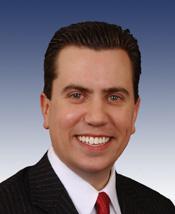
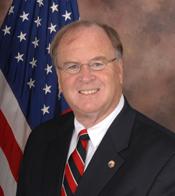
This is a bipartisan bill, Madam Chairman. It has the bipartisan sponsorship of the Republican and Democrat chairs of the Congressional Sportsmen's Caucus, Mr. Miller of Florida and Mr. Ross of Arkansas, as well as the caucus' vice chairs, Mr. Latta of Ohio and Mr. Shuler of North Carolina. This bill also has the broad support of America's recreational fishing, hunting, shooting, and wildlife conservation community.
At the appropriate time, I will include two letters, one from over 35 sportsmen's organizations and one from the Association of Fish and Wildlife Agencies, for the Record.
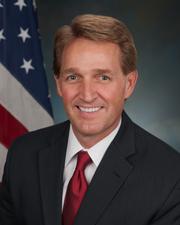
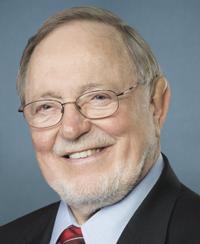
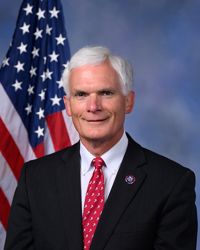
There are four titles to this legislation, and each reflects stand- alone bills sponsored by individual Members of the House. Mr. Benishek of Michigan, Mr. Flake of Arizona, Mr. Young of Alaska, and Mr. Miller of Florida all deserve credit for leadership on these important sportsmen issues. Their four bills were assembled in this package to be among the first pro-sportsmen bills considered and, I hope, passed by the House this year. I expect and anticipate further action on additional legislation in the months ahead.
This legislation is an affirmative declaration that Americans' ability to fish and hunt is not arbitrarily subject to limitation by the whim of Federal bureaucrats. It makes clear that public lands are ``open until closed'' to such recreational activities, and it makes absolutely clear, Madam Chairman, that the EPA does not have the authority to regulate ammunition and fishing tackle. This bill is not a solution in search of a problem, but regrettably, bureaucratic threats to hunting, fishing, and recreational shooting are very real, thus the need for this legislation.
Title I of this bill protects sportsmen from arbitrary Federal efforts to block hunting and fishing on public lands managed by the U.S. Forest Service and the Bureau of Land Management, or the BLM.
It requires that these activities be supported and facilitated, but-- this is very important, Madam Chairman--it does not prioritize hunting and fishing over other multiple uses.
The vast majority of our Nation's public lands are to be open and available for multiple uses, but, regrettably, there are agency personnel and land managers who attempt to control these lands as personal fiefdoms and prevent legitimate uses and activities, including hunting and fishing. In addition, activist groups bring lawsuits to limit these activities; and in the worst situations, bureaucrats willingly roll over to such lawsuits as a convenient way to limit the use of these facilities. This bill will protect against such lawsuits and the ensuing costly paperwork associated with them.
Title II of the bill directly addresses the sudden attempt last year by the Obama administration's Bureau of Land Management to limit target shooting on certain lands. An agency spokesman was cited in a news article saying that their proposed ban was being enacted in response to urbanites who ``freak out'' when they hear shooting and that the restriction wasn't rooted in public safety but, rather, to reduce ``social conflict.'' This proposed ban echos the Obama administration's attempt to impose a new classification of wildlands on Federal property in an attempt to unilaterally establish de facto wilderness.
Madam Chairman, I want to remind my colleagues once again that only Congress has the authority to establish wilderness areas.
Just as with the wildlands proposal, public outcry against the BLM's attempt to limit target and recreational shooting forced Interior Secretary Salazar to retreat from this effort, and rightfully so. However, at any point--say, right after the November election--the administration could again attempt such a ban on such activities. This is exactly why this legislation is necessary, because it would clearly provide that any closure must be specifically and publicly justified and be for reasons of national security, public safety, or to comply with Federal or State laws.
Title III of the bill would allow for the importation of certain legally taken hunting trophies from Canada that, through no fault of the sportsmen, have become trapped in a bureaucratic limbo. This is focused squarely on resolving existing situations ensnarled in red tape and does not open the door to unlimited future imports.
Finally, title IV of the bill is in response to perhaps the greatest bureaucratic threat posed, and that threat comes in the form of the Environmental Protection Agency, or EPA. In 1976, Congress barred the EPA from regulating firearms and ammunition. However, this has not stopped attempts to try and circumvent the law with the argument that EPA may not be able to regulate ammunition, but it can regulate components of ammunition and components of fishing tackle.
Regulating components of ammunition and fishing tackle would be a massive power grab by the EPA despite a clear lack of legal authority. Has that stopped the EPA under this administration? Sadly, it hasn't.
The EPA is an unfettered agency with an appetite for greater regulations that result in a greater stranglehold of our economy and how Americans are allowed to live their lives. But, unfortunately, the EPA is not without its allies.
In March, over 100 activist antihunting and environmental groups petitioned the EPA to ban the use of lead in hunting and fishing components. This is an overt attempt to end-run a law that has been on the books for nearly 40 years.
This legislation that the House will vote on today reiterates and clarifies existing law, leaving no question that the EPA does not have the authority to regulate ammunition and fishing tackle.
Madam Chairman, hunting, fishing, and recreational shooting are longstanding American traditions that deserve protection, which is exactly what this underlying legislation does, the Sportsmen's Heritage Act of 2012. This is why the bill has received strong bipartisan support and the endorsement of dozens of sporting and wildlife organizations.
I again want to commend the sponsors for their work and encourage all of my colleagues to support and vote for this legislation. I also want to thank Chairman Upton of the Energy and Commerce Committee and Chairman Lucas of the Agriculture Committee for their cooperation and assistance in helping to expedite consideration of this bill. At the appropriate time, I will again insert into the Record an exchange of letters between me and those chairmen regarding this legislation.
With that, I reserve the balance of my time.
House of Representatives,
Committee on Energy and Commerce,
Washington, DC, March 8. 2012.
Hon. Doc Hastings,
Chairman, Committee on Natural Resources, Longworth House
Office Building, Washington, DC.
Dear Chairman Hastings: I am writing concerning H.R. 4089,
the ``Sportsmen's Heritage Act of 2012,'' which was ordered
reported from your committee on February 29, 2012. I wanted
to notify you that, although it received a referral on the
bill, the Committee on Energy and Commerce will forgo action
on H.R. 4089 so that it may proceed expeditiously to the
House floor for consideration.
This is done with the understanding that the Committee on
Energy and Commerce is not waiving any of its jurisdiction,
and the Committee will not be prejudiced with respect to the
appointment of conferees or its jurisdictional prerogatives
on this or similar legislation.
I would appreciate your response to this letter, confirming
this understanding with respect to H.R. 4089, and ask that a
copy of our exchange of letters on this matter be included in
the Congressional Record during consideration of the bill on
the House floor.
Sincerely,
Fred Upton,
Chairman.
Madam Chairman, I am very pleased to yield 4 minutes to the author of one of those pieces of legislation, the chairman of the Veterans' Affairs Committee, the gentleman from Florida (Mr. Miller).
Madam Chairman, I yield 2 minutes to the gentleman from Georgia (Mr. Broun), who is a member of the Natural Resources Committee.
I yield the gentleman an additional 30 seconds.
Madam Chair, I yield 2 minutes to the gentleman from Michigan, Dr. Benishek, who is also a sponsor of one of the pieces of legislation that's part of this legislation.
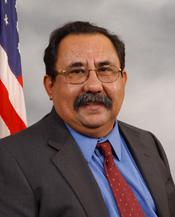
I am very pleased to yield 1 minute to the gentleman from Arizona, somebody who has worked on this legislation, Mr. Gosar.
Madam Chairman, I yield myself such time as I may consume.
Let me touch a bit on an issue that was brought up as to the cost of this legislation--cost that I acknowledge was scored by the Congressional Budget Office. I have to say, sometimes we have differences with those agencies. I guess that's understandable. But they suggest that there is a cost associated with this bill. Let me kind of walk through some points of this bill that I hope will point out: How can there be a cost associated with it?
Because, first of all, this bill does not create a new program. New programs would be associated with cost. This does not create a new program. It does not authorize any new spending. So because it doesn't authorize spending, how can there be a cost associated with it? It does not authorize any new personnel. So if we don't add any new personnel, how can there be a cost associated with it? Further, the bill restricts the ability of Federal land managers to oppose restrictions. Well, if they do less, one would say, logically, how could there be a cost associated with it?
I think what the reason is--and sometimes we point fingers here too much, but I mentioned in my opening statement that the Department of the Interior had some problems with this legislation, and maybe they had some problems and said that there would be new activities for people that work for them and, therefore, there would be a cost.
Let me reiterate: it doesn't create a new program. It does not authorize new spending, doesn't hire anybody. Under current law, they are required to do what they are required to do. How could that possibly cost more money? But yet that is what the CBO scored, and there's absolutely nothing we can do because that's their score.
But I will tell you, Madam Chairman, for the record, I highly doubt that if one were to walk their way through the restrictions that I have here and apply it to any other legislation, I would have to think that there would be no costs associated with that legislation. And I think that is probably the case, when you really get down to it, on this legislation.
With that, I reserve the balance of my time.
I am very pleased to yield 3 minutes to another gentleman that has authored legislation that is part of the title of this legislation, the gentleman from Arizona (Mr. Flake).
Madam Chairman, I am very pleased to yield 2 minutes to a vice chairman of the bipartisan Sportsmen's Caucus, Mr. Latta, from Ohio.
I thank the gentleman. I am prepared to close, and so if he wishes to close, then I will close on my side.
Madam Chairman, I yield myself the balance of the time.
Let's go back and set the stage for why this legislation is needed, and let's understand that public lands were designated for multiple use which, of course, means recreation and, of course, commercial activity, unless Congress says otherwise. And the most obvious example of where Congress says otherwise is in wilderness designations. But even then, in wilderness designations, there are certain activities. But Federal lands were designed to be multiple use.
The reason for this legislation is because we are finding arbitrary decisions on the ground not for the exceptions that Congress looked at that would restrict land activity. The gentleman from Arizona (Mr. Flake) pointed that out very well with his portion of this bill.
Some of the restrictions make perfectly good sense if one were to look at it hopefully logically, and sometimes we miss that point when we debate here on the floor. One of the reasons is for reasons of national security. If there should be restrictions on public lands for national security, nobody, I think, would argue with that. If there should be restrictions on public lands for public health, nobody would argue with that. Forest fires or wildfires come to mind in that situation--or if they are contrary to applicable Federal statutes. All of those things make sense.
But let's not lose the underlying principle of public lands, that they should be for multiple use. And what this legislation simply does is reiterates, reiterates that hunting and fishing have their portion-- not higher, not lower--but have their portion on use for public lands. That's what the whole intent of this legislation is.
We hear my friends on the other side of the aisle saying this is becoming top down; and yet when you look at the concerns that Members have had trying to offer amendments where they're trying to get more flexibility, you can't have it both ways. This simply reiterates what are the national standards. It should be multiple use, but particularly in this case as it relates to hunting and fishing.
With that, I urge adoption of the legislation, and I yield back the balance of my time.
Madam Chairman, I have an amendment at the desk made in order under the rule.
Madam Chairman, I yield myself as much time as I may consume.
Madam Chairman, this manager's amendment is a noncontroversial amendment to H.R. 4089 that makes several technical, clarifying, and harmonizing changes to the bill. It adds to the bill amendments that were adopted by the Natural Resources Committee when it considered several of the individual bills that are now separate titles of the Sportsmen's Heritage Act.
In addition, although I believe the original bill never allowed extractive commercial activity or motorized travel in wilderness areas, this amendment adds language that will say so explicitly.
Finally, the amendment reduces the administrative tasks faced by the agencies with regard to the format and frequency of public notice and congressional reporting requirements.
I ask for your support for this amendment, and with that, I reserve the balance of my time.
I yield back the balance of my time.
Mr. Chairman, I rise in opposition to the amendment.
I yield myself as much time as I may consume.
Mr. Chairman, the Holt amendment uses a blunderbuss and not a rifle to address the complex issue of the programs in national parks that involve shooting. This issue goes beyond sport or subsistence hunting, which are currently allowed in some park units.
In addition to national parks that allow traditional forms of hunting, the National Park Service has a historic weapons program that would be silenced, contrary to what my good friend and the author of this amendment, Mr. Holt, says.
In 2011, more than 600 national parks participated in some form of historic weapons demonstrations. From cannons to flintlocks, the Park Service says this program is ``undeniably popular with visitors'' and drew just less than a million visitors to various national parks around the country last year.
At Fort Vancouver National Park in Oregon and Washington, for example, both rangers and volunteers regularly fire muskets and cannons to demonstrate the historic role these weapons played in the history of the site.
One of the most popular public participation events in many parks involves the reenactment of historic battles. Thousands of reenactors participate. They use their own historically accurate weapons and costumes to re-create, on location, the great battles that took place at our Civil War sites. For many of those who participate or come to watch, these educational passions are the favorite of the national park events.
It was on this week, 237 years ago, that General Thomas Gage, the Royal Governor in Boston, sent his troops to confiscate the patriot weapons at Lexington and Concord. And at the Minuteman National Historic Park today, a living history event is conducted in which volunteers are permitted to bring reproductions of the flintlock muskets, pistols, and percussion cap weapons their ancestors used during the first battle for our independence.
At a time when the National Park Service is running a multibillion dollar maintenance backlog, the Holt amendment will disarm it of its real draw. So I urge my colleagues to oppose the amendment and to allow the Park Service to continue the tradition of educating visitors about our proud American history.
I reserve the balance of my time.
Mr. Chairman, how much time do I have remaining?
I yield myself the balance of the time.
I beg to differ. I understand where my good friend from New Jersey is coming from. I'm sure that's what his intent is, but that's not what his amendment says. His amendment says that that activity has to be provided by statute at each facility, and that's simply not the case. We haven't done that. We blanket authority give that to the National Park System to carry on what is classified as pastimes, that sort of activity. He prohibits that unless it's provided by statute. He did not offer an amendment to say we should statutize every one of those at every one of the sites. That's the flaw in the amendment. It was brought up in Rules yesterday, and yet the amendment wasn't corrected and so here we are.
Now, I understand what he's trying to do, but the amendment does not say that. So I urge defeat of the amendment, and I yield back the balance of my time.
I yield myself such time as I may consume.
Mr. Chairman, last year, the Bureau of Land Management decided that it would close a lot of the land it manages to shooting sports. The agency never explained why it wanted to do this, but one BLM official was quoted in a news article as stating, ``It's not a safety issue; it's a social conflict issue.'' He elaborated by saying that urbanites ``freak out'' when they hear shooting.
Now, after a public outcry on this, the Interior Secretary had to send out an order telling BLM to stand down on this regulation, but the question is really: For how long?
There is nothing that prevents the Obama administration from changing its mind--say, immediately after the November election--and again seeking to arbitrarily limit shooting sports. That's why this bill is necessary, to prevent such an arbitrary action by bureaucrats to limit recreational shooting, fishing, and hunting without justification.
The amendment by the ranking member of the Subcommittee on National Parks, Forests and Public Lands is even more arbitrary. While the amendment is drafted to appear reasonable, it is most certainly not. The devil is in the clever details. It appears to permit fishing, hunting, and recreational shooting, but in reality the amendment nullifies the actual purpose of the underlying bill to protect these activities.
First, one needs to understand that you could fit a lot of eastern States in a small fraction of our land that is BLM land. BLM controls 253 million acres of land, more than one-eighth all the land in the United States.
Second, the term ``public land'' used in this amendment has an expansive meeting. Legally, public land means more than national forest and BLM land. It also includes the Outer Continental Shelf. So, under this amendment, as long as fishing is allowed in any part of the ocean, no actual land need to be open to hunting; in other words, the 20 percent requirement could be satisfied in the Outer Continental Shelf.
Who hunts in the Outer Continental Shelf, Mr. Chairman?
Again, the bill we are considering today is about public land open to American people for outdoor recreation. That is a good goal. This amendment tries to hijack the bill by sending it 180 degrees from the intent of the underlying legislation.
So I urge my colleagues to oppose this amendment, and I reserve the balance of my time.
I yield myself the balance of my time.
Mr. Chairman, my good friend from Arizona said that suggesting in my argument that there could be a change in direction after the November election--and I'll paraphrase. He said that's preposterous. It may be. But I would just remind my colleagues that in a situation here several weeks back when it was not supposed to be recorded, our President was talking to the President of Russia.
This was recorded on an open mike when he was talking to the President, and again I'll paraphrase. He said, After the election, I'll have more flexibility on missile defense.
Now, on that issue, keep in mind, he had already given up the missile defense in Eastern Europe. Why would he want to have more flexibility for the defense of our country? The issue there is flexibility. And the issue is, if the President is going to use flexibility in that context, couldn't you apply the same flexibility to something that he has already done this year that has been reversed?
So I don't think it is preposterous. The flexibility issue, I believe, is going to be an issue that is going to be talked about a lot between now and November, and it could apply to a great deal of policies that we could be considering in this House. This is one of them because the administration has already said that these activities should make BLM lands off limits to target shooting. I don't know why that same principle could not be applied if the President has more flexibility after the election.
So I urge the defeat of the amendment, and I yield back the balance of my time.
Will the gentleman yield?
I thank the gentleman for yielding and for his talk and discussion about the long history and strong local support for this traditional form of hunting in his State.
The primary purpose of this legislation is to limit unjustified Federal bureaucratic limitations and restrictions on hunting and fishing in public lands. The circumstances that he has detailed demonstrate that his amendment fits squarely within the spirit of this bill, and I therefore support the amendment.
It is important to recognize that it is the authority of States to regulate hunting and fishing. Individual Federal agency personnel should not be substituting their opinion for the laws of the State.
Mr. Chairman, I commend the gentleman and I urge adoption of the amendment.
I thank the gentleman for yielding.
The Atlantic Striped Bass Conservation Act's authorization of appropriations expired at the end of fiscal year 2011. Our Fisheries Subcommittee intends to hold hearings on the reauthorization in this Congress. I think this would be the appropriate time and place to have the discussion which is the subject of your amendment.
I understand the gentleman's concern. Believe me, we have heard other concerns on the Atlantic striped bass. If the gentleman would withdraw his amendment, I can assure him that he will get a full hearing on the content of his amendment in our committee this year.
If the gentleman will yield, I thank you very much, and we will work together on
this. This is a larger issue, and I certainly understand the gentleman's concerns.
I yield myself such time as I may consume.
Mr. Chairman, the section of the bill that applies to hunting and fishing was derived from the excellent bill offered by the gentleman from Michigan (Mr. Benishek).
I have noticed that whenever a new wilderness designation bill is introduced and a subcommittee hearing is held, the sponsor testifies that his or her bill will not reduce hunting because hunting is clearly permitted in wilderness areas. And they are right. Nevertheless, when an anti-hunting group went to court recently to block hunting in the wilderness section of a national forest in Michigan, the Forest Service had to waste a great deal of time and money justifying the hunting permitted there.
Similarly, anti-hunting groups have sought to use the National Environmental Policy Act, or NEPA, to entangle the land management agencies in NEPA's briar patch when the agencies allow hunting activity on public land.
Now I'm certain that many would agree that hunting and fishing on public land is not a new major Federal action that requires a full environmental impact statement. However, to protect sportsmen and to prevent the waste of resources that occurs when conservation dollars are diverted into defending against nuisance lawsuits, Dr. Benishek's provision gives clear statutory support to legitimacy of hunting on public land.
I believe from the beginning that the Benishek bill dealt only with hunting and fishing. It never authorized motorized travel or extractive industries, even though some environmental activist groups quickly made that accusation. But to allay any genuine concerns people may have, we worked closely with a wide variety of conservation groups and decided to include in the manager's amendment that was passed a provision that explicitly states that the relevant portions of the bill--and I quote from the amendment--``are not intended to authorize or facilitate commodity development, use, or extraction, or motorized recreational access or use.''
With that very direct language I can honestly say that virtually every major conservation group that is not anti-hunting supports the bill. I don't have time to read the whole list, but it does include the NRA, the Safari Club, the bipartisan Congressional Sportsmen's Caucus, the U.S. Sportsmen's Alliance, Ducks Unlimited, the Theodore Roosevelt Conservation Partnership, and the Association of Fish and Wildlife Agencies.
I think H.R. 4089, as amended, now has the support of the entire range of sportsmen conservation groups, ranging from those considered conservative to those that are quite liberal, and do not believe that the wilderness section needs any additional changes as offered by the gentleman from New Mexico's amendment. Again, the concerns expressed by the gentleman from New Mexico in support of his amendment, in my view, are unfounded. This bill deals squarely with hunting and fishing, and does not authorize motorized travel or mining or other such activities in wilderness areas.
With that, I reserve the balance of my time.
I yield myself the balance of my time.
It appears that the argument here is that this language that we've drafted and passed in the manager's amendment is not strong enough. Let me read the appropriate words. In the gentleman from New Mexico's amendment, he focuses on the word ``shall,'' which, of course, is strong language. But he follows it with ``construed.'' Now that raises the question: Construed by whom?
Our language says very specifically that nothing in here is intended to authorize or facilitate any use regarding extraction. We say that is the intent of the law, very specifically. When you use the word ``construed,'' I dare say, Mr. Chairman, that you are opening this wide open to litigation, and maybe that is exactly what the gentleman intended.
By focusing on ``shall,'' he doesn't focus on the operative word, which is ``construed,'' because ``construed'' can be used by anybody outside in order to sue. We say very specifically, even though we didn't think extraction was part of this underlying legislation, but we say very specifically it's not intended to reinforce it. That was the reason that provision was in the manager's amendment.
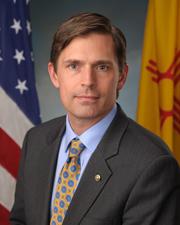
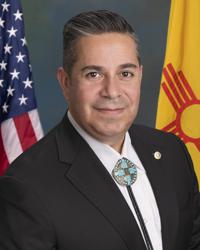
So I urge my colleagues to defeat the Heinrich amendment.
With that, I yield back the balance of my time.
I thank the gentlelady for yielding.
Unfortunately, the Antiquities Act is used more often than not to circumvent Congress' role in setting land-use policy or to foreclose any opportunity for anyone outside the White House to participate in whatever decision they make, including the affected States.
Unlike America in 1906 when the antiquities law was first enacted, we now have an elaborate set of other laws and regulations that require deliberative processes and procedures to be followed before any significant action affecting public lands can be taken.
I think the gentlelady's amendment would improve this process, and with that, I support it.
Mr. Chairman, I move that the Committee do now rise.