Mr. Speaker, I thank my colleague for yielding time, and I yield myself such time as I may consume. I rise in opposition to the proposed rule to H.R. 359 to terminate the Presidential Election…
Mr. Speaker, I thank my colleague for yielding time, and I yield myself such time as I may consume.
I rise in opposition to the proposed rule to H.R. 359 to terminate the Presidential Election Campaign Fund and the ability for taxpayers to designate $3 of their Federal tax liability for financing of Presidential election campaign.
This week, Republicans have engaged in what amounts to a shifty attack on a program that successfully limited the influence of corporations and special interests in our Presidential campaigns, tilting the playing field further in favor of multimillionaires who can, and often do, spend their own money.
Just as poll taxes and literacy tests prevented poor people and minorities from voting, eliminating this program will place those without the multimillion-dollar political clout yet another step away from having their day in a Presidential race.
This program allows every taxpaying American to voluntarily check a box--and I think I should reiterate here the individual ``opts in'' to this program--on their 1040 to put $3 in the Presidential Election Campaign Fund. A married couple has the option of $6 if filing jointly.
Checking the ``yes'' box does not increase the amount of taxes an individual owes, nor does it decrease any refund to which he or she is entitled.
In establishing the checkoff program, Congress left the single most important decision to the taxpayer. The taxpayer, not the House Republican leadership, decides whether he or she wants $3 of their taxes to be used for the Presidential funding program. The choice is theirs to voluntarily check ``yes'' or ``no.'' And I might add, during our hearing in the Rules Committee yesterday, several of us, including some of my Republican colleagues, indicated that they had at one time or another participated in this program. And yet now they want to eliminate it. Yes, this program does need improvement, but it is far from ineffective or obsolete.
Since the fund's inception in 1976, every Presidential candidate before 2008 has used the Presidential Election Campaign Fund in the general election,
and Republicans' own 2008 Presidential candidate, Senator John McCain, used it to fund his election.
During the 2008 election cycle, nearly $17 million of public funds were spent for the Republican convention, and an equivalent amount for Democrats; $84 million to Republicans for general election grants; and a total of $18 million for primary matching funds for parties' candidate nominations.
House Republican leaders have promised to bring reform and accountability to Congress, and I quote from the Republican Pledge to America: ``We are fighting to bring much-needed sunlight to the process.'' Is this the kind of reform and sunlight that you pledge to the American people?
YouCut gives Americans a choice? Really? A Web site where you only have the opportunity to vote ``yes'' for cutting--that is, either you support the Republican agenda, or we do not care what you think. A Web site where saying ``yes'' to meaningful programs, such as the National Endowment For the Arts, Legal Services Corporation, the Community Development Program, and a fund that was created specifically to empower Presidential candidates to participate in the political system regardless of their socioeconomic status or their relationship with special interest influence, is not welcome.
I have said it before, and I will say it again: A more fitting name for the ``YouCut'' program would be ``CutYou'' because it hurts everyday Americans while doing little to cut the Federal deficit.
Simply put, YouCut undercuts our democracy. The summary's headline for the legislation we are considering today is: End the Presidential Election Fund--Savings of $520 million over 10 years.
The biased paragraph goes on to say: ``In short, it provides taxpayer subsidies to political candidates and parties.'' Not only are the summaries provided on YouCut inaccurate, they are written to elicit a specific response.
We know that use of the fund has declined in recent years. President Obama was the first candidate since the fund's inception to opt out of the public financing in the general election, and other candidates have opted out of public financing in primary elections. If candidates from major parties continue to decline public financing, then the savings from eliminating the fund could and likely will be substantially lower.
Confusing YouCut voters with one-sided jargon and eliminating programs like the Presidential Election Campaign Fund are not the answers; fixing the public financing system and paying attention to what the American people really want are the answers.
What Republicans fail to mention is that the YouCut program is inherently selective, and therefore biased. Neither online nor cell phone voters are able to vote to save a program rather than cut it. Furthermore, the YouCut program conveniently targets only those who have Internet access and cell phones, which disproportionately leaves out a lot of the poor and elderly. The last time I checked, an undisclosed number of votes on a partisan Web site does not constitute the will of the American people.
Republicans seem to think that this online gimmick is an effective substitute for good governance. Now, the Republicans have promised over and over again that the 112th Congress would be a new wave of accountability and transparency. And yet this, like every other major bill that has been considered thus far, is lacking in both. The Republican leadership has held no hearings or markups, failed to consider alternatives, and crafted a bill so narrow that very few amendments can even be considered germane.
Mr. Speaker, this bill eliminates rather than repairs the Presidential public financing system, which is, in my judgment, irresponsible and will move our Nation in the wrong direction. I suggest that the next campaign more than likely on either side, Republican or Democrat, will cost as much as $1 billion each.
The House Republican leadership has touted that they are going to change the permissive culture of Congress. Today's consideration of this legislation is evidence that the only thing House Republicans want to do is glorify the permissive culture of their own party.
I urge my colleagues to instead focus on repairing the system and maintain the focus on increasing the roles of average citizens in our Presidential election process.
I reserve the balance of my time.
I yield myself such time as I may consume.
Mr. Speaker, that free-flowing debate consists of six preprinted amendments. Five of those amendments are not in order. So we're going to have a free-flowing debate on six matters that are offered; and if what he just said is going to give the American public the impression that we're having a free-flowing debate, then I must have missed something.
I yield to the gentleman from California.
I reclaim my time merely to point out that I don't consider five matters that are not in order and one that's going to be ultimately debated to be a free-flowing debate.
We'll get there. Perhaps we'll get there after we listen to my good friend, the former chair of this committee and the distinguished ranking member from New York.
I yield 3 minutes to the gentlelady from New York (Ms. Slaughter).
I yield the gentlelady an additional minute.
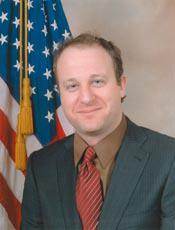
Mr. Speaker, I yield 2\1/2\ minutes to my good friend, the distinguished gentleman from Colorado (Mr. Polis).
I yield the gentleman an additional 30 seconds.
Mr. Speaker, I am very pleased to yield 1 minute to the distinguished gentleman from Virginia, my good friend, Gerry Connolly.
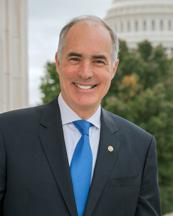
Mr. Speaker, I am very pleased to yield 2 minutes to my friend of longstanding, the distinguished gentleman from New Jersey (Mr. Pallone).
Mr. Speaker, in closing, I am one of those people among the 10 million that did do the checkoff of $3 for publicly-financed Presidential campaigns and to support the national parties' conventions. I feel very strongly that my $3 now is directed in a way that I did not wish that it should be directed.
I do urge my friend from North Carolina to understand that at least one Member on this side clearly understands that $617 million is a whole whale of a lot of money. To some of us, $617 or $67 is a whole lot of money. That said, what is balanced here is whether or not we should try in this institution to eliminate the kind of corruption that comes by virtue of a flood of dollars going into campaigns.
To correct my colleague from California--and I wish he were here; I would yield to him to respond--when he cites the fact that no corporate dollars can be contributed to the respective candidates who are on the ballot, he is absolutely correct. That is the law. But under the aegis of the Citizens United decision, corporations and individuals can contribute anonymously to any campaign. And we saw evidence of that on both sides.
Now, I have seen every iteration of reform during the last 50 years in the United States of America. Some of it was good and some of it didn't achieve its mark. This particular measure had some limitations and at the very same time did permit people like Eugene McCarthy, Jimmy Carter, Pat Buchanan, Pat Robertson, Jerry Brown, Jesse Jackson, Sr., just to mention a few, and more recently my good friend Dr. Ron Paul-- it gave them an opportunity to put forward their ideas. And the argument that they can go out there and raise the kind of money that would allow for that to happen I think is specious at best.
For most candidates, public funding from the Presidential election campaign fund has been the source of sorely needed funds at crucial points in Presidential races. To make matters worse, as has been pointed out by Ms. Slaughter and myself and others, the legislation we are considering today is a repeat of the disastrous Citizens United decision, which on January 21, 2010, unleashed massive corporate influence-buying expenditures in our national elections. In the face of the first anniversary of Citizens United, we know for a fact how essential it is to repair the Presidential public financing system and provide Presidential candidates with a viable alternative for financing their elections, as opposed to having to depend on influence-seeking big donors, lobbyists, bundlers, and corporate spenders. We cannot eliminate the corruption of our political system when we are eliminating a program that was created to try to do that.
Mr. Speaker, a vote for this legislation is a vote for big corporations and big private money to fund the election of their desired candidates. The Presidential public financing system needs repairs, but eliminating a program that works, that is voluntary, and that gives a voice to the American people is not the answer.
Mr. Speaker, if we defeat the previous question, I will offer an amendment to the rule to provide that immediately after the House adopts this rule it will bring up the DISCLOSE Act, with the same text as H.R. 5175 from the 111th Congress, as it passed the House on June 24, 2010. This Republican proposal to eliminate voluntary public financing for Presidential elections is, in my view, a step in the wrong direction.
When Presidential campaigns stop receiving this clean money, they'll have to go after private contributions instead. That's going to mean more time spent talking to special interests and the powerful and less time spent talking with the voters and communities and groups that have good ideas and real problems to discuss but don't have multi-million dollars to donate to a campaign.
Is that really what we want for our constituents? I am confident that the answer is a resounding ``no.'' Make no mistake, this will affect the quality of our campaigns and it will affect our democratic process.
We should be considering real campaign finance reform like the DISCLOSE Act. That bill would establish disclosure requirements for election-related spending by corporations, unions, and other organizations. And I might add, Mr. Speaker, it was a measure, as offered in the previous Congress, that did go through regular order, did have substantial committee hearings, and was presented to the Rules Committee, as opposed to this measure that has had absolutely no hearings and just comes here direct to the floor under the rubric of a modified open rule. And it would require, this DISCLOSE measure, any person or organization making so-called ``independent expenditures'' over $10,000 to disclose them within 24 hours. That's what we need after Citizens United, not politicians spending more time and energy to raise big money.
The DISCLOSE Act would put a check on donations by Federal contractors and prohibit contributions and expenditures by foreign- controlled domestic corporations. And among its other provisions, for example, is a prohibition on recipients of TARP funds from making contributions or expenditures.
Mr. Speaker, I ask unanimous consent to insert the text of the amendment in the Record along with extraneous material immediately prior to the vote on the previous question.
Mr. Speaker, I urge my colleagues to vote ``no'' and defeat the previous question so we can debate and pass real campaign finance reform today.
The material previously referred to by Mr. Hastings of Florida is as follows:
An Amendment to H. Res. 54 Offered by Mr. Hastings of Florida
At the end of the resolution, add the following new
sections:
Sec. 2. Immediately upon adoption of this resolution the
Speaker shall, pursuant to clause 2(b) of rule XVIII, declare
the House resolved into the Committee of the Whole House on
the State of the Union for consideration of a bill consisting
only of the text of H.R. 5175 of the 111th Congress as passed
by the House. The first reading of the bill shall be
dispensed with. All points of order against consideration of
the bill are waived. General debate shall be confined to the
bill and shall not exceed one hour equally divided and
controlled by the chair and ranking minority member of the
Committee on House Administration. After general debate the
bill shall be considered for amendment under the five-minute
rule. All points of order against provisions in the bill are
waived. At the conclusion of consideration of the bill for
amendment the Committee shall rise and report the bill to the
House with such amendments as may have been adopted. The
previous question shall be considered as ordered on the bill
and amendments thereto to final passage without intervening
motion except one motion to recommit with or without
instructions. If the Committee of the Whole rises and reports
that it has come to no resolution on the bill, then on the
next legislative day the House shall, immediately after the
third daily order of business under clause 1 of rule XIV,
resolve into the Committee of the Whole for further
consideration of the bill.
Sec. 3. Clause 1(c) of rule XIX shall not apply to the
consideration of the bill specified in section 2 of this
resolution.
I yield back the balance of my time.
Mr. Speaker, on that I demand the yeas and nays.