Mr. Speaker, I yield myself such time as I may consume. I rise today in great agreement with my colleague from California on the other side of the aisle. What she has articulated before us in this…
Mr. Speaker, I yield myself such time as I may consume.
I rise today in great agreement with my colleague from California on the other side of the aisle. What she has articulated before us in this Chamber, Mr. Speaker, is an instruction to the conferees, of which I am one, to get our job done. I wholeheartedly agree with that sentiment.
Also, there is a tremendous amount of agreement when it comes to the payroll tax extension to get an extension for at least a year, to extend unemployment benefits, and also to do what we have to do in Washington, D.C., in regards to our providers under Medicare with our doc fix.
We have proposed and passed in this Chamber before the end of the year a 1-year proposal on the payroll tax extension fully paid for, a 2-year proposal on our doc fix fully paid for. Those are long-term solutions that have been offered by our side of the aisle, adopted in a bipartisan fashion before the end of the year, and sent to the Senate to act upon.
The reality of the situation finds us in a position where the Senate has not done its job. And my colleague from California is correct. A lot of it had to do with the fact that the Senate ran out of time, and they reverted to classic, old political ways of doing business: passing legislation at 3 o'clock, 2 o'clock in the morning, waiting until the last minute, and putting forth a product that only allowed us to kick the can 2 months down the road.
We can do better. We need to do better. The proposal that came out of this Chamber was a start in that right direction. It is time that we join together and we hit this long-term solution put forth for the American people because they deserve no less.
I would be remiss if we did not identify the fact that we as conferees were here over the Christmas break. We were here trying to champion the cause for making sure we put policy into law, not achieve political gamesmanship or wins. It is time for us to focus on policy and put politics aside. Hardworking taxpayers deserve that today in America.
I, for one, will join my colleague on the other side of the aisle in the tremendous amount of agreement that I think we have going into this conference and the sentiment of getting the job done in time, not waiting until the last minute, coming up with a long-term solution of at least a year on our payroll tax extension, at least 2 years for our doctors who are getting reimbursed under Medicare, and take care of the unemployment situation.
But I would have to disagree with my colleague on the other side of the aisle when she says that unemployment benefits are some sort of economic stimulus that should be expanded. I understand, and I have read what the economists have said on the economic impact of unemployment benefits.
My point would be, if that logic were true, then why don't we just extend unemployment benefits to every American and sit back and watch the economy blossom. The fundamental truth is--and it's time to be open and honest with the American people about it--that the economy is not going to strengthen based on government expansion, government spending. It's going to strengthen on a commitment to small-business America laying the foundation upon which the private sector knows that there is certainty, there is confidence in the market, and they have the ability to know what the rules are going to be for years to come, not on a month-by-month basis.
I urge my colleagues in the other Chamber, in the U.S. Senate, to heed that fundamental message. We can no longer, in Washington, D.C., believe that short-term policy is the best we can do for America. Hardworking taxpayers deserve better than that, and small business owners across America need to know what the rules are with certainty and for years so that they can make the investments to put our hardworking taxpayer Americans back to work.
That's what we stand for on this side of the aisle; and that is what I am hopeful, going into this conference, we will be able to produce out of this payroll bill, unemployment extension, and our doc fix.
With that, I reserve the balance of my time.
Mr. Speaker, I yield myself such time as I may consume.
I would like to respond to my colleague on the other side of the aisle who just spoke in regard to when it comes to unemployment benefit extensions.
What we have to do, in my opinion, is set the framework upon which jobs in America could be created. We just had an example of this last week. I so hope our President tonight in this very Chamber comes and explains his decision to reject American jobs being created through the Keystone pipeline, because there is a project that has been identified; and it will be implemented in a way that would create an immediate 20,000 new jobs for men and women in America.
That will go a long way to solving our unemployment problems in the United States, not just extending unemployment benefits. But as we take up the issue of extending unemployment benefits, we need to do better. We owe it to hardworking taxpayers of America to come up with solutions and reforms in our unemployment benefits programs that give them the tools, the resources to be reemployed.
I agree wholeheartedly with my colleague on the other side of the aisle that I don't believe the majority of Americans wants to be unemployed. They want to get back to work.
So in our reforms that were passed in this Chamber before the end of the year, we talk about such things as requiring GEDs, high school education equivalency diplomas, high school degrees so that people could have that basic educational benefit that will give them the tools to get back to work. We should be focusing together in a bipartisan manner, Democrat and Republican, on reforms that are going to give those tools to our unemployed Americans rather than just giving a check.
There is an old adage that I grew up with, being the youngest of 12 children, that was passed on for generations in our family, which was: You give a man a fish, you feed him for a day. You teach a man or woman to fish, you feed him and her and their entire family for a lifetime.
That is the mantra. That is the foundation upon which we should take up unemployment extension in this conference and join hands to implement going forward.
Again, I have to highlight the fact that what we see out of the other Chamber in the United States Senate is a willingness to just achieve what is politically possible, to only achieve what could be called a political win. It is time to stop focusing on politics. Hardworking taxpayers in America deserve us to focus on good policy.
Mr. Speaker, with that, I reserve the balance of my time.
Mr. Speaker, again I'm heartened because, as the gentlelady spoke, I came to the conclusion we're in full agreement. House Republicans are in full agreement, so that gives us hope, ladies and gentlemen. That gives us hope going into this conference that what we're going to be able to put together with the doc fix and how our providers are paid under Medicare is a solution that will be a long- term solution to this situation that politically is required to go through all the time because of this doc fix situation we find ourselves in.
But I would remind this Chamber and I would remind all of my colleagues that we are in the midst of a fiscal crisis in this Nation that needs to be respected. And as we talk about making
sure that our providers under Medicare are taken care of on a long-term basis, we need to go into this discussion with our eyes wide open, and that is that fiscal crisis forces us to cover these costs, for us to be responsible in Washington, DC, for one time and pay for what we are doing and live within our means.
That's what our proposal for 2 years out of the House Chamber before the end of year passed by a bipartisan fashion did--took care of 2 years of the doc fix, fully paid for and offset. What we need to do is bring that attitude into the conference to get it taken care of.
I so heartily agree with my colleague, the esteemed lady, and her position in coming up with a long-term solution for our doctors under Medicare. But we do need to be responsible and we have to offset and make sure that it is paid for. That is the reality of the situation we find ourselves in in America in the fiscal crisis we now face, and it will be the reality of our Nation's fiscal prosperity going forward if we so choose to honor it.
With that, I continue to reserve the balance of my time.
Mr. Speaker, I do have to remind my good friend on the other side of the aisle that, on December 22, House Republicans were here. We were sitting in the conference ready to get to work, and conferees on their side of the aisle had not even been named by that point in time.
I was here over the New Year's break, Thursday, Friday, working on this issue in preparation for the conference. Where was the Senate? Nowhere to be found. So let us be straight with the American people. Let's be open and honest with the American people that who's ready to do the work is us in the House Chamber on the House Republican side. We demonstrated it at the end of 2011 by staying here. We may have been hurt politically or lost that political battle. But you know what? The American people want us to do not what is politically the winning strategy, but what is the best policy for the American people. And that's what we stood up for.
Maybe that message didn't get home to the men and women back in our districts immediately. But I can tell you, Mr. Speaker, when I went back in my district and I had the question presented to me at my local church, local grocery store, why were you still down there? What was the problem? What were you fighting for? And we went through the details of the policy that we're talking about here with the payroll tax rate, the unemployment extension, and the Medicare reimbursement for our providers under Medicare, and they said: Well, obviously, you needed to stay there to get it done. And that's what we have to do. We have to adopt the attitude of, we have been sent here to do the people's work. It's time not for us to wait until the last minute, I wholeheartedly agree. But it's also time that we just do not leave town because we've accomplished what was politically possible or what was in our political interest. I wholeheartedly am committed to finding the real solutions, the real policy initiatives, and that's what we are standing for on this side of the aisle.
With that, I continue to reserve the balance of my time.
Mr. Speaker, I yield myself such time as I may consume.
I so appreciate my colleague reminding me of the offsets on the doc fix bill. And I would just like to remind my colleagues on the other side of the aisle and this entire Chamber that in the House-passed bill that was sent to the Senate, 90 percent--90 percent--of those offsets were recommended and
supported by the President of the United States, President Obama.
Now, I'm not saying that that's the final thing that we can agree to. By no means am I saying that. But what I will say is that we did our work. We found common ground with the President's own recommendations and policies that he supported and sent it to the Senate. At this point in time, I still remind the American people who is at the table: the House. Where is the United States Senate? And may I remind the Speaker and the American people, I say the entire Senate but, in particular, those on the other side of the aisle.
With that, I continue to reserve the balance of my time.
Mr. Speaker, I would like to yield 1 minute to my good friend from Missouri (Mr. Long).
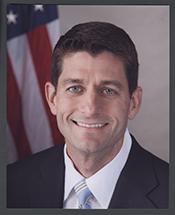
Mr. Speaker, I am pleased to yield 2 minutes to my colleague from Wisconsin (Mr. Ryan).
Mr. Speaker, I'd just remind my good colleague on the other side of the aisle that we were here. The House Republicans were here December 22. December 26, conferees weren't even named yet. I was here Thursday and Friday of New Year's working on the issue.
We're ready to do the work. But there is one thing that we will not yield on, that we have demonstrated years in Washington, DC, of fiscal irresponsibility. And until we came in, this freshman class in November 2010, there was an attitude of, Don't worry about how we're going to cover it; don't worry about how we're going to pay for it.
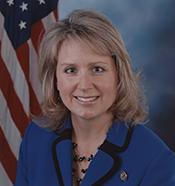
That attitude has changed, and that's why I'm proud to yield 2 minutes to a fellow freshman Member from North Carolina (Mrs. Ellmers).
Mr. Speaker, in closing, I would just like to say simply this, that we wholeheartedly agree with the general sentiment that has been brought to the House Chamber today, with the motion that is before this body, that we need to do our work in the conference. We cannot wait until the last minute. We wholeheartedly join in that sentiment, and we have demonstrated that commitment by what we have already done. Our actions should speak louder than our words.
The House Republicans were here on December 22, asking the Senate to come back to the table and do the people's work. And we are ready to do that work now. We need the Senate to come to the table in good faith, finalize this package on a long-term basis, bring certainty to our payroll tax rates, bring certainty to our providers, how they get paid under Medicare, and take care of the unemployment extension situation. But we must go into this conference with our eyes wide open.
We were sent to Washington in November 2010 because the American people recognized the fiscal crisis that is coming to our shores in America if we don't get our debt under control, and the habit that creates it; the spending problem of Washington, D.C., corrected once and for all, or we will not have a future in America. And that is unacceptable to me, as a father of two, and as the father of three, the gentleman from New York (Mr. Crowley) on the other side of the aisle, also indicated. We are fighting for our children and our grandchildren who have yet to see the face of this Earth.
So I join with my colleagues in sending a message that we will do the work. The hardworking taxpayers in America deserve no less. The U.S. Senate should come to the table, find a solution to these issues, and we will wholeheartedly join hands on our side of the aisle when we do it in a responsible way that will take care of this situation in a long-term fashion, not the short-term Band-Aid that Washington, D.C., for so long has thought is good policy at the expense of the hardworking taxpayers of America.
With that, I yield back the balance of my time.