Mr. Speaker, thank you for giving us the time and, in fact, we are very appreciative on our side of the aisle of having this opportunity this evening, Mr. Speaker, on, really, a historic day in which…
Mr. Speaker, thank you for giving us the time and, in fact, we are very appreciative on our side of the aisle of having this opportunity this evening, Mr. Speaker, on, really, a historic day in which we finally delivered to the American people a promise that has been made over a year ago, that should this bill, this comprehensive health care reform bill sometimes referred to as ObamaCare but more formally known as Patient Protection and Affordable Care Act of 2010, should this legislation pass, that if we had the opportunity to take control of this House of Representatives to get that gavel away from former Speaker Nancy Pelosi and the prior Democratic majority, that our first and number one priority on behalf of the American people would be to repeal this mistaken bill.
Today, Mr. Speaker, is the day that that happened and certainly I am extremely grateful, as cochairman along with my colleague, Tim Murphy from the great State of Pennsylvania, Dr. Murphy and I cochair the House GOP Doctors Caucus. Mr. Speaker, we grew our strength in this election, November 2. We had about 11 Members in their caucus, 11 very active hard-working Members who practiced medicine in one form or another, one specialty or another for many, many years.
In fact, I think, Mr. Speaker, one time we calculated the number of years that we have actually practiced medicine, and it was something like 350 years of clinical practice. As you notice, Mr. Speaker, there is a little bit of a grayness around the temple of some of us.
But we are very thankful for this election and the American people giving the Republican Party the opportunity to right this wrong and to bring seven additional Members, seven additional health care practitioners, again, some of them have been in practice many years, dentists, doctors, even some associate members of our group, some registered nurses to be part of this new majority.
As we voted today on H.R. 2, the repeal bill of ObamaCare, I can assure you that 100 percent of us, in fact, 100 percent of Republicans, all 242 on our side of the aisle, plus, I think, three or four Democrats in a bipartisan way, joined with us in voting to repeal this bill.
I realized this evening, Mr. Speaker, that our time is limited. I am very pleased that some members of the House GOP Doctors Caucus are with us.
I would first like to take the opportunity to yield to my cochairman, Dr. Tim Murphy of Pennsylvania. Dr. Murphy.
Mr. Speaker, I thank Dr. Murphy for his remarks. And now I would like to yield time to my colleague from the great State of Georgia. I represent the 11th District; he represents the 10th District in the Athens area. He is a great friend of mine, a family practitioner, Dr. Paul Broun.
Reclaiming my time, and I thank the gentleman from Georgia from the 10th Congressional District. The gentleman makes some great points. And colleagues on both sides of the aisle, I would ask you to look at the posters that we have here because what Dr. Murphy, Mr. Speaker, and Dr. Broun are talking about is really the plan. And the plan is not a plan, but it is a series of plans, if you will. It's a plan A, it's a plan B, and it's a plan C. And of course today, the repeal as depicted on this very first and second poster was at least a House completion of plan A, and that is repeal of ObamaCare as this poster depicts. Priority number one, we feel very strongly that that's what we need to do, and that's what we did in this House today.
As Dr. Broun was talking about, Republican priority number two is not only to repeal it, but to replace it, because every one of us, particularly the members of the House GOP Doctors Caucus that are on the floor this evening, understand that nothing is perfect. And as Dr. Broun and others have said, we tried to bring forth legislation during the 111th Congress. We gave a copy of ``Better Solutions'' to the President, Mr. Speaker. Pages 8 and 9 were all about our plans and other options other than a government takeover, lock, stock and barrel, of the health care system. The President said, well, I got it, I read it, and then went on to say, they have no ideas, they won't bring me any ideas, if they only would.
So priority number two, of course, replace ObamaCare with reforms that empower patients and protect our economy. And then, of course, as I say, Republican priority number three in this poster, repeal and defund provisions of ObamaCare until full repeal is successful if we're not able to get the Senate and the President to go along with us in regard to this full repeal. If they don't do it, quite honestly, they are not listening, Mr. Speaker, to the American people. They do that at their own peril.
I would yield back to the gentleman from Georgia for 5 seconds.
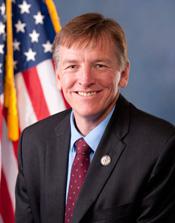
At this time, Mr. Speaker, I would like to yield to one of our freshman members, the gentleman from Arizona, Dr. Paul Gosar. Dr. Gosar is a dentist and has been very, very active not only in his own practice in Arizona but in the American Dental Association. At this time I am proud to yield to a freshman member, our colleague, Dr. Paul Gosar.
Mr. Speaker, I thank the gentleman from Arizona and welcome him, of course, to the House GOP Doctors Caucus.
Our final speaker, and I want to yield time to a cardiothoracic surgeon, Mr. Speaker, from Indiana, a new member, Dr. Larry Bucshon, and I think Dr. Bucshon was here on the floor a little earlier when the Democratic 30 minutes was controlled by the gentleman from Minnesota, and he made some remarks against the fact that we were successful in repealing ObamaCare. And I think Dr. Bucshon would like to comment on some of those points that were made.
At this time, I proudly yield to our new member, Dr. Larry Bucshon.
Mr. Speaker, I thank the gentleman for his comments.
Before I yield again to my cochair, Dr. Murphy, I want to make a few comments in regard to some of the things that were said on the Democratic side of the aisle just within the last 30 minutes. The gentleman that spoke is a fine, fine Member, has a great heart and a lot of compassion and is a friend of mine and I don't refute him in any way of being strident or any animosity toward him, but the gentleman made a comment about why not give the law a chance, I think is sort of the way it was put, Mr. Speaker. The Republican majority, the new Republican majority wanted to come along with H.R. 2 and repeal the bill, didn't even want to give it a chance to see how well it might work.
Mr. Speaker, I would just say on a point like that, we on this floor right now on the Republican side of the aisle, we doctors know that when you discover a cancer, you don't give it a chance to grow. You don't give it a chance to metastasize. You cut that sucker out and you get rid of it lock, stock and barrel. As our colleague from Iowa, Steve King, said the other day, you pull it out by the roots. I think, Mr. Speaker, the Speaker, John Boehner, said the same thing. We feel very strongly that today we did the right thing.
I have a number of other charts here that my colleagues might want to reference in regard to specifics about what we feel about this bill and why we needed to repeal it and basically start over.
I will finally quickly say that I heard the other side talk about statistics, saying that only 18 percent of people wanted the bill completely repealed. That is not an accurate statistic. Eighteen percent wanted to leave it like it is. Fully 75 percent in the latest Rasmussen poll either wanted it to be repealed or repealed and replaced. Or if not repealed, significantly altered. And, of course, that is what we are about as we go forward.
I yield to the gentleman from Pennsylvania (Dr. Murphy).
I realize our time is running short, and I want to make a couple of points before yielding to Dr. Broun for a final comment.
Republican doctors can help the repeal-replace effort, and I have four bullet points that I want to point out to my colleagues.
Number one, health insurance reforms: Yes, but without government health plans.
Number two, guaranteed access to insurance: Yes, but without an individual unconstitutional mandate.
Number three, reduce the cost of health care: Yes, but without gutting Medicare, especially the Medicare Advantage program and taking something like $130 billion out of that program. And I think it was pointed out earlier that 20 percent of Medicare recipients are on Medicare Advantage, or at least they were.
And number four, medical liability reform, and I will have a bill addressing that issue.
Let me turn to my colleague from Georgia for a final comment.
Just a few closing remarks.
Mr. Speaker, I want to thank Dr. Gosar and Dr. Bucshon for being with us tonight.
You know, we didn't have time to go into all of the details that we would like to have gone into, but one thing that is absolutely clear is that Governors across this country--and not just Republican Governors but Democratic Governors as well--are very, very concerned with the Medicaid mandates and the fact that this maintenance of effort requirement that says that Governors who can't even be innovative and creative in running their own Medicaid programs is resulting in budget- busting in all of these States that have to balance their budgets. Unfortunately, we don't do that up here. They're having to cut education to the bone, and they're having to cut public safety to the bone because of the massive increasing costs of Medicaid.
Well, we thank the Speaker for the time, and we appreciate the opportunity to speak to the American people. We will be back here tomorrow to pass House Resolution Number 9 so that we can get busy on replacing ObamaCare.
With that, I yield back the balance of my time.