Madam Speaker, I strongly support H.R. 4086, the ``Foreign Cultural Exchange Jurisdictional Immunity Clarification Act,'' as amended. This is a bipartisan bill that the Judiciary Committee ordered…
Madam Speaker, I strongly support H.R. 4086, the ``Foreign Cultural Exchange Jurisdictional Immunity Clarification Act,'' as amended. This is a bipartisan bill that the Judiciary Committee ordered favorably reported by voice vote.
This bill contains a narrowly tailored fix to the expropriation exception of the Foreign Sovereign Immunities Act of 1976 that would clarify that the exception is not available in cases where:
artwork or a cultural object is imported into the United States for temporary exhibit or display pursuant to an agreement between a foreign state that owns or has custody of the work and a U.S. cultural or educational institution;
the work has been granted immunity from seizure by the President pursuant to the Immunity from Seizure Act because it is of cultural significance and its temporary exhibit or display is in the national interest; and
the President's determination has been published pursuant to IFSA.
The bill also clarifies that its provisions do not apply to Nazi-era claims regarding the ownership of art or cultural objects.
In short, this bill immunizes foreign states from lawsuits that seek damages for artwork that is already immune from seizure pursuant to a Presidential determination when the work is in the U.S. for temporary exhibition.
I am an original cosponsor of this bill for several reasons.
First, H.R. 4086 will make the FSIA consistent with the purpose underlying the Immunity from Seizure Act.
The IFSA was intended to encourage foreign states to lend their artwork and other cultural property to American museums and educational institutions for the cultural and educational benefit of the American people.
We enacted the IFSA in 1965 at the height of the Cold War to immunize certain artwork owned by the Soviet Union so that the Soviets would lend the artwork to the University of Richmond for a temporary exhibit.
We recognized then, and continue to recognize now, that as a general matter, the benefits of the cultural exchange fostered by temporary exhibits or displays of artwork outweigh the provision of a U.S. forum for disputes about the ownership of cultural property that is held by a foreign government.
The benefits of cultural exchange include an increased understanding of and appreciation for foreign cultures, a decrease in xenophobia and prejudice, and perhaps even some diplomatic benefit in fostering mutual respect between our Nation and other nations.
IFSA worked well for 40 years. Unfortunately, the court's decision in Malewicz [MA-le-vich] v. City of Amsterdam broadened the scope of the FSIA's expropriation exception to the point where it undermined IFSA.
The court construed the term ``commercial activity'' as used in the FSIA to include the temporary exhibit of artwork in the United States. This triggered the expropriation exception to sovereign immunity even though the works at issue in Malewicz had been immunized from seizure by the President.
The Malewicz case has had a chilling effect on loans of cultural property from foreign states.
According to a letter urging my support for this bill that I received from Graham W.J. Beal, Director of the Detroit Institute of Arts, both the Russian and Czech governments are refusing to lend works of art to American museums in the wake of this court decision.
Additionally, the Metropolitan Museum of Art withdrew a loan request to a Middle Eastern museum out of fear that once the works were in the U.S., their presence would be used as grounds for a lawsuit.
H.R. 4086 resolves the inconsistency between the IFSA and the FSIA created by the Malewicz decision by ensuring that any work that the President has immunized from seizure pursuant to IFSA will also immunize the foreign government owner of that work from a suit for damages under FSIA.
Second, the sovereign immunity provided for under this bill is limited to a very specific set of circumstances.
H.R. 4086 does not cover every possible claim concerning the ownership of artwork owned by a foreign government. For instance, the expropriation exception could be available for any claim concerning works that have not received immunity from seizure under IFSA.
Similarly, the expropriation exception remains available for a work that is not in the United States on temporary exhibit or display pursuant to an agreement.
Additionally, H.R. 4086 leaves untouched the other exceptions to sovereign immunity provided for in the FSIA, including the general ``commercial activity'' exception.
Third, I can support H.R. 4086 because it makes an exception for Nazi-era claims.
This carve-out is consistent with longstanding American policy to seek restitution when possible for victims of the Nazi government, its allied governments, and its affiliated governments.
In light of the unique historical sensitivities surrounding the Nazi government's deliberate campaign to steal artwork from its victims, H.R. 4086 rightfully ensures that victims of the Nazis are not foreclosed from pursuing damages for stolen art, even at the cost of foreclosing cultural exchange.
H.R. 4086 is an exceedingly modest bill that will nonetheless foster tremendous benefits for the American people.
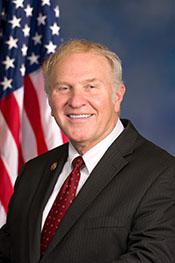
I applaud Representative Steve Chabot, the sponsor of this bill, as well as my fellow co-sponsors, Judiciary Chairman Lamar Smith and Representative Steve Cohen, for their leadership on this issue.
I urge my colleagues to support this bill.