
H.R. 6029House112th Congress (2011-2013)Enacted

Foreign and Economic Espionage Penalty Enhancement Act of 2012

Introduced June 27, 2012

Legislative Activity

Stay on top of the latest movement without scrolling through every action

26 earlier actions
Became Law Latest Action

Became Public Law No: 112-269.

January 14, 2013

View full timeline
HouseIntro Referral

Introduced in House

June 27, 2012

HouseIntro Referral

Referred to the House Committee on the Judiciary.

June 27, 2012

HouseCommittee

Committee Consideration and Mark-up Session Held.

July 10, 2012

HouseCommittee

Ordered to be Reported by Voice Vote.

July 10, 2012

HouseCommittee

Reported by the Committee on Judiciary. H. Rept. 112-610.

July 19, 2012

HouseCalendars

Placed on the Union Calendar, Calendar No. 443.

July 19, 2012

HouseFloor

Mr. Smith (TX) moved to suspend the rules and pass the bill.

July 31, 2012 • 7:48 PM

HouseFloor

Considered under suspension of the rules. (consideration: CR H5506-5507)

July 31, 2012 • 7:48 PM

HouseFloor

DEBATE - The House proceeded with forty minutes of debate on H.R. 6029.

July 31, 2012 • 7:48 PM

HouseFloor

At the conclusion of debate, the chair put the question on the motion to suspend the rules. Mr. Scott (VA) objected to the vote on the grounds that a quorum was not present. Further proceedings on the motion were postponed. The point of no quorum was withdrawn.

July 31, 2012 • 7:57 PM

HouseFloor

Considered as unfinished business. (consideration: CR H5619)

August 1, 2012 • 8:47 PM

HouseFloor

Passed/agreed to in House: On motion to suspend the rules and pass the bill Agreed to by voice vote.(text: CR 7/31/2012 H5506)

August 1, 2012 • 8:47 PM

HouseFloor

On motion to suspend the rules and pass the bill Agreed to by voice vote. (text: CR 7/31/2012 H5506)

August 1, 2012 • 8:47 PM

HouseFloor

Motion to reconsider laid on the table Agreed to without objection.

August 1, 2012 • 8:47 PM

SenateCalendars

Received in the Senate. Read twice. Placed on Senate Legislative Calendar under General Orders. Calendar No. 493.

August 2, 2012

SenateFloor

Measure laid before Senate by unanimous consent. (consideration: CR S8229-8230)

December 19, 2012

SenateFloor

Passed Senate with an amendment by Unanimous Consent.

December 19, 2012

SenateFloor

Message on Senate action sent to the House.

December 20, 2012

HouseResolving Differences

Mr. Smith (TX) moved that the House suspend the rules and agree to the Senate amendment. (consideration: CR H7453-7455)

December 30, 2012 • 5:56 PM

HouseFloor

DEBATE - The House proceeded with forty minutes of debate on the motion to suspend the rules and agree to the Senate amendment to H.R. 6029.

December 30, 2012 • 5:56 PM

HouseResolving Differences

At the conclusion of debate, the chair put the question on the motion to suspend the rules. Mr. Scott (VA) objected to the vote on the grounds that a quorum was not present. Further proceedings on the motion were postponed. The point of no quorum was considered as withdrawn.

December 30, 2012 • 6:02 PM

HouseNot Used

Resolving differences -- House actions: On motion that the House suspend the rules and agree to the Senate amendment Agreed to by voice vote.(consideration: CR H7559; text as House agreed to Senate amendment: CR 12/30/2012 H7453-7454)

January 1, 2013

HouseResolving Differences

On motion that the House suspend the rules and agree to the Senate amendment Agreed to by voice vote. (consideration: CR H7559; text as House agreed to Senate amendment: CR 12/30/2012 H7453-7454)

January 1, 2013 • 11:13 PM

HouseResolving Differences

Motion to reconsider laid on the table Agreed to without objection.

January 1, 2013 • 11:13 PM

President

Presented to President.

January 3, 2013

Became Law

Signed by President.

January 14, 2013

Became Law

Became Public Law No: 112-269.

January 14, 2013

Floor Debate

3 members

What members said about H.R. 6029 on the floor

1 Republican2 Democrats
Lamar Smith
Rep. Lamar SmithR-TX-21 · Dec 30, 2012

Mr. Speaker, I move to suspend the rules and concur in the Senate amendment to the bill (H.R. 6029) to amend title 18, United States Code, to provide for increased penalties for foreign and economic…

Lamar Smith
Rep. Lamar SmithR-TX-21 · Jul 31, 2012

Mr. Speaker, I move to suspend the rules and pass the bill (H.R. 6029) to amend title 18, United States Code, to provide for increased penalties for foreign and economic espionage, and for other…

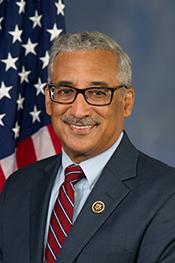
Robert C. "Bobby" Scott
Rep. Robert C. "Bobby" ScottD-VA-3 · Dec 30, 2012

Mr. Speaker, I yield myself such time as I may consume Mr. Speaker, I rise in support of the Senate amendment to H.R. 6029, the Foreign and Economic Espionage Penalty Enhancement Act of 2012. The…

Robert C. "Bobby" Scott
Rep. Robert C. "Bobby" ScottD-VA-3 · Jul 31, 2012

Mr. Speaker, I yield myself such time as I may consume. I rise in support of H.R. 6029, the Foreign and Economic Espionage Penalty Enhancement Act of 2012. This legislation will help to protect the…

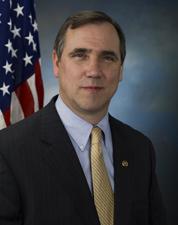
Jeff Merkley
Sen. Jeff MerkleyD-OR · Dec 19, 2012

I ask unanimous consent that the Senate proceed to the consideration of Calendar No. 493, H.R. 6029. I ask unanimous consent that a Kohl-Lee substitute amendment which is at the desk be agreed to;…

Bill Text

7 versions available

Reading Mode
Latest
Enrolled BillPublication date not provided

One Hundred Twelfth Congress of the United States of America

At the Second Session

Begun and held at the City of Washington on Tuesday, the third day of January, two thousand and twelve

H. R. 6029

AN ACT

To amend title 18, United States Code, to provide for increased penalties for foreign and economic espionage, and for other purposes.

1.

Short title

This Act may be cited as the Foreign and Economic Espionage Penalty Enhancement Act of 2012.

2.

Protecting U.S. businesses from foreign espionage

(a)

For offenses committed by individuals

Section 1831(a) of title 18, United States Code, is amended, in the matter after paragraph (5), by striking not more than $500,000 and inserting not more than $5,000,000.

(b)

For offenses committed by organizations

Section 1831(b) of such title is amended by striking not more than $10,000,000 and inserting not more than the greater of $10,000,000 or 3 times the value of the stolen trade secret to the organization, including expenses for research and design and other costs of reproducing the trade secret that the organization has thereby avoided.

3.

Review by the United States Sentencing Commission

(a)

In general

Pursuant to its authority under section 994(p) of title 28, United States Code, the United States Sentencing Commission shall review and, if appropriate, amend the Federal sentencing guidelines and policy statements applicable to persons convicted of offenses relating to the transmission or attempted transmission of a stolen trade secret outside of the United States or economic espionage, in order to reflect the intent of Congress that penalties for such offenses under the Federal sentencing guidelines and policy statements appropriately, reflect the seriousness of these offenses, account for the potential and actual harm caused by these offenses, and provide adequate deterrence against such offenses.

(b)

Requirements

In carrying out this section, the United States Sentencing Commission shall—

(1)

consider the extent to which the Federal sentencing guidelines and policy statements appropriately account for the simple misappropriation of a trade secret, including the sufficiency of the existing enhancement for these offenses to address the seriousness of this conduct;

(2)

consider whether additional enhancements in the Federal sentencing guidelines and policy statements are appropriate to account for—

(A)

the transmission or attempted transmission of a stolen trade secret outside of the United States; and

(B)

the transmission or attempted transmission of a stolen trade secret outside of the United States that is committed or attempted to be committed for the benefit of a foreign government, foreign instrumentality, or foreign agent;

(3)

ensure the Federal sentencing guidelines and policy statements reflect the seriousness of these offenses and the need to deter such conduct;

(4)

ensure reasonable consistency with other relevant directives, Federal sentencing guidelines and policy statements, and related Federal statutes;

(5)

make any necessary conforming changes to the Federal sentencing guidelines and policy statements; and

(6)

ensure that the Federal sentencing guidelines adequately meet the purposes of sentencing as set forth in section 3553(a)(2) of title 18, United States Code.

(c)

Consultation

In carrying out the review required under this section, the Commission shall consult with individuals or groups representing law enforcement, owners of trade secrets, victims of economic espionage offenses, the United States Department of Justice, the United States Department of Homeland Security, the United States Department of State and the Office of the United States Trade Representative.

(d)

Review

Not later than 180 days after the date of enactment of this Act, the Commission shall complete its consideration and review under this section.

Speaker of the House of Representatives.

Vice President of the United States and President of the Senate.