

H.R. 6336House112th Congress (2011-2013)Enacted

To direct the Joint Committee on the Library to accept a statue depicting Frederick Douglass from the District of Columbia and to provide for the permanent display of the statue in Emancipation Hall of the United States Capitol.

Introduced August 2, 2012

Legislative Activity

Stay on top of the latest movement without scrolling through every action

14 earlier actions
Became Law Latest Action

Became Public Law No: 112-174.

September 20, 2012

View full timeline
HouseIntro Referral

Introduced in House

August 2, 2012

HouseIntro Referral

Referred to the House Committee on House Administration.

August 2, 2012

HouseFloor

Mr. Lungren, Daniel E. moved to suspend the rules and pass the bill, as amended.

September 10, 2012 • 5:15 PM

HouseFloor

Considered under suspension of the rules. (consideration: CR H5745-5746)

September 10, 2012 • 5:15 PM

HouseFloor

DEBATE - The House proceeded with forty minutes of debate on H.R. 6336.

September 10, 2012 • 5:15 PM

HouseFloor

Passed/agreed to in House: On motion to suspend the rules and pass the bill, as amended Agreed to by voice vote.(text: CR H5745)

September 10, 2012 • 5:21 PM

HouseFloor

On motion to suspend the rules and pass the bill, as amended Agreed to by voice vote. (text: CR H5745)

September 10, 2012 • 5:21 PM

HouseFloor

Motion to reconsider laid on the table Agreed to without objection.

September 10, 2012 • 5:21 PM

HouseFloor

The title of the measure was amended. Agreed to without objection.

September 10, 2012 • 5:21 PM

SenateIntro Referral

Received in the Senate, read twice.

September 11, 2012

SenateFloor

Passed Senate without amendment by Unanimous Consent. (consideration: CR S6284-6285)

September 12, 2012

SenateFloor

Message on Senate action sent to the House.

September 13, 2012

President

Presented to President.

September 14, 2012

Became Law

Signed by President.

September 20, 2012

Became Law

Became Public Law No: 112-174.

September 20, 2012

Floor Debate

6 members

What members said about H.R. 6336 on the floor

1 Republican5 Democrats
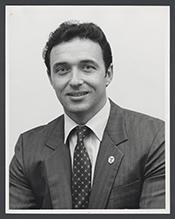
Daniel E. Lungren
Rep. Daniel E. LungrenR-CA-3 · Sep 10, 2012

Mr. Speaker, I move to suspend the rules and pass the bill (H.R. 6336) to direct the Joint Committee on the Library to accept a statue depicting Frederick Douglass from the District of Columbia and…

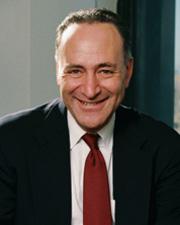
Charles E. Schumer
Sen. Charles E. SchumerD-NY · Sep 12, 2012

Mr. President, I rise today to praise my Senate and House colleagues for passing H.R. 6336, a bill that will allow a statue of American hero and Rochester resident, Frederick Douglass, to reside…

Richard J. Durbin
Sen. Richard J. DurbinD-IL · Sep 12, 2012

Mr. President, the statues and busts in the U.S. Capitol depicting distinguished Americans number more than 120. However, among the collection are only two African Americans, Dr. Martin Luther King,…

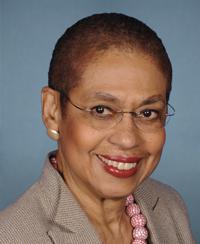
Eleanor Holmes Norton
Rep. Eleanor Holmes NortonD-DC · Sep 10, 2012

Mr. Speaker, I rise in strong support of H.R. 6336, and to express my deep gratitude to Chairman Dan Lungren for introducing the bill, for consulting with me on it, and for bringing it to the House…

Robert A. Brady
Rep. Robert A. BradyD-PA-1 · Sep 10, 2012

Mr. Speaker, I yield myself such time as I may consume. Mr. Speaker, I also urge support for H.R. 6336, to direct the Joint Committee on the Library to accept the statue of Frederick Douglass and…

Show 1 more
Harry Reid
Sen. Harry ReidD-NV · Sep 12, 2012

I ask unanimous consent that the Senate proceed to the consideration of H.R. 6336. I ask unanimous consent that the bill be read three times and passed, the motion to reconsider be laid upon the…

Bill Text

5 versions available

Reading Mode
Latest
Enrolled BillPublication date not provided

One Hundred Twelfth Congress of the United States of America

At the Second Session

Begun and held at the City of Washington on Tuesday, the third day of January, two thousand and twelve

H. R. 6336

AN ACT

To direct the Joint Committee on the Library to accept a statue depicting Frederick Douglass from the District of Columbia and to provide for the permanent display of the statue in Emancipation Hall of the United States Capitol.

1.

Findings

Congress finds the following:

(1)

Frederick Douglass, born Frederick Augustus Washington Bailey in Maryland in 1818, escaped from slavery and became a leading writer, orator, and publisher, and one of the Nation's most influential advocates for abolitionism, women's suffrage, and the equality of all people.

(2)

The contributions of Frederick Douglass over many decades were crucial to the abolition of slavery, the passage of the 13th, 14th, and 15th Amendments to the Constitution of the United States, the support for women's suffrage, and the advancement of African-Americans after the Civil War.

(3)

After living in New Bedford, Massachusetts, Frederick Douglass resided for 25 years in Rochester, New York, where he published and edited The North Star, the leading African-American newspaper in the United States, and other publications.

(4)

Self-educated, Frederick Douglass wrote several influential books, including his best-selling first autobiography, Narrative of the Life of Frederick Douglass, an American Slave, published in 1845.

(5)

Frederick Douglass worked tirelessly for the emancipation of African-American slaves, was a pivotal figure in Underground Railroad activities, and was an inspiration to enslaved Americans who aspired to freedom.

(6)

As a well-known speaker in great demand, Frederick Douglass traveled widely, visiting countries such as England and Ireland, to spread the message of emancipation and equal rights.

(7)

Frederick Douglass was the only African-American to attend the Seneca Falls Convention, a women's rights convention held in Seneca Falls, New York in 1848.

(8)

During the Civil War, Frederick Douglass recruited African-Americans to volunteer as soldiers for the Union Army, including 2 of his sons, who served nobly in the Fifty-Fourth Massachusetts Regiment.

(9)

In 1872, Frederick Douglass moved to Washington, DC, after a fire destroyed his home in Rochester, New York.

(10)

Frederick Douglass was appointed as a United States Marshal in 1877 and was named Recorder of Deeds for the District of Columbia in 1881.

(11)

Frederick Douglass became the first African-American to receive a vote for nomination as President of the United States at a major party convention for the 1888 Republican National Convention.

(12)

From 1889 to 1891, Frederick Douglass served as minister-resident and consul-general to the Republic of Haiti.

(13)

Frederick Douglass was recognized around the world as one of the most important political activists in the history of the United States.

(14)

Frederick Douglass died in 1895 in Washington, DC and is buried in Rochester, New York.

(15)

Frederick Douglass's achievements and influence on the history of the United States merit recognition in the United States Capitol.

2.

Acceptance of statue of frederick douglass for placement in emancipation hall

(a)

Acceptance

Not later than 2 years after the date of the enactment of this Act, the Joint Committee on the Library shall accept from the District of Columbia the donation of a statue depicting Frederick Douglass, subject to the terms and conditions that the Joint Committee considers appropriate.

(b)

Placement

The Joint Committee shall place the statue accepted under subsection (a) in a suitable permanent location in Emancipation Hall of the United States Capitol.

Speaker of the House of Representatives.

Vice President of the United States and President of the Senate.