Thank you very much, Mr. Speaker, and thank you, George Miller, for setting aside this time. You've heard from a lot of my colleagues. I think what is interesting about this moment in history is this…
Thank you very much, Mr. Speaker, and thank you, George Miller, for setting aside this time.
You've heard from a lot of my colleagues. I think what is interesting about this moment in history is this is probably the largest retirement ever of any delegation at any one time. California is losing 25 percent of its incumbent delegation, seven Republicans and seven Democrats. That's 14 people that have been here. Of the seven Democrats, they were here for historical moments--of electing Nancy Pelosi from California, the first woman Speaker of the House of Representatives; and here to pass the first-in-history comprehensive health care bill, led by Californians, I might add, and led by the dean of our delegation, Pete Stark.
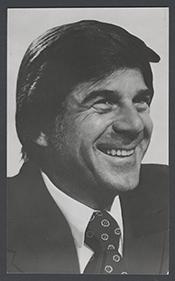
Pete Stark is one of the oldest, longest serving Members of Congress. He has been here 40 years. I think there are only two, three people that have served here longer. He's watched this delegation come and go since 1973. He is here tonight with his beautiful family.
Pete, of all the people coming into Congress, is the only one that just came right from the private sector. Most of us got elected to the local and State governments, but Pete came here with a background in MIT, in engineering, and then a degree from Berkeley in business administration. In 1963, he founded the Security National Bank of Walnut Creek, which became, during the war years, known as the progressive bank and the bank that was going to loan to people that weren't otherwise getting loans. He became a very popular leader in his community and built the bank into a $1 billion financial institution. Having a background in the Air Force and other civic activities, he ran for Congress and got elected and has been here, as I said, for 40 years.
He is here tonight with his children. He has four daughters, three sons, and eight grandchildren. He is married to Deborah Roderick, also of California. We're going to miss Pete. He's been a fixture for this Congress through all the big issues.
He is followed by Howard Berman from southern California, with a background in UCLA, a law degree from UCLA. I was a staff member when he was a California State legislator. He came there for the background in VISTA. After the assembly, he got elected to the House and has been the leading ranking Democrat, probably the most trusted person in all of Congress for foreign affairs; and with his background in labor, in issues for farmworkers in California and the advancement they've made under Federal law. But also, as the Leader pointed out, he's one of the few persons that really understands the intricacies of patent law, copyright, trademark, all those things very vitally important to the entertainment industry, the electronics industry, and the information technology industry. He's been a senior member on all of that. We're going to miss him deeply, deeply. I feel like a son of Howard Berman. I supported his
speakership way back when he ran for the State assembly. I'm going to miss him.
Lynn Woolsey has served 10 terms. She is senior to me. I got elected 6 months after Lynn got sworn into office. I remember how proud I was of her background in local government, in roles that she's played in Sonoma County, in Marin County. She's been, I think, on the floor speaking more than anybody else--as pointed out, 440 times speaking for peace. She's going to leave this body known as the ``lady of peace'' and will be here in history forever and ever. I remember the night that Bill Clinton gave his State of the Union address and recognized the backgrounds, the humble and unusual backgrounds of people that get here, that Lynn Woolsey was the first woman elected to Congress who, as a single mom, had to be on welfare and how she had worked her way out of that, and was a leading role model to show that there are opportunities for you, for all people in this great country. But the lady of peace is the most important of all.
Bob Filner, he had a background in local government. He went back to local government. After being involved in school districts, he is now the mayor of San Diego. He came here with his background of being a Freedom Rider and in the civil rights movement and led the Veterans' Committee here.
As we pointed out, Joe Baca will always be known as the captain of our baseball team. He did so well in that, but he also had a proud background, as the Leader said, in the Army as a paratrooper. The list goes on and on.
Laura Richardson is leaving us. I would also mention before this, the early resignation of Dennis Cardoza.
That's seven Democrats. We're going to miss them greatly. Thank you for allowing me to speak in favor of their great service to the United States Congress.
congressman pete stark
Congressman Pete Stark has served in Congress since 1973. A senior member of the powerful Ways and Means Committee, he is currently the Ranking Minority Member of its Health Subcommittee. Stark previously served as the subcommittee's Chairman from 2007 to 2010 and 1985 to 1994, and previously as Ranking Minority Member from 1995 to 2006.
Before being elected to Congress in 1972, Stark was a successful businessman and banker. Upon entering Congress, he served on the House Banking and Currency Committee. After completing his first term, Stark was named to the Ways and Means Committee, whose scope includes taxes, Medicare, Social Security, trade and public assistance.
From 1981 to 1984, Stark served as Chairman of the Ways and Means Subcommittee on Select Revenue Measures. As Chairman, Stark became known as one of the Nation's foremost advocates of tax reform. He later served a critical role in shaping the historic tax reform act of 1986. In the years since, he has been a vocal voice for tax fairness and opposed the addition of corporate loopholes to our Nation's income tax laws.
In January of 1985, Stark became the Chairman of the Ways and Means Health Subcommittee. As Chairman, he presided over major reforms to the Medicare system. While cutting billions of dollars in waste, fraud, and abuse, Stark expanded benefits for tens of millions of Medicare beneficiaries, provided COBRA health continuation benefits to workers, and made numerous improvements in the quality of our Nation's care.
As Chairman of the Ways and Means Health Subcommittee from 2007 to 2010, Stark helped write the health reform law that is bringing quality, affordable health care to millions of Americans.
Stark champions universal health care, and speaks out for peace, freedom of choice, and protecting our environment. He is a tireless advocate for children, families, senior citizens, and people with disabilities, as well as the residents of the 13th Congressional District.
A diverse area stretching along the east side of the San Francisco Bay, the 13th Congressional District runs from Alameda to Fremont.
Stark is a graduate of the Massachusetts Institute of Technology, MIT, with a degree in engineering and the University of California, Berkeley with a Master's degree in Business Administration, MBA.
In 1963, he founded Security National Bank in Walnut Creek. The bank grew from a small storefront operation to a a $1 billion financial institution with branches in Alameda and Contra Costa Counties. Stark sold his interest in the bank after his election to Congress.
Before his business career, Stark served in the U.S. Air Force. His other civic activities have included: Director, Common Cause; Chairman, Board of Trustees, Starr King School of Ministry; Board Member, Housing Development Corporation; Board Member, Council for Civic Unity, and many others.
Stark has four daughters, three sons, and eight grandchildren. He is married to Deborah Roderick Stark of San Lorenzo.
congressman howard l. berman
Born in Los Angeles, California, Howard Berman attended U.C.L.A., where he received his B.A. in 1962 and his LL.B in 1965.
Upon his graduation from law school, Howard Berman began his career in public service with a year's work as a VISTA volunteer. From 1967 until 1973, he practiced law in Los Angeles, specializing in labor relations. In 1973, he was elected to the California State Assembly.
In his first term in the state legislature, then-Assemblyman Berman was named Assembly Majority leader, the youngest person ever to serve in that leadership capacity. He also served as Chair of the Assembly Democratic Caucus and the Policy Research Management Committee of the Assembly. In 1982, Berman was elected to Congress, where he was named to the Foreign Affairs and Judiciary Committees.
Congressman Berman is the Ranking Democrat on the House Committee on Foreign Affairs, meaning he is the most senior Democrat serving on the committee. During his tenure on the Foreign Affairs Committee, Berman negotiated a five-year, $50 billion reauthorization of our global HIV/ AIDS programs, authored legislation that removed Nelson Mandela and other members of the African National Congress from the U.S. terrorism list, and passed a bill to strengthen U.S. assistance to Israel. His top priorities include improving America's diplomatic strength through a reauthorization of the State Department, assistance to fight terrorism in Pakistan, and improving the efficiency of U.S. foreign aid.
As the second highest ranking Democrat on the Judiciary Committee, Berman plays a key role in shaping the copyright, trademark, and patent laws that are of vital importance to the entertainment, biotechnology, broadcasting, pharmaceutical, telecommunication, consumer electronics, and information technology industries. Berman is a member of the Subcommittee on Intellectual Property, Competition, and the Internet.
Berman is particularly well-known for his ability to form bipartisan coalitions. Together with Republican Henry Hyde, Berman wrote a law authorizing embargoes on nations that support terrorism. With Republican Senator Chuck Grassley, he wrote amendments to the False Claims Act that have saved over $20 billion in taxpayer money since 1986.
``There a few House members who have made such an imprint on legislation in so many areas as Howard Berman,'' says the Almanac of American Politics. The Almanac goes on to call Berman ``one of the most aggressive and creative members of the House and one of the most clear- sighted operators in American politics.''
Congressman Berman and his wife, Janis Gail Berman, have two daughters, Brinley and Lindsey.
congresswoman lynn woolsey
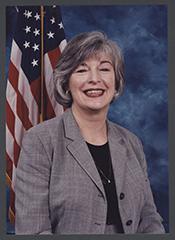
Congresswoman Lynn Woolsey is in her 10th term as the representative from California's 6th District, just north of San Francisco. Her district includes all of Marin, and most of Sonoma County.
As president of Americans for Democratic Action, Congresswoman Woolsey is a vocal and visible leader on progressive issues, particularly those dealing with education, children and families. A passionate and outspoken opponent of the Iraq war, she helped move public opinion against President's Bush's failed Iraq policy. She introduced the first resolution calling for our troops to be brought home and has been called the ``the unofficial matriarch of the [antiwar] movement in Congress,'' by the San Jose Mercury News.
Congresswoman Woolsey is also active on labor and education issues. She is a senior member of the Committee on Education and the Workforce and the ranking member on the Subcommittee on Workforce Protections. She also serves on Subcommittee on Early Childhood, Elementary, and Secondary Education.
Congresswoman Woolsey was the author of a recent law authorizing workers six months of job protected leave in order to care for injured family members serving in the armed forces, as well as legislation to protect workers from exposure to dangerous chemicals.
One of Congresswoman Woolsey's top priorities is a legislative package called ``The Balancing Act,'' which aims to help parents balance their work and family responsibilities. Her proposal calls for: paid family leave; public universal pre-school; major investments in child care; universal school breakfast; benefits for part-time workers; and telecommuting incentives.
Congresswoman Woolsey is also a senior member of the Committee on Science, Space and Technology, and serves on the Subcommittee on Energy and the Environment, where she works to reduce our dependence
on foreign oil and promote the use of clean, efficient energy sources. In the current Congress, she has reintroduced her legislation to add the Sonoma coastline to the National Marine Sanctuary Program, thus protecting it from oil and gas drilling.
Having lived and raised her family in California's North Bay for over 40 years, Congresswoman Woolsey understands the concerns of Sonoma and Marin County residents. She frequently says they are the most important voice she listens to; and she not only listens, she responds. Her Washington office alone receives and answers over three thousand letters, phone calls, and emails from constituents each week.
Congresswoman Woolsey dedication to family issues and her belief in a strong social safety net are rooted in her personal history. As a young mother struggling to raise three children by herself, she needed public assistance just to make ends meet, even though she was employed.
The experience of needing a helping hand from her government has shaped her commitment to family-friendly policies.
Woolsey was born on November 3, 1937 in Seattle, Washington. Now living in Petaluma, California, she is the mother of four grown children and a grandmother of five.
congressman bob filner
Bob Filner's adult political career began when he was 18 years old during the Civil Right Movement. He spent several weeks in the Mississippi State Penitentiary as a Freedom Rider. ``My political optimism stems from those times. I believe by our individual involvement, we can change history! And, my commitment to a world free of racism and discrimination continues today.''
Just after receiving a Ph.D. in the history of science from Cornell University, he moved to San Diego and began a 20 year long teaching career at San Diego State University. Always the activist, he challenged his college students that their ``grand'' thoughts were futile unless they put them into action in order to help people and make the world a better place. And it's a lesson he continues to impress on others while in the United States Congress.
In the late 1970s Filner was frustrated with the local school board after announcing that his children's school was going to close (daughter, Erin and son, Adam). He felt his children weren't getting the education and attention they deserved. This led to his first run for San Diego School Board Member in 1979.
Filner's ``back to basics'' approach toward education--including mandatory homework--won wide support among parents all across San Diego. During his time the board hired a more responsive Superintendent, test scores went up, and million of dollars in bureaucratic waste was eliminated.
Therefore it was no surprise that under his leadership on these issues he was selected as School Board President in 1982.
This increasing civic involvement led to his election to the San Diego City Council in 1987 where he began taking on issues such as bringing good jobs to San Diego and broadening its economic base. He created the city's first Economic Conversion Committee and wrote the city's Economic Conversion Plan. He found creative ways to fight neighborhood crime, including the introduction of Police Walking Patrols and a Citizen Graffiti Patrol with the area's first 24-hour graffiti hotline.
Recognizing his ability to work with his colleagues, the council members selected him as Deputy Mayor in 1991.
In 1992, Filner was elected to the United States House of Representatives. In his first term in Congress, he was one of only a handful of freshman legislators to get legislation passed--for example a critical law amending the Clean Water Act, allowing San Diego to save billions of dollars.
Almost immediately upon his arrival in Washington, his request for an appointment to the Veterans' Affairs Committee was granted. And in 2006 was elected by his Democratic colleagues as Chairman of the House Veterans' Affairs Committee.
Since January 2007, Congress has increased the Veterans Healthcare budget by 60%--the largest increase since the VA was created 79 years ago. Other victories include VA Home loans increased by 50%; the G.I. Bill was reinstated to meet the same level of education benefits, adjusted for cost-of-living increases, as that offered by the original World War II-era bill; benefits for Filipino-American veterans granted and legislation is pending for Merchant Marine veterans of World War II benefits. Filner says, ``This is the least we can do for our men and women in uniform who have sacrificed so much for us--we owe it to them!''
The 51st District--stretching the whole California/Mexico border, from San Diego to Yuma, Arizona--is one of the most diverse regions in the nation! It encompasses the southern portion of the City of San Diego, the South Bay cities of Chula Vista and National City, and all of Imperial Valley. The district's population is approximately 55% Latinos, 15% African-Americans, 15% Anglos and 15% Filipinos.
For 9 terms now, he has worked hard to both enhance his district's advantages while meeting its challenges. For example since many families in his district, and across the nation, suffer from sub- standard medical treatment, he has worked to provide affordable healthcare for border communities and all Americans.
While always looking for ways to embrace the opportunities the region provides, he does not back down from challenges specific to border communities.
His work on U.S.-Mexico relations led President Clinton to ask Filner to join him on an international mission to meet with former Mexican President Ernesto Zedillo. Again in 2004, with President Vicente Fox, he stepped forward to encourage increased cooperation and collaboration between the two nations. He took the lead in securing critical funding and support for the International Waste Water Treatment Plant in the Tijuana River Valley, as well as the New River in the Imperial Valley with the Water Resources Development Act of 2007.
He serves on the House Transportation and Infrastructure Committee as the Senior Democratic Member of the Subcommittee on Coast Guard and Maritime Transportation, a member of the Highway and Transit, Water Resources and Environment, and Aviation subcommittees. As Congressmen, he has brought home billions of dollars to improve roads, bridges and other critical infrastructure. At the same time he is constantly looking to the future in support of high-speed rail projects that would link San Diego with other areas of the state and Arizona and he secured funding to study suitable locations in Imperial Valley for the site of a new regional airport. Although these forward looking projects have been in the works for a long time, how appropriate they're labeled the ``Jobs Train.'' Not only would San Diego become a major national distribution hub, thousands of jobs in San Diego and Imperial Valley would be created!
Congressman Filner has built his career by ``walking his own talk''-- ``Grand thoughts are futile unless they are put into action in order to help people and make the world a better place.'' Help him to continue this work for a better California--and a better America! He cannot go it alone!
Congressman Joe Baca
Rep. Joe Baca has represented California's Inland Empire in the House of Representatives since winning a special election in 1999. He serves on the House Agriculture Committee, and is Ranking Member of the Subcommittee on Nutrition and Horticulture. He also serves on the House Financial Services Committee.
Rep. Baca served as Chair of the Congressional Hispanic Caucus, CHC, during the 110th Congress (2007-2008). During this time, he successfully blocked harmful English-only and anti-immigrant amendments offered in the House. He also guided the CHC in its efforts to ensure the contributions of Latino and Native America veterans were recognized in the PBS documentary ``The War.'' In addition, Rep. Baca used his leadership position to pass record breaking funding levels for food stamps and nutrition programs to feed over 44 million hungry Americans; and helped secure new funding for minority serving institutions, including over $200 million in new grant funding. He currently chairs the CHC Corporate America Task Force.
Rep. Baca continues to advocate in Congress on issues that impact the poor and underserved, including nutrition, housing, health, veterans' affairs, and issues affecting the Hispanic and Native American communities. He has used his experience in Congress to help secure over $154 million in federal appropriations assistance for education, public safety, transportation, and water projects. Congressman Baca is also the primary sponsor of the PROUD Act, legislation that puts responsible immigrant high school graduates on an expedited path to U.S. Citizenship.
Personal History--Joe was born in Belen, New Mexico, the youngest of 15 children in a house where little English was spoken. Joe worked shining shoes at age 10 and later worked as a laborer for the Santa Fe Railroad. He served in the U.S. Army as a paratrooper with both the 101st and the 82nd Airborne Divisions from 1966-68. Following military service, Joe earned his associates degree from Barstow Community College and his bachelor's degree in sociology from California State University, Los Angeles. In 1979, he became the first Latino elected to the board of Trustees for the San Bernardino Valley College District. He was elected to the State Assembly in 1992, where he became the first Latino Speaker pro Tempore, and was elected to the State Senate in 1998.
Joe and his wife, Barbara, began their own business, Interstate World Travel, in 1989. They have four children--Rialto City Councilman Joe Baca Jr., Jeremy, Natalie and Jennifer.
Awards--Rep. Baca has received many honors for his public service. Recent awards
include the U.S. Hispanic Leadership Institute Edward R. Roybal/Henry B. Gonzalez award for Public Service, the U.S. Hispanic Chamber of Commerce President's Achievement Award, the National Farmers Union Presidential Award for Leadership, the Walter Kaitz Foundation Diversity Advocate Award, and the U.S. Department of Agriculture Coalition of Minority Employees Award of Excellence. He has been listed as one of the top 100 most influential Hispanic leaders in America by Latino Leaders Magazine. He also has two local parks named after him: the Joe Baca Senior Field at the Empire Center in Fontana and the Joe Baca Field at the Rialto Boys and Girls Club. In addition, the ``Joe Baca Middle School'' at 1640 S. Lilac Avenue in Rialto, California, is expected to open its doors in 2013.
Congresswoman Laura Richardson
Congresswoman Laura Richardson represents California's 37th District, which includes the communities of Long Beach, Compton, Carson, Watts, Willowbrook and Signal Hill, as well as parts of the City of Los Angeles and Los Angeles County. She was sworn in to Congress in 2007 and is currently serving her 3rd term.
Congresswoman Richardson served the Long Beach community as a city councilwoman for six years before being elected to the California State Assembly in 2006. Following a special election in 2007, she immediately began serving in the House of Representatives, and as such, Congresswoman Richardson has the rare distinction of having served in government at the local, state, and federal level in the span of less than one year.
The Congresswoman currently sits on the House Committee on Transportation & Infrastructure, where she works to improve the Nation's highways, railways, airports, and seaports while overseeing the Coast Guard, Army Corps of Engineers, and Federal Emergency Management Agency, FEMA. She is a member of the Water Resources and Environment Subcommittee, the Highways & Transit Subcommittee and the Railroads, Pipelines & Hazardous Materials Subcommittee.
Congresswoman Richardson is also on the House Committee on Homeland Security. In this role, she works to protect America's borders and ensure the Nation is prepared for and able to effectively respond to any disasters that may arise. She is the Ranking Member for the Emergency Preparedness, Response, and Communications Subcommittee and also sits on the Cybersecurity, Infrastructure Protection, and Security Technologies Subcommittee.
In addition to her House Committee assignments, the Congresswoman is a founding member of the California High-Speed Rail Commission, where she has worked to secure funding for a project that has the potential to create 450,000 permanent jobs statewide over the next 25 years.
In January of 2011, President Barack Obama signed into law the Diesel Emissions Reduction Act of 2010, DERA, which Congresswoman Richardson authored. The legislation extends a voluntary national and state-level grant and loan program that creates jobs, saves lives and significantly improves the Nation's air quality. DERA is widely considered one of the most cost-effective federal programs in the Nation. The EPA has estimated that in California alone, the program averages more than $13 in health and economic benefits for every $1 in funding. Without the signing of Richardson's bill, the authorization for DERA would have expired at the end of the fiscal year.
Congresswoman Richardson graduated from UCLA with a Bachelor of Arts in Political Science and received an MBA from the USC Marshall School of Business. She spent 14 years working in the corporate sector at Xerox.