Mr. Speaker, I move to suspend the rules and agree to the resolution (H. Res. 22) reducing the amount authorized for salaries and expenses of Member, committee, and leadership offices in 2011 and…
Mr. Speaker, I move to suspend the rules and agree to the resolution (H. Res. 22) reducing the amount authorized for salaries and expenses of Member, committee, and leadership offices in 2011 and 2012.
Mr. Speaker, I ask that all Members have 5 legislative days to revise and extend their remarks.
Mr. Speaker, I yield myself such time as I may consume.
Mr. Speaker, today is a momentous day. We are all here together as Members of a new Congress and, more importantly, at the cusp of a new era in America's political life. I find it humbling and most appropriate that while yesterday we were ceremonially sworn in in this historic House Chamber and appropriately voted on a transparency- enhancing rules package, today we began our proceedings with a reading of the United States Constitution. The Constitution not only establishes our polity and our framework of government, it enshrines as our fundamental law the proper role of government.
Mr. Speaker, as we promised in our Pledge to America, today's reading was an affirmation of our commitment to return this government back to its proper role--a smaller, less costly, more accountable one.
Mr. Speaker, the resolution before us, introduced by my colleague from Oregon, is extremely important to today's affirmation. And it is no accident that this is our first piece of legislative business in this the 112th Congress.
This legislation is significant because, along with our other activities here on the House floor this week, this bill committing ourselves to a more responsible and efficient stewardship of
the taxpayers' dollars demonstrates, we hope, to the American people that we are listening.
Mr. Speaker, the people's House should act first and lead by example. Everybody knows that across this country families and small businesses have cut their spending, are paying off their debt, and are striving to live within their means. We should do the same, and this legislation is a beginning. It will do that by having an immediate impact, and I would like to thank the gentleman from Oregon (Mr. Walden) and his transition team for their hard work and their constructive ideas.
Under this resolution, each leadership, committee and Member office in the 112th Congress will receive no more than 95 percent of its 111th Congress funding level. In fiscal year 2011, this will mean a savings of $1 million from leadership offices, a savings of $8.1 million from committee budgets, and a savings of $26.1 million from, collectively, the Members' office budgets. For those who may not know, the Members' office budgets are the specific amounts that are given to Members so that they can carry out their functions as Members of Congress. It includes the ability to communicate with their constituents, it includes paying for their staff, it includes paying for their transportation from their district to Washington, D.C. and back; it includes the rental on their district offices. In other words, it is the money that is utilized for Members to carry out their official activities. These are important jobs that Members are required to do if in fact we are to represent our people appropriately. Nonetheless, even though these are important things that we do, we should try to be even more efficient in the way that we do them. That is the purpose of this legislation before us.
Mr. Speaker, these are substantial cuts in budgets, in budgets that frankly cannot continue indefinitely on an upward trajectory. We must all find ways to do more with less, to enhance our productivity, and to ferret out waste or inefficiencies wherever they may be. With that being said, this initial savings is only a down payment on future efforts. My colleagues and I on House Administration are dedicated to continuing savings and reductions in spending in other areas as well. Thus, for fiscal year 2012, we have committed to keeping this 5 percent reduction in place. We are also directing all House officers, such as the Clerk, the Sergeant at Arms and the Chief Administrative Officer, to find savings within their own organizations without sacrificing their services and the excellence they pride themselves on maintaining; in other words, to do what all Americans are attempting in their own lives, finding ways to do more with less. We look forward to hearing from these and other House offices in specificity as to what their cost-savings plans will be.
As has been said by our Speaker, we have committed to cutting domestic spending and returning non-security discretionary spending to 2008 levels. If we could live on that level of spending a mere 2 years ago, surely we can find ways to do so again. Again, American families are doing it. American businesses are doing it. We must try as well.
Mr. Speaker, listening to the American people and restoring the proper role of government means decreasing spending, ending our deficit mentality, and fostering job creation. These are the virtues that have made this country great and will sustain us in the future.
I want to publicly thank my colleague from Oregon (Mr. Walden) and his transition team for the efforts that they have put into this legislation, and I would urge all of my colleagues to support it.
Mr. Speaker, I reserve the balance of my time.
Mr. Speaker, I yield 4 minutes to the gentleman from Oregon (Mr. Walden) who spent an enormous amount of time beginning immediately after the elections to bring us to this point.
At this time, Mr. Speaker, it is my pleasure to yield 4 minutes to the gentleman from Kentucky (Mr. Rogers), the chairman of the Appropriations Committee.
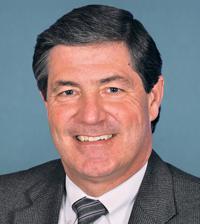
Mr. Speaker, at this time I yield 4 minutes to the gentleman from Florida (Mr. Crenshaw).
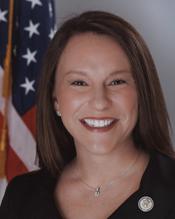
At this time I would like to yield 3 minutes to the gentlewoman from Alabama (Mrs. Roby), a member of the transition team.
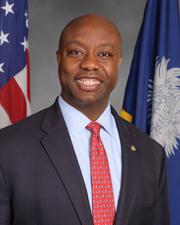
At this time, Mr. Speaker, I would yield 3 minutes to the gentleman from South Carolina (Mr. Scott).
Mr. Speaker, at this time it is my pleasure to yield 3 minutes to the gentleman from Colorado (Mr. Gardner), a member of the transition team.
Mr. Speaker, at this time it gives me a great deal of pleasure to yield 1 minute to the majority leader of the House of Representatives, the distinguished gentleman from Virginia (Mr. Cantor).
Mr. Speaker, at this time, I would like to yield 3 minutes to another gentleman who served us well on the transition team, the gentleman from Illinois (Mr. Kinzinger).
At this time, I would like to yield 3 minutes to the gentleman from Mississippi (Mr. Harper), a member of the House Administration Committee.
Mr. Speaker, at this time, it is my privilege to yield 3 minutes a new member of our House Administration Committee but a veteran of this House, the gentleman from Georgia, Dr. Gingrey.
Mr. Speaker, at this time, I would like to yield 2 minutes to the gentlewoman from Michigan (Mrs. Miller), who has done great work in the past about the operations of this House.
Mr. Speaker, I would make an inquiry as to whether the gentleman has further requests for time.
If the gentleman is going to yield back the balance of his time after his statement, I will do the same on this side.
Mr. Speaker, I yield myself such time as I may consume.
Mr. Speaker, I would like to thank the gentleman, my friend from the great State of Pennsylvania, who has worked on a bipartisan basis, most of the time, and what I mean by that is about 85 percent or 90 percent of the work we do on our committee has to do with making this place work, helping Members do the job that they were elected to do to represent their constituents, and making sure this institution of the House of Representatives works. There is a sense of a pride of the institution that I think marks our committee, and we try in a very real way to work, both on the Democratic and Republican sides, to ensure the productivity of the membership here and to ensure that, frankly, the people get their money's worth.
About 10 or 15 percent of what we have to do has to do with election law, and I might say that that's not always as obviously bipartisan, but we've always done it in the spirit of civility and always done it in the spirit of respect for one another, and for that, I would like to thank the gentleman from Pennsylvania.
Mr. Speaker, this is an important vote. In comparison to a trillion- dollar budget and trillion-dollar deficit people
might say this is a small amount. It is not a small amount. It is a serious 5 percent cut with respect to the operations of this House in very, very significant ways. It is a down payment on the future actions of this House with respect to other operations of the House, but as we scan across the entire Federal Government, this marks the down payment on that new vision.
So I would once again like to thank the Congressman from Oregon (Mr. Walden).
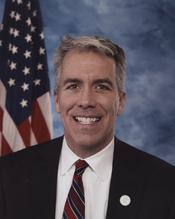
I have just discovered that I do have another speaker here, and with the indulgence of my friend on the other side, I would like to yield 3 minutes to the gentleman from Illinois (Mr. Walsh).
Mr. Speaker, I urge all Members to support this resolution. Let's make it a bipartisan effort. Let's show that we have the commitment of the membership here towards responding to the reality of our times.
I yield back the balance of my time.
Mr. Speaker, on that I demand the yeas and nays.