Pursuant to House Resolution 43, I call up the resolution (H. Res. 38) to reduce spending through a transition to non-security spending at fiscal year 2008 levels, and ask for its immediate…
Pursuant to House Resolution 43, I call up the resolution (H. Res. 38) to reduce spending through a transition to non-security spending at fiscal year 2008 levels, and ask for its immediate consideration.
Madam Speaker, I ask unanimous consent that all Members may have 5 legislative days in which to revise and extend their remarks on the resolution that is before us.
Madam Speaker, I yield myself such time as I may consume.
One of the indelible and enduring images of 2010 was that of violent protesters on the streets of Athens following the proposal of the government to impose austerity measures. We all remember very vividly that scene.
Having come to the brink of collapse and nearly dragging the entire euro zone with it, the Greek government had no choice but to scale back its profligate ways. Thousands of public employees took to the streets in anger.
Now, Madam Speaker, I contrast that with the image of tens of thousands of peaceful demonstrators across America coming out to express their frustration with excessive government spending. Rather than demanding more Federal largesse, these taxed-enough-already demonstrators actually came together to petition their government for greater restraint and discipline. This might actually have been a first in human history.
It was a powerful illustration of the unique nature of American values. But it was also a testament to just how badly fiscal discipline is needed. This issue is no longer just the purview of budget wonks and economists.
The looming crisis of our national debt is a challenge that working Americans recognize very clearly. While the magnitude of a $14 trillion debt is simply too massive to truly comprehend, those with a modicum of common sense can appreciate the crushing weight that will fall on future generations. If we do not immediately change course, the damage could quickly become irreversible.
Today's resolution is a clear signal that we are making that change in course. House Resolution 38 is the first step, Madam Speaker, in what will be a long and admittedly difficult process over the next 2 years as we pursue the goal of living within our means. This resolution lays down a marker to return to pre-bailout, pre-binge-spending, pre- stimulus levels. This resolution provides the framework under which we will finally dispense with the fiscal year 2011 budget which the previous Congress, unfortunately, failed to do.
Nearly halfway through the fiscal year--we are nearly halfway through the fiscal year--now the imperative is to responsibly finish the work that is really very, very urgent for us to approach and deal with at this moment.
Once we move beyond this task, we will immediately pivot to fiscal year 2012. We will craft a budget, we will consider alternatives, with a full debate, and then this House will pass a budget.
We will then proceed with consideration of appropriations bills. We will return to the traditional, open process that always governed our appropriations bills prior to the last couple of years. This will ensure full accountability and true collaboration and restore the deliberative traditions and customs of this body.
There will be very tough choices ahead. Very tough choices need to be made. There is no doubt that we will engage in heated debate, and I suspect we will in just a few minutes right here. But we simply cannot afford to put off the hard work any longer. Madam Speaker, today we take the first step. I urge my colleagues to support this resolution.
I reserve the balance of my time.
Madam Speaker, I yield myself 30 seconds to say to my good friend, again, that this is the beginning of a process. We have been saddled with a situation where for the first time since the implementation of the 1974 Budget and Impoundment Act, we have no budget. And so what is it we've been left to do? Nearly halfway through the fiscal year, we are faced with this challenge. We now are in a position where we are going to begin going through regular order to ensure that we have a budget, which we didn't do last year, and have an open, free-flowing debate on the amendments through the appropriations process. And I will say to my friend, the defense issues are going to be a high priority when it comes to oversight and scrutiny.
With that, Madam Speaker, I would like to yield 3 minutes to my very good friend and colleague, the distinguished chair of the Committee on the Budget from whom we are going to be hearing later this evening, the gentleman from Janesville, Wisconsin (Mr. Ryan).
Will the gentleman yield?
I thank my friend for yielding.
I would like to point to our colleagues, Madam Speaker, H. Res. 38. It is literally a one-sentence measure, a one-sentence measure which says that our goal is to get to 2008 levels of spending or less.
Madam Speaker, I yield myself 30 seconds to respond to my friend by saying a couple of things.
Unfortunately, we have begun by degenerating the debate to the sky- is-falling mentality again, that we're going to be cutting NIH funding; we're going to be gutting FBI agents. We are beginning the process of getting our fiscal house in order.
Madam Speaker, I think it is important to note that while both of my friends have used the term ``press release,'' H. Res. 38 is going to be a statement from the United States House of Representatives that we are today, before the President, at 9 this evening, stands here in this Chamber and delivers his State of the Union message, that we are committing ourselves to reduce the level of spending.
At this point I yield 4 minutes to my very good friend and classmate, the distinguished new chair on the Appropriations Committee, the gentleman from Somerset, Kentucky (Mr. Rogers).
Would the gentleman yield to me to respond?
I thank my friend for yielding, and let me just say that clearly the budget that we have right now expired at the end of the Congress. We know that very well. And we look forward to numbers which will be coming out from both your new committee, the Budget Committee, and the Appropriations Committee as well.
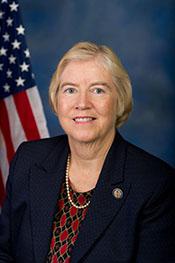
Madam Speaker, with that I am very happy to yield 1 minute to my good friend from the Harrison Township of Michigan (Mrs. Miller).
I'm sorry. I was talking to my new colleague, Mr. Mulvaney, here. If the gentleman was yielding to me, I apologize, but he will have to repeat the question.
If the gentleman would yield, I am happy to answer my friend by saying that the House will work its will. It is one of the things that Speaker Boehner has made very clear.
I thank my friend for yielding.
I thank my friend for yielding.
Let me say, Madam Speaker, that Speaker Boehner, who is the leader of this House, of both Democrats and Republicans alike, and who is obviously the leader of Republicans, said this morning in a meeting, as he has said repeatedly, the House is going to work its will. We are going to do something that hasn't been done, especially in the appropriations process in the last 2 years. We are going to have a debate that will allow a majority of this institution to determine what those numbers are.
Madam Speaker, I yield myself 30 seconds to say to my friend, as we talk about an open process, my Rules Committee colleagues know that just a few minutes ago, for the first time in 4 long years, the Rules Committee reported out a modified open rule that will allow a free-flowing debate tomorrow right here on this House floor.
I should say, Madam Speaker, that H. Res. 38 is literally one sentence, which says that this institution is committed to getting our level of spending to 2008 levels or less--or less, Madam Speaker--and I think it's important for us to note that.
We have the chairman of the Budget Committee, as I started to say in response to my friend, we have the Appropriations Committee chairman, and we are determined to begin a process.
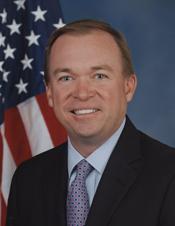
With that, I am happy to yield 2 minutes to my great new friend from Indian Hills, South Carolina (Mr. Mulvaney).
Madam Speaker, I yield myself 30 seconds to say to my very good friend from Santa Barbara that creating jobs and getting our economy back on track is exactly what this resolution is all about.
We all know that, on the sidelines all across this country and around the world, there is capital, there are resources that are waiting to be invested. And once we get our fiscal house in order, the signal that that sends to job creators out there is a very important one.
With that, I am very happy to yield 1 minute to my very good friend from Richmond, Virginia, the distinguished majority leader, Mr. Cantor.
Madam Speaker, I yield myself 30 seconds to say to my very good friend from Seattle that I am in complete agreement with the notion of ensuring that we focus time, energy, and effort on paring back waste, fraud, and abuse, especially within the Pentagon. We all know that it's there. And I'm glad that my friend from Worcester raised that issue in his opening remarks. He somehow was arguing that we have left it as sacrosanct. We don't.
The focus today is obviously on non-security discretionary spending, and that's exactly what we are trying to do with this first try.
I am happy to yield my friend 15 seconds, Madam Speaker.
If I could reclaim my time, Madam Speaker, I would say to my friend, he knows very well that we have gone without a budget so far. We are going to go through the standard budget process.
I yield myself an additional 15 seconds to say that I would like to see complete reform of the 1974 Budget Act. I want a joint, bicameral, bipartisan committee to do just that. But then, with the structure we have today, we are going to proceed with the appropriations process so we will be able to do exactly what my friend said.
With that, Madam Speaker, I reserve the balance of my time.
Mr. Speaker, I continue to reserve the balance of my time.
Mr. Speaker, may I inquire of my friend how many speakers he has remaining?
I am going to sit on the edge of my seat in anticipation of Mr. Hoyer's very thoughtful remarks that I look forward to, Mr. Speaker.
Will the gentleman yield? And I will yield my friend additional time.
I thank my friend for yielding.
Let me just say to my friend, Mr. Speaker, that this is the beginning of a process. This is a one-sentence resolution that will allow this House to go on record making a strong commitment to reducing the level of spending. And my friend was absolutely right in his opening remarks when he said that everyone wants us to reduce the deficit. And he's right.
This may be unprecedented, but we're in unprecedented times.
I would yield my friend an additional 30 seconds.
I continue to reserve the balance of my time.
Mr. Speaker, I yield myself the balance of my time.
Mr. Speaker, we have bipartisan consensus around here. We need to get our
economy back on track, and we need to do everything that we can to cut Federal spending. The distinguished minority whip just said as much. So there is a consensus, and I think that's wonderful.
In a few hours, 9 o'clock this evening, Democrats are going to be sitting with Republicans; Republicans are going to be sitting with Democrats. It's going to be unprecedented. And I will say that Mr. Hoyer referred to this simple one-sentence resolution as unprecedented. And I believe that it probably is unprecedented.
What it says--I mean, I have almost memorized the one sentence, Mr. Speaker. It says that we need to make sure that the Budget Committee and the Appropriations Committee work to get us to 2008 spending levels or less. I personally believe that we should be substantially below 2008 levels. I believe that we need to take that kind of action.
And it's true, before the President stands right over my shoulder at 9 o'clock this evening and delivers his State of the Union message, we want this institution to have a chance to go on record saying that we are committed to doing everything that we can to get the spending levels to 2008 or less.
Now, Mr. Speaker, we are in the position we are, and that itself is unprecedented, and that's why unprecedented action is necessary.
Now, I began my remarks by talking about the fact that probably one of the most enduring and powerful memories of 2010 was what took place in Athens, Greece. We saw the riots take place in the streets from public service employees in the wake of the government facing the responsibility of imposing austerity standards on the people of Greece. And what happened? We saw this huge outcry come because they were arguing that they couldn't, in fact, bring about cuts in spending.
I juxtapose that to what we saw in the last year here. We saw tens of thousands of Americans taking to the streets carrying this message: Taxed Enough Already. They came together to petition their government to bring about spending reductions. Not complaining that the government was making cuts; complaining that the government wasn't making enough cuts. And that's exactly what we're doing.
In fact, Mr. Speaker, I believe that this may be the first time in human history that we have witnessed what it was that we saw take place last year and led to the outcome in the November 2 election. We know that the greatest change in three-quarters of a century took place in this institution. Sixty-three members of the Democratic Party were defeated. We now have 87 new Republicans and nine new Democrats who have joined with us, and they have carried this message to us that we need to rein in spending.
Now, Mr. Speaker, I think it's important to note that our real goal is above that. It is job creation and economic growth, getting our economy back on track so that people out there who are trying to get onto the first rung of the economic ladder are able do just that. We have a painfully high unemployment rate, and people across this country are hurting.
Now, Mr. Speaker, what steps can we take to create jobs? I personally believe that we need to--and I look forward to having the President talk about this tonight--open up new markets around the world so that union and nonunion workers in the United States of America can have the opportunity to sell goods and provide services into countries like Colombia and Panama and South Korea, where these pending agreements exist.
I believe that since Japan has brought about a reduction in its top corporate rate, the rate of those job creators, we can reduce the top corporate rate--it's the highest rate of any country in the world now-- from 35 to 25 percent. I understand the President may be proposing that this evening. That will go a long way towards creating jobs.
But, Mr. Speaker, what we're doing with H. Res. 38 is we are getting ourselves on a path towards fiscal responsibility, and I believe that that is one of the most important things that we can do as we seek this shared goal of job creation and economic growth. So if we can let this institution go on record in support of getting to 2008 levels or less, I am convinced that that will be a strong step towards our goal, our shared goal of creating jobs and establishing economic growth.
This is the beginning of a process, Mr. Speaker, the beginning of a process; again, a one-sentence resolution that this House will be voting on in just a few minutes. But the process, itself, is one that is broken. It's broken because, for the first time since the 1974 Budget Act was put into place, we've not had a budget. We've not had a budget. We're almost 5 months into the new fiscal year, and we are in the process of cleaning up the mess that was handed to us.
So how is it we plan to do it? Well, Speaker Boehner has made it very clear. And that is that we need to make sure that we have an open, free-flowing debate as we proceed with a budget. And I'm convinced that our Rules Committee will make alternatives in order when we proceed with the work that the Budget Committee will have done. And I'm convinced that we will get back to the kind of regular order that I think today Democrats and Republicans alike would want to see, and that is a chance for Democrats and Republicans to stand up and offer amendments to the appropriations bills.
So, Mr. Speaker, I will say again that it's a simple one-sentence resolution. Are we going to let this institution get onto a path towards reducing the size, scope, reach, and control of the Federal Government or are we not? And so, Mr. Speaker, I am going to urge my colleagues to vote in favor of this very, very important resolution.
I yield back the balance of my time.