Mr. Speaker, before I begin, I have a parliamentary inquiry. Mr. Speaker, can you tell us how many Democrats have cosponsored H.R. 3630? I raised the issue, Mr. Speaker, because the gentleman said…
Mr. Speaker, before I begin, I have a parliamentary inquiry.
Mr. Speaker, can you tell us how many Democrats have cosponsored H.R. 3630?
I raised the issue, Mr. Speaker, because the gentleman said this was a bipartisan bill and I don't know of any Democrats that are cosponsors of the bill.
First of all, let me thank the distinguished chairman of the Rules Committee, my good friend, Mr. Dreier, for yielding me the customary 30 minutes, and I yield myself such time as I may consume.
(Mr. McGOVERN asked and was given permission to revise and extend his remarks.)
Mr. Speaker, I rise in strong opposition to this closed rule and to the underlying bill. This bill and this process is so lousy, I barely know where to begin today.
Let's start with the process. The bill, the way this bill was conceived, drafted and brought up may be the worst yet under this Republican-controlled Congress. Simply, this process is shameful. It's an embarrassment. This 369-page monstrosity was presented on Friday afternoon.
The gentleman says that this was reported by the Ways and Means Committee. It was presented by the chairman of the Ways and Means Committee. It was not reported out of that committee. I use the word presented because it was introduced on a day when no committees met and we had no votes in the House.
It was referred to 12 committees, 12 different committees. That's more than half the committees in the House of Representatives. But not a single committee held a hearing or a markup on this bill. It never saw the light of day in any of these committees.
There are 348 Members who sit on the committees that have jurisdiction over this bill. That's 348 Members of the House who should have had an opportunity to offer amendments and question witnesses about this bill in committee hearings or markups. Not one of these Members had an opportunity.
And last night in the Rules Committee, Members came up, 12 amendments were offered. Every single one of them was rejected.
Mr. Levin, the ranking member on the Ways and Means Committee, asked for a Democratic substitute to be made in order. That was rejected too.
The gentleman from California says that it's traditional, when Ways and Means bills are presented, that they be done so under a closed rule. That's when it's a tax bill. This is a tax bill plus 1,000 other things that have nothing to do with tax issues.
And this lousy process, I will say to my colleagues, leads to bad legislating. Just look at this bill. It's long, and it's sloppy. The Republicans who rushed to put this bill together have already found an error which we're trying to correct in the rule. Who knows how many other errors there are?
Last year Speaker Boehner and Majority Leader Cantor, Whip McCarthy and other members of the Republican leadership rolled out their Pledge to America, their campaign pledge to run this House in a more open way. Yet all year long they have been chipping away at their pledge, and now we have this bill that flat out breaks their pledge.
In their pledge, the House Republicans promised to, and I quote, ``end the practice of packaging unpopular bills with 'must-pass' legislation to circumvent the will of the American people. Instead, we will advance major legislation one issue at a time.'' That's what they said.
Yet we have three provisions--extension of the payroll tax cut, extension of unemployment insurance, and SGR, or doc fix--that are must pass by the end of this year. And do we have a clean bill that is free from unrelated provisions? Of course not. That would be logical and make too much sense.
No, Mr. Speaker, the bill we have before us is loaded up with goodies to mollify the extreme right wing that is in charge of this House. Along with the extension of the payroll tax cut and doc fix, this bill includes the following: Requires the approval of the controversial Keystone pipeline; requires millions of seniors to pay more for health care; increases taxes on working families by forcing large, end-of-the- year health care payments; slashes prevention funding that actually reduces Medicare and Medicaid costs; undermines air quality, endangering the health of children and families by blocking mercury pollution reduction; cuts retirement programs for Federal workers; and extends the pay freeze for Federal workers.
Each of these provisions are different. They have nothing to do with one another. Why are they all bunched together in this one bill?
And these policies are bad for America. They are bad for the American people. Yet the Republican leadership continues to push these extreme and harmful policies.
And even though the unemployment insurance program needs to be extended, this bill actually erodes the support program by cutting unemployment insurance benefits for 1 million Americans who lost their jobs through no fault of their own. And it imposes new limits on unemployment compensation by restricting benefits employees have paid for.
Why is it so difficult for this Republican-controlled House to help the middle class and those struggling to get into the middle class? Why do they throw roadblock after roadblock in front of middle class Americans who are trying to make their lives better? Why do they continue to make it virtually impossible for us to help average people, while at the same time they do everything in their power to protect subsidies for big oil companies and tax cuts for the Donald Trumps of the world?
Extension of the payroll tax cut, extension of the unemployment insurance program, and the doc fix should not be controversial. And these extensions should have been done a long, long time ago.
My friends on the other side of the aisle are playing a very risky game. We know this failure to extend the payroll tax cut will mean a $1,500 tax increase on middle class Americans. We know that 160 million Americans will see their taxes go up if we don't act before the end of the year. So why are Republicans bringing a bill to the floor that we know will not pass the Senate?
We know, by the way, the President will not sign it. I have a Statement of Administration Policy, which I would like to place in the Record, which basically makes it very clear that the President would veto this bill.
Executive Office of the President Office of Management,
and Budget,
Washington, DC, December 13, 2011.
Statement of Administration Policy
H.R. 3630--Middle Class Tax Cut Act of 2011
(Rep. Camp, R-Michigan, and 5 others)
The Administration strongly opposes H.R. 3630. With only
days left before taxes go up for 160 million hardworking
Americans, H.R. 3630 plays politics at the expense of middle-
class families. H.R. 3630 breaks the bipartisan agreement on
spending cuts that was reached just a few months ago and
would inevitably lead to pressure to cut investments in areas
like education and clean energy. Furthermore, H.R. 3630 seeks
to put the burden of paying for the bill on working families,
while giving a free pass to the wealthiest and to big
corporations by protecting their loopholes and subsidies.
Instead of working together to find a balanced approach
that will actually pass both Houses of the Congress, H.R.
3630 instead represents a choice to refight old political
battles over health care and introduce ideological issues
into what should be a simple debate about cutting taxes for
the middle class.
This debate should not be about scoring political points.
This debate should be about cutting taxes for the middle
class.
If the President were presented with H.R. 3630, he would
veto the bill.
So why are we wasting precious time?
The Republican leadership insists on playing chicken with the American people just to score cheap political points. This is not a time for political theater. This is the time for responsible leadership. It's time to do the right thing for the American people and drop these controversial provisions from this bill.
This is not the time to increase taxes on middle class Americans. It's time to extend the payroll tax cut and unemployment insurance and the doc fix.
Mr. Speaker, this House needs to get back to doing the people's business, and the people's business is jobs. It would be nice if my Republican friends would allow the President's jobs bill to come to the floor for a vote rather than bills that reaffirm our national motto or make it easier for unsafe people to carry concealed weapons from one State to another.
I say to my Republican friends, the American people are outraged. They're outraged at Republican indifference to the middle class. They're outraged by Republicans' callous attitude to the most vulnerable in this country. They're outraged that Republicans are playing politics with their lives.
Mr. Speaker, I urge my Republican colleagues to do the right thing, to pass a clean extension of the payroll tax cut, properly extend unemployment insurance and the doc fix. Do the right thing, and do it the right way. That's all the American people are asking for.
I reserve the balance of my time.
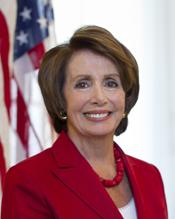
Mr. Speaker, at this time I am very proud to yield 1 minute to the gentlewoman from California, the Democratic leader, Ms. Pelosi.
Mr. Speaker, I am proud to yield 2 minutes to the gentlewoman from New York, the ranking member of the Rules Committee, Ms. Slaughter.
I yield the gentlelady 1 additional minute.
I yield 3 minutes to the gentleman from New Jersey (Mr. Andrews).
(Mr. ANDREWS asked and was given permission to revise and extend his remarks.)
At this time I would like to yield 2 minutes to the gentleman from Michigan, the ranking member of the Ways and Means Committee who was denied his right to have a substitute when he was at the Rules Committee, Mr. Levin.
(Mr. LEVIN asked and was given permission to revise and extend his remarks.)
I yield the gentleman an additional 30 seconds.
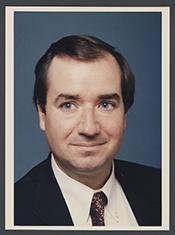
Mr. Speaker, I yield 1\1/2\ minutes to the gentleman from New York (Mr. Engel).
Mr. Speaker, I would like to insert in the Record a letter from William Samuel, the director of the government affairs department at the AFL-CIO, in strong opposition to H.R. 3630.
American Federation of Labor and Congress of Industrial
Organizations,
Washington, DC, December 13, 2011.
Dear Representative: On behalf of the AFL-CIO, I am writing
to urge you to oppose the Middle Class Tax Relief and Job
Creation Act of 2011 (H.R. 3630), which would replace a
modest surtax on income over $1 million with drastic benefit
reductions for jobless workers, pay cuts for public
employees, reduced premium assistance for low- and middle-
income individuals buying health insurance, cutbacks in
preventive health services, and higher premiums for many
Medicare beneficiaries.
H.R. 3630 would cut the federal unemployment insurance (UI)
program by more than half in 2012, reducing benefit
eligibility by 14 weeks in every state and by 40 weeks in
states with the highest unemployment rates. These benefit
cuts would reduce economic activity by $22 billion and cost
140,000 jobs.
Even more troubling, H.R. 3630 would fundamentally change
the nature of unemployment insurance and erode the
unemployment safety net for the future. Unemployment
insurance (UI) is a social insurance program, to which
workers make contributions in the form of reduced wages. H.R.
3630 would change the nature of UI by allowing states to
require jobless workers to ``work off'' their benefits, in
effect allowing UI to be transformed into a workfare program.
H.R. 3630 would further undermine social insurance by
introducing means testing, which would surely be used to
restrict UI eligibility to fewer and fewer workers over time.
The authors of this legislation do not seem to understand
that America faces a continuing jobs crisis, and they seem to
think that jobless workers--rather than Wall Street--are to
blame for high unemployment and the lack of jobs. In addition
to cutting unemployment benefits, H.R. 3630 would allow drug
testing of all workers before they can receive benefits;
require workers without a high school degree to be enrolled
in classes before they can receive benefits; and make jobless
workers pay out of their own pockets for reemployment
services offered by the government.
In order to spare millionaires from having to pay one more
penny in taxes, H.R. 3630 would also require federal
employees to sacrifice even more than they have already. Not
only would H.R. 3630 extend the current pay freeze for
federal employees, but it would also raise $37 billion in
revenues by increasing federal employee pension contributions
and reducing their retirement income.
H.R. 3630 would also have a substantial negative impact on
the health care of working families. It would impose daunting
subsidy repayment requirements on families whose economic
circumstances improve, which would deter 170,000 people from
accepting premium assistance under the Affordable Care Act,
according to the Joint Tax Committee. As a result, thousands
of middle- and lower-income families would be unable to
afford health insurance. In addition, H.R. 3630 would
increase Medicare premiums for at least 25 percent of all
beneficiaries, requiring many in the middle class to pay
substantially more, and would reduce federal support for new
preventive services.
H.R. 3630 would protect the most privileged one percent of
all Americans from having to pay one more penny in taxes, and
it would do so by demanding still more sacrifice and pain
from jobless workers, federal employees, and low- and middle-
income families. The authors of H.R. 3630 obviously have more
sympathy for millionaires than for the victims of the
economic crisis caused by Wall Street. We urge you to vote
against this cruel and selfish piece of legislation.
Sincerely,
William Samuel,
Director, Government Affairs Department.
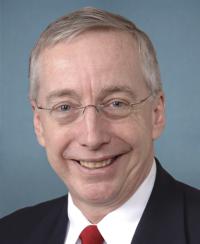
At this time I would like to yield 2 minutes to the gentleman from Virginia (Mr. Connolly).
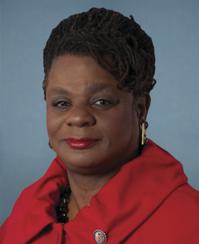
I yield 2 minutes to the gentleman from Illinois (Mr. Davis).
Mr. Speaker, again, the AFL-CIO still opposes this bill.
At this time I would like to yield 2 minutes to the gentlewoman from Texas (Ms. Jackson Lee).
I have at least two more speakers.
Mr. Speaker, I would like to yield 1 minute to the gentlewoman from New York (Mrs. Maloney).
I yield the gentlelady an additional 30 seconds.
Mr. Speaker, at this time I would like to yield 1\1/2\ minutes to the gentleman from Pennsylvania (Mr. Fattah).
I advise the gentleman from California that I am the last speaker.
I yield myself the balance of my time.
Mr. Speaker, I would like to place in the Record an article from Politico entitled, ``GOP takes packaging path,'' talking about how my Republican friends have broken their Pledge to America.
[From Politico, Dec. 11, 2011]
GOP Takes Packaging Path
(By Jake Sherman)
The year-end rush to extend the payroll tax holiday has
House Republicans struggling to keep up with a key promise
from last year's election as they bundle together a
hodgepodge of issues before skipping town for Christmas.
In the Pledge to America, released by GOP leadership under
much fanfare in September 2010, Republicans said they would
``end the practice of packaging unpopular bills with `must-
pass' legislation to circumvent the will of the American
people. Instead, we will
advance major legislation one issue at a time,'' they said.
They'll be doing the exact opposite this week.
The year-end legislative package centered on extending the
payroll tax has turned into a holiday tree filled with
legislative ornaments ranging from the Keystone XL oil
pipeline, the sale of broadband spectrum, an extension of
jobless benefits, changes to Medicare and easing of certain
environmental standards. On top of that, the House will also
try to clear a nearly $1 trillion catch-all year-end spending
bill--the type of appropriations package that Speaker John
Boehner (R-Ohio) himself has decried as inadequate.
Republicans bristle at the comparison, insisting they're in
full compliance with their election-season promises, but the
manner with which they're passing the legislation underscores
larger issues Congress has to contend with as a winter chill
settles on Washington: Republicans want to score political
points from Democrats; the Senate is split; President Barack
Obama is in reelection mode; and tax provisions are slated to
expire as the Christmas recess looms.
A GOP leadership aide said the comparison is ``a half-assed
attempt at a `gotcha' story--and it's weak even for POLITICO
on a quiet Friday afternoon.''
Michael Steel, a spokesman for Boehner, said the extension
bill ``does not fit the definition of `must-pass'
legislation--which generally refers to funding bills, or an
increase in the debt limit--nor does it contain any
`unpopular' provisions. Therefore, it is entirely consistent
with the Pledge to America.''
Any number of Republicans, though, have said that the tax
holiday must be extended, saying its expiration would amount
a tax increase when it's least needed.
Whether it's a ``must pass'' or not, the package of bills
is seen as critical for both parties: If Congress doesn't
act, taxes will go up on more than 100 million families,
jobless benefits will expire and doctors who treat Medicare
patients will have their fees slashed.
Over the past week, the narrative has shifted
significantly. Both Republicans and Democrats now say they
want to extend the provisions, recognizing both the political
and economic peril that would come from allowing the measures
to run out.
The argument is now over how the government will pay for it
and what will ride alongside it for Republicans to say they
tried to create jobs.
It's all pretty familiar to Capitol Hill onlookers and
could help explain Congress's 9 percent approval rating. The
year-end dash--Boehner says he wants the House to be done by
Friday--mirrors Congress's work during the previous 10
months. There's political posturing on both sides and
panicked legislating, all set against the backdrop of a
looming holiday deadline.
Here's where things stand: Top GOP aides say the
Republicans' Middle Class Tax Relief and Job Creation Act
represents their last offer. The legislation extends the
payroll tax holiday, jobless benefits and the ``doc fix,'' in
addition to other sweeteners. To blunt conservative angst
about the bill and to offset its cost, GOP leaders tacked on
language to force President Barack Obama to restart the
Keystone XL pipeline project, in addition to easing
environmental standards on boilers and slashing money from
the Democrats' health care law.
It will hit the House floor this week. Senate Republican
leaders say it has enough steam to sail through the upper
chamber. Senate Minority Leader Mitch McConnell (R-Ky.) said
on ``Fox News Sunday'' that Democrats such as Sens. Barbara
Milkulski of Maryland and Ron Wyden of Oregon support rolling
back the boiler regulation. Some Democrats, including
lawmakers from labor-friendly districts, support the pipeline
construction.
But Senate Majority Leader Harry Reid (D-Nev.) said flatly
that the House bill with the pipeline won't pass--and
Democrats are weighing what bill to put on the floor this
week.
``It's the highest priority of the president and the
Democrats in Congress,'' Senate Majority Whip Dick Durbin of
Illinois said of the payroll tax extension on NBC's ``Meet
the Press.''
But there's still blowback on the pipeline issue.
Sen. Lindsey Graham (R-S.C.), also appearing on NBC, said
flatly that the ``pipeline is probably not gonna sell.''
``At the end of the day, the payroll tax will get extended
as it is now,'' Graham said. ``It won't get expanded; it'll
get extended. And we'll find a way to pay for it in a
bipartisan fashion.''
Senate Democrats say that's what they're trying to do.
Democratic sources suggest the party might abandon its plan
to institute a surtax on millionaires, eyeing instead a
package with more palatable spending cuts to attract
Republican support.
There are a few question marks on the House side. When the
package was rolled out, the conference rallied behind
Boehner. But should it fray, so might its support. Boehner
told members in a closed meeting he wants all 242 House
Republicans to support the bill.
If the Republican support does not stay intact, House
Democrats will again be necessary for passage. It's an open
question what they would support to offset the cost of the
bill.
On Friday, House Minority Leader Nancy Pelosi (D-Calif.)
was cool on changes to Medicare--including means testing for
millionaires--and cutting unemployment benefits from 99 to 59
weeks.
``Some things [that] might be acceptable in terms of a big,
bold and balanced plan are unacceptable if we're not only not
going to the place where President Obama wants to go on the
payroll tax cut, have a more modest proposal and on top of
that, have consumers of Medicare pay the price,'' Pelosi
said.
She minced no words when talking about the Keystone
pipeline.
``This is not about the Keystone pipeline,'' she said.
``The Keystone pipeline is a completely separate issue.
People on both sides of the issue agree that this shouldn't
be on this package. It's just not polite; it's a poison pill
designed to sink the payroll tax cut.''
Mr. Speaker, the House Republicans have designed a bill to fail, and it contains poison pills which will result in tax hikes for 160 million workers and the loss of hundreds of thousands of existing jobs. They say they're for extending the payroll tax cut for middle class Americans, they say they want to help the unemployed, but yet they demand a ransom in order for us to get this passed. And the ransom that they are demanding is quite high.
You've heard from Members on our side of all the poison pills that are in this bill. I have introduced into the Record the statement from the administration saying that they would veto this bill, because it is so awful, if it comes to the desk of the President. We know that the United States Senate will not move on this bill.
So why are we wasting our time with precious few days left in the session? Why aren't we doing what most Americans want us to do, and that is to extend the payroll tax cut for middle class Americans and extend unemployment insurance for the millions of people who are out of work, through no fault of their own, because it's the right thing to do?
My friends on the other side of the aisle have no problem with bailing out big banks on Wall Street, but when it comes to helping middle class families and working people, they squawk.
You've heard over and over that this is the Christmas season; we're supposed to be generous in our hearts. I don't feel the generosity on the other side. I don't feel the compassion. I'm not sure if my colleagues understand how Americans are struggling, what it feels like to be out of work. People who are in their 50s and 60s who have lost their job and can't find another job, and my colleagues are trying to make it more difficult for them to be able to get benefits so they can keep their homes and put food on the table.
My friend from California talks about, well, Mr. Levin, the ranking member of the Ways and Means Committee, didn't submit a substitute, he only asked for one. Well, this bill, I will again remind everybody, was presented to us on Friday when Members were home. And we had an emergency Rules Committee--which bypasses the normal procedures and the normal time given for Members to be able to offer amendments. So, I mean, everything was stacked against anybody offering an amendment in advance.
Mr. Speaker, if we defeat the previous question, I will offer an amendment to the rule to make in order Mr. Levin's amendment in the nature of a substitute, which extends middle class tax relief, unemployment benefits, and the doc fix the right way.
I ask unanimous consent to insert the text of the amendment in the Record along with extraneous material immediately prior to the vote on the previous question.
Mr. Speaker, I will just close again by urging my colleagues to stand with working people in this country, to stand with those who have lost their jobs through no fault of their own. I mean, it's so easy for the other side to stand with big oil companies and protect tax breaks for the wealthiest in this country. Let's have a little justice in our tax system, a little fairness.
I urge my colleagues to vote ``no'' and defeat the previous question so we can amend this bill and make it actually address these urgent issues in a thoughtful and reasonable way, I urge a ``no'' vote on the rule, and I yield back the balance of my time.
Mr. Speaker, on that I demand the yeas and nays.
Mr. Speaker, I demand a recorded vote.