Mr. Speaker, I move to suspend the rules and agree to the resolution (H. Res. 497) to provide for the placement of a statue or bust of Sir Winston Churchill in the United States Capitol. Mr. Speaker,…
Mr. Speaker, I move to suspend the rules and agree to the resolution (H. Res. 497) to provide for the placement of a statue or bust of Sir Winston Churchill in the United States Capitol.
Mr. Speaker, I ask unanimous consent that all Members have 5 legislative days to revise and extend their remarks.
Mr. Speaker, I yield myself such time as I may consume.
I rise in support of H. Res. 497 and the placement of a statue or bust of Winston Churchill here in the United States Capitol. Winston Churchill was unique. An inspiration to millions around the world during World War II, Winston Churchill's eloquence and courage brought hope to those bound under the weight of tyranny and war.
His prose and his voice were direct and succinct. Churchill believed in calling things by their rightful names. When he secretly met with President Roosevelt in August of 1941 and signed the Atlantic Charter, Churchill made sure that it referred specifically to ``Nazi tyranny.'' Always a straight shooter, Churchill called it like it was. In retrospect, many people think that it's easy for that kind of nomenclature to be used, but at the time, it was unique. During the 1930s, when voice after voice cautioned against taking too strong a stance against Nazi Germany, Winston Churchill refused to ignore the gathering storm.
In 1982, Mr. Speaker, I was a young, second-term Member of this House. But I, like millions of Americans, was inspired that year by the actions and words of our 40th President, who traveled across the Atlantic in June of that year to address Parliament. He did so out of an appreciation of the common liberty-loving and natural rights- affirming heritage Great Britain and the United States had shared, and which he thought must be protected at all costs.
And as he should have, President Reagan quoted frequently from Churchill that day, for there was no other statesman in the 20th century who had thought, who had contemplated, who had written, and who had taught us about war, about the motives of man, and about the causes of and necessities present for civilization to survive. That is why Churchill's hatred of tyranny burned so deep, and why his warnings about oppression before and after the war were so prescient.
Mr. Speaker, during the long dark night of war in 1940 and 1941, before the United States was there to aid its ally, Britain suffered the horrors of attack after attack, as all others on the continent had fallen and it was left alone, separated only by the channel from utter destruction.
During Nazi bombing attacks on London, the great and majestic St. Paul's Cathedral was badly damaged. It looked like it would crumble in flames, but it did not. One of the most inspired images of the war is of St. Paul's with smoke billowing all around it, standing tall, refusing to fall, and reminding us of the things for which Britain was fighting. And like that image, Winston Churchill's example does the same, and so much more.
Almost 70 years ago to the day, Prime Minister Churchill risked his life in a U-boat attack in a secret voyage across the Atlantic. On December 26, 1941, in an address to a joint session of Congress, he said: ``I avow my hope and faith, sure and inviolate, that in the days to come the British and American peoples will, for their own safety and for the good of all, walk together in majesty, in justice, and in peace.'' This is a charge to which I hope this Congress will still aspire.
Mr. Speaker, I support this resolution, I urge my colleagues to support it, and I reserve the balance of my time.
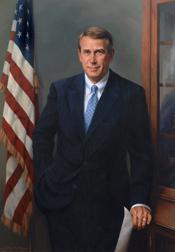
Mr. Speaker, it is my pleasure to yield 1 minute to the gentleman from Ohio (Mr. Boehner), the author of this resolution and distinguished Speaker of the House.
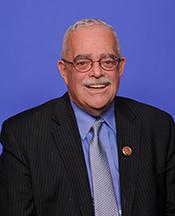
Mr. Speaker, I yield 4 minutes to the gentleman from Mississippi (Mr. Harper), the distinguished chairman of the Subcommittee on Elections for the Committee on House Administration.
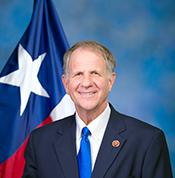
Mr. Speaker, I yield 3 minutes to the gentleman from Texas (Mr. Poe), a distinguished member of the Judiciary and Foreign Affairs Committees.
Mr. Speaker, I yield myself such time as I may consume.
Returning to the subject at hand, we have the great portrait of General Lafayette here in the House Chamber, one of seven honorary citizens of the United States, Winston Churchill being another.
Winston Churchill was, as is evident, one of the great men of the last century, one for whom inspiration was a way of life, and one who, as the Speaker said just a few moments ago, was the best ally that the United States has ever had.
As a young boy, having been born somewhat after World War II, I remember with fascination seeing this figure on television. He seemed to remind me of every newborn baby I've ever seen. They all look like Winston Churchill without the cigar. You wondered what was it that made this man great. And you began to read history. You began to talk with your father who had served in World War II about what this man was, and you realized this was someone who, in his youth, was involved in cavalry charges, and in his oldest age, was leader of a country at the beginning of the thermonuclear world.
Talk about the span of time and the span of greatness and the ability to perceive, through all of that time, despite his mistakes, being a fallible man, perceive the greatness of the individual and the opportunity that democracy gives to individuals as no other form of government does.
At the time when he criticized Nazi Germany, it was not something that all then said. The late Christopher Hitchens, in an April 2002 article in ``The Atlantic,'' said this:
But alone among his contemporaries, Churchill did not
denounce the Nazi empire merely as a threat, actual or
potential, to the British one. Nor did he speak of it as a
depraved but possibly useful ally. He excoriated it as a
wicked and nihilistic thing. That appears facile now, but was
exceedingly uncommon then. In what was perhaps his best ever
speech, delivered to the Commons 5 days after the Munich
agreement on October 5, 1938, Churchill gave voice to the
idea that even a ``peace-loving'' coexistence with Hitler had
something rotten about it. ``What I find unendurable is the
sense of our country falling into the power, into the orbit
and influence of Nazi Germany, and of our existence becoming
dependent upon their good will or pleasure.''
That was an uncommon statement at the time. That was a courageous statement at the time. That was a visionary statement at the time.
It is to honor that vision, it is to honor that ally, it is to honor that person who was dedicated to the best of Western civilization, who was one who stood with very few at a time when that civilization was threatened as never before.
Mr. Speaker, it is an honor to be on the floor to offer this resolution to allow for, to authorize, a statue or bust of Winston Churchill here in the United States Capitol.
Mr. Speaker, I yield back the balance of my time as I urge my colleagues to vote for this resolution.