Good morning, Mr. Speaker. I want to thank my friend, Mr. Scott from South Carolina, for yielding me the customary 30 minutes and yield myself such time as I may consume. A lot of verbiage is going…
Good morning, Mr. Speaker.
I want to thank my friend, Mr. Scott from South Carolina, for yielding me the customary 30 minutes and yield myself such time as I may consume.
A lot of verbiage is going on here this morning, but Mr. and Ms. America, let me tell you what we're doing here--nothing. We were promised that we could have a vote to concur in what the Senate did, 89-10, give it to the President and make sure that the payroll tax continues, but that's not what we're doing here today.
What they changed that to is to reject what the Senate did and ask for a conference, which the other side, the leader of the Senate says he is not going to do. We could have done all of this last week, but instead, 435 of us have been flown back here this week to do absolutely nothing.
At the end of the day here, we will not have accomplished a thing. There will be no payroll tax; there will be no unemployment insurance; there will be no doc fix. It just simply says we reject what they did, 89-10, which is a miracle in itself, but we're not going to do anything here. We're just going to kick it over to the other side.
In addition to this, the President has not signed the omnibus bill. I think he was going to wait for this one, which means that come Friday the government could shut down. We have once again this brinksmanship of hanging by our thumbs.
So if I can make any point today for America: Don't pay any attention to that man behind the curtain here. We are not doing anything. We could have but we are not.
And after that great expense of shuttling us all back and forth last weekend, we come here today, and we really had a rare opportunity to truly come together and provide the vital assistance to Americans in need. The Senate certainly answered the call in a bipartisan bill, which was really quite wonderful. It made us all feel really good about the Congress. It may have even made us go up from 9 to 10 points for all I know.
But they passed a bill with support of 89 Senators, and 80 percent of the Republican Senators, and I'm very proud of them. Not only did they vote for that, but they are signaling their great displeasure that the House can't do the same. And until Saturday night, this bill had the blessings of the Speaker of this House.
After a year of bitter battles in Washington, we stood on the brink of a bipartisan agreement to lower taxes and provide much-needed assistance to those who are struggling to get through the holiday season through no fault of their own, having lost their employment, that is, until a small army of ideologues said ``no'' and demanded that a truly bipartisan bill be tossed out in the cold. What a shame.
So we meet today at the height of the Christmas season as the timeworn tales of Tiny Tim and Mr. Scrooge are playing out in theaters across the country and here in the House. Will we come together to provide a gift for the American people or will a small group of ideologues let taxes rise and the unemployed go without housing and food as we ring in the new year?
It is my belief, and certainly borne out, I think, by not a shortage of media this morning, that one of the reasons that the vote today is to reject the Senate bill was had we had a vote to concur in it instead and say that we agreed with what the Senate had done, then it would have passed.
Now, I spoke about this game of brinksmanship last week, and certainly, you know, we've gone the whole year hoping that there would be no payroll tax on the other side. They didn't believe in that and certainly did not believe in the extension of unemployment. Now, suddenly today, we can't just have two months; we've got to have a year.
The reason they couldn't get a year in the Senate was the difference of opinion on how to pay for it. It was decided that, with the 2-month extension, we would keep it, that we would not lose it after 2 months. During those 2 months, the House and Senate, we would hope, would be working out ways we could continue it for a year. There is not going to be that great hardship of bookkeeping that everybody is talking about. We were going to take our time to fix it during those 2 months, but the 2 months is basically an emergency measure which is being turned down by the House of Representatives.
We'd love to live in a world where every single principle we believe in could be made true, where those who disagree with us would bend to our wishes and support our views, but quite simply, we don't live in that world. After the majority spent the entire year ignoring the need for an extended tax break and renewed insurance for the unemployed, I've heard frequent refrain in the last 24 hours that the policies we are considering today should not be implemented for 2 months but, rather, for a year. That is pretty recent.
The majority should be heartened to know that hardly a soul in the body disagrees with it. We all wanted a year, as did the President of the United States. As I've said before, we know that we will get that year and that we will have the 2 months to work on getting that extension. However, after weeks of negotiation, 435 legislators can't agree on an equally important point: how to pay for the tax cuts for a year.
The Democrats have said that millionaires and those who have benefited the most in the past decade should pay for this tax break. The majority has said that seniors receiving Medicare should pay instead, which was, indeed, in the bill passed here last week. This simple but profound disagreement is part of what has led us here today.
The other part of the equation is that the majority needed to design a vote by which, no matter the vote totals, they would never lose. Isn't that clever? If we had another month to work on resolving our disagreement, we could continue to debate without pause. However, the clock is about to hit midnight, and the taxes of millions of Americans and the unemployment insurance of millions more are about to be harmed because we won't strike a deal.
By now, it should be obvious why we must pass this Senate agreement. It's time that all of us accept the world as
it is. It's time that we came to a compromise, a compromise to benefit millions of Americans in this time of holiday cheer for some. There will be many more debates in the months to come about how to help the American people, but now we must seize our opportunity and provide for the millions of Americans who sent us here in order to make sure the season can be a little better than the last.
So I'm going to urge my colleagues to defeat the previous question when we get to that point, but I want to reiterate again that nothing is happening here today. When we leave here, the tax cut will not be extended; unemployment will not be extended. We will simply go back home to await the consequences of what we're doing here today. I deeply regret that because I would have liked nothing better than the bipartisanship that the Senate showed in this time of need to have been on display here as well in the House of Representatives.
I reserve the balance of my time.
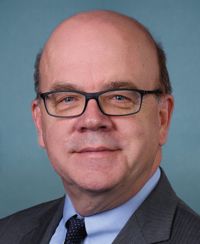
Mr. Speaker, I am pleased to yield 3 minutes to the gentleman from Massachusetts and a member of the Committee on Rules, Mr. McGovern.
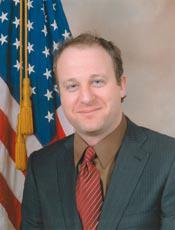
Mr. Speaker, I am pleased to yield 2\1/2\ minutes to the gentleman from Colorado (Mr. Polis), a member of the Rules Committee.
Mr. Speaker, I am pleased to yield 2 minutes to the gentleman from California, the distinguished ranking member of the Committee on Education and the Workforce, Mr. Miller.
Mr. Speaker, I yield myself 1 minute.
I would like to include in the Record the comments of Republican Senators begging the House to take their bill.
Sen. Scott Brown (R-MA): ``The House Republicans' plan to
scuttle the deal to help middle families is irresponsible and
wrong. I appreciate their effort to extend these measures for
a full year, but a two-month extension is a good deal when it
means we avoid jeopardizing the livelihoods of millions of
American families. The refusal to compromise now threatens to
increase taxes on hard-working Americans and stop
unemployment benefits for those out of work. During this time
of divided government, both parties need to be reasonable and
come to the negotiating table in good faith. We cannot allow
rigid partisan ideology and unwillingness to compromise stand
in the way of working together for the good of the American
people.''
Sen. Scott Brown, Press Release: ``Sen. Brown Blasts House
For Jeopardizing Tax Relief, Unemployment Benefits'', Dec 19,
2011.
Sen. Olympia Snowe (R-Maine): ``I spoke out against this
unprecedented two-month policymaking experiment on Saturday.
That said, there wasn't an indication that the House would be
in disagreement with the Senate's action. Nonetheless, what
is paramount at this point is that this tax benefit
for hardworking Americans not be allowed to lapse.''
Seung Min Kim and Jonathan Allen, ``New GOP split over
payroll bill'', Politico, 12/19/11.
Sen. Dean Heller (R-Nev.): ``there is no reason to hold up
the short-term extension while a more comprehensive deal is
being worked out.''
Seung Min Kim and Jonathan Allen, ``New GOP split over
payroll bill'', Politico, 12/19/11.
Sen. Susan Collins (R-Maine): ``at this point, we must act,
as the Senate has done, to prevent a tax increase that will
otherwise occur on Jan. 1.''
Seung Min Kim and Jonathan Allen, ``New GOP split over
payroll bill'', Politico, 12/19/11.
Sen. Dick Lugar (R-Ind.): ``I'm hopeful there are a
majority of Republicans and Democrats 4 today who will
proceed, because it seems to me this is best for the country,
as well as for all the individuals who are affected.''
Daniel Strauss, ``GOP's Lugar: House should pass tax bill
for the good of the country'', The Hill, 12/19/11.
I want to put into the Record the key dates in the Boehner payroll tax cut debacle:
Last Wednesday, Speaker Boehner sat at a meeting in Senator McConnell's office with Reid and McConnell. Speaker Boehner said the two Senate leaders should negotiate a deal and that Senator McConnell has his proxy.
Thursday, Speaker Boehner made public comments promising to live by whatever agreement the Senate reached. He said: ``If the Senate acts, I'm committed to bringing the House back--we can do it within 24 hours--to deal with whatever the Senate does.''
On Friday, Speaker Boehner reacted to reports that we may have to settle on a 2-month extension by saying if the Senate passed that, he would take it, add the Keystone pipeline provision to it, and send it back to the Senate. So we added the pipeline into the deal in the Senate because that's what Speaker Boehner said he needed to get the measure through the House.
Friday night after Senator McConnell presents the payroll tax deal to his caucus, he's captured in a video leaving the caucus high-fiving Senator Barrasso. Later, Senator McConnell tells reporters: ``Obviously, I keep the Speaker informed as to what I'm doing.''
I yield myself an additional 30 seconds.
Saturday, McConnell calls the payroll tax cut compromise a bill designed to pass. McConnell said: ``I thank my friend, the majority leader, for the opportunity to work together with him on something that could actually pass the Senate and be signed by the President.''
Saturday, Speaker Boehner called the deal a ``good deal'' and a ``victory,'' and according to reports, urged his caucus to declare victory and pass it, on a conference call.
Saturday afternoon, Senator McConnell gave his consent to allow the Senate to adjourn for the year.
On Sunday, once the Tea Party Republicans in the caucus rebelled, Speaker Boehner reversed course and is now disowning the deal he supported 24 hours earlier.
I yield 2 minutes to the gentleman from New Jersey (Mr. Andrews).
(Mr. ANDREWS asked and was given permission to revise and extend his remarks.)
Mr. Speaker, I yield 2 minutes to the gentlewoman from Colorado, a member of the Committee on Energy and Commerce, Ms. DeGette.
Mr. Speaker, I yield a minute and a half to the gentleman from New Jersey (Mr. Pallone).
Mr. Speaker, I am pleased to yield a minute and a half to the gentlewoman from Texas (Ms. Jackson Lee).
Mr. Speaker, I am pleased to yield 2 minutes to the gentleman from South Carolina, the assistant Democratic leader, Mr. Clyburn.
Mr. Speaker, I am pleased to yield 1 minute to the gentleman from New York, a member of the Committee on Energy and Commerce and my colleague from New York, Mr. Engel.
If my colleague is prepared to close, I have one more speaker.
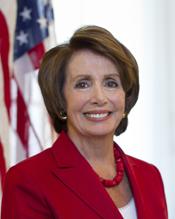
I would like to yield 1 minute to the gentlewoman from California, our Democrat leader, Ms. Pelosi.
Mr. Speaker, I yield myself the balance of my time.
I want to reiterate the way I started today that what we're doing here today is killing the tax cut by not voting anything here except that we do not concur with the Senate and that we will hope some conference will come from someplace. That means there will be no tax cut; that means there will be no extension of unemployment benefits.
Now, last night at 7 o'clock when the Rules Committee was supposed to meet, the agenda called for a vote to concur in the Senate bill. But after the stormy 2-hour Tea Party conference, they reversed their course. And now we have a process where no tax cut can pass today, no matter who wins what vote.
If every Member of the House supported the bipartisan proposal, it still does not go to the President, and it does not become law. We have one chance, Mr. Speaker, of being able to vote on the Senate bill and one chance of winning that, and that will be on the previous question.
If we are able to defeat the previous question, we can have what I will construe as an up-or-down vote on the Senate bill. I ask unanimous consent to insert the text of the amendment in the Record along with extraneous material immediately prior to the vote on the previous question, but we want an up-or-down vote on the previous question.
Let me repeat that because it's terribly important. I urge all of my colleagues in the House on both sides of the aisle, if you wish an up- or-down vote on what the Senate has done so that we can actually get some legislation done here and get it sent to and signed by the President of the United States, you must vote ``no'' on the previous question so that we will have that opportunity, which we have absolutely been denied.
Let me repeat, again, what we're doing here is absolutely nothing. It's simply a stalling tactic, I believe, to kill the tax cut and to kill the unemployment benefits.
I urge my colleagues to vote ``no'' to defeat the previous question so we can do the compromise today. I urge a ``no'' vote also on the rule, and I yield back the balance of my time.
Mr. Speaker, on that I demand the yeas and nays.