Mr. Speaker, I ask unanimous consent that all Members may have 5 legislative days to revise and extend their remarks and include extraneous material on the bill, H.R. 5743. Mr. Chairman, I yield…
Mr. Speaker, I ask unanimous consent that all Members may have 5 legislative days to revise and extend their remarks and include extraneous material on the bill, H.R. 5743.
Mr. Chairman, I yield myself such time as I might consume.
Mr. Chairman, I first wish to make an announcement with respect to the availability of the classified annex to the bill for the Members of the House. This is to reinforce a previous announcement made to Members by the Committee on Rules on May 23, 2012, and an informal announcement by leadership.
Mr. Chairman, the classified Schedule of Authorizations and the classified annex accompanying the bill remain available for review by Members at the offices of the Permanent Select Committee on Intelligence in room HVC 304 of the Capitol Visitors Center. The committee office will open during regular business hours for the convenience of any Member who wishes to review this material prior to its consideration by the House.
I recommend that Members wishing to review the classified annex contact the committee's director of security to arrange a time and date for that viewing. This will assure the availability of committee staff to assist Members who desire assistance during their review of these classified documents.
Mr. Chairman, we're especially pleased with this year's fiscal 2013 Intelligence authorization bill and its presence here on the floor today. This will be our third authorization since I assumed the chairmanship and my colleague, Mr. Ruppersberger, assumed the ranking member position on the House Intelligence Committee.
The bill is a vital tool for congressional oversight of the intelligence community's classified activities and is critical to ensuring that our intelligence agencies have the resources and authorities they need to do their important work.
The Intelligence authorization bill funds U.S. intelligence activities spanning 17 separate agencies. This bill is significantly below last year's inactive budget, but up modestly from the President's roughly $72 billion in the unclassified number budget request for fiscal year 2013. It is also completely in line with the House budget resolution, which provides for a modest increase of defense activities above the President's budget.
The FY13 bill sustains our current intelligence capabilities and provides for the development of future capabilities, all while achieving significant savings and ensuring the intelligence agencies are being good stewards of the taxpayers' dollars. The U.S. intelligence community plays a critical role in the war on terrorism and securing the country from many threats that we face. Effective and aggressive congressional oversight is essential to ensuring continued success in the intelligence community. The current challenging fiscal environment demands the accountability and financial oversight of our classified intelligence programs that can only come with an Intelligence authorization bill.
The bill's comprehensive classified annex provides detailed guidance on intelligence spending, including adjustments to costly but important programs. The bill funds requirements of the men and women of the intelligence community, both military and civilian, many of whom directly support the war zones and are engaged in other dangerous operations designed to keep America safe.
It provides oversight and authorization for vital intelligence activities, including global counterterrorism operations such as the one that took out Osama bin Laden; efforts by the National Security Agency to defend us from advance foreign state-sponsored cyberthreats; countering the proliferation of weapons of mass destruction; global monitoring of foreign militaries and advanced weapons tests; and research and development of new technology to maintain our intelligence agencies' technological edge, including work on code breaking and spy satellites.
To stay competitive amidst declining budgets, the IC must wring out cost in all realms of operations--collection, processing, analysis, logistics, and ``back office'' operations. This bill promotes operating efficiencies in a number of areas, particularly in information technology, the ground processing of satellite data, and the intelligence, surveillance, and reconnaissance departments. The bill holds personnel levels, one of the biggest cost drivers, at last year's levels. Even so, the bill adds a limited number of new personnel positions for select, high-priority positions, such as FBI surveillance officers to keep watch on terrorists.
The bill contains additional funding for intelligence collection programs, including increased counterintelligence to thwart foreign spies. The bill also increases funding for our intelligence community's comparative advantage--cutting-edge research and development.
While we're on the subject of funding our intelligence agencies, I think I would be remiss if we didn't briefly discuss the looming threat of sequestration and the devastating consequences it would have for our vital intelligence operations. The intelligence community and the congressional intelligence oversight committees have worked together over the last year, in recognition of the current challenging fiscal environment, to find efficiencies in the intelligence budget. And we've done that. We've actually done more in certain areas by finding efficiencies in other areas and reducing the overall cost of our 17 agencies.
Unlike the dangerous, across-the-board cuts of the 1990s, however, these funding cuts were carefully selected to ensure that no important operational intelligence capabilities were impacted. Let me be clear: The intelligence community has given until it hurts to produce better budget efficiencies, but we have done this without adversely affecting the mission, which is critically important.
All of this careful work, however, will have been done for nothing if Congress doesn't avert the sequestration train wreck. Sequestration will require a devastating cut to defense spending that will also entail dangerous across-the-board reductions in intelligence funding. The across-the-board nature of the sequester means that there is very little discretion left to our intelligence agencies on how to apportion these reductions.
Let me give you just a few examples of the dangerous impact this would have. Thousands of intelligence officers and specialized technicians will be laid off, to include those working around the world, and around the clock, to stop terrorist plots before they arrive on U.S. shores. The National Security Agency would have to significantly reduce its ability to intercept, translate, and analyze terrorist communications about their plans to attack the United States and Western targets. This would significantly reduce our odds of detecting and disrupting those terrorist plots. Intelligence community support to our soldiers and marines in harm's way in Afghanistan would significantly be curtailed. Also, the National Geospatial-Intelligence Agency would be forced to cut back the number of satellite images that it analyzes, reducing our odds of detecting significant foreign military activity, such as North Korean preparations for an attack on our troops in South Korea.
Our intelligence agencies and the important work they do is our first line of defense against the many threats around the world to our national security. Sequestration would be dangerous and irresponsible for many reasons, not the least of which is the threat to those vital intelligence capabilities, and Congress must act to avoid it. The House has put an offer on the table that would avert this disaster. We passed a bill earlier this month with responsible spending reforms that will bring down the debt without endangering our national security. I urge my colleagues in the Senate to take up this bill without further delay.
The bipartisan fiscal year 2013 Intelligence authorization bill preserves and advances national security and is also fiscally responsible. We have proven it can be done. The secrecy that is a necessary part of our country's intelligence work requires that the congressional Intelligence Committees conduct strong and effective oversight on behalf of the American people. That strong and effective oversight is impossible, however, without an annual Intelligence Authorization bill.
I want to thank all of the members on the committee for their bipartisan effort to find agreement on a bill that saves money and moves forward smartly on protecting the interests of national security for the United States.
I reserve the balance of my time.
Mr. Chairman, I yield 2 minutes to a distinguished member of the committee, the gentleman from California (Mr. Nunes).
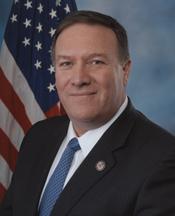
Mr. Chairman, I would yield 2\1/2\ minutes to the gentleman from Kansas (Mr. Pompeo).
Mr. Chairman, I'll reserve my time.
Mr. Chairman, I continue to reserve my time.
Mr. Chairman, I continue to reserve the balance of my time.
Mr. Chairman, I have one more speaker who is on his way to the floor, I understand, so I continue to reserve the balance of my time.
Mr. Chairman, I yield 3 minutes to the gentleman from Nevada (Mr. Heck).
Mr. Chairman, I yield myself as much time as I may consume.
I, too, want to thank the ranking member for his bipartisan leadership on this very, very important issue, our national security, and the staffs of both committees. We did something very unusual. We have the staffs work together to produce an authorization bill, and we think it makes a much better product with a lot more voices in the mix. We think we have gotten to a place that will protect America and save money for the taxpayers. That's a good place to be.
And at the end of the day, this is about a very serious issue. It's about the fact that we have folks all around the world who are getting up in the morning trying to commit acts of violence against U.S. citizens or our allies. It's about nation-states who want to steal the very prosperity of America by stealing our intellectual property through spying or cyberspying. It's about nation-states who are making an investment in cyberattack capability that would actually cause catastrophic harm to the United States economy. It is about nation- states who are engaged in the development of nuclear weapons for certainly no good purpose.
In the nineties we had a peace dividend because the structure of the threat changed fundamentally, and we could rearrange the way we looked at the world and our defense posture and our national security posture around the world. And I think this is a good moment to caution where we go in the future.
This is not like the nineties. We don't enjoy the same peace dividend in the sense that the world is more complicated and, in many ways, more dangerous than it has ever been before. Those intelligence services are getting aggressive. Our adversaries are getting better. They are investing in space and cyber in a way that is breathtaking if we don't keep pace. We don't have to spend dollar for dollar, but we do have to match intellectual capital with the solutions that we need to keep America safe.
The very brave men and women who risk their lives all over the globe to protect our soldiers by providing them state-of-the-art and up-to- date information, or by recruiting somebody in a very dangerous place somewhere else that might give us that little bit of advantage in knowing what our adversaries are up to, we owe a great debt of gratitude to those very brave Americans who risk their lives every single day in defense of this Nation. They are silent and quiet warriors, but deserve no less of our appreciation and gratitude for faithful service to this great Nation.
This bill reflects that, and it reflects the important status that we are going
to have to take in the intelligence community when it comes to protecting America in what is promising to be a dangerous future when it comes to our adversaries. This bill, we think, takes head-on those new challenges, so that America can be equally prosperous in the future and as safe as we have ever been.
With that, Mr. Chairman, I yield back the balance of my time.
Mr. Chairman, I have an amendment at the desk made in order under the rule, amendment No. 1.
Mr. Chairman, I yield myself as much time as I might consume.
Mr. Chairman, this is a manager's amendment to the bill, and very simply--and I don't want to waste a lot of time on it--it would simply strike two technical provisions to allow us to resolve any potential issues going forward.
There were two technical issues that were deemed by the Parliamentarian as appropriation language. We just wanted to take that language out to make sure that there were no issues. It doesn't change the nature of the bill in any way, and it has bipartisan support. I would urge the body's support of the Rogers amendment.
I yield back the balance of my time.
Mr. Chairman, while I do not oppose the amendment, I rise to control the time in opposition.
I yield myself such time as I may consume.
I want to thank Mr. Thompson for working with us, not only on the overall bill, but on any amendment that might strengthen the process. I am committed to continue to work with Mr. Thompson on these very issues, and I would support the amendment.
I yield back the balance of my time.
Mr. Chairman, I yield myself such time as I may consume.
This is an interesting amendment. This is something that we do as a matter of course in the committee, and it is as serious a matter as we consider: issues of war. It is also interesting that the consequences of a nuclear Iran are not a part of this. We would encourage that to happen, and we will engage in that discussion in the committee. A nuclear arms race in the Middle East is a catastrophe that is the worst part of a nightmare. Saudi Arabia has said, Hey, if Iran goes nuclear, we very well can't not go nuclear.
We believe that other nations--Turkey, Egypt, others--have said it's probably in our best interests not to be the ones without a nuclear weapon program if Iran gets a nuclear weapon. The proliferation of nuclear weapons across the Middle East is dangerous, incredibly dangerous. That's one outcome. We also have to consider that outcome as well.
Think about where Israel is today. This is a talk about U.S. action against Iran, something that we should consider. We should be very careful about all of those considerations. Now think about Israel and what they may or may not have to do when it comes to taking out a nuclear weapon program where they know one of its destinations will impact the very existence of the people of Israel. They live in a dangerous neighborhood. Egypt is now an uncertain partner in peace. There is violence
breaking out in the Sinai because of the turmoil and the changes happening in Egypt. Hamas is well armed, as well armed as we have ever seen them, with missiles aimed at Israel. Hezbollah has about 30,000-- the public number--we believe of very accurate missile systems pointed at Israel. Iran is moving and marching forward. Clearly the IAEA just recently reported a 27 percent enrichment rate on traces of uranium. That doesn't get you to the all-important 95, but it crosses a very critical threshold and a dangerous one, that 20 percent enrichment rate. That is a dangerous place for them to be. You hit 20, it's a lot easier to get to 95.
They have certainly shown that they are bad actors in the world. We should consider that as well, and we do in the Intelligence Committee. Imagine the fact that somebody would make the calculation, a nation- state, to assassinate an ambassador of another nation in our Nation's capital. And if they killed U.S. civilians, so be it.
We have seen a proliferation of these types of attacks from Iran. They haven't been very good at it yet. We've caught most of them. But they're learning from every event. And it's happening in places like Turkey, Pakistan, Argentina, and other places around the world. We are in a scary place indeed.
I won't oppose this amendment, but we need to look at this in total. I will tell you that if you want to stop Iran from getting a nuclear weapons program, we have to step up. We're doing a fine job on the sanctions now--thanks to this body leading the way for sanctions working--but they also have to believe that military options are on the table. If they do not believe it, they'll continue down this path that is dangerous for the national security interests of the United States, of the Middle East, and indeed the world. Nuclear weapons in the hands of rogue elements is a thing that keeps me up every single night. I can't imagine that arms race in the Middle East making the job of stopping that any easier indeed.
I will not oppose this amendment, but I do think it's important that we put it in all of the context of the threat that a nuclear Iran poses, not just to the Middle East but to the world.
With that, I yield back the balance of my time.
Mr. Chairman, while I do not oppose the amendment, I ask unanimous consent to control the time in opposition.
Thank you, Mr. Chairman. I just want to applaud the gentleman for his work. We look forward to working with him as we move forward, and I will support the amendment.
With that, I yield back the balance of my time.
I yield myself such time as I may consume.
I want to compliment the gentleman for his work in bringing attention to this very important issue.
We have a serious problem on our southern border with our friend, neighbor, and ally, Mexico. They are under siege by organized criminal narcotrafficking organizations.
If you have just looked at the sheer death count and the murder and mayhem in some of the provinces along our southern border, it is shocking; and I think this will serve to at least make an advance on trying to help our southern neighbors get a handle on what is a serious and growing violent problem to our neighbor to the south. And I commend the gentleman and look forward to working with him in the future on this very important issue, and I would support the amendment.
I yield back the balance of my time.
I yield myself such time as I may consume.
I want to thank the gentlelady for her concern on these very important issues. One of the things that's so important, I think, to our country, is that we do have a strong and robust national security service of all sorts.
In order for that to work and be the most effective, people have to have trust in it. They have to understand that their rights are protected, and I think this amendment states exactly where they are and where they should be. And, therefore, I won't oppose the amendment, and I applaud the gentlelady's concern and effort. It will serve as a valuable reminder, I think, to the men and women who are standing tall in our defense what it's all about and why they do it.
I support the amendment, and I yield back the balance of my time.
Mr. Chairman, though I do not oppose the amendment, I ask unanimous consent to control the time in opposition.
I yield myself such time as I may consume.
I thank the gentlelady for her amendment. Certainly, the good news is, as she said, she has pointed out the progress that has been made. And that's right, they have done an exceptionally good job of understanding that diversity is part of the success of our intelligence services. So restating that policy is probably a good idea. I will not oppose the amendment, and I yield back the balance of my time.
I yield myself such time as I may consume.
I want to thank the gentlelady. Civil liberties are incredibly important. It's important that the American people have faith in their intelligence services that they are, in fact, catching bad guys and protecting Americans' civil liberties. The good news is that as a part of the Director of National Intelligence they have a Civil Liberties Protection Officer. This is a reaffirmation, I think, of that valuable work that that particular officer does, and really all of the members of our intelligence community need be reminded that protection of American civil liberties is an important value and an important thing to do while in fact you're catching the bad guys.
I support the amendment and yield back the balance of my time.
I want to thank the gentlelady from North Carolina, say thank you very, very much for her work on the supply chain and its vulnerabilities. She has spent a lot of time on our committee making sure that we're doing all the right things to try to protect the supply chain when it comes to cyberthreats and other vulnerabilities that may exist, so I couldn't support the amendment more.
Lastly, I would just like to thank the gentlelady. This will be her last authorization bill. She has been a fantastic member of this committee and has brought a lot of stature to the issues she's engaged in--everything from home-grown terrorism to cyber to supply chain management. She has been a national treasure on that committee. She will be sorely missed. I wanted to offer our congratulations and our thanks to a job well done.
I object.
Mr. Speaker, I rise in opposition to the motion to recommit.
First of all, this is a motion to recommit. Let's not fool ourselves. And I understand this is the loyal opposition portion of the debate. It happens in each and every bill; I get it.
We've spent a lot of time in a bipartisan way getting the bill, and I think it's one of our better products given the detail with which we went over every budget line and operational detail in this budget. So when I read this, it looks like it was prepared fairly quickly in order to meet the time demand here, and it's very concerning.
In some of the things that we've done--even in this Chamber, we debated the cybersecurity bill and people had strong passions on both sides of the aisle of that bill about protection of civil liberties and just making sure there were checks and balances on our ability just to share information, a very small little piece. When you read this bill, that makes our cybersecurity bill look like a walk in the park. This is an expansion of the government involved in the Internet in a way that I find a little bit scary and shocking that they would allow it to get this far. Let me read it:
The intelligence community shall take all steps necessary
to protect and ensure that--
Sensitive information pertaining to economic, financial,
and consumer information is protected from cybersecurity
attacks.
That means you've got to reach way out into the Internet. Now you've just empowered the intelligence community--the very people we said we want to keep separate--into the Internet. This is dangerous. That's what happens when you get in a hurry and try to have a political amendment on a very bipartisan bill, and that's unfortunate about this.
The first paragraph, I would submit, we should make as a part of the ``department of redundancy department.'' All of that already happens. We do that as a matter of course and mission.
Again, it's a little bit surprising that they would allow this. I would even hope that your Members would take a very close look at this. You have just put your Members in a pretty bad spot about making them vote on something that will actually have the government involved in your Internet. Welcome to the laptop near you. Very concerning to me.
I will passionately oppose this, would urge all of my colleagues to passionately oppose this, and I yield back the balance of my time.
Madam Speaker, I demand a recorded vote.
Mr. Speaker, I ask unanimous consent that in the engrossment of the bill, H.R. 5743, the Clerk be authorized to make such technical and conforming changes as necessary to reflect the actions of the House.
Mr. Speaker, I ask unanimous consent to include an exchange of letters with the chairman of the Committee on Homeland Security with respect to the bill at this point in the Record.