Mr. Speaker, by direction of the Committee on Rules, I call up House Resolution 827 and ask for its immediate consideration. Mr. Speaker, for the purpose of debate only, I yield the customary 30…
Mr. Speaker, by direction of the Committee on Rules, I call up House Resolution 827 and ask for its immediate consideration.
Mr. Speaker, for the purpose of debate only, I yield the customary 30 minutes to the gentlewoman from Fairport, New York, my dear friend, the ranking member on the committee, Ms. Slaughter, pending which I yield myself such time as I may consume. During consideration of this resolution, all time yielded is for the purpose of debate only.
General Leave
Mr. Speaker, I ask unanimous consent that all Members have 5 legislative days to revise and extend their remarks.
I rise today in support of this rule, which will provide this body the ability to consider legislation under suspension of the rules for
the remainder of this Congress. However, I would prefer not really to be here today talking about this resolution. I was speaking with the gentlewoman, Ms. Slaughter, a few minutes ago, and we concluded that it sounds a lot like Christmas, and that's why we're all here. It must be Christmastime, and so we're going to work all the way through. But I'd like to be home with my constituents, I'd like to be home with the family, I'd like to be doing things. But the reality is that Congress will have to remain in session for the holiday season because we're the ones that said we would help solve the problems of this country, that we would step up to the plate on behalf of the American people and make sure we did what we said we'd do, and that is to make life better for people. We set the dates, we set the timing, and that's why we're here.
So while families all across the country are with their loved ones, we will be here working. We said we would, and what we're going to wait for is our two sides, our leaders, the President of the United States, Barack Obama, Speaker John Boehner, certainly Senate Majority Leader Harry Reid, to lead those efforts to find a legislative deal that is designed to avoid America and this country, including our government, from going off the fiscal cliff. We have heard a lot about that. We are speaking about it. We've had discussions on the floor today about it. That's why we're here. And we're trying to make sure that we, as Members of Congress from both parties, are here trying to help resolve that so we can still do work in between that period of time.
So, 2 weeks ago, House Republicans proposed this solution of trying to make sure that we would have an answer. The President has come back with a solution, and we now know where to point where. Our friends, the Democrats, are insisting upon a tax increase to move forward, and Republicans are saying, hold on, hold on; we need new revenue, but we don't need new taxes, especially taxes on small business owners that are the creators of jobs in our economy. And so Republicans are saying, we're not going to fall victim for being for the President's ideas and the Democrats' ideas that destroy 700,000 American jobs.
So, here we are. We're here. We're going to stay here in town. Republicans have resolved to stay here. We said we'd sit at the table, we said we would do the American workers' and the American people's bidding at the table to make sure that we have a bipartisan answer, and that's what we are going to do.
So we all remember that following the election in November that our Speaker, John Boehner, committed that this body would continue working with the President to reach a compromise that averts the fiscal cliff. Avoiding the fiscal cliff is what we should continue to do, and we should work very diligently. So for my friends that wonder why we're here, perhaps, Mr. Speaker, our families, we're here. We're going to keep working. We're going to work day in and day out, and we're going to hope that our leadership, including the President, is able to make counteroffers until we reach that exact point where a deal can be done.
This is not just about negotiating. It is about finding an answer for the American people. By the way, for people that think this is all about politics and the things that are going on, perhaps it is, but it's going to take both sides--two sides, two willing partners--to want to come to an agreement. That's why we're still in town.
To date, I know we've not seen a lot of progress, and I know we are worried about it. But I would remind us, and I believe this is true, that the President said he is going to stay at the table, he is going to work with Republicans, he is going to get a deal that's good for the American people, and the President said this during the election, and so I think we're here to make sure that is what happens.
Mr. Speaker, in less than 20 days, in addition to the beginning of the New Year, we're going to find out that we also have a new set of taxes that have already been agreed to by the Congress. Ms. Pelosi, when she was Speaker, and the President ran through something that the President likes to call ObamaCare. But there are massive taxes already ahead in law for the American people, many of which we're just now becoming aware of. I guess that's what happens when you don't read the bill before you pass it. But every single American will see their personal taxes already go up, and that's before we get to whatever happens with the fiscal cliff.
This is an arbitrary across-the-board tax increase, the combination of which will mean that if we are unable to resolve the fiscal cliff without raising taxes, we'll already see a lot of new taxes as a result of the health care law on financial transactions, on insurance programs, on every single working American. That's why we have Speaker John Boehner trying to present President Obama with an alternative that says rather than raising taxes, which is already going to happen on January 1 from this massive new tax increase that was in the health care bill, why don't we find a way to understand and have the economy take that in hand first.
I know the President stood here at the State of the Union address and said we're not going to spend one dime of taxpayer money. I know the President stood here and said every single American can keep their own insurance plan. I know the President has made these promises to the American people, and these are the things that we're going to have to understand about January 1 of next year. I believe that's why we need to have John Boehner be successful, and the President, to make sure we avoid further tax increases because we already have a massive tax increase that's going to take place. This would, in essence, be a double whammy on not just a fragile economy, but an economy that is in far worse shape with a country that is far more in debt and much more at risk today.
So you and I understand, the CBO has estimated some 2 million American jobs would be at risk because of the ObamaCare implementation and its massive impact on the free-enterprise system and taxation, combined with what would be this new--if the President gets his way-- tax increase on working Americans and, in particular, small business.
While much has been made about the debates surrounding tax rates, there is, I think, a larger picture that we need to consider. We should focus on employment and jobs. Instead of trying to necessarily aim for fairness just by using this weapon against small business, we should focus, I think, on job creation.
We understand that if the President's bill passes, we will lose 700,000 jobs. That means 700,000 Americans and their families would then qualify, I presume, for unemployment, and it would mean that we begin the new year once again on a negative pathway. That's why we are here today talking and trying to have our leaders of this great Nation make sure that we avoid this.
This country is in desperate need of an economic kick-start. Lower taxes, we believe, through stimulating job creation and job investment and by stimulating the economy, will allow all Americans not only to keep their jobs but also to keep more of their own hard-earned pay. In fact, President John F. Kennedy, I think, agreed with us when he said:
It is a paradoxical truth that tax rates are too high and
tax revenues are too low, and the soundest way to increase
revenues in the long run is to cut rates now.
That's exactly where we are. Republicans are arguing not to increase taxes at a time when the American economy is struggling, when families are struggling. Let's not ask them to go into their pockets and pay more to a government that simply wants to spend more of this money.
Mr. Speaker, my Republican colleagues and I remain committed to staying in Washington, D.C., to try and get this done. Between now and then, what this rule is all about is saying that we're going to put us to work on solving some of the ideas and issues that remain in the workplace where there are answers with suspension votes. So that's why we're here today pending conference reports and decisions that need to be made.
I encourage my colleagues to support this rule with a ``yes'' vote, and I reserve the balance of my time.
I yield myself such time as I may consume.
Mr. Speaker, the gentlewoman makes a number of good points. We did pass in the House the Violence Against Women Act. It passed on May 16 of this year, 222-205. The House has passed, by the way--256 of our colleagues to 171--what's called the Job Protection and Recession Prevention Act. It was passed on August 1.
I will yield in just a second.
Mr. Speaker, this bill would have extended all current rates and would have compelled Congress to enact meaningful tax reform in 2013. We passed this. We've said we ought to do what we should do, and that was back in August.
I yield to the gentlewoman from New York.
In reclaiming my time, I do appreciate the gentlewoman in that we will be engaged in many of these debates. We have been in the past, and we will be in the future. I think the gentlewoman makes a good point.
We offered this bill. We debated it. We passed it. We are waiting for the Senate to get to a point at which they can get to conference. I mean, this is how this thing works. We're not going to take the Senate bill and pass it. We passed our bill. Now, if we could get to conference, where the Senate and the House get together and they resolve their differences, then we can bring it back, and we'll have a bill. That's supposed to be how this place works. It's not where we pass our bill and then, all of a sudden, we decide we're just going to take the Senate bill and repass it and negotiate with ourselves. I think what we need to do is to stick to what we understand, and that is that we are waiting for the Senate to come and do business with us.
Mr. Speaker, at this time, I yield 5 minutes to a young, new member of the Rules Committee, the gentleman from Georgia (Mr. Woodall).
I appreciate the gentleman's engaging me. I would say to you there is nothing in this rule that will preclude our taking a conference report or any business on what we might call ``regular order'' that would require a rule to come forth.
The gentleman would be correct, and we do expect those.
Mr. Speaker, with great respect to my dear friend, the gentlewoman from San Francisco and minority leader, I'm delighted that she came down to engage us on this very important issue. The gentlewoman does recognize and know that the House on August 1, in fact, did exactly what she is suggesting today, and that is to take action on what the future tax rates would be in this country. And on a bipartisan basis, 256-171, this House of Representatives said let's understand that now is a bad time to raise taxes on the American people; and let's extend for a period of time all of what are known as the tax cuts which allow America to keep working. We passed it 256-171.
Mr. Speaker, I'll insert into the Record a chart that exists on the House Budget Committee that shows the choice of the futures. And one future that was presented, this slide that I've got that's on the House Budget Committee is essentially about the current pathway as the President would choose as outlined in his budget that the gentlewoman, Ms. Pelosi, spoke of that got no votes in the United States Senate. Not one vote. No votes here, the plan that the President has presented which would substantially not just raise taxes, but substantially raise spending.
If you isolate the President's ideas of simply raising taxes on whatever he calls the top 2 percent, those who have a household income of $250,000 and above, what you essentially do, Mr. Speaker, is very quickly lose 700,000 American jobs. And that's the answer that this administration fails to include in their talking points, that there's a huge impact. And part of that impact, Mr. Speaker, comes from the problem where dividends, and dividends are that money that comes back as a result of an investment, would rise essentially from 15 percent to whatever a person's top tax rate is--meaning it could go, at least under the scenario that the President wants, to 39 percent. That means from 15 to 39 percent.
That window, that value in between is what people reinvest in their companies. They reinvest that many times in small business, and that's the job creation element. When you make this rate go up, you arbitrarily take away some 700,000 American jobs that need current capital every day, a small business owner, reputting that money, reinvesting that money for the life of their business.
And this is the part that we believe as Republicans, that we stand on the side of saying we shouldn't lose American jobs just for the sake of fairness, of what the President, what the minority leader is down arguing for, of increasing taxes.
So it's obvious to Republicans that what we believe we stand for is creation of jobs and making sure that that capital that's invested in the economy continues.
I reserve the balance of my time.
Mr. Speaker, I'd like to remind the gentleman that Republicans have already passed the bill for the middle class tax cut on August 1 of this year, and it passed 256-171. We're now waiting for the Senate to act on that.
I reserve the balance of my time.
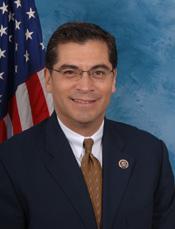
Mr. Speaker, I'd like to just make sure that the speaker that was up here, Mr. Becerra, understands that on August 1 of this year we passed a bill to extend tax cuts for the middle class, 256-171. We've already done that, and it's now awaiting Senate approval.
I reserve the balance of my time.
Mr. Speaker, I do appreciate the gentleman, my dear friend from Maryland, whom I have not only regular conversations with but enjoy very much. I would once again remind the gentleman that on August 1 of this year we passed, 256-171, an idea that would be about not losing 700,000 jobs by doing it the way that our friends the Democrats want to do it.
I yield to the gentleman.
Reclaiming my time, it is wrong to lose 700,000 more American jobs, and that's the practical effect.
The minority leader and our speakers here all day want to talk about sequestration. The sequestration came as a result of a promise, a deal, an agreement that we as Republicans and House and Senate and the President agreed upon that we would come to an agreement upon how to cut some spending. The President says it's absolutely essential. Now they want to back away from the deal.
Well, here's what their deal is:
Their deal is, among other things, about the new taxes that will take place. Here's one of them that we know will happen already under law: Medicare DSH payments paid to qualifying hospitals that serve low- income patients will be reduced by 75 percent starting October 1, 2013, in addition to the $700 billion that will be transferred away from senior care. And I know we had an election where we talked about this. One person tried to explain, Well, that's not really right. Those were to a certain group of people that may be rich. But it's right here, to low-income hospitals. That means that we're going to have hospitals that no longer will serve seniors because their payment rate got cut by 75 percent. Tax increases, tax increases on health care; tax increases, as we learned last week, when it was announced that all insurance plans will now be paying an extra $63. Those are passed on to customers, consumers.
This is an outrageous government takeover of health care, and now what they want to do is diminish another 700,000 jobs. No, sir, we're not going to fall victim to that.
[From the House Committee on Small Business]
The Patient Protection and Affordable Care Act is currently
being implemented. The following table lists some of the
provisions affecting small businesses that take effect in
2013.
The gentleman from New York, a very dear friend of mine, really, I think, got something wrong. What we're trying to extend is the law that President Obama signed into law as a result of bipartisan action 2 years ago, and the economy was better then than it is now. We were trying to extend the tax cuts that President Obama was asking us to do, and that's what we simply did in August again. So it is a President Obama last-signed bill that we're trying to offer an extension of.
I reserve the balance of my time.
Mr. Speaker, I appreciate the gentleman, my friend, who formerly was the vice chairman of the Rules Committee. I would like to remind him that when he was the vice chairman of the committee, almost half of the 3,075 bills considered under suspension in the 110th and 111th Congress were for post offices and Federal building namings, or resolutions, or things just like National Pollinators Week.
What we're trying to talk about is, at the end of the year, since we're going to be here waiting for the ``big deal,'' that we're going to make sure that we can take ideas that still exist and reside on a bipartisan basis.
I reserve the balance of my time.
I thank the gentlewoman for asking. I have no further speakers and will allow her that opportunity, and then I will close.
Mr. Speaker, I want to thank my friend, the gentlewoman from New York, for this vigorous debate that we had on the floor today.
Mr. Speaker, top to bottom, the leadership of the Democratic Party has been on record here again today saying they want to increase taxes on small business. They want to increase taxes on family-owned businesses and people who get up every day and want to employ people and work harder. Small business is the engine of our economy, and our friends, the Democrats, want to punish them through taxes for fairness issues.
Well, I'd like to say, Mr. Speaker, we've got a bunch of problems in this country, and that's why we're at the fiscal cliff. This thing is not as a result of taxes, it's as a result of spending and too many people not having jobs to be able to pay in not just their taxes, but to be able to sustain our economy.
So we have millions of people that are unemployed and drawing unemployment compensation. We're seeing disabilities rise at a rate of 16 percent every year. One thing which we note is that just before President Obama took effect, the White House figure showed the Federal budget was $2.9 trillion. Next year's estimate is going to be $3.8 trillion. This is a 31 percent increase in spending in just 4 years.
We have someone as President, our great President, who is hung up on taxing and spending. What we need is a House of Representatives that's hung up on jobs and job creation, the American product, entrepreneurship, creativity, and competition with the world. The next new great ideas will not come from this body but from the creativity of the American people.
This is what Republicans are trying to keep alive in our country, the idea of self-reliance and working hard and taking care of people that are not just in your house but are in your neighborhood, your cities, our States, the vibrancy of our country. We are headed over the fiscal cliff after 4 years of leadership from this President who is running-- running--directly to the fiscal cliff, and he has even said, and his Secretary of the Treasury said, We don't mind jumping off this cliff.
Mr. Speaker, we should not be having that kind of attitude. We should have the attitude that we're for everybody. We want to be for American entrepreneurship and especially small business, because it's small business such as family farms, small business such as electrical companies and people who put their name on the buildings, the creative people who get up to go to work every day. That is who we're going to hurt.
We're not just going to hurt them, we're going to hurt their business families, the people they have had employed, small communities, large communities, but small business which is the engine of our economy. That's really who we're going to punish.
Lastly, we should not do it at this time, just like we should not have 2 years ago, but I guess we were aiming for an election at that time, and now the President does not have one ahead of him.
Mr. Speaker, I encourage a ``yes'' vote on the rule.
Mr. Speaker, I yield back the balance of my time, and I move the previous question on the resolution.