








II
Calendar No. 469
112th CONGRESS
2d Session
S. 1039
[Report No. 112–191]
IN THE SENATE OF THE UNITED STATES
May 19, 2011
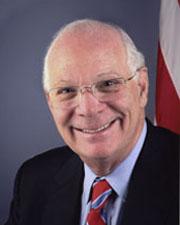
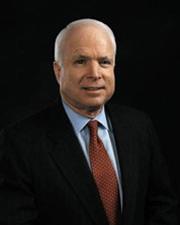
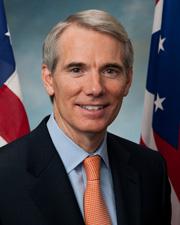
Mr. Cardin (for himself, Mr. McCain, Ms. Ayotte, Mr. Begich, Mr. Blumenthal, Mr. Durbin, Mr. Johanns, Mr. Kirk, Mr. Kyl, Mr. Lieberman, Mr. Rubio, Mrs. Shaheen, Mr. Whitehouse, Mr. Wicker, Mr. Udall of New Mexico, Mr. Casey, Mrs. Boxer, Mr. Sessions, Mr. Menendez, Mr. Inhofe, Mr. Graham, Mr. Risch, Mr. Blunt, Mr. Cornyn, Mr. Coons, Mr. DeMint, Mr. Wyden, Ms. Collins, Mr. Schumer, Mr. Coburn, Mr. Brown of Ohio, Mr. Lee, Mr. Burr, Mr. Harkin, Mr. Johnson of Wisconsin, Mr. Thune, Ms. Cantwell, Ms. Snowe, and Mr. Grassley) introduced the following bill; which was read twice and referred to the Committee on Foreign Relations
July 23, 2012
Reported by Mr. Kerry, with an amendment
Strike out all after the enacting clause and insert the part printed in italic
A BILL
To impose sanctions on persons responsible for the detention, abuse, or death of Sergei Magnitsky, for the conspiracy to defraud the Russian Federation of taxes on corporate profits through fraudulent transactions and lawsuits against Hermitage, and for other gross violations of human rights in the Russian Federation, and for other purposes.
Short title
This Act may be cited as the
Sergei Magnitsky Rule of Law
Accountability Act of 2011
.
Findings
Congress finds the following:
The United States supports the people of the Russian Federation in their efforts to realize their full economic potential and to advance democracy, human rights, and the rule of law.
The Russian Federation—
is a member of the United Nations, the Organization for Security and Co-operation in Europe, the Council of Europe, and the International Monetary Fund;
has ratified the Convention against Torture and Other Cruel, Inhuman or Degrading Treatment or Punishment, the International Covenant on Civil and Political Rights, and the United Nations Convention against Corruption; and
is bound by the legal obligations set forth in the European Convention on Human Rights.
States voluntarily commit themselves to respect obligations and responsibilities through the adoption of international agreements and treaties, which must be observed in good faith in order to maintain the stability of the international order. Human rights are an integral part of international law, and lie at the foundation of the international order. The protection of human rights, therefore, particularly in the case of a country that has incurred obligations to protect human rights under an international agreement to which it is a party, is not left exclusively to the internal affairs of that country.
Good governance and anti-corruption measures are instrumental in the protection of human rights and in achieving sustainable economic growth, which benefits both the people of the Russian Federation and the international community through the creation of open and transparent markets.
Systemic corruption erodes trust and confidence in democratic institutions, the rule of law, and human rights protections. This is the case when public officials are allowed to abuse their authority with impunity for political or financial gains in collusion with private entities.
The Russian nongovernmental organization INDEM has estimated that corruption amounts to hundreds of billions of dollars a year, an increasing share of the gross domestic product of the Russian Federation.
The President of the Russian Federation,
Dmitry Medvedev, has addressed corruption in many public speeches, including
stating in his 2009 address to Russia’s Federal Assembly, [Z]ero
tolerance of corruption should become part of our national culture. . . . In
Russia we often say that there are few cases in which corrupt officials are
prosecuted. . . . [S]imply incarcerating a few will not resolve the problem.
But incarcerated they must be.
. President Medvedev went on to say,
We shall overcome underdevelopment and corruption because we are a
strong and free people, and deserve a normal life in a modern, prosperous
democratic society.
. Furthermore, President Medvedev has acknowledged
Russia’s disregard for the rule of law and used the term legal
nihilism
to describe a criminal justice system that continues to
imprison innocent people.
The systematic abuse of Sergei Magnitsky, including his repressive arrest and torture in custody by the same officers of the Ministry of the Interior of the Russian Federation that Mr. Magnitsky had implicated in the embezzlement of funds from the Russian Treasury and the misappropriation of 3 companies from his client, Hermitage, reflects how deeply the protection of human rights is affected by corruption.
The politically motivated nature of the persecution of Mr. Magnitsky is demonstrated by—
the denial by all state bodies of the Russian Federation of any justice or legal remedies to Mr. Magnitsky during the nearly 12 full months he was kept without trial in detention; and
the impunity of state officials he testified against for their involvement in corruption and the carrying out of his repressive persecution since his death.
Mr. Magnitsky died on November 16, 2009, at the age of 37, in Matrosskaya Tishina Prison in Moscow, Russia, and is survived by a mother, a wife, and 2 sons.
The Public Oversight Commission of the City
of Moscow for the Control of the Observance of Human Rights in Places of Forced
Detention, an organization empowered by Russian law to independently monitor
prison conditions, concluded, A man who is kept in custody and is being
detained is not capable of using all the necessary means to protect either his
life or his health. This is a responsibility of a state which holds him
captive. Therefore, the case of Sergei Magnitsky can be described as a breach
of the right to life. The members of the civic supervisory commission have
reached the conclusion that Magnitsky had been experiencing both psychological
and physical pressure in custody, and the conditions in some of the wards of
Butyrka can be justifiably called torturous. The people responsible for this
must be punished.
.
According to the
Financial Times, A commission appointed by President Dmitry Medvedev has
found that Russian police fabricated charges against an anti-corruption lawyer
[Sergei Magnitsky], whose death in prison in 2009 has come to symbolise
pervasive corruption in Russian law enforcement.
.
The second trial and verdict against former Yukos executives Mikhail Khodorkovsky and Platon Lebedev evokes serious concerns about the right to a fair trial and the independence of the judiciary in the Russian Federation. The lack of credible charges, intimidation of witnesses, violations of due process and procedural norms, falsification or withholding of documents, denial of attorney-client privilege, and illegal detention in the Yukos case are highly troubling. The Council of Europe, Freedom House, and Amnesty International, among others, have concluded that they were charged and imprisoned in a process that did not follow the rule of law and was politically influenced. Furthermore, senior officials of the Government of the Russian Federation have acknowledged that the arrest and imprisonment of Khodorkovsky were politically motivated.
According to
Freedom House’s 2011 report entitled The Perpetual Battle: Corruption in
the Former Soviet Union and the New EU Members
, [t]he highly
publicized cases of Sergei Magnitsky, a 37-year-old lawyer who died in pretrial
detention in November 2009 after exposing a multimillion-dollar fraud against
the Russian taxpayer, and Mikhail Khodorkovsky, the jailed business magnate and
regime critic who was sentenced at the end of 2010 to remain in prison through
2017, put an international spotlight on the Russian state’s contempt for the
rule of law. . . . By silencing influential and accomplished figures such as
Khodorkovsky and Magnitsky, the Russian authorities have made it abundantly
clear that anyone in Russia can be silenced.
.
Sergei Magnitsky’s experience, while particularly illustrative of the negative effects of official corruption on the rights of an individual citizen, appears to be emblematic of a broader pattern of disregard for the numerous domestic and international human rights commitments of the Russian Federation and impunity for those who violate basic human rights and freedoms.
The tragic and unresolved murders of Nustap Abdurakhmanov, Maksharip Aushev, Natalya Estemirova, Akhmed Hadjimagomedov, Umar Israilov, Paul Klebnikov, Anna Politkovskaya, Saihadji Saihadjiev, and Magomed Y. Yevloyev, the death in custody of Vera Trifonova, the disappearances of Mokhmadsalakh Masaev and Said-Saleh Ibragimov, the torture of Ali Israilov and Islam Umarpashaev, the near-fatal beatings of Mikhail Beketov, Oleg Kashin, Arkadiy Lander, and Mikhail Vinyukov, and the harsh and ongoing imprisonment of Mikhail Khodorkovsky, Alexei Kozlov, Platon Lebedev, and Fyodor Mikheev further illustrate the grave danger of exposing the wrongdoing of officials of the Government of the Russian Federation, including Chechen leader Ramzan Kadyrov, or of seeking to obtain, exercise, defend, or promote internationally recognized human rights and freedoms.
Definitions
In this Act:
Admitted; alien
The terms admitted and alien have the meanings given those terms in section 101 of the Immigration and Nationality Act (8 U.S.C. 1101).
Appropriate congressional committees
The term appropriate congressional committees means—
the Committee on Financial Services, the Committee on Foreign Affairs, and the Committee on the Judiciary of the House of Representatives; and
the Committee on Banking, Housing, and Urban Affairs, the Committee on Foreign Relations, and the Committee on the Judiciary of the Senate.
Financial institution; domestic financial agency; domestic financial institution
The terms financial institution, domestic financial agency, and domestic financial institution have the meanings given those terms in section 5312 of title 31, United States Code.
United States person
The term United States person
means—
a United States citizen or an alien lawfully admitted for permanent residence to the United States; or
an entity organized under the laws of the United States or of any jurisdiction within the United States, including a foreign branch of such an entity.
Identification of persons responsible for the detention, abuse, and death of Sergei Magnitsky, the conspiracy to defraud the Russian Federation of taxes on certain corporate profits, and other gross violations of human rights
In general
Not later than 90 days after the date of the enactment of this Act, the Secretary of State, in consultation with the Secretary of the Treasury, shall publish a list of each person the Secretary of State has reason to believe—
is responsible for the detention, abuse, or death of Sergei Magnitsky;
participated in efforts to conceal the legal liability for the detention, abuse, or death of Sergei Magnitsky; or
committed those frauds discovered by Sergei Magnitsky, including conspiring to defraud the Russian Federation of taxes on corporate profits through fraudulent transactions and lawsuits against the foreign investment company known as Hermitage and to misappropriate entities owned or controlled by Hermitage; or
is responsible for extrajudicial killings, torture, or other gross violations of human rights committed against individuals seeking—
to expose illegal activity carried out by officials of the Government of the Russian Federation; or
to obtain, exercise, defend, or promote internationally recognized human rights and freedoms, such as the freedoms of religion, expression, association, and assembly and the rights to a fair trial and democratic elections.
Updates
The Secretary of State shall update the list required by subsection (a) as new information becomes available.
Notice
The Secretary of State shall—
to the extent practicable, provide notice and an opportunity for a hearing to a person before the person is added to the list required by subsection (a); and
remove a person from the list if the person demonstrates to the satisfaction of the Secretary that the person did not engage in the activity for which the person was added to the list.
Requests by Members of Congress
Not later than 30 days after receiving a written request from a Member of Congress with respect to whether a person meets the criteria for being added to the list required by subsection (a), the Secretary of State shall inform that Member of the determination of the Secretary with respect to whether or not that person meets those criteria.
Inadmissibility of certain aliens
Ineligibility for visas
An alien is ineligible to receive a visa to enter the United States and ineligible to be admitted to the United States if the alien is on the list required by section 4(a).
Current visas revoked
The Secretary of State shall revoke, in accordance with section 221(i) of the Immigration and Nationality Act (8 U.S.C. 1201(i)), the visa or other documentation of any alien who would be ineligible to receive such a visa or documentation under subsection (a).
Waiver for national interests
The Secretary of State may waive the application of subsection (a) or (b) in the case of an alien if the Secretary determines that such a waiver is in the national interests of the United States. Upon granting such a waiver, the Secretary shall provide to the appropriate congressional committees notice of, and a justification for, the waiver.
Financial measures
Special measures
Not later than 120 days after the date of the enactment of this Act, the Secretary of the Treasury shall investigate money laundering relating to the conspiracy described in section 4(a)(1)(C). If the Secretary of the Treasury makes a determination under section 5318A of title 31, United States Code, with respect to such money laundering, the Secretary of the Treasury shall instruct domestic financial institutions and domestic financial agencies to take 1 or more special measures described in section 5318A(b) of such title.
Freezing of assets
The Secretary of the Treasury shall freeze and prohibit all transactions in all property and interests in property of a person that are in the United States, that come within the United States, or that are or come within the possession or control of a United States person if the person—
is on the list required by section 4(a); or
acts as an agent of or on behalf of a person on that list in a matter relating to the activity for which the person was added to that list.
Waiver for national interests
The Secretary of the Treasury may waive the application of subsection (a) or (b) if the Secretary determines that such a waiver is in the national interests of the United States. Upon granting such a waiver, the Secretary shall provide to the appropriate congressional committees notice of, and a justification for, the waiver.
Enforcement
Penalties
A person that violates, attempts to violate, conspires to violate, or causes a violation of this section or any regulation, license, or order issued to carry out this section shall be subject to the penalties set forth in subsections (b) and (c) of section 206 of the International Emergency Economic Powers Act (50 U.S.C. 1705) to the same extent as a person that commits an unlawful act described in subsection (a) of such section.
Requirements for financial institutions
In general
Not later than 120 days after the date of the enactment of this Act, the Secretary of the Treasury shall prescribe regulations to require each financial institution that is a United States person—
to perform an audit of the assets within the possession or control of the financial institution to determine whether any of such assets are required to be frozen pursuant to subsection (b); and
to submit to the Secretary—
a report containing the results of the audit; and
a certification that, to the best of the knowledge of the financial institution, the financial institution has frozen all assets within the possession or control of the financial institution that are required to be frozen pursuant to subsection (b).
Penalties
The penalties provided for in sections 5321(a) and 5322 of title 31, United States Code, shall apply to a financial institution that violates a regulation prescribed under subparagraph (A) in the same manner and to the same extent as such penalties would apply to any person that is otherwise subject to such section 5321(a) or 5322.
Regulatory authority
The Secretary of the Treasury shall issue such regulations, licenses, and orders as are necessary to carry out this section.
Report to Congress
Not later than 180 days after the date of the enactment of this Act, and annually thereafter, the Secretary of State and the Secretary of the Treasury shall submit to the appropriate congressional committees a report on—
the actions taken to carry out this Act, including—
the number of times and the circumstances in which persons described in section 4(a) have been added to the list required by that section during the year preceding the report; and
if few or no such persons have been added to that list during that year, the reasons for not adding more such persons to the list; and
efforts to encourage the governments of other countries to impose sanctions that are similar to the sanctions imposed under this Act.
Short title
This Act may be cited as the
Sergei Magnitsky Rule of Law
Accountability Act of 2012
.
Findings
Congress finds the following:
The United States supports the people of the Russian Federation in their efforts to realize their full economic potential and to advance democracy, human rights, and the rule of law.
The Russian Federation—
is a member of the United Nations, the Organization for Security and Co-operation in Europe, the Council of Europe, and the International Monetary Fund; and
is a party to the Convention against Torture and Other Cruel, Inhuman or Degrading Treatment or Punishment, the International Covenant on Civil and Political Rights, the United Nations Convention against Corruption, and the European Convention on Human Rights.
In becoming parties to human rights treaties, governments voluntarily undertake international obligations to respect and encourage certain fundamental rights and freedoms of their citizens. The protection and encouragement of human rights throughout the world is an important objective of United States foreign policy.
Good governance and anti-corruption measures are instrumental in the protection of human rights and in achieving sustainable economic growth, which benefits both the people of the Russian Federation and the international community through the creation of open and transparent markets.
Systemic corruption erodes trust and confidence in democratic institutions, the rule of law, and human rights protections. This is the case when public officials are allowed to abuse their authority with impunity for political or financial gains in collusion with private entities.
The Russian nongovernmental organization INDEM has estimated that corruption amounts to hundreds of billions of dollars a year, an increasing share of the gross domestic product of the Russian Federation.
The President of the Russian Federation,
Dmitry Medvedev, has addressed corruption in many public speeches, including
stating in his 2009 address to Russia’s Federal Assembly, [Z]ero
tolerance of corruption should become part of our national culture. . . . In
Russia we often say that there are few cases in which corrupt officials are
prosecuted. . . . [S]imply incarcerating a few will not resolve the problem.
But incarcerated they must be.
. President Medvedev went on to say,
We shall overcome underdevelopment and corruption because we are a
strong and free people, and deserve a normal life in a modern, prosperous
democratic society.
. Furthermore, President Medvedev has acknowledged
Russia’s disregard for the rule of law and used the term legal
nihilism
to describe a criminal justice system that continues to
imprison innocent people.
In light of the importance of legitimate and transparent public institutions and the serious negative effects that corruption has on the efforts of the United States to strengthen democratic institutions and free market systems, Presidential Proclamation 7750 of January 12, 2004, allows the Secretary of State to suspend the entry into the United States of aliens who are suspected of participating in corrupt practices.
The systematic abuse of Sergei Magnitsky, including his repressive arrest and torture in custody by the same officers of the Ministry of the Interior of the Russian Federation that Mr. Magnitsky had implicated in the embezzlement of funds from the Russian Treasury and the misappropriation of 3 companies from his client, Hermitage, reflects how deeply the protection of human rights is affected by corruption.
The politically motivated nature of the persecution of Mr. Magnitsky is demonstrated by—
the denial by all state bodies of the Russian Federation of any justice or legal remedies to Mr. Magnitsky during the nearly 12 full months he was kept without trial in detention; and
the impunity of state officials he testified against for their involvement in corruption and the carrying out of his repressive persecution since his death.
Mr. Magnitsky died on November 16, 2009, at the age of 37, in Matrosskaya Tishina Prison in Moscow, Russia, and is survived by a mother, a wife, and 2 sons.
The Public Oversight Commission of the City
of Moscow for the Control of the Observance of Human Rights in Places of Forced
Detention, an organization empowered by Russian law to independently monitor
prison conditions, concluded, A man who is kept in custody and is being
detained is not capable of using all the necessary means to protect either his
life or his health. This is a responsibility of a state which holds him
captive. Therefore, the case of Sergei Magnitsky can be described as a breach
of the right to life. The members of the civic supervisory commission have
reached the conclusion that Magnitsky had been experiencing both psychological
and physical pressure in custody, and the conditions in some of the wards of
Butyrka can be justifiably called torturous. The people responsible for this
must be punished.
.
On July 6, 2011, President Medvedev's Human Rights Council announced the results of its independent investigation into the death of Sergei Magnitsky. The Human Rights Council concluded that Sergei Magnitsy's arrest and detention was illegal, he was denied access to justice by the courts and prosecutors of the Russian Federation, he was investigated by the same law enforcement officers whom he had accused of stealing Hermitage Fund companies and illegally obtaining a fraudulent $230,000,000 tax refund, he was denied necessary medical care in custody, he was beaten by 8 guards with rubber batons on the last day of his life, and the ambulance crew that was called to treat him as he was dying was deliberately kept outside of his cell for one hour and 18 minutes until he was dead. The report of the Human Rights Council also states the officials falsified their accounts of what happened to Sergei Magnitsky and, 18 months after his death, no officials had been brought to trial for his false arrest or the crime he uncovered.
The second trial, verdict, and sentence against former Yukos executives Mikhail Khodorkovsky and Platon Lebedev evoke serious concerns about the right to a fair trial and the independence of the judiciary in the Russian Federation. The lack of credible charges, intimidation of witnesses, violations of due process and procedural norms, falsification or withholding of documents, denial of attorney-client privilege, and illegal detention in the Yukos case are highly troubling. The Council of Europe, Freedom House, and Amnesty International, among others, have concluded that they were charged and imprisoned in a process that did not follow the rule of law and was politically influenced. Furthermore, senior officials of the Government of the Russian Federation have acknowledged that the arrest and imprisonment of Khodorkovsky were politically motivated.
According to Freedom
House’s 2011 report entitled The Perpetual Battle: Corruption in the
Former Soviet Union and the New EU Members
, [t]he highly
publicized cases of Sergei Magnitsky, a 37-year-old lawyer who died in pretrial
detention in November 2009 after exposing a multimillion-dollar fraud against
the Russian taxpayer, and Mikhail Khodorkovsky, the jailed business magnate and
regime critic who was sentenced at the end of 2010 to remain in prison through
2017, put an international spotlight on the Russian state’s contempt for the
rule of law. . . . By silencing influential and accomplished figures such as
Khodorkovsky and Magnitsky, the Russian authorities have made it abundantly
clear that anyone in Russia can be silenced.
.
Sergei Magnitsky’s experience, while particularly illustrative of the negative effects of official corruption on the rights of an individual citizen, appears to be emblematic of a broader pattern of disregard for the numerous domestic and international human rights commitments of the Russian Federation and impunity for those who violate basic human rights and freedoms.
The tragic and unresolved murders of Nustap Abdurakhmanov, Maksharip Aushev, Natalya Estemirova, Akhmed Hadjimagomedov, Umar Israilov, Paul Klebnikov, Anna Politkovskaya, Saihadji Saihadjiev, and Magomed Y. Yevloyev, the death in custody of Vera Trifonova, the disappearances of Mokhmadsalakh Masaev and Said-Saleh Ibragimov, the torture of Ali Israilov and Islam Umarpashaev, the near-fatal beatings of Mikhail Beketov, Oleg Kashin, Arkadiy Lander, and Mikhail Vinyukov, and the harsh and ongoing imprisonment of Mikhail Khodorkovsky, Alexei Kozlov, Platon Lebedev, and Fyodor Mikheev further illustrate the grave danger of exposing the wrongdoing of officials of the Government of the Russian Federation, including Chechen President Ramzan Kadyrov, or of seeking to obtain, exercise, defend, or promote internationally recognized human rights and freedoms.
The people of the Russian Federation, like people everywhere, deserve to have their human rights and fundamental freedoms respected. Human rights and fundamental freedoms are inalienable and universal in character and thus bind all states.
Definitions
In this Act:
Admitted; alien
The terms admitted and alien have the meanings given those terms in section 101 of the Immigration and Nationality Act (8 U.S.C. 1101).
Appropriate congressional committees
The term appropriate congressional committees means—
the Committee on Armed Services, the Committee on Financial Services, the Committee on Foreign Affairs, the Committee on Homeland Security, and the Committee on the Judiciary of the House of Representatives; and
the Committee on Armed Services, the Committee on Banking, Housing, and Urban Affairs, the Committee on Foreign Relations, the Committee on Homeland Security and Governmental Affairs, and the Committee on the Judiciary of the Senate.
Financial institution
The term financial institution has the meaning given that term in section 5312 of title 31, United States Code.
United States person
The term United States person means—
a United States citizen or an alien lawfully admitted for permanent residence to the United States; or
an entity organized under the laws of the United States or of any jurisdiction within the United States, including a foreign branch of such an entity.
Identification of persons responsible for the detention, abuse, and death of Sergei Magnitsky and other gross violations of human rights
In general
Not later than 120 days after the date of the enactment of this Act, the Secretary of State, in consultation with the Secretary of the Treasury, shall submit to the appropriate congressional committees a list of each person the Secretary of State determines—
is responsible for the detention, abuse, or death of Sergei Magnitsky;
participated in efforts to conceal the legal liability for the detention, abuse, or death of Sergei Magnitsky;
benefitted financially from the detention, abuse, or death of Sergei Magnitsky; or
was involved in the criminal conspiracy uncovered by Sergei Magnitsky;
is responsible for extrajudicial killings, torture, or other gross violations of internationally recognized human rights committed against individuals seeking—
to expose illegal activity carried out by officials of the Government of the Russian Federation; or
to obtain, exercise, defend, or promote internationally recognized human rights and freedoms, such as the freedoms of religion, expression, association, and assembly and the rights to a fair trial and democratic elections, anywhere in the world; or
acted as an agent of or on behalf of a person in a matter relating to an activity described in paragraph (1) or (2).
Updates
The Secretary of State shall update the list required by subsection (a) as new information becomes available.
Removal from list
A person shall be removed from the list required by subsection (a) if the Secretary of State determines that the person did not engage in the activity for which the person was added to the list.
Form of list; public availability
In general
Except as provided in paragraph (2), the list required by subsection (a) shall be submitted in unclassified form.
Classified annex
The list required by subsection (a) may include a classified annex if the Secretary of State—
determines that it is necessary for the national security interests of the United States to do so; and
prior to submitting the list including a classified annex, provides to the appropriate congressional committees notice of, and a justification for, including each person in the classified annex.
Review of classified annex
Not later than 300 days after the date of the enactment of this Act, and annually thereafter, the Secretary shall—
review the classified annex, if any, included in the list required by subsection (a); and
provide to the appropriate congressional committees a justification for continuing to include each person in the classified annex.
Public availability of unclassified portion
The unclassified portion of the list required by subsection (a) shall be published in the Federal Register.
Requests by chairperson and ranking member of appropriate congressional committees
In general
Not later than 120 days after receiving a written request from the chairperson and the ranking member of one of the appropriate congressional committees with respect to whether a person meets the criteria for being added to the list required by subsection (a), the Secretary of State shall submit a response to the committee the chairperson and ranking member of which made the request with respect to whether or not the Secretary determines that the person meets those criteria.
Form
The Secretary of State may submit a response required by paragraph (1) in classified form if the Secretary determines that it is necessary for the national security interests of the United States to do so.
Nonapplicability of confidentiality requirement with respect to visa records
The Secretary of State shall publish the list required by subsection (a) without regard to the requirements of section 222(f) of the Immigration and Nationality Act (8 U.S.C. 1202(f)) with respect to confidentiality of records pertaining to the issuance or refusal of visas or permits to enter the United States.
Inadmissibility of certain aliens
Ineligibility for visas
An alien is ineligible to receive a visa to enter the United States and ineligible to be admitted to the United States if the alien is on the list required by section 4(a).
Current visas revoked
The Secretary of State shall revoke, in accordance with section 221(i) of the Immigration and Nationality Act (8 U.S.C. 1201(i)), the visa or other documentation of any alien who would be ineligible to receive such a visa or documentation under subsection (a).
Waiver for national security interests
The Secretary of State may waive the application of subsection (a) or (b) in the case of an alien if—
the Secretary determines that such a waiver—
is necessary to permit the United States to comply with the Agreement between the United Nations and the United States of America regarding the Headquarters of the United Nations, signed June 26, 1947, and entered into force November 21, 1947; or
is in the national security interests of the United States; and
prior to granting such a waiver, the Secretary provides to the appropriate congressional committees notice of, and a justification for, the waiver.
Financial measures
Freezing of assets
The Secretary of the Treasury shall, pursuant to the International Emergency Economic Powers Act (50 U.S.C. 1701 et seq.), freeze and prohibit all transactions in all property and interests in property of a person that the Secretary, in consultation with the Secretary of State, determines has engaged in an activity described in paragraph (1), (2), or (3) of section 4(a) if such property and interests in property are in the United States, come within the United States, or are or come within the possession or control of a United States person.
Waiver for national security interests
The Secretary of the Treasury may waive the application of subsection (a) if the Secretary determines that such a waiver is in the national security interests of the United States. Prior to granting such a waiver, the Secretary shall provide to the appropriate congressional committees notice of, and a justification for, the waiver.
Report to Congress
Not later than 1 year after the date of the enactment of this Act, and annually thereafter, the Secretary of State and the Secretary of the Treasury shall submit to the appropriate congressional committees a report on—
the actions taken to carry out this Act, including—
the number of times and the circumstances in which persons described in section 4(a) have been added to the list required by that section during the year preceding the report; and
if few or no such persons have been added to that list during that year, the reasons for not adding more such persons to the list; and
efforts to encourage the governments of other countries to impose sanctions that are similar to the sanctions imposed under this Act.
July 23, 2012
Reported with an amendment