Mr. President, before I begin to address the pending amendment I have offered along with a number of Senators in response to regulatory reform, I am going to yield to the Senator from North Dakota,…
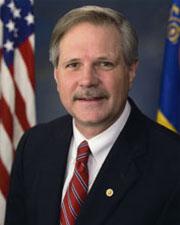
Mr. President, before I begin to address the pending amendment I have offered along with a number of Senators in response to regulatory reform, I am going to yield to the Senator from North Dakota, who is a cosponsor of this legislation. I am delighted that he is a cosponsor, and that he recognizes and acknowledges the importance of changing the regulatory environment in America if we are going to have job creation and economic growth.
Mr. President, I thank the Senator from North Dakota, Mr. Hoeven, for his excellent remarks. As a former Governor for 10 years, he knows the impact of regulations on small businesses and how detrimental they can be to job creation, particularly at this time where we have a very difficult economy. We have persistent high unemployment and subpar economic growth. We are at a consequential moment in our economic history, frankly, that deserves the attention of the Senate. So, again, I thank the Senator for his comments in recognizing the effect regulatory reform will have on the performance of small business and, ultimately, job creation in this economy.
I am very pleased to have many colleagues cosponsoring this amendment. I am pleased to have worked with Senator Coburn from Oklahoma, and this amendment is also cosponsored by Senators McConnell, Ayotte, Barrasso, Brown of Massachusetts, Coats, Enzi, Isakson, Kirk, Hoeven, Johnson, Moran, Thune, and Vitter. It is clear to me that many of the Senators understand the value and imperative of reforming our regulatory system. It is absolutely vital that the Federal Government consider the small business economic impact of the rules and regulations that agencies promulgate.
The question might be asked, Why do we need regulatory reform? We had a bill on the floor last month, in early May, wherein I was denied a vote, which was regrettable because it is clear that many people don't understand how important this is and how central it is to small business job creation, how vital it is to the survival of small businesses and the cost of doing business across America. But I keep hearing from certain colleagues, ``Yes, we understand it is important; however'' or ``but'' or ``at some point.'' Let's define ``at some point.'' When?
When I was denied a vote on regulatory reform, on May 4 in the Senate, I heard that we are going to have hearings on the issue. Well, that obviously has not occurred. So it becomes the politics of obfuscation, not the reality. As I heard from a small business owner yesterday, ``When I come into Washington, it is a walled city--walled off from reality, detached from the real world on Main Street.''
I have been told that a concern with this amendment is that we have not had hearings. We had a hearing in the Small Business Committee on regulatory reform, but that is not enough for the Senator from California, who is saying we have not had hearings. She has offered plenty of amendments that haven't had hearings in the Senate. We had a major issue yesterday that was very important to small business--the interchange fee--which didn't have hearings. It didn't have hearings the first time it was offered to the Dodd-Frank legislation last year, and yesterday's amendment didn't have a hearing. So is there a new standard, in the Senate, when it comes to regulatory reform? Do you think there have been any overtures by anybody who opposes my legislation to work with us on this right away?
What is happening on Main Street America is that we are not creating jobs. Why? Because of what is failing to happen in Washington, DC, in the Senate. There is a clear detachment from the real world. Small businesses keep asking me what is going on. I say I can't explain it, other than it is clear that people don't understand what is going on because if they did, we would be working on it.
I heard the Senator from California say, ``at some point.'' But tell that to the person who is running a small business and trying to keep their neck above water and keep their business afloat during these very difficult times. What do these small business owners talk about? They talk about the regulations that are suffocating their ability to survive in a very tough economic climate.
We are dithering. That is what this is all about. It is all a masquerade, a facade, just bringing up bogus arguments. I have been in the legislative process for the better part of four decades, and I know when there is a serious purpose about working together and solving a problem. It appears to me that there is no interest in solving this problem here in Washington. Everybody has their own agenda, but people are wondering why there is this unemployment rate of 9.1 percent.
When I raised these concerns to the Secretary of the Treasury back in early February in the Finance Committee, when he was testifying--I described the concerns about what was happening on Main Street because I take Main Street tours, and I invite people to do that and to actually listen to what people are saying--he said: ``I think your view of the economy is dark and pessimistic.''
I said: Well, maybe I wasn't hearing it right. Maybe I wasn't hearing it right on Main Street. So when I meet with small business owners, I mention the Secretary's comments to them, and they cannot believe it. They cannot comprehend that the Secretary of the Treasury doesn't understand what is going on on Main Street; that the administration doesn't, the Senate doesn't, and the Congress doesn't. If they did, we would be working here day and night.
I was told I had to have a vote on this amendment right now. Why? Because it is Thursday, and certain members of this body are smelling the jet fumes while people are suffering on Main Street. Our fellow Americans are losing their jobs. Have my colleagues heard the stories about what people are facing? Time and time again I hear the same old refrains: ``We don't have time. We have to rush it. It hasn't had hearings. We will do it sometime.'' Well, tell that to the average American who is struggling to keep a job, to find a job or to keep the doors open to their business. That is what this amendment is all about. That is the reality.
We can pretend it is something else, but the macroeconomic numbers are demonstrating time and again there is a desperation out there. Yet, we take 2-week recesses, then we come back and have morning business and chat along, but it does nothing to resolve the consequential issues facing this Nation. There was a time when the Senate used to work, where we could sit down and solve a problem. Now it is all a facade, a few talking points and we move on. In the meantime, people are suffering and they are handicapped by our inability to work together. Regulatory reform is central to that agenda, make no mistake about it.
Let's look at what we are talking about and why we need regulatory reform. The analysts have lowered their forecast for the second quarter growth this year. The first quarter growth was already abysmal at 1.8 percent of GDP. Manufacturing recovery has slowed. Housing remains in shambles. New claims for jobless benefits, as the Senator from North Dakota indicated, exceeds 400,000--again. Growth of consumer spending is sluggish.
The President talks about job creation and stimulating the economy, but the results speak louder than words. Since the President took office, unemployment has dipped below 9 percent for only 5 months. Even that data is skewed because it doesn't account for the millions of workers who have exited the workforce altogether. Just last week, the unemployment rate for May increased to 9.1 percent. We are experiencing the longest unemployment period in American history since data collection started in 1948, surpassing even the 1982 double-dip recession for the length of unemployment.
Despite the President's promise, and an $800 billion stimulus package, a $700 billion TARP program, up to $600 billion in quantitative easing by the Federal Reserve, and over $2 trillion in overall government spending, we are years away from where we need to be in terms of job or economic growth. Mr. President, 40 months after the start of the four deepest postwar recessions our economic output averaged 7.6 percent higher than pre-recession levels. Yet since December 2007, when the most recent recession commenced, our GDP has only increased 0.1 percent. That is why we need regulatory reform. We need to bolster job creation, and the only place we can do that is through small businesses.
The Senator from California says we need hearings on this amendment. Then we should change the rules of the Senate and require that every amendment offered on this floor has a hearing, and every bill. That must be a new standard, Mr. President. We have had hearings on this question in the Small Business Committee, and the focus is that we desperately need reform.
In a small business regulatory reform hearing in November 2010 we heard a witness note if there was a 30 percent cut in regulatory costs, an average 10-person firm would save nearly $32,000--enough to hire one additional person.
When President Reagan entered office in 1981, he faced actually much worse economic problems than President Obama faced in 2009. I know because I served in the House of Representatives at that moment in time. With unemployment soaring into double digits, at a peak of 10.8 percent, huge chunks of industrial America shut down in the recession of 1981-1982 and never reopened. Yet once the recovery began in earnest in the first quarter of 1983, the economy boomed. It exceeded 7.1 percent for five consecutive quarters and kept growing at a 4-percent pace for another 2 years.
The contrast in results between the current recovery and the Reagan years is instructive because the government's response was so different. As a recent Wall Street Journal article reiterated, in the 1980s the policy goals were to cut tax rates, reduce regulatory costs and uncertainty--which is what these regulations are producing day in and day out--let the private economy allocate capital free of political direction, and focus monetary policy on price stability rather than on reducing unemployment. That is the type of policy mix we need to rediscover if we are going to climb out of this economic downturn.
Let's look at the first chart--small business job creators in my State and across America because they are the ones that create 70 percent of all the net new jobs in America. That is why regulation reform becomes so essential and imperative. The total cost of regulation is at $1.7 trillion--that is with a ``t''--and small firms with fewer than 20 employees bear a disproportionate burden in terms of those costs. It is $10,585 per employee, which is 36 percent higher than the regulatory costs confronting larger firms.
I know some people like to dispute numbers and say: Oh, no, that is not really a true number. Oh, really? Just add them up. There was a study that was done by Crain and Crain. They added the estimated cost of four categories or types of regulations--economic regulations at $1.2 trillion; environmental regulations at $281 billion; task compliance, $160 billion; and regulations involving occupational safety, health, and homeland security, $75 billion.
Some studies omit independent agencies. Some even omit the Internal Revenue Service from the calculation cost of regulations. Well, ask a small business or any business in America about whether IRS regulations have a cost for them. Of course they do. We have to include all agencies of government that have an impact directly on small business or any business in America.
Even a separate White House finding acknowledges that the estimated annual cost of major Federal regulations reviewed by the Office of Management and Budget this past decade cost between $44 billion and $62 billion.
The point is, the principal impediment to job creation in this country is a broken regulatory system. We have repeatedly talked about it. It is a top priority for the small business community across America. Every major organization that is a key voice for small business echoes this repeatedly: Federal regulations have placed a tremendous burden on them.
I know many of my colleagues and I understand the critical nature of all of this. We have heard the message loud and clearly. Even the President, interestingly enough, issued an Executive order in January to begin the process of reviewing Federal regulations, citing the need for ``absurd and unnecessary paperwork requirements that waste time and money.'' So in 4 months the administration's preliminarily findings uncovered over $1 billion in savings in 30 agencies. They ran the gamut. They included even environmental regulations.
So, obviously, there is some recognition and acknowledgment that regulations are a barrier and an impediment. The President is making eliminations at the Occupational Safety and Health Administration and the Environmental Protection Agency. And yet, I don't think anybody would suggest he is trying to eradicate all environmental protections in America by identifying some that just aren't worthy of support because they are onerous. He would eliminate the requirement that States install a system to protect against fuel polluting the air at gas stations since modern vehicles already have these systems. That would save up to $67 million a year. But no one in this Chamber is going to accuse the President of saying, well, we are undermining all environmental regulations in the country.
It is as if we can't be discerning and discriminating in evaluating what is worthy and what isn't, what is too costly and complex and what isn't, what makes sense and what doesn't in this current context of this economic environment. Can we spend time doing that, since I was denied the time on May 4 and an ability to vote on this amendment? Could we have worked that out? Absolutely not. So why can't we become involved in this effort?
It seems we are turning a blind eye to it. There is no recognition because I don't think there is a full understanding or an appreciation of what is going awry in the economic landscape in every community across this country and why there is that despair, that anxiety.
By the way, about 80 percent of the American people believe we are moving in the wrong direction when it comes to our economy. That should be a Paul Revere wake-up call. It should be a message on which we might want to realign our focus in the Senate.
Maybe we should spend some time in the Senate working out the issues to solve the problems so we can create jobs for Americans who are unemployed, because we know that 9.1 percent doesn't capture all unemployed Americans. There are many who have dropped out of the workforce entirely. You could have, underemployed or unemployed, as many as up to 25 million Americans. That is staggering. That is breathtaking.
Since the time I was denied a vote, we could have been moving ahead on this legislation, or in the interim from when I was denied that vote on May 4, working out a solution, working through these issues. And during that time, the chairman of President Obama's own Council on Jobs and Competitiveness, General Electric CEO Jeff Immelt, announced the top four priorities. This just happened on May 10. Understand, on May 4 I was prevented from having a vote on regulatory reform. That is preposterous. We have not had hearings. Hearings sometimes are a path to nowhere; leading to nothing. But since then, have there been hearings called for? No, of course not.
But 6 days later, who is speaking on regulatory reform? The President's own Council on Jobs and Competitiveness chairman, that is who, and he is noting a number of priorities. Guess what. One of them happens to be regulations to support a pro-growth environment and strengthen U.S. competitiveness. He listed improving and innovating education and bolstering exports to the world's fastest growing markets as three of those priorities. Then he called for ``collaboration between government and business with regard to regulation'' as a top priority, noting that ``Decades of overlapping, uncoordinated regulations create unnecessary hurdles and increased burdens for entrepreneurs and businesses, large and small, across the country.''
Let me repeat, this is from the President's hand-selected chairman of a council dedicated to create American jobs and boosting our competitiveness. He made this pronouncement less than a week after the Senate failed to consider my regulatory reform amendment to the SBIR Reauthorization legislation that we were considering for nearly two months, with a mere three days of votes over that time.
You might think that if there were some reasonable concerns about my amendment, the other side would try to work with me since then. Nothing. Nothing. We might have had a recess or two. We had days without votes, days without debating key issues--actually not just days, weeks. Nothing. Nothing is connecting.
What is connecting, though, unfortunately for small businesses and people who depend on them for jobs, is that there is a cause and effect and that is why you are seeing the deleterious effects of our inability to work on the issues that matter, that we have basically relegated all of this to the backseat, we have substituted other things without purpose. It is truly regrettable because of what it is doing to the average American and for those who are struggling. People, rightfully, know it. The American people understand what is happening here--or what is not happening here, I should say.
The breadth of regulations is truly punitive on businesses in America. The Heritage Foundation reported last year that ``[t]he burden of regulation on Americans increased at an alarming rate in fiscal year 2010,'' with a record 43 major new regulations costing $26.5 billion alone, ``far more than any other year for which records are available.''
That is just in 1 year, $26.5 billion. That is on top of the $1.75 trillion in already existing total regulatory costs. That is just 1 year, $26.5 billion.
It is clear the administration and the agencies have gone on a regulatory rampage. Again, it is that detachment from the real world. What does this mean? What are the real, practical implications for the person running a small business and trying to calculate the costs or anticipate future costs? Why are they going to hire a new employee and take on new costs? Why should they make investments? They don't dare. They can't take the risk. They say: We don't know.
I meet with small businesses regularly and talk to them and they say it is the uncertainty with regulations that continues to limit their decisions. This demonstrates it.
The Heritage Foundation reports that ``[r]egulatory costs will rise until policymakers appreciate the burdens that regulations are imposing on Americans and the economy, and exercise the political will necessary to limit--and reduce--those burdens.''
That is exactly what our amendment will do. This is a clarion call for regulatory reform. There should be no political or philosophical boundaries. There should not be philosophical differences. You might have some arguments about what approach you take, but those things could be worked out. In fact, that is exactly what I did with the amendment I offered on which I was denied a vote back on May 4.
From the other side there were some issues. We made five major modifications to my proposal because it is important to build bipartisan support. I have certainly reached across the aisle on so many occasions. I would have thought we could have had a corresponding response to work out these issues. That is what I do not understand. I cannot understand. There should not be any debate. If they talk to their small business community, they will get the same response.
What can we do to make it better? That is the key. The key is making some changes. One, I called for a small business review panel to be required for every agency so they can review the regulations before they are promulgated, before they are implemented, so we find out beforehand what might be of concern to small business, what might have potential costs or risks, or will not work out, and know it beforehand. I hear from some: Oh, no, we will work it out later, afterward. You ask the small business person how you are going to work it out afterward, after they paid astronomical costs to comply with that regulation.
Let's set up the small business review panels. This is not a new model. There are such panels for OSHA and EPA. And due to an amendment that I offered to the financial regulatory reform bill, one also now exists at the Consumer Financial Protection Bureau, and it is part of that mechanism now. There was a model that we adopted from OSHA and EPA, from 1996, when we had a Democratic administration, and it worked exceptionally well. So I thought, Why not apply it to every agency?
But we heard, absolutely not.
So I said OK, what can we do to work it out? I talked to those on the other side of the aisle and we changed it and said for the 3 years that this bill will be authorized we will do it for nine agencies, three a year, to see how it works for the nine agencies who's rules have the most effect on small businesses. I did that. I made that change to address the concerns that were expressed on the other side of the aisle.
Then we said we should start requiring the agencies to do what they are supposed to do by law. You think it is a little redundant to ask them to do what they are required to do already, which is to review the rules? They are supposed to review the rules every 10 years but, guess what, they do not. So I said: If they are not reviewing a rule every 10 years, then that rule cannot be that important. So let's take it off the books. That is what I proposed. If an agency cannot be bothered to review the regulations as they are required to do under the law every 10 years, if they are not doing it, then it must not be that important so let's take them off.
There was some resistance on the other side so I made the change in response to the concerns. What I incorporated is that they would lose 1 percent of their operating budget. That is fair. We have to give them incentives to do what they should be doing by law but we will now give them some greater impetus to comply with the law. It is amazing that we are in that position, but that is where it stands. So I made that change because I thought it was important.
We have tasked inspector generals with assuring that these reviews are taking place and they can do so in consultation with the chief advocacy counsel at the Small Business Administration. It is not unusual for an IG to determine that the agency they are overseeing complies with existing laws. After all, isn't that what they precisely do? Would anybody argue that outdated and ineffective regulations hurt the environment or harm small businesses? The administration's own preliminary review of regulations at 30 agencies in 4 months identified $1 billion worth of savings. Why would we not want to start having those reviews become the norm rather than the exception? I do not understand it. Are we that busy here that we cannot do it? Maybe we could forfeit a few recesses and do some work for America to connect what is going on in Main Street--getting back to Main Street because that is where the jobs are created.
Maybe we could spend more time here doing that instead of deferring to sometime down the road.
I made some other key changes in hopes that we could build that bridge in response to the concerns that were given by the other side. I made five major modifications because I thought it is important to build bipartisan support. Again I was denied that opportunity.
Now we are being told that the main concern is that it has not had a hearing. Does that mean that we ought to change the rules of the Senate, as I said earlier, to require a hearing for every amendment? Perhaps that would slow the train down even more here. Maybe we could get back to achieving some results.
Another provision I have in my Regulatory Reform Act that I have introduced with Senator Coburn and so many others here, is a basic commonsense approach: incorporating the indirect economic effects of regulations on small businesses so we make sure they anticipate the foreseeable indirect economic effects in addition to the direct effects, because we know there are a multiplicity of effects that resonate and reverberate with other industries. That needs to be calculated and incorporated and factored into the equation in terms of cost. And let's be clear. This is not a radical or partisan proposition. In fact, the language was taken directly, word for word, from the President's Chief small business regulatory watchdog, the head of the SBA Office of Advocacy.
I also recommend that we expand the judicial review requirement so we make sure that when an agency proposes a rule, it has complied with its existing legal requirements to consider the economic impact of the rule on small businesses, that it has contemplated less costly alternative ways to make the rule less burdensome.
That is important because they ought to listen to diverse options, in terms of the rule they are proposing, to make sure that they have incorporated the views of small businesses in understanding the implications, being more exact and precise in the process--not waiting until months and years down
the road, after you go through a very extensive, complicated rulemaking process, to try to make your case. Small businesses do not have the resources to do that to begin with, let alone the time or employees to do it. That is not a good use of their capital, by the way, to be spending their time arguing with a government agency time and again.
For 30 years, small businesses have had the ability to seek judicial review of an agency's small business impact statement after the rule has been made. In this entire time period, for over 30 years, even with the ability to obtain judicial review, we know of only two rules that were remanded by the courts. One was a mining regulation that did not account for the number of small businesses that had gone bankrupt under bonding requirements. The other was fishing restrictions issued without realizing the impact on fishermen. This means that waiting until the rule is final is simply too late; the damage is done.
To correct this injustice, our amendment would provide small businesses the ability to bring legal action earlier in the process so we can avert mistakes at the outset so we do not force small businesses to go through this onerous, complicated, costly process, and then find out we made a mistake, the agencies made a mistake, and they say: You know what. You are going to have to fight it and go through another rulemaking process which takes months if not years. It is not going to happen. That is why we are not stimulating economic growth; we have thousands of regulations.
As a result, we have provided small businesses the ability to bring legal action, to seek judicial review prior to the rule becoming finalized, whether an agency failed to comply with its existing small business review requirement. This is a commonsense approach, to ensure agencies abide by the law prior to a rule being made final. It is not a partisan measure. It is just practical sense. If somebody has not run a small business, they probably do not understand it, do not appreciate what it takes to start or run a small business, the ingenuity and the cost involved.
If you take a small operation with 5 employees, 10 employees, 20 employees, they are the majority of small businesses in America. And small businesses account for up to 70 percent of the net new jobs in America. Remember, in the last 2\1/2\ years other than 4 months, we have had 9 percent or higher unemployment rates. I mean, that is a dire commentary of where we stand today after we have spent $2 trillion, and the deficit is growing, the debt is growing. We are facing the potential of a debt crisis if we do not deal with this massive accumulation of debt. That is why job growth becomes such an imperative. This is why regulatory reform is urgent and why we must do something about it.
We could work across the aisle instead of making broad accusations that this is going to decimate the environment, and workplace safety, that this is going to decimate health care. If that is the case, the President must be doing the same thing because he has just proposed revoking more than $1 billion worth of regulations from agencies in 4 months. We cannot even have a hearing in 4 months on the issue if hearings are so important to the outcome. I would be more than happy to have hearings to get it done, but we cannot even get hearings, cannot work it out. It is just talk, talk, talk.
Many of my proposals have bipartisan support. In fact, interestingly enough, this proposal regarding judicial review was a provision that actually the Small Business Committee chair, the Senator from Louisiana, proposed and Senator Cardin from Maryland, in a nearly identical fashion as section 605 of the Small Business Investment and Innovation Act of 2010 in the 111th Congress. They obviously agreed with the approach. There is nothing partisan about this. We ought to be able to work this out. There is nothing complicated about it. There is nothing complicated about addressing a fundamental issue facing small business.
I just want to set things straight so it is clear and we are not misunderstood. Some are making generalized mischaracterizations. People have not read the amendment, or taken the time and effort to understand it. Reason it out, and if you disagree, come up with something so we can move with urgency, with dispatch because we are losing jobs in America. We are losing businesses. This would help enormously.
That is why the legislation I have introduced, and the Senator from Oklahoma and others, has broad support from major small business organizations across America. They understand. They are hearing from their membership. And speaking of this, Mr. President, I ask unanimous consent to have printed in the Record two letters of support, one from 32 major business organizations and another from the Chamber of Commerce.
Our amendment includes a number of other provisions that would be important. For instance, we asked the Internal Revenue Service to consider small business impact on rulemaking, and that agencies review their rule penalty structures. I think we should ask the Internal Revenue Service to consider small business impact as well. It is reasonable. They obviously have a broad effect on small businesses across America.
I have spoken on this issue at great length because I think it is that important. I have been a ranking member of the Small Business Committee. I have been chair of the Small Business Committee, since 2003 in either capacity. My State of Maine is a small business State with over 97 percent small businesses, so I fully understand and appreciate the magnitude of the situation, the circumstances in which they find themselves and struggle to survive. The interchange fee amendment to this bill, was an important issue that consumed a lot of time in the Senate. I certainly did not complain because I understand that. It did not have a hearing. It is a new proposal--that did not have any hearings. I did not complain, but it is important to understand--I just want everybody to understand not every amendment offered on the Senate floor, every proposal, has a hearing. Far from it. Very few ever do.
We had a hearing on small business regulations last fall. That is why I am working this out, but we cannot work it out. There is no process or mechanism. It is all talk. No action for where it matters most, and I feel the despair and anxiety of my constituents. I feel it intuitively. I wish we could do better.
I have been in the legislative process, as I said earlier, for the better part of four decades. My whole reason for serving in public office is to rise to a higher level. I believe it is my responsibility to solve the problems on behalf of people I represent and, hopefully, the country. There are only 100 United State Senators. It matters for our States, and it matters for our country. I would hope we could aspire to a higher level than this; certainly, in the aftermath of the last election, where there was an indisputable, unequivocal message from the American people begging and pleading with us to solve problems.
We have an individual and a collective responsibility. We know how to do it, and we can do it. The genius of America has always been working together to solve our problems. It has been the hallmark of the innovation and the can-do spirit of America. I happen to believe in that can-do spirit. I know it is possible if we have a process and a procedure in the Senate that allows for it.
When I get up every day, it is about what I can do for the people I represent and for this country at a very trying and anguishing moment, where the uncertainty is permeating the American psyche; to feel and to understand the fear that people get up with every day wondering if they are going to find a job or keep a job. Even if they get a job, it is about one-third of what they were making before. I heard that story yesterday from some constituents, about the hundreds who apply for a job for one-third of what they were making. How are they going to keep their families afloat, their homes? If they can keep it. That is what it is all about.
Why is it we cannot replicate it here in actions and speak to the American people and give voice to those fears and say we are going to do it, we are going to do it right here, and then systematically tackle those issues one after the other and just do it and do it as long as it takes, even if we have to work weekends? Americans are working weekends, two and three jobs. They are doing everything. We take recesses. We do this. We ``obfuscate'' is the word that comes to mind, sort of create a confusion, a masquerade that we are doing something to mix it up.
The practical impact in the absence of what we are doing is directly felt at home on the average American. I know we can do better. There have been soaring moments in this Chamber and there can be again. This is one of the most consequential times in our economic history, and we have an obligation to lift up the spirits of the people by working together on the issues that matter, and this is one issue that matters because there are 30 million small businesses in America. They are the job generators and creators, and if we do not recognize the reality of this type of reform and we cannot get it done, then we have failed to do our jobs. And I regret that.
I believe we can do it, and working it out instead of talking about hearings at some point, some ambiguity, as if we cannot appreciate or understand what is happening in the real world and households every day on our Main Streets. If you do not, then I suggest you take a few Main Street tours and talk to small businesses and talk about their fears. These are Americans who are working mighty hard to make a difference in this world. All they want is a better life for themselves and their families and their children and, in fact, we are retreating.
We have an obligation to stand up to do what is right. I hope we can find our way somehow, somewhere. This is a great place to start to make a difference.
I yield the floor, Mr. President.
Mr. President, reserving the right to object.
Reserving the right to object, the Senator from California has been addressing the Senate, so wouldn't it be appropriate for the Senator from South Dakota to speak?
Reserving the right to object, I wish to include the Senator from Oklahoma, Mr. Coburn.
Fifteen.
Mr. President, how much time remains on the Republican side?
Thirteen minutes. Thank you, Mr. President.
I want to make a few points. It is about solving problems. That is what this is all about. It truly amazes me that we have an amendment here on regulatory reform that everybody agrees with in principle and everything else, that goes to the heart of the issues concerning the economic well-being of small business and, hence, America's well-being in these desperate times, yet we can't manage to get it together and to work on these issues.
I made a number of good-faith changes in my legislation, and I would have done more if I had heard any response from the other side to working those out. I made five major changes to the proposition back in April to respond to this. But there is no response. Then I hear about these hearings. Can somebody please tell me where it is in the rules of the Senate that every amendment has to have a hearing?
We had a major vote yesterday on interchange for the second time. That is important to small business. But even the committee of jurisdiction didn't have a hearing. So this is, again--as I describe it--the politics of obfuscation. Let's get to the heart of the matter and solve the problems for America. It isn't about who authors it and who is doing it. Let's do it. That is the point: We are not doing it. We are just sitting here talking, recessing, going home today, going to do something else, going to have recesses.
We have five committees that have jurisdiction over this issue. We are going to need a roadmap pretty soon. I don't want to go home and tell my constituents this is what happened on regulatory reform. So let me get this straight. Let me get this straight. We have five committees, there are a number of bills, time is running out, people have to leave, and we can't have enough time to debate this.
That is what I was told this morning. All of a sudden I was given a call saying: Sorry, you have to do it right now. I said: Well, is the bill over? We just started. There are a number of pending amendments that haven't even been addressed yet. Let's vote on those. This is an important issue. Let's give this the equivalency of the interchange amendment. Let's do something that is important for small business. Absolutely not.
This is about jobs at a very difficult time in America.
Let me repeat, 40 months after the start of the four deepest postwar recessions, our economic output averaged 7.6 percent. Here we are, our GDP has only increased .1 percent. Those are terrible numbers. But behind those numbers are people and human beings because it means we are not creating jobs.
We heard here today that sometimes bureaucracy is good. Well, bureaucracies, by definition, and I read, mean ``excessive multiplication of, and concentration of power in administrative bureaus or administrators'' Absolutely. They are unelected. We are elected. We understand the problems. Even the President--let's read this headline, ``Obama to scale back regulations in an effort to spur economic growth.''
What is interesting about all this--nobody is accusing the President of decimating the environment or workplace or health care. Understanding that, 6 days after I was denied a vote on this very amendment where I made five different adjustments to respond to the other side, you have the President's Economic Competitiveness Council coming out with four major priorities, one of which is a need to improve the regulatory process because there are decades of overlapping and uncoordinated regulations.
Even by the administration's estimate, this White House's own estimate, that regulations last decade cost anywhere from $44 to $62 billion, last year's alone with a $26 billion. This is a serious issue.
Can we work it out? Can we do it? Do we have the capacity to work on issues anymore, thoroughly and deliberatively? It has been almost 2 months
and we have not gotten any further. We haven't even had a hearing. Somewhere, somebody has bills. Great. Bring them up. Let's debate them. Let's compare them. Let's do something. Let's do something for small business. They desperately need it. Now I will be glad to yield to the Senator from Illinois.
I now yield to the Senator from Massachusetts, Mr. Brown.
Mr. President, I ask unanimous consent for additional time on the bill, since the vote is not going to occur until 2:15, and that time be equally divided.
I yield the remainder of the time to Senator Brown. It is regrettable, since this is an important issue, that we couldn't have more time on this key issue.
Thank you, Mr. President.
I would urge my colleagues to support this amendment. It is about jobs. It is about small businesses. It is about the well-being of American families. Just remember this: the stark numbers. The unemployment rate is at 9.1 percent; the average over the last 2\1/2\ years, 9.4 percent. For 23 out of the last 28 months, unemployment has been at 9 percent or higher. Housing prices are at the lowest level since mid-2002. This is the longest recession since modern record- keeping.
These are stark, grim numbers. What I am hearing here today is a bureaucratic process and response, exactly what we are trying to attack. This is not indiscriminate, as some have described on the other side of the aisle about this regulatory reform measure. It is very consistent.
I know the Senator from Louisiana was talking about several of the issues. I would like to go through them.
First of all, she mentioned about the concerns of the judicial review. But this provision is nearly identical to one that she and Senator Cardin introduced in their own legislation in the 111th Congress.
The Senator also was concerned with our tying budget cuts to the SBA to this amendment as a way of paying for some of the costs of it. But, to avoid controversy, we specifically selected as offsets, cuts in the SBA that had been proposed by the Agency's Inspector General, and in the President's very own budget.
The Senator from Louisiana talked about the problems associated with considering indirect economic effects on small businesses when issuing rules. But, for that provision we used the exact same language suggested by the President's chief small business regulatory appointee, the chief advocate at the Small Business Administration.
So this is not indiscriminate and some are mischaracterizing the provisions in this legislation because they have not bothered to read the amendment. I made a number of changes in order to address the concerns on the other side. If there were further concerns, that we could work through, I would have addressed those as well. So I think we better make sure we get our facts straight because it is about small businesses and jobs. That is what it is about. We are just stalling, deferring, delaying.
We heard concerns that we did not have a hearing on my specific amendment. Well, the Senate did not hold a hearing on it since I was denied a vote on it on May 4. And the President came out a few days later and said regulatory reform was one of the top four issues for American economic growth and job creation.
Then we hear a bureaucratic conversation about hearings and multiple jurisdictions and committees and committees. I have to say, I have never known amendments to require hearings before they are considered on the floor. In fact, I believe the Senator from California had 19 amendments in the last Congress--19 amendments--8 of which were accepted and none had hearings. Yesterday we had a major amendment on interchange. We did not have a hearing on that major issue.
I am just making a point. This is just bringing up issues to obfuscate and obscure. I do not know exactly what the concern is, to be honest with you. If there are some issues to address, then let's address them. But to just postpone in conversation, debating--the talk goes nowhere. There are no hearings. There is nothing.
The President scaled back regulations, as I said earlier in an effort to spur economic growth, including some in the Environmental Protection Agency. He did not undercut the Endangered Species Act. Nobody is accusing him of scaling back every environmental law that has ever been on the books.
I think we ought to get away from extreme mischaracterizations, inaccuracies and untruths. Let's talk about the facts. Let's read the bill. Let's know what we are talking about and get our facts straight. This goes to the heart of economic growth. It goes to jobs.
It goes to the American people's well-being.
Madam President, I rise today to discuss a bipartisan amendment I have filed to S. 782, the Economic Development Revitalization Act of 2011. This amendment, the Small Business Contracting Fraud Prevention Act of 2011, is cosponsored by Senators McCaskill, Grassley, Hagan, Collins, Merkley, and Enzi.
In the past year, the Government Accountability Office, GAO, has identified vulnerabilities and abuses in virtually all of the SBA's contracting programs, including the 8(a) Business Development Program, the Historically Underutilized Business Zone, HUBZone, program, and the Service-Disabled Veteran-Owned small business, SDVOSB, program. Our amendment attempts to remedy the spate of illegitimate firms siphoning away contracts from the rightful businesses trying to compete within the SBA's contracting programs.
As ranking member of the Senate Committee on Small Business and Entrepreneurship, I take very seriously our responsibility of vigorous oversight. That is why, last December, Senator Landrieu and I sent a letter to the SBA highlighting the recent press headlines and GAO reports of fraud and abuse that have plagued the agency's contracting programs. That letter stated unequivocally that our committee's first priority this Congress is ensuring that all of the SBA's contracting programs are running efficiently, effectively, and free of exploitation. Adopting this critical small business legislation is an effective first step at ensuring all small businesses are competing fairly and honestly within the Federal marketplace.
The SBA has begun to take positive steps to address issues of fraud, but reports continue to surface showing additional tools are needed. As recently as Saturday, March 12, the Washington Post, as part of an ongoing investigation, published an article titled, ``D.C. insiders can reap fortunes from federal programs for small businesses.'' This article states ``Government officials were not monitoring contracts for compliance with rules.'' The report exposes a glaring deficiency in contract oversight. Moreover, an SBA spokesperson is quoted as saying the SBA ``long ago transferred that authority to the Pentagon and other agencies.'' This hands-off attitude is unacceptable, and as I told the SBA Deputy Administrator at a recent Small Business Committee hearing, the ultimate authority for monitoring fraud lies with the SBA.
This amendment contains recommendations both from the SBA inspector general and the GAO for combating these reports of fraud and addresses vulnerabilities in the Service-Disabled Veteran-Owned small business program, the HUBZone program, and the 8(a) program. Additionally, the bill will work to change the culture at SBA to make the process of suspensions and debarments more transparent.
In order to effectively execute the small business contracting programs, the SBA needs a comprehensive framework to provide effective certification, continued surveillance and monitoring, and robust enforcement throughout the SBA's contracting portfolio. This bill aims to increase criminal prosecutions as well as suspension and debarments for businesses found to have attained contracts through fraudulent means, and requires the SBA to submit a report to Congress annually detailing the specific data on all suspensions, debarments, and cases referred to the Department of Justice for criminal prosecutions.
My amendment provides the SBA more stringent oversight capacity across all the SBA contracting programs. It is SBA's duty to utilize every fraud prevention measure at its disposal and this amendment puts the tools in place to punish the bad actors that have infiltrated the SBA contracting programs.