





II
Calendar No. 579
112th CONGRESS
2d Session
S. 1763
[Report No. 112–265]
IN THE SENATE OF THE UNITED STATES
October 31, 2011
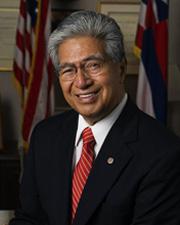
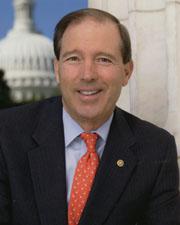
Mr. Akaka (for himself, Mr. Franken, Mr. Udall of New Mexico, Mr. Inouye, Mr. Begich, Mrs. Murray, Mr. Johnson of South Dakota, Mr. Bingaman, Mr. Tester, Mr. Baucus, Mr. Conrad, Mr. Reid, Ms. Murkowski, Mr. Crapo, and Mr. Sanders) introduced the following bill; which was read twice and referred to the Committee on Indian Affairs
December 27, 2012
Reported by Mr. Akaka, with an amendment
Strike out all after the enacting clause and insert the part printed in italic
A BILL
To decrease the incidence of violent crimes against Indian women, to strengthen the capacity of Indian tribes to exercise the sovereign authority of Indian tribes to respond to violent crimes committed against Indian women, and to ensure that perpetrators of violent crimes committed against Indian women are held accountable for that criminal behavior, and for other purposes.
Short title; table of contents
Short title
This Act may be cited
as the Stand Against Violence and
Empower Native Women Act
or the SAVE Native Women Act
.
Table of contents
The table of contents for this Act is as follows:
Sec. 1. Short title; table of contents.
TITLE I—Grant programs
Sec. 101. Grants to Indian tribal governments.
Sec. 102. Tribal coalition grants.
Sec. 103. Consultation.
Sec. 104. Analysis and research on violence against women.
Sec. 105. Definitions.
TITLE II—Tribal jurisdiction and criminal offenses
Sec. 201. Tribal jurisdiction over crimes of domestic violence.
Sec. 202. Tribal protection orders.
Sec. 203. Amendments to the Federal assault statute.
Sec. 204. Effective dates; pilot project.
Sec. 205. Other amendments.
TITLE III—Indian Law and Order Commission
Sec. 301. Indian Law and Order Commission.
Grant programs
Grants to Indian tribal governments
Section 2015(a) of title I of the Omnibus Crime Control and Safe Streets Act of 1968 (42 U.S.C. 3796gg–10(a)) is amended—
in paragraph (2), by inserting sex
trafficking,
after sexual assault,
;
in paragraph (4), by inserting sex
trafficking,
after sexual assault,
;
in paragraph (5),
by inserting sexual assault, sex trafficking,
after
dating violence,
;
in paragraph (7)—
by inserting sex
trafficking,
after sexual assault,
each place it
appears; and
by striking
and
at the end;
in paragraph (8)—
by inserting sex
trafficking,
after stalking,
; and
by striking the period at the end and inserting a semicolon; and
by adding at the end the following:
provide services to address the needs of youth who are victims of domestic violence, dating violence, sexual assault, sex trafficking, or stalking and the needs of children exposed to domestic violence, dating violence, sexual assault, sex trafficking, or stalking, including support for the nonabusing parent or the caretaker of the child; and
develop and promote legislation and policies that enhance best practices for responding to violent crimes against Indian women, including the crimes of domestic violence, dating violence, sexual assault, sex trafficking, and stalking.
.
Tribal coalition grants
Section 2001 of title I of the Omnibus Crime Control and Safe Streets Act of 1968 (42 U.S.C. 3796gg) is amended by striking subsection (d) and inserting the following:
Tribal coalition grants
Purpose
The Attorney General shall award a grant to each established tribal coalition for purposes of—
increasing awareness of domestic violence and sexual assault against Indian women;
enhancing the response to violence against Indian women at the Federal, State, and tribal levels;
identifying and providing technical assistance to coalition membership and tribal communities to enhance access to essential services to Indian women victimized by domestic and sexual violence, including sex trafficking; and
assisting Indian tribes in developing and promoting legislation and policies that enhance best practices for responding to violent crimes against Indian women, including the crimes of domestic violence, dating violence, sexual assault, sex trafficking, and stalking.
Grants
In general
Subject to subparagraph (B), the Attorney General shall award grants on annual basis under paragraph (1) to—
each tribal coalition that—
meets the criteria of a tribal coalition under section 40002(a) of the Violence Against Women Act of 1994 (42 U.S.C. 13925(a));
is recognized by the Office on Violence Against Women; and
provides services to Indian tribes; and
organizations that propose to incorporate and operate a tribal coalition in areas where Indian tribes are located but no tribal coalition exists.
Restriction
An organization described in subparagraph (A)(ii) shall use a grant under this subsection to support the planning and development of a tribal coalition, subject to the condition that any amounts provided to the organization under this subsection that remain unobligated on September 30 of each fiscal year for which amounts are made available under paragraph (3) shall be redistributed in the subsequent fiscal year by the Attorney General to tribal coalitions described in subparagraph (A)(i).
Use of amounts
For each of fiscal years 2013 through 2017, of the amounts appropriated to carry out this subsection—
10 percent shall be made available to organizations described in paragraph (2)(A)(ii); and
90 percent shall be made available to tribal coalitions described in paragraph (2)(A)(i), which amounts shall be distributed equally among each eligible tribal coalition for the applicable fiscal year.
Duration
A grant under this subsection shall be awarded for a period of 1 year.
Eligibility for other grants
Receipt of an award under this subsection by a tribal coalition shall not preclude the tribal coalition from receiving additional grants under this title to carry out the purposes described in paragraph (1).
Multiple purpose applications
Nothing in this subsection prohibits any tribal coalition or organization described in paragraph (2)(A) from applying for funding to address sexual assault or domestic violence needs in the same application.
.
Consultation
Section 903 of the Violence Against Women and Department of Justice Reauthorization Act of 2005 (42 U.S.C. 14045d) is amended—
in subsection (a)—
by striking and the Violence Against
Women Act of 2000
and inserting , the Violence Against Women Act
of 2000
; and
by inserting
, and the Stand Against Violence and
Empower Native Women Act
before the period at the
end;
in subsection (b)—
in the matter
preceding paragraph (1), by striking the Secretary of the Department of
Health and Human Services and
and inserting the Secretary of
Health and Human Services, the Secretary of the Interior, and
;
and
in paragraph (2),
by inserting sex trafficking,
after sexual
assault,
; and
by adding at the end the following:
Notice
Not later than 120 days before the date of a consultation under subsection (a), the Attorney General shall notify tribal leaders of the date, time, and location of the consultation.
.
Analysis and research on violence against women
Section 904(a) of the Violence Against Women and Department of Justice Reauthorization Act of 2005 (42 U.S.C. 3796gg–10 note) is amended—
in paragraph (1)—
by striking
The National
and inserting Not later than 2 years after
the date of enactment of the Stand Against
Violence and Empower Native Women Act, the National
;
and
by inserting
and in Native villages
before the period at the end;
in paragraph (2)(A)—
in clause (iv), by
striking and
at the end;
in clause (v), by
striking the period at the end and inserting ; and
; and
by adding at the end the following:
sex trafficking.
;
in paragraph (4),
by striking this Act
and inserting the
Stand Against Violence and Empower Native
Women Act
; and
in paragraph (5),
by striking this section $1,000,000 for each of fiscal years 2007 and
2008
and inserting this subsection $1,000,000 for each of fiscal
years 2012 and 2013
.
Definitions
Section 40002(a) of the Violence Against Women Act of 1994 (42 U.S.C. 13925(a)) is amended—
by redesignating paragraphs (18) through (22) and (23) through (37) as paragraphs (19) through (23) and (25) through (39), respectively;
by inserting after paragraph (17) the following:
Native village
The term Native village has the meaning given that term in section 3 of the Alaska Native Claims Settlement Act (43 U.S.C. 1602).
;
in paragraph (22) (as redesignated by paragraph (1))—
in subparagraph
(A), by striking or
at the end;
in subparagraph
(B), by striking the period at the end and inserting ; or
;
and
by adding at the end the following:
an area or community under the jurisdiction of a federally recognized Indian tribe.
;
by inserting after paragraph (23) (as redesignated by paragraph (1)) the following:
Sex trafficking
The term sex trafficking means any conduct proscribed by section 1591 of title 18, United States Code, regardless of whether the conduct occurs in interstate or foreign commerce or within the special maritime and territorial jurisdiction of the United States.
; and
by striking paragraph (31) (as redesignated by paragraph (1)) and inserting the following:
Tribal coalition
The term tribal coalition means an established nonprofit, nongovernmental Indian organization established to provide services on a statewide, regional, or customary territory basis that—
provides education, support, and technical assistance to Indian service providers in a manner that enables the providers to establish and maintain culturally appropriate services, including shelter and rape crisis services, designed to assist Indian women and the dependents of those women who are victims of domestic violence, dating violence, sexual assault, and stalking;
is comprised of board and general members that are representative of—
the service providers described in subparagraph (A); and
the tribal communities in which the services are being provided;
serves as an information clearinghouse and resource center for Indian programs addressing domestic violence and sexual assault;
supports the development of legislation, policies, protocols, procedures, and guidance to enhance domestic violence and sexual assault intervention and prevention efforts in Indian tribes and communities to be served; and
has expertise in the development of Indian community-based, linguistically, and culturally specific outreach and intervention services for the Indian communities to be served.
.
Tribal jurisdiction and criminal offenses
Tribal jurisdiction over crimes of domestic violence
Title II of Public Law 90–284 (25 U.S.C.
1301 et seq.) (commonly known as the Indian Civil Rights Act of
1968
) is amended by adding at the end the following:
Tribal jurisdiction over crimes of domestic violence
Definitions
In this section:
Dating violence
The term dating violence means violence committed by a person who is or has been in a social relationship of a romantic or intimate nature with the victim, as determined by the length of the relationship, the type of relationship, and the frequency of interaction between the persons involved in the relationship.
Domestic violence
The term domestic violence means violence committed by a current or former spouse of the victim, by a person with whom the victim shares a child in common, by a person who is cohabitating with or has cohabitated with the victim as a spouse, or by a person similarly situated to a spouse of the victim under the domestic or family violence laws of the Indian tribe that has jurisdiction over the Indian country where the violence occurs.
Indian country
The term Indian country has the meaning given the term in section 1151 of title 18, United States Code.
Participating tribe
The term participating tribe means an Indian tribe that elects to exercise special domestic violence criminal jurisdiction over the Indian country of that Indian tribe.
Protection order
The term protection order means any injunction, restraining order, or other order issued by a civil or criminal court for the purpose of preventing violent or threatening acts or harassment against, sexual violence against, contact or communication with, or physical proximity to, another person, including any temporary or final order issued by a civil or criminal court, whether obtained by filing an independent action or as a pendente lite order in another proceeding, so long as the civil or criminal order was issued in response to a complaint, petition, or motion filed by or on behalf of a person seeking protection.
Special domestic violence criminal jurisdiction
The term special domestic violence criminal jurisdiction means the criminal jurisdiction that a participating tribe may exercise under this section but could not otherwise exercise.
Spouse or intimate partner
The term spouse or intimate partner has the meaning given the term in section 2266 of title 18, United States Code.
Nature of the criminal jurisdiction
In general
Notwithstanding any other provision of law, in addition to all powers of self-government recognized and affirmed by this Act, the powers of self-government of a participating tribe include the inherent power of that tribe, which is hereby recognized and affirmed, to exercise special domestic violence criminal jurisdiction over all persons.
Concurrent jurisdiction
A participating tribe shall exercise special domestic violence criminal jurisdiction concurrently, not exclusively.
Applicability
Nothing in this section—
creates or eliminates any Federal or State criminal jurisdiction over Indian country; or
affects the authority of the United States, or any State government that has been delegated authority by the United States, to investigate and prosecute a criminal violation in Indian country.
Criminal conduct
A participating tribe may exercise special domestic violence criminal jurisdiction over a defendant for criminal conduct that falls into 1 or more of the following categories:
Domestic violence and dating violence
An act of domestic violence or dating violence that occurs in the Indian country of the participating tribe.
Violations of protection orders
An act that—
occurs in the Indian country of the participating tribe; and
violates the portion of a protection order that—
prohibits or provides protection against violent or threatening acts or harassment against, sexual violence against, contact or communication with, or physical proximity to, another person; and
was issued against the defendant;
is enforceable by the participating tribe; and
is consistent with section 2265(b) of title 18, United States Code.
Dismissal of certain cases
Definition of victim
In this subsection and with respect to a criminal proceeding in which a participating tribe exercises special domestic violence criminal jurisdiction based on a criminal violation of a protection order, the term victim means a person specifically protected by a protection order that the defendant allegedly violated.
Non-Indian victims and defendants
In a criminal proceeding in which a participating tribe exercises special domestic violence criminal jurisdiction, the case shall be dismissed if—
the defendant files a pretrial motion to dismiss on the grounds that the alleged offense did not involve an Indian; and
the participating tribe fails to prove that the defendant or an alleged victim is an Indian.
Ties to Indian tribe
In a criminal proceeding in which a participating tribe exercises special domestic violence criminal jurisdiction, the case shall be dismissed if—
the defendant files a pretrial motion to dismiss on the grounds that the defendant and the alleged victim lack sufficient ties to the Indian tribe; and
the prosecuting tribe fails to prove that the defendant or an alleged victim—
resides in the Indian country of the participating tribe;
is employed in the Indian country of the participating tribe; or
is a spouse or intimate partner of a member of the participating tribe.
Waiver
A knowing and voluntary failure of a defendant to file a pretrial motion described in paragraph (2) or (3) shall be considered a waiver of the right to seek a dismissal under this subsection.
Rights of defendants
In a criminal proceeding in which a participating tribe exercises special domestic violence criminal jurisdiction, the participating tribe shall provide to the defendant—
all applicable rights under this Act;
if a term of imprisonment of any length is imposed, all rights described in section 202(c); and
all other rights whose protection is necessary under the Constitution of the United States in order for Congress to recognize and affirm the inherent power of the participating tribe to exercise criminal jurisdiction over the defendant.
Petitions To stay detention
In general
A person who has filed a petition for a writ of habeas corpus in a court of the United States under section 203 may petition that court to stay further detention of that person by the participating tribe.
Grant of stay
A court shall grant a stay described in paragraph (1) if the court—
finds that there is a substantial likelihood that the habeas corpus petition will be granted; and
after giving each alleged victim in the matter an opportunity to be heard, finds, by clear and convincing evidence that, under conditions imposed by the court, the petitioner is not likely to flee or pose a danger to any person or the community if released.
Grants to tribal governments
The Attorney General may award grants to the governments of Indian tribes (or to authorized designees of those governments)—
to strengthen tribal criminal justice systems to assist Indian tribes in exercising special domestic violence criminal jurisdiction, including—
law enforcement (including the capacity to enter information into and obtain information from national crime information databases);
prosecution;
trial and appellate courts;
probation systems;
detention and correctional facilities;
alternative rehabilitation centers;
culturally appropriate services and assistance for victims and their families; and
criminal codes and rules of criminal procedure, appellate procedure, and evidence;
to provide indigent criminal defendants with the effective assistance of licensed defense counsel, at no cost to the defendant, in criminal proceedings in which a participating tribe prosecutes a crime of domestic violence or dating violence or a criminal violation of a protection order;
to ensure that, in criminal proceedings in which a participating tribe exercises special domestic violence criminal jurisdiction, jurors are summoned, selected, and instructed in a manner consistent with all applicable requirements; and
to accord victims of domestic violence, dating violence, and violations of protection orders rights that are similar to the rights of a crime victim described in section 3771(a) of title 18, United States Code, consistent with tribal law and custom.
Supplement, not supplant
Amounts made available under this section shall supplement and not supplant any other Federal, State, tribal, or local government amounts made available to carry out activities described in this section.
Authorization of appropriations
There are authorized to be appropriated to carry out subsection (g) and to provide training, technical assistance, data collection, and evaluation of the criminal justice systems of participating tribes such sums as are necessary.
.
Tribal protection orders
Section 2265 of title 18, United States Code, is amended by striking subsection (e) and inserting the following:
Tribal court jurisdiction
For purposes of this section, a court of an Indian tribe shall have full civil jurisdiction to issue and enforce protection orders involving any person, including the authority to enforce any orders through civil contempt proceedings, the exclusion of violators from Indian land, and other appropriate mechanisms, in matters arising anywhere in the Indian country of the Indian tribe (as defined in section 1151) or otherwise within the authority of the Indian tribe.
.
Amendments to the Federal assault statute
Assaults by striking, beating, or wounding
Section 113(a)(4) of title 18,
United States Code, is amended by striking six months
and
inserting 1 year
.
Assaults resulting in substantial bodily injury
Section 113(a)(7) of title 18, United States Code, is amended by striking “substantial bodily injury to an individual who has not attained the age of 16 years” and inserting “substantial bodily injury to a spouse or intimate partner, a dating partner, or an individual who has not attained the age of 16 years”.
Assaults by strangling or suffocating
Section 113(a) of title 18, United States Code, is amended by adding at the end the following:
Assault of a spouse, intimate partner, or dating partner by strangling, suffocating, or attempting to strangle or suffocate, by a fine under this title, imprisonment for not more than 10 years, or both.
.
Definitions
Section 113(b) of title 18, United States Code, is amended—
by striking
(b) As used in this subsection—
and inserting the
following:
Definitions
In this section—
;
in paragraph
(1)(B), by striking and
at the end;
in paragraph (2), by striking the period at the end and inserting a semicolon; and
by adding at the end the following:
the terms dating partner and spouse or intimate partner have the meanings given those terms in section 2266;
the term strangling means intentionally, knowingly, or recklessly impeding the normal breathing or circulation of the blood of a person by applying pressure to the throat or neck, regardless of whether that conduct results in any visible injury or whether there is any intent to kill or protractedly injure the victim; and
the term suffocating means intentionally, knowingly, or recklessly impeding the normal breathing of a person by covering the mouth of the person, the nose of the person, or both, regardless of whether that conduct results in any visible injury or whether there is any intent to kill or protractedly injure the victim.
.
Indian major crimes
Section 1153(a) of title 18, United States Code, is
amended by striking “assault with intent to commit murder, assault with a
dangerous weapon, assault resulting in serious bodily injury (as defined in
section 1365 of this title)” and inserting a felony assault under
section 113
.
Effective dates; pilot project
General effective date
Except as provided in subsection (b), the amendments made by this title shall take effect on the date of enactment of this Act.
Effective date for special domestic-Violence criminal jurisdiction
In general
Except as provided in paragraph (2), subsections (b) through (e) of section 204 of Public Law 90–284 (as added by section 201) shall take effect on the date that is 2 years after the date of enactment of this Act.
Pilot project
In general
At any time during the 2-year period beginning on the date of enactment of this Act, an Indian tribe may ask the Attorney General to designate the tribe as a participating tribe under section 204(a) of Public Law 90–284 on an accelerated basis.
Procedure
The Attorney General (or a designee of the Attorney General) may grant a request under subparagraph (A) after coordinating with the Secretary of the Interior (or a designee of the Secretary), consulting with affected Indian tribes, and concluding that the criminal justice system of the requesting tribe has adequate safeguards in place to protect defendants’ rights, consistent with section 204 of Public Law 90–284.
Effective dates for pilot projects
An Indian tribe designated as a participating tribe under this paragraph may commence exercising special domestic violence criminal jurisdiction pursuant to subsections (b) through (e) of section 204 of Public Law 90–284 on a date established by the Attorney General, after consultation with that Indian tribe, but in no event later than the date that is 2 years after the date of enactment of this Act.
Other amendments
Assaults
Section 113(a) of title 18, United States Code, is amended—
by striking paragraph (1) and inserting the following:
Assault with intent to commit murder or a felony under chapter 109A, by a fine under this title, imprisonment for not more than 20 years, or both.
;
in paragraph (3)
by striking and without just cause or excuse,
; and
in paragraph (7),
by striking fine
and inserting a fine
.
Repeat offenders
Section 2265A(b)(1)(B) of title 18, United States Code,
is amended by inserting or tribal
after
State
.
Indian Law and Order Commission
Indian Law and Order Commission
Section 15(f)
of the Indian Law Enforcement Reform Act (25 U.S.C. 2812(f)) is amended by
striking 2 years
and inserting 3 years
.
Short title; table of contents
Short title
This Act may be cited
as the Stand Against Violence and
Empower Native Women Act
or the SAVE Native Women Act
.
Table of contents
The table of contents for this Act is as follows:
Sec. 1. Short title; table of contents.
TITLE I—Grant programs
Sec. 101. Grants to Indian tribal governments.
Sec. 102. Tribal coalition grants.
Sec. 103. Consultation.
Sec. 104. Analysis and research on violence against women.
Sec. 105. Definitions.
TITLE II—Tribal jurisdiction and criminal offenses
Sec. 201. Tribal jurisdiction over crimes of domestic violence.
Sec. 202. Tribal protection orders.
Sec. 203. Amendments to the Federal assault statute.
Sec. 204. Effective dates; pilot project.
Sec. 205. Assaults; repeat offenders.
Sec. 206. Violations of tribal civil protection orders.
Sec. 207. High priority performance goal pilot program reporting.
TITLE III—Indian Law and Order Commission
Sec. 301. Indian Law and Order Commission.
TITLE IV—Safety enhancement study and demonstration projects
Sec. 401. Safety enhancement study and demonstration projects.
Grant programs
Grants to Indian tribal governments
Section 2015 of title I of the Omnibus Crime Control and Safe Streets Act of 1968 (42 U.S.C. 3796gg–10) is amended—
in subsection (a)—
in paragraph (2), by inserting sex
trafficking,
after sexual assault,
;
in paragraph (4), by inserting sex
trafficking,
after sexual assault,
;
in paragraph (5), by
inserting sexual assault, sex trafficking,
after dating
violence,
;
in paragraph (7)—
by inserting sex
trafficking,
after sexual assault,
each place it
appears; and
by striking
and
at the end;
in paragraph (8)—
by inserting sex
trafficking,
after stalking,
; and
by striking the period at the end and inserting a semicolon; and
by adding at the end the following:
provide services to address the needs of youth who are victims of domestic violence, dating violence, sexual assault, sex trafficking, or stalking and the needs of children exposed to domestic violence, dating violence, sexual assault, sex trafficking, or stalking, including support for the nonabusing parent or the caretaker of the child; and
develop legislation and policies and provide outreach and education that enhance best practices for responding to violent crimes against Indian women, including the crimes of domestic violence, dating violence, sexual assault, sex trafficking, and stalking.
; and
by adding at the end the following:
Administration
Notwithstanding any other provision of law and in addition to any amounts that are otherwise made available to carry out this section, amounts made available pursuant to sections 41201(d)(1), 41303(a)(3)(B), and 41305(a)(3)(B) of the Violence Against Women Act of 1994 (42 U.S.C. 14043c(d)(1), 14043d–2(a)(3)(B), 14043d–4(a)(3)(B)) shall be made available to carry out this section.
.
Tribal coalition grants
Section 2001 of title I of the Omnibus Crime Control and Safe Streets Act of 1968 (42 U.S.C. 3796gg) is amended by striking subsection (d) and inserting the following:
Tribal coalition grants
Purpose
The Attorney General shall award a grant to tribal coalitions for purposes of—
increasing awareness of domestic violence and sexual assault against Indian women;
enhancing the response to violence against Indian women at the Federal, State, and tribal levels;
identifying and providing technical assistance to coalition membership and tribal communities to enhance access to essential services to Indian women victimized by domestic and sexual violence, including sex trafficking; and
assisting Indian tribes in developing legislation and policies and providing outreach and education that enhance best practices for responding to violent crimes against Indian women, including the crimes of domestic violence, dating violence, sexual assault, sex trafficking, and stalking.
Grants
The Attorney General shall award grants on annual basis under paragraph (1) to—
each tribal coalition that—
meets the criteria of a tribal coalition under section 40002(a) of the Violence Against Women Act of 1994 (42 U.S.C. 13925(a));
is recognized by the Office on Violence Against Women; and
provides services to Indian tribes; and
organizations that propose to incorporate and operate a tribal coalition in areas where Indian tribes are located but no tribal coalition exists.
Use of amounts
For each of fiscal years 2013 through 2017, of the amounts appropriated to carry out this subsection—
not more than 10 percent may be made available to organizations described in paragraph (2)(B); and
not less than 90 percent shall be made available to tribal coalitions described in paragraph (2)(A), which amounts shall be distributed equally among each eligible tribal coalition for the applicable fiscal year.
Duration
A grant under this subsection shall be awarded for a period of 1 year.
Eligibility for other grants
Receipt of an award under this subsection by a tribal coalition shall not preclude the tribal coalition from receiving additional grants under this title to carry out the purposes described in paragraph (1).
Multiple purpose applications
Nothing in this subsection prohibits any tribal coalition or organization described in paragraph (2) from applying for funding to address sexual assault or domestic violence needs in the same application.
.
Consultation
Section 903 of the Violence Against Women and Department of Justice Reauthorization Act of 2005 (42 U.S.C. 14045d) is amended—
in subsection (a)—
by striking and the Violence Against
Women Act of 2000
and inserting , the Violence Against Women Act
of 2000
; and
by inserting , and
the Stand Against Violence and Empower Native
Women Act
before the period at the end;
in subsection (b)—
in the matter preceding
paragraph (1), by striking the Secretary of the Department of Health and
Human Services and
and inserting the Secretary of Health and
Human Services, the Secretary of the Interior, and
; and
in paragraph (2), by
inserting sex trafficking,
after sexual assault,
;
and
by adding at the end the following:
Notice
Not later than 120 days before the date of a consultation under subsection (a), the Attorney General shall notify tribal leaders of the date, time, and location of the consultation.
.
Analysis and research on violence against women
Section 904(a) of the Violence Against Women and Department of Justice Reauthorization Act of 2005 (42 U.S.C. 3796gg–10 note) is amended—
in paragraph (1)—
by striking The
National
and inserting Not later than 3 years after the date of
enactment of the Stand Against Violence and
Empower Native Women Act, the National
; and
by inserting ,
women in Alaska Native villages, and Native Hawaiian women
before the
period at the end;
in paragraph (2)(A)—
in clause (iv), by
striking and
at the end;
in clause (v), by
striking the period at the end and inserting ; and
; and
by adding at the end the following:
sex trafficking.
;
in paragraph (4), by
striking this Act
and inserting the
Stand Against Violence and Empower Native
Women Act
; and
in paragraph (5), by
striking this section $1,000,000 for each of fiscal years 2007 and
2008
and inserting this subsection $1,000,000 for each of fiscal
years 2012 and 2013
.
Definitions
Section 40002(a) of the Violence Against Women Act of 1994 (42 U.S.C. 13925(a)) is amended—
by redesignating paragraphs (23) through (37) as paragraphs (24) through (38), respectively;
in paragraph (21)—
in subparagraph (A), by
striking or
at the end;
in subparagraph (B), by
striking the period at the end and inserting ; or
; and
by adding at the end the following:
an area or community associated with a federally recognized Indian tribe, regardless of whether the land is owned by the Indian tribe.
;
by inserting after paragraph (22) the following:
Sex trafficking
The term sex trafficking means any conduct proscribed by section 1591 of title 18, United States Code, regardless of whether the conduct occurs in interstate or foreign commerce or within the special maritime and territorial jurisdiction of the United States.
; and
by striking paragraph (30) (as redesignated by paragraph (1)) and inserting the following:
Tribal coalition
The term tribal coalition means an established nonprofit, nongovernmental Indian organization (including a Native Hawaiian organization) that—
is established to provide services to members of the tribal coalition on a statewide, regional, or customary territory basis;
provides education, support, and technical assistance to member Indian service providers in a manner that enables those member providers to establish and maintain culturally appropriate services, including shelter and rape crisis services, designed to assist Indian women and the dependents of those women who are victims of domestic violence, dating violence, sexual assault, and stalking;
serves as an information clearinghouse and resource center for Indian programs addressing domestic violence and sexual assault;
is comprised of board and general members that are representative of—
the member service providers described in subparagraph (B); and
the tribal communities in which the services are being provided;
supports the development of legislation, policies, protocols, procedures, and guidance to enhance domestic violence and sexual assault intervention and prevention efforts in Indian tribes and communities to be served; and
has expertise in the development of Indian community-based, linguistically, and culturally specific outreach and intervention services for the Indian communities to be served.
.
Tribal jurisdiction and criminal offenses
Tribal jurisdiction over crimes of domestic violence
Title II of Public Law 90–284 (25 U.S.C.
1301 et seq.) (commonly known as the Indian Civil Rights Act of
1968
) is amended by adding at the end the following:
Tribal jurisdiction over crimes of domestic violence
Definitions
In this section:
Dating violence
The term dating violence means violence committed by a person who is or has been in a social relationship of a romantic or intimate nature with the victim, as determined by the length of the relationship, the type of relationship, and the frequency of interaction between the persons involved in the relationship.
Domestic violence
The term domestic violence means violence committed by a current or former spouse of the victim, by a person with whom the victim shares a child in common, by a person who is cohabitating with or has cohabitated with the victim as a spouse, or by a person similarly situated to a spouse of the victim under the domestic or family violence laws of the Indian tribe that has jurisdiction over the Indian country where the violence occurs.
Indian country
The term Indian country has the meaning given the term in section 1151 of title 18, United States Code.
Participating tribe
The term participating tribe means an Indian tribe that elects to exercise special domestic violence criminal jurisdiction over the Indian country of that Indian tribe.
Protection order
The term protection order means any injunction, restraining order, or other order issued by a civil or criminal court for the purpose of preventing violent or threatening acts or harassment against, sexual violence against, contact or communication with, or physical proximity to, another person, including any temporary or final order issued by a civil or criminal court, whether obtained by filing an independent action or as a pendente lite order in another proceeding, so long as the civil or criminal order was issued in response to a complaint, petition, or motion filed by or on behalf of a person seeking protection.
Special domestic violence criminal jurisdiction
The term special domestic violence criminal jurisdiction means the criminal jurisdiction that a participating tribe may exercise under this section but could not otherwise exercise.
Spouse or intimate partner
The term spouse or intimate partner has the meaning given the term in section 2266 of title 18, United States Code.
Nature of the criminal jurisdiction
In general
Notwithstanding any other provision of law, in addition to all powers of self-government recognized and affirmed by this Act, the powers of self-government of a participating tribe include the inherent power of that tribe, which is hereby recognized and affirmed, to exercise special domestic violence criminal jurisdiction over all persons.
Concurrent jurisdiction
A participating tribe shall exercise special domestic violence criminal jurisdiction concurrently, not exclusively.
Applicability
Nothing in this section—
creates or eliminates any Federal or State criminal jurisdiction over Indian country; or
affects the authority of the United States, or any State government that has been delegated authority by the United States, to investigate and prosecute a criminal violation in Indian country.
Criminal conduct
A participating tribe may exercise special domestic violence criminal jurisdiction over a defendant for criminal conduct that falls into 1 or more of the following categories:
Domestic violence and dating violence
An act of domestic violence or dating violence that occurs in the Indian country of the participating tribe.
Violations of protection orders
An act that—
occurs in the Indian country of the participating tribe; and
violates the portion of a protection order that—
prohibits or provides protection against violent or threatening acts or harassment against, sexual violence against, contact or communication with, or physical proximity to, another person; and
was issued against the defendant;
is enforceable by the participating tribe; and
is consistent with section 2265(b) of title 18, United States Code.
Dismissal of certain cases
Definition of victim
In this subsection and with respect to a criminal proceeding in which a participating tribe exercises special domestic violence criminal jurisdiction based on a criminal violation of a protection order, the term victim means a person specifically protected by a protection order that the defendant allegedly violated.
Non-Indian victims and defendants
In a criminal proceeding in which a participating tribe exercises special domestic violence criminal jurisdiction, the case shall be dismissed if—
the defendant files a pretrial motion to dismiss on the grounds that the alleged offense did not involve an Indian; and
the participating tribe fails to prove that the defendant or an alleged victim is an Indian.
Ties to Indian tribe
In a criminal proceeding in which a participating tribe exercises special domestic violence criminal jurisdiction, the case shall be dismissed if—
the defendant files a pretrial motion to dismiss on the grounds that the defendant and the alleged victim lack sufficient ties to the Indian tribe; and
the prosecuting tribe fails to prove that the defendant or an alleged victim—
resides in the Indian country of the participating tribe;
is employed in the Indian country of the participating tribe; or
is a spouse or intimate partner of a member of the participating tribe.
Waiver
A knowing and voluntary failure of a defendant to file a pretrial motion described in paragraph (2) or (3) shall be considered a waiver of the right to seek a dismissal under this subsection.
Rights of defendants
In a criminal proceeding in which a participating tribe exercises special domestic violence criminal jurisdiction, the participating tribe shall provide to the defendant—
all applicable rights under this Act;
if a term of imprisonment of any length is imposed, all rights described in section 202(c); and
all other rights whose protection is necessary under the Constitution of the United States in order for Congress to recognize and affirm the inherent power of the participating tribe to exercise criminal jurisdiction over the defendant.
Petitions To stay detention
In general
A person who has filed a petition for a writ of habeas corpus in a court of the United States under section 203 may petition that court to stay further detention of that person by the participating tribe.
Grant of stay
A court shall grant a stay described in paragraph (1) if the court—
finds that there is a substantial likelihood that the habeas corpus petition will be granted; and
after giving each alleged victim in the matter an opportunity to be heard, finds, by clear and convincing evidence that, under conditions imposed by the court, the petitioner is not likely to flee or pose a danger to any person or the community if released.
Grants to tribal governments
The Attorney General may award grants to the governments of Indian tribes (or to authorized designees of those governments)—
to strengthen tribal criminal justice systems to assist Indian tribes in exercising special domestic violence criminal jurisdiction, including—
law enforcement (including the capacity to enter information into and obtain information from national crime information databases);
prosecution;
trial and appellate courts;
probation systems;
detention and correctional facilities;
alternative rehabilitation centers;
culturally appropriate services and assistance for victims and their families; and
criminal codes and rules of criminal procedure, appellate procedure, and evidence;
to provide indigent criminal defendants with the effective assistance of licensed defense counsel, at no cost to the defendant, in criminal proceedings in which a participating tribe prosecutes a crime of domestic violence or dating violence or a criminal violation of a protection order;
to ensure that, in criminal proceedings in which a participating tribe exercises special domestic violence criminal jurisdiction, jurors are summoned, selected, and instructed in a manner consistent with all applicable requirements; and
to accord victims of domestic violence, dating violence, and violations of protection orders rights that are similar to the rights of a crime victim described in section 3771(a) of title 18, United States Code, consistent with tribal law and custom.
Supplement, not supplant
Amounts made available under this section shall supplement and not supplant any other Federal, State, tribal, or local government amounts made available to carry out activities described in this section.
Authorization of appropriations
There are authorized to be appropriated to carry out subsection (g) and to provide training, technical assistance, data collection, and evaluation of the criminal justice systems of participating tribes such sums as are necessary.
.
Tribal protection orders
Section 2265 of title 18, United States Code, is amended by striking subsection (e) and inserting the following:
Tribal court jurisdiction
For purposes of this section, a court of an Indian tribe shall have full civil jurisdiction to issue and enforce protection orders involving any person, including the authority to enforce any orders through civil contempt proceedings, the exclusion of violators from Indian land, and other appropriate mechanisms, in matters arising anywhere in the Indian country of the Indian tribe (as defined in section 1151) or otherwise within the authority of the Indian tribe.
Applicability
Nothing in this section limits, alters, expands, or diminishes the civil or criminal jurisdiction of the State of Alaska, any subdivision of the State of Alaska, or any Indian tribe in the State of Alaska.
.
Amendments to the Federal assault statute
Assaults by striking, beating, or wounding
Section 113(a)(4) of title 18, United States
Code, is amended by striking six months
and inserting 1
year
.
Assaults resulting in substantial bodily injury
Section 113(a)(7) of title 18, United States Code, is amended by striking “substantial bodily injury to an individual who has not attained the age of 16 years” and inserting “substantial bodily injury to a spouse or intimate partner, a dating partner, or an individual who has not attained the age of 16 years”.
Assaults by strangling or suffocating
Section 113(a) of title 18, United States Code, is amended by adding at the end the following:
Assault of a spouse, intimate partner, or dating partner by strangling, suffocating, or attempting to strangle or suffocate, by a fine under this title, imprisonment for not more than 10 years, or both.
.
Definitions
Section 113(b) of title 18, United States Code, is amended—
by striking (b) As
used in this subsection—
and inserting the following:
Definitions
In this section—
;
in paragraph (1)(B), by
striking and
at the end;
in paragraph (2), by striking the period at the end and inserting a semicolon; and
by adding at the end the following:
the terms dating partner and spouse or intimate partner have the meanings given those terms in section 2266;
the term strangling means intentionally, knowingly, or recklessly impeding the normal breathing or circulation of the blood of a person by applying pressure to the throat or neck, regardless of whether that conduct results in any visible injury or whether there is any intent to kill or protractedly injure the victim; and
the term suffocating means intentionally, knowingly, or recklessly impeding the normal breathing of a person by covering the mouth of the person, the nose of the person, or both, regardless of whether that conduct results in any visible injury or whether there is any intent to kill or protractedly injure the victim.
.
Indian major crimes
Section 1153(a) of title 18, United States Code, is
amended by striking “assault with intent to commit murder, assault with a
dangerous weapon, assault resulting in serious bodily injury (as defined in
section 1365 of this title)” and inserting a felony assault under
section 113
.
Effective dates; pilot project
General effective date
Except as provided in subsection (b), the amendments made by this title shall take effect on the date of enactment of this Act.
Effective date for special domestic-Violence criminal jurisdiction
In general
Except as provided in paragraph (2), subsections (b) through (e) of section 204 of Public Law 90–284 (as added by section 201) shall take effect on the date that is 2 years after the date of enactment of this Act.
Pilot project
In general
At any time during the 2-year period beginning on the date of enactment of this Act, an Indian tribe may ask the Attorney General to designate the tribe as a participating tribe under section 204(a) of Public Law 90–284 on an accelerated basis.
Procedure
The Attorney General (or a designee of the Attorney General) may grant a request under subparagraph (A) after coordinating with the Secretary of the Interior (or a designee of the Secretary), consulting with affected Indian tribes, and concluding that the criminal justice system of the requesting tribe has adequate safeguards in place to protect defendants’ rights, consistent with section 204 of Public Law 90–284.
Effective dates for pilot projects
An Indian tribe designated as a participating tribe under this paragraph may commence exercising special domestic violence criminal jurisdiction pursuant to subsections (b) through (e) of section 204 of Public Law 90–284 on a date established by the Attorney General, after consultation with that Indian tribe, but in no event later than the date that is 2 years after the date of enactment of this Act.
Assaults; repeat offenders
Assaults
Section 113(a) of title 18, United States Code, is amended—
by striking paragraph (1) and inserting the following:
Assault with intent to commit murder or a felony under chapter 109A, by a fine under this title, imprisonment for not more than 20 years, or both.
;
in paragraph (3) by
striking and without just cause or excuse,
; and
in paragraph (7), by
striking fine
and inserting a fine
.
Repeat offenders
Section 2265A(b)(1)(B) of title 18, United States Code,
is amended by inserting or tribal
after
State
.
Violations of tribal civil protection orders
Section 1153 of title 18, United States Code, is amended by adding at the end the following:
Violation of tribal civil protection order
Definition of civil protection order
In this subsection, the term civil protection order means an order issued in a civil proceeding by a court or other judicial tribunal of an Indian tribe for the purpose of protecting a person who resides in the Indian country of the Indian tribe from physical harm, violent or threatening acts, harassment, or sexual violence by the respondent, which temporarily or permanently prohibits the respondent from approaching or coming into physical proximity to or contact with the person at a specified residence, place, or area in such Indian country.
Prohibition
It shall be unlawful for any person to violate the terms of a civil protection order issued by a court or other judicial tribunal of an Indian tribe in accordance with paragraph (4).
Penalty
Any person who violates paragraph (2) shall—
be guilty of a crime; and
for the first violation of the civil protection order, fined not more than $1,000, imprisoned for not more than 1 year, or both; and
for any subsequent violation of the civil protection order, fined not more than $5,000, imprisoned for not more than 3 years, or both.
Requirements
A violation of a civil protection order or a civil exclusion order shall constitute an offense under paragraph (2) if the civil protection order—
meets all of the requirements of section 2265 relating to full faith and credit; and
includes the following
statement: A violation of this civil protection order may result in
criminal prosecution under Federal law and the imposition of a fine,
imprisonment, or both.
.
Effect of subsection
Nothing in this subsection limits, modifies, or otherwise affects the application of any provision of sections 2261 through 2266.
.
High priority performance goal pilot program reporting
Section 3(c) of the Indian Law Enforcement Reform Act (25 U.S.C. 2802(c)) is amended—
in paragraph (17), by
striking and
after the semicolon;
in paragraph (18), by
striking the period at the end and inserting ; and
; and
by adding at the end the following:
beginning not later than 90 days after the date of enactment of this paragraph, submitting to the appropriate committees of Congress for each fiscal year a report on the high priority performance goal pilot program carried out by the Secretary to reduce violent crime in Indian communities that includes—
a list of the Indian tribes participating in the program, including—
baseline data on the violent crimes occurring on the reservations of those Indian tribes before the high priority performance goal pilot program commenced, including the quantity and types of violent crimes;
data on the quantity and types of violent crimes on the reservations of those Indians tribes in each subsequent fiscal year; and
any barriers to reporting violent crimes on the reservations of those Indian tribes;
a projected list of Indians tribes, reservations, or Indian land that the Secretary anticipates including in the program, including details on when and how the Secretary intends to develop the program on the Indian land or reservations;
a description of the strategies, community policing activities, tribal consultation, best practices, training, technical assistance, and community and tribal outreach employed by the Office of Justice Services and law enforcement personnel;
for each of the reservations described in subparagraphs (A) and (B)—
baseline data on the quantity of law enforcement and court personnel at each of the reservations;
data on the quantity of law enforcement and court personnel at each of the reservations at the end of each subsequent fiscal year; and
a description of any barriers to hiring law enforcement and court personnel for those reservations;
a description of the short- and long-term plans of action of the Secretary for reducing violent crime in the tribal communities described in subparagraphs (A) and (B);
any feasibility evaluations or studies relating to the expansion of the pilot program to other Indian tribes and Indian land or reservations, which shall include an analysis of the impact of such an expansion on existing programs; and
any other information the Secretary determines to be necessary.
.
Indian Law and Order Commission
Indian Law and Order Commission
Section 15(f) of
the Indian Law Enforcement Reform Act (25 U.S.C. 2812(f)) is amended by
striking 2 years
and inserting 3 years
.
Safety enhancement study and demonstration projects
Safety enhancement study and demonstration projects
Title II of Public Law 90–284 (25 U.S.C.
1301 et seq.) (commonly known as the Indian Civil Rights Act of
1968
) (as amended by section 201) is amended by adding at the end the
following:
Safety enhancement study and demonstration projects
In general
For each of fiscal years 2012 through 2018, the Secretary may select up to 5 Indian tribes to participate in a demonstration project to carry out Federal regulatory enforcement activities authorized by this section.
Demonstration projects
For each Indian tribe selected by the Secretary for a demonstration project under this section, the Secretary shall—
in consultation with the Indian tribe, promulgate regulations with respect to the management, use, and public safety of and in Indian country, including the property in Indian country; and
at the request of the Indian tribe, negotiate agreements with the Indian tribe that reflect the status of the applicable tribal officers as Federal law enforcement officers under section 5(f) of the Indian Law Enforcement Reform Act (25 U.S.C. 2804(f)), acting within the scope of the duties described in section 3(c) of that Act (25 U.S.C. 2802(c)), to allow those tribal officers to enforce regulations promulgated under this section.
Application and selection
In general
Subject to paragraph (2), not later than 180 days after the date of enactment of this section, and after consultation with Indian tribes, the Secretary shall publish application requirements and selection criteria for demonstration projects authorized under this section.
Criteria
In selecting an Indian tribe for participation in a demonstration project under this section, the Secretary shall—
ensure that the Indian tribe has notified the applicable State and local governments in which the proposed demonstration project is located; and
give preference to an application for Indian country in which the United States Attorney for the district in which the proposed demonstration project is located consents to the proposed project.
Penalties
In general
Any person who knowingly and willfully violates any regulation promulgated pursuant to this section shall be fined not more than $1,000, imprisoned for not more than 1 year, or both.
Magistrate judges
Any person charged with a violation of a regulation promulgated pursuant to this section may be tried and sentenced by any United States magistrate judge who is designated for that purpose by the court in the same manner and subject to the same conditions and limitations as are described in section 3401 of title 18, United States Code
Effect of regulations
Nothing in this section, including a regulation promulgated by the Secretary under this section—
modifies or diminishes the criminal jurisdiction of any State or local government; or
modifies or affects section 1152 of title 18, United States Code.
Expiration of regulations
A regulation promulgated by the Secretary under this section may remain in effect for a period not to exceed 4 years after the date of expiration of the applicable demonstration project.
Report
Not later than September 30, 2016, the Secretary shall submit to Congress a report that describes, as of the date on which the report is submitted—
a description of each demonstration project approved under this section; and
an assessment of the effectiveness of the demonstration projects.
.
December 27, 2012
Reported with an amendment