Mr. President, I raise a germaneness point of order against the pending Cantwell-Graham amendment. Mr. President, I raise a germaneness point of order against the Reed-Landrieu-Levin-Brown of Ohio…
Mr. President, I raise a germaneness point of order against the pending Cantwell-Graham amendment.
Mr. President, I raise a germaneness point of order against the Reed-Landrieu-Levin-Brown of Ohio substitute.
Mr. President, I call up amendment No. 1884, offered by Senators Merkley, Bennet, and others.
Mr. President, I ask for the yeas and nays on that amendment.
Mr. President, I call up the second-degree amendment, No. 1931, offered by Senator Reed of Rhode Island.
Mr. President, the bill before this body had broad bipartisan support, bicameral in nature. The bill we are considering today is the IPO bill, of course. The bill passed the House by an overwhelming majority. President Obama supports it.
I want everybody to know that the bill is imperfect, and that perhaps is an understatement. What we are trying to do with amendments offered by Senators Merkley and Reed is to improve this bill, which has a lot of problems. These two amendments would go a long way toward correcting those.
This is an important piece of legislation, and we are confident that it will improve innovators' access to capital and give startups the flexibility they need to hire and grow. But it is not perfect, I repeat. As with any other piece of legislation, there are ways we can improve it. On this bill, there are many ways we can improve it. I am sorry we cannot do more.
To that end, the Senate will consider two germane amendments to this IPO bill that will protect investors and prevent fraud.
The first amendment is sponsored by Senator Merkley and others. It deals with companies that raise capital online from small investors. This amendment will ensure that watchdogs are in place to protect the small investors and their money from fraudulent companies and abuse of the system.
People are lurking out there waiting for ways to cheat. I am sorry, but it is true. These are people who are either amoral or immoral, looking for opportunities to make money. I appreciate very much the work that a number of Senators have put into this amendment. It is an important amendment, and it is so important to improving this bill. You will hear much more this afternoon from the sponsors of the amendment about why it is so important.
The second amendment is sponsored by Senator Reed of Rhode Island. All Senators have stature, but Jack Reed, with his military background, his experience in the House, and his experience in the Senate, is a man we all look to for leadership. His amendment will ensure fair and honest disclosure by companies raising capital. It will stop businesses from gaming the system and avoiding oversight by hiding thousands--or maybe tens of thousands--of investors. This will stop when this amendment passes.
Democrats and Republicans agree that we need to pass the IPO bill and make it easier for American companies to raise capital, to grow operations, and to hire new workers, but we must do so in a way that balances the needs and rights of investors and prevents fraud and abuse.
These two amendments will accomplish that. These two amendments are not going to make the bill perfect, but it will be a lot better.
While the IPO measure before the Senate today is an important piece of legislation, experts agree its impact on job creation will be somewhat limited.
This legislation is something that is before this body. Yesterday, Senate Republicans blocked a bill that would create, in 1 year, as it did this year that we are in, 300,000 jobs. It is hard to comprehend, but people who sponsored the amendment voted against it. But this isn't anything new. I think it is such callous disregard for what is fair and right.
The Republican leader has been talking nonstop about how important it is for Congress to continue to create jobs. So I am disappointed--and that is an understatement--that yesterday Senate Republicans, led by my friend the Republican leader, rejected an opportunity to help American exporters grow and hire.
The Ex-Im Bank helps American exporters compete in a global economy, and it has always enjoyed broad, bipartisan support--until this Republican minority stepped in here. The last time it was offered, in 2006, a Republican offered it. It got unanimous consent to pass. This legislation has been going since the 1930s. It is backed by the National Association of Manufacturers, the Chamber of Commerce, the Business Roundtable, and labor unions. All my Republican friends can explain to the Chamber of Commerce, the National Association of Manufacturers, and the Business Roundtable that not only did they kill this bill but they stopped the deficit from going down by $1 billion, because the Ex-Im Bank bill reduces the deficit by $1 billion. Of course, it had Republican cosponsors.
In fact, my Republican colleagues, including many who voted against this amendment yesterday, admitted they support the legislation. I had a number of Senators come to me saying, we like it. As I said yesterday in my remarks, they are voting against a bill they say they like. The Republican leader said a number of things yesterday, but he said he wanted to vote down this worthy proposal because he wants to pass it separately.
We understand what is going on here. The Republican-dominated House of Representatives wants to send over here a hollow shell of the Ex-Im Bank, and they would look to us and say that we now have an Ex-Im Bank bill. What they have come up with is so foolish, and that is a good description of it. Their offer is hollow. They want to appear to support the Ex-Im Bank and at the same time kill it.
Democrats actually do support the Ex-Im Bank, and we made that very clear to everybody and voted accordingly. We want it to become law.
House Republicans have shown no desire to even consider this important jobs measure--let alone pass it. The only way to ensure the Ex-Im Bank can continue to help American companies grow and create jobs is for the Senate to attach it to this IPO bill, and that failed.
Yesterday, Senate Republicans had an opportunity to join with Democrats to create hundreds of thousands of jobs in this country over the next many years. They passed up that opportunity. Once again, they chose to pick an unnecessary fight instead. They want to fight over even things they agree with. How do you like that one? They love this bill, but they want to fight about it.
Our No. 1 priority is to create jobs, and we have shown that. It is obvious that the Republicans don't have their priorities straight. But this is something we have had to live with.
We are going to work with the minority to come up with a time to have a vote. The time expires around 6 o'clock tonight. Because of a number of things going on here today, I hope we can have a vote earlier than that. We will do our best to work with the Republican leader to try to come up with a vote. There will be three votes: Merkley, Reed, and final passage.
Mr. President, I ask unanimous consent that the order for the quorum call be rescinded.
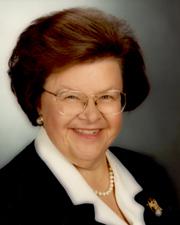
Mr. President, the hour of 2:30 having arrived, it is my honor and my pleasure to rise to honor a patriot, a pioneer, and now the longest serving woman in the Congress of the United States ever, and that is the senior Senator from Maryland Barbara Mikulski.
Barbara and I served together in the House, and we came to the Senate together in 1986. I remember that day so well, when we had our first appearance in the Senate as new Senators. It was quite a moving event for me. But one of the events I remember about that day is the presentation of Senator Mikulski.
We all said a word or two, and everything we said will be long forgotten. But what Barbara Mikulski said, in the way she has of saying things, will not be forgotten.
Here is this woman who is not even as tall as my wife, who is 5 feet tall, but she said, ``I slam-dunked Linda Chavez,'' her opponent. That said it all.
That was the beginning of my working closely with this good woman. She has been a friend, an inspiration to me in so many different ways in the time we have served together. When we got on the Environment and Public Works Committee, she was here, and I was here. She was always ahead of me in seniority because of her longer service in the House. On the Appropriations Committee, for more than two decades, I was here, she was here. She was always one ahead of me.
Barbara was the first Democratic woman elected to the Senate in her own right. Last year, she surpassed the legendary Margaret Chase Smith of Maine as the longest serving woman in the history of the Senate. On Saturday, she officially surpassed Congresswoman Edith Nourse Rogers of Massachusetts, who, by the way, served in the House from 1925 to 1960 as the longest serving woman in the history of the Congress.
Senator Mikulski's service--and the service of many female Members of Congress--has paved the way for girls of today to know they can become Senators, they can become professional basketball players, and they can be engineers and doctors. The sky is the place they need to go, and that is where they believe they can go because of the work that has been done by Barbara Mikulski.
When I came to the Senate with her, she was the only woman who served in the Senate as a Democrat. There was one other Republican at the time. Now, since then, Mr. President, I have watched very closely on this side of the aisle. Now we have 12 Democrats, and if the elections turn out the way I hope they do--and I am cautiously optimistic they will--we will have 17 women who are Democrats in the Senate.
She has been truly a trailblazer. We recognize Barbara's achievements today and her outstanding record as a tireless advocate for the State of Maryland. She grew up in the Highlandtown neighborhood of east Baltimore. She learned the value of hard work by working in and watching her dad, especially, open that family grocery store and work from early in the morning until night. He sold lunch to steelworkers and other people who came by that little grocery store.
In high school she was educated by the nuns at the Institute of Notre Dame. She credits the nuns with instilling in her faith and a thirst for justice. She went on to study at Mount Saint Agnes College, which is now part of Loyola College in Maryland. She earned her master's degree in social work from the University of Maryland.
Barbara was a social worker and has always been proud of the fact that she has been a social worker. She was employed by Catholic Charities and the City of Baltimore's Department of Social Services. I can imagine what a dynamo she was--and she still is. There is no work harder than being a social worker. The problems one sees and has to deal with are extremely difficult.
During her years as a social worker, she was a powerful voice for children and seniors in need of an advocate. Barbara Mikulski then and now is an advocate. It was there the spark for service and activism was lit, but it was a plan to build a 16-lane highway that fanned the flames that had been lit by her activism.
The highway would have gutted historic Fells Point, a neighborhood that she believed should have been protected. It would have uprooted homeowners in a majority African-American neighborhood. She organized the residents of Fells Point and Baltimore's Inner Harbor and stopped the construction of that highway.
That is a testament to the power of democracy that she believes in with all her soul. Looking back on that triumph, Senator Mikulski said:
I got into politics fighting a highway. In other countries,
they take dissidents and put them in jail. In the United
States of America, because of the First Amendment, they put
you in the United States Senate. God bless America.
She has always been an advocate for the disenfranchised and disadvantaged in this country, but she has also been an advocate for dissidents in other countries, of whom she has spoken so eloquently on so many occasions. Her family was Polish. She has heard all the Polish jokes, and she has withstood a little of the ``barbs'' when neighborhoods were different than they are now. But she took special pleasure and was so proud of her heritage.
Barbara took a special interest in the plight of Polish people oppressed under communism. We know in 1980 the people of Poland started a fledgling little group called Solidarity--a movement to engage in nonviolent resistance against communism and in support of social change.
Senator Mikulski and I had the wonderful pleasure of traveling under the guidance of a trip led by John Glenn--a world famous man then and now. It was a wonderful trip for a couple of new Senators. The Iron Curtain was down, and it was down hard, but we went to Poland on a codel. I can remember we had the opportunity to meet with members of the Solidarity movement. We met in secret with them, in a secret location, and Senator Glenn talked, Senator Stevens, then a senior member of the Senate at the time spoke, and I said I would like to hear from Senator Mikulski.
Now, Mr. President, I am not articulate enough to explain the presentation she made extemporaneously, but this powerful woman stood and talked about her heritage and her religion and what that meant to the people of America and what it should mean to the people of Poland. It was truly--and I have told her this personally over the years on several occasions to remind her--one of the most heart-warming, stirring speeches I have ever been present to listen to. She spoke to the people assembled there--there weren't many of them--as a fellow activist. She spoke as an American of Polish descent and a fellow Catholic. She spoke as one of them. When that presentation was completed, everyone knew she was one of them.
It took almost a decade for the Solidarity movement to strike victory in Poland, and I know Senator Mikulski's speech was not the reason, but I guarantee you it was one of the reasons they had the audacity and the courage to proceed as they did.
Remember, Poland was an interesting country. It was the only country behind the Iron Curtain where the Communists could not destroy their educational system, and that was because of the strength of the Catholic Church in Poland at that time. Solidarity's victory in Poland inspired a stream of peaceful anti-Communist revolutions that eventually caused the fall of communism entirely all over Eastern Europe.
Barbara's Polish ancestry and the Polish community in which she grew up in Baltimore were very important to her, but I never knew it until that moment in Warsaw with those few members of Solidarity who were assembled to honor us.
Her great-grandmother had come here from Poland with just a few pennies in her pocket--literally--but she had a dream of a better life for her and her family. This is what Barbara Mikulski said about her great-grandmother.
She didn't even have the right to vote, and in this great
country of ours, in three generations, I joined the United
States Senate.
It was a remarkable feat for her. But, more importantly, it was a confirmation of the American dream. For Barbara, what began as community activism, a fight against a highway, grew into a successful career in public service.
I just want to add a side note, Mr. President, and talk about something very personal to me. When Senator David Pryor got sick, he was the Democratic conference secretary in the Senate. That opened up a spot in the Senate leadership. That was something I thought would be interesting to me. It was known who was interested in filling that spot, and I knew Barbara was interested.
I went to Barbara and said: Barbara, if you want it, it is yours. Two years later, Wendell Ford decided he was going to retire. He was the whip. I can still remember that morning walking from the Hart Building over to the Russell Building, in that long walkway there, and I saw Barbara Mikulski. I didn't say a word to her.
She said: I want to talk to you. She said: You supported me when I wanted to be the conference secretary. You
want to be the whip, I am supporting you. But for Barbara Mikulski, I would not have had that leadership position. Once the Democratic caucus knew Barbara Mikulski supported me, it was all over. I won. And I won because she came to me, as she did that morning.
So, Mr. President, my respect, admiration, and love for this woman is difficult for me to describe, but it is there. Barbara Mikulski ran for Congress and won after serving on the city council of Baltimore for 5 years. She represented Maryland's Third District for 10 years before winning the seat in the Senate she now holds.
Again, I appreciate all she has done for me--so many different things she has done for me. As a very able member of the Appropriations Committee and somebody who loves this institution, I am in awe of the legislative record of this amazing woman.
She has been a dedicated representative not only for the State of Maryland but the State of Nevada. One thing she did for me--and there have been a lot of them--when we were new Senators and she was on one of the subcommittees of the Appropriations Committee concerning veterans benefits and affairs, as a favor to me she traveled to Reno, NV, to look at an old veterans hospital. She went through it and said: This is not the way a veterans hospital should be, and I, Barbara Mikulski, am going to change it. And she did.
Through the appropriations process we renovated and improved that hospital so it was one of the better hospitals at the time. So I am grateful for this good woman, an advocate for parity for women on everything from salary to health care access. But for Barbara Mikulski the National Institutes of Health would not have a center for women. She got a little upset when she learned they had done a study of the effect of aspirin on people's hearts and she realized they had tested 10,000 people and they were all men.
I had a situation that arose in Nevada about at the same time where three women came to me who had something called interstitial cystitis, a devastating, debilitating, painful disease that is described as running slivers of glass up and down your bladder. It was said to be a psychosomatic disease. These women had nowhere to go. I talked to Barbara Mikulski about this, and now 40 percent of these women have medicine that takes away their symptoms totally.
I could go on here a long time, as everyone can see. But I do it because I congratulate Barbara on this milestone, which is so important to me and the Senate, and to tell her how much Nevada appreciates her. It is not just for Maryland. She has done things for the entire country.
I wish her well for years to come.
Madam President, Senator McConnell and I have tentatively worked out something so we will have votes tomorrow, not today. That being the case, we are not under a crunch for time here today.
We have a number of Senators here who wish to say something regarding Senator Mikulski, and I wish to set up an orderly time to do that. So I ask that Senator Mikulski be recognized. Following that, we have Senator Cardin to be recognized for 10 minutes; Senator Boxer, 10 minutes. Senator Kay Bailey Hutchison has been here since before anybody else. So following Senator Boxer, I ask that she be recognized. And Senator Gillibrand?
Yes.