Mr. President, would the Chair let me know when I have used 5 minutes, and then I am going to yield to Senator Reed for up to 8 minutes. Mr. President, I wish to be clear about this. If the Paul…
Mr. President, would the Chair let me know when I have used 5 minutes, and then I am going to yield to Senator Reed for up to 8 minutes.
Mr. President, I wish to be clear about this. If the Paul resolution passes--which I don't think it will, it is so extreme-- people in 38 States, 248 million people, will be adversely impacted with filthy, dirty air.
In the Senator's own State of Kentucky, the prediction is, based on science, that between 530 people and 1,400 people will succumb to premature death. So we are not talking about some political argument. We are talking about the very life and death of the people we represent. I wish to thank Senators Durbin, Whitehouse, Lautenberg, Shaheen, and Ayotte for already speaking out on the floor against the Paul resolution.
I hope we will have a big vote because we are dealing with the health of the people, with the health of the children, with the ability of people to work--because if we cannot breathe, we cannot work--and we are dealing with jobs, many jobs, over 1 million jobs that are created as a result of clean technology.
Senator Paul insulted the people of America. There was a poll just taken last month where 67 percent of voters support the cross-state air pollution rule. That is 85 percent of Democrats, 68 percent of Independents, and 48 percent of Republicans. Are they extremists? No. They are mainstream. Are the groups who support this rule extremists?
I think the Senator owes an apology to the American Lung Association for making it sound as if they are for air pollution rules because they are getting some kind of payoff. It is an outrage, a complete outrage. Does he
think the National Association of County Health Officials is extremist? He said the American Lung Association. He already attacked them. How about the American Nurses Association, does he think they are extremists? Does he think President Richard Nixon was an extremist when he signed the Clean Air Act and he said: ``Clean air, clean water, open spaces--these should once again be the birthright of every American.'' Does he think Richard Nixon was an extremist?
Let's talk about what he wants to do. He wants to repeal a very important rule that is going to clean up the air, that is going to reduce toxic poison soot and smog-forming air pollution that impacts air quality for over 240 million people.
Let me say this. I know all 100 of us in this Chamber would condemn it if somebody took all their garbage and put it on the lawn of the next-door neighbor. That is what this cross-air pollution rule is about. It is about States that don't crack down on pollution. They have smokestacks that blow the pollution into other States and they say: Isn't it wonderful? We don't have any problem here; it is your problem.
When I made this analogy, Senator Carper corrected me. He said: The Senator is right. It is a good analogy as far as it goes, but garbage is not usually poison. I will amend my analogy to say this: If we knew that someone had garbage that included poison and they took that garbage that included poison and put it on someone else's front lawn, that would be a terrible thing to do, and it would be the moral responsibility of that party to clean it up and not do it again. That is what this rule is about.
I wish to talk about specifics rather than be vague. This rule that Senator Paul seeks to cancel and repeal prevents up to 34,000 cases of premature death, 19,000 emergency room and hospital visits, 400,000 cases of aggravated asthma attacks, and 1.8 million lost work and schooldays. It is estimated to provide up to $280 billion in annual benefits by 2014.
So all this flailing around of arms and calling people extremists simply cannot erase the fact that what Senator Paul is doing is extreme and is hurtful to our people.
How many people feel good when they look at a child such as this who is desperately seeking air? Here is the exhaler, this plant, and here is her inhaler. Exhale from these dirty plants and inhale clean air.
It reminds me of a story I just read in the New York Times that talks about China.
I ask unanimous consent for 1 minute, and then I will yield 8 minutes to Senator Reed.
In China, the leaders there are arrogant and they are elitists and they surround themselves with air purifiers in their offices, in their homes, in the great hall of the people where they work, which is opulent, but the rest of the people in China have to breathe filthy, dirty air. In a recent trip there, our group did not see the sun for 7 days.
``Chinese leaders are largely insulated from Beijing's famously foul air.'' That is the story in the Times. ``The privileges of China's elites include purified air.'' Well, I don't think anybody ought to be able to insulate themselves from the quality of the air. We have to clean up the air for everybody, not just an elite few. So I think Senator Paul's resolution under the CRA should be soundly defeated.
At this time, I yield 8 minutes to Senator Jack Reed.
Mr. President, I wish to address that, if I could for a moment, for the benefit of Senator Coats. I was going to speak for a much longer block, but I didn't. I yielded the time to Senator Reed, and I retain the time I have. So I only did it because he was trapped in a hearing. But it is up to the Senators, however they want to proceed.
I am happy to do that. I will retain my time and yield to the Senator from Indiana.
I am retaining my time.
Mr. President, if my colleague would withhold for just 50 seconds.
I thank the Senator.
I would like to make a quick point before my colleague, Senator Sessions, leaves the floor.
I want to first of all thank the Senator very much for working with us in the EPW Committee. As I said to the Senator privately, in our committee,
when it comes to infrastructure, we are all very closely tied, and we support each other. When it comes to the environment, we see things differently.
I want to say to my friend who is very wise in many ways, I do not know why he would question--he has a total right to question the EPA's assertion--that if we pass the Rand Paul repeal, it would result in 34,000 premature deaths. I want to point out he is not a cardiovascular specialist or a lung specialist. Neither am I. But I think it is important to rely on those who are, such as the American Association of Cardiovascular Pulmonary Rehab, the American Association of Respiratory Care, the College of Preventive Medicine, the Lung Association, the Nurses Association, and I will not go on because I only have 1 minute. But I will list these. I would hope we would look to these groups because I do not know of anyone in this body who is a specialist in cardiovascular or lung conditions. And these groups oppose the Paul resolution because they think people will get ill and they will die prematurely.
I yield 8 minutes to Senator Alexander.
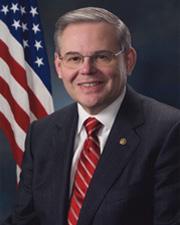
Mr. President, I ask unanimous consent that Senator Menendez go for 5 minutes and Senator Blunt for 10 minutes following that.
How much time remains on the Republican side and on this side?
Thank you. I will use some time on our side until we have another speaker, which will probably about be 5 minutes. I know Senator Reid will want to have the floor.
Mr. President, this is a very important vote that is coming up. I wish to put into perspective what we are talking about. In 1997--by my calculation, that is 14 years ago--several States went to the EPA and said their people were suffering because certain States were producing horrible pollution--toxic, dirty pollution--and it was floating right over to their States and then their States had to face the impact of that pollution, which was causing asthma attacks, heart attacks, cardiovascular problems, all sorts of problems and that their State, the recipient of the dirty air, was then expected to clean it up.
I liken that to this: If you had toxic garbage in your house and went and dumped it on your neighbor's front lawn and said now it is your problem. That is not what we believe in America. We believe in responsibility.
But the Paul amendment would say, no, we cannot ask those States that are producing pollution that is floating to other States and harming their people to do anything about it. That is what this rule is about. It is the cross-State air pollution rule. The pollution goes across one State into another. I believe 38 States would be adversely impacted if the Paul resolution were to pass.
Let's look at this. I am not just being rhetorical. The scientists have looked at this. They said that if the Paul amendment were to pass and we repeal this cross-State air pollution rule and States could feel very fine about dumping their pollution in another State, there would be 34,000 cases of premature death, there would be 19,000 emergency room and hospital visits, 400,000 cases of aggravated asthma attacks, and 1.8 million lost work and schooldays, and we would lose up to $280 billion in annual benefits by 2014.
So anyone who stands in this Chamber and tells us that by voting for the Paul resolution we are helping people, don't fall for it. It is wrong. If anyone comes to this floor and says: Oh, this is about jobs, it is wrong--because if we cannot breathe, we cannot work. Lost days at work are an economic burden. If we turn the clock back, all this great clean-tech economy we have, which is exported to the rest of the world--and it is huge; it employs more than 1 million people--we hurt those jobs. So the Paul resolution, which would cancel out a very important protective air pollution rule that helps our people--that resolution is one of the worst things to come before this Senate.
Let me tell you who backs me on this: The American Association of Cardiovascular and Pulmonary Rehab, the American Association of Respiratory Care, the American College of Preventive Medicine, the American Lung Association, the American Nurses Association, the American Public Health Association, the American Thoracic Society, the Asthma and Allergy Foundation of America, the National Association of Medical Direction of Respiratory Care, the National Association of County and City Health Officials, the National Home Oxygen Patients Association--which sees people gasping for air.
Have you ever seen a child gasp for air? It is something you don't forget. I will show a photo of a beautiful child who is forced to wear one of these inhalers too often because she cannot breathe. We hear lots of things: Oh, we need more time for this. How about the polluters knew about this since 1997? How about since 2005, when they learned the Bush administration rule was too weak--how about that?
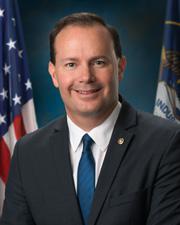
I see Senator Carper. Since we are going back and forth, this would be a good time for Senator Lee to speak. How much time is Senator Lee going to need?
Mr. President, I ask unanimous consent for 5 minutes for Senator Lee, followed by 8 minutes for Senator Carper.
Mr. President, how much time remains on each side?
Mr. President, we have heard the same theme over and over from our Republican friends: We need time, give us time. The EPA is rushing this.
Well, how much time do they need to fix a problem that is forcing children to put on these inhalers? How much time do they need to enforce a rule that is keeping people from dying prematurely; that is keeping them from getting heart attacks?
Here is the deal. In 1997, several States went to the EPA and said: Something is really wrong. We have kids like this gasping for air, and the air pollution isn't coming from our State. It is coming from the States to the west of us.
Now, I want to make it clear that my State of California doesn't have a dog in this fight. We are not involved in this. We don't pollute. We don't have a lot of coal-powered plants. And we are in the far west. Frankly, having that ocean along our State helps us. We have plenty of air pollution, but we are not getting it from another State to our west. So I stand here speaking, frankly, as a Senator who cares about clean air, who cares about the public health, and who also sees this as a moral issue.
I have said this every way I can say it. It is immoral to take poison and put it on someone else's front yard. It is immoral to walk away from your responsibility, particularly if you have a truck to put it in and take it away.
Well, we have the technology to make cleaner utilities, to make cleaner power. And as my friend Tom Carper so eloquently stated, clean tech creates jobs.
We have the technology. We have the ability to create jobs cleaning up the environment. We have an ability to make sure fewer children, such as this beautiful child, don't have to resort to inhalers if we clean up our powerplants, and we have the ability to do that. The other side is crying, We need time. That is all we need, we need time. Well, I think 14 years is enough time.
Then in 2005, the courts said again how important it was to do this. So they knew about this in 1997, they knew about it in 2005, and now they are crying bitter tears and they want to continue to dump poison in States next door. This is just the tip of the iceberg of the Republican Party's desire to repeal important health and safety regulations. The American people do not agree with it.
Let me show you a poll that was taken last month in terms of where people stand. This cross-State air pollution rule is very popular with the people of this country because they see very clearly. I think when we were kids our moms always said, clean up your room. You know, you owe it to the rest of the family, clean up your room. Polluters have to clean up their room. Polluters can't pollute at will and, as Senator Carper said, build these big smokestacks and blow that pollution over to, in this case, 38 other States and hurt the people in those States. That is not the American way. What Senator Paul is doing is the height of irresponsibility.
I want to put back the picture of that child again.
How is it responsible to allow the pollution to go on and on and on when you have the technology developed to stop it, and when it is moving out of your State and going to another State and harming children?
I would be happy to yield.
It would.
I will respond on my time; the Senator can respond on his.
Let me tell you something. As far as I know, we do not have one person in this Senate who is a physician with a degree in lung specialty, thoracic specialty, cardiovascular specialty; therefore, we need to look to those people.
You are right. When you go to the hospital and talk to physicians, they will tell you about children dying in their arms. I have seen that testimony, I have heard it in front of our committee. The fact is, this rule will prevent 400,000 cases of aggravated asthma
attacks and 1.8 million lost work and school days. This is factual.
I want to say that hearing people come on this floor questioning whether there is an association between soot in the air and asthma attacks, frankly, is to me unimaginable. And we have all of the health organizations that disagree with Senator Paul on that.
Absolutely. I don't know of any medical groups that support the Paul resolution. But I do have in my hand a letter signed by many groups, which I wish to quote from.
I ask unanimous consent to have printed in the Record this important letter Senator Durbin is speaking of.
Blocking the cross-air pollution rule, cross-State pollution rule would force people living in downwind States to continue to suffer from high levels of unhealthy pollution from out-of-State powerplants. They say they express their strong opposition. They say ozone and particulate matter are associated with numerous adverse health effects, including lung disease, irreversible reductions in lung function--irreversible.
So it is not as though you have a bad day and you are gasping for air, and suddenly the next day it comes back. Irreversible reduction in lung function. Asthma attacks. And, by the way, we are told there will be 400,000 cases of aggravated asthma attacks if we go back on this rule. Aggravation of other respiratory and cardiovascular diseases. And, I would say to the Senator, they add premature death. Here they are saying 34,000 cases of premature death. I will give you a few of the names of the people who signed this.
I am so glad the Senator came down here. He has been such a great leader on these issues and, I want to say for the record, led me and so many others, the majority of the House, in saying no more smoking on airplanes. And, boy, we remembered how it was in those days, and I know the Senator's personal experience with lack of lung function and his own dad. So the Senator coming over here today is very appreciated. I will give you the names of some of these organizations.
I will.
Absolutely. Well, first of all, I want people to know that since the Clean Air Act passed and there were all these predictions of a horrible recession, there has been a huge number of jobs created and it is all documented on one of these charts here. I can tell you, our GDP rose more than any other industrialized nation in the world as we cleaned up the air.
The Senator and I were on a trip to China. We did not see the Sun for days and days and days. I don't know if you missed this or caught this story in the New York Times. The Chinese elites in the government--many of whom we met with there to try to push our agenda, which is trade with China and all the other things we want and making sure their currency is floating--this is what we learned:
Chinese leaders are largely insulated from Beijing's
famously foul air.
In the Great Hall there they have all these fabulous clean air devices. In their homes they are protected, in their cars they are protected. But guess what. The people are suffering and struggling. They don't even get to see the Sun shine there. If I could say, I don't want to see elitism here. Every single person in our country deserves to have a chance to breathe clean air.
To get specifically to the point, to talk about the economy--because I think that is critical--Senator Paul's resolution is bad for this economy. It is bad for jobs. It is bad for our families.
That is why it is opposed by every health professional.
Let me say this. We are talking about 400,000 cases of aggravated asthma attacks if this resolution passes. We are talking about 34,000 cases of premature death.
I want to make a point here. If you are the head of household and you die prematurely because of filthy, polluted, poisonous air that is floating in from another State, you can't work and your family is in deep trouble. I will tell you this, the annual benefits by 2014-- annual, of this rule--are estimated to be $280 billion a year. So if anyone stands up here and says we are fighting for jobs, we are fighting for the people, we are fighting for the economy by rolling back clean air rules, don't believe it for a minute. If you don't want to listen to me or Senator Durbin, listen to the people I know you respect, from the American Association of Cardiovascular Rehabilitation, the American College of Preventive Medicine, the American Lung Association, the American Nurses Association. Those nurses have held those babies.
How much time remains on our side?
I hope we vote down this resolution.