Mr. Speaker, I yield myself 5 minutes. Mr. Speaker, in little more than a month, the interest rates on loans to millions of the neediest students will double from 3.4 percent to 6.8 percent. With…
Mr. Speaker, I yield myself 5 minutes.
Mr. Speaker, in little more than a month, the interest rates on loans to millions of the neediest students will double from 3.4 percent to 6.8 percent. With that doubling, those that can afford it least will be burdened with more debt. With total student loan debt already surpassing $1 trillion, this Congress needs to stop that interest rate hike, that doubling of the interest rates.
But rather than make it more affordable for students and families to pay for college, this Congress this day in this Chamber is debating a bill--I know people won't believe this--but we're debating a bill to make it more expensive for families and students to achieve a college education. At a time when college costs are rising and historic low interest rates, the majority is asking us to accept a bill that would increase interest rates. And even though the student interest rate is scheduled on July 1 to double from 3.4 percent to 6.8 percent, the bill presented on this floor today is worse than that for students and their families. It increases the drag on the economy that the student debt is to families and to young people trying to seek a job and to seek to form family.
This bill is so bad that it means more than the doubling of the interest rates. How do you think that has anything to do with the market rates? According to the Congressional Research Service, when they look at this bill, you can see that under current law interest rates, they would pay $4,000. And they are doubling to 6.8 percent, so they'd pay $8,800 in interest rates. And under the Republican bill, families would pay more than $10,000 in interest. How can that possibly be in the interest of these families? How can that possibly be happening in this economy when people are struggling with interest rates? It cannot be allowed.
You can see here that the parents who may have to contribute something, they would take out a loan to
help their child complete a college education, they are going to pay more than $35,000 over the life of those loans than under the current law, and that's what we've got to stop from happening.
And so what you see is when it is all said and done, this bill asks students over the next few years to pay more than $3.7 billion, almost $4 billion, in increased interest rates. No wonder this poor student has a headache. No wonder this parent is pounding on his head thinking, What am I going to do?
But what do they say? They say we have a market rate here. We have a market rate. Well, many in America, certainly middle class families and many low-income families, will remember the last time when we had this kind of market rate because what they have, they have a teaser rate. For your first year, they'll have a lower interest rate. So you have a teaser rate. But you know that next year that teaser rate adjusts so you don't get that rate because next year you get a new rate. And when you're a sophomore in college and you take out another loan, you get a new rate, a higher rate. And when you're a junior, you take out a loan, and you get a higher rate. And when you graduate, they take all of your loans together and give you a higher rate. Does that sound familiar to people? That's the marketplace. That's the marketplace when you choose to crush the people who are borrowing the money.
The President has the market rate. The chairman has said many times the President is looking to use the markets to set a realistic rate. But as he sets the rate, it's deficit neutral. As he sets the rate, the amendment we tried to offer was deficit neutral. He saves those students and families about $30 billion over the life of those loans. You get the difference? Yes, the market's the market. But you can pick the worst of the market, and you can pick the best of the market. They've chosen to pick the worst of the market for these students.
Now they had options. Republicans last night in the Rules Committee had options. Mr. Courtney offered an amendment to keep rates at 3.4 percent. They rejected it.
I offered the President's market approach. They rejected that.
Then Mr. Heck from the Republican side of the aisle from Nevada offered to say let's provide an incentive to make sure that students in fact continue to pay on time, as they should, as the market would do because you want to incent good behavior because you get more of it. They rejected that.
Mr. Rice of South Carolina went before them. He's a member of the Republican caucus, very concerned about interest rates in this legislation, very concerned about what's going to happen to these families. He thought he could lower the interest rates within their bill, within the market rates, stick with the market principle. They said ``no.''
So all you get today is whether or not you want a solution that is worse than the doubling of the interest rates on July 1. That's not an answer for America's families. That's not an answer for America's students.
I reserve the balance of my time.
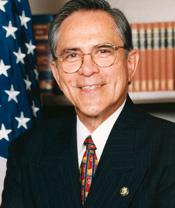
I yield 2 minutes to the gentleman from Texas (Mr. Hinojosa).
I yield the gentleman an additional 10 seconds.
I yield 2 minutes to the gentleman from New Jersey (Mr. Andrews).
(Mr. ANDREWS asked and was given permission to revise and extend his remarks.)
I yield 2 minutes to the gentleman from Virginia (Mr. Scott).
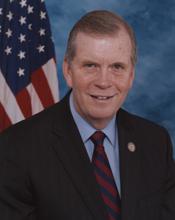
I yield 2 minutes to the gentleman from Massachusetts (Mr. Tierney).
I yield 1 minute to the gentlewoman from New York (Mrs. McCarthy), a member of the committee.
I yield 1 minute to the gentlewoman from California (Mrs. Davis), a member of the committee.
May I inquire of the Chair of the time remaining on both sides?
I yield 2 minutes to the gentleman from Connecticut (Mr. Courtney), a member of the committee.
Mr. Speaker, I yield 1\1/2\ minutes to the gentlewoman from Oregon (Ms. Bonamici), a member of the committee.
I yield 1 minute to the gentleman from Vermont (Mr. Welch).
I yield the gentleman an additional 30 seconds.
I yield 1 minute to the gentleman from California (Mr. Swalwell).
Mr. Speaker, I yield 1\1/2\ minutes to the gentleman from Rhode Island (Mr. Cicilline).
Mr. Speaker, I yield 1 minute to the gentleman from New York (Mr. Meeks).
I have no further speakers.
Is the chairman the last speaker?
Mr. Speaker, I yield myself the balance of my time.
I want to thank all of my colleagues who entered into the debate here this morning on this legislation. I think it is clear that there is a very big difference between our positions on this legislation; there's a very big difference between the President's bill, who is trying to use a market system, and this bill before us, Mr. Kline's bill, that uses a market system.
The fact is that the President's bill saves students billions of dollars, but the Republicans would not make President Obama's bill in order for consideration. Why not? They say it's like they're doing the same thing as the President. Well, they're not. In fact, they're adding $4 billion worth of debt onto the backs of students over their program.
And how can they possibly do that? You've heard my colleagues on this side of the aisle speak to the issues that we hear all of the time when we go home. The struggle of students, the struggle of families, be they low-income, be they middle-income, to get access and to be able to complete a college education, to get access to a community college, to a State college system, to get a certificate, to get a degree that will allow them to participate in the American society, in the American economy. That's part of the American Dream.
Yes, we lowered the interest rates to 3.4 percent, and they've held over a period of years. And they held over those exact same years when families were under the most stress because of this recession that was created on Wall Street and the scandals that took away 70 percent of the wealth of African American and Hispanic families in this country, that destroyed the equity and good chunks of middle America because of teaser rate loans, subprime loans.
And what is happening today in the private market? The banks are getting money from the Treasury at 0.75 interest, and they're loaning it to families in private student loans. If you have good credit, they'll loan it to you for somewhere around 7 percent.
Bankers used to go die and go to heaven if they could get a 7 percent spread. That's how you become a billionaire. Get it at 0.75 and put it out at 7. And if your credit rating is not so good, those statistics sort of suggest you drift towards 13 percent.
Obviously, the students and middle class can't survive in that market for the most part, and that's why we have a student loan program. That's why we took this program away from the banks a number of years ago. We took the $60 billion that we were giving to the banks to loan the public's money to students and we said why don't we put that to use for families, and we did.
And we lowered the interest rates, and we increased the participation in the Pell Grants, made it available. We increased some loan limits. We gave people a chance to manage their debt after they graduated, so the more you earn, the more you pay, but you don't get crushed on your first job that may not have the best salary, even though it's the career you want to go in and it takes time to get that salary. We made it more affordable for America's families.
Yes, we lowered the debt to 3.4 percent. It was paid for, and that's all we could afford. Congress will make that decision. Last year, the Congress made a decision to extend it. This year, they've decided that they don't want to extend it on the other side of the aisle. So, fine, come up with a plan. But the plan they came up with is worse than having the 3.4 percent double on July 1.
How can you develop a plan that's worse for students? I guess maybe if you go home and everybody in your district is working and everybody is participating in this slow-growing economy that's getting better. I don't know. Families I represent, they're still struggling. The recession hasn't left town. The recession hasn't left the country.
If you pick up The Wall Street Journal today, there's greater concern about what's happening in China dragging down the world economy, there's greater concern about the Europeans dragging down the world economy. America is trying to struggle and the students are trying to struggle, and we're going to come along and more than double the rate.
We're going to give them a teaser rate, though. This next September when families go out and they get a rate, it will be probably somewhat lower than the current rate. But that loan will be adjusted, and they don't know what those rates are going to be. As long as they're paying on that loan, that loan will continue to be adjusted. We just saw that history in America. We saw what that did.
I don't have a problem going to a market system. How about a fair one? When the President went to a market system for the subsidized Stafford loan, he said on the market system we'll go to 0.9. They said they would go to 2.5--10 years plus 2.5. The President said 10 years plus 0.9.
There are a lot of ways to go to a market system. You don't have to punish the American family. You don't have to punish the students in school to go to a market system. I wish the President had a cap. The gentleman has a cap. This could be worked out, but we don't do things bipartisanly anymore in the Congress of the United States. So, because we can't get the President and the majority on the Education and the Workforce Committee to sit down and work out the market system--because that's not allowed and
we don't do bipartisan work--the victims are going to be the families and the students, and, in the long term, our Nation.
Every Member of Congress has come to this floor and has said how important this education system is to our future economic growth, to competing in a globalized world, to have innovation, to have discovery, to have job creation. We're now creating a drag on job creation. We're now creating a drag on the opportunities for families. We are creating a drag on the ability to achieve the American Dream--and a college education is part of that dream, but a college education is also critical to keeping this economy and this society moving.
I would hope that my colleagues, whether they are committed to a market rate or not, would understand that this is a very flawed market rate.
Mr. Speaker, I yield back the balance of my time.
I want to congratulate the gentlewoman for offering this motion to recommit. I think she goes right to the heart of the matter, and that is the uncertainty that is being presented by the legislation on the floor today.
Other Members tried to deal with this issue of uncertainty. Mr. Heck from Nevada tried to deal with this uncertainty by providing an incentive for those students who borrowed money and were able to pay 4 years on steady payments to give them incentive to continue to do that. Mr. Rice of South Carolina sought to have a lower rate.
This lower rate isn't chiseled in granite. This isn't the market rate. This is a choice of the Republican Members of the committee to choose these rates. Mr. Rice thought this time couldn't we have the lower rate to begin with, but the Rules Committee turned that out. Then Obama's plan was offered, and they turned that out.
So now we're stuck, and that's why we need this motion to recommit, to do as the gentlewoman from Arizona has said: to protect the students from the escalation of their interest rates, to protect the students from the escalation of the cost of college.
These are families and students. Companies and colleges create calculators to try to show students what it will cost over 4 years. This legislation takes all of that uncertainty out for families: how they set money aside, how they save money, how they borrow money. Those calculators don't work with this variable rate, and this variable rate can go on and on and on and on. That's the problem here.
This is a big choice for most families. I appreciate for some families that it's not a big deal as they've got enough money. From where I live, my family, people around me, my neighbors, this is a big choice and commitment to finance the education of your children. That's why this motion to recommit from the gentlewoman from Arizona is so important. There should be truth in lending for America's students, truth in lending for America's families, and we should get rid of the rates that will just punish them and crush them into the future as they graduate from college and they seek to participate in the American economy and in a career of their choice with the talents that we need as a Nation.
I want to thank the gentlewoman so very much.
Mr. Speaker, I demand a recorded vote.