Mr. Speaker, I ask unanimous consent that all Members may have 5 legislative days in which to revise and extend their remarks and include extraneous material on the bill H.R. 2824. Mr. Chairman, I…
Mr. Speaker, I ask unanimous consent that all Members may have 5 legislative days in which to revise and extend their remarks and include extraneous material on the bill H.R. 2824.
Mr. Chairman, I yield myself such time as I may consume.
It is well-known the Obama administration has waged a long-running war on coal, which last year a White House adviser admitted ``is exactly what's needed,'' but this is not only a war on coal. It is a war on jobs, our economy, affordable energy, small businesses, and the household budgets of American families. Already faced with higher home heating costs, middle class families will be further squeezed if the Obama administration is successful in its attempts to shut down coal production.
One of the ways the administration has carried out this war on coal is through the reckless rewrite of a coal production regulation, the 2008 Stream Buffer Zone Rule. Shortly after taking office, the Obama administration discarded the 2008 rule that went through 5 years of extensive public comment and environmental review. Since then, the administration has spent over 10 million taxpayer dollars in working to rewrite this rule, including hiring new contractors, then only to dismiss those same contractors once it was publicly revealed that the administration's proposed rewrite would cost 7,000 jobs and cause economic harm in 22 States. A report released by our House Natural Resources Committee staff in September of 2012, following years of oversight and investigations, exposed the gross mismanagement of the rulemaking process, potential political interference, and widespread economic harm the proposed regulation would cause.
Earlier this year, the U.S. Department of the Interior's Office of Inspector General, or IG, released a report with similar findings. However, what is more troubling is that the IG has identified significant ongoing problems with the rulemaking process. To make matters worse, they are refusing to disclose those problems to us here in Congress. For example, there is an entire section of the report that we have received, entitled ``Issues with the New Contract,'' that have been almost completely blacked out. Despite our repeated requests, Deputy Inspector General Mary Kendall has refused to give Congress an unredacted copy of this report. In a letter, she states that the Department of the Interior decided that it should be withheld from the committee.
The IG is charged with being an independent watchdog for Congress. It is completely unacceptable and inappropriate for the IG to be taking orders from the Interior Department, especially about what information to withhold from us here in Congress.
Mr. Chairman, I don't take what I am going to say lightly. That is why, today, I have issued a subpoena to the Department's Inspector General Kendall for this information that she has withheld from us. If the IG discovered ongoing issues with the way the Department is currently conducting this rulemaking process, they have a responsibility and a duty to share that information with Congress now. The committee is not asking the IG for materials produced by the Department, but we are asking for materials and interviews produced by the IG's staff.
The Obama administration's rulemaking process has been and continues to be an unmitigated disaster. Despite having spent millions of taxpayer dollars, they have absolutely nothing to show for it and, to date, haven't even produced a draft. Meanwhile, States, industry, and America's coal miners are left in limbo, unsure of what the operating rules are on the ground. Without the 2008 rule, we are left with a rule that was put in place in 1983.
That is why we are here today--to consider H.R. 2824, the Preventing Government Waste and Protecting Coal Mining Jobs in America Act. This legislation will put an end to the years of ongoing waste and dysfunction. It will put in place a responsible process to ensure there is no rush to recklessly regulate.
First, Mr. Chairman, it stops the administration's unnecessary rewrite and implements the 2008 Stream Buffer Zone Rule that I mentioned took 5 years to put in place. It then directs the Department to responsibly study the impact of the rule for a prescribed period of time prior to initiating another new rule. This will provide certainty to the economy, to the individual States, and allow a clear examination of what may be needed and changed in the future. This bill will make certain that a new rule is written properly.
Now, some will attempt to criticize this bill for the fact that it puts in place the 2008 rule that was vacated on a very narrow technical ground by a Federal judge last month. There is really nothing new here, however, because this is the exact outcome that the administration has been seeking for over 5 years--to get rid of the 2008 rule. But let's be clear what the court ruling and, subsequently, the Department's actions really mean.
The court ruling strikes down the more protective 2008 rule and sets us back 30 years to a less restrictive 1983 rule. The 2008 rule is more modern and more protective in limiting the impacts of coal mining than the 1983 rule, but one Federal judge ruled that the 2008 rule must be set aside due to a narrow procedural technicality. This judge ruled, because the 2008 rule didn't have formal consultation with the Fish and Wildlife Service on possible impacts to endangered species, the entire rule
should be set aside and, thus, revert back to the 1983 rule.
Mr. Chairman, for the record, there were multiple meetings and discussions and consultations with Fish and Wildlife in proposing the 2008 rule regarding species when the 2008 rule was written, and it was done in a published and transparent fashion over a multiple-year period. Comments were taken and recommendations were made, but the bureaucratic process wasn't done precisely so, and as a result, this judge struck it down. Compare this conscientious effort, which was done to protect species in the 2008 rule, with the fact that there was absolutely zero consultation of protecting species in the 1983 rule.
What could be the responsible thing to do? Clearly, it would be to implement the more modern and protective 2008 rule. What does the Obama administration say? It says let's go back to 1983. Why should we go back? It simply makes no sense to discard a modern rule, where we know the ESA consultation took place, for a 30-year-old rule that we know had no ESA consultations.
Perhaps we should look to the people whom the Obama administration hired to write a rule of its own. In case notes that the committee obtained from the IG's office during their investigation, it quotes one of the current contractors, admitting, ``The 1983 rule was less restrictive than the 2008 rule.'' In the same case notes, it also states about the current contractor that, although she is a Democrat, the Stream Protection Rule appears to be an ``effort to kill coal mining.'' There you have it--straight from the mouth of the person who is working on the current rewrite--an admission that the new rule is an effort to ``kill coal mining.''
That is why we must take action today to stop this administration. Not only are they attempting to impose a new coal regulation that will destroy thousands of American mining jobs, but they have also wasted 5 years and over 10 million taxpayer dollars on a process that has been completely dysfunctional and misguided.
Enough is enough. Republicans want to create an America that works, and that requires access to affordable energy. If we do not stop the administration from implementing its new coal regulation, thousands of Americans will be out of work, and home heating costs for working middle class families will rise.
Let's pass this legislation to protect American taxpayer dollars, to protect American jobs, and to end this administration's reckless, wasteful rewrite by putting in place a responsible process that will allow a proper new rule to be written.
With that, I reserve the balance of my time.
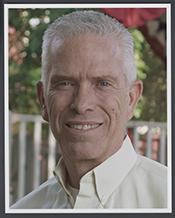
Mr. Chairman, I am very pleased to yield 3 minutes to the gentleman from Colorado (Mr. Lamborn), the subcommittee chairman of the House Natural Resources Committee dealing with this legislation.
Mr. Chairman, I yield 3 minutes to the gentleman from Ohio (Mr. Johnson), the author of this legislation.
I yield the gentleman an additional 1 minute.
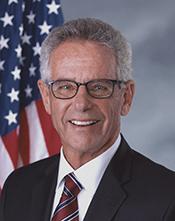
Mr. Chairman, I yield 2 minutes to the gentleman from North Dakota (Mr. Cramer), a member of the Natural Resources Committee.
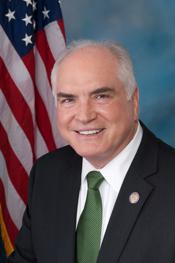
Mr. Chairman, I yield 3 minutes to the gentleman from Pennsylvania (Mr. Kelly), a new Member, not necessarily a brand-new Member, but a newer Member.
I yield an additional 30 seconds to the gentleman.
Mr. Chairman, I am very pleased to yield 2 minutes to the gentleman from Louisiana (Mr. Scalise).
Mr. Chairman, I am pleased to yield 2 minutes, again, to the gentleman from Colorado (Mr. Lamborn), the chairman of the subcommittee dealing with this legislation.
Mr. Chairman, I am very pleased to yield 1 minute to the gentleman from Indiana (Mr. Stutzman).
Mr. Chairman, I would advise my friend from New Jersey I am prepared to close if the gentleman is prepared to close.
Mr. Chairman, how much time remains on my side?
I yield myself the balance of my time.
Mr. Chairman, to hear my friends on the other side of the aisle argue about this, they are making arguments that are pre-1977. Now, why do I say that? Because they are talking about their perception of mountaintop mining or surface mining probably in general. Well, it is precisely that argument that led to the Surface Mining Control and Reclamation Act of 1977 under the Carter administration--with a Democrat Congress, I might add. So that bill passed to allow for surface mining.
Now, there is always necessary rulemaking that comes after that, and the latest rulemaking prior to the turn of this century was in 1983 under the Reagan administration. So the Bush administration looked because of some court test that maybe we ought to rewrite this rule; and, Mr. Chairman, contrary to what my friends on the other side of the aisle said that that was a late-breaking rule, it took 5 years to put that together--5 years to put that together.
So, as a result, because of this court decision that ended up vacating because of the technicality of the 2008 rule, the issue before us is this: Do we put the 2008 rule in place, which is what the focus of this legislation is, and then look forward to further rulemaking, or do we vacate the 2008 rule and go back to 1983? That is what the choice is.
What I find that is so interesting about my colleagues on the other side of the aisle is that everybody acknowledges that the 2008 rule is more restrictive--more restrictive--but they want to go back to the 1983 rule. I find that hard to understand, but at least that is what appears to be their argument.
So, Mr. Chairman, we think the responsible way to do this is to take into consideration what the Bush administration did for 5 years, looking at proper rulemaking that, by the way, looked into the Endangered Species Act. That is something the '83 rule did not look at at all. So we think that is a better way to put that in place right now. It is a more restrictive rule that industry understands, the States understand, and it is probably better for energy certainty in this country.
So I urge my colleagues to vote for this legislation, and I yield back the balance of my time.
Mr. Chairman, I rise in opposition to the gentleman's amendment.
Mr. Chairman, I yield myself such time as I may consume.
I find it hard sometimes to listen to this debate, especially when I hear my good friends on the other side of the aisle defending anything that the Reagan administration did. But they are doing it, so I will acknowledge that there is some substance there, but let me just go back to what I mentioned in my closing arguments.
SMCRA was passed in 1977. The Reagan rulemaking was 6 years after that. So there has not been an update on that rule--right now--for 30 years,
but it was more likely probably 20 years when the Bush administration thought it should be updated.
Now I want to get right to the heart of the matter and the reason that the environmental community does not like the 2008 rule and instead opts for the 1983 Reagan rule. They don't like it because the 2008 rule will provide clarity and certainty in the SMCRA process, which of course will free up job creation, meaning that there is going to be some certainty in coal production; rather, the environmental community would like to use loopholes that they found in the 1983 rulemaking to take people to court.
That is exactly why, from my perspective, that this amendment is offered, to go back to the Reagan times so there can be probably more litigation and less certainty in rulemaking of surface mining.
The gentleman mentioned, for example the 100-foot buffer zone. The Bush rule has a 100-foot buffer zone just like the Reagan rule. Nothing changed there. The only changes in the long run in rulemaking is certainty, and those who like to go to court don't like certainty. That is why I believe we have this improbable defense of anything that Reagan did, because they see that over a period of time there are ways that you can manipulate that to their advantage.
I think the Bush rule--which I said several times and is even acknowledged by the coal mining industry that it is more restrictive but has more certainty in it--is a better model, and it is precisely what this legislation does. It takes us to the 2008 rule.
This amendment takes us back to the 1983 rule, and I don't think that is a proper way to go. I urge rejection of this amendment.
I reserve the balance of my time.
Mr. Chairman, I yield myself the balance of my time.
Very briefly, and maybe we are caught here in semantics, but the issue--I have said several times and it has been acknowledged that the 2008 rule is more restrictive. My friend on the other side of the aisle and the author of the amendment said, ``Let me be clear, the 2008 rule is not as protective.''
I think when we are talking about protecting the environment, that ``restrictive'' and ``protective'' are probably synonymous in nature. So when we hear statements made by the industry that the 2008 rule is more restrictive, I take them at their word.
But, Mr. Chairman, I have to make this point and this point is very important because we need to have a certainty supply of energy in this country if we are going to have a growing economy. I am in favor of all of the above, and that certainly includes coal. Unless you have certainty in the regulations, you will not have an energy source.
As I have said right from the start--and as a matter of fact, many have acknowledged within the administration that this administration has a war on coal--this provides certainty. It is contrary to where the administration obviously wants to go because it does provide certainty with our energy production. So I would urge rejection of this amendment, which would take us back to a rule that would be more potentially litigious in nature to something that has certainty. With that, I urge rejection of the amendment.
I yield back the balance of my time.
Mr. Chairman, I rise in opposition to the amendment.
Mr. Chairman, before I speak directly as to why we should not adopt this amendment, let me respond to the rhetorical question that my friend from Pennsylvania asked when he said:
How can you say that this administration rule, which hasn't been promulgated yet, will cost jobs?
Well, I would tell the gentleman, Mr. Chairman, that there were leaked documents of the first initial rewrite of the 2008 amendment, leaked documents that said that the contractor that was hired by the administration to rewrite the rule came back with the conclusion that 7,000 jobs would be lost in 22 States. So what was the response of the Obama administration? They fired the contractor; it was the wrong message.
Now they are still in the rulemaking process. But, Mr. Chairman, I have to tell you, I doubt that the philosophy has changed from that very way because they are trying to manipulate which rules to follow to minimize what we found out in the initial go-round.
So let me just talk about this amendment. This amendment is not only unnecessary, it is actually harmful to protecting states' rights. Under SMCRA of 1977, State regulations have to meet or exceed the new regulation issued by the Office of Surface Mining. The gentleman's amendment would eliminate the ability of States to meet these rules by mandating that States can only exceed the OSM rules. This ignores both the history of Federal-State regulations with regard to rulemaking but also the need for flexibility in the States to meet the OSM rules while protecting their own geology, hydrology, and community interests.
Again, States already have the ability to change regulations to meet or exceed Federal rules with regards to all aspects of the regulatory regime under SMCRA.
We should not limit the ability to have flexibility in meeting the new rules. This amendment would mandate that you could only change that by increasing it. I think, Mr. Chairman, that is the wrong way to go. I think the amendment is ill-advised.
I urge rejection of the amendment, and I yield back the balance of my time.