Mr. Speaker, pursuant to House Resolution 727, I call up the bill (H.R. 2) to remove Federal Government obstacles to the production of more domestic energy; to ensure transport of that energy…
Mr. Speaker, pursuant to House Resolution 727, I call up the bill (H.R. 2) to remove Federal Government obstacles to the production of more domestic energy; to ensure transport of that energy reliably to businesses, consumers, and other end users; to lower the cost of energy to consumers; to enable manufacturers and other businesses to access domestically produced energy affordably and reliably in order to create and sustain more secure and well-paying American jobs; and for other purposes, and ask for its immediate consideration.
Mr. Speaker, I ask unanimous consent that all Members may have 5 legislative days in which to revise and extend their remarks and include extraneous material on H.R. 2.
Mr. Speaker, I yield myself as much time as I may consume.
Mr. Speaker, I stand here on the House floor, only a few hundred yards away from the Senate, and it feels as if we are worlds apart. In the House, we are listening to the American people who are telling us that it is time to expand American energy production.
Hardworking Americans know how important energy is in their lives. They need it to commute to and from work. It fuels the buses that take our kids to school. It powers the businesses on Main Street.
It provides jobs and improves the livelihoods of millions of Americans who are struggling to make ends meet in President Obama's economy; and, Mr. Speaker, Sunday, it will power the Jumbotron at CenturyLink Field in Seattle as the Seahawks take on the Broncos.
Unfortunately, on the other side of the Capitol, these calls to expand American energy production are falling on deaf ears. The House has passed dozens of energy bills, including a number from the House Natural Resources Committee, on which the Senate has failed to act. By doing so, they are standing in the way of American job creation, affordable energy, and increased national security.
H.R. 2, the American Energy Solutions for Lower Costs and More American Jobs Act, would protect and expand American energy production by removing this administration's roadblocks and preventing unnecessary bureaucratic red tape.
Mr. Speaker, since President Obama took office, total Federal offshore oil production has dropped 13 percent, Federal offshore natural gas production has dropped by nearly one-half, and the Obama administration has placed over 85 percent of America's offshore acreage off limits.
Onshore, Mr. Speaker, it is the same story. This administration has had the 4 lowest years of Federal acres leased for onshore energy production going back to 1988. It has also pledged to impose a duplicative layer of red tape on hydraulic fracturing, which would only hurt American job creation.
The Obama administration has also waged a war on coal and on coal jobs. Coal is a reliable and affordable energy resource that provides 30 percent of America's electricity and supports millions of American jobs.
Unfortunately, with one proposed regulation by the Obama administration, those jobs could disappear. Their rewrite of the stream buffer zone rule could cost 7,000 coal jobs and cause economic harm in 22 States.
But there is good news, and the good news are the provisions in these bills. These provisions are a direct response to the Obama administration's actions that have locked up our energy resources. The bill would end the regulatory delays blocking the construction of the Keystone XL pipeline.
After nearly 6 years of review, this is a commonsense solution that would eliminate the need for a Presidential permit, addresses all other necessary Federal permits, and limit litigation that would delay the project.
The bill would also expand offshore energy production. It would require this administration to responsibly move forward with new offshore energy production in areas that contain the most oil and natural gas resources. What a novel idea, going where the product is, and those areas include areas off the Atlantic and the Pacific coasts.
It also requires the administration to hold oil and natural gas lease sales that have been delayed or canceled, such as offshore of Virginia. This expanded offshore production would generate over $1 billion in new revenue to the Federal Treasury and create up to 1.2 millions of jobs long-term.
Mr. Speaker, the bill would expand onshore energy production. It would reform the leasing and permitting process to remove unnecessary delays, set
clear rules for the development of U.S. oil shale resources, and establish Internet-based auctions for leases. It would also help foster expanded energy production on tribal lands.
The bill would stop the Federal Government from imposing duplicative Federal hydraulic regulations and prevent it from implementing job- destroying coal regulations. It would help protect consumers from EPA regulations that could destroy jobs and increase energy costs.
Finally, Mr. Speaker, the bill would expand production of clean, renewable hydropower by removing outdated barriers and streamlining the regulatory process. It would authorize hydropower development at existing manmade water canals and pipes at 12 Bureau of Reclamation projects.
Mr. Speaker, the American Energy Solutions for Lower Costs and More American Jobs Act is a commonsense action plan to create over 1 million new American jobs and provide relief to hardworking Americans who are feeling the squeeze of higher gasoline and electricity prices. It would strengthen our economy and--probably more importantly in this unsettled world--increase America's energy security.
Mr. Speaker, I urge my colleagues to support this important bipartisan piece of legislation, and I reserve the balance of my time.
Mr. Speaker, I am very pleased to yield 4 minutes to the gentleman from Oregon (Mr. Walden), my colleague from Oregon, across the Columbia River from my district.
Mr. Speaker, I yield 4 minutes to the gentleman from Nebraska (Mr. Terry), the author of this legislation.
Mr. Speaker, I yield 2\1/2\ minutes to the gentleman from Colorado (Mr. Lamborn), the subcommittee chairman on the Natural Resources Committee.
Mr. Speaker, I am very pleased to yield 2\1/2\ minutes to the gentleman from Pennsylvania (Mr. Marino).
Mr. Speaker, I am very pleased to yield 2 minutes to the gentleman from Louisiana (Mr. Cassidy).
Mr. Speaker, I yield the gentleman 30 additional seconds.
Mr. Speaker, I am very pleased to yield 2
minutes to the gentleman from Louisiana (Mr. Scalise), the distinguished majority whip.
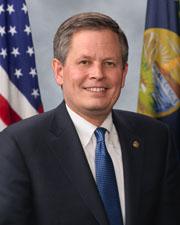
Mr. Speaker, I am very pleased to yield 3 minutes to the gentleman from Montana (Mr. Daines), a hardworking member of the Natural Resources Committee.
Mr. Speaker, I am very pleased to yield 3 minutes to the gentleman from Virginia (Mr. Goodlatte), the distinguished chairman of the Judiciary Committee.
Mr. Speaker, I am very pleased to yield 4 minutes to the gentleman from Kentucky (Mr. Whitfield), one of my classmates.
I yield the gentleman an additional 30 seconds.
Mr. Speaker, I am very pleased to yield 2 minutes to the gentleman from Ohio (Mr. Johnson).
Mr. Speaker, I am very pleased to yield 3 minutes to the gentleman from Texas (Mr. Gohmert), a member of the Natural Resources Committee.
Mr. Speaker, I am very pleased to yield 3 minutes to the gentleman from Michigan (Mr. Upton), the chairman of the Energy and Commerce Committee.
I yield the chairman an additional 30 seconds.
Mr. Speaker, I will advise the gentleman that we still have several more. I will advise you when we get down to that point, but we do have several Members still waiting to speak.
Mr. Speaker, I am pleased to yield 1 minute to the gentleman from Florida (Mr. Bilirakis).
Mr. Speaker, I would advise my friend from California that I am prepared to close if the gentleman is prepared to close.
Mr. Speaker, I reserve the balance of my time.
Mr. Speaker, I yield myself as much time as I may consume.
Mr. Speaker, this is a good bill. It has been acknowledged on both sides of the aisle that this bill is a package of bills that has passed the Senate. It has been talked about that the Senate hasn't acted on the individual bills. It has been talked about the Senate hasn't acted on a lot of bills.
As a matter of fact, the main bill we passed yesterday, the continuing resolution--which is a terrible way to run the government, by the way, when you haven't got certainty--was passed largely because the Senate had not passed one of the 13 House bills out of the Senate. How do you negotiate when you have that sort of a situation?
Here is a point that has not been made today--and maybe my friends on the other side of the aisle aren't familiar with what our Founders envisioned when they created a bicameral legislative body.
In order for our system to work, both Houses have to pass bills. Now, the American people, in their judgment--
you know, they made good judgments every 2 years. Sometimes, some of us don't like what that judgment is--but, in their wisdom, they created one of the Houses that is controlled by the Democrats, and, in their wisdom, they created a House that is controlled by Republicans.
Now, just by the very definition of that, clearly, you are going to have two different views--clearly, you are going to have two different views. I acknowledge that, and I doubt if anybody on the other side would dispute that too.
When we talk about sending bills that we think are important from here over to the Senate--and, by the way, I should add that within this package of bills were a number of bills that came out of the House Natural Resources Committee that I have the privilege to chair. Every one of them, every one of them passed with bipartisan support. That means there are Democrats that voted for it.
Here is the issue: if the Senate, then, has a different view on these topics than we do, then fine. Pass a bill. Pass a bill. If there is a difference between the House version and the Senate version, we have a means to work that out. It is called going to conference, but the fact is the Senate hasn't passed anything.
So how do you go to conference? The only way that we find that we could make our point over and over and over again is to say, ``Okay. We will send it over.'' Maybe somebody, somebody in the other body will finally get the message and say, ``Maybe we ought to pass it.''
Finally, I just want to make another point too. I had the privilege of serving on the Rules Committee for 12 years, and, yes, the Rules Committee, in a larger body like the House, does set the rules for debate.
When the Democrats were in the majority, they set the rules for debate that we criticized. Obviously, they are criticizing us because we are setting the rules for the debate, but my friend from California said that the Senate doesn't work that way with rules. They work by unanimous consent, that anybody can offer an amendment on any bill.
Well, that may be, that may be how the Senate rules work, but, when it is manipulated by the majority leader, all that goes away. It is a process that--I admit I don't know a whole lot about the Senate rules-- but it is a process called filling the amendment tree, amendments to be offered, and the majority leader fills the tree, and nobody has an amendment.
It has gotten so bad, so bad over there in the last 6 years that the junior Senator from Alaska, the junior Senator from Alaska who has been there for 6 years has not had an opportunity to offer one amendment on the floor, and the junior Senator happens to be a member of the majority party. You talk about openness. There is no openness that way.
We feel in this body here that the best way to make the case by debating bills that we think are important for the American people-- jobs bills, energy bills, energy security bills--the best way to do that is to continue to send the same stuff over to the Senate. Maybe, maybe--because hope springs eternal, at least from my perspective--they will take one of these up.
All they have to do, by the way, is take up one of these bills and change it and send it back over here, and we will negotiate the difference, but they haven't even done that. You see, that was never acknowledged during this whole debate of defense of what the Senate has or has not done, but, as a matter of fact, Mr. Speaker, that is exactly what has happened, and that is why we are where we are.
Mr. Speaker, this is, once again, a very good bill that deals with energy and energy security and American jobs. I urge its passage, and I yield back the balance of my time.
Objection.
Mr. Speaker, I rise in opposition to the gentleman's amendment.
Mr. Speaker, this is probably my last opportunity to respond to a Democratic motion to recommit, and I have heard a whole gamut of them in the time that I have had the privilege to do that, and I kind of surmise, from reading the motion to recommit, that he is talking about energy and energy supply.
Well, Mr. Speaker, that is precisely what the underlying legislation is all about. My friends on the other side of the aisle talked about how oil and gas production has gone up in the United States--increased in the United States--which it has.
But, Mr. Speaker, he left out the important part: it is not because of this administration, it is in spite of this administration's actions, because all of that activity is increasing on State and private lands where they don't have the burdensome regulation from the Federal Government inhibiting that growth.
However, the focus of this legislation is to do exactly the same thing which happened on private and State lands on Federal lands because, if you have a problem with supply, what is the best way to respond to that? You increase the opportunity for supply.
What does that do to the marketplace? In the long run, it tends to lower prices. Who benefits? American people, American jobs.
Mr. Speaker, I just simply want to say these motions to recommit have been procedural motions. They have been political motions over time, not that that isn't something we deal with on the floor, but, once again, it is a motion that, I think, is not worthy of passing.
Mr. Speaker, I urge my colleagues to reject--reject--the motion to recommit and vote for the underlying bill, and I yield back the balance of my time.