Mr. Chairman, I have an amendment at the desk. Mr. Chairman, I rise today to set a standard for answering the call of 500,000 to 800,000 jobs being created by 2020 that addresses the work in our…
Mr. Chairman, I have an amendment at the desk.
Mr. Chairman, I rise today to set a standard for answering the call of 500,000 to 800,000 jobs being created by 2020 that addresses the work in our ongoing and growing energy industry.
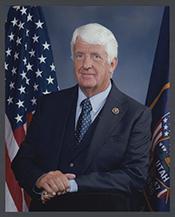
Mr. Chairman, I would like to thank the Natural Resources Committee chairman, Mr. Hastings, and Ranking Member DeFazio for their leadership on diversifying our employment base. I also want to wish the chairman well as he moves on to other endeavors. He will be missed on his insight.
Mr. Chairman, I rise to speak in support of the Jackson Lee Amendment No. 9 to H.R. 4899. The Congress has an affirmative duty to increase diversity in Federal Government as there is an undeniable lack of participation for veterans, women, and minorities in regards to employment, entrepreneurial, and ownership opportunity.
The Jackson Lee Amendment No. 9 to H.R. 4899 directs the Secretary of the Interior to establish an office of energy employment and training to create economic opportunities that support the agency's hiring and training of veterans, women, and underrepresented minorities. It sets the standard for the private sector.
Mr. Chairman, as a Member of Congress from Houston, the energy capital of the Nation, I have always been mindful of the importance of having strongly advocated for national energy policies--really, all of the above--and to make our Nation energy independent, preserve and create jobs, and keep our Nation's economy strong.
The recent increase in production of unconventional oil and natural gas has provided a lift to the U.S. economy, and Americans are seeing the benefits not only because of the jobs created, but also because household incomes have gone up. It is up to us to have the regulatory structure that protects the
environment but also provides the opportunity for growth and creates jobs.
Mr. Chairman, I would be remiss if I did not point out that both the chairman and ranking member have been resolute in their pursuit of the expansion of opportunities in the energy industry. I share that commitment with them, and this amendment is an example of what happens when Members work in good faith across the aisle to find viable solutions.
In this amendment, veterans, minorities, and women recognize that they are significantly underrepresented in the oil and gas industries at all levels and severely underrepresented in the senior managerial, professional, board, and ownership ranks. U.S. competitiveness requires that this Nation increase the number of successful underrepresented minorities in STEM education and careers, which is more essential than ever.
A pipeline of qualified veterans looking for employment will play a key role as the energy industry seeks quality, highly skilled workers. I am committed to honoring our obligations to our Nation's veterans and utilizing the talents of veterans to help the government meet today's dynamic challenges.
Mr. Chairman, the Office of Energy Employment and Training will provide an opportunity to align military and utility job classifications, identify veterans with their desired basic skills, access military personnel during the off-boarding process, and hold training programs.
It is interesting to note that in 2013, the number of STEM jobs in North Dakota increased by 37.2 percent as a direct result of the oil and gas boom in that State.
Mr. Chairman, I hope my colleagues will support this amendment.
I reserve the balance of my time.
Mr. Chairman, I want to thank the chairman for his astute reflection on the work that we have done and I have done over the years. I introduced H.R. 70 and H.R. 3710 that dealt with coastal restoration and the utilization of training for our young people and our veterans.
So as I conclude and thank the chairman for his acknowledgment, along with the ranking member, of their work on the committee dealing with diversification, the Jackson Lee amendment will help prepare a diverse population of workers from across the country with diverse backgrounds to enter in exciting and rewarding careers in American energy jobs.
Our Historically Black Colleges and Universities, Hispanic Centers of Excellence, Tribal Colleges and Universities, Native American-Serving Nontribal Institutions, and women colleges and universities will become engaged by a direct pipeline into the Department of the Interior that will foster collaboration, mentorships, and partnerships through effective job training that will yield employment opportunities. The Department of the Interior will be responsible for fostering diversity in management, employment, and business activities. It will be the light at the end of the tunnel creating a pathway for the 800,000 jobs.
Mr. Chairman, at this time, I would like to put into the Record the Employment Outlook for African Americans and Latinos In the Upstream Oil and Natural Gas Industry.
[An IHS Report, Nov. 2012]
Employment Outlook for African Americans and Latinos in the Upstream
Oil and Natural Gas Industry
(Prepared for the American Petroleum Institute, API)
key findings
Oil and natural gas will remain as the main source of fuel
for decades to come as other forms of energy also become
commercially viable. In fact, in early November 2012, the
International Energy Agency (IEA) projected that the United
States will become the world's top oil producer by 2020 and
that North America would be in a position to export more oil
than it imports by 2030.
These findings underscore the critical importance of the
analysis and findings of a new IHS report entitled Employment
Outlook for African Americans and Latinos in the Upstream Oil
and Natural Gas Industry (2012). Principal findings of the
new IHS report Include:
More than 500,000 jobs projected to be created by 2020 and
over 800,000 jobs created by 2030 in the upstream oil and
natural gas industry under pro-energy development policies.
Job growth would be geographically diverse. Over half of
the job growth, 417 thousand jobs, is expected in the Gulf
region. The East region is expected to contribute nearly 140
thousand job opportunities and the Rockies region nearly 116
thousand job opportunities. The West, Alaska, and Central
regions will combine to contribute approximately 138 thousand
job opportunities.
Central to this analysis is workforce training critical to
the projected U.S. petroleum industry growth to keep the
nation at a competitive advantage and to provide the energy
the nation depends upon. African Americans and Hispanic
Americans represent a critically vital and available talent
pool to help meet the demands of the projected growth and
expansion. For African Americans and Hispanics to be
competitive for the 800,000 potential new jobs it will
require:
Significant improvement in minority preparation in Science,
Technology, Engineering and Mathematics (STEM) related
disciplines at the primary and secondary school levels--a
national priority;
Significant improvement in high school completion rates for
Hispanics and African Americans;
Secondary and post-secondary staff (i.e., principals,
deans, teachers, faculty, counselors) should be trained to
inform their students on the workforce opportunities in the
petroleum industry, specifically in the regions identified,
and the training required;
An increase the labor force participation rates of African
Americans and Hispanics;
Sixty-two percent of the job growth are estimated to be in
blue collar jobs that would require a high school diploma and
some additional training such as community college vocational
degrees and certificates;
Twenty-one percent of the job growth will require training
in engineering (petroleum, etc.), geoscience fields,
management, business, and finance, and as technicians;
Partnerships between higher education and industry,
especially at the community college level would yield near
term positive results;
Hispanic and African American students with high school
diplomas and some additional training at community colleges
in skills related to the oil and gas industry are immediately
competitive for current job opportunities;
African American and Hispanic students who successfully
complete college degrees related to the oil and natural gas
industry, e.g., petroleum engineering, would be highly
competitive for workforce placement;
Wages in the upstream oil and natural gas industry, across
many professions, far exceed the national average wage rate;
Some portion of the job opportunities would be in
geographic locations away from segments of minority
populations and may require relocation;
Employment in the oil and gas industry can provide a
reliable means to a better than average quality of life for
Hispanics and African Americans for decades to come.
Both challenges and opportunities exist going forward.
Raising educational achievement for large segments of the
upcoming generation is resource intensive and will take
decades to achieve. However, the payoff of an increased
skilled labor pool would be enormous to society in general
and U.S. industry in particular. This report illustrates
that there are significant opportunities for African
Americans and Hispanics throughout the petroleum industry
currently and well into the future at each level of education
and training.
III. Minority and Female Employment in the Oil & Gas and Petrochemical
Industries in 2010
employment by industry
The three segments of the U.S. oil and gas industry and the
petrochemical industry together employed a total of 1.2
million people in 2010 (see Table III.1).
The upstream segment, with employment of 721 thousand,
accounted for 60% of the total, followed by the downstream
segment with 23%.
African American workers held 98 thousand jobs in these
industries in 2010, accounting for 8.2% of total employment.
Their share within the petrochemical industry was 11.2%.
Hispanic workers held 188 thousand jobs across all four
industry segments--15.7% of the total. They accounted for a
higher share of employment in the upstream segment than in
the other segments.
Table III.1--AFRICAN AMERICAN AND HISPANIC EMPLOYMENT IN THE OIL & GAS AND PETROCHEMICAL INDUSTRIES BY SEGMENT:
2010 TOTAL ----------------------------------------------------------------------------------------------------------------
Petro-
Total Upstream Midstream Downstream chemicals ---------------------------------------------------------------------------------------------------------------- Total........................... 1,198,590 720,911 42,079 279,162 156,438 African American................ 97,789 57,886 2,262 20,043 17,598 Hispanic........................ 188,088 136,265 4,440 28,426 18,957
Minority Shares by Segment Total........................... 100.0% 100.0% 100.0% 100.0% 100.0% African American................ 8.2% 8.0% 5.4% 7.2% 11.2% Hispanic........................ 15.7% 18.9% 10.6% 10.2% 12.1%
Shares by Segment in Each Occupation Total........................... 100.0% 60.1% 3.5% 23.3% 13.1% African American................ 100.0% 59.2% 2.3% 20.5% 18.0% Hispanic........................ 100.0% 72.4% 2.4% 15.1% 10.1% ----------------------------------------------------------------------------------------------------------------
Employment by Gender
Women accounted for 19% of total employment in the combined
oil and gas and petrochemical industries. Their share is
higher in the downstream and petrochemical segments (25%) and
lower in the upstream and midstream segments (15-16%). (See
Table III.2.)
The female share of employment in these industries is much
lower for the Hispanic population--only 13%.
The incidence of female employment for the African American
population in the oil & gas industry generally mirrors the
nation-wide pattern for the industry, at a share of 19%. In
the midstream industry there is a higher female share.
So, in conclusion, Mr. Chairman, let me indicate that our task here is to create jobs. We understand that there are 300,000 vets that, in fact, may need unemployment insurance. We want them to have jobs, along with women and minorities, and so I would ask my colleagues to accept the Jackson Lee amendment, and I thank the committee.
I yield back the balance of my time.
Mr. Chair, I would like to thank Natural Resources Committee Chairman Hastings and Ranking Member DeFazio for their leadership and commitment.
I also wish the Chairman well as he moves on to other endeavors. He will be missed.
Mr. Chair, I rise to speak in support of the Jackson Lee Amendment #9 to H.R. 4899, the Lowering Gasoline Prices to Fuel an America that Works Act of 2014.
Congress has an affirmative duty to increase diversity in the federal government as there is an undeniable lack of participation for veterans, women and minorities in regards to employment, entrepreneurial and ownership opportunities.
The Jackson Lee Amendment #9 to H.R. 4899 directs the Secretary of the Interior to establish an Office of Energy Employment and Training to create economic opportunities that support the Agency's hiring and training of veterans, women and underrepresented minorities.
As the Member of Congress from Houston, the energy capital of the nation, I have always been mindful of the importance and have strongly advocated for national energy policies that will make our nation more energy independent, preserve and create jobs, and keep our nation's economy strong.
The recent increase in production of unconventional oil and natural gas has provided a lift to the U.S. economy and Americans are seeing the benefits not only because of the jobs created but also because household incomes have seen an increase as a result of lower energy costs.
I would be remiss if I did not point out that both the Chairman and Ranking Member have been resolute in their pursuit of the expansion of opportunities in the energy industry. I share that commitment with them--and this amendment is an example of what happens when Members work in good-faith across the aisle to find viable solutions.
We all know that while government may not be able to solve all problems--it can be a bridge to solving some--and ``the great mitigator'' for others.
Veterans, minorities and women are significantly underrepresented in the oil and gas industries at all levels and severely underrepresented in the senior managerial, professional, board and ownership ranks. U.S. competitiveness requires that this nation increases the number of successful underrepresented minorities in STEM education and careers, is more essential than ever.
A pipeline of qualified veterans looking for employment could play a key role as the energy industry seeks quality, highly skilled workers. I am committed to honor our obligations to our Nation's veterans; utilize the talents of veterans to help the Government meet today's dynamic challenges; and create a program worthy of emulation by the private sector.
The Office of Energy Employment and Training will provide an opportunity to align military and utility job classifications, identify veterans with the desired basic skills, access military personnel during the off-boarding process and hold training programs specifically for targeted veteran cohorts.
Underrepresented minorities seeking STEM jobs cannot solely rely upon advanced degree programs, but must be able to pursue a number of routes to good paying STEM jobs. A highly focused area for STEM education and job opportunities can be found in the oil and gas industry.
For example, 2001-13 the number of STEM jobs in North Dakota increased by 37.2 percent as a direct result of the oil and gas boom
in that state. North Dakota exceeded the nation in life, physical and social science technicians and the state is close to the national average for engineering technicians, physical scientists and life scientists.
Nationally, in 2010 there were 1.2 million people employed in the oil and gas industry of those persons only: 98,000 or 8.2% are African Americans; 188,000 or 15.7% are Hispanics; and 225,687 jobs or 19% are women.
The 2014 report prepared by the American Petroleum Institute states the oil and gas industry and petrochemical industry could create between 940,000 to 1.3 million employment opportunities between now and 2030.
Only a small fraction of these new jobs will come as a result of retirements.
The major factor for employment demands for the oil and gas industry is natural growth that will occur and investment by the industry and the influence of energy demand by a growing economy.
There a significantly larger number and variety of good paying jobs in the oil and gas industry. In 2011, the average oil field worker earned $35,590, slightly higher than the national average; those working in natural gas distribution earned an average of $38,870 per year. The states with the highest pay included Alaska, at $48,370; Montana at $45,870 per year; Wyoming, at $41,130; and North Dakota, at $40,340 per year.
Minorities comprise 26% of the oil and gas labor force in 2010 and that number is expected to grow to 325 by 2030. In 2010 women were 17% of the oil and gas labor force and their number is expected to drop to less than 15% in 2030.
The lower employment prospects for women are a direct consequence of the extreme level of underrepresentation in the energy sector.
A closer look at the employment prospects for minorities' reveals that African-Americans like are projected to experience a decline in employment in the oil and gas industry due to underrepresentation of African Americans.
The level of underrepresentation of minorities and women is reflected in oil and gas industry senior and professional ranks. Minorities comprise 15% of management and professionals working in the oil and gas industry and are projected to comprise 17% by 2030.
When compared to all blue collar jobs2-minorities make up 21% of the jobs, and in 2010 they comprised 38% of blue collar jobs.
Women do slightly better with a 24% in 2010, and are expected to hold this percentage of the blue collar job market to 2030.
Our booming energy sector has been one of the greatest American success stories in the last decade, and remains a bright spot in our economy as it continue to fuel job creation. To continue this success we need a diverse energy workforce that is equipped to meet the challenges and opportunities of our new energy landscape.
The Jackson Lee amendment will help prepare a diverse population of workers from across the country with diverse backgrounds to enter into exciting and rewarding careers in American energy jobs.
Our Historically Black Colleges and Universities, Hispanic Centers of excellence, Tribal Colleges and Universities, Native American-Serving Non-Tribal Institutions and Women Colleges and Universities will become more engaged by a direct pipeline into the Department of Interior that will foster collaboration, mentorships and partnerships through effective job training that will yield employment opportunities.
In closing, I ask my colleagues, to support the Jackson Lee amendment that will address the ability and potential of people who are traditionally underrepresented in energy-production activities by creating an Office of Energy Employment and Training, which will oversee the hiring and training efforts of the Department of Interior's energy planning, permitting, and regulatory agencies.
The Department of the Interior will be responsible for fostering diversity in management, employment, and business activities.
Again, I thank Chairman Hastings and Ranking Member DeFazio for their outstanding leadership.