Mr. Speaker, I rise to speak on behalf of the Congressional Progressive Caucus. During our Special Order hour, we want to talk specifically about the need for unemployment insurance but, more…
Mr. Speaker, I rise to speak on behalf of the Congressional Progressive Caucus. During our Special Order hour, we want to talk specifically about the need for unemployment insurance but, more broadly, about what we need to do to make sure that everyone in this country has access to opportunity.
Just yesterday, we celebrated the 50th anniversary of the war on poverty. President Johnson said, during his State of the Union in 1964:
Unfortunately, many Americans live on the outskirts of
hope, some because of their poverty, and some because of
their color, and all too many because of both. Our task is to
help replace their despair with opportunity.
This administration today, here and now, declares
unconditional war on poverty in America. It will not be a
short or easy struggle. No single weapon or strategy will
suffice, but we shall not rest until that war is won. The
richest nation on Earth can afford to win it. We cannot
afford to lose it.
Those are the words of President Johnson 50 years ago when we started the war on poverty in this country. We created Medicare and Medicaid, the food stamp program and programs like Head Start. And we have great results from those programs.
In fact, according to a new study, these initial programs, coupled with expansion of pro-work and pro-family programs, like the earned income tax credit, have helped reduce poverty by nearly 40 percent since the 1960s. The poverty line fell from 26 percent in 1967 to 16 percent in 2012, when the safety net is taken into account.
Now, while there has been a lot of progress, we still have far too many people in this country who are still living in poverty or on the brink of living in poverty. Fifteen percent of Americans today are living below the poverty line, and that is just $11,490 for an individual. 46.5 million people in our country are living in poverty, and one in three Americans teeters on the brink of living in poverty. That includes 16 million children in this country. That is more than 700,000 people in my home State of Wisconsin.
According to the Institute for Research on Poverty at the University of Wisconsin, Madison, in Rock County, in my district, a county that I share with Congressman Paul Ryan, 22 percent of the children in that county are living in poverty.
We still have vast inequality, income inequality. We have unlivable wages. And we still have Members of this body, Mr. Speaker, who want to chip away at that very economic security. It almost seems like today it is not a war on poverty, but sometimes it seems like there is a war on the war on poverty, that we are actually stepping backwards from the very improvements we made over the years from 1960.
In fact, what we noticed that just happened was the not extending of the benefits, emergency unemployment benefits back in December, on December 28. It has affected 1.3 million Americans. Not only do we have issues like that, but we also have an attack on food stamps, where this very body has voted to cut $39 billion from the SNAP program, the Supplemental Nutrition Assistance Program--$39 billion--affecting millions and millions of Americans.
We have seen attempts to not allow us to raise the minimum wage, a minimum wage that is entirely behind where it should be. If you took into consideration where it should be, just for inflation from 1968, that minimum wage in 2013 dollars would be at $10.60--not $7.25, at $10.60. We are way behind keeping up with inflation.
Income inequality is at an all-time high. We are finding that incomes for the top 1 percent have grown more than 31 percent since 2009, and the bottom 99 percent of people, their income has moved less than 1 percent. So we are in a challenging time.
We know that there was an economic downfall across the globe, and especially hard hit, we feel it in this country. And while we are having dual activities happen, jobs are creeping back up, we are having progress, but still, 7 percent of people are unemployed.
And while we have got those jobs creeping up, we still also notice that
people are being left behind with this economy, and that is exactly why we have tried to do things like extending the unemployment insurance benefits for people.
But unfortunately, in this body, in this very body, Mr. Speaker, austerity has ruled the day. Austerity has taken place, instead of prosperity. Instead of doing measures that would lift people out of poverty and help people get a job and help people be able to support their families, we are trying to take government down and down and down, like they did in Europe, and they have had disastrous results from doing that.
That is not a path out of our current economic condition. We need to be investing in our people so that they have those opportunities. They can grab a ring at that ladder and get a good job and be able to get by. So there are so many things we need to do.
Unfortunately, these attacks aren't just in this body, in the Congress. Mr. Speaker, unfortunately, these attacks are even happening in the States.
In my home State of Wisconsin, our Governor, Scott Walker, was recently on a CNN program. And when he was asked about extending unemployment benefits, his response was, the reason why the White House is so actively pursuing this, unemployment insurance, is they want to desperately talk about anything but ObamaCare.
Can you believe the Governor of a State who is 37th in job creation, who promised when he was elected to create 250,000 jobs, and he has done a portion of that, is somehow trying to say that helping people to get out of poverty, helping people to be able to support their family with groceries and to be able to pay their rent or mortgage, at a time of still having record people who are out of work, while we are trying to start getting jobs to come back, at 7 percent, at that time, Mr. Speaker, that Governor can still only talk about ObamaCare, as all too often this body has done.
We need to act now. The time to act on this, for this body, is now. 1.3 million people are currently out of work and trying to get those benefits they need so desperately during that period that have been cut off. And every week, across the country, 72,000 new Americans will lose their benefits if we don't do something--72,000 thousand people across the country.
Mr. Speaker, in our Speaker of the House's district alone, you look at the largest cities in that district in Ohio: Springfield, Ohio, 60,000 people, that would be like having your entire city of Springfield go unemployed in a single week; in the city of Hamilton, 62,000 people, 1 week, all out of work; Middleton, 48,000 people, you can take that and the surrounding communities, all in 1 week, out of work if we don't do something.
That is why, Mr. Speaker, it is imperative that this body do something. 1.3 million Americans have lost these benefits at the end of December, including 20,000 military veterans who aren't getting the benefits they need. These are hardworking people who are still trying to find jobs in this economy, but there are just not enough jobs yet available. And in many fields it is even tougher.
Right now, 24,000 Wisconsinites have lost these important, vital lifelines, and the number just keeps going up every single week by 72,000 people. Yet, Mr. Speaker, the House Republicans adjourned Congress on December 12, more than 2 weeks before these benefits were set to expire. We could have done something, we could have stayed and worked, and instead we didn't. Now, because of that, we have 1.3 million and counting people who don't have access to these vital benefits.
Now, let's just think about this. Under President Bush, five times we extended these benefits without any strings attached like this Congress is trying to do to this President, five times, and the unemployment was less than the 7 percent we are at right now. It is hypocritical for us not to do what we all did together five times under President Bush while people are still looking for work.
The bottom line is you still need this money, not just to pay for groceries and to pay for rent or your mortgage, but you need things to be able to get a job. If you don't have the ability to pay for gas in your car, how are you going to be able to find a job? You need to be able to have that car to go to interviews to find a job.
You need to be able to pay for your phone so you can receive a phone call for these jobs. These are all reasons why we need to make sure those benefits are available for all too many people in this country.
There is also what happens to the economy when you don't have these benefits in place. Just in the first week since Congress cut off long- term unemployment, our local economies across America lost $400 million of potential economic activity, and that is going to grow every single week. So it is a double-whammy: not only the people who are desperately looking for work, trying to find that job, not able to find that job, but we are also going to have even more people be unemployed because of the overall impact that has on the economy.
It has been said that 200,000 jobs would be lost in 2014, and we are going to decrease the gross domestic product simply by not doing these benefits. The bottom line is, there are so many reasons why we need to do this. Later, I am going to talk more about my State of Wisconsin and why it is important.
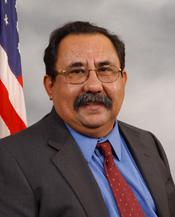
I am joined by one of my colleagues here today who is actually the cochair of the Congressional Progressive Caucus, Representative Raul Grijalva. Representative Grijalva has served in Congress for six terms. He is a member of the Committee on Education and the Workforce, and he also serves on the Committee on Natural Resources, where he is the ranking member of the Subcommittee on Public Lands and Environmental Regulation.
He is a tremendous Member of Congress. He has been a mentor to many of us who are freshmen, who recently have joined, and is a very strong member of our Progressive Caucus, speaking on behalf of each and every American who needs opportunity. It is my pleasure to yield now to the gentleman from Arizona, Representative Grijalva.
Thank you, Congressman Grijalva, for so articulately outlining the austerity policy of the House Republican leadership and their stunning lack of ability to get anything done to help the 1.3 million people who are out of work and the 72,000 Americans each and every week that are going to lose their benefits if this House doesn't act.
It is now my pleasure to introduce a stalwart progressive in the U.S. Congress, the ranking member of the House Committee on Financial Services, as well as a member of the House Steering and Policy Committee. She is a member of the Congressional Progressive Caucus and was past chair of the Congressional Black Caucus. It is my honor to now yield to Representative Maxine Waters.
Thank you so much, Representative Waters. Your efforts over the years have been so appreciated by so many, and I hope the House Republican leadership will listen to your pleas and bring this to a vote.
It is now my honor to introduce one of my fellow freshmen who has rapidly been recognized not only for his hard work and effort, but for his skills, and his work on behalf so many across this country. I would like to yield some time to my colleague Representative Jeffries.
Thank you, Representative Jeffries, and thank you for articulating, I guess, what I have been feeling also for the last year, my lack of hostage-taking skills. I certainly learned some in the last 12 months serving in this body.
It is now my pleasure to yield some time to my colleague from California, Representative Lucille Roybal-Allard, who is the first Mexican American woman to be elected to Congress. She cofounded the bipartisan Congressional Study Committee on Public Health. She became the first woman to chair the Congressional Hispanic Caucus and serves as the chairwoman of their health care task force.
Thank you so much.
It is so important to note that 37 percent of the people who receive these benefits have been searching for a job over 6 months, the very people who are going to be affected, 72,000 a week if this House doesn't act.
I now yield to another colleague, someone who has been a stalwart member of the Progressive Caucus, is the senior whip for the Democratic Caucus, and she is currently a member of the Judiciary Committee and the Homeland Security Committee and a strong advocate for people who are trying to lift themselves out of poverty and find opportunity in America.
It is my pleasure to yield to Congresswoman Sheila Jackson Lee.
Thank you so much, Representative Jackson Lee. I think you clearly explained the dilemma we have.
While the economy is slowly bouncing back--and this President has brought us from a 9.8 percent unemployment rate he inherited down to 7 percent--and jobs are slowly being created, we still are noticing that there are still people being left behind. We have to recognize that as well.
I believe Secretary Robert Reich wrote a piece that appeared today that explained that so well. Unfortunately, due to income inequality, the gap of the percentage of people who are poor, are working but still are not earning enough, we need to talk about that as well.
I now yield to another one of my colleagues, one of my freshman colleagues who in fact has been elected by our Democratic class as the freshman class president. He serves on the House Committee on Oversight and Government Reform where he is the ranking member on the Subcommittee on Economic Growth, Job Creation and Regulatory Affairs, and is also on the Committee on Natural Resources. It is my honor to yield to Representative Matt Cartwright from Pennsylvania.
Thank you so much, Representative Cartwright, for not only your long-time advocacy on behalf of so many people, but for sharing the personal stories, because I think that is what matters the most.
Mr. Speaker, how much time is remaining?
I have all sorts of stories that I would read but I don't have time to from construction workers who are out of work and need these benefits, from machinists who are out of work, a surgical nurse in Baraboo, Wisconsin. There are so many people who need these benefits, and the very stories that Representative Cartwright shared, I just have pages of these stories of people across the country who need these benefits to continue to get by while they are looking for work. They are not lazy. They are not sitting back. They want to work. And in this economy, they are doing everything they can to try to, but the economy is not ready for some of these people and we have to do everything we can.
I do want to read one story. I had an opportunity this afternoon to meet with a constituent from Reedsburg, Wisconsin. She was recently the winner of Half in Ten's Our American Story: 50th Anniversary of the War on Poverty Storytelling Contest. Her name is Amy Treptow. She was here with her daughter, Anna. She has benefited from programs that we have put together for people who are lower income. I will read her words:
I have always worked hard and played by the rules, but I
was still living on the brink of poverty. My story is the
story of millions in today's economy in which there aren't
enough jobs and/or adequate training for the ones that are
available. The basic need for more good jobs and training
programs seems to be overlooked in today's conversation about
poverty.
I am a veteran and a divorced mother with two children. I
went to school to become an elementary schoolteacher but
wasn't able to find full-time employment, so I enrolled in a
skills enhancement program at my local community action
agency in Wisconsin. The program assists low-income adults
that are working a minimum of 20 hours per week to gain job
skills in order to be able to have a job that pays a living
wage with health benefits.
I was working as a contract teacher making $15,184 a year,
which is far below the poverty line for a family of three.
Once I enrolled in the program, I started to take coursework
to get certified as a reading specialist. The program helped
me with the tuition and other school expenses and provided me
with case management services. I was also living in section 8
housing and received housing counseling, as well as
participating in the agency's Family Self-Sufficiency
Program. I am now a full-time employee with benefits as a
reading specialist instructor
helping low-income children, along with two other jobs, and I
now own my own home.
And she goes on.
By providing these safety nets, the very safety nets that we celebrated yesterday on the 50-year anniversary of the war on poverty, we have helped someone like Amy and her family lift themselves out of poverty, but we have to do that right now in helping others.
I would like to, at this point, yield some time to my colleague from Illinois, someone who has been a mentor to me my entire career in the legislature, and so glad to serve with her now in Congress, a very staunch Progressive, Representative Jan Schakowsky from the State of Illinois.
Mr. Speaker, I appreciate the time, and I yield back the balance of my time.