Mr. Speaker, I ask unanimous consent that all Members may have 5 legislative days in which to revise and extend their remarks and to include extraneous materials on the subject of our Special Order…
Mr. Speaker, I ask unanimous consent that all Members may have 5 legislative days in which to revise and extend their remarks and to include extraneous materials on the subject of our Special Order hour.
Mr. Speaker, this month is Women's History Month, and the Congressional Black Caucus is pleased to come during this Special Order hour to bring attention to the important issues that particularly face women this month, but we shouldn't be fighting for equality just 1 month out of the year.
It is a constant effort. We are here tonight to encourage everyone to get engaged in making equality a reality.
As President Obama made clear during his State of the Union Address, when women succeed, America succeeds. So tonight, we, the Congressional Black Caucus, gather to discuss the ways in which we can help women succeed, rather than continuing to turn back the clock on women's rights.
I am pleased to start this hour with our chairwoman of the Congressional Black Caucus, the person who brings these issues forward each and every day on behalf of her constituents in Ohio and on behalf of constituents all across America, the gentlelady from Ohio, Representative Fudge.
I thank the chairwoman of the Congressional Black Caucus for your dynamic leadership as the chair of the Congressional Black Caucus. It has been my honor to serve with you this legislative Congressional session and look forward to the many achievements ahead on behalf of the Congressional Black Caucus.
Mr. Speaker, so much of the focus tonight is on the history that women contribute to our great Nation. We have many dynamic women who serve in our delegation in the House of Representatives. It is part of that representation that ensures that these issues that are important to women, as they are important to all Americans, are brought forward.
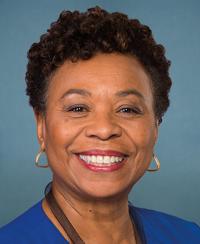
We have none other than a champion for women in her district in the northern part of California, but also around the world. She is someone who needs no introduction because she brings so much experience and education and knowledge to these issues. I would like to yield now to the gentlelady from California, Representative Barbara Lee.
Thank you to the gentlelady from California. Thank you for that great historical overview and perspective and for bringing those profound remarks to the floor this evening.
I would also like to yield to a dynamic colleague. We have had the great honor and privilege to get to know each other as freshmen in this congressional session. She is the gentlelady from Ohio. She brings so much talent and perspective, energy and focus to the issues that she works on here in the House of Representatives on behalf of her constituents and those around the country. I would like to yield now to the gentlelady from Ohio, Representative Joyce Beatty.
I thank the gentlewoman from Ohio, Representative Joyce Beatty, for those illuminating topics that were covered, and for highlighting all the various ways, both historically and currently, that women make a huge impact in our society, in the home, in the workplace, in education, and throughout all aspects of life. So thank you, Representative Beatty, for your ongoing contributions to these important issues.
I am so proud to be joined here by the Representative from New York (Mr. Jeffries), my coanchor of this hour. I look forward to his remarks.
I want to also highlight in addition to all of the national leaders and women who have run for office, whether it be here in the House of Representatives, in the Senate, or as President, we also have many unsung women who toil everyday but who make a huge impact.
It is only fitting, Mr. Speaker, that during Women's History Month that I recognize a Nevada leader, an icon, Ms. Ruby Duncan, who is an inspiration in my home State to many.
Ruby to me is the personification of the word fight. She is someone we can all learn from each and every day. Her history is a lesson in never giving up and staring down the specter of inequality. Nothing was ever handed to her, but much was taken.
Ruby's life began in the middle of the Great Depression. Where she grew up in rural Louisiana, people were already poor for a long time. Ruby had three brothers and a sister, all but one passing from accidents or illnesses. She lost her parents before she was 4. She spent most of her youth moving around Tallulah, living with relatives.
The school that she attended, a school for Black children, was located in a church miles from home. There was no transportation. She walked every day until she left school after the ninth grade for full- time work. Actually, it was more than full-time work. For years she was a waitress making about $9.50 a week. Yes, that's right, $9.50 a week. Her work weeks were long, over 80 hours a week.
When she heard her aunt in Las Vegas was making $40 for similar work, she moved there. When she arrived, she discovered her aunt living in a cardboard shack in the desert, sharing a community wash house with others. She discovered a de facto segregated community there, separate schools, housing, and zoning in the community resulted in a system of clear disenfranchisement.
Blacks were not welcome at the Las Vegas Strip hotels. There were colored sections designated in movie theaters. Still, Ms. Ruby Duncan persevered. She survived. She did day work as a maid in homes around the area. In 1959 she worked as a hotel maid but was fired later for attempting to organize other maids to protest the inhumane treatment and workload.
For a while her only income for herself and her children was the aid to dependent children grant that she received from the State welfare system. Like those struggling today, she did not rest. She was not lazy; she worked. She searched for work and was hired in the pantry of one of the Strip hotels in Las Vegas.
After an accident, she learned she could no longer do the heavy work that she was performing. When a State program that was supporting her was cut, she was contacted to join a group of mothers going up to Carson City, our State's capital, to protest substandard grants from the Nevada Legislature.
Ruby marched and spoke at a hearing with no prior experience in public speaking. She did it because someone had to say something for those who were struggling. Someone had to stand up for what was right.
After Mrs. Duncan's trip to Carson City, she was elected president of the Clark County Welfare Rights Organization. As president, she led the nationally publicized 1971 marches on the Las Vegas Strip, protesting the purge of thousands of needy Nevada families from programs designed to help the poor and allow them to keep their heads above water.
From that she has fought to provide basic necessities to families in need--food, shelter, health services, and education. Her organization that she created, Operation Life, has had an impact on health screening centers, libraries, food programs for women, infants and children, child care, and the list goes on.
Ruby Duncan represents hope. In a country plagued by inequality and discrimination of the worst forms, Ruby fought and won many decisive battles that affect the lives of so many in Nevada and across this Nation today.
Not everyone wins their battle with poverty. For so many, circumstances beyond their control take over their lives. For many born poor, they stay poor. For many born just above the poverty line, they dip below and enter a cycle of living paycheck to paycheck, if they can even find one.
The poor are not poor because of a weak character. They are not lazy. Many are poor because no one ever gave them a chance. It is people like Ruby Duncan that I am here to represent. The people who had less than a hand up, but they still persevered. She is strong, and she is an inspiration to me, and someone who I wanted to recognize during this recognition of Women's History Month. Congratulations to Ms. Ruby Duncan.
I would now like to yield to the coanchor for this hour, my colleague, the gentleman from New York (Mr. Jeffries). It is always great to be here with you, to bring this hour of power of information to the constituents throughout the United States who are listening. I thank you for your friendship, for always working hard, for including me, and it is great to serve with you in this 113th Congress.
I yield to my good friend.
I thank the gentleman from New York. Thank you for
that very insightful background on your district and the leadership of the district. It speaks to why there is so much impact that comes from Representatives from your district and the area and the neighborhoods that you represent.
I know that you cannot fully fill those shoes, but you are doing your part in bringing forward the message that so many others carried and that we follow now on their shoulders, so thank you for that historical perspective.
In addition to the historical perspective that women offer in this country, the House Democrats also have a legislative agenda that focuses on when women succeed, America succeeds. It is an economic agenda for women, and it is one that was created by the women in the House Democratic Caucus that is sponsored and supported by men.
As a man, I support this economic agenda for women because, as a husband and a father, I want for every woman what I want for my own wife and my daughter. As a brother and a son, I want for other women what I want for my two sisters and my mother. So this economic agenda for women focuses on a number of areas.
The first, of course, is equal pay for equal work. It is appalling, Mr. Speaker, that in the year 2014, we are still struggling to pay women the wages that they deserve. They are still not receiving equal pay for equal work. That, on its face, is wrong.
Women in my home State of Nevada are paid about 85 cents for every dollar paid to men; and while that is better than the 77-cent national average, we still have a long, long way to go.
As my colleagues have already explained, for African American women and Latinas, this pay gap is even larger. African American women, on average, earn only 64 cents; and Latinas, on average, earn only 55 cents for every dollar earned by White, non-Hispanic men.
In my home State of Nevada, the pay gap between men and women is, on average, $6,316 per year. Now, that is real money, and it makes a real impact in the lives of families. Nevada women lose approximately $2 billion per year because of this wage gap.
Now, what can $6,316 pay for, for families in my home State of Nevada?
$6,316 is about 46 more weeks of food. $6,316 per year is 4 more months of mortgage and utility payments. $6,316 per year is 7 months of rent. $6,316 per year is an additional 1,681 gallons of gas.
So if we thought that the wage gap was just some rhetoric that was being talked about out there, all you have to look at is the real impact of lost economic benefit to women. If we closed the wage gap between men and women, we could cut the poverty rate in half for working women and their families.
It is the right thing to do, to treat people equally, to pay them equal pay for equal work. That is why 125,000 households in Nevada, who are headed by women, expect this Congress to support the Paycheck Fairness Act, invest in job training and educational opportunities, and make sure that we protect pregnant workers from discrimination in the workplace.
Now, another area that we have to address is raising the minimum wage and giving America a raise.
Mr. Speaker, low-income workers continue to struggle to provide for their families, while the rich continue to make record profits in the millions.
It is important to remember who earns the minimum wage in this country. They are women. Women make up the majority of low-income workers. In fact, nearly two-thirds of minimum wage workers are women. These are our mothers. They are our sisters and our daughters.
Can we really expect for women to provide for their families when they are making the minimum wage?
Let's talk about what $7.25 really means as a national wage for women. That is $14,500 a year. Can people really survive on $14,500 a year?
Particularly, more than a majority now of women who are the head of their household, the primary breadwinners, can they provide for themselves and their families on $14,500 a year?
That is why House Democrats, in this economic agenda for women--when women succeed, America succeeds--we understand that by lifting the Federal minimum wage to $10.10, that if it were adjusted for inflation, compared to what it was in the 1960s, it would be well past time, Mr. Speaker, to address this pay gap for women.
In addition to increasing the minimum wage to help 1 in 3 adult women who are currently living in poverty or on the brink of it, this would help lift those women out of poverty, helping 30 million Americans see an increase in their wage, a million Americans being lifted out of poverty.
These are the real impacts and the benefits on the economic agenda for women.
Mr. Speaker, I yield to my colleague, Mr. Jeffries, to elaborate further on these points, and then I can close us out.
I thank the gentleman, my coanchor, for joining me this hour.
Mr. Speaker, as we come to a close, to just highlight some of the major reasons why the Congressional Black Caucus along with the House Democrats believe that, if we are really going to honor the role of women in this country, then we need to start by honoring them through equal pay. We need to honor them through an economic agenda that supports their needs and the needs of their families.
And as my colleagues have already ably laid out, women now make up half--47 percent--of the general workforce and some 62 percent of the minimum wage workforce, which is up from about 30 percent in the 1950s. Twelve percent of workers in the United States have access to paid family leave through their employers, and fewer than 40 percent have access to personal medical leave through employer-provided short-term disability insurance.
So one of the other cornerstones, in addition to giving women equal pay for equal work, for increasing the minimum wage, is providing a work-family balance by allowing women to be able to take off work when necessary to care for a loved one without losing their earnings and a paycheck.
Laws providing paid family leave and medical leave allow workers to continue to earn a portion of their pay while they take time away from work to address serious health conditions, including pregnancy, to care for a family member with a serious health condition, and to care for a newborn, newly adopted child or a newly placed foster child.
You know, we should be encouraging the growth of strong, healthy families. And so often my colleagues on the other side talk about family values. Well, if you won't pass legislation that allows workers to spend time with their families, then what kind of a family value is that?
Over the average lifetime of a woman, by the age of 65, they will have lost $431,000 because of the earnings gap. That is something that the House Democrats, along with the Congressional Black Caucus, are working to address. We have legislation, When Women Succeed, America Succeeds, the economic agenda for women that we have laid out here tonight that would close this earnings gap, provide women the support they need to make more, helping their families and helping our economy as a whole.
So in closing, Mr. Speaker, when we talk about Women's History Month, we hope that it will resonate in this Chamber and in the Halls here in Washington that the decisions that we make impact the lives of all of our constituents. And it is time that women have a fair shot to the full opportunity that this country has to offer, and it starts by providing them with the earnings that they deserve. This is good not only for that woman and her future, but it is good for the family as a whole.
As I said earlier, I want for every woman what I want for my wife and my daughter: to be able to have the same opportunities and to be treated the same way as a man is treated in this country. I want for every woman what I want for my two sisters and my mother: to have the same equal opportunities to pursue their dreams and to be paid the same for pursuing that dream.
So these are the issues that we have laid out tonight, Mr. Speaker. We look forward to continuing to work with our colleagues on the other side. We would like to thank the chairwoman of the Congressional Black Caucus, Representative Fudge, and all of the members of the CBC and those who were able to speak tonight. When women succeed, Mr. Speaker, America succeeds.
I yield back the balance of my time.