Mr. Speaker, tonight the Congressional Black Caucus comes before this body and the American people for the next hour to talk about important issues facing our country. Tonight, we will discuss the…
Mr. Speaker, tonight the Congressional Black Caucus comes before this body and the American people for the next hour to talk about important issues facing our country.
Tonight, we will discuss the problem of poverty in America and what we can do to bring more Americans into the middle class. From SNAP to the earned income tax credit, from Head Start to TRIO and GEAR UP, we have effective programs that reduce poverty and open
up opportunities for people in the low income. Unfortunately, these programs are often the first targeted for cuts.
When you are worrying where your next meal is going to come from, you probably don't have a lot of time to lobby Congress. Well, tonight, we're here to speak to these important issues, and we're also here to listen. So, hopefully, we will be able to answer some questions from our constituents from across America.
If you're watching and you have something that you'd like to let us know about, get on Twitter and tweet #CBCtalks, and we'll do our best to answer your questions.
At this time, I'd like to turn to the chair of the Congressional Black Caucus, the gentlelady from Ohio, the woman providing tremendous leadership to the members of the Congressional Black Caucus to bring forward the issues that are facing so many American families, and those families particularly in poverty today, they have a voice, and for the next hour we're going to bring their voice to this body here in Congress.
Thank you for your leadership and for fighting the fight on this very important issue of poverty in America.
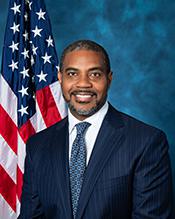
Over the last week, we had our work period. And I had the opportunity to be in my district, Mr. Speaker. One of the things we did was an outreach event where we had a ``Commuting with your Congressman.'' I boarded a bus--public transportation in my district--and I met and listened to my constituents for 4 hours as we traveled throughout the various corners of my district--from Centennial Hills to downtown to the new veterans' hospital, where our veterans literally board a bus in a wheelchair--to listen to the struggle that so many Americans are facing; the fact that they are even struggling to make ends meet. There was a mom who boarded the bus who said it takes 2 hours each way to get to work. They can't always make it to a town hall meeting. They can't always come to our district offices. But they deserve to have a voice here in Washington on these important issues.
So much of what this Congress is talking about is the budget and the priorities of the budget. Well, that mom is a priority of mine. That veteran who takes public transportation to get to their veterans' appointment is a priority of mine. That young man who is 17 years old and going to his first job interview so that he can work his way through college is a priority of mine. And it's a priority of my colleagues who are here tonight, along with the cochair for the CBC hour, Mr. Jeffries from New York. We're going to bring a voice to these issues tonight--and everyday--as the CBC does.
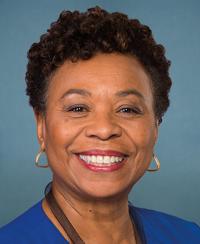
At this time I would like to turn to my colleague who cochairs Poverty and the Economy for the CBC, as well as chairing the whip's task force on eliminating poverty, the gentlelady from California, Representative Lee.
Thank you, Congresswoman. Let me just engage you for a moment because you hit on a number of points.
I want, again, to make sure that we are providing a voice to these very important issues. And to follow the conversation, if you're tuning in, go to our hashtag at #CBCTalks.
But you focused on the fact that nearly 46 million people in our country live in poverty; 16 million of them are children. You talked about the poverty line. In 2013, the poverty line for an individual is $11,490. For a family of four, it's $23,550.
So can you elaborate further on the SNAP program, how that program provides for a safety net for individuals and how is it that a family of four in America can survive on $23,550 a year?
Well, I know the challenge is something that you have called upon for people to accept. This is a reality for 16 million children, 46 million Americans who are living at this level now. The average meal is $1.48 per meal.
Poverty is not partisan.
Thank you very much, Congresswoman Lee. Thank you for your leadership and for those solutions that you're offering to help move people out of poverty and into the middle class and recognizing that many of these programs that those on the other side propose to cut are actually safety nets.
The sequester alone would cut $85 billion but would directly affect 50 million Americans living below the poverty income line. So they're hurting the very people that we should be sustaining during these difficult economic times.
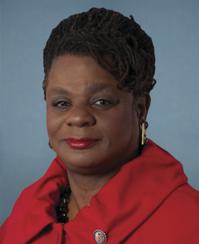
At this time, Mr. Speaker, I'd like to turn to my colleague, the gentlelady of Wisconsin (Ms. Moore), the alum of TRIO. She is a dynamic leader who talks so much about the need to help young people get the quality education, particularly first generation college students. I know we're having a college student debate right now on whether or not
we're going to allow student loan rates to double on July 1. The Republican plan puts students in debt, provides no certainty. We're hoping that between now and July 1 we will come up with a bipartisan solution that will keep our college loan rates and will address the more comprehensive need to make college more affordable.
I defer to the gentlelady from Wisconsin, Congresswoman Moore.
Thank you, Congresswoman Moore. I couldn't agree with you more when you talk about, first and foremost, your last point, which is if we fail to invest in our children, in our elderly, and in the disabled, then we have done a disservice to them and to society as a whole.
And so a lot of times when these programs get talked about, the various acronyms, billions of dollars here and billions of dollars there--waste, fraud, and abuse I know gets brought up oftentimes as kind of the red herring in the room in a lot of our committee hearings--but really the reality is there's a face behind each one of these programs. There's real people depending on them--as you indicate, the 250,000 children who would lose free and reduced-cost lunches.
How is a child supposed to learn if they're hungry? How are they supposed to focus if they haven't been able to see a doctor or see a dentist? These are real issues that are facing this Congress. And I know a lot of times, again, those on the other side somehow want to make this out to be more than what it is on people, and how it affects people.
``Opportunity'' I think is the key word there, Mr. Speaker. This isn't about a handout, this isn't about providing social services; it's about opportunity. Education is one of those most fundamental opportunities. And you, again, as an alum of TRIO programs and an advocate for funding up TRIO/GEARUP, these programs which provide tremendous opportunity to particularly first generation college students, those who may not have even had the knowledge of how to go about applying to enroll, let alone financial aid and scholarships--but yet it's that opportunity, that door to opportunity that then leads to careers and their ability to contribute, to sustain for themselves and their family.
That's what we're talking about, Mr. Speaker, is providing that opportunity. And right now we're having this big debate of whether that opportunity should come with a huge burden of debt.
Because if they finish school, when they finish school, should they be so far in debt they can't afford to buy a home, to buy a car, to start saving for their future, or should they be focused on paying $1,000, $1,500, $2,000 a month in debt for college loans?
Of course. And with your voice and your continued participation I'm sure we will do just that, which is to continue to advocate for these as priorities.
And I do want to go, as I turn to my colleague from North Carolina, the vice chairman of the CBC, to a quick question that came in from the Twitter line. It's from Dr. Davis 920, who asks: How can we increase money in underserved areas for students from high school to college instead of doing more with less funding?
I'm going to ask our vice chairman if he would tackle that question as he provides his response.
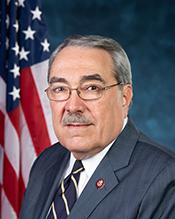
I yield now to the gentleman from North Carolina, Congressman Butterfield.
Thank you again to our vice chairman for the Congressional Black Caucus, the gentleman from North Carolina.
I really want to commend you for being very plain with how desperate the situation is for so many people. You talked about 36 percent of the people in North Carolina, in parts of your district, who are living in poverty and about the fact that they are going without basic fundamentals, things that many of us probably just take for granted in America. There are people in America who are going without the basics, and that is not something often that's talked about here in Washington, definitely not in this House. When so much attention is placed on corporate special interests and subsidies for big corporations, it's time that we start changing the debate and focusing on the people who most need government support, and those are the people you just talked about, so I commend you for that.
You were very clear, and I know Mr. Clyburn would expect nothing less than for us to lay out what our position is.
I know some people ask: What is the Congressional Black Caucus' position on how to address poverty?
You touched on it. It's the 10-20-30 policy. This means that 10 percent of funds from certain accounts would be directed to areas that have had a poverty rate of 20 percent for the last 30 years in America.
So, rather than spending money everywhere, let's spend it where there is the most need, the most critical need, and where there has been a generational need now for 30 years so that we can see the type of outcomes, the return on investment and the change that people so desperately need.
Thank you to the gentleman from North Carolina.
Now I would like to turn to the cochairman of the Progressive Caucus, the gentleman from Minnesota. I want to commend the gentleman and the Progressive Caucus because I know you had a hearing before the recess in which you brought low-income wage earners and had a special hearing to listen to their concerns and on how working people, really the working poor, are struggling. I would like to yield to the gentleman from Minnesota at this time.
What's ironic about the culture of dependency is they never talk about it when we bring up corporate welfare and corporate entitlements.
If we really want to talk about entitlements and who is depending upon government, then let's put it all on the table: the billions of dollars that go to special interests, but yet we want to take away services for poor, needy children, families, the elderly, and the disabled. That's really the comparison.
Thank you to the gentleman from Minnesota, and, again, thank you for your leadership. On behalf of the Progressive Caucus, we work together here to try to bring these issues forward and we appreciate your hard work.
I'm so pleased to be joined by the coanchor for this hour, my good friend, the gentleman from New York, who represents, I think, a community that has constituents who are struggling, like many constituents in my district, the Fourth District in Nevada.
So I just want to pose the question to you, Mr. Jeffries, around this whole issue of income inequality that we just spent nearly the hour talking about. The fact that it's increased by more over the last 3 years than in the previous 12 years, that under the Republican policies, the budget that they proposed, middle class families with children pay, on average, $3,000 more in taxes, but yet higher tax cuts, upwards of $245,000, were given to some of the wealthiest in America, and here we've heard about so many programs such as SNAP to GEAR UP to TRIO, funding for K-12 education, for Head Start, $20 billion cuts to SNAP that are on the cutting board, and yet we are giving tax cuts to wealthy Americans and corporate subsidies, what do you say about that, my friend from New York?
I yield to you at this time.
I thank, again, my good friend from New York, Mr. Jeffries. I just want to ask you, the proposal by the CBC which supports a 10-20-30 policy for Federal spending, how do you feel this would improve outcomes, address prioritizing of resources, and create the type of positive impact that would ultimately lead to reduced poverty in America?
I thank my friend and co-anchor and those who have listened for the last hour. Thank you for joining the conversation at #CBCTalks, and we are going to continue this conversation because 46 million people in our country live in poverty; 16 million of them are children. The U.S. poverty rate has risen and approaches a 50-year high. There's no way in America a family of four can live on $23,550 and not expect some type of support.
So these are the issues that we're confronting, Mr. Speaker. We want to work with our colleagues on the other side, but we want to do it in a way that addresses the root causes of the issue.
General Leave
Mr. Speaker, I ask unanimous consent that all Members have 5 legislative days to revise and extend their remarks and insert additional materials on this topic and also House Resolution 242.