Mr. Speaker, I am here today on behalf of both the Progressive Caucus and the Equality Caucus, as we are here today to talk about June being national Pride Month--Lesbian, Gay, Bisexual, and…
Mr. Speaker, I am here today on behalf of both the Progressive Caucus and the Equality Caucus, as we are here today to talk about June being national Pride Month--Lesbian, Gay, Bisexual, and Transgender Pride Month--as we celebrate every June.
This year has been an especially significant year. We have had a lot of victories. One year ago Thursday--tomorrow--is the year anniversary of the Supreme Court decision that ensured that people could have their marriages recognized by the Federal Government.
We have also had a number of States in the last year--bringing us up to 19 States and the District of Columbia--where you can legally be married in this country and several others that have approved it, but are currently in the legal status, including my home State of Wisconsin. We have had a big year, in that Michael Sam was the first openly gay person to be drafted into the NFL.
So we have had a lot of successes in the last year since our last Pride. We are here today to talk about that and what an important contribution to this country we have from our gay, lesbian, bisexual, and transgender citizens, but as much we have had all these successes, we have also had a number of projects that we still have to get done.
Until everyone has access to full equality in this country, we have not provided equal treatment under the law to each and every person as we would expect.
Mr. Speaker, we still have a number of States where you can be fired simply for being gay or lesbian. Michael Sam, as much as he has finally made it into the NFL, could be fired in a number of States in this country under the current law.
We still have too many students and too many youth who attempt suicide who are bullied in school. We have to make sure they have equal access to a quality education, and we still have too much uneven treatment, depending on what State you live in, whether or not your family is recognized. Whether you are in Wisconsin or Massachusetts, the law is different, certainly, in the State level.
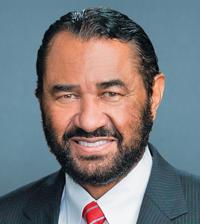
We are here today to talk about the many successes we have had and the challenges we still yet have. I am very happy to be joined by a number of colleagues today, and I would like to yield, if I could, right off the bat, to one of my colleagues who has been an outspoken advocate for equality, Representative Al Green from the great State of Texas.
Thank you, Representative Green, not only because you have been a veteran fighter for civil rights for everyone in this country, but I believe that is the first time that that resolution has been introduced in the body of Congress to recognize this month as Pride Month. We appreciate all the hard work you have done to make sure that happens.
I agree with you. I look forward to the day that we actually get a chance to vote on that in the month of June and make sure we recognize everyone in this country, so thank you so much for your contributions.
Mr. Speaker, it is interesting that, when the gentleman talked about the historical aspect of why this month is so important, he mentioned the Stonewall riots.
In fact, this Saturday--June 28--will mark the 45th anniversary of the Stonewall riots, which is often seen as the real birth of the movement for equality for the gay, lesbian, bisexual, and transgender communities.
The gentleman mentioned Harvey Milk from California, who just this year was recognized on a stamp by the U.S. Government, the U.S. Postal Service, so we can recognize the many contributions that Harvey Milk made for this country, so that so many people could be out and run for office.
Mr. Speaker, I like to remind people that, in my home State of Wisconsin, one of the things is we talk about each coast and the many things that have been done on our coasts for people for equality who are gay, lesbian, bisexual, and transgendered.
My State of Wisconsin--we were the State that sent the first person who ran out for Congress, Tammy Baldwin, to the U.S. House, the first person elected to the U.S. Senate, in Tammy Baldwin.
With my election, Tammy Baldwin's, and a Republican's--Steve Gunderson, who came out while he was in office--we have sent more openly gay and lesbian people to Congress than any other State in the country--and that is from the heartland, the State of Wisconsin.
So we are really proud of this entire country, from coast to coast and especially in the heartland. We are trying to do everything we can to make sure that everyone is treated with respect and dignity and they have the liberty to live their lives to the fullest, and that is exactly what this month is about.
Mr. Speaker, I would like to yield to another one of my colleagues who has been a hardworking fighter on behalf of equality for every single person. In fact, I think he may have the distinction of being the first person to fly a rainbow flag outside of his office here in Washington, DC, have it outside of his door in his office.
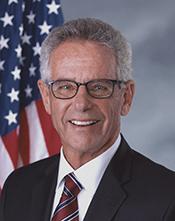
He has been a tremendous fighter from the Long Beach area of California and a very good friend of mine. I would like to yield to my colleague from the great State of California, Representative Alan Lowenthal.
Mr. Speaker, I again thank the gentleman from California (Mr. Lowenthal). You have been an outstanding advocate for every single one of your constituents, including the LGBT community, and I can't thank you enough for all of the work you do.
As Representative Lowenthal mentioned, one of the things we need to get done yet is a bill called the Employment Non- Discrimination Act, or ENDA. In 29 States in this country, you can still be fired simply because of your sexual orientation, and in 33 States based on your gender identity. This is 2014. Our country has moved far beyond the fact that you can be fired simply because of who you love. In fact, most people assume this is already the law of the land, yet it is not the law of the land, and depending upon what States you live in depends on whether or not you can have discrimination against you. That is simply wrong.
The ENDA bill has the support of virtually every Democrat in the House. Eight Republican Members have officially signed on as sponsors. And if that bill were to come to this floor, Mr. Speaker, there would be the votes to pass this bill. The problem is getting it to the floor of Congress.
Right now we are not able to do that. The Republican majority has not allowed that bill to come to the floor, but we know and we feel confident that there are the votes to pass that in this House if we can only get it on the floor. We can join the 90 percent of Fortune 500 companies that provide for equal treatment for their employees. And the fact that 82 percent of the U.S. public supports this, it is far past due to make sure that we protect each and every person with these protections.
Another thing that Representative Lowenthal said that deserves extra recognition is that the Obama administration, President Obama and Vice President Biden, have been outspoken advocates for equal treatment under the law for each and every single person.
In fact, when I think about 1 year ago tomorrow when that Supreme Court decision came out, I was outside the Supreme Court when the decision was declared. I remember going back to my office, and that day we were on the phone with the President and his administration telling us how they were going to make sure that the Supreme Court decision would be implemented in law as quickly as humanly possible. I can tell you, that has certainly happened. In fact, just last week, the Obama administration released a report on the implementation of the Windsor decision detailing exactly how Federal agencies have moved to implement the law, and we have had tremendous progress in virtually every area.
While we still have some areas to move forward, specifically in Social Security and in veterans benefits, we are moving forward with that law, making sure that the Supreme Court's decision is implemented in the laws of the land in this country so that everyone is treated equally. I tell you, that President Obama and Vice President Biden have made it such a priority that everyone is treated with dignity and respect in this country has been amazing, and it is part of why we have the progress that we have. If only this Congress could get an employee nondiscrimination bill on the floor, I know this Congress would pass in a bipartisan way the very protections that we need. In fact, the President just within the last 2 weeks made sure that some of those protections are in place.
The LGBT Equality Caucus has long asked the President could we possibly do an executive order to make sure that anyone who does business as a Federal contractor provides these protections to their gay and lesbian employees, just as should happen under the law. If this Congress can't act, it doesn't mean nothing should happen. If this Congress can't act, something has to happen to fill that vacuum. The White House says they will be drafting an executive order to make sure that any Federal contractor does not discriminate based on their sexual orientation. That is a tremendous step forward, but we still have to make sure that each and every one of those States that doesn't provide these protections does provide those protections under the law.
Another area within the Federal Government where we need to do more is specifically on a number of bills that have been introduced by a number of Members from across this country to make sure that everyone is respected under that court decision--no matter what you do for a living, that you have that respect and dignity.
The gentleman from New York (Mr. Nadler) has introduced the Respect For Marriage Act to ensure that those who live in States that aren't recognized can be recognized.
For example, in the State of Wisconsin, my husband and I were married in 2006 in Toronto. My State still has hate in its constitution. By Federal law, we are recognized for the thousand rights and responsibilities that are afforded to marriage, but the 213 under State law are still in limbo. Despite the fact that a Federal judge recently ruled our marriage ban as unconstitutional, it is still back in legal limbo. Until that decision gets made, people who have been married, which is in the hundreds in Wisconsin who just got married, and before that hundreds and hundreds more, can still have recognition of their benefits so we have consistency in the law.
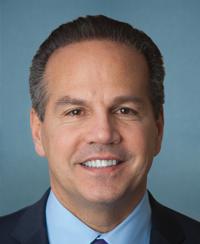
There are other bills that I am going to talk about as we go through this hour, but I would like to yield to another one of my colleagues, someone who has been an outstanding Representative from the State of Rhode Island. First he served as the mayor of Providence, and he is an outstanding advocate for equality for each and every single person of this country, the gentleman from Rhode Island (Mr. Cicilline).
I thank Representative Cicilline. You are seen on so many issues as the point person in this Congress; specifically, making sure that we respect those who may be lesbian, gay, bisexual, or transgender in other countries. I think I heard a statistic this year that one out of six people who previously had rights lost them this year because of countries like Russia, India, and other countries across our globe. It is a real concern. While we are having progress here, it is leaving a lot of other people behind around the world. Thank you for all of your advocacy around that.
In fact, one of those countries that is a country that has not gone forward in the area of equal treatment of their citizens is the country of Brunei. Brunei is a country that is currently part of the negotiations that we are having with the Trans-Pacific Partnership, a trade deal that is generally offered to countries that we have something in common with, that we want to be able to not only have increased trade with, but you actually want to make sure that they somehow reflect your values.
And unfortunately Brunei just recently implemented shari'a law, which includes the stoning of gays and lesbians, the stoning to death for gays and lesbians in their country. This is something that we have great concern about.
There was a bipartisan letter recently signed by 119 Members of this body that went to both Secretary Kerry and the U.S. Trade Representative, Michael Froman specifically saying why are we rewarding something that is considered such a prize, to have status in trading with us as one of the countries that we are going to put into a trade agreement, when they have such terrible human rights conditions? 119 people, in a bipartisan way in this body, sent that letter.
So we are hoping that--as Representative Cicilline said, we are seeing us go backwards in Russia, and it looks like we may be going backwards in India and some other countries. Certainly, they have advocated the stoning of gays and lesbians. That is truly a backward idea and something that this country needs to do everything we can to change. I am glad that so many of our colleagues, in a bipartisan way, did that.
Some of the other bills that Members of Congress have introduced to try to address some of the issues that we need to move forward on, Representative Titus from Nevada has introduced the Veteran Spouses Equal Treatment Act, specifically getting at some of the complexities that we haven't gotten to yet within the Veterans Administration to make sure that everyone has their family relationship recognized and that that treatment is extended to their spouses.
Representative Walz also has Protecting the Freedoms and Benefits for All Veterans Act; Representative Adam Smith has Military Spouses Equal Treatment Act--all trying to make sure that if you serve this country and you are a gay or lesbian citizen, you have the same benefits and rights offered to your family as offered to the other members of the military.
There is also a bill Representative Ron Kind from Wisconsin has introduced, the Social Security and Marriage Equality Act, trying to address the other problem that we have within Social Security, to make sure that everyone has those benefits offered to their life partners, their husbands or wives in same sex-sex relationships. Right now that has not happened yet since that Windsor decision, and it needs to happen and we are moving forward on that.
There is a bill that I have introduced that specifically is looking to--the Restore Honor to Servicemembers Act. One of the, I think, uglier parts of our Nation's history when it comes to treatment of folks who may be gay or lesbian has been the fact that we had for so long a policy--and previous to that, outright discrimination--against gays and lesbians who choose to serve this country in the military. Under President Clinton we implemented Don't Ask, Don't Tell, but that still didn't fix it so that you could serve openly in the military.
And finally, when Don't Ask, Don't Tell was repealed and anyone was able to serve in the military regardless of sexual orientation, we found that 114,000 people since World War II in this country were discharged with something different than the honorable discharge they should have received for their service to this country because we so often let people go previously out of the military because they are gay or lesbian with a either dishonorable discharge, other than honorable, or some other status.
Don't forget, a dishonorable discharge in some States is the same as a felony. It can take away your ability to vote; it takes away your ability to have veterans' benefits even though you served this country well.
There is a process now that people can get that status changed to the honorable status they should have received, but it is a complicated process. While it is in place under this current President, a future President could change it because it is not actually in statute. Often people have to go and hire a lawyer because it is a complicated process.
We have introduced a bill to make sure that we really treat all those veterans with the respect and honor they deserve for treating this country in the way they did by putting their life on the line to do everything they could to make sure that we have the liberty that we all have, that they should now have the liberty that they deserve and have that record changed. That is a bill that we are also trying to get done that we think is very important in moving forward.
This is a historic month. When we have Pride Month, we try to recognize the many areas that not only have we moved forward on, but also what we still need to improve. I think by talking about some of the bills that still have to move forward to make sure that everyone has that equal treatment under the law--again, those things include equal treatment for employment, which is why we have the Employee Nondiscrimination Act. In 29 States in this country you can still be fired simply because of whom you love.
We have too many students who are still being bullied in school, and the suicide rate among LGBT youth is much higher than youth in general, and we have to help restore that.
It shouldn't matter what State you live in whether or not your family is recognized. So, if you live in Wisconsin
that unfortunately still has hate in our State constitution, the fact that I live there with my husband doesn't mean I should be treated any differently than if I lived in Illinois or Minnesota or Iowa, neighboring States that all recognize the relationships regardless of whom you love.
Those are all things we still have to get done in this country. We need to do that in this body, Mr. Speaker, in this Congress. We need to get these bills to the floor and pass them and move on from what I think at one point in this history was a certain way to get out certain voters. There is a certain constituency that was built around hate. We need to move beyond that. I think many people have. While the Democratic Party certainly, I think, has been a party of inclusion and moved in a positive way, I think I am seeing that happen among Republicans, but we need to have the leadership of this House also moving.
We had a Republican Member just yesterday who has been a strong supporter of equality for all people just win his Republican primary. That is important because he has been an outspoken voice for equality. Representative Hanna, I am glad you won your primary. You stood up for your values, and your constituents supported you.
I think it is time that more of our colleagues, especially on the Republican side of the aisle, need to also stand up for what is right, because we all have colleagues and we all have constituents who are gay and lesbian, bisexual or transgendered. We can't pick and choose who we represent. You support and you represent every single person in your district, and when you don't support full equality, you are really not standing up for each and every constituent, and that is truly unfortunate.
To end, I really want to focus again on those successes. We have had a tremendous year. We have had so much progress from the Supreme Court decision exactly 1 year ago tomorrow, where we have now had a number of States just in the last year move towards full marriage equality, where we have had a country where Michael Sam could finally be the first openly gay person drafted into the NFL.
We have been able to move forward in so many areas. This is because society has moved. A majority of people in this country support marriage equality. I believe the last I saw was 58 percent of the people. Even more important, 81 percent of people 30 and under support marriage equality. That is where this country is going. We want to treat everyone with respect and dignity and allow them the liberty to live their lives. Until we do that for every single citizen, we have not reached the goal of treating everyone with equality and equal treatment under the law.
With this time that we have had, the Progressive Caucus and the Equality Caucus, I wanted to share some time with our members so we could make sure we celebrate this Pride Month and all of our constituents who may be gay or lesbian, bisexual or transgendered and say thank you for all you do. We are going to continue to fight for your equality, not only in this body in Congress, but throughout society.
With that, Mr. Speaker, I yield back.