Mr. Speaker, I want to thank the gentleman from Texas (Mr. Sessions), my friend, the chairman of the committee, for yielding me the customary 30 minutes. I yield myself such time as I may consume.…
Mr. Speaker, I want to thank the gentleman from Texas (Mr. Sessions), my friend, the chairman of the committee, for yielding me the customary 30 minutes.
I yield myself such time as I may consume.
Mr. Speaker, this is a sad day in the people's House. Today, the Republican leadership is bringing to the floor one of the most heartless pieces of legislation I have ever seen, a bill to take food away from some of our most vulnerable neighbors.
After a $20 billion cut was voted down by the House in June, the Republican leadership has decided to double down on the cruelty with a $40 billion cut. It is terrible policy wrapped in a terrible process.
This is a 109-page bill that would cut the SNAP program, cut billions of dollars and make major changes to the way SNAP works; and there hasn't been a single hearing, not a single markup. It didn't even go through the Agriculture Committee. And today it's being brought to the floor under a closed rule. It was just cooked up in the majority leader's office as some sort of Heritage Foundation fever dream.
CBO says that the bill would cut 3.8 million low-income people from SNAP in 2014 and millions more in the following years. These are some of America's poorest adults, as well as many low-income children, seniors, and families that work for low wages. Let me say that again, Mr. Speaker, so there's no confusion. People who work but who don't make enough to feed their families will be cut from this program.
The biggest cut affects millions of unemployed, childless adults who live in areas of high unemployment. These are poor people. Many don't have the skills or education they need to find a job. It is a group whose average income is about $2,500 a year. And for most, SNAP is the only government assistance that they receive.
Now, if that weren't bad enough, 210,000 children in these families would also lose their free school meals; and 170,000 unemployed veterans will lose their SNAP benefits as well. Let me repeat: 170,000 veterans will lose their benefits. These are the people who have served our country. How can you do that?
Mr. Speaker, we are 45 years and a million miles away from the War on Poverty. The Republican leadership has instead launched a war on poor people.
This bill is not about reform. It is not about making SNAP a better, stronger program.
Mr. Speaker, it is not easy to be poor in America. It is not a glamorous life. It is a struggle just to make it through the day. The average SNAP benefit is $1.50 per meal. Housing costs, transportation costs, childcare costs, they all add up.
You know, fighting hunger used to be a bipartisan issue. Think of people like Bob Dole and Bill Emerson. And I know that a lot of Republicans--moderates and conservatives--are very nervous about this bill. So I would say to them: don't do this. Please don't do this. Don't go along with cutting food benefits to millions of struggling families. Don't make hundreds of thousands of children and seniors and veterans go hungry. Don't put the food banks and church pantries in your districts into an even deeper hole. The people who rely on SNAP to feed their families struggle every single day. Please don't make their lives even harder. It is not too late. We do not need to pass this bill in order to go to conference on the farm bill.
I would urge my colleagues to search their consciences and to vote against this bill.
I reserve the balance of my time.
Mr. Speaker, it is my privilege to yield 2 minutes to the gentleman from Minnesota (Mr. Peterson), the ranking member of the Committee on Agriculture.
Mr. Speaker, Republican talking points aside, according to CBO, this bill, if passed, will result in 3.8 million people losing their benefits, including 170,000 veterans. That is shameful.
I appreciate the gentleman's concern about the waivers, but I remind him that his Governor of Texas, Rick Perry, has requested waivers on a number of occasions because people haven't been able to find jobs in his State of Texas. So if you've got a problem with the waivers, you ought to talk to your own Governor.
At this point, I yield to the gentlelady from Ohio (Ms. Fudge) for a unanimous consent request.
Mr. Speaker, I yield to the gentleman from Texas (Mr. O'Rourke) for a unanimous consent request.
Mr. Speaker, I yield to the gentleman from Minnesota (Mr. Ellison) for a unanimous consent request.
Mr. Speaker, I yield to the gentlelady from California (Mrs. Capps) for a unanimous consent request.
Mr. Speaker, I yield to the gentleman from New Jersey (Mr. Pascrell) for a unanimous consent request.
Mr. Speaker, I yield to the gentlelady from Ohio (Ms. Kaptur) for a unanimous consent request.
Mr. Speaker, I yield to the gentlelady from Texas (Ms. Jackson Lee) for a unanimous consent request.
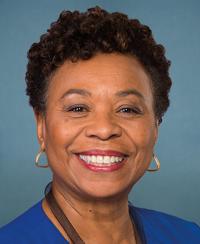
Mr. Speaker, I yield to the gentlelady from California (Ms. Lee) for a unanimous consent request.
Mr. Speaker, I yield to the gentlelady from Connecticut (Ms. DeLauro) for a unanimous consent request.
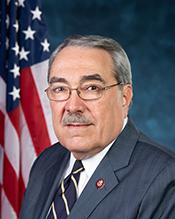
Mr. Speaker, I yield to the gentleman from North Carolina (Mr. Butterfield) for a unanimous consent request.
Mr. Speaker, I yield to the gentleman from Tennessee (Mr. Cohen) for a unanimous consent request.
Mr. Speaker, I yield to the gentleman from North Carolina (Mr. Price) for a unanimous consent request.
Mr. Speaker, I yield to the gentlewoman from Florida (Ms. Castor) for a unanimous consent request.
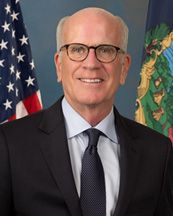
Mr. Speaker, I yield to the gentleman from Vermont (Mr. Welch) for a unanimous consent request.
I yield myself such time as I may consume.
Mr. Speaker, my Republican friends don't like the President. We hear it every day. I get it.
While you debate his policies, don't take it out on poor people. The CBO says 3.8 million people will be thrown off this benefit, and 170,000 veterans will lose their benefits.
This bill is not a thoughtful bill--it is a thoughtless bill--because it hasn't even gone through committee. This is more a political statement than it is sound policy or even bad policy. It's just plain politics. It's red meat for, I guess, the extreme right-wing base. I'm hoping there are people on your side who will see through this and who will stand with us and do the right thing, because it has been a bipartisan tradition in this Congress to support efforts to prevent hunger.
At this point, I yield 3 minutes to the gentlewoman from Connecticut (Ms. DeLauro).
Mr. Speaker, I yield myself 5 seconds to remind the gentleman who just spoke that there are
36,000 households in his district in Georgia who rely on SNAP. I think they're counting on him to vote a different way.
At this point, I yield 1 minute and 15 seconds to the gentleman from North Carolina (Mr. Butterfield).
Mr. Speaker, I yield myself 5 seconds.
I just wanted to say to the gentleman from Oregon that there are one in five Oregonians who are on food stamps as we gather here today. In his district, there are nearly 60,000. You talked about trees, but there are a lot of people that will be adversely affected.
I have no remaining time to yield to the gentleman.
Mr. Speaker, I yield 1 minute to the gentlewoman from California (Mrs. Capps).
Mr. Speaker, I yield 1 minute to the gentleman from North Carolina (Mr. Price).
(Mr. PRICE of North Carolina asked and was given permission to revise and extend his remarks.)
Mr. Speaker, at this time I yield 1 minute to the gentlewoman from Ohio (Ms. Kaptur).
Mr. Speaker, let me just suggest to my Republican colleagues that maybe they ought to deal with sequester, maybe they ought to stop threatening to shut the government down, and maybe they ought to bring the President's jobs bill to the floor to put people back to work, and, in the meantime, they ought not to throw poor people off food assistance.
I yield 1 minute to the gentlewoman from California (Ms. Lee).
I yield the gentlewoman from California an additional 15 seconds.
Mr. Speaker, let me just say to my friend from Texas, we know exactly what you are all doing here. What you are doing is throwing 3.8 million people off of this program who, quite frankly, rely on it to put food on the table.
And I just want to point out for the record, the average length of someone on SNAP is about 9 months. There are people who work, who work full time who are on SNAP because they don't earn enough. People do want to work. People don't want to be on public assistance. But the bottom line is that we have had a Congress here that has blocked every major piece of legislation that might produce jobs. So let's get our facts straight here.
At this point, I yield 1 minute to the gentleman from New Jersey (Mr. Pascrell).
Mr. Speaker, I yield 1 minute to the gentlewoman from New York (Ms. Velazquez).
Mr. Speaker, I will just remind the gentleman that compassionate conservatism also gave us the Great Recession.
At this point, I yield 1 minute to the gentleman from Connecticut (Mr. Himes).
Mr. Speaker, at this point, it's my privilege to yield 2 minutes to the gentleman from California (Mr. George Miller).
(Mr. GEORGE MILLER of California asked and was given permission to revise and extend his remarks.)
I yield the gentleman an additional 30 seconds.
Mr. Speaker, I need to qualify something here. I want to respond to what the gentleman just said.
The fact of the matter is, when children's parents get cut from SNAP, then children are no longer eligible for free breakfast and lunch in school. That's where we get the number of 270,000 kids who will lose their free breakfast and lunch programs. That's the connection. So it is connected. So I would point that out because it is important. I don't want anyone to be fooled by the fact that somehow this doesn't affect school meals. It does, very directly.
At this point, I yield 1 minute to the gentleman from Tennessee (Mr. Cohen).
Mr. Speaker, at this time, I yield 1 minute to the gentleman from Texas (Mr. Doggett).
Mr. Speaker, I yield 1 minute to the gentleman from Vermont (Mr. Welch).
Mr. Speaker, it's my privilege to yield 1 minute to the gentleman from Virginia (Mr. Connolly).
Mr. Speaker, I yield 1 minute to the gentlewoman from Texas (Ms. Jackson Lee).
(Ms. JACKSON LEE asked and was given permission to revise and extend her remarks.)
Mr. Speaker, how much time do I have remaining?
Could I ask the gentleman how many more speakers he has?
Mr. Speaker, before I close, I'd like to insert into the Record letters from the United States Conference of Catholic Bishops, the United States Conference of Mayors, AARP, and a list of a number of other groups that are opposed to the bill.
And I'd also like to insert into the Record a September 4 New York Times story, entitled, ``On the Edge of Poverty, at the Center of a Debate on Food Stamps.''
Committee on Domestic Justice
and Human Development,
September 11, 2013.
Dear Representative: As the House considers a proposal to
address nutrition programs apart from the Farm Bill, I write
to urge you to oppose harmful cuts and changes to the
Supplemental Nutrition Assistance Program (SNAP). The House
proposal would cut SNAP by $40 billion and harm hungry
children, poor families, vulnerable seniors and workers who
are underemployed or unable to find employment.
Adequate and nutritious food is a fundamental human right
and a basic need that is integral to protecting the life and
dignity of the human person. SNAP is one of the most
effective and important federal programs to combat hunger in
the nation by helping to feed millions of persons in need
every year.
SNAP helps relieve pressure on overwhelmed parishes,
charities, food banks, pantries and other emergency food
providers across the country that could not begin to meet the
need for food assistance if SNAP eligibility or benefits were
reduced. The faith community and the private sector are vital
in the fight to combat hunger. But government has an
indispensable role in safeguarding and promoting the common
good of
all. This includes ensuring poor and hungry people have
access to adequate and nutritious food.
Struggling people are not seeking a life of government
dependency but rightfully deserve decent paying jobs to
provide for them and their families. Even with evidence of a
modest economic recovery, the economy still has not improved
the standard of living for many people, especially for the
poor and the working poor. More than four million people have
been jobless for over six months, and that does not include
the millions more who have simply lost hope. For every
available job, there are often five unemployed and
underemployed people actively vying for it. SNAP remains an
essential tool to help struggling individuals and families
avoid hunger and stay out of poverty.
Proposals to eliminate access to SNAP for people who have
at some point in their lifetime committed certain crimes are
counterproductive and an affront to human dignity. Persons
who have paid their debt to society and their families should
not be penalized for the sins of the past. A on-size-fits-all
approach to state waivers on SNAP work requirements is
unreasonable. States should continue to be afforded the
flexibility to assess and respond to local needs and economic
conditions. Ending state waivers will only harm vulnerable
people.
How the House chooses to address our nation's hunger and
nutrition programs will have profound human and moral
consequences. This is a crucial time for our nation to place
a circle of protection around programs that build a more just
framework and put poor and hungry people first. I
respectfully urge you to reject efforts to reduce or
restructure SNAP, and to pursue instead the common good in
agriculture and food policy that works from a genuine
preferential option for the poor.
Sincerely,
Most Reverend Stephen E. Blaire,
Bishop of Stockton, Chairman, Committee on Domestic Justice
and Human Development.
Mr. Speaker, on that I demand the yeas and nays.