Reserved for the Minority Leader.
Legislative Activity
Stay on top of the latest movement without scrolling through every action
Introduced in House
January 6, 2015
Floor Debate
23 membersWhat members said about H.R. 15 on the floor
 SJL
SJL JP
JP DFE
DFE PSNP+18
Floor Debate
23 membersWhat members said about H.R. 15 on the floor
Mr. Chair, I rise in opposition to the Aderholt- Mulvaney-Barletta Amendment to H.R. 240, the Fiscal Year 2015 Homeland Security Appropriations Act. I oppose the amendment because it is nothing more…
Mr. Chair, I rise in opposition to the Aderholt- Mulvaney-Barletta Amendment to H.R. 240, the Fiscal Year 2015 Homeland Security Appropriations Act.
I oppose the amendment because it is nothing more than the Republican majority's latest partisan attack on the President and another diversionary tactic to avoid addressing the challenge posed by the nation's broken immigration system.
The President will veto the underlying bill if the Aderholt Amendment is adopted so I urge my colleagues to defeat this irresponsible amendment which has the potential to put the security of our homeland at risk.
House Republicans are playing a dangerous game of Russian Roulette with the security of America's homeland by recklessly adding this ``poison pill'' to legislation needed to fund the agencies and programs charged with securing the border and protecting the homeland.
Mr. Chair, the Aderholt Amendment seeks to prohibit the executive branch from exempting or deferring from deportation any immigrants considered to be unlawfully present in the United States under U.S. immigration law, and to prohibit the administration from treating those immigrants as if they were lawfully present or had lawful immigration status.
The amendment bill seeks to make January 9, 2015 the effective date of these prohibitions--thereby retroactively blocking the executive actions taken President Obama to address our broken immigration system by providing smarter enforcement at the border, prioritize deporting felons--not families--and allowing certain undocumented immigrants, including the parents of U.S. citizens and lawful residents, who pass a criminal background check and pay taxes to temporarily stay in the U.S. without fear of deportation.
Mr. Chair, let me briefly discuss why the executive actions taken by President Obama are reasonable, responsible, and within his constitutional authority.
Under Article II, Section 3 of the Constitution, the President, who is the nation's Chief Executive, ``shall take Care that the Laws be faithfully executed.''
In addition to establishing the President's obligation to execute the law, the Supreme Court has consistently interpreted the Take Care Clause as ensuring presidential control over those who execute and enforce the law and the authority to decide how best to enforce the laws. See, e.g., Arizona v. United States; Bowsher v. Synar; Buckley V. Valeo; Printz v. United States; Free Enterprise Fund v. PCAOB.
Every law enforcement agency, including the agencies that enforce immigration laws, has ``prosecutorial discretion''--the power to decide whom to investigate, arrest, detain, charge, and prosecute.
Agencies, including the U.S. Department of Homeland Security (DHS), may develop discretionary policies specific to the laws they are charged with enforcing, the population they serve, and the problems they face so that they can prioritize resources to meet mission critical enforcement goals.
Executive authority to take action is thus ``fairly wide,'' indeed the federal government's discretion is extremely ``broad'' as the Supreme Court held in the recent case of Arizona v. United States, 132 S. Ct. 2492, 2499 (2012), an opinion written Justice Kennedy and joined by Chief Justice Roberts:
Congress has specified which aliens may be removed from the
United States and the procedures for doing so. Aliens may be
removed if they were inadmissible at the time of entry, have
been convicted of certain crimes, or meet other criteria set
by federal law. Removal is a civil, not criminal, matter. A
principal feature of the removal system is the broad
discretion exercised by immigration officials. Federal
officials, as an initial matter, must decide whether it makes
sense to pursue removal at all. If removal proceedings
commence, aliens may seek asylum and other discretionary
relief allowing them to remain in the country or at least to
leave without formal removal. (emphasis added) (citations
omitted).
The Court's decision in Arizona v. United States, also strongly suggests that the executive branch's discretion in matters of deportation may be exercised on an individual basis, or it may be used to protect entire classes of individuals such as ``[u]nauthorized workers trying to support their families'' or immigrants who originate from countries torn apart by internal conflicts:
Discretion in the enforcement of immigration law embraces
immediate human concerns. Unauthorized workers trying to
support their families, for example, likely pose less danger
than alien smugglers or aliens who commit a serious crime.
The equities of an individual case may turn on many factors,
including whether the alien has children born in the United
States, long ties to the community, or a record of
distinguished military service.
Some discretionary decisions involve policy choices that
bear on this Nation's international relations. Returning an
alien to his own country may be deemed inappropriate even
where he has committed a removable offense or fails to meet
the criteria for admission. The foreign state may be mired in
civil war, complicit in political persecution, or enduring
conditions that create a real risk that the alien or his
family will be harmed upon return.
The dynamic nature of relations with other countries
requires the Executive Branch to ensure that enforcement
policies are consistent with this Nation's foreign policy
with respect to these and other realities.
Mr. Chair, in exercising his broad discretion in the area of removal proceedings, President Obama has acted responsibly and reasonably in determining the circumstances in which it makes sense to pursue removal and when it does not.
In exercising this broad discretion, President Obama not done anything that is novel or unprecedented.
Here are a just a few examples of executive action taken by several presidents, both Republican and Democratic, on issues affecting immigrants over the past 35 years:
1. In 1980, President Jimmy Carter exercised parole authority to allow Cubans to enter the U.S., and about 123,000 ``Mariel Cubans'' were paroled into the U.S. by 1981.
2. In 1987, President Ronald Reagan used executive action in 1987 to allow 200,000 Nicaraguans facing deportation to apply for relief from expulsion and work authorization.
3. In 1990, President George H.W. Bush issued an executive order that granted Deferred Enforced Departure (DED) to certain nationals of the People's Republic of China who were in the United States.
4. In 1992, President George H.W. Bush granted DED to certain nationals of El Salvador.
5. In 1997, President Bill Clinton issued an executive order granting DED to certain Haitians who had arrived in the United States before Dec. 31, 1995.
6. In 2010 the Obama administration began a policy of granting parole to the spouses, parents, and children of military members.
Mr. Chair, because of the President's leadership and far-sighted executive action, 594,000 undocumented immigrants in my home state of Texas are eligible for deferred action.
If these immigrants are able to remain united with their families and receive a temporary work permit, it would lead to a $338 million increase in tax revenues, over five years.
Mr. Chair, the President's laudable executive actions are a welcome development but not a substitute modernizing the nation's immigration laws. Only Congress can do that.
America's borders are dynamic, with constantly evolving security challenges. Border security must be undertaken in a manner that allows actors to use pragmatism and common sense.
And as shown by the success in the last Congress of H.R. 1417, the bipartisan ``Border Security Results Act, which I helped to write and introduced along with the senior leaders of the House Homeland Security Committee, we can do this without putting the nation at risk or rejecting our national heritage as a welcoming and generous nation.
This legislation has been incorporated in H.R. 15, the bipartisan ``Border Security, Economic Opportunity, and Immigration Modernization Act,'' legislation which reflects nearly all of the core principles announced professed last year by House Republicans.
As a nation of immigrants, the United States has set the example for the world as to what can be achieved when people of diverse backgrounds, cultures, and experiences come together.
It is now time to open the golden symbolized by Lady Liberty's lamp to the immigrant community of today so they can participate fully in the American Dream.
These loyal and law-abiding persons have been waiting patiently for far too long for their chance.
We can and should seize this historic opportunity pass legislation to ensure that we have in place adequate systems and resources to secure our borders while at the same preserving America's character as the most open and welcoming country in the history of the world and to reap the hundreds of billions of dollars in economic productivity that will result from comprehensive immigration reform.
President Obama has acted boldly, responsibly, and compassionately in exercising his constitutional authority to enforce the immigration laws in an effective and humane manner.
If congressional Republicans, who refused to debate comprehensive immigration reform legislation for more than 500 days, disapprove of the lawful actions taken by the President, an alternative course of action is readily available to them: pass a bill and send it to the President for signature.
The President has shown responsible leadership. The next move is for congressional Republicans to stop playing Russian Roulette with the security of America's homeland and bring to the floor a clean Homeland Security spending bill that the President can sign into law.
I urge all Members to join me in opposing the rule and the underlying bill.
Madam Chair, I rise in opposition to the Blackburn Amendment to H.R. 240, the Fiscal Year 2015 Homeland Security Appropriations Act.
I oppose the amendment because it is nothing more than the Republican majority's latest partisan attack on the President and another diversionary tactic to avoid addressing the challenge posed by the nation's broken immigration system.
The President will veto the underlying bill if the Blackburn Amendment is adopted so I urge my colleagues to defeat this irresponsible amendment which has the potential to put the security of our homeland at risk.
The Blackburn Amendment would prohibit U.S. Immigration and Customs Enforcement (ICE) from using federal funds to implement enforcement guidance governing the exercise of prosecutorial discretion to ensure that scarce resources are targeted toward aliens who pose a danger to national security or a risk to public safety and not wasted on Dream Act children who pose no threat to our nation.
I oppose the Blackburn Amendment because it is hypocritical, irresponsible, and mean-spirited.
It is hypocritical because supporters of the amendment regularly claim that their refusal to compromise on budget issues and their support for sequestration is motivated by their belief in the importance of setting spending priorities.
Yet, the Blackburn Amendment would deny ICE the ability to use its limited resources in the most efficient manner to achieve its highest priorities which are apprehend, detain, and remove aliens who pose a danger to national security or a risk to public safety.
The Blackburn Amendment is irresponsible because it seeks to prevent trained, experienced, and professional agents and prosecutors from exercising their discretion and acting on the basis of what everyone knows to be true: that there is a vast difference between a terrorist bent on harming America and DREAM Act kid studying hard in school so he or she can graduate and join the Armed Services and willingly risk his or her life to defend the country.
This inefficient use of resources wastes taxpayer dollars and does nothing to keep America safe.
Third, the Blackburn Amendment is mean-spirited because it would have ICE target its limited resources on innocent, law abiding, young people who were brought to this country as children and would have them deported to a foreign land even though America is the country they know as home and the only to which they have ever pledged allegiance.
As Member of Congress, I have traveled many times to Iraq and Afghanistan and always the highlight of my visit was meeting the young men and women who are willingly risking their lives to defend the country they love more than life.
Right now, at this very moment, there are thousands of soldiers fighting for us in Afghanistan and elsewhere who are not yet American citizens but who dream that one day they will become citizens of the nation they gladly risk their lives to defend.
The Blackburn Amendment, however, would have ICE agents and prosecutors pretend to see no difference between someone like these veterans who came to this country as an undocumented immigrant and an alien engaged in or suspected of espionage or terrorism.
The Blackburn Amendment wastes the money of hard-working taxpayers.
It does nothing to make America safer.
And, just as bad, it is inconsistent with American values of justice and fair play.
Madam Chair, as a nation of immigrants, the United States has set the example for the world as to what can be achieved when people of diverse backgrounds, cultures, and experiences come together.
It is now time to open the golden symbolized by Lady Liberty's lamp to the immigrant community of today so they can participate fully in the American Dream.
Instead of passing irresponsible measures like the Blackburn Amendment, we should instead seize this historic opportunity pass legislation to ensure that we have in place adequate systems and resources to secure our
borders while at the same preserving America's character as the most open and welcoming country in the world and to reap the hundreds of billions of dollars in economic productivity that will result from the passage of comprehensive immigration reform legislation.
I urge all Members to join me in opposing the Blackburn Amendment.
I thank the gentlewoman for her leadership and the ranking member for his leadership.
Madam Chair, this is a full force assault on immigrants. It is an assault on the integrity of this Nation which was built upon the investment and the love of this country by immigrants from all over the world.
As I look to the landscape of what we now confront--2,000 dead in Nigeria by Boko Haram, little girls dressed with suicide bombs, and Homeland Security being held hostage by an assault on immigration--let me say to you that the Constitution has given the President the authority under the ``take care'' provision, so this assault of amendments that is trying to chip away at these executive actions is a false premise in order to attack the ideas and the values of this Nation.
In my own State, if the actions of the President's are in place, we will gain $8.2 billion in gross domestic product and $19.2 billion over 10 years, a decade. Do you think we need the underlying amendment or amendments? Pastors and religious leaders--the Episcopal bishops--have indicated that they support the executive actions. The Catholic bishops support the executive actions.
The Aderholt amendment wants to attack those young DREAMers who want to invest and young soldiers. The Blackburn amendment wants to take away, if you will, the childhood arrivals.
Mr. DeSantis wants to misrepresent to victims of human trafficking and domestic violence. Mr. Salmon, in his amendment, wants to suggest that workers are being hired over American workers; then Mr. Schock wants to ignore the investment of this particular language into this Nation.
Let me end by saying this is an attack on immigrants. Let's oppose all of these.
Mr. Speaker, I thank the gentleman from Texas for yielding me the customary 30 minutes, and I yield myself such time as I may consume. Mr. Speaker, I rise in opposition to this rule. First of all,…
Mr. Speaker, I thank the gentleman from Texas for yielding me the customary 30 minutes, and I yield myself such time as I may consume.
Mr. Speaker, I rise in opposition to this rule.
First of all, when we have spending bills that make it here to the floor of the House, we traditionally have had an open amendment process for those appropriations bills. That allows Members on both sides of the aisle to offer cuts to move things around.
At the time of bloated budget deficits, why aren't the Republicans allowing any cuts to be made from this bill? They are not allowing Democrats or Republicans under a closed rule to offer savings to the Federal Government from bloated budgets.
They are limiting amendments on two other bills, a completely unrelated anti-regulatory bill and also a bill with regard to Financial Services that I offered an amendment along with Mr. Issa to improve are not allowed under this rule as well.
It is a very bad precedent for congressional procedure here in our second week to shut down ideas from both sides of the aisle to make either of these bills better beyond a select few ideas that have apparently been blessed by the Republican majority.
I heard in the Rules Committee last night--and my friend, the chair, did as well--a number of very good amendments that were offered, some that I didn't agree with, but I still thought we ought to be able to discuss and debate--I offered a few myself--but hardly any of these are actually allowed to be debated or voted on by the Members of this body.
Instead, what the Republicans have done is effectively hijack the discussion of homeland security and safety to instead have a discussion about our broken immigration system. Well, I was ready to go for that.
I offered an amendment that would have allowed us to vote on an immigration reform bill as part of the rule, one that passed the Senate with more than two-thirds support last session, one that I believe would still carry the support of more than 60 Senators--I think it would likely pass the House if it had been made in order--but I was shut down.
Instead of allowing a discussion about a solution to our broken immigration crisis, the Republicans seek to keep it alive, conflict for the sake of conflict, and to somehow lump families and children in with criminals for the same enforcement priority, which makes no sense to any law enforcement professional or any of our communities, which is why we have a broad coalition of the business community, the faith- based community, the law enforcement community, all outraged over the most recent Republican actions, which seem to cater to the far rightwing of their party, rather than seek pragmatic practical solutions to replace our broken immigration system with one that works.
With regard to the Financial Services bill, I offered a bipartisan amendment along with my colleagues, Mr. Issa and Mr. Ellison, to improve transparency, to modernize our financial reporting standards, to ensure that digital data was available and searchable by investors everywhere, to increase transparency with regard to public companies. Unfortunately, it was not allowed to be debated or voted on here on the floor of the House to improve this bill.
This is truly an obstructive and undemocratic approach to governing. Instead of the Members of this body--Democrat and Republican--being able to work together and propose ideas to improve bills, we are presented with bills that are ``our way or the highway,'' bills that will never become law, bills that have the threat of veto from
the President of the United States, and are presumably only being done to appease the rightwing Republican base.
Well, we should have started off this Congress with a fresh sensibility. We could have brought forward a clean Homeland Security Appropriations bill, allowed Members to improve it, to make cuts, to balance our budget deficit, to move things from programs that didn't work to programs that did. We could have brought forth a real jobs bill addressing the needs of working families.
Instead, what the Republicans have chosen to do is to play politics and jeopardize the safety of our country and our homeland security over a debate that they want to have with regard to immigration without offering any solutions.
One of the things that I took away from the meeting in the Rules Committee last night, in the testimony from Members on both sides of the aisle, is that nobody thought--Democrats or Republicans--that this Republican bill that defunded DACA and undid the executive action would actually solve our broken immigration system. Republicans and Democrats acknowledged it wouldn't.
So rather than playing politics with our defense of our homeland, why don't we roll up our sleeves and get to work to actually fix our broken immigration system and replace it with one that works?
Now, look, the bill provides for consideration of the Homeland Security bill, but everybody knows it is not a serious attempt at funding the Department of Homeland Security. There is a manufactured crisis, the first step in a sure-to-fail legislative process that the President himself has said he would veto.
Why is anybody in this body--reasonable lawmakers, all of them-- placing the funding of Homeland Security at a time of increased national threat--we saw the events in France this last week--putting our defense of our homeland at risk?
Yes, our President took action. Some agree with it; some disagree with it. He used the authority that he has been given by this body to establish enforcement priorities with regard to the 10, 11, 12 million people who are here illegally.
Guess what, Mr. Speaker, if we don't solve our broken immigration system, there is only going to be more people here illegally; instead of 10 or 11 million, there could be 12 million, 14 million, 15 million, until we get serious about border security, about enforcement, about restoring the rule of law.
This bill doesn't do it. This bill says let's support children rather than criminals; let's prevent people that have registered, gotten right by the law, paid a fee, had a background check, had their fingerprints taken, let's prevent them from legally working or going to school; let's hang the threat of tearing them apart from their American kids over their heads.
Both sides acknowledge that is not the answer to fixing our broken immigration system. So let's move past this discussion, let's secure our homeland, and let's get to the discussion of how to fix our broken immigration system, which both sides agree this debate is not about.
This bill also provides for consideration of the Regulatory Accountability Act, another recycled bill from the last Congress. It is not an immigration reform bill; it is not a jobs bill. It is actually a bill that makes government function even less efficiently than it currently does.
It adds 84 new bureaucratic hurdles to make sure our food is toxin- free and safe to eat. It would bury agency rulemaking under a bureaucratic blizzard of hurdles and documentation requirements. This is a paperwork creation bill, this is a government inefficiency bill, the opposite of the direction we should be moving with regard to making government streamlined and more efficient.
Finally, this rule provides for consideration of the Financial Services bills, which this body considered last week, but again, when something doesn't pass under suspension, a procedure that requires two- thirds, the rule should hopefully enable Members on both sides of the aisle to improve upon the bill. I offered just such an improvement, as did some of my colleagues.
If the goal was to get to two-thirds rather than just pass this bill with a Republican majority, why don't we begin the difficult work of making this bill better, of improving on it, of taking ideas from Democrats and Republicans, to get this bill to the point where two- thirds of this body support it? Unfortunately, that did not occur, and this bill is being brought under a very restrictive rule.
We can do better. We can do better than closing down the traditional open process we have around amending appropriations bills. We can restore regular order and allow bills to actually be considered through the committee process here in this Congress, instead of appearing with 48 hours to read for Members of Congress, without even giving the opportunity to amend them. Unfortunately, in the second week here, the Republican majority is already making good governance a farce.
I urge my colleagues to vote ``no'' on this rule, to show that Congress can and will do better if you give the Democrats and Republicans who serve in this body the ability to legislate, to offer their ideas, to work with Members on their side of the aisle and the opposite side of the aisle, and to get to a point where we can present a bill that the President of the United States will sign and will become the law of the land.
I reserve the balance of my time.
Mr. Speaker, I yield 2 minutes to the gentleman from Massachusetts (Mr. McGovern), a member of the Rules Committee.
Mr. Speaker, I yield 2 minutes to the gentleman from New Jersey (Mr. Pascrell).
Mr. Speaker, I yield the gentleman an additional 30 seconds.
Mr. Speaker, I yield 1 minute to the gentlewoman from Texas (Ms. Jackson Lee).
(Ms. JACKSON LEE asked and was given permission to revise and extend her remarks.)
Mr. Speaker, I yield 2 minutes to the gentleman from Mississippi (Mr. Thompson), the distinguished ranking member of the Committee on Homeland Security.
I yield the gentleman an additional 30 seconds.
Mr. Speaker, I yield 1 minute to the gentleman from Florida (Mr. Deutch).
I yield the gentleman an additional 15 seconds.
Mr. Speaker, I yield 1 minute to the gentleman from California (Mr. Sherman).
I yield the gentleman 15 seconds.
Mr. Speaker, I yield 1 minute to the gentlewoman from Florida (Ms. Castor).
I yield the gentlewoman an additional 15 seconds.
Mr. Speaker, I yield 1 minute to the gentlewoman from California (Ms. Judy Chu).
Mr. Speaker, I yield 1 minute to the gentlewoman from California (Ms. Lee).
Mr. Speaker, I yield 1 minute to the gentleman from Texas (Mr. Castro).
Mr. Speaker, I yield 2 minutes to the gentleman from Texas (Mr. Doggett).
I yield myself the balance of my time.
Mr. Speaker, unfortunately, the Republicans are playing partisan games with our country's border security and our safety. By tacking on unrelated immigration measures to a basic funding bill for Homeland Security, they are putting us on a path that could shut down our Department of Homeland Security and endanger the people of our Nation.
Mr. Speaker, if we defeat the previous question, I will offer an amendment to the rule that would allow the House to consider a clean version of the Homeland Security bill.
Mr. Speaker, I ask unanimous consent to insert the text of the amendment in the Record along with extraneous material immediately prior to the vote on the previous question.
We do not need to start this new Congress going down a path of legislative brinkmanship and crises of our own making. We shouldn't be treating funding for our national security like a political pawn.
There are differences of opinion about how to solve immigration. There are differences of opinion about the President's actions. The venue for taking out those disagreements is not to put the homeland security of our country at risk. We don't have to attach these controversial amendments to a must-pass bill to keep our borders secure. We have no shortage of other things we should be focusing on.
There seems to be pent-up frustration about our broken immigration system. I share that. Let's address our broken immigration system and fix it and pass immigration reform. I tried to do that in the Rules Committee yesterday. Unfortunately, that discussion is not allowed under this rule, and I urge my colleagues to vote down the rule.
Instead, we are spending our time here in Congress with yet another crisis of our own making. Instead of solving pressing issues, instead of creating jobs, instead of protecting our homeland, we are putting a bipartisan, important appropriations bill right smack in the middle of an unrelated political fight.
The American people can no longer afford an immigration enforcement system that spends extraordinary sums of money every year detaining and deporting individuals with strong ties to their community and who pose no meaningful threat to anyone. We should focus on criminals rather than children. That is exactly what the President's actions do.
If the Republicans don't like it, we are happy to work with them to address the underlying issues of immigration and why we have 11 million people living here illegally in the first place. Until we do, this bill doesn't solve a thing. But let's not get hung up over the side issue and make sure that we continue to protect our homeland against a terrorist threat.
Mr. Speaker, I urge my colleagues to vote ``no'' and defeat the previous question. I urge a ``no'' vote on the rule, and I yield back the balance of my time.
Mr. Speaker, on that I demand the yeas and nays.
Mr. Speaker, I demand a recorded vote.
Mr. Speaker, I think my good friends who are on the floor today, my good friends on the Republican side of the aisle, have failed to read the Constitution, which includes, clearly, the President's…
Mr. Speaker, I think my good friends who are on the floor today, my good friends on the Republican side of the aisle, have failed to read the Constitution, which includes, clearly, the President's authority for executive actions and not, as they have articulated, an executive order.
And it says in the ``take care clause'' that he has the ability to manage this government, as Presidents Reagan and Eisenhower did.
What I would offer to say is, there is nothing in what the President has done but to exercise executive action. But I will say to them that Secretary Johnson of Homeland Security has said that we are placing ourselves in a dangerous position, not because of the President's actions, not because of the appropriations bill, but because of these enormous poison pills that are stamping and stomping on the President's right to executive action.
I oppose all of the bills that are presently in this rule, including the regulatory bill, the Financial Services--all of them have poison pills. The regulatory bill, for example, wants 70 criteria before any agency can pass a regulation.
Yes, to my Republican friends, we are in a moment, a historic moment. France was more than a wake-up call. But what I will say to you is that we can pass a clean Homeland Security appropriations bill and we can end this dangerous condition that we are in.
I would ask my colleagues to eliminate the poison pills of pulling back on the President's constitutional authority.
Mr. Speaker, I rise in opposition to the rule for H.R. 240, the Homeland Security Appropriations Act for Fiscal Year 2015.
I oppose the rule because, if passed, the five Republican amendments made in order by the Rules Committee guarantee the bill will be vetoed by the President at a time when ensuring that the agencies charged with securing our border and protecting the homeland have the resources needed to keep us safe should be our highest priority.
House Republicans are playing a dangerous game of Russian Roulette with the security of America's homeland by recklessly adding this ``poison pill'' to legislation needed to fund the agencies and programs charged with securing the border and protecting the homeland.
Mr. Speaker, the amendments to H.R. 240 made in order by the Rules Committee are simply the latest attempt by House Republicans to prohibit the executive branch from exempting or deferring from deportation any immigrants considered to be unlawfully present in the United States under U.S. immigration law, and to prohibit the administration from treating those immigrants as if they were lawfully present or had lawful immigration status.
The rule we are being asked to accept makes in order amendment that seek to block the executive actions taken President Obama to address our broken immigration system by providing smarter enforcement at the border, prioritize deporting felons--not families--and allowing certain undocumented immigrants, including the parents of U.S. citizens and lawful residents, who pass a criminal background check and pay taxes to temporarily stay in the U.S. without fear of deportation.
Mr. Speaker, the executive actions taken by President Obama are reasonable, responsible, and within his constitutional authority.
Under Article II, Section 3 of the Constitution, the President, who is the nation's Chief Executive, ``shall take Care that the Laws be faithfully executed.''
In addition to establishing the President's obligation to execute the law, the Supreme Court has consistently interpreted the Take Care Clause as ensuring presidential control over those who execute and enforce the law and the authority to decide how best to enforce the laws. See, e.g., Arizona v. United States; Bowsher v. Synar; Buckley v. Valeo; Printz v. United States; Free Enterprise Fund v. PCAOB.
Every law enforcement agency, including the agencies that enforce immigration laws, has ``prosecutorial discretion''--the power to decide whom to investigate, arrest, detain, charge, and prosecute.
Agencies, including the U.S. Department of Homeland Security (DHS), may develop discretionary policies specific to the laws they are charged with enforcing, the population they serve, and the problems they face so that they can prioritize resources to meet mission critical enforcement goals.
Executive authority to take action is thus ``fairly wide,'' indeed the federal government's discretion is extremely ``broad'' as the Supreme Court held in the recent case of Arizona v. United States, 132 S. Ct. 2492, 2499 (2012), an opinion written Justice Kennedy and joined by Chief Justice Roberts:
Congress has specified which aliens may be removed from the
United States and the procedures for doing so. Aliens may be
removed if they were inadmissible at the time of entry, have
been convicted of certain crimes, or meet other criteria set
by federal law. Removal is a civil, not criminal, matter. A
principal feature of the removal system is the broad
discretion exercised by immigration officials. Federal
officials, as an initial matter, must decide whether it makes
sense to pursue removal at all. If removal proceedings
commence, aliens may seek asylum and other discretionary
relief allowing them to remain in the country or at least to
leave without formal removal. (emphasis added) (citations
omitted).
The Court's decision in Arizona v. United States, also strongly suggests that the executive branch's discretion in matters of deportation may be exercised on an individual basis, or it may be used to protect entire classes of individuals such as ``[u]nauthorized workers trying to support their families'' or immigrants who originate from countries torn apart by internal conflicts:
Discretion in the enforcement of immigration law embraces
immediate human concerns.
Unauthorized workers trying to support their families, for
example, likely pose less danger than alien smugglers or
aliens who commit a serious crime. The equities of an
individual case may turn on many factors, including whether
the alien has children born in the United States, long ties
to the community, or a record of distinguished military
service.
Mr. Speaker, in exercising his broad discretion in the area of removal proceedings, President Obama has acted responsibly and reasonably in determining the circumstances in which it makes sense to pursue removal and when it does not.
In exercising this broad discretion, President Obama not done anything that is novel or unprecedented.
Here are a just a few examples of executive action taken by several presidents, both Republican and Democratic, on issues affecting immigrants over the past 35 years:
1. In 1987, President Ronald Reagan used executive action in 1987 to allow 200,000 Nicaraguans facing deportation to apply for relief from expulsion and work authorization.
2. In 1990, President George H.W. Bush issued an executive order that granted Deferred Enforced Departure (DED) to certain nationals of the People's Republic of China who were in the United States.
3. In 1992, President George H.W. Bush granted DED to certain nationals of El Salvador.
Mr. Speaker, because of the President's leadership and far-sighted executive action, 594,000 undocumented immigrants in my home state of Texas are eligible for deferred action.
If these immigrants are able to remain united with their families and receive a temporary work permit, it would lead to a $338 million increase in tax revenues, over five years.
America's borders are dynamic, with constantly evolving security challenges. Border security must be undertaken in a manner that allows actors to use pragmatism and common sense.
And as shown by the success in the last Congress of H.R. 1417, the bipartisan ``Border Security Results Act, which I helped to write and introduced along with the senior leaders of the House Homeland Security Committee, we can do this without putting the nation at risk or rejecting our national heritage as a welcoming and generous nation.
This legislation has been incorporated in H.R. 15, the bipartisan ``Border Security, Economic Opportunity, and Immigration Modernization Act,'' legislation which reflects nearly all of the core principles announced professed last year by House Republicans.
As a nation of immigrants, the United States has set the example for the world as to what can be achieved when people of diverse backgrounds, cultures, and experiences come together.
We can and should seize this historic opportunity pass legislation to ensure that we have in place adequate systems and resources to secure our borders while at the same preserving America's character as the most open and welcoming country in the history of the world and to reap the hundreds of billions of dollars in economic productivity that will result from comprehensive immigration reform.
President Obama has acted boldly, responsibly, and compassionately.
If congressional Republicans, who refused to debate comprehensive immigration reform legislation for more than 500 days, disapprove of the lawful actions taken by the President, an alternative course of action is readily available to them: pass a bill and send it to the President for signature.
Mr. Speaker, I urge all Members to vote against the rule so we can put an end to the dangerous game of playing Russian Roulette with the security of America's homeland.
Let us defeat this rule and bring to the floor a clean Homeland Security spending bill that the President can sign into law.
I thank the gentlewoman for yielding time. I will enter in the Record a letter from the National Task Force to End Sexual and Domestic Violence Against Women opposing the DeSantis- Roby amendment.…
I thank the gentlewoman for yielding time.
I will enter in the Record a letter from the National Task Force to End Sexual and Domestic Violence Against Women opposing the DeSantis- Roby amendment.
National Task Force To End Sexual and Domestic Violence
Against Women,
January 12, 2015.
Dear Representative: As the Steering Committee of the
National Task Force to End Sexual and Domestic Violence
(``NTF''), comprised of national leadership organizations
advocating on behalf of sexual and domestic violence victims
and women's rights, we write in opposition to the Aderholt
and DeSantis amendments to the Department of Homeland
Security appropriations bill. These amendments are overly
broad, sweep large numbers of victims into their scope and
ignore the best interests of victims and their children.
We recently celebrated the twentieth anniversary of the
bipartisan Violence Against Women Act (``VAWA''), which has,
since it was first enacted, included critical protections for
immigrant victims of domestic and sexual violence. The
proposed amendments serve to undermine protections from
removal for victims of domestic and sexual violence and
undercut the spirit of VAWA.
We strongly urge you to vote NO on the following
amendments:
DeSantis Amendment
What it does:
This amendment prevents ICE from implementing the new
detention and deportation priorities set in the November 20,
2014 Executive Action memo regarding Policies for the
Apprehension, Detention and Removal of Undocumented
Immigrants by preventing its implementation.
This amendment disallows funding to support implementation,
administration, enforcement, or carrying out of any policy
that does not prioritize enforcement against those with
domestic violence, and sexual abuse, and child abuse
convictions. In particular, the November 20th guidance
recognizes that immigrant victims of domestic violence may be
convicted of violence themselves, and the amendment removes
DHS discretion to consider the facts underlying the
conviction.
How it affects victims of domestic and sexual violence:
Victims of domestic violence often do not seek help when
they know that the consequences to the perpetrator (for
example, a spouse or parent, or perhaps other family member)
may result in the perpetrator's deportation. This often takes
place due to their financial dependence, and even close
relationship to the perpetrator. As a result, this amendment
will discourage victims from seeking help, reducing reporting
and prosecution of crimes, creating communities that are less
safe and in which victims are more likely to endure abuse.
Immigrant victims are vulnerable to being arrested and
prosecuted for domestic violence, even when they are not the
primary perpetrator of violence in the relationship. This
frequently happens due to language and cultural barriers.
Often, victims are desperate to be released and reunited with
their children upon arrest and/or during trial. These
factors--combined with poor legal counsel, particularly about
the immigration consequences of criminal pleas and
convictions--have in the past and will likely continue to
lead to deportation of wrongly accused victims who may have
pled to or been unfairly convicted of domestic violence
charges.
The vast majority of sexual abuse, child exploitation and
domestic violence convictions already fall within the highest
priorities for enforcement; this amendment removes DHS
discretion to consider the needs of victims.
Aderholt Amendment
What it does:
Among other things, the amendment prevents the use of funds
or fees for all of the November 20, 2014 Executive Action
mandates by the president, including the renewal and
continuation of the Deferred Action for Childhood Arrivals
(DACA) program for young people who arrived in the United
States as children, and hinders the ability to implement the
Deferred Action for Parental Accountability (DAPA) program,
which provides protection for parents of U.S. citizen and
Legal Permanent Resident children. These programs grant
immigrants who are not priorities for removal some protection
from removal.
The amendment also prevents the use of ``funds or fees'' to
carry out prior DHS guidance, including ICE Director Morton's
prosecutorial discretion memos (2011), USCIS referrals of
Notices To Appear (2011), ICE response to Secure Communities
Task Force (Apr. 2012), detainers (Dec. 2012), and adjustment
of status under visa waiver program (Nov. 2013).
The amendment prohibits any ``substantially similar''
policy changes to these memos in the future.
The amendment also prohibits the use of funds or fees to
``grant any Federal benefit'' to any noncitizen pursuant to
any of the policy changes in these memos.
The amendment reinstates the Secure Communities Program.
Impact on victims of domestic and sexual violence:
This amendment increases the vulnerability to abuse for
immigrants by increasing: (1) fear of deportation and (2)
financial dependence on abusers.
Eliminates DHS prosecutorial discretion to consider the
needs of victims of domestic and sexual violence, including
the trauma they have experienced, in prioritizing enforcement
activities.
Increases victims fear of deportation as a consequence of
reporting crimes committed against them as a result of local
law enforcement entanglement with ICE in implementing the
Secure Communities Program. As a result, many violent crimes
will go unreported.
We strongly urge members to prioritize the needs of
immigrant victims of domestic and sexual violence, and reject
these amendments. These recommendations are endorsed by the
Immigration subcommittee and the steering committee of the
National Taskforce to End Sexual and Domestic Violence,
including The Asian Institute on Gender Based Violence,
ASISTA Immigration Assistance, Casa de Esperanza: National
Latin@ Network for Healthy Families and Communities, Futures
Without Violence, National Immigrant Justice Center, the
National Network to End Domestic Violence, and the Washington
State Coalition Against Domestic Violence.
If you have any questions, please contact us for further
information through Grace Huang, Washington State Coalition
Against Domestic Violence or Andrea Carcamo, Casa de
Esperanza.
As the founder and former executive director of the National Network to End Domestic Violence, I join the network of every State domestic violence coalition and the National Task Force to End Sexual and Domestic Violence Against Women in opposing this amendment.
The issue really is very simple. Often--too often--in cases of domestic violence, law enforcement show up at a home, they can't figure out what happened, both parties are arrested, and down the line both plead to misdemeanor domestic violence offenses. This happens all the time all around the country. For the victim, it may be because she just wants to get it out of the way to get back to her children or she has been threatened with further violence by her abuser or with her immigration status held over her head.
Whatever the reason, it turns out that in too many of these circumstances, no one--not law enforcement, prosecutors, judges, or even her attorney, if she is fortunate to have one--tells her that by pleading to the misdemeanor, her immigration status is threatened and she faces deportation.
So this is not about fault. It just means that we still have a lot of work to do when it comes to domestic violence. It is why we reauthorized the Violence Against Women Act in the last Congress.
Here is the harm. This amendment would prevent immigration authorities from looking beneath the surface in circumstances only of domestic violence offenses to make absolutely certain that we are not victimizing the victim twice by subjecting her to deportation.
I urge my colleagues to vote ``no'' on this dangerous amendment that could result in additional violence and undoing what successive Congresses and Presidents, Republicans and Democrats, have done for 20 years--afford fairness and protection for vulnerable immigrant women who are victims of domestic violence.
And so let's get the facts straight. This is not about shielding perpetrators. It is about protecting victims.
Our immigration authorities deserve to take a second look when it comes to domestic violence, and I urge my colleagues to do no harm and vote ``no'' on the DeSantis-Roby amendment.
Mr. Speaker, by direction of the Committee on Rules, I call up House Resolution 27 and ask for its immediate consideration. Mr. Speaker, for the purpose of debate only, I yield the customary 30…
Mr. Speaker, by direction of the Committee on Rules, I call up House Resolution 27 and ask for its immediate consideration.
Mr. Speaker, for the purpose of debate only, I yield the customary 30 minutes to the gentleman (Mr. Polis), my friend from Colorado, pending which I yield myself such time as I may consume. During consideration of this resolution, all time yielded is for the purpose of debate only.
General Leave
Mr. Speaker, I ask unanimous consent that all Members have 5 legislative days to revise and extend their remarks.
Mr. Speaker, we are here today because of failed liberal policies of the President of the United States. Through his unilateral executive actions taken in November and through policies pursued throughout his administration for a number of years, the President's policies have harmed the American taxpayer.
Specifically, that is why we are here today as part of this funding bill, to make sure that we address those problems that we see. Today, the House of Representatives will fight the President's failed liberal Democratic dogma and provide for a Homeland Security bill that actually protects the homeland and the American taxpayer.
This past summer, the American people saw what happens when the executive branch pursues policies that are not in the best interests of the American people. Over 70,000 unaccompanied minors from South and Central America entered our country illegally. They did this because they believed that this administration would allow them entry into the United States--and, by the way, it looks like it worked.
This influx was a costly mistake for the taxpayer and for communities all across this country. Federal taxpayers paid $553 million. We put local schools at risk and stretched the resources of communities all across this country to a tipping point.
Mr. Speaker, that is why we are here engaged in this fight. This bill represents conservative Republican solutions on how to protect the homeland and the rule of law. Within this rule is a bill to fund the Department of Homeland Security, as well as five amendments that represent a united fight against the President's executive amnesty plan.
Let me be perfectly clear. I believe that the President's actions on executive amnesty are unwise and unconstitutional, and they must be stopped. This package provides this body with the opportunity to effectively block and reverse the President's unilateral amnesty, reassert the rule of law, and uphold our Constitution.
America became the laughing stock of the world by the way we dealt with this issue, and it lands directly at the feet of the President of the United States. That is why we are here today and are issuing this bill to the United States Senate, to have them take the appropriate action that is necessary, so that we may work together so that America is safe and that we do not have actions that America should not undertake.
We have a number of Republicans who wish to speak on this rule today. I look forward to hearing their thoughts, and I reserve the balance of my time.
Mr. Speaker, at this time, I yield 3 minutes to the gentleman from Pennsylvania, Congressman Lou Barletta, who came to the Rules Committee last night to speak about the importance of this bill, the former mayor of Hazleton, Pennsylvania.
Mr. Speaker, I yield 3 minutes to the gentleman from Lewisville, Texas, Dr. Burgess, from the Rules Committee.
Mr. Speaker, I yield 4 minutes to the gentleman from Ranger, Georgia (Mr. Graves).
Mr. Speaker, I yield 1\1/2\ minutes to the gentleman from Georgia (Mr. Allen), one of our brand new freshmen.
Mr. Speaker, I yield 1\1/2\ minutes to the gentleman from the First District of Georgia, Pooler, Georgia (Mr. Carter).
Mr. Speaker, I yield 1\1/2\ minutes to the gentleman from Monroe, Georgia (Mr. Jody B. Hice).
Mr. Speaker, that is a very sad way to explain what we are doing here today. The gentleman knows that these 11 bills have all been heard, most of them voted on the floor, overwhelming majorities, if not----
No, sir. We covered this yesterday in the Rules Committee, and we intend to move forward. And they are great bills that will help the economy and jobs in this country.
Mr. Speaker, at this time I yield----
Mr. Speaker, I have the time and I appreciate that.
Parliamentary Inquiry
Mr. Speaker, I yield 1\1/2\ minutes to the gentleman from Cassville, Georgia, Congressman Loudermilk, a freshman Member of this delegation.
Mr. Speaker, I yield 3 minutes to the gentleman from the Seventh Congressional District of Texas, Congressman Culberson, the gentleman from the Appropriations Committee.
Mr. Speaker, I yield 1\1/2\ minutes to the gentleman from Raleigh, North Carolina, Congressman Holding.
Mr. Speaker, I yield 2 minutes to the gentleman from Appleton, Wisconsin, Reid Ribble.
Mr. Speaker, at this time, I yield 2 minutes to the gentleman from Gainesville, Georgia, Congressman Collins, a member of the Rules Committee.
Mr. Speaker, I have no further requests for time, but I would like to ask how much time remains on both sides.
I will reserve the balance of my time.
I yield myself the balance of my time.
Mr. Speaker, we are here because the law requires that the House of Representatives pass funding bills. Today we are here because we are going to fund Homeland Security, and that we are. We are going to fund Homeland Security because every single member of this Republican Conference, and I believe every single Member of this House, understands how important Homeland Security funding is to protect this country and our citizens.
But we also need to understand that the President of the United States last year, and perhaps the year before, took actions which we disagreed with, which I believe embarrassed this country, which I believe we were unprepared to fulfill the responsibilities, and that is directly related to issues of executive orders and ideas that he had about illegal immigration.
Mr. Speaker, we are here because we feel passionately about the rule of law and the Constitution of the United States. It is the President of the United States who we believe has gone well past not only his constitutional authority, but the authority that I believe is vested in him: well and faithfully executing the laws of the country, which is his oath of office.
So we have gathered together, united in support of this rule and the underlying legislation. We are also going to follow the Constitution and pass it here today and tomorrow with the bill and send it to the United States Senate and let them deal with it.
Thank goodness we have Republican control in the Senate; otherwise, it might not even be heard with the other 360 pieces of legislation that the former head of the Senate decided not to take up in that body to debate or to have a vote on.
So we stand today prepared to fight the President's unwise and unconstitutional executive amnesty plan. It is time for this House to fight, I believe, for what is a constitutional issue, and we are going to politely do this. There was no screaming and yelling on our side. We have great resolve. We have an understanding about what is in the best interest of the United States.
So I urge my colleagues to support this rule and the underlying legislation.
I yield back the balance of my time, and I move the previous question on the resolution.
Show 8 more
Madam Chair, I thank the gentlelady for yielding and for her exceptional leadership, as well as that of the ranking member of the full committee, Mr. Conyers, and the work of your staff to bring the…
Madam Chair, I thank the gentlelady for yielding and for her exceptional leadership, as well as that of the ranking member of the full committee, Mr. Conyers, and the work of your staff to bring the facts to the fore on this subject.
I rise in opposition to all of these amendments for reasons I spelled out for half an hour last night. Not to go into them again, but I want to say how disconcerting this is after we have seen the President act with authority under the law and also according to precedent of every President, Democratic and Republican, since President Eisenhower. That is why it is very disturbing to see the Speaker of the House saying President Obama has submitted his legacy of lawlessness.
Legacy of lawlessness. Was President Reagan lawless? Was President George Herbert Walker Bush lawless? Was President George W. Bush lawless? I never heard him say that about any executive actions taken by them.
I rise in opposition to all of these amendments, specifically, to the DeSantis amendment. Opposition is contained in a letter from the National Catholic Conference of Bishops. On behalf of the bishops, they write to ask that we oppose immigration-related amendments in the bill.
Specifically to DeSantis, they say:
Representative DeSantis' immigration amendment would
prevent the Department of Homeland Security from implementing
its memoranda setting civil immigration enforcement
priorities. While presented as a measure that helps domestic
violence victims, we fear that it actually would discourage
many such victims from reporting abuse. Immigrants face
obstacles to reporting crimes that have been perpetrated
against them. This amendment would perpetuate this problem.
So I urge our colleagues to vote ``no'' on all of the amendments, and I call to their attention the letter from the bishops urging a ``no'' vote on the amendments, which I will submit for the Record.
Committee on Migration,
Washington, DC, January 13, 2015.
Dear Representative: On behalf of the U.S. Conference of
Catholic Bishops (USCCB) Committee on Migration, I write to
ask that you oppose immigration-related amendments to H.R.
240, the Fiscal Year 2015 Department of Homeland Security
(DHS) Appropriations Act which are being offered by
Representatives Aderholt, Blackburn, and DeSantis,
respectively. I urge your opposition to these amendments,
which attempt to defund and block implementation of the
Administration's executive actions on immigration taken on
November 20th to help keep immigrant families with U.S.
Citizen and Legal Permanent Resident children together, as
well as block continued implementation of the
Administration's Deferred Action for Childhood Arrivals
(DACA) initiative.
Representative Aderholt's immigration amendment would bar
the use of funds for nearly all of the Administration's
November 20th Executive Actions on Immigration and undermine
numerous Department of Homeland Security (DHS) memos that
outline deportation priorities and prosecutorial discretion.
Representative Aderholt's amendment would place millions of
hard-working immigrant families in peril and perpetuate
situations of family separation. In addition, this amendment
would upend existing DHS deportation and discretion
priorities and force millions of undocumented people to
return to living in the shadows to avoid new draconian
deportation priorities. Representative Aderholt's amendment
would cause immigrant families to suffer great harm and would
frustrate the existing administration of immigration laws.
Representative Blackburn's immigration amendment would
effectively repeal the Deferred Action Childhood Arrival
(DACA) program by denying funds to new, previously denied,
and renewal DACA applications. The amendment would therefore
affect hundreds of thousands of hard-working ambitious
immigrant children. As you know, DACA has benefited youth who
have been able to work and pursue education, thus helping
them to reach their potential and contribute to our nation.
Forcing these children back into the shadows and exposing
them to the threat of deportation would undermine their
future contributions to our nation, and treat them as
criminals in the only homeland they have ever known.
Representative DeSantis's immigration amendment would
prevent DHS from implementing its memoranda setting civil
immigration enforcement priorities. While presented as a
measure that helps domestic violence victims, we fear that it
actually would discourage many such victims from reporting
abuse. Immigrants face obstacles to reporting crimes that
have been perpetrated against them. This amendment would
perpetuate this problem.
In our churches and in our parishes, we see firsthand the
devastation of family separation and the family breakdown
that results from such separation. For this reason, we
strongly oppose these amendments and ask that you vote
against them. Should any of them be agreed to, we would ask
that you oppose the underlying bill. Instead, we urge you to
pass just and humane immigration reform legislation that
addresses all aspects of our broken immigration system. Such
legislation is the best solution to our currently broken
system. We welcome the opportunity to work with this Congress
to fix our immigration system through comprehensive
legislative means. We stand ready to work with the leaders of
both parties to protect poor and vulnerable people, promote
human life and dignity, and advance the common good.
Finally, we are deeply disappointed that the version of
H.R. 240 being brought to the House floor excludes prolife
language that the House has included in its draft Homeland
Security appropriations bills in recent years. This provision
simply maintains the longstanding ban on use of DHS funds for
abortions, a necessary step because DHS funds are no longer
covered by the abortion funding ban contained in the
Commerce/Justice/Science appropriations bills. We strongly
urge that this important provision be restored to the bill
before it is taken up by the full House, or that an amendment
restoring it be made in order on the House floor.
Thank you for your consideration of our requests.
Sincerely,
Most Reverend Eusebio Elizondo,
Auxiliary Bishop of Seattle,
Chairman, USCCB Committee on Migration.
Again, what is disturbing about this is that you may have a difference of opinion about immigration or this or that, but don't describe the President as lawless and to use the Constitution as the basis for this debate when, in fact, the courts have upheld the rights of our Presidents to take executive action in relationship to protecting immigrants in our country--every President, Democratic and Republican, from President Eisenhower to the present.
I urge a ``no'' vote on all of the amendments, particularly, in this case, the DeSantis amendment.
Let me thank my colleague for yielding, and let me thank all of my colleagues who have worked to put this bill together. Madam Chair, today, I rise--and the House rises--to support and defend our…
Let me thank my colleague for yielding, and let me thank all of my colleagues who have worked to put this bill together.
Madam Chair, today, I rise--and the House rises--to support and defend our Constitution. We do not take this action lightly; but, simply, there is no alternative. This is not a dispute between the parties or even between the branches of our government.
This executive overreach is an affront to the rule of law and to the Constitution itself. I appreciate all of the efforts of those working to fix our broken immigration system, especially since I am one of them.
What we are dealing with is a President who has ignored the people, who has ignored the Constitution, and even his own past statements. In fact, on at least 22 occasions, he said he did not have the authority to do what he has done.
Before he became President, on March 31, 2008, the President said: ``I take the Constitution very seriously. The biggest problems that we're facing right now have to do with the President trying to . . . not go through Congress at all, and that's what I intend to reverse when I'm President.''
On May 19, 2008, the President said, ``I believe in the Constitution, and I will obey the Constitution of the United States.''
After he was President, on May 5, 2010, the President said, ``Anybody who tells you . . . that I can wave a magic wand and make it happen hasn't been paying attention to how this town works.''
On July 1, 2010, the President said: ``There are those . . . who have argued passionately that we should . . . at least ignore the laws on the books . . . I believe such an indiscriminate approach would be both unwise and unfair.''
On October 14, 2010, the President said: ``I do have an obligation to make sure that I am following some of the rules. I can't simply ignore laws that are out there.''
On October 25, 2010, the President said: ``I am President. I am not king. I can't do these things just by myself. . . . I can't just make the laws up by myself.''
On March 28, 2011, the President said: ``America is a nation of laws, which means I, as the President, am obligated to enforce the law.''
On April 20, 2011, the President said: ``I can't solve this problem by myself. . . . I can't do it by myself.''
On April 29, 2011, the President said: ``Some here wish that I could just bypass Congress and change the law myself. But that's not how democracy works.''
On May 10, 2011, the President said: ``They wish I could just bypass Congress and change the law myself. But that's not how a democracy works.''
On July 25, 2011, the President said: ``The idea of doing things on my own is very tempting. . . . But that's not how our system works. That's not how our democracy functions. That's not how our Constitution is written.''
On September 28, 2011, the President said: ``We live in a democracy. You have to pass bills through the legislature, and then I can sign it.''
On September 20, 2012, the President said: ``What I've always said is, as the head of the executive branch, there's a limit to what I can do.''
On October 16, 2012, the President said: ``We're . . . a nation of laws. . . . And I've done everything that I can on my own.''
On January 30, 2013, the President said: ``I'm not a king. I am the head of the executive branch of government. I'm required to follow the law.''
On January 30, 2013, the President also said: ``I'm not a king. You know, my job as the head of the executive branch ultimately is to carry out the law.''
On February 14, 2013, the President said: ``The problem is that I'm the President of the United States. I'm not the emperor of the United States.''
On July 16, 2013, the President said: ``I think that it is very important for us to recognize that the way to solve this problem has to be legislative.''
On September 17, 2013, the President said: ``My job in the executive branch is supposed to be to carry out the laws that are passed. . . . But if we start broadening that, then essentially I would be ignoring the law.''
On November 25, 2013, the President said: ``The easy way out is to try to yell and pretend like I can do something by violating our laws. . . . That's not our tradition.''
On March 6, 2014, the President said: ``And I cannot ignore those laws any more than I could ignore . . . any of the other laws that are on the books.''
And on August 6, 2014, the President said: ``I'm bound by the Constitution; I'm bound by separation of powers.''
To think that the President of the United States actually studied constitutional law is one thing. But he didn't just learn constitutional law, he taught it as well. But now his actions suggest that he has forgotten what these words even mean.
Enough is enough. By their votes last November, the people made clear that they wanted more accountability from this President; and by our votes here today, we will heed their will, and we will keep our oath to protect and defend the Constitution of the United States of America.

Madam Chair, I demand a recorded vote. Madam Chair, I claim the time in opposition to the amendment. Madam Chair, I yield myself 2 minutes. This amendment is unnecessary and harmful. The memorandum…
Madam Chair, I demand a recorded vote.
Madam Chair, I claim the time in opposition to the amendment.
Madam Chair, I yield myself 2 minutes.
This amendment is unnecessary and harmful. The memorandum issued by the Department of Homeland Security already makes people convicted of these crimes ineligible for deferred action and already makes them top priorities for deportation.
So, at best, this amendment is duplicative, but it does something else. In the memorandum there is this proviso:
In evaluating whether the offense is a significant
misdemeanor involving domestic violence, careful
consideration should be given to whether the convicted alien
was also the victim of domestic violence. If so, this should
be a mitigating factor.
This amendment leaves that out. And so that is why so many supporters of services to domestic violence victims are opposing this amendment. That includes the National Task Force to End Sexual and Domestic Violence, the U.S. Conference of Catholic Bishops, the law enforcement officers group. They all oppose this amendment because they say it will make victims of domestic violence less able to seek help, less willing to call the police, and more likely to remain victims of domestic violence.
Let me make it clear. People who are convicted of aggravated felonies, which includes child molestation, child pornography, rape, or any crime of violence, are a top priority for deportation. They are excluded from relief under what the President did, as are significant misdemeanors, which includes convictions of domestic violence.
So this is really much simpler than it looks. This is trying to correct a problem that does not exist, but also creates a problem for domestic violence victims in the solution to a nonproblem.
Madam Chair, I yield to the gentleman from Texas (Mr. Gene Green) for a unanimous consent request.
(Mr. GENE GREEN of Texas asked and was given permission to revise and extend his remarks.)
Madam Chair, I reserve the balance of my time.
Madam Chair, I yield 1 minute to the gentlewoman from California (Ms. Pelosi), the Democratic leader.
Madam Chair, I yield 2 minutes to the gentlewoman from Maryland (Ms. Edwards).
Madam Chair, I claim the time in opposition.
I yield myself 2 minutes.
Madam Chair, this amendment is premised on a mistake in the understanding of how USCIS actually works. Here is a fact that some people may not know: the USCIS is funded not by the taxpayers, it is funded by the fees of the applicants.
The amendment seems to assume that, if you are out of status, somehow, somebody else is paying for you--the taxpayers or some other applicant. That is not the case. Each applicant pays enough money to cover the cost of processing his own fee, and it does not delay others.
What this amendment would do would not just deal with DACA applicants; it would impact people whom I don't think we want to delay in terms of the processing of their petitions. For example, people who are victims of torture can come to the United States and make a case--a plea--for political asylum. They file petitions to do that. This amendment would say that their petitions can't be heard.
There are people who are victims of domestic violence. We created a visa category that allows domestic violence victims to petition so that they can be free to leave their abusers. Those petitions could not be heard in a timely manner.
Victims of sex trafficking are eligible for a T visa. That is something we created in law. According to this amendment, people who apply--sex trafficking victims--would not be eligible to have their petitions processed in a timely manner.
Here is something else: most of the petitions that are adjudicated are family-based. If you have your American citizen daughter marry somebody from another country, she can petition so that her husband can become a legal resident of the United States. If that husband is out of status, that petition would not be petitioned.
I don't think we want to do what this amendment suggests we should do.
I reserve the balance of my time.
Madam Chair, I yield for a unanimous consent request to the gentlewoman from New York (Mrs. Carolyn B. Maloney).
(Mrs. CAROLYN B. MALONEY of New York asked and was given permission to revise and extend her remarks.)
Madam Chair, I yield 1\1/2\ minutes to the gentlewoman from Texas (Ms. Jackson Lee), my colleague and compatriot on the Judiciary Committee.
Madam Chair, I believe I have the right to close, so I reserve the balance of my time.
Madam Chair, I yield the balance of my time to the gentleman from Michigan (Mr. Conyers), the ranking member of our full committee.
Madam Speaker, I have a motion to recommit at the desk. I am in its current form. Madam Speaker, this is the final amendment to the bill. It will not kill the bill or send it back to committee. If…
Madam Speaker, I have a motion to recommit at the desk.
I am in its current form.
Madam Speaker, this is the final amendment to the bill. It will not kill the bill or send it back to committee. If adopted, the bill will immediately proceed to final passage, as amended.
Madam Speaker, last week terrorists struck France, reminding us every day
that we must be vigilant and every day we must be prepared. Madam Speaker, I represent Long Island, New York. Hundreds of my constituents were killed on 9/11. Almost every day, another recovery worker from Ground Zero is losing his or her life all these years later.
On that day, on 9/11, those of us who were in this body, as the sun set over Washington, we took to the steps. We held hands and we sang ``God Bless America.'' We committed ourselves to working together to strengthen our homeland security, not as Republicans, not as Democrats, but as Members of Congress whose constituents expect us to keep them safe--whose constituents expect us to put aside whatever disagreements we have on whatever other issues there may be and at least agree on their fundamental right to be safe. That is the expectation.
And now, Madam Speaker, we have a bill that should not be controversial, that should fund our homeland security, but it has been turned into a divisive political strategy on immigration.
Madam Speaker, let's face it. This bill is not about homeland security; this bill is about Republican political security. It is an injustice to those who suffered on 9/11 and still remember that.
Members are entitled to whatever view they may have on the President's executive order. They are entitled to whatever view they may have on immigration. They are entitled to votes on those issues.
But to force those views on a bill that funds grants to first responders, that helps those first responders hire additional personnel and purchase protective equipment, that assists our State and local governments in preventing and responding to terrorist attacks and other disasters, that secures essential cyber networks, that simply puts ugly politics ahead of the safety of the American people.
This bill goes too far. For the first time in history, they are holding our security hostage to the politics of immigration.
My motion gives every Member here a fundamental choice. It allows you to pursue whatever agenda you may have on immigration without undermining our homeland security. It would ensure passage of a clean Homeland Security bill, with an additional $3 million for fusion centers.
Madam Speaker, this is The 9/11 Commission Report, the report that every Member of Congress said that we would heed and pay attention to, that we would not allow politics to be injected into. This report calls for fusion centers, which are located in every State, to gather, receive, analyze, and share threat information among Federal, State, and tribal law enforcement and other public safety partners.
Unity of effort and information sharing, this report says, is a key necessity in protecting our homeland; and our fusion center networks are critical in our response to that recommendation.
This motion to recommit makes a further investment in these fusion centers, so that we don't have a repeat of what happened in France a week ago.
This is the choice, Madam Speaker. It is clear, and it is stark. You can vote ``yes'' on this motion to recommit and strengthen fusion centers, or you can vote ``no'' and have weakened them. How will you explain your vote ``no'' if a disaster occurs?
You can vote ``yes'' and stand for full and immediate funding of DHS without Washington politics, or you can vote ``no'' and tell your constituents that being against immigration is more important to you than being for their homeland security. How will you explain that ``no'' vote to them if disaster occurs again?
Republicans are saying that anti-immigration riders on this bill are part of a political compromise. Madam Speaker, we all understand compromise, we all support compromise, but homeland security is the last thing in this body that should be subject to a political compromise--not after the attacks on France, not after 9/11 when we pledged to keep the American people safe, not after we stood on the steps of this building committing ourselves to bipartisan cooperation and to do the right thing for our homeland security.
Do the right thing, my colleagues, and vote for this motion to recommit and take the politics, the ugly politics, out of keeping the American people safe.
I yield back the balance of my time.
Madam Speaker, on that I demand the yeas and nays.
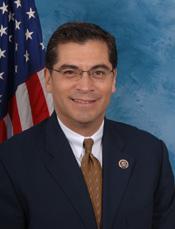
Madam Chair, I rise in opposition to the amendment. Madam Chair, I yield myself 2 minutes. Madam Chairman, the barbaric killing in Paris last week of 17 innocent human beings, including two police…
Madam Chair, I rise in opposition to the amendment.
Madam Chair, I yield myself 2 minutes.
Madam Chairman, the barbaric killing in Paris last week of 17 innocent human beings, including two police officers, is a stark reminder of the high price we sometimes pay to exercise our freedoms, including our freedom of speech.
Here in this House, we exercise that freedom every day on this floor, but that freedom comes with a responsibility. We are all entitled to our own opinions, and we can express them here, but we are not entitled to our own set of facts.
This sense of Congress fails in that responsibility. First, it misappropriates the facts, but worse, it misrepresents the facts.
The Affordable Care Act prohibits the precise activity and conduct by employers that this sense of Congress says it is trying to prohibit. In fact, the Affordable Care Act has explicit language, and I will, for the Record, submit 29 U.S. Code, section 218(c), protections for employees, which specifically prohibits an employer from discriminating against an American citizen who works for that employer for the purposes of hiring someone who doesn't have a right to work and, therefore, will not get insurance.
So the worst part of this sense of Congress is that it tries to mislead the American people to think something is going on that isn't. And if it is going on then, in the time that the gentleman has to push his amendment, I would urge him to name a name of an employer who is doing this to an American citizen who should be allowed to work.
29 U.S. Code Sec. 218c--Protections for employees
(a) Prohibition
No employer shall discharge or in any manner discriminate
against any employee with respect to his or her compensation,
terms, conditions, or other privileges of employment because
the employee (or an individual acting at the request of the
employee) has--
(1) received a credit under section 36B of title 26 or a
subsidy under section 18071 of title 42;
(2) provided, caused to be provided, or is about to provide
or cause to be provided to the employer, the Federal
Government, or the attorney general of a State information
relating to any violation of, or any act or omission the
employee reasonably believes to be a violation of, any
provision of this title (or an amendment made by this title);
(3) testified or is about to testify in a proceeding
concerning such violation;
(4) assisted or participated, or is about to assist or
participate, in such a proceeding; or
(5) objected to, or refused to participate in, any
activity, policy, practice, or assigned task that the
employee (or other such person) reasonably believed to be in
violation of any provision of this title (or amendment), or
any order, rule, regulation, standard, or ban under this
title (or amendment).
(b) Complaint procedure
(1) In general
An employee who believes that he or she has been discharged
or otherwise discriminated against by any employer in
violation of this section may seek relief in accordance with
the procedures, notifications, burdens of proof, remedies,
and statutes of limitation set forth in section 2087(b) of
title 15.
(2) No limitation on rights
Nothing in this section shall be deemed to diminish the
rights, privileges, or remedies of any employee under any
Federal or State law or under any collective bargaining
agreement. The rights and remedies in this section may not be
waived by any agreement, policy, form, or condition of
employment.
Madam Chair, I reserve the balance of my time.
Madam Chair, I yield 1\1/2\ minutes to the gentleman from New Jersey (Mr. Pascrell), who is on the Ways and Means Committee.
Madam Chair, I yield 1 minute to the gentleman from New York (Mr. Crowley), vice chairman of the House Democratic Caucus.
Madam Chairman, I yield myself the balance of my time.
I asked if the proponents would name the name of an American who has been discriminated against, the name of an employer who has discriminated against an American worker. They gave none. This is all anecdotal. These are all stories. They don't have anything to do with the fact that we need to pass the Homeland Security bill because we are jeopardizing the funding for our security.
Are people tone-deaf to what happened in Paris that they would do these types of amendments at a time when we need to support our men and women who protect us through Homeland Security?
This is wrong, and that is why we oppose this senseless sense of Congress amendment.
Madam Chairman, I yield back the balance of my time.
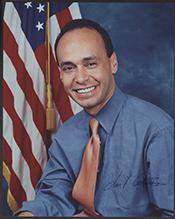
Wow, time flies when you are playing politics with people's lives. Just a year ago, as the Republican majority was rushing off to their retreat, they had a very different story. Here it is: House…
Wow, time flies when you are playing politics with people's lives. Just a year ago, as the Republican majority was rushing off to their retreat, they had a very different story. Here it is:
House immigration reform, 2013. Goodlatte-Cantor working to
give legal status to kids. House GOP leaders embrace
immigration fix that includes status for undocumented.
Republicans see the light on immigration reform.
And what are the headlines today? Behold the Republican immigration strategy: mass deportation.
One year ago--this is the difference in the headlines that your party's public policy on immigration has caused. But wait, let's see what you said in your principles:
It is time to provide an opportunity for legal residence
and citizenship for those who were brought to this country as
children through no fault of their own, those who knew no
other place as home.
Citizenship, legal residence for the undocumented youth--that was your idea, one that we applauded and we accepted and we cheered on. And 1 year later, you want to take away from 600,000 DREAMers their right to live in this country and to live legally. You want to deport them all. What happened? What happened?
Well, then let me say this. I just think if that is what happened in 1 year, what are you going to come up with next year? What is your game plan for next year if this is the kind of position you have taken from one year to the next?
But let me just say this. The action you take today I know you believe will cause fear and confusion and consternation in the immigrant community throughout this Nation, thereby causing the failure of the President's executive order because no one will sign up.
But let me tell you something. The fruits of your action today will cause only anger and outrage and the mobilization of an immigrant community throughout this Nation that will be the death knell of the future of your party as a national institution. That is what you will reap today with this.
Tonight, I will be with Congressman Cicilline, and I will be there standing with the Catholic Diocese, with evangelicals, with men of faith in Providence, Rhode Island, and people will come forward. Where will the Republican Party be? Simply telling them that we cannot do anything.
Mr. Chairman, I thank Congressman Conyers.
I just want to go back one moment, so that we can be very clear about this because I think we need to understand the difference between the rhetoric of today and the rhetoric of 1 year ago.
This is 1 year ago:
One of the greatest founding principles of our country was
that children would not be punished for the mistakes of their
parents.
I didn't write this. No one on our side of the aisle wrote this. I wish I would have. I am sure we would have all been proud to have been coauthors or cosponsors of that statement.
What happened? What happened? What happened to that principle? You just gave it up, it doesn't mean anything to you anymore, you don't care about children, you think children should be held responsible for the actions of their parents? Because that is precisely what you are saying today, because 600,000 young people came forward and did exactly this.
Then, wait a minute, it gets better because you said--and we were so happy because we thought we were moving forward because we thought the Republican Party was finally turning a page. You said:
It is time to provide an opportunity for legal residence
and citizenship for those who were brought to this country as
children.
What happened? I want one of you to deny that this isn't one of the principles you took into your conference last year. It is what you took. What happened 1 year later?
Well, you know, here is what happened, I think. You guys always say the same thing: Oh, it is that King from Iowa. He tricks us at the last second. He brings in one of these poisonous things, and there is nothing we can do about it.
Well, what excuse do you have today, when you did it with all the premeditation and thoughtfulness and viciousness to bring this amendment forward with the support of your complete Conference? This is not a surprise. You thought this out.
Where are you going to move the country forward to?
Let me just tell you about one number--yeah, there are 600,000--it is 270, that is the electoral college. It is the number it takes to elect the President of the United States. You are out of reach there.
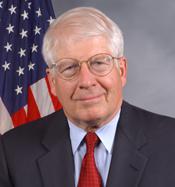
Mr. Chair, I claim the time in opposition. Mr. Chairman, I yield myself such time as I may utilize. Mr. Chairman, I rise in strong opposition to this poison pill amendment, which is a laundry list of…
Mr. Chair, I claim the time in opposition.
Mr. Chairman, I yield myself such time as I may utilize.
Mr. Chairman, I rise in strong opposition to this poison pill amendment, which is a laundry list of attacks on anything the executive branch has done to improve immigration and border security policy. It caters to every whim of the Republican Conference's most extreme elements. It would defund the Secretary's Southern Border and Approaches Campaign designed to unify border security efforts. It would defund policies to improve employment-based immigration, to bring highly skilled workers into our country. It would defund the policy to parole in place family members of citizens or lawful permanent residents who seek to enlist in the U.S. military, a policy supported by the Department of Defense. Incredibly, it would defund the Department's provision of temporary relief to individuals who were brought to this country illegally as children--those covered by the DREAM Act--and to the parents of U.S. citizens who meet certain criteria.
Of course, it would defund the Secretary's policy of setting immigration enforcement priorities. Every prosecutor in this country exercises some level of discretion to make the most of limited resources. We want our police to pursue murderers over traffic violators. We also should want DHS to focus enforcement efforts on illegal immigrants who pose a threat to our communities.
Now, it would be preferable--as the President is the first to acknowledge--to pass comprehensive immigration reform to address our country's festering immigration challenges. But in the face of House Republicans' failure to act, the President has taken well-considered steps, each of them well-grounded in law and precedent. If the Republican majority wishes to change the law in some way to deny him such authority, they should introduce legislation to do so. But adoption of this amendment would sabotage the Homeland Security funding bill and undermine our Nation's security at a time of great danger.
Mr. Chairman, I urge my colleagues to oppose this amendment, and I reserve the balance of my time.
Mr. Chairman, I yield 2 minutes to the gentlewoman from New York (Mrs. Lowey), our ranking member on Appropriations.
Mr. Chairman, I yield 2 minutes to the gentleman from Illinois (Mr. Gutierrez), the chairman of the Immigration Task Force of the Congressional Hispanic Caucus.
Mr. Chairman, I yield 2 minutes to the gentlewoman from California (Ms. Linda T. Sanchez), the chair of the Congressional Hispanic Caucus.
Mr. Chairman, may I inquire as to the remaining time on both sides?
Mr. Chairman, I reserve the balance of my time to close.
Mr. Chairman, I yield myself such time as I may consume.
I want to close by again thanking colleagues on both sides of the aisle for the good work done on the underlying bill, our bipartisan, bicameral negotiated agreement on Homeland Security.
It is really a shame that we are faced here today with an amendment that has the potential to wreck this good bill and to damage the Homeland Security Department so badly. Now, I don't say that lightly. I think Members
know I don't interject terms like ``poison pill'' into debates lightly; but, believe me, that term applies to the amendment we are now considering.
This amendment caters to every whim of the most extreme elements of the Republican Conference. It doesn't just roll back the President's recent executive action--which, by the way, is thoroughly grounded in law and precedent. It goes beyond that. It rolls back in its entirety the progress that has been made over many years on prioritizing dangerous criminals for deportation and bringing common sense to our deportation policy.
In pursuing this political vendetta, Republicans are putting at risk a full-year funding bill, worked out months ago, for the Department of Homeland Security, and they are doing that at a time of heightened alert.
Mr. Chairman, this is an egregious abuse, probably the worst I have ever seen, of the appropriations process. More than that, it is a reprehensible, reckless tactic which will compromise--has already compromised--the full and effective functioning of our Homeland Security Department and puts the security of our country at risk.
This amendment richly deserves our rejection, and I yield back the balance of my time.
Mr. Chair, I demand a recorded vote.

Madam Chair, I have an amendment at the desk. Madam Chair, there are currently 4.4 million people ready to enter this country through legal channels. Many of them have been waiting for years. They…
Madam Chair, I have an amendment at the desk.
Madam Chair, there are currently 4.4 million people ready to enter this country through legal channels. Many of them have been waiting for years. They have saved their money. They have filled out all of the proper forms. They have paid their fees.
This amendment is about doing right by them and their families. It is about making sure the men and women who play by the rules receive the fair treatment that they were promised.
Congress must send a clear message to the administration and the American people that we are committed to fixing what is broken about our immigration system but not at the expense of law-abiding immigrants.
In recent weeks, I have worked with The Heritage Foundation to identify seven failing programs at the USCIS that are in most need of improvement. One of the most egregious examples is of the $792 million that the USCIS spent between 2008 and 2012 to create an online system for applicants to file forms and pay fees. After $700 million spent and 4 years of time, only two forms out of 100 and one out of 73 different fees can be processed online.
The administration's repeated inability to build a Web site that works--well-documented as it is by now--is compounded by its eagerness to bypass the Constitution and break the law.
Had the President wished to show real leadership on immigration reform, he could have used his executive authority to promote greater efficiency and cost-saving measures within the system. Had he done so, I suspect there would have been overwhelming support in this Congress, but, regrettably, that is not the course he chose, and it is why this Congress must act.
We have a responsibility to American taxpayers and to millions of immigrants to establish spending priorities at the USCIS, and eliminating wasteful spending in the immigration system is an important component of our responsibility and is a first great step in achieving comprehensive reform. Ensuring that the fees paid by lawful applicants are not used to fast-track those who break the law strikes at the heart of our oath of office.
During my time in Congress, the 18th District of Illinois has welcomed more than 2,600 new citizens, many of whom have faced a long road to get here, but there are still thousands more who are waiting. It is not because their paperwork isn't in order, not because they have something in their records, and not because of anything other than there being a broken system.
Take Charles from Peoria. He has been trying to get his fiancee to join him here in the United States since January of 2012. For more than 2 years, Charles has waited. He has struggled with the financial support requirements. He has been unable to travel to see her. He had his application postponed time and time again. Why? Because Charles is a quadriplegic on disability.
Take Danny from Jacksonville, Illinois. He works two shifts at a meatpacking facility. He applied and paid for his green card on October 4 of 2013. His green card was mailed to the wrong address, even though it was properly done on his paperwork, and it was in order.
Danny lost his job because he couldn't show his green card to his employer. After many months of lost wages, the USCIS admitted to my office and to Danny that they screwed up and made a mistake. Now, more than a year later, Danny finally received his green card, and he went back to work, but not before our broken system cost him a year's worth of wages.
Madam Chair, these stories could be repeated hundreds of time in my congressional office alone--tens of thousands of times across this body in Republican and Democrat districts alike. The system is failing our constituents, their families, and their loved ones. It is failing businesses in our districts. It is failing daycare facilities and major manufacturers.
Yes, Mr. President, the system is broken, but the way to fix a broken system is not to overload the system by fast-tracking 5 million more people.
Madam Chair, it is as if these hardworking taxpayers--these hardworking people--are sitting at a toll booth.
Madam Chair, how much time is remaining?
I reserve the balance of my time.
Madam Chair, I reserve the balance of my time.
Madam Chair, I yield the balance of my time to the distinguished gentleman from Ohio (Mr. Boehner), my friend.
I yield back the balance of my time.
Show 11 more

I thank the gentleman for yielding and for his leadership on this issue. Mr. Chairman, I thank the gentlewoman for yielding, and I strongly support her amendment to H.R. 240, which prohibits Federal…
I thank the gentleman for yielding and for his leadership on this issue.
Mr. Chairman, I thank the gentlewoman for yielding, and I strongly support her amendment to H.R. 240, which prohibits Federal funding or resources from being used to adjudicate any new, renewal, or previously denied application for the President's Deferred Action for Childhood Arrivals program. It is that simple.
The President's DACA program, announced by the President and the Secretary of the Department of Homeland Security on June 15, 2012, violates the laws Congress has written and is a usurpation of the plenary authority over immigration law that article I, section 8, clause 4 of the United States Constitution confers upon the legislative branch.
For these reasons, I urge my colleagues to support the gentlewoman's amendment to defund DACA.
I thank the gentleman for yielding and for the work he and Mrs. Roby did on this amendment. I urge my colleagues to support the amendment.
Madam Chair, this amendment simply requires the Department of Homeland Security to treat any alien convicted of any offense involving domestic violence, sexual abuse, child molestation, or child abuse or exploitation as a top priority for immigration enforcement. Unfortunately, the current priorities created by the Obama administration on November 20, 2014, treat certain aliens convicted of domestic violence, convicted of sexual abuse, or convicted of exploitation as a secondary priority.
While aliens convicted of a ``significant misdemeanor,'' such as domestic violence, sexual abuse, or exploitation, are deemed a secondary priority for removal, they can stay in the United States in contravention of duly enacted law if they simply show ``factors'' warranting release.
The amendment corrects these irresponsible policies of the Obama administration and ensures that criminal aliens convicted of domestic violence and sexual abuse are treated as top priorities for removal.
For these reasons, I urge my colleagues to support this amendment.
Madam Chairman, I urge my colleagues to support this amendment by Representatives Salmon and Thompson.
The amendment expresses the sense of Congress that U.S. workers should not be harmed by President Obama's unilateral executive action programs.
These programs absurdly give American employers a financial incentive to hire unlawful aliens over American citizens and legal immigrants.
The fact is, in many cases, a business now has a $3,000 incentive to hire an unlawful immigrant who benefited from the Deferred Action for Childhood Arrivals program. This is because, under ObamaCare, many businesses face a $3,000 per employee penalty if they do not provide health insurance to their workers.
However, unlawful immigrants granted DACA relief and, most likely, those benefiting from President Obama's new deferred action program are not eligible for ObamaCare. Thus, in many cases, employers will not have to pay this penalty if they hire deferred action recipients rather than legal workers.
It is simply indefensible public policy for the Obama administration to give unlawful aliens a leg up over legal workers. Yet, that is the result of the President's unilateral actions. I urge my colleagues to support this good amendment.
I have an amendment at the desk. Mr. Chairman, I want to thank the chairman of the Appropriations Committee (Mr. Carter) for his leadership in putting a great bill and a comprehensive bill before us…
I have an amendment at the desk.
Mr. Chairman, I want to thank the chairman of the Appropriations Committee (Mr. Carter) for his leadership in putting a great bill and a comprehensive bill before us this morning that deals with protecting the homeland.
I am presenting today, along with my distinguished colleagues--in particular, from South Carolina (Mr. Mulvaney), and also Mr. Barletta from Pennsylvania--an amendment that defunds the President's unconstitutional executive actions on illegal immigration.
As it has been noted here last night and this morning, back in December, the House voted to fund the Federal Government for this fiscal year, FY15, but we kept funding for the Department of Homeland Security on a continuing resolution. By doing so, we were making a promise to the American people. It was a promise that once we had a Republican Senate, we would work together as a Congress to ensure the President's unconstitutional and unilateral actions would not go unchecked. Today, this promise has been kept with this amendment before us today.
At this time, I would like to yield 1 minute to the distinguished gentleman from Texas (Mr. Carter), the chairman of the Homeland Security Subcommittee on Appropriations.
Mr. Chairman, I yield 1 minute to the gentleman from California (Mr. McCarthy), the majority leader of the House of Representatives to speak, and thank him for his leadership.
Mr. Chairman, I yield 1 minute to the distinguished gentleman from Virginia (Mr. Goodlatte), the chairman of the House Judiciary Committee.
Mr. Chairman, I yield 1 minute to the distinguished gentleman from Pennsylvania (Mr. Barletta), the cosponsor of this amendment, who has been very helpful in crafting this amendment.
Mr. Chairman, I yield 1 minute to the distinguished gentleman from South Carolina (Mr. Mulvaney), who is not only a cosponsor of this amendment but who, again, was very instrumental in this amendment taking place.
Mr. Chairman, I yield 30 seconds to the distinguished gentleman from California (Mr. LaMalfa).
Mr. Chairman, I yield 30 seconds to the gentleman from Alabama (Mr. Palmer), who is joining us from the Birmingham area and is a new Member of the House of Representatives.
Mr. Chairman, I yield 30 seconds to the gentleman from Wisconsin (Mr. Sensenbrenner).
Mr. Chairman, I yield 30 seconds to the distinguished gentleman from Arkansas (Mr. Westerman), a new Member to this body.
Mr. Chairman, again let me just say before the gentleman closes, the amendment here before us today prevents any funds appropriated, or user fees collected by any Federal agency, to be used to carry out the executive actions that were announced on November 20, 2014, which would grant deferred action to an estimated 4 million people in the country illegally and unlawfully.
Again, this goes back to a promise that was made by the Republican House of Representatives at the end of last year, and we addressed this issue saying that we would work on this issue, make a commitment to address this issue of the President's action when this bill came to the floor, and this is fulfilling that promise today.
Again, I would ask my colleagues to support this amendment.
I yield back the balance of my time.

Mr. Chairman, I have an amendment at the desk. Mr. Chair, I yield myself such time as I may consume. I rise today in support of my amendment to freeze the President's Deferred Action for Childhood…
Mr. Chairman, I have an amendment at the desk.
Mr. Chair, I yield myself such time as I may consume.
I rise today in support of my amendment to freeze the President's Deferred Action for Childhood Arrivals program, which was unlawfully created by executive memo on June 15, 2012.
My amendment prohibits Federal funding, fees, or resources from being used to consider or adjudicate any new, renewal, or previously denied application for any alien requesting consideration for deferred action.
Article I, section 8, clause 4 states that the Congress shall have power ``to establish an uniform rule of naturalization''--Congress, not the Executive. President Obama has circumvented Congress and unilaterally rewritten immigration law from the Oval Office.
A Federal judge in Pennsylvania said President Obama's amnesty is unconstitutional and that, number one, ``Inaction by Congress does not make unconstitutional executive action constitutional''; and, number two, ``Executive action goes beyond prosecutorial discretion. It is legislation.'' That is the reason we bring the amendment.
At this time, I yield 1 minute to the gentleman from Virginia (Mr. Goodlatte), chairman of the House Judiciary Committee.
Mr. Chairman, at this time, I yield 1 minute to the gentleman from Pennsylvania (Mr. Marino), who is one of our Members who had truly a significant career as a prosecutor before coming to this Chamber.
Madam Chairman, how much time is remaining on each side?
Thank you, Madam Chairman.
I yield myself such time as I may consume.
Let's talk about a couple of these things. The Democrats like to say, Madam Chairman, that this is radical.
Let me ask you a question, let me ask my colleagues a question: Is it radical to support the rule of law? Is it radical to fight for American workers who are going to lose their jobs to illegal aliens? Is it radical to prioritize legal immigrants that are coming to this country? Is it radical to try to protect children that are in this program via the Office of Refugee Resettlement?
Democrats are over there saying that Republicans are playing politics with national security. Let me ask you another question: Why were they saying nothing this summer when the southern border was being overrun with all sorts of trafficking--human trafficking, sex trafficking, weapons trafficking, drug trafficking?
Here are the facts. DACA became effective August 15, 2012. In fiscal year 2014, the Office of Refugee Resettlement released 53,518 unaccompanied children here in the U.S. It is a magnet.
Seventy-five percent of all Americans reject the Obama executive amnesty. Eighty percent of Americans don't want foreign workers taking jobs from Americans.
Those are the facts, Madam Chairman.
To my colleagues, that is why we are here. We have two choices. We are either a Nation of laws or we are lawless.
President Obama is turning every State into a border State, every town into a border town; and unfortunately, the lawless amnesty has taken Democrats from the party of ``yes, we can'' to acting like the party of ``because we can.''
With that, Madam Chairman, I yield back the balance of my time.
Mr. Speaker, I would like to read to you a few quotes. First: With respect to the notion that I can just suspend deportations through executive order, that's just not the case, because there are laws…
Mr. Speaker, I would like to read to you a few quotes. First:
With respect to the notion that I can just suspend
deportations through executive order, that's just not the
case, because there are laws on the books that Congress has
passed.
Congress passes the law. The executive branch's job is to
enforce and implement those laws.
The problem is that I'm the President of the United States,
I'm not the emperor of the United States. My job is to
execute laws that are passed.
I can't do it by myself. We're going to have to change the
laws in Congress.
I am President. I am not king. I can't do these things just
by myself.
I'm not a king. You know, my job as the head of the
executive branch ultimately is to carry out the law.
I'm bound by the Constitution; I'm bound by separation of
powers. There are some things we can't do.
Congress has the power of the purse, for example.
These are the words and the statements of the President of the United States. And words matter. But, even after the President said all of this in a politically motivated action last November, he pursued a course that could allow up to 5 million undocumented immigrants to remain in the United States illegally and without consequence.
Like my constituents, I am outraged. President Obama defied the will expressed by the American people last November and blatantly contradicted his own statements about the limits of the executive branch.
Now, let's be clear, lest others confuse this issue today. This is not a debate about immigration. That will come later. But this is about the rule of law. This is about the constitutional separation of powers. This is about the respect we owe the American people.
In this appropriations bill, we are exercising the power of the purse and we are taking a strong, narrow approach that will, first and foremost, provide security to our homeland and, secondly, deny any funds whatsoever from being used to carry out the President's unwise and, in my opinion, unconstitutional actions.
Now, I have to say, the President was right about a couple of things. He is not an emperor, and he is surely not a king. House Republicans are united in making sure that he doesn't get away with acting like one either. And yet before the debate even begins, last night the President has already issued threats. He is threatening to shut down the Department of Homeland Security because this bill prevents him from implementing his own ideology.
But make no mistake: a veto threat is a threat to our national security; a veto threat is an open invitation to our enemies. In the wake of the horrific terrorist attack this week in France, is the President really willing to compromise the safety of 320 million Americans to appease his base and score political points? God help us if that is the case.
Today, it is up to us in the House. Let us vote to defend the constitutional role of this legislature, let us vote to stop the President's blatant overreach, and let us vote to secure our homeland.
Mr. Chairman, I claim the time in opposition to the amendment. Mr. Chair, I am very disturbed by the nature of this Blackburn amendment because it would prevent the use of Federal funds or resources…
Mr. Chairman, I claim the time in opposition to the amendment.
Mr. Chair, I am very disturbed by the nature of this Blackburn amendment because it would prevent the use of Federal funds or resources to consider or adjudicate any new, renewal, or any previously denied application for Deferred Action for Childhood Arrivals, DACA, or any subsequently similar program. This amendment is similar to the same Blackburn bill that passed the House in August of 2014.
This amendment clearly terminates the DACA program, the DREAMers, ladies and gentlemen, my colleagues. The amendment prevents new persons from applying for DACA and explicitly prohibits further efforts to renew deferred action under this amendment.
Hundreds of thousands of young people who came forward, passed background checks, obtained DACA, and have since followed the law would be deportable at the end of their 2-year deferred action period. This is serious; it is dangerous.
The amendment is anti-immigrant and antifamily. This is a vote to deport DREAMers. These applicants who have applied have positive impacts on both job growth and economy.
The amendment would leave DACA applicants without work authorization and would expose many of them to deportation to a country that they don't even know. We should be passing legislation to keep DACA recipients in our country because they have a net impact on our communities.
The amendment is one more of the same anti-immigrant-type rhetoric that has dominated conservatives and is further evidence that the majority is not interested in fixing our broken immigration system, but is only interested in penalizing members of our community who seek to work, go to school, and remain with their family.
I reserve the balance of my time.
Mr. Chairman, I yield the balance of my time to the gentleman from Illinois (Mr. Gutierrez).
Madam Chair and members of the committee, I oppose the Schock amendment for many of the numerous reasons that have already been stated by our colleagues, but I want to make sure that we are all perfectly clear on what is occurring on the House floor today.
The majority is, unfortunately, playing politics with the lives, safety, and security of the American people. The ideologues are holding funding hostage for the Homeland Security Department here today. That is not right. They would rather deport DREAMers--the kids and their parents--rather than fund the Department of Homeland Security.
In the wake of the recent Paris tragedy, we need to remain vigilant with smart enforcement policies that protect Americans. The Department of Homeland Security plays a central role in our fight against terror, and we must fully fund the efforts as soon as possible. We should not be attaching poison pill amendments to this important legislation.
I urge all of my colleagues on the other side of the aisle to really join us and govern with a sense of far more responsibility.
Madam Chair, I demand a recorded vote.
Madam Chairman, I have an amendment at the desk. Madam Chairman, I yield 2 minutes to the gentleman from Pennsylvania (Mr. Thompson), the coauthor of this amendment. Madam Chair, I yield 1 minute to…
Madam Chairman, I have an amendment at the desk.
Madam Chairman, I yield 2 minutes to the gentleman from Pennsylvania (Mr. Thompson), the coauthor of this amendment.
Madam Chair, I yield 1 minute to the gentleman from Virginia (Mr. Goodlatte), chairman of the full Committee on the Judiciary.
Madam Chairman, I yield myself such time as I may consume.
Madam Chairman, they say sunlight is the best disinfectant. We are trying to shed a little sunlight on some of the problems with the President's unconstitutional and illegal executive order of last year.
I am incredulous that the leader of the opposition has now encouraged the Members of the opposition to vote, en bloc, against all these commonsense amendments defending the American worker, protecting the American worker, cracking down on the molesters and sex offenders, and making sure that they don't have a haven here in America, and making sure that those who want legal immigration are the first and foremost that we consider in this process, and that those who cheated the system have to get behind those folks that are doing it legally before their paperwork can be processed.
It is incredulous that the other side would oppose such commonsense measures that I believe most of America is crying for. People are hurting out there. Maybe they haven't gotten the memo, but I think most of us have.
The other thing that is incredulous is that when you hear a lot of squealing, you know when you have hit a raw nerve; you know there is some truth to what is being spoken.
This amendment is simply a sense of Congress that we don't give a $3,000 benefit to those who have cheated the system, that we don't give a $3,000 advantage to them over hardworking, tax-paying American citizens who have been out of work for quite some time.
As we know, President Obama recently issued a series of memos that would essentially grant legal status to millions of people residing illegally within the borders of the United States. Unfortunately, this is not the first time that such action has been taken by this administration, and history has a habit of repeating itself.
Under Deferred Action for Childhood Arrivals, DACA, up to 1.7 million individuals were granted legal status and were allowed to cut in line, being given preferential treatment over those who respected our laws and waited patiently for their immigration cases to be processed.
Furthermore, while these individuals who were given legal status under DACA were initially required to purchase health insurance under ObamaCare, they were later exempted from that requirement. With this exemption, those given legal status under DACA are not required to purchase insurance.
We just don't want that to happen again, and I would urge the other side to stand up for the American worker. That is why we are here.
Madam Chairman, I yield back the balance of my time.
Madam Chairman, I demand a recorded vote.

Today, Mr. Speaker, the Republican House takes an important step in restoring the trust of the American people in their elected Representatives and in restoring the rule of law in our Nation. Two of…
Today, Mr. Speaker, the Republican House takes an important step in restoring the trust of the American people in their elected Representatives and in restoring the rule of law in our Nation.
Two of the most important principles underlying our entire system of government are trust and the rule of law. The American people in the election last November decisively rejected the aggressive, liberal agenda of this President and of the Democrats in Congress.
They elected this Republican majority to stop the President from doing further damage to our system of laws and further damage to our Constitution. The American people elected us to preserve and protect and defend the Constitution of the United States, but that work begins with trust.
We, today, are doing what the voters of America asked us to do in enforcing our laws on the border to ensure that our laws are respected, to ensure that our immigration law is fair, and that it treats everyone equally as the Constitution requires.
We are keeping our word to the American people to do precisely what we said we would do, and that is to overturn these illegal executive memos that are attempting to ignore what the law says the President must do. Not even King George III had the authority to waive a law enacted by the Parliament.
Mr. Speaker, once we have begun this path today of restoring that bond of trust, we will restore the rule of law in America because, without the law, there is no liberty.
In fact, the first design on one of the first coins ever minted in the Republic of Mexico, a coin which I have here with me, shows the liberty cap--liberty and law. There is no liberty without law enforcement, and the House today is doing what the American people hired us to do: to restore their trust and to restore the rule of law.
This is a law enforcement issue. Border security and immigration, these are matters of law enforcement. We trust the good hearts and the good sense of the officers in the field to do the right thing for the right reasons, which is to enforce our laws fairly and equally, because the people on the Rio Grande understand better than anyone else that if the law is not enforced, there cannot be safe streets and that you cannot have good schools and a strong economy without law enforcement.
We in Texas understand better than anyone else that this debate is far larger than it just being about immigration or border security. It is far larger than just these individual issues we will debate today.
Today, we in the Republican House are honoring the will of the American people. We will keep our word. We will make sure that the laws of the United States are enforced equally and fairly for all.
Above all, we will preserve and protect the Constitution and the America that we know and love. That was the message of the election last November.
I thank the chairman for yielding. Mr. Speaker, I rise today to encourage people on both sides of the dais, both sides of the aisle, to support the rule and the underlying appropriations bill with…
I thank the chairman for yielding.
Mr. Speaker, I rise today to encourage people on both sides of the dais, both sides of the aisle, to support the rule and the underlying appropriations bill with its attached amendments.
I do tire of hearing people talk about our broken immigration system. Mr. Speaker, last year, in the United States of America, 1.1 million people came into this country, raised their right hand, took the oath of citizenship, and came in legally. And it has been that way every year that I have been in Congress since 2003. So, by my arithmetic, that is well over 12 million people that have become naturalized United States citizens in the last 10 or 12 years.
Does that sound like a system that is broken?
For comparison, let's look at other countries. The fact of the matter is, when you combine every other country on the face of the Earth, they don't match half of the number of people that are allowed to come into the United States and take the oath of citizenship.
But I will tell you what is broken. What is broken is the enforcement of our immigration laws, and we have seen that demonstrated time and again.
The President made some unilateral decisions in June of 2012, and we in Texas, particularly in the Lower Rio Grande Valley, understand very much what happens when someone makes adjustments without going through the rule of law. As a consequence, in late 2013, and then throughout the spring and summer of last year, we saw unprecedented amounts of unaccompanied minors simply coming across the border and turning themselves in to Customs and Border Patrol.
Now, why did they do that? Did someone just suddenly wake up one day in Honduras or Guatemala and say: I'm going to make that dangerous trek across the Mexican desert? No, it is because child traffickers, coyotes, saw what the President did, and said: Here's a business plan. Let's go to these families, charge them thousands of dollars, with the admonition that if you don't do it now, this door is going to close. But right now the President has got the door open for you to come up and get your amnesty. Step up and get it while you can.
So what did the President do in November? He doubled down on that. The message to the child traffickers around the world is: Y'all come. Y'all come and it will be all right.
But the fact of the matter is it is not all right. In fact, our homeland security is threatened.
This is an important bill. Judge Carter has done enormous work to bring this bill to the floor. For that, I thank him. The bill is important, along with the amendments. I urge adoption of the rule, and I urge adoption of the underlying bill with its accompanying amendments.
Mr. Speaker, I rise in support of the rule and the amendments offered to the Department of Homeland Security Appropriations bill, including the amendment I coauthored with my colleagues, Congressman…
Mr. Speaker, I rise in support of the rule and the amendments offered to the Department of Homeland Security Appropriations bill, including the amendment I coauthored with my colleagues, Congressman Aderholt of Alabama and Congressman Mulvaney of South Carolina.
Our amendment defunds President Obama's unlawful executive amnesty program for illegal immigrants.
Now, when I was mayor of my hometown of Hazleton, Pennsylvania, I saw firsthand how illegal immigration can affect a community. I believe that my stance against illegal immigration was why I was elected to Congress in the first place.
I am someone who has dealt with this as a smalltown mayor. I know what it looks like on the back end when the Federal Government doesn't do its job. Very simply, we are making sure that, at long last, we enforce the law.
First, it prevents the funding of carrying out the President's actions announced on November 20 of last year.
But let's be clear about something. The President's amnesty program did not just begin all of a sudden 2 months ago. It goes back much further than that, to the so-called Morton memos of 2011. They instructed immigration officers to ignore broad categories of illegal immigrants and halt deportation proceedings for them. In short, these memos told immigration officers to view the law the way that President Obama wished it had been written rather than how Congress actually wrote it.
We defund the implementation of the Morton memos. We also say that no funds can be used to implement any similar amnesty policies. That simply means that this or any other President cannot try to tweak their policies or try more trickery to try another end around past Congress without our approval.
Mr. Speaker, this states unmistakable congressional intent. The amendment says that the President's policies have no basis in law and are not grounded in the Constitution. We prevent anyone who receives such executive amnesty from being awarded any Federal benefits.
There are other amendments being considered, including stopping the Deferred Action for Childhood Arrivals program, or DACA, which was born out of the Morton memos. I support that amendment and all of the others as well.
Mr. Speaker, our Constitution is clear: the President of the United States does not have unilateral power. In America, we also have a legislature. As such, the President cannot simply make laws on his own. The Aderholt-Mulvaney-Barletta amendment makes that clear.
I urge support of the rule and the accompanying amendments to the DHS Appropriations bill.
Mr. Speaker, I rise to oppose this rule. Let us be perfectly clear about what is happening here today. House Republicans are holding our national security hostage to the extreme policies of their…
Mr. Speaker, I rise to oppose this rule.
Let us be perfectly clear about what is happening here today. House Republicans are holding our national security hostage to the extreme policies of their most radical Members. I speak from experience, having been one of the three or four that started this committee back after 9/ 11. You know that.
A vote for this rule and the poison pill amendments that will follow is a vote to shut down the Department of Homeland Security, plain and simple. It is a vote against the brave men and women in our Border Patrol, Secret Service, Coast Guard, and local public safety departments who put their lives on the line every day.
As the cochair of the Congressional Fire Caucus and the Public Safety Caucus, I am outraged that this stunt will jeopardize important funding under the Fire and SAFER grants programs. It provides community firefighters with the equipment they need and the ability to hire additional firefighters to help keep the risk of loss of life and property damage at a minimum.
I welcome a debate about immigration, but this is another ruse. This is an exact ruse. Whether you are talking about border security or whether you are talking about ``amnesty,'' it is a ruse. It doesn't matter whether it is this or something else to stop immigration, House Republicans have done nothing but run from that conversation.
Speaker Boehner has been sitting on a bipartisan comprehensive immigration bill since June of 2013. He has done nothing to move the bill through the House. He hasn't proposed an alternative. And if you don't like the President's executive actions to help address our broken immigration system, why haven't you put your own on the table?
Policies like the President's executive order provide responsible solutions to prevent families from being torn apart. Don't we want family unification? Don't we support that? In the bowel of our values, don't we support that more than anything else: keeping families together?
Republicans have no solutions for these families--and they are out there. They are all over. It is quite simply unbelievable that they are willing to put politics before national security and shut down the Department of Homeland Security to block the President from implementing his solutions.
Let's end this charade now. You want to have a debate about immigration? Great. We welcome it. But we will not play along with this dangerous plan to jeopardize the safety and security of the American people. I urge my colleagues to oppose this rule.
I thank the chairman for yielding me the time. Mr. Speaker, I rise in very strong support of this rule and the underlying bills, many of which have not been discussed because we have been discussing…
I thank the chairman for yielding me the time.
Mr. Speaker, I rise in very strong support of this rule and the underlying bills, many of which have not been discussed because we have been discussing the one that is, frankly, the most effective and have been discussing what the President has done and the funding issues. But the one thing that I want to emphasize is what is not being discussed here, and what is not being discussed is the simple opportunity to restore constitutional checks and balances.
My friends across the aisle have talked about what question would you want to talk about. Well, let's talk about immigration. When they had the opportunity, they punted on that issue, so I wouldn't want to talk about it if I were them either.
They want to talk about how we are going to leave the country in jeopardy. No, we are not. The President can sign this bill, get back to proper constitutional order, and then everything is funded; and there, order is restored.
What I find amazing is the blame on running other things. And even when we bring up this, some of my friends from across the aisle will bring up, well, other Presidents have done it. Well, that reminds me of what my mother used to say: If everybody jumped off the roof, would you?
Just because it was wrong then does not make it right now.
It is time. And what people in America tell us all the time is it is time for Congress to reassert its congressional authority. That is what this is about. Throw the blame anywhere you want to, try to direct us, but you are not deceiving the American people, as the speaker just said. The American people do know the difference when you are trying to misdirect them.
So this package of rules, these bills underneath, they get at the heart of restoring constitutional order, of taking back regulations that need to be rolled back so that our businesses can function, our markets can function, and we can get back to doing exactly what we are supposed to be in here doing.
So as long as we hear the distractions, I know the American people aren't fooled because I am not fooled. I did what I have said I would do--I came here to fight--back at the first of the year: to fight what was being done around Congress and around this executive order. I will continue that fight. That is the promise that we made to the American people. That is the promise the Republicans are bringing forth. Jobs, people, and kitchen table. That is what we are about. It is about what the Founding Fathers said we would do.
Bill Text
Legislative text isn't available for this bill yet.