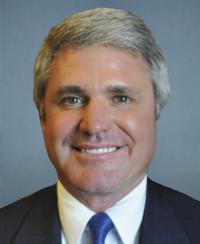
Mr. Speaker, I move to suspend the rules and pass the bill (H.R. 623) to amend the Homeland Security Act of 2002 to authorize the Department of Homeland Security to establish a social media working…
Mr. Speaker, I move to suspend the rules and pass the bill (H.R. 623) to amend the Homeland Security Act of 2002 to authorize the Department of Homeland Security to establish a social media working group, and for other purposes.
Mr. Speaker, I ask unanimous consent that all Members may have 5 legislative days in which to revise and extend their remarks and include extraneous materials on H.R. 623.
Mr. Speaker, I yield myself such time as I may consume.
Mr. Speaker, I rise today in support of H.R. 623, the Social Media Working Group Act of 2015.
Social media is transforming the way the Nation is communicating before, during, and after terrorist attacks, natural disasters, and other emergencies. There are countless examples from recent events of how citizens are turning to Facebook, Twitter, and even Instagram for public safety information, to comfort survivors, and to request assistance.
For example, during the height of the most recent winter storm Juno in the Northeast, there were over 20,000 posts using the hashtag #blizzardof2015.
A quarter of Americans--let me repeat that--a quarter of Americans got information about the devastating terrorist attack at the 2013 Boston Marathon from Facebook and Twitter.
Immediately following that attack and during the manhunt, the Boston Police Department utilized social media as a way to communicate with and solicit information from citizens and visitors.
In fact, the first official announcement that Boston Marathon bomber Dzhokhar Tsarnaev had been captured was not through a traditional press conference, but it was through the Boston Police Department's Twitter account. That post was retweeted more than 135,000 times.
These examples prove that social media has become one of the primary ways we share information.
In the 113th Congress, I served as the chair of the Committee on Homeland Security's Subcommittee on Emergency Preparedness, Response, and Communications with the gentleman from New Jersey as my ranking member. Our subcommittee held two hearings that focused on this new phenomenon, and we learned that while the Nation is making great strides in this area, gaps and challenges remain.
One of the key takeaways from these hearings was that during and after a terrorist attack, natural disaster, or other emergency, there is still a need for better communication between the public sector and the private sector, specifically with how we utilize social media as a communication tool.
Last year, I introduced this bill, along with Ranking Member Payne, Chairman McCaul, Representative Palazzo, and Representative Swalwell, to address this issue; and I am pleased now to reintroduce the bill this Congress.
Mr. Speaker, H.R. 623 addresses the issues we heard in our hearings by authorizing and enhancing the Department of Homeland Security's Virtual Social Media Working Group to ensure information sharing between the Department and appropriate stakeholders and the leveraging of best practices.
Currently, the Virtual Social Media Working Group, which is made up mostly of State and local officials, is doing great work in developing guidance documents on how to utilize social media during disasters. In fact, it produced a lessons learned paper on social media usage during Hurricane Sandy.
This bill will increase the working group's stakeholder participation, particularly among the private sector and Federal response agencies, thereby creating a Whole Community dialogue on this issue.
The bill will require this group to submit an annual report to Congress highlighting best practices, lessons learned, and any recommendations. Finally, this bill will require the group to meet in person or virtually at least twice a year, and it will not be a financial burden on the Department.
In today's day and age, when new social media platforms and technologies can change the game almost instantly, we must ensure our critical first responders are nimble enough to adapt to an ever- changing landscape. This group is one way to help facilitate this.
The House passed this bill last Congress with strong bipartisan support. I now want to thank Chairman Shuster and Chairman Barletta of the Transportation and Infrastructure Committee for working with the Committee on Homeland Security and me to get this bill to the floor today.
Mr. Speaker, I urge Members to join me in supporting this bill, and I reserve the balance of my time.
Mr. Speaker, I have no further speakers, and I reserve the balance of my time.
Mr. Speaker, I would like to thank the gentlelady from the District of Columbia and the gentleman from New Jersey for continuing this important work that we began last year.
It was a visit to the American Red Cross shortly after Hurricane Sandy where we learned about the important role that social media had played and the growing role that it played and the fact that they have digital volunteers now who continue to work on behalf of saving lives.
I just want to thank all of those who have been supportive of this bill, and I urge my colleagues to join me in once again supporting this important legislation.
I reserve the balance of my time.
Mr. Speaker, in closing, I again thank the gentlewoman from the District of Columbia and the gentleman from New Jersey in supporting this important legislation.
I yield back the balance of my time.
Mr. Speaker, on that I demand the yeas and nays.