Mr. Speaker, I move to suspend the rules and pass the bill (H.R. 1545) to amend title 38, United States Code, to clarify the authority of the Secretary of Veterans Affairs to disclose certain patient…
Mr. Speaker, I move to suspend the rules and pass the bill (H.R. 1545) to amend title 38, United States Code, to clarify the authority of the Secretary of Veterans Affairs to disclose certain patient information to State controlled substance monitoring programs, and for other purposes.
Mr. Speaker, I ask unanimous consent that all Members may have 5 legislative days within which to revise and extend their remarks and include extraneous materials.
Mr. Speaker, I yield myself as much time as I may consume.
Mr. Speaker, I rise today in support of H.R. 1545, the VA Prescription Data Accountability Act of 2017. H.R. 1545 would require the Department of Veterans Affairs to disclose information about any individual prescribed medication by a VA employee or a provider authorized by the VA to a State Prescription Drug Monitoring Program to the extent necessary to prevent misuse and diversion of prescription medication.
Prescription Drug Monitoring Programs are Statewide electronic databases that collect and distribute information on prescription medication to certain authorized individuals or entities. They are used to identify and address prescription drug abuse, addiction, and diversion.
While 90 percent of the VA's patient population are veterans, the VA treats certain nonveterans, including Active-Duty servicemembers who receive VA care through sharing agreements with the Department of Defense, dependents, caregivers of veterans, and VA staff, to name a few.
Current law authorizes the VA to disclose information to Prescription Drug Monitoring Programs for veterans and dependents of veterans only. The VA is not authorized to disclose information for other patients.
Moreover, technological barriers prevent the VA from transmitting dependent data to Prescription Drug Monitoring Programs. That means that prescription drug information for nonveterans--10 percent of the VA's patient population, which translates to more than 700,000 veterans this fiscal year--is not being shared with Prescription Drug Monitoring Programs today.
In light of ongoing concerns about the potential for misuse or diversion of prescription medication, particularly opioid medications, it is imperative that the VA share information about all VA patients, veteran and nonveteran, to State Prescription Drug Monitoring Programs. It is a matter of public safety.
H.R. 1545 is supported by the American Legion, the Paralyzed Veterans of America, the Veterans of Foreign Wars of the United States, and by the VA, who testified before the Subcommittee on Health earlier this year that this authority would ``ensure that VA is able to fulfill its public health role in sharing vital clinical information to help guide treatment decisions.''
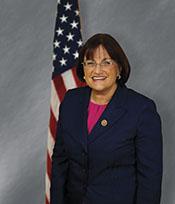
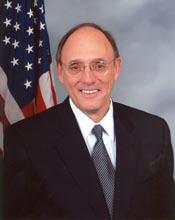
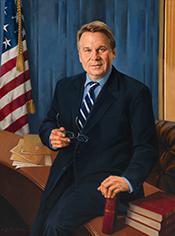
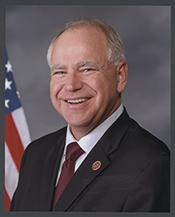
Mr. Speaker, this bill is sponsored by the gentlewoman of New Hampshire (Ms. Kuster), the ranking member of the Subcommittee on Oversight and Investigations, who is joined by the gentleman from Ohio (Mr. Wenstrup), the chairman of the Subcommittee on Health; the gentleman from Michigan (Mr. Bergman), the chairman of the Subcommittee on Oversight and Investigations; and the gentlewoman from California (Ms. Brownley), the ranking member on the Subcommittee on Health. I am grateful to all of them for sponsoring this legislation. It has my full support, and I urge all of our colleagues to join me in supporting it.
Mr. Speaker, I reserve the balance of my time.
Mr. Speaker, at this time I yield 1 minute to the gentleman from Pennsylvania (Mr. Costello).
Mr. Speaker, I continue to reserve the balance of my time.
Mr. Speaker, I yield myself the balance of my time to close.
In over 31 years of the practice of medicine, I have seen great changes, many of them to the good. One of the things that has disturbed me greatly is the opioid epidemic that we have in this great country at this time. I am an obstetrician. I have delivered a lot of babies in my career, and it was a rare event when we saw a baby that was addicted to opioids--as a matter of fact, almost never until, literally, about 20 years ago, and 10 years ago a full-fledged epidemic.
In our hospital at home, we have a neonatal intensive care unit that cares for nothing but opioid-addicted babies. In our State of Tennessee, Mr. Speaker, we have had more people who died of prescription drug overdose deaths than died in car wrecks. It now exceeds many cancer deaths in the country.
This bill has my 100 percent support, and I certainly want to thank Ms. Kuster for her great work on this bill. We have shared a trip to Afghanistan together, as we did with Mr. Takano, and had a chance to talk about these things in great detail. I want to thank her and also the ranking member for their support in this.
I once again encourage all Members to support this legislation.
Mr. Speaker, I yield back the balance of my time.